Case file · CHEVROLET-CRUZE-2011-2015 · 1st gen (J300)
Chevrolet Cruze 2011–2015Common problems, reliability & repair costs
The first-gen Cruze is a comfortable, well-priced compact that GM never fully sorted under the hood. The 1.4L turbo is the heart of the problem: coolant leaks from the water pump, thermostat housing, and turbo lines are so common owners call it 'a way of life,' and the PCV system built into the valve cover and intake manifold fails in a way that ruins idle and burns oil. Buy one with eyes open, a documented water-pump fix, and a budget for cooling work.
2014, 2015, Cruze Diesel (if you want the powertrain and can service it: GM's 2014 book replaces its timing belt, tensioner, idler and water pump at 97,500 miles or 10 years)
2011 (most complaints, harsh-shift early 6T40, cooling issue +1 more
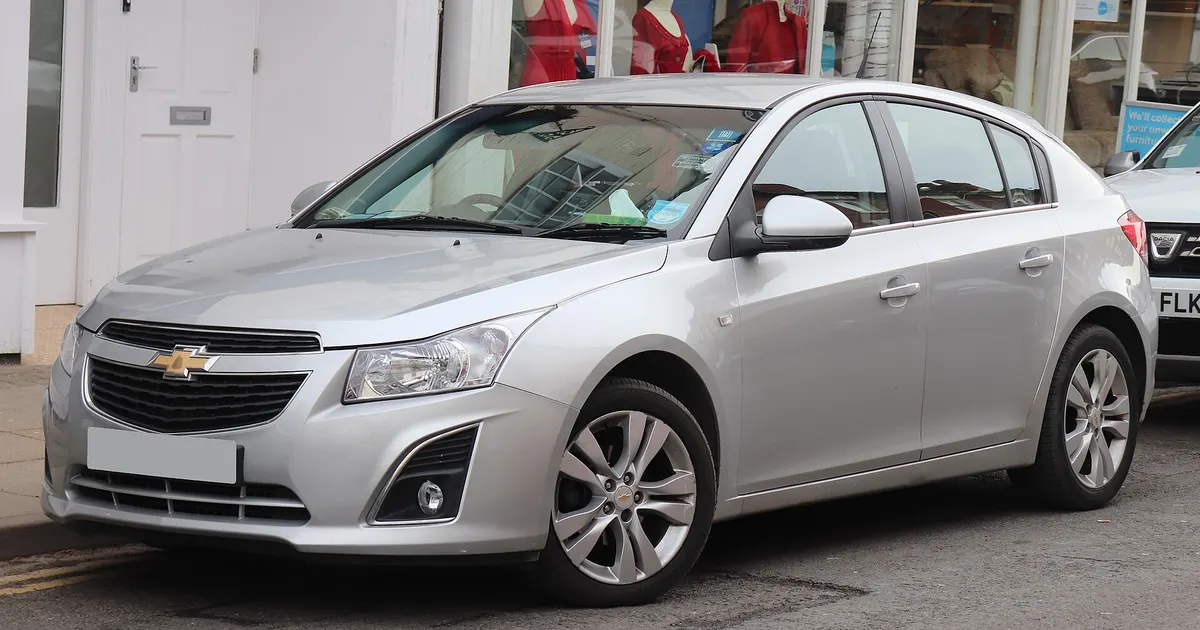
Engines
- LUJ / LUV · 1.4L gasoline, 138 hp
- LUW / LWE · 1.8L gasoline, 138 hp
- LUZ · 2.0L diesel, 151 hp
Transmissions
- 6T40 · automatic, 6-speed
- manual , 6-speed
Drivetrain
FWD
Body
sedan
Trims
LS, LT, LTZ, Eco, Diesel
Chevrolet Cruze part-number cross-reference
Start from the OEM number, then pick the brand you trust. Verified equivalents for the Chevrolet Cruze (2011–2015).
Part links go to Amazon, and to eBay where Amazon does not stock the part. Affiliate links, so we may earn a commission if you buy. Your price is unchanged, and a commission never changes a verdict.
Oil filter
ACDelco
GM 93185674 in the 2011-2013 books, GM 55594651 in the 2014 book. PF2257GF is the same filter in Fresh-pack
Find ACDelco oil filter on AmazonWix
cartridge; fits 1.4L and 1.8L. NOT Wix 57064, which is a Toyota/Lexus/Scion cartridge that aggregators mis-cross to this GM number
Look up Wix oil filterFram
Extra Guard; TG10246 = Tough Guard, XG10246 = Ultra Synthetic (same body)
Check Fram oil filterVerified via: Amazon: ACDelco PF2257G (GM 55594651), cap marked HENGST, Walmart: Fram CH10246 fits 2011-2015 Chevrolet Cruze (1.4L & 1.8L), Walmart: Wix 57674 for 2011-2015 Chevrolet Cruze, GM 2011 Cruze owner's manual, maintenance replacement parts, 93185674 / PF2257G (PDF p346), GM 2014 Cruze owner's manual, maintenance replacement parts, 55594651 / PF2257G (PDF p374)
Oil filter
ACDelco
GM's 2014 book pairs GM 19301505 with ACDelco PF103G. DIFFERENT filter from the gasoline PF2257G
Compare ACDelco oil filter on AmazonACDelco
Sold by retailers for GM 19301505. Not in GM's 2014 book, unverified
Find ACDelco oil filterVerified via: GM 2014 Cruze owner's manual, maintenance replacement parts, 2.0L diesel 19301505 / PF103G (PDF p374), Amazon: ACDelco PF2260G (GM 19301505) engine oil filter and cap seal, 1A Auto: ACDelco PF2260G fits 2014-15 Cruze 2.0L turbo diesel, IDParts (diesel specialist): OEM Cruze 19301505 = PF2260G
Engine air filter
ACDelco
shared by the 1.4T and the 2.0 diesel; NOT the 1.8L filter (that is GM 13272720 / A3145C, an adjacent SKU)
Look up ACDelco engine air filter on AmazonVerified via: IDParts: ACDelco A3144C = GM 13272719 (Cruze Gen1), Amazon: A3144C replaces 13272719 / Fram CA10989, Cruze 1.4L 2011-2015 + diesel, Walmart: Fram CA10989 fits 2011-2015 Chevrolet Cruze
Engine air filter
ACDelco
1.8L-only; do not substitute the 1.4T/diesel A3144C / 13272719
Compare ACDelco engine air filter on AmazonECOGARD
explicitly lists A3145C / CA10990 / GM 13272720 / Wix 49730 as crosses
Check ECOGARD engine air filterVerified via: Amazon: ECOGARD XA6163 fits Cruze 1.8L 2011-2015; replaces A3145C, CA10990, GM 13272720, Wix 49730, PartsGeek: Wix 49730 for Chevrolet Cruze 1.8L, eBay: Fram CA10990 air filter for 2013-2016 Cruze 1.8L
Cabin air filter
ACDelco
GM lists 13271191 / CF176 in its 2011, 2012, 2013 and 2014 books. Parts catalogs also show GM 13271190 and 13503675
See ACDelco cabin air filter on AmazonVerified via: GMPartsGiant: OEM Cruze cabin filter GM 13271190 / 13271191 / 13503675 (2011-2016, all engines), AirFilter cross-reference: GM 13271190 crosses Fram CF10775 / Wix WP24590 / Mann CUK2442, eBay: Genuine GM cabin air filter 13271190, GM 2014 Cruze owner's manual, maintenance replacement parts, 13271191 / CF176 (PDF p374)
Spark plugs
Verified via: GM 2011 Cruze owner's manual, maintenance replacement parts, both engines 55576026 / 41-117 (PDF p346), GM 2012 Cruze owner's manual, maintenance replacement parts (PDF p363) and gap 0.028 in (PDF p371), GM 2013 Cruze owner's manual, maintenance replacement parts (PDF p349)
Spark plugs
Verified via: GM 2012 Cruze owner's manual, maintenance replacement parts, 1.8L 55580961 / 41-120 (PDF p363), GM 2013 Cruze owner's manual, maintenance replacement parts, 1.8L (PDF p350)
Spark plugs
ACDelco
GM says the gap is for replacement plugs, so check it before install
Compare ACDelco spark plugs on AmazonVerified via: GM 2014 Cruze owner's manual, maintenance replacement parts (PDF p374) and engine specifications gap (PDF p381)
Front brake pads
GM
2011-2016, LS/LT/LTZ, all engines; later OE alternate 39126138 for 2014-2015 LT/LTZ
Find GM front brake pads on AmazonVerified via: GMPartsGiant: OEM front pad set 42570931 (2011-2016 Cruze, all engines), Amazon: Bosch BC1522 QuietCast front pads, Cruze / Cruze Limited / Sonic, FinditParts: Akebono ACT1522 front pad set (2011-2015 Cruze)
Wiper blades
OE sizes
GM's books print 60.0 cm (23.6 in) driver and 45.0 cm (17.7 in) passenger. 24 in and 18 in are the nearest US sizes. No rear wiper on the sedan
Compare OE sizes wiper blades on AmazonFitment note
hook-arm fitment; Trico, Bosch, Michelin, Rain-X beam blades in these sizes fit. The 28/24 sizes seen online are the 2016+ 2nd-gen Cruze. Do not use them
Find Fitment note wiper bladesVerified via: AutoPadre: Chevrolet Cruze wiper sizes (24 in driver / 18 in passenger, 2011-2015), WindshieldWipers.com: 2013 Chevrolet Cruze 24 in / 18 in set, Amazon: AUTOLMX front blades for 2011-2015 Chevy Cruze 24 in & 18 in, GM 2014 Cruze owner's manual, wiper blade sizes (PDF p374)
Serpentine belt
Gates
GM part 55567574 on 2011 cars superseded to 55578811 for 2012+; the Gates K060555 aftermarket belt covers the whole 2011-2015 range. Verify by year/VIN
Look up Gates serpentine belt on AmazonVerified via: Walmart: Gates K060555 fits 2011 Chevrolet Cruze 1.4L (and Sprinter), Titan Motorsports: Gates 12-16 Chevrolet Cruze 1.4L serpentine belt kit (K060555), PartCatalog: Gates K060555 for Chevrolet Cruze / Sonic (6-rib, 1409 mm)
Serpentine belt
Gates
GM 55578115 (2012+) / 55579905 (2011). The 1.8L also runs a SEPARATE alternator/generator belt (GM 55565302), so check both when servicing
Check Gates serpentine belt on AmazonVerified via: Amazon: Gates K060569 Micro-V for Chevrolet Cruze 1.8L 2012-2016, NewParts: Gates K060569 accessory-drive belt (6-rib, 1448 mm), GMPartsGiant: OEM 1.8L drive belts (main 55578115; generator 55565302)
Serpentine belt
Verified via: eBay: Gates K060726A serpentine belt for 14-15 Chevrolet Cruze diesel, IDParts: Cruze Gen1 diesel serpentine belt kit (belt 55578485 + tensioner 55562864), GM Parts Warehouse: OEM V-ribbed belt 55578485, 2014-2015 Cruze
Battery
BCI group size
typical ~600-650 CCA flooded; e.g. Interstate MT-47/H5 ~650 CCA
Compare BCI group size battery on AmazonVerified via: AutoPadre: Chevrolet Cruze battery group 47 (H5) for gasoline 2011-2015, Interstate Batteries: Chevy Cruze MT-47/H5 (650 CCA)
Battery
BCI group size
~850 CCA; fills the full tray. Also a common CCA upgrade for the gasoline Cruze
Find BCI group size battery on AmazonVerified via: AutoPadre: Cruze diesel battery group 94R (H7), Interstate Batteries: Chevy Cruze MTX-94R/H7 AGM (850 CCA)
Should I buy a 2011–2015 Chevrolet Cruze?
Buy with caution and a cooling-system budget. A clean first-gen Cruze rides and drives nicely for the money, but the 1.4L turbo's appetite for coolant (water pump, thermostat housing, turbo coolant lines) and the PCV/valve-cover failure baked into its design mean repair bills come early and often. The smart buy is a later (2013–2015) 1.4L or the 1.8L base car (budget its timing belt, $1,184-$1,694 per YourMechanic, unless there is a receipt: GM calls for it at 97,500 miles or 10 years in the 2012-2014 books), with paperwork showing the water pump was replaced under GM's special coverage and the PCV/valve cover already addressed. Avoid the 2011 unless it's cheap and you accept it as a project; that year carries the most complaints, the harsh-shifting early 6T40, and the bulk of the cooling headaches.
Best years
2014, 2015, Cruze Diesel (if you want the powertrain and can service it: GM's 2014 book replaces its timing belt, tensioner, idler and water pump at 97,500 miles or 10 years)
Years to avoid
2011 (most complaints, harsh-shift early 6T40, cooling issues), 2012 (still high complaint volume; verify cooling + PCV fixes)
Pre-Purchase Checklist for Chevrolet Cruze
- ☐On any 1.4L turbo: check the coolant level cold and look for crusty residue or drips at the water pump (front of engine), thermostat housing, and turbo coolant lines. Disappearing coolant with no big puddle is the classic Cruze tell.
- ☐Ask whether the water pump was replaced. GM special coverage ran 10 years / 150,000 miles. A documented replacement is a plus, not a red flag.
- ☐Run the heat and A/C and sniff for a sweet antifreeze or hot-coolant smell in the cabin; it points to coolant venting or heater-core area issues this car is known for.
- ☐Check for the PCV/valve-cover symptom: rough or surging idle, a whistle on acceleration, or visible oil residue around the valve cover and intake.
- ☐On 2011 automatics, test-drive at part throttle and feel the 3–4 upshift; a hard, loud bang is the known early-6T40 behavior.
- ☐Confirm the negative battery cable special coverage / recall work was done. Bad crimps cause flickering displays, stalling, and lost power steering.
- ☐Pull the dipstick and check oil level and condition; the failing PCV system causes excess oil consumption, so a low or sludgy reading matters.
- ☐On a 1.8L or a diesel, ask for the timing belt receipt. GM calls for the belt at 97,500 miles or 10 years in the 2012-2014 books (100,000 miles in the 2011 book), and the diesel job includes the water pump. With no receipt, price the belt into the offer.
Common Chevrolet Cruze problems & repair costs
1.4L turbo coolant leaks (water pump / thermostat housing / turbo lines)
$300–$900Symptoms: Coolant level that keeps dropping with no large puddle, sweet coolant smell, crusty residue at the water pump weep hole or thermostat housing, and in later stages an 'Engine Hot, A/C Off' message or overheating.
Fix: Replace the leaking component: most often the water pump, the plastic thermostat housing/water outlet, or a turbo coolant line. GM issued special coverage on the water pump for 10 years / 150,000 miles, so many were done free. Out of coverage, expect a few hundred dollars per item; multiple leaks at once push the bill higher.
Sources: GM Service Bulletin 14371: coolant leak from water pump (2011–2014 Cruze), RepairPal: Chevrolet Cruze coolant leak, CarComplaints: Chevrolet Cruze
PCV system failure (valve cover / intake manifold)
$80–$500Symptoms: Rough or surging idle and stalling at stops, a whistling noise under acceleration with loss of boost, excess oil consumption, and oil weeping from gaskets and seals from raised crankcase pressure.
Fix: The PCV diaphragm is integrated into the valve cover (and a check valve in the intake manifold). The factory fix is to replace the valve cover, and the intake manifold if its check valve failed. Many owners use a cheaper aftermarket PCV fix kit. Doing the valve cover yourself is a common, affordable job; a full intake manifold replacement at a shop costs more.
Sources: CruzeTalk: 1.4 PCV valve cover / intake manifold issues, CarComplaints: 2012 Cruze intake manifold / PCV valve failure
Antifreeze / coolant smell in the cabin
$150–$1,300Symptoms: A sweet antifreeze or hot-coolant smell inside the car, sometimes with a faint burning-plastic note, often worse with the heat on. Usually no warning light by itself.
Fix: Often tied to the same coolant venting/leak problem: coolant vapor reaching the cabin or hot coolant near plastic HVAC components. Fixing the underlying leak (degas bottle, hoses, water pump) clears most cases; persistent cabin leaks can require heater-core or HVAC case work at the high end.
Sources: CruzeTalk: antifreeze smell in cabin, CarComplaints: Chevrolet Cruze
Harsh-shifting first-gen 6T40 automatic
$150–$3,300Symptoms: Hard, loud upshifts (notably the 3–4 shift at part throttle), hesitation into 3rd, and abrupt downshifts. In worse cases, internal failure of the early transaxle.
Fix: Many 2011 cars improve with a GM TCM re-flash (a few hundred dollars or less, sometimes covered by TSB). GM revised the 6T40 for 2012+ with a different TCM, solenoids, bearings, and firmware. A failed transaxle that needs rebuild or replacement is the expensive end.
Sources: RepairPal: automatic transmission shifts too hard (Cruze), CarComplaints: Chevrolet Cruze 2011 transmission
Negative battery cable bad crimp
$0–$250Symptoms: Flickering interior/exterior lights, radio/HVAC display cutting in and out, false ABS/StabiliTrak/'Service Steering' and 'Battery Saver Active' messages, loss of power steering assist, and in some cases the car stalling while driving.
Fix: An insufficient crimp at the negative terminal raises resistance and starves the electrical system. GM addressed it under special coverage (10 years / 120,000 miles), so many were fixed free; otherwise it's a relatively inexpensive cable/terminal repair.
Sources: NHTSA Service Bulletin: negative battery cable (Special Coverage 14311), CarProblemZoo: Chevrolet Cruze battery cable problems
Cooling fan, sensors, and small turbo-system electronics
$100–$500Symptoms: Check-engine lights for boost/charge-air or coolant temperature sensors, a cooling fan that fails or runs constantly, and assorted turbo-plumbing leaks that trip codes.
Fix: Mostly individual sensor or fan replacements and re-clamping/replacing turbo plumbing. Individually cheap, but they add up over the life of the car and are part of why the 1.4L feels needy.
Sources: 1A Auto: most common Chevy Cruze problems (1st gen), CruzeTalk: GM 1.4T coolant / cooling discussions
The first-gen Cruze is cheap to buy and parts are widely available, but the 1.4L turbo makes it more expensive to keep than a typical compact. Plan on cooling-system spending as routine, not exceptional: water pump, thermostat housing, hoses, and turbo lines can all need attention before 100k miles. Budget for the PCV/valve-cover fix and the occasional sensor or cooling-fan replacement on top of normal wear (brakes, tires, battery). The 1.8L base car and the manual transmission lower the risk, but the 1.8L carries a timing belt GM wants at 97,500 miles or 10 years (100,000 miles in the 2011 book), about $1,184-$1,694 per YourMechanic; the diesel is durable but its emissions parts are costly out of warranty.
Cost calculator
What will this Chevrolet Cruze cost you by a given mileage?
Drag to a mileage. We total the documented problems whose typical onset falls at or before it. The same cost ranges listed above, nothing new invented.
$0 estimated repair range
5-Year Maintenance Schedule & Cost to Own
Every scheduled service by mileage, fluid capacities, independent shop ranges, and parts cross-references.
Have a repair quote for this Chevrolet Cruze?
Audit against OEM book times, uncover duplicate pad and rotor labor, and verify parts markups.
How to fix common Chevrolet Cruze problems (DIY)
Replace the valve cover (PCV fix) on the 1.4L turbo
Tools: Metric socket and Torx/E-Torx set, Torque wrench, Pliers for hose clamps, Shop towels
- Disconnect the battery and remove the engine cover and intake/turbo inlet tubing for access.
- Unplug the ignition coil/connectors and any sensors or PCV hoses attached to the valve cover.
- Remove the valve cover bolts in a crisscross pattern and lift the cover off the head.
- Clean the sealing surface, set the new valve cover (with its integrated PCV diaphragm) in place, and start all bolts by hand.
- Torque the bolts to spec in sequence, reconnect coils, sensors, and hoses, and reinstall the intake tubing.
- Reconnect the battery, start the engine, and confirm a smooth idle with no whistle or vacuum leak.
Parts
- Valve cover with integrated PCV (1.4L turbo Cruze) · Amazon $40–$90
- Aftermarket PCV fix kit (alternative) · Amazon $15–$40
Replace the thermostat housing / water outlet
Tools: Socket set, Drain pan, Hose-clamp pliers, Funnel for coolant fill
- With the engine cold, drain the coolant into a clean pan.
- Remove the hoses and electrical connector from the plastic thermostat housing/water outlet.
- Unbolt the housing, remove it, and clean the mating surface on the engine.
- Install the new housing with a fresh gasket/O-ring and torque the bolts evenly.
- Reconnect the hoses and connector, refill with the correct Dex-Cool, and bleed the cooling system.
- Run the engine to temperature and check for leaks and a stable temperature gauge.
Parts
- Thermostat housing / water outlet (1.4L Cruze) · Amazon $30–$70
- Dex-Cool coolant (1 gal) · Amazon $15–$25
Some parts links are affiliate links. We may earn a commission at no cost to you. We only list parts that fit this generation.
The short version
The 2011–2015 Chevrolet Cruze is a likeable, well-priced compact let down by a needy engine. The 1.4-liter turbo, the one most Cruzes have, leaks coolant from several places (water pump, plastic thermostat housing, turbo lines) often enough that owners describe constant coolant loss as normal. On top of that, the PCV crankcase-ventilation system is built right into the valve cover, and when its diaphragm fails you get rough idle, a whistle under acceleration, and oil burning.
None of that makes the Cruze a death trap. It makes it a car you buy knowing the maintenance pattern, with money set aside for cooling work.
What that means when you’re shopping
A 2014–2015 1.4L is the better used bet, especially with paperwork showing the water pump was replaced under GM’s 10-year / 150,000-mile special coverage and the PCV/valve cover already handled. The 1.8L base car skips the turbo’s worst cooling drama at the cost of being slow, and it runs a timing belt: GM wants it replaced at 97,500 miles or 10 years (100,000 miles in the 2011 book). Ask for the receipt or budget $1,184-$1,694 (YourMechanic’s estimates).
Treat coolant as the first thing to clear. Check the level cold, look for crusty residue at the water pump and thermostat housing, and sniff the cabin with the heat on. A sweet antifreeze smell inside is a known Cruze symptom. On a 2011 automatic, feel the 3–4 upshift on a test drive; a hard, loud bang is the early 6T40 behavior that GM later re-flashed and redesigned.
Two freebies worth confirming: the water pump special coverage and the negative battery cable special coverage. The bad battery-cable crimp causes flickering displays, false warning messages, lost power steering, and even stalling, and many cars were fixed at no charge. A car with both already done is worth more to you.
Everything else is ordinary used-compact stuff: brakes, tires, a battery, the occasional sensor or cooling fan. Just go in expecting the Cruze to ask for cooling-system attention sooner than a Civic or Corolla would.
How this file is built: failure modes and cost ranges are compiled from NHTSA service bulletins and GM special-coverage actions, CarComplaints data, RepairPal, and owner reporting on CruzeTalk, then sanity-checked against shop-floor experience. Cost figures are independent-shop estimates and vary by region. Spot something off? Tell us.
Viral car myths, checked against this car
- Misleading
Is the "$2 liquid that stops any leak" really banned in 11 states?
Automotive stop-leak products are not banned in any US state. The products are real (Bar's Leaks, BlueDevil), they work in specific narrow situations, and they can permanently damage your cooling or oiling system if applied to the wrong leak.
- Dangerous
Is the "$2 liquid that destroys engine sludge forever" real? Our shop-floor verdict.
An aggressive solvent flush on a high-mileage engine is a textbook way to spin a bearing. The viral 'kitchen-cabinet flush' is folklore that real shops spend money cleaning up after.
Frequently asked questions
Which Chevy Cruze years should I avoid?
The 2011 is the one to be most careful with. It has the highest complaint volume, the harsh-shifting first-gen 6T40 automatic, and the bulk of the early cooling problems. The 2012 is better but still warrants checking that the water pump and PCV issues were addressed. The 2014–2015 cars are the safer used buy.
Why does my Chevy Cruze keep losing coolant?
The 1.4L turbo is known for it. The usual culprits are the water pump, the plastic thermostat housing/water outlet, the degas (overflow) bottle and its hoses, and the turbo coolant lines. GM ran special coverage on the water pump for 10 years / 150,000 miles, so check whether yours was already replaced. A documented fix is a good sign.
What is the Cruze PCV / valve cover problem?
The PCV (crankcase ventilation) system is built into the valve cover, with a related check valve in the intake manifold. When the diaphragm ruptures it causes rough idle, stalling, a whistle under acceleration, and oil consumption. The fix is replacing the valve cover (and intake manifold if its check valve failed), or fitting an aftermarket PCV kit.
Why does my Cruze smell like antifreeze inside?
It's a common first-gen complaint, usually tied to the same coolant venting/leak issue: coolant vapor reaching the cabin or hot coolant running near plastic HVAC parts. Fixing the underlying leak (degas bottle, hoses, water pump) clears most cases; a persistent cabin leak can mean heater-core or HVAC case work.
Is the Chevy Cruze 1.4 turbo reliable?
It's reliable on comfort and economy but needy on the cooling and crankcase-ventilation systems. Expect cooling repairs and a PCV/valve-cover fix during ownership. If you buy one with that work documented and keep up with coolant maintenance, it can serve well; if you want minimal fuss, the 1.8L base car or a different compact is the safer pick. The 1.8L has a timing belt GM wants replaced at 97,500 miles or 10 years (100,000 miles in the 2011 book), so check for a receipt.
Cross-shopped rivals
Files on what buyers weigh against the Chevrolet Cruze of this era.