Case file · CHEVROLET-IMPALA-2014-2020 · 10th gen (Epsilon II (long))
Chevrolet Impala 2014–2020Common problems, reliability & repair costs
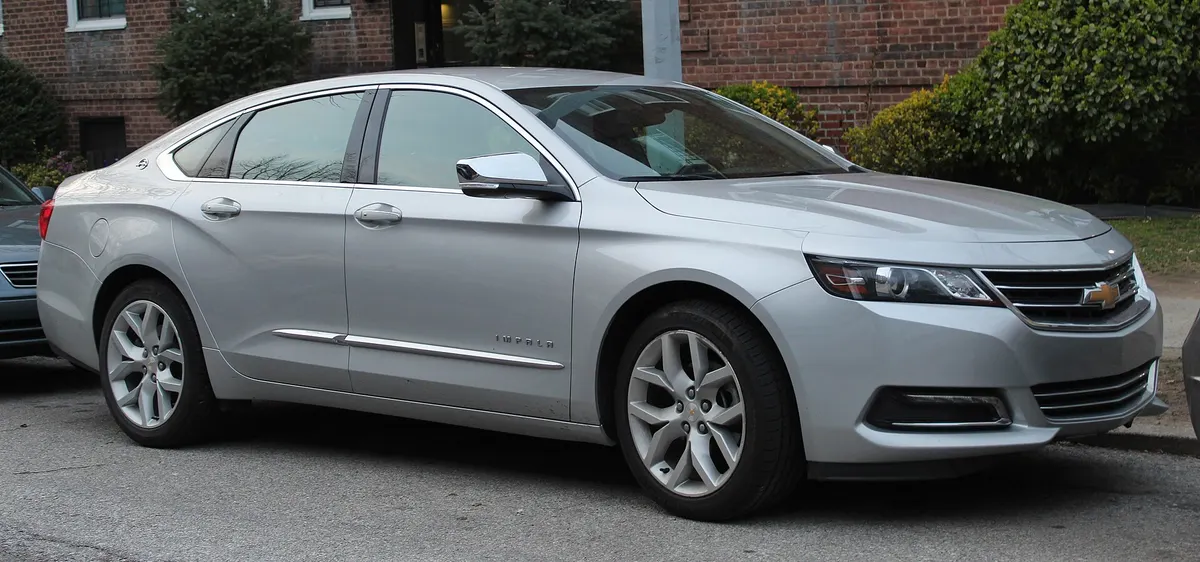
The last real Impala is a genuinely good large sedan: quiet, roomy, and comfortable. It's also the smartest used buy in its class if you pick the right engine. The 3.6L V6 (LFX) is the one to get and is largely trouble-free. The base 2.5L four-cylinder is the weak link, prone to creeping oil consumption. Early 2014–2015 cars also carried a string of recalls (parking brake, power steering) you'll want to confirm were closed out.
2017, 2018, 2019
2014 (most recalls and early-build complaints) +1 more
Engines
- LCV · 2.5L gasoline, 196 hp
- LFX · 3.6L gasoline, 305 hp
- LUK (eAssist) · 2.4L hybrid, 182 hp
Transmissions
- 6T70/6T75 · automatic, 6-speed
Drivetrain
FWD
Body
sedan
Trims
LS, LT, LTZ, Premier
Chevrolet Impala part-number cross-reference
Start from the OEM number, then pick the brand you trust. Verified equivalents for the Chevrolet Impala (2014–2020).
Part links go to Amazon, and to eBay where Amazon does not stock the part. Affiliate links, so we may earn a commission if you buy. Your price is unchanged, and a commission never changes a verdict.
Oil filter
Verified via: WIX WL10290 = GM 12640445, spin-on, fits 2014-19 Impala 2.5L (NewParts), ACDelco PF64 = GM 12640445 (Gwatney Performance), Chevrolet (2014 manual, parts table PDF p373), Chevrolet (2019 manual, parts table PDF p310)
Oil filter
ACDelco
GM's books: GM 89017525 PF63 in 2014-2015, GM 19330000 PF63E in 2016-2019, GM 12690385 PF63E in 2020
Compare ACDelco oil filter on AmazonWIX
WIX-cataloged cross (also WL10255); enthusiasts prefer WIX 57502 to match GM's 22-psi PF63E bypass
Find WIX oil filterVerified via: ACDelco PF63 cross-ref (FindItParts), AC-Delco PF63 alternatives (oilfilter-crossreference), Chevrolet (2015 manual, parts table PDF p367), Chevrolet (2016 manual, parts table PDF p336), Chevrolet (2020 manual, parts table PDF p286)
Oil filter
Verified via: ACDelco PF457G cross-ref + 2.4L Ecotec/2014 Impala fitment (FindItParts), AC-Delco PF457G alternatives (oilfilter-crossreference)
Engine air filter
Verified via: FRAM CA11251 cross-ref: ACDelco A3174C, GM 20972654 (airfilter-crossreference), Chevrolet (2019 manual, parts table PDF p310), Impala 2.5L engine air filter guide: GM 20972654 / WIX WA10254 / FRAM CA11251 (HowTune)
Engine air filter
Verified via: FRAM CA11253 cross-ref: ACDelco A3176C, WIX WA10039 (airfilter-crossreference), Chevrolet (2014 manual, parts table PDF p373), Chevrolet (2020 manual, parts table PDF p286), ECOGARD XA10016 fits Impala 3.6L 2014-2020 + XTS, replaces WIX WA10039 (PartLimit)
Cabin air filter
ACDelco (GM)
GM's books: 2014-2017 CJ2 13356914 CF184, C67 13356916 CF185. 2018-2019 Base 13356914 CF184, Uplevel 13508023 CF185. 2020 Base 23393247 CF201, Uplevel 13508023 CF185
See ACDelco cabin air filter on AmazonVerified via: FRAM CF11966 cross-ref: WIX 24211, Mann CU24003 (FindItParts), Chevrolet (2014 manual, parts table PDF p373), Chevrolet (2019 manual, parts table PDF p310), Chevrolet (2020 manual, parts table PDF p286), CF11966 = Impala cabin filter (CF188 is the truck/SUV filter) (Amazon)
Spark plugs
Verified via: Chevrolet (2016 manual, gap PDF p340), ACDelco 41-109 iridium spark plug (AutoZone), 2012-2020 Impala 3.6L spark plug = ACDelco 41-109 (PartsGeek)
Spark plugs
Verified via: Chevrolet (2016 manual, gap PDF p340), 2014-2019 Impala 2.5L spark plug = ACDelco 41-115 (PartsGeek), ACDelco 41-115 iridium, pre-gapped 0.043 in (AutoZone)
Front brake pads
ACDelco (GM)
Find ACDelco front brake pads on AmazonVerified via: GM 84233325 front disc brake pad set, fits Impala (GM Parts Warehouse), ACDelco 84233325 front disc brake pads (Summit Racing)
Wiper blades
Verified via: 2016/2017 Impala wiper set 24" driver + 19" passenger (Otto), 2016 Impala windshield wipers 24"/19" (WindshieldWipers.com)
Serpentine belt
ACDelco (GM)
Check ACDelco serpentine belt on AmazonVerified via: GM 12627134 serpentine belt, Impala 2.5L 2014-2018 (eBay OEM listing), Gates K050694 / PC-1081363 belt, Impala 2.5L 2014-2019 (Amazon)
Serpentine belt
ACDelco (GM)
Find ACDelco serpentine belt on AmazonVerified via: ACDelco 12639018 serpentine belt fits 2014-2020 Impala (Walmart), Dayco 5060955 cross-ref (Gates K060955) (FindItParts)
Battery
BCI group
GM's 2015-2019 books: cars with Stop/Start have an AGM battery under the hood plus an auxiliary AGM battery behind the left rear trunk panel, and a standard battery shortens life. Otherwise the car has a standard battery (2020 book). GM says to use the replacement number on the original battery's label
See BCI group battery on AmazonVerified via: Chevrolet (2019 manual, battery PDF p241), Chevrolet (2020 manual, battery PDF p217), Interstate MT-48/H6 for 2018 Impala V6, 2019 Impala Group 48 battery (AutoZone)
Should I buy a 2014–2020 Chevrolet Impala?
Buy the V6. A 3.6L (LFX) Impala is one of the best big-sedan values on the used market: comfortable, well-equipped, and dependable into the 150k–200k range with normal maintenance. The 2.5L four-cylinder is the version to be careful with: it's underpowered for the car and is the engine associated with creeping oil consumption, so check the oil level and history closely on any four-cylinder car. On 2014–2015 cars, confirm the parking-brake and power-steering recalls were performed (a dealer can verify by VIN). 2016–2020 cars are the cleaner pick overall.
Best years
2017, 2018, 2019, 2020
Years to avoid
2014 (most recalls and early-build complaints), 2.5L four-cylinder cars (any year) unless oil use is verified low
Pre-Purchase Checklist for Chevrolet Impala
- ☐Strongly prefer the 3.6L V6 over the 2.5L four-cylinder. Confirm which engine is in the car (V6 has noticeably more power and a cleaner reliability record).
- ☐On any 2.5L car, pull the dipstick warm and ask the seller how often they add oil; creeping consumption with no leak and no smoke is the tell.
- ☐On 2014–2015 cars, have a Chevy dealer check the VIN for the parking-brake (14471) and power-steering (14V450/recall 14330) recalls. Confirm both were completed.
- ☐Test the electronic parking brake: it should set and fully release without a warning light or drag.
- ☐Drive through 2nd-to-3rd shifts repeatedly; a hard or surging shift points to transmission solenoid wear.
- ☐Cycle the climate control through hot and cold and across vents. Clicking or stuck temperature actuators are a known annoyance.
- ☐Try removing the key (on keyed cars). A key that sticks in the ignition is a commonly reported nuisance.
- ☐On higher-mileage V6 cars, check for coolant weeping at the water pump and any cold-start timing-chain rattle.
Common Chevrolet Impala problems & repair costs
Excessive oil consumption (2.5L four-cylinder)
$200–$3,500Symptoms: Oil level dropping a quart or more between changes with no visible leak and little or no smoke. Owners report needing to top up regularly; if missed, low oil can lead to bigger engine damage. The four-cylinder shares GM's low-tension-ring Ecotec design family that drew oil-consumption class actions on related engines.
Fix: Mild cases are managed by checking and topping up oil between changes plus a PCV inspection (cheap). Severe cases need a piston-ring or partial engine job, which is why a four-cylinder car with documented low oil use is worth far more than one of unknown history.
Sources: Cherish Your Car: GM 2.5L engine problems (oil loss), Impala Forums: oil consumption problems, GM Authority: Ecotec oil-consumption class action
Electronic parking brake recall (2014–2015)
$0–$0Symptoms: The electronic parking brake actuator may not fully retract, leaving the pads partially engaged. That drags the brakes, builds excessive heat, and in the worst case created a fire risk. Some cars were re-remedied after the first fix was done incorrectly.
Fix: Covered by recall. Dealers reflashed the electronic parking-brake software free of charge (GM recall 14471, began Oct 2014). Confirm by VIN that the remedy (and any follow-up) was completed; the fix costs you nothing but an unrepaired car is a safety issue.
Sources: CarComplaints: Chevy Impala parking-brake recall, NHTSA recall 15V085000 (2014 Impala parking brake)
Loss of electric power steering assist (2014 recall)
$0–$0Symptoms: A poor electrical ground at the power-steering control module can cause a sudden loss of power-steering assist at startup or while driving, making the car much harder to steer at low speed.
Fix: Covered by recall. Dealers cleaned paint from behind the ground stud and updated the module software free of charge (NHTSA 14V450 / GM 14330, began Aug 2014). Verify it was performed; out of recall, an actual EPS module failure can run into four figures.
Sources: NHTSA recall 14V450000 (2014 Impala EPS), RepairPal: recall 14V450000
Rough / hard shifting from transmission solenoids
$400–$1,500Symptoms: Hard or jerky 2-to-3 upshift, occasional surge, or harsh engagement. Traced to pressure-control / shift solenoids inside the 6-speed automatic. GM's TSB 10023432 addresses a transmission surge condition.
Fix: Often a fluid service plus solenoid replacement; severe internal cases require partial transmission teardown. Keeping the fluid serviced is the best prevention.
Sources: My Auto Store: why 9th-gen Impala transmissions fail, CarProblemZoo: Impala transmission solenoid problems
Electrical gremlins (HVAC actuators, key stuck, modules)
$150–$1,200Symptoms: Clicking or stuck HVAC temperature-blend actuators (uneven or wrong-temperature air), the ignition key sticking and refusing to come out on keyed cars, and intermittent rear side-detection (blind-spot) warnings. Individually small, but several owners report electrical items as their main spend.
Fix: HVAC actuator replacement is the most common (moderate cost behind the dash). Key-stuck issues are often a shift-interlock or lock-cylinder fix; side-detection faults usually trace to a module or harness connection.
Sources: CarComplaints: 2014 Impala top problems (electrical / side detection), Endurance: common Chevy Impala problems
Water pump / cooling leaks (3.6L V6, higher mileage)
$500–$1,000Symptoms: Coolant weeping or low coolant on higher-mileage V6 cars, sometimes a sweet smell or residue near the front of the engine. The water pump is buried, so labor is the bulk of the cost.
Fix: Water-pump replacement. Because access is labor-intensive, many shops suggest doing it alongside any other front-of-engine work. Not a defect so much as a known wear item on this V6.
Sources: Powertrain Company: GM 3.6L V6 overview, GoTech: GM 3.6L timing chain / cooling
Pick the V6 and this is a cheap, comfortable car to own: parts are everywhere, it shares mechanicals with millions of GM vehicles, and the LFX is durable when oil changes are kept current. Most spend goes to normal wear items like brakes, tires, a battery, and on higher-mileage V6 cars a water pump. The four-cylinder is where ownership cost gets unpredictable, because oil consumption can range from 'top it up occasionally' to a ring job. Budget the big transmission or engine numbers only for a neglected car; a maintained one is undemanding.
Cost calculator
What will this Chevrolet Impala cost you by a given mileage?
Drag to a mileage. We total the documented problems whose typical onset falls at or before it. The same cost ranges listed above, nothing new invented.
$0 estimated repair range
5-Year Maintenance Schedule & Cost to Own
Every scheduled service by mileage, fluid capacities, independent shop ranges, and parts cross-references.
Have a repair quote for this Chevrolet Impala?
Audit against OEM book times, uncover duplicate pad and rotor labor, and verify parts markups.
How to fix common Chevrolet Impala problems (DIY)
Replace HVAC cabin air filter
Tools: Screwdriver (glovebox stops)
- Open the glovebox and empty it.
- Release the glovebox stops/dampener so the box drops down fully and exposes the filter door.
- Open the filter cover and slide out the old cabin filter, noting the airflow arrow direction.
- Insert the new filter with the airflow arrow pointing the same way, close the cover, and re-seat the glovebox.
Parts
- Cabin air filter (2014–2020 Impala) · Amazon $10–$18
Replace engine air filter
Tools: Flathead screwdriver (airbox clips, if needed)
- Locate the airbox on top of the engine and release the lid clips or screws.
- Lift the airbox lid and pull the old panel filter straight out.
- Wipe out any debris in the box, drop in the new filter seated flat in its frame.
- Re-clip the lid and confirm it's sealed all the way around.
Parts
- Engine air filter (2014–2020 Impala) · Amazon $12–$22
Front brake pad replacement
Tools: Floor jack + jack stands, Lug wrench, Socket set + caliper bolt sockets, C-clamp or caliper piston tool, Torque wrench
- Loosen the lug nuts, lift the front of the car, support it on jack stands, and remove the wheels.
- Unbolt the caliper, lift it off (hang it with wire so it doesn't dangle by the hose), and remove the old pads.
- Compress the caliper piston with a C-clamp so the new, thicker pads will fit.
- Fit the new pads and any included hardware, reinstall the caliper, and torque the bolts to spec.
- Reinstall the wheels, torque the lug nuts, then pump the brake pedal until firm before driving.
Parts
- Front brake pads (2014–2020 Impala) · Amazon $30–$70
- Front brake rotors (pair, if needed) · Amazon $60–$120
Some parts links are affiliate links. We may earn a commission at no cost to you. We only list parts that fit this generation.
The short version
The 2014–2020 Impala was the last of a long line, and Chevy went out on a high note: it’s a big, quiet, comfortable sedan that’s now cheap to buy and cheap to run, if you choose the right engine. The 3.6-liter V6 (LFX) is the one to get. It’s strong, smooth, and durable, and it doesn’t suffer the oil-consumption issue that hangs over the four-cylinder.
The base 2.5-liter four-cylinder is the weak link. It’s underpowered for a car this size, and it shares GM’s low-tension-ring Ecotec design family that’s known for slowly burning oil with no leak and no smoke. That can mean anything from topping up a quart now and then to a ring job, so a four-cylinder car’s oil history matters a lot.
What to check before you buy
If you’re looking at a 2014 or 2015 car, two recalls are non-negotiable: the electronic parking brake (it could drag and overheat) and the electric power steering assist loss. Both were fixed free by Chevy dealers. Confirm by VIN that the work was done, and note that some parking-brake cars needed a second fix.
On any model year, drive it: feel for a hard 2-to-3 shift (transmission solenoids), cycle the climate control for clicking blend actuators, and on keyed cars try pulling the key out (a sticking ignition is a common gripe). On higher-mileage V6 cars, glance at the water pump area for coolant weeping. It’s a known wear item, not a defect, but the labor isn’t cheap.
The bottom line
Buy the V6, prefer 2016–2020, and treat the four-cylinder cars with extra suspicion about oil use. Do that and you’ve got one of the best comfortable-big-sedan values on the used market, a car that quietly runs to 150k–200k with normal maintenance.
How this file is built: failure modes and cost ranges are compiled from NHTSA recall data, CarComplaints owner reports, GM service bulletins, and owner-forum reporting, then sanity-checked against shop-floor experience. Cost figures are independent-shop estimates and vary by region. Spot something off? Tell us.
Viral car myths, checked against this car
- Misleading
Is the "$2 liquid that stops any leak" really banned in 11 states?
Automotive stop-leak products are not banned in any US state. The products are real (Bar's Leaks, BlueDevil), they work in specific narrow situations, and they can permanently damage your cooling or oiling system if applied to the wrong leak.
- Dangerous
Is the "$2 liquid that destroys engine sludge forever" real? Our shop-floor verdict.
An aggressive solvent flush on a high-mileage engine is a textbook way to spin a bearing. The viral 'kitchen-cabinet flush' is folklore that real shops spend money cleaning up after.
Frequently asked questions
Which Chevrolet Impala engine should I buy, the 2.5L or the 3.6L?
Get the 3.6L V6 (LFX). It has plenty of power for a car this size and a cleaner reliability record. The 2.5L four-cylinder is adequate at best and is the engine tied to creeping oil consumption, so only buy a four-cylinder if you can verify it doesn't use oil and has clean service history.
What years of the 10th-gen Impala are best to buy used?
2017–2020 cars are the cleaner pick. The 2014 model carried the most early-build complaints and the parking-brake and power-steering recalls. Those recalls were fixed free, so a 2014–2015 car with both completed (verify by VIN) can still be a fine buy.
Is the Impala's oil consumption a real problem?
On the 2.5L four-cylinder, yes. It's a known pattern where the engine slowly burns oil with no visible leak. It ranges from a minor 'top it up' nuisance to needing a ring job. Check the oil level on any four-cylinder car and ask how often the seller adds oil. The 3.6L V6 does not share this issue.
How many miles will a 2014–2020 Impala last?
A well-maintained 3.6L V6 commonly reaches 150,000–200,000 miles. The V6 and 6-speed automatic are durable when fluids are serviced; most early retirements come from neglect, a starved four-cylinder, or deferred transmission service rather than the car simply wearing out.
Are the Impala recalls expensive to fix?
The major 2014–2015 recalls, the electronic parking brake and the electric power steering, were repaired free by Chevy dealers. The cost to you is zero if they were done. The real risk is an unrepaired car, so confirm by VIN that the remedies were completed before buying.
Cross-shopped rivals
Files on what buyers weigh against the Chevrolet Impala of this era.