Case file · CHEVROLET-MALIBU-2016-2023 · 9th gen (E2XX (Epsilon II / GEP))
Chevrolet Malibu 2016–2023Common problems, reliability & repair costs
The 9th-gen Malibu is a roomy, comfortable, cheap-to-buy midsize sedan that's let down by its powertrains. The base 1.5L turbo (most of the cars on the lot) has a real record of sudden 'Engine Power Reduced' stalls, coolant-air-pocket trouble, and brake-vacuum-pump failures. Worse, the 2019+ CVT shudders and slips. The 2.0L turbo cars are the better drive but rarer. Buy on a clean powertrain history, not on the price.
2018, 2.0L Premier (any year, for the powertrain)
2016 (highest complaint volume; early 1.5L piston/coolant is +1 more
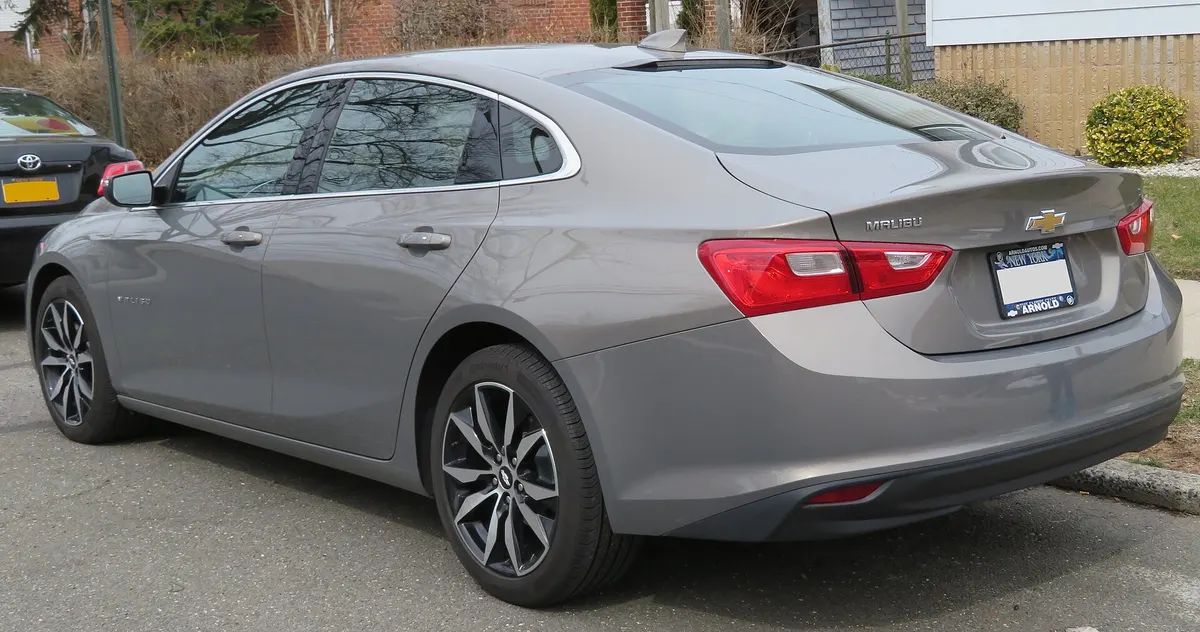
Engines
- LFV · 1.5L gasoline, 160 hp
- LTG · 2.0L gasoline, 250 hp
- LKN (hybrid) · 1.8L hybrid, 182 hp
Transmissions
- 6T40 · automatic, 6-speed
- automatic , 8-speed
- 9T50/9T65 · automatic, 9-speed
- VT40 · cvt
Drivetrain
FWD
Body
sedan
Trims
L, LS, LT, RS, Premier, Hybrid
Chevrolet Malibu part-number cross-reference
Start from the OEM number, then pick the brand you trust. Verified equivalents for the Chevrolet Malibu (2016–2023).
Part links go to Amazon, and to eBay where Amazon does not stock the part. Affiliate links, so we may earn a commission if you buy. Your price is unchanged, and a commission never changes a verdict.
Oil filter
GM (OE number)
GM casting for ACDelco PF64; also sold as 12690386 / 12696048 / 19386865 / PF64F
Look up GM oil filterVerified via: Go-Parts WIX WL10290 (2013-2022 Malibu 2.0L, replaces ACDelco PF64), PartsHawk FRAM PH12060 (spin-on; cross-refs ACDelco PF64, WIX WL10290), OverStockDirect ACDelco PF64 = GM 25206377 / 12696048 / 19386865
Oil filter
GM
GM pairs it with ACDelco PF2257G in the 2016 book and PF101G in the 2018 and 2019 books
Compare GM oil filter on AmazonVerified via: GM 2016 Malibu owner's manual, maintenance replacement parts, 1.8L 55594652 / PF2257G (printed p378), GM 2018 Malibu owner's manual, maintenance replacement parts, 1.8L 55594652 / PF101G (printed p376), PartsHawk FRAM CH10246 (cartridge), oilfilter-crossreference WIX 57674 -> FRAM CH10246 (cartridge), A-Premium oil filter for 2017 Malibu 1.8L
Engine air filter
Verified via: Go-Parts ACDelco A3208C (2016-2021 Malibu 1.5L), Amazon ACDelco A3208C (GM 23430312), maXpeedingrods CA12085 (Malibu 1.5L 2016-2022, 1.8L 2017-2019; replaces A3208C / 23430312)
Engine air filter
Verified via: PartsGeek WIX WA10419 (2016-2022 Malibu air filter), GM 2018 Malibu owner's manual, maintenance replacement parts, 2.0L 23430313 / A3210C (printed p376), FinditParts WIX WA10419 cross-reference (ACDelco A3210C)
Cabin air filter
ACDelco
GM 13356916 in the 2016 book, GM 13508023 in the 2018-2023 books
Look up ACDelco cabin air filter on AmazonVerified via: GM 2016 Malibu owner's manual, maintenance replacement parts (printed p378), GM 2022 Malibu owner's manual, maintenance replacement parts (printed p315), Amazon FRAM CF11966 (fits 2016-2022 Malibu)
Spark plugs
Verified via: GM 2016 Malibu owner's manual, replacement parts (printed p379) and engine specifications gap (printed p383)
Spark plugs
Verified via: GM 2018 Malibu owner's manual, maintenance replacement parts (printed p376)
Spark plugs
Verified via: GM 2019 Malibu owner's manual, maintenance replacement parts (printed p340)
Spark plugs
Verified via: GM 2020 Malibu owner's manual, maintenance replacement parts (printed p314), GM 2021 Malibu owner's manual, maintenance replacement parts (printed p313)
Spark plugs
Verified via: GM 2022 Malibu owner's manual, maintenance replacement parts (printed p315), GM 2023 Malibu owner's manual (chevymanuals.org copy), replacement parts (printed p295) and gap (printed p298)
Spark plugs
Verified via: PartsHawk ACDelco 41-152 (Chevrolet Malibu 1.8L 2016-2019), NewParts ACDelco 41-152 spark plug, GM 2016 Malibu owner's manual, replacement parts, 1.8L 41-152 (printed p379), GM 2018 Malibu owner's manual, replacement parts, 1.8L 41-152 (printed p376), GM 2019 Malibu owner's manual, replacement parts, 1.8L 41-152 (printed p340)
Front brake pads
Verified via: PartsGeek Raybestos MGD1913CH (2016-2019 Malibu front), PartsGeek ACDelco 17D1913CHF1 (2016-2019 Malibu front), Detroit Axle P-1913 front pads (fits LS/LT/Premier/RS/Hybrid; 1.5L/1.8L/2.0L)
Wiper blades
Size spec
GM's books print 650 mm (25.6 in) driver and 450 mm (17.7 in) passenger. 26 in and 18 in are the nearest US sizes
Compare Size spec wiper blades on AmazonVerified via: WiperBladesUSA size chart 2018 Malibu (26 in / 18 in), OttoBlades 2018 Malibu (26 in driver + 18 in passenger), GM 2016 Malibu owner's manual, wiper blade sizes (printed p379)
Serpentine belt
Verified via: CarParts ACDelco 5K685 (2018 Malibu 1.5L serpentine belt), eBay Gates K050685 (2016-2023 Malibu 1.5L L4 gas serpentine belt)
Battery (12V, BCI group)
Battery type
GM says a standard battery in its place reduces battery life. No GM book prints a BCI group, so match the size on the car's battery label
Compare Battery type battery on AmazonVerified via: GM 2016 Malibu owner's manual, battery (printed p304), GM 2023 Malibu owner's manual (chevymanuals.org copy), battery (printed p236)
Battery (12V, BCI group)
Retail listing
AutoZone and PowerTex list Group 47 for the 2018 Malibu. Verify against the battery in the car
Look up Retail listing battery on AmazonVerified via: AutoZone 2018 Malibu battery (Group 47/H5; Group 48 AGM for start-stop), PowerTex 2018 Malibu battery BCI Group 47 (H5)
Should I buy a 2016–2023 Chevrolet Malibu?
Buy with your eyes open. The 9th-gen Malibu is a lot of comfortable, well-equipped midsize car for the money, and that's exactly why so many are for sale cheap. The powertrains hurt resale. The 1.5L turbo's stalling/'Engine Power Reduced' problem is real and can be dangerous, and the 2019+ CVT has a genuine shudder-and-slip reputation. The smartest used buy is a 2016–2018 1.5L with the 6-speed automatic (not the CVT) and a clean service record, or a 2.0L Premier if you can find one. Insist on a test drive long enough to catch a cold-start CVT shudder or a power-reduction event, and confirm any open recalls and GM special-coverage work were done by VIN.
Best years
2018, 2.0L Premier (any year, for the powertrain)
Years to avoid
2016 (highest complaint volume; early 1.5L piston/coolant issues), 2019–2021 1.5L CVT cars (shudder/slip risk)
Pre-Purchase Checklist for Chevrolet Malibu
- ☐Identify the transmission before anything else: 2019+ 1.5L cars use the VT40 CVT. On the test drive, start cold and feel for shudder or hesitation pulling away from a stop.
- ☐Drive long enough to provoke a 'Engine Power Reduced' / stall event; ask the seller directly if the car has ever surged, hesitated, or dropped to limp mode.
- ☐Run the VIN at a Chevy dealer for open recalls AND special coverage, notably GM Special Coverage N182188250 (accelerator pedal position sensor circuit) and the brake-vacuum-pump items.
- ☐Watch for a 'Shift to Park' message at shutdown and a battery that drains overnight. The shifter microswitch (TSB 19-NA-206) is a common fault.
- ☐Check coolant level and condition; ask whether the 1.5L has ever overheated, run rough, or had a coolant-related repair (air-pocket / piston concern).
- ☐On the 2.0L, ask which fuel it has run on (GM recommends premium (93 octane in the 2019 book) and says regular 87 can be used, with reduced acceleration and fuel economy) and check for turbo-related oil consumption or smoke on startup.
- ☐Scan for stored codes even if no light is on. Pending accelerator-pedal, MAF, and turbo codes are common precursors.
Common Chevrolet Malibu problems & repair costs
Sudden 'Engine Power Reduced' / stalling (1.5L turbo)
$200–$900Symptoms: Without warning the dash shows 'Engine Power Reduced' and the car drops to ~20–35 mph and won't accelerate, sometimes at highway speed or in traffic. In some cases the engine stalls outright, occasionally after the auto stop/start cuts in.
Fix: Most often traced to the accelerator pedal position sensor. GM issued Special Coverage N182188250 for a loss of continuity in that circuit. Other cars trace to throttle body, MAF, or turbo components. Diagnosis is the hard part; the pedal sensor itself is a relatively cheap fix once identified. Check coverage by VIN before paying out of pocket.
Sources: CarComplaints: 2016 Malibu vehicle speed control, NHTSA complaints: 2016 Malibu
Coolant air pockets / piston damage (1.5L turbo)
$500–$6,000Symptoms: Rough idle, shaking, and stalling tied to air pockets in the cooling system; in worse cases, internal piston damage. Coolant type and fill level appear to influence whether the problem develops.
Fix: Mild cases are a proper cooling-system bleed/refill. Severe cases mean teardown and pistons or a long block. GM has covered some piston repairs case-by-case depending on age and mileage, but there is no blanket warranty extension. Many out-of-warranty owners pay full price.
Sources: CarComplaints: 2016 Malibu engine, VehicleHistory: 2016 Malibu 1.5T problems
Brake vacuum pump failure (1.5L turbo)
$400–$900Symptoms: Hard brake pedal / reduced power-brake assist, sometimes a service-brake warning. The mechanical vacuum pump can wear and, in the worst cases, come apart internally and send debris into the engine.
Fix: Replace the vacuum pump as a unit. That's the only known fix. Catch it early: a pump that fails internally can turn a brake-assist repair into an engine repair.
Sources: CarComplaints: 2016 Malibu engine (vacuum pump), NHTSA complaints: 2017 Malibu
VT40 CVT shudder, slip & lost forward gear
$300–$5,000Symptoms: Shudder and delayed engagement when shifting into Drive after startup, jerky/sluggish takeoff (won't move much until revs climb), rubber-banding, and in some cases a complete loss of forward drive.
Fix: Start with fluid level/condition and a TCM software update; many shudders trace to fluid or a sticking clutch regulator valve in the valve body. Worn forward-clutch piston or pulley-bearing wear means a valve-body or full transmission replacement. Service the fluid on a strict interval to slow clutch wear.
Sources: GM Authority: Malibu/Trailblazer transmission lost forward gear / slips, Chevy Malibu Forum: 2019 CVT issues
'Shift to Park' message + overnight battery drain
$150–$600Symptoms: At shutdown the car shows 'Shift to Park' even though it's in Park, won't fully power down, and drains the battery overnight. Caused by a faulty microswitch inside the shifter assembly.
Fix: Clean the park-switch contacts; the durable fix is GM's jumper-harness procedure (TSB 19-NA-206) or a shifter assembly replacement. Often out of warranty, so it lands on the owner.
Sources: Go-Parts: Malibu shifter 'Shift to Park' guide (TSB 19-NA-206), CarComplaints: 2017 Malibu electrical system
When the powertrain behaves, the 9th-gen Malibu is cheap to own. Parts are common, routine service is ordinary, and the cabin and ride punch above the price. The risk is all in the big-ticket failures: a CVT rebuild or an engine repair from a coolant/piston or vacuum-pump event can exceed the car's value. That's why diagnosis history and recall/special-coverage status matter more here than on most used sedans. Budget for the small stuff (brakes, tires, the shifter switch, a battery) and keep a real reserve in case the transmission or 1.5L turbo acts up.
Cost calculator
What will this Chevrolet Malibu cost you by a given mileage?
Drag to a mileage. We total the documented problems whose typical onset falls at or before it. The same cost ranges listed above, nothing new invented.
$0 estimated repair range
5-Year Maintenance Schedule & Cost to Own
Every scheduled service by mileage, fluid capacities, independent shop ranges, and parts cross-references.
Have a repair quote for this Chevrolet Malibu?
Audit against OEM book times, uncover duplicate pad and rotor labor, and verify parts markups.
How to fix common Chevrolet Malibu problems (DIY)
Replace engine air filter & cabin air filter
Tools: Flat screwdriver (airbox/cabin clips)
- Unclip the engine airbox lid, lift it, and remove the old panel filter noting its orientation.
- Drop in the new engine filter, seat the lid, and re-secure the clips.
- Open the glove box completely and disconnect the glove box door dampener arm from the door (GM's first step in the 2016 and 2022 books), then squeeze both sides of the glove box past its stops so it drops down to expose the cabin filter door.
- Slide out the old cabin filter, insert the new one with the airflow arrow pointing the same way, and close up.
Parts
- Engine air filter (2016–2023 Malibu) · Amazon $12–$22
- Cabin air filter (2016–2023 Malibu) · Amazon $10–$18
Replace the 12V battery
Tools: 10mm socket + ratchet, Memory saver (optional), Battery terminal brush
- With the car off, disconnect the negative terminal first, then the positive.
- Remove the hold-down clamp and lift the old battery out (it's heavy, so keep it level).
- Clean the tray and terminals, set the new battery in, and refit the hold-down.
- Reconnect positive first, then negative, and snug both clamps.
- Re-set the clock/radio; an overnight-drain complaint that persists after a new battery points back to the shifter switch or a parasitic draw, not the battery.
Change the CVT / transmission fluid (1.5L CVT cars)
Tools: Floor jack + jack stands, Drain pan, Socket set, Fluid pump for fill
- Warm the transmission to the spec temperature, then lift and level the car safely on stands.
- Remove the drain plug, drain the old fluid, and inspect it. Dark or burnt fluid is a warning sign.
- Reinstall the drain plug to spec and refill through the fill port with GM CVT fluid, GM part 19355873 (19355874 in Canada), the fluid GM's 2019 and 2020 books name.
- On 2020 and later cars GM's severe schedule changes the filter with the fluid ('Change automatic transmission fluid and filter. (1.5L engine only.)' in the 2022 book), so replace the filter at the same visit.
- Bring the transmission to the checking temperature and set the level exactly per the fill procedure (overfill/underfill both cause shudder).
- Test drive from cold to confirm the shudder is reduced; if it persists, suspect the valve body or clutch wear.
Parts
- GM CVT fluid, part 19355873 (VT40) · Amazon $15–$30 per quart
Some parts links are affiliate links. We may earn a commission at no cost to you. We only list parts that fit this generation.
The short version
The 9th-gen Chevy Malibu is one of the best deals in used midsize sedans on paper: comfortable, quiet, well-equipped, and cheap to buy. The catch is why it’s cheap: the powertrains have hurt its reputation, and for good reason.
The base 1.5L turbo, which is what most of these cars have, has a documented habit of throwing a sudden “Engine Power Reduced” warning and dropping to a crawl, sometimes at highway speed. A lot of those cases trace back to the accelerator pedal position sensor, which GM covered under a special-coverage program. The same engine has had coolant-air-pocket trouble (rough running, and in bad cases piston damage) and a brake-vacuum-pump that can fail internally and take the engine with it.
Then there’s the transmission split. 2016–2018 1.5L cars use a conventional 6-speed automatic and are the more dependable choice. 2019-and-up 1.5L cars got a CVT (the VT40) that’s known for a cold-start shudder, slipping, and the occasional total loss of forward drive.
What that means when you’re shopping
Treat the powertrain as the whole ballgame. The body, interior, and electronics are ordinary used-car stuff; the engine and transmission are where the money goes.
If you want the safest bet, look for a 2016–2018 1.5L with the 6-speed automatic and a clean, documented service history. Confirm by VIN that any recalls and special-coverage repairs (the accelerator-pedal-sensor and vacuum-pump items in particular) were performed.
If you’re set on a 2019+ car, drive it from stone cold and feel for CVT shudder pulling away from a stop. Any hesitation, jerk, or “rubber-banding” is a red flag, not a quirk.
If you can find a 2.0L Premier, that’s the better car to drive and own. 250 hp and a real automatic instead of a CVT. Just know it’s rarer and was discontinued after 2022. GM recommends premium for it and allows regular 87, with less acceleration and fuel economy.
How this file is built: failure modes and cost ranges are compiled from NHTSA complaint data, CarComplaints owner reports, GM service bulletins and special-coverage actions, and owner-forum reporting, then sanity-checked against shop-floor experience. Cost figures are independent-shop estimates and vary by region. Spot something off? Tell us.
Viral car myths, checked against this car
- Outdated
Does a "$1 mineral" really double car battery life? The Epsom-salt reality.
The mineral is Epsom salt (magnesium sulfate). It was a real desulfation hack for serviceable flooded-cell batteries 40+ years ago. It does not work on modern sealed AGM or EFB batteries, and trying it on yours will void the warranty without helping the battery.
- Misleading
Is the "$1 Japanese oil trick" that stops engine wear forever real?
The 'Japanese oil trick' is almost certainly MoS2 (molybdenum disulfide), a real industrial friction modifier. It is German, not Japanese (Liqui Moly popularized it), sold openly at every parts store for $15-20, has real but modest measured friction benefits, and was never buried by anyone.
- Dangerous
Is the "$2 liquid that destroys engine sludge forever" real? Our shop-floor verdict.
An aggressive solvent flush on a high-mileage engine is a textbook way to spin a bearing. The viral 'kitchen-cabinet flush' is folklore that real shops spend money cleaning up after.
Frequently asked questions
Which Chevy Malibu years should I avoid?
Be most cautious with 2016 1.5L cars (the highest complaint volume and the early piston/coolant trouble) and the 2019–2021 1.5L cars with the VT40 CVT (shudder and slip). The sweet spot is a 2016–2018 1.5L with the conventional 6-speed automatic and a clean history, or a 2.0L Premier.
Is the Malibu's 1.5L stalling problem dangerous?
It can be. 'Engine Power Reduced' events drop the car to roughly 20–35 mph with little warning, sometimes on the highway. Many cases trace to the accelerator pedal position sensor, which GM covered under Special Coverage N182188250. Have the VIN checked and don't ignore hesitation or surging on a test drive.
Does the Malibu have a CVT, and is it reliable?
Only the 1.5L cars from 2019 onward use a CVT (the VT40). It has a real reputation for cold-start shudder, slipping, and occasional loss of forward drive. The 2016–2018 1.5L cars use a more dependable 6-speed automatic, and the 2.0L cars use 8- or 9-speed automatics.
Why does my Malibu say 'Shift to Park' when it's already in Park?
A faulty microswitch in the shifter. It can also stop the car from fully powering down and drain the battery overnight. GM's fix is a jumper-harness procedure (TSB 19-NA-206) or a shifter replacement; cleaning the contacts is a temporary patch.
1.5L or 2.0L, which should I buy?
The 2.0L (250 hp, Premier trim) is the better engine and the more satisfying car, but it's rarer, was dropped after 2022, and runs best on premium: GM recommends it and allows regular 87 at a cost in acceleration and fuel economy. The 1.5L is everywhere and fine when healthy, but it carries the stalling and (on CVT cars) shudder risks. If you find a clean 2.0L Premier at a fair price, it's the smarter long-term buy.
Cross-shopped rivals
Files on what buyers weigh against the Chevrolet Malibu of this era.