Case file · FORD-F-150-2015-2020 · 13th gen (aluminum body) (P552)
Ford F-150 2015–2020Common problems, reliability & repair costs
The aluminum-body F-150 made the best-selling truck in America lighter and more efficient, and the bones are genuinely good. But the engine and transmission you pick decide everything. The 3.5L EcoBoost is loved until the cam phasers start rattling, the 10-speed automatic (2017+) shipped with harsh, erratic shifting that spawned class actions, and the 2018+ 5.0L V8 can drink oil. There's also a safety brake recall and a door-latch recall on early trucks. Buy on powertrain and recall history, not on looks.
2016, 2017, 2.7L EcoBoost or pre-2018 5.0L V8 (any year)
2017 (first year of the harsh-shifting 10-speed) +2 more
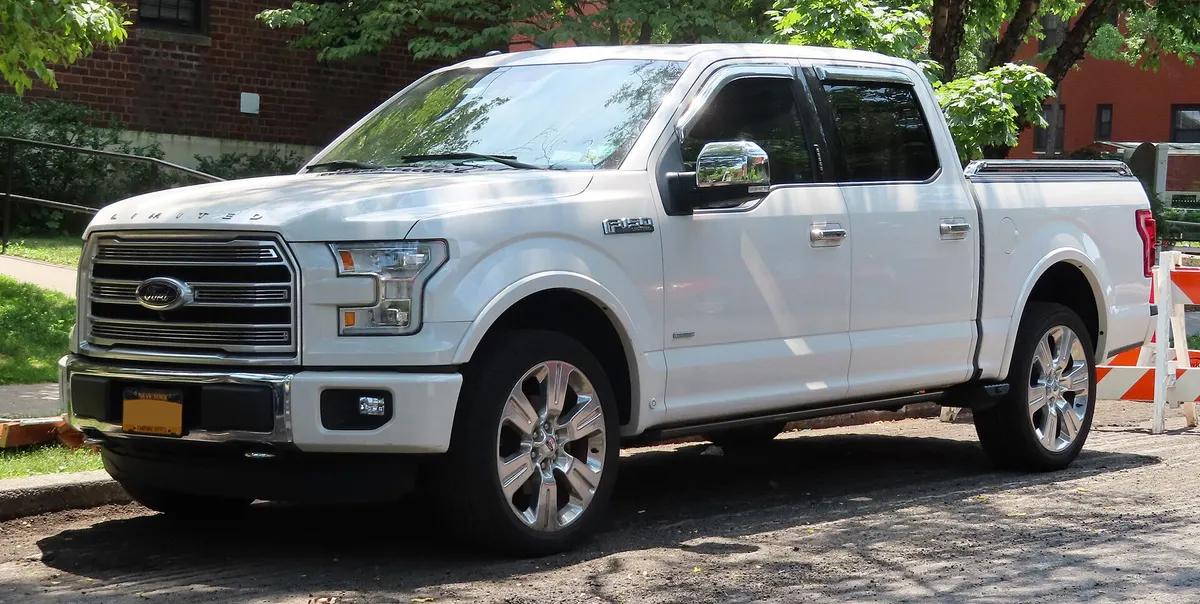
Engines
- 3.5L EcoBoost (1st gen) · 3.5L gasoline, 365 hp
- 3.5L EcoBoost (2nd gen) · 3.5L gasoline, 375 hp
- 2.7L EcoBoost · 2.7L gasoline, 325 hp
- 5.0L Coyote V8 · 5.0L gasoline, 395 hp
- 3.3L Ti-VCT V6 · 3.3L gasoline, 290 hp
- 3.5L Ti-VCT V6 · 3.5L gasoline, 282 hp
- 3.0L Power Stroke diesel · 3.0L diesel, 250 hp
Transmissions
- 6R80 · automatic, 6-speed
- 10R80 · automatic, 10-speed
Drivetrain
RWD / 4WD
Body
Regular Cab, SuperCab, SuperCrew
Trims
XL, XLT, Lariat, King Ranch, Platinum, Limited, Raptor
Ford F-150 part-number cross-reference
Start from the OEM number, then pick the brand you trust. Verified equivalents for the Ford F-150 (2015–2020).
Part links go to Amazon, and to eBay where Amazon does not stock the part. Affiliate links, so we may earn a commission if you buy. Your price is unchanged, and a commission never changes a verdict.
Motor oil
Motorcraft
Ford's own 5W-30 in the 5-quart jug (it's a synthetic blend, not full synthetic; Ford requires the spec, not the base oil). XO-5W30-Q1SP is the 1-quart bottle that finishes the fill.
Find Motorcraft motor oil on AmazonValvoline
Carries Ford WSS-M2C961-A1, the newer number that replaced 946-B1, same 5W-30, fine in this truck
See Valvoline motor oilVerified via: F150hub: 3.5L EcoBoost maintenance schedule (SAE 5W-30, 6.0 qt with filter change), Tailored Trucks: 2015 F-150 oil type and capacities (2.7L and 3.5L EcoBoost both 5W-30, 6.0 qt; confirms the EcoBoost engines are NOT 5W-20), Ford FCSD Chemicals & Lubricants: Motorcraft SAE 5W-30 Synthetic Blend (part numbers XO-5W30-5Q3SP 5 qt / XO-5W30-Q1SP 1 qt), Mobil: Mobil 1 Extended Performance product data (5W-30 lists Ford WSS-M2C946-B1, API SP), Castrol EDGE 5W-30 product listing (Ford WSS-M2C946-A / 946-B1 / 961-A1, API SP), Valvoline: Advanced Full Synthetic SAE 5W-30 (Ford WSS-M2C961-A1, API SP/SQ)
Motor oil
Motorcraft
Ford's own 5W-20 in the 5-quart jug; XO-5W20-Q1SP is the 1-quart bottle. On a 2018-2020 5.0L, buy one spare quart and leave it in the truck. That engine has documented oil-consumption complaints and you will need to top it off between changes.
Compare Motorcraft motor oil on AmazonVerified via: Oils Advisor: F-150 oil type and capacity by engine (5W-20 for the 3.3L/3.5L Ti-VCT V6s and 5.0L V8; 6 qt V6, 7.7 qt 2015-2017 V8, 8.85 qt 2018-2020 V8), Truck Insiders: F-150 5.0L V8 maintenance guide (5W-20; 7.7 qt 2011-2017, 8.8 qt 2018-2020), Ford FCSD Chemicals & Lubricants: Motorcraft SAE 5W-20 Synthetic Blend (XO-5W20-5Q3SP 5 qt / XO-5W20-Q1SP 1 qt), Mobil: Mobil 1 5W-20 product data (lists Ford WSS-M2C960-A1, API SP), Valvoline: Advanced Full Synthetic SAE 5W-20 (Ford WSS-M2C960-A1, API SP/SQ), Castrol EDGE 5W-20 listing (Ford WSS-M2C945-B1 / WSS-M2C960-A1, API SP)
Motor oil
Motorcraft
Ford's own F-150 diesel oil: SAE 5W-30, API FA-4, Ford WSS-M2C214-B1. Sold by the quart, so you need 7 bottles for a 6.5-quart fill. It is not the same as Motorcraft Super Duty diesel oil, which is for the bigger Power Strokes.
See Motorcraft motor oil on AmazonShell Rotella
API CK-4, the towing grade; the most widely stocked diesel oil on the shelf
Find Shell Rotella motor oilVerified via: Diesel Hub: 3.0L Power Stroke maintenance schedule (5W-30 FA-4 normal / 5W-40 CK-4 towing; 6.5 qt with filter; Motorcraft FL2081), Ford FCSD Chemicals & Lubricants: Motorcraft SAE 5W-30 F-150 Diesel Motor Oil XO-5W30-QFA (API FA-4, Ford WSS-M2C214-B1, 1 qt), Chevron Lubricants: Delo 400 XSP-FA SAE 5W-30 (API FA-4), Valvoline: Premium Blue Extreme Full Synthetic SAE 5W-40 (API CK-4), Shell: Rotella T6 Full Synthetic Heavy Duty Engine Oil 5W-40 (API CK-4)
Oil filter
Motorcraft
Check Motorcraft oil filter on AmazonVerified via: K&N HP-2011 cross-reference list (Motorcraft FL500S, Ford AA5Z-6714-A, Wix 57502, Fram XG10575, Mobil 1 M1212A), RockAuto interchange search for Ford AA5Z-6714-A (Motorcraft FL500S, WIX 57502, Mobil 1 M1212A, Denso 150-2021), AutohausAZ: Motorcraft FL500S applications (OE replacement for 3.5L V6 and 5.0L V8 Ford engines), K&N vehicle lookup, 2018 F-150 5.0L V8 (returns HP-2011; 3.5L page returns the same filter)
Oil filter
Motorcraft
Check Motorcraft oil filter on Amazon, 2.7LK&N
Cartridge with 2 O-rings; K&N's own lookup result for 2018 F-150 2.7L
Look up K&N oil filter, 2.7LVerified via: AmericanTrucks: Motorcraft FL-2062, fits all 2015+ 2.7L EcoBoost F-150, RockAuto interchange search for Ford FT4Z-6731-A (Motorcraft FL2062A, WIX WL10050, Denso 150-3100, Mobil 1 M1C351A), K&N HP-7037 cross-reference list (Ford FT4Z-6731-A) and K&N lookup for 2018 F-150 2.7L, FordPartsGiant oil filter catalog (FT4Z-6731-A listed for the 2.7L; superseded by KU2Z-6731-A element kit)
Engine air filter
Motorcraft
Check Motorcraft engine air filter on AmazonK&N
Washable; K&N's own lookup result for 2015 and 2018 F-150 across 2.7/3.5/5.0
Find K&N engine air filterVerified via: Amazon: Motorcraft FA-1883 listing (OE replacement, 2009-2026 F-150), RockAuto interchange search for Ford AL34-9601-CA (WIX 49883, Mann C27081), K&N 33-2385 cross-reference list (Ford FA1883 / AL34-9601-CA, Fram CA10262, WIX 49883), K&N vehicle lookup, 2018 F-150 3.5L (same result for 2.7L 2018 and 5.0L 2015)
Cabin air filter
Verified via: FordPartsGiant F-150 cabin air filter catalog (FL3Z-19N619-A for 2015-2019, replaced by KL3Z-19N619-AA), RockAuto interchange search for Ford FL3Z-19N619-A (Motorcraft FP92, WIX WP10266, Purolator C38214C, Denso 453-6111, Bosch P3955WS), K&N VF2049 cross-reference list (Ford FP79, Fram CF12150, WIX WP10266, Purolator C38214)
Spark plugs
Motorcraft
Look up Motorcraft spark plugs on AmazonVerified via: RockAuto catalog, 2018 F-150 3.5L V6 Turbocharged > Spark Plug (Motorcraft SP594 gap .031, NGK 93594/94374, Denso 4719, Bosch 9697/96315), F150forum: '2018 3.5 eco spark plug question' (SP594 is the correct/latest plug; SP534 superseded), FordPartsGiant F-150 spark plug catalog (CYFS-12Y-RT3 current consolidated application 2015-2025; CYFS-12Y-PCTX 2017-2020)
Spark plugs
Motorcraft
Find Motorcraft spark plugs on AmazonVerified via: RockAuto catalog, 2016 F-150 3.5L V6 Turbocharged > Spark Plug (Motorcraft SP580X gap .035, interchangeable w/ SP-580), Newparts: Motorcraft SP-580-X (fits 2011-2016 F-150 3.5L V6, iridium, gap .035)
Spark plugs
Motorcraft
Compare Motorcraft spark plugs on AmazonVerified via: RockAuto catalog, 2016 F-150 5.0L V8 > Spark Plug (Motorcraft SP548X gap .051, NGK 90374/6509, Bosch 9616), Newparts: Motorcraft SP-548-X (fits 2011-2017 F-150 5.0L V8, platinum, gap .051)
Spark plugs
Motorcraft
See Motorcraft spark plugs on AmazonVerified via: RockAuto catalog, 2018 F-150 5.0L V8 > Spark Plug (Motorcraft SP589 gap .051, NGK 94862, Bosch 8171, Champion 9299), F150forum: '2018 5.0L spark plug recommendations' (SP-551 superseded to SP-589)
Front brake pads
Motorcraft
Check Motorcraft front brake pads on AmazonPowerStop
Z36 Truck & Tow carbon-fiber ceramic w/ hardware (Z23-2087 is the street version)
Find PowerStop front brake padsAkebono
ProACT ceramic. RockAuto lists it for 2015-2017 front (w/o wear sensor); for 2018-2020 Akebono shows only the SDF1414 severe-duty/police front pad
Look up Akebono front brake padsVerified via: RockAuto catalog, 2018 F-150 3.5L EcoBoost > Brake Pad (Motorcraft BRF1899 OE Design front; Wagner OEX2087, Bosch BC2087, PowerStop Z362087/Z232087), RockAuto catalog, 2016 F-150 3.5L EcoBoost > Brake Pad (same BRF1899 front; Akebono ACT1414 ProACT front), FordPartsGiant F-150 brake pads catalog (JL3Z-2001-B front kit, 2018-2020)
Wiper blades
Motorcraft
Check Motorcraft wiper blades on AmazonVerified via: RockAuto catalog, 2018 F-150 > Wiper Blade (all-22-in listings; Motorcraft WW2202PF/WW2203PF, Trico 25220/221B, Bosch 22CA/EVO22), AutoPadre F-150 wiper size chart (2015-2020: 22 in driver / 22 in passenger), NAPA: Bosch ICON 22 in blade BSH 22A, Home Depot: Rain-X 22 in Latitude 2-in-1 Water Repellency blade 5079279-2
Serpentine belt (main drive)
Motorcraft
Look up Motorcraft serpentine belt on AmazonGates
Micro-V, 6-rib, 49.92 in effective length; cross-refs Ford HL3Z-8620-A / Motorcraft JK6505
Check Gates serpentine beltVerified via: RockAuto catalog, 2018 F-150 3.5L EcoBoost > Belt (Motorcraft JK6505 accessory drive; Gates K060499, Dayco 5060500, Continental 4060500; Gates K040359SF A/C stretch), FinditParts: Gates K060499 (fits 2017+ F-150; OEM cross Ford HL3Z 8620 A, Motorcraft JK6505; 6-rib, 49.92 in)
Serpentine belt (main drive)
Motorcraft
Find Motorcraft serpentine belt on AmazonVerified via: RockAuto catalog, 2016 F-150 3.5L EcoBoost > Belt (Gates K060547, Dayco 5060550, Continental 4060547; Gates K040359SF A/C stretch), FordPartsGiant F-150 serpentine belt catalog (Ford OE 8620 family applications across 2015-2020 engines)
Serpentine belt (main drive)
Motorcraft
Compare Motorcraft serpentine belt on AmazonVerified via: RockAuto catalog, 2018 F-150 5.0L V8 > Belt (Motorcraft JK6648 main drive; Gates K060640, Dayco 5060640, Continental 4060642; Bando row shows OE interchange BL3Z8620A/BL3Z8620G), RockAuto catalog, 2016 F-150 5.0L V8 > Belt (same JK6648/K060640/5060640 main-drive set; Motorcraft JK4540 A/C belt), FordPartsGiant F-150 serpentine belt catalog (BL3Z-8620-G listed for 2015+ F-150 incl. 5.0L; JL3Z-8620-B = A/C belt)
Battery
BCI group
See BCI group battery on AmazonVerified via: AutoPadre F-150 battery size chart (2016-2020 H6/48; 2015 also lists H7/94R), CarSpecs.org F-150 battery sizes (2015-2020 H6 standard, H7 on King Ranch/Lariat/Platinum, H8 on 2019 diesel), Interstate Batteries: MTX-48/H6 AGM (760 CCA, 70 Ah), Interstate Batteries: MTX-94R/H7 AGM (850 CCA, 80 Ah)
Should I buy a 2015–2020 Ford F-150?
Buy it on the powertrain and the paperwork, not the badge. A 2.7L EcoBoost or a pre-2018 5.0L V8 paired with the older 6-speed automatic is the low-drama combination on this generation. The desirable 3.5L EcoBoost is a great engine right up until the cam phasers start their cold-start rattle, and the 2017+ 10-speed automatic shipped with harsh, erratic shifting that Ford has chased with recalls and TSBs for years. On early trucks (2015–2018) confirm the brake master cylinder and door-latch recalls were performed. Get a clean combination with documented recall work and you have the best-selling truck in America for good reasons; ignore the powertrain lottery and you can buy someone else's problem.
Best years
2016, 2017, 2.7L EcoBoost or pre-2018 5.0L V8 (any year)
Years to avoid
2017 (first year of the harsh-shifting 10-speed), 2018–2020 5.0L V8 (oil-consumption complaints), Any 3.5L EcoBoost with an unaddressed cam phaser rattle
Pre-Purchase Checklist for Ford F-150
- ☐Cold-start the truck after it's sat overnight: a 2–5 second rattle/tick from the front of a 3.5L EcoBoost is the classic worn cam phaser. Don't let a seller warm it up before you arrive.
- ☐On any 10-speed (2017+), drive it 35–50 mph on light throttle and feel for hunting between gears, hard 1-2 or 2-1 shifts, and clunks. A test drive that's all highway hides this. Make it shift in town.
- ☐On a 2018+ 5.0L V8, check the oil level and ask for oil-change records; excessive consumption (a quart in ~1,000 miles) is the documented complaint. Look for the revised dipstick.
- ☐Run the VIN on Ford's recall lookup (or NHTSA): confirm the brake master cylinder recall and the 2015–2017 door-latch recall were completed.
- ☐Inspect the aluminum body for corrosion at panel seams and around steel fasteners (galvanic corrosion) and check prior collision repair quality. Aluminum body work is specialized and expensive.
- ☐On EcoBoost trucks, look for turbo-related condensation/coolant issues and listen for intercooler 'limp' stumbles under hard acceleration in humid weather.
- ☐Check that any towing-heavy truck has clean transmission service history; the 10-speed and 6-speed both want fluid changes if it's worked hard.
Common Ford F-150 problems & repair costs
3.5L EcoBoost cam phaser rattle (cold start)
$1,500–$4,000Symptoms: A ticking/tapping or rattle from the top-front of the engine for 2–5 seconds on the first cold start of the day (after sitting 6+ hours). It often starts mild and gets louder and longer over time; left alone it can progress to timing-component wear.
Fix: Replace the variable camshaft timing (VCT) phasers. Ford addressed this under TSBs (e.g., 22-2200 / 23-2143). At an independent shop it's a labor-heavy front-of-engine job; many owners report it can recur 40k–50k miles later, so confirm whether updated parts were used.
Sources: Ford TSB: 3.5L EcoBoost VCT (NHTSA), F150 Ecoboost Forum: cam phaser rattle, CarComplaints: 2018 F-150 engine
10-speed (10R80) harsh, erratic shifting and gear hunting
$200–$4,500Symptoms: Harsh or clunky 1-2 / 2-1 shifts, jerking and lunging, hesitation, and gear 'hunting' (rapid cycling between adjacent gears, often 4th-5th-6th) at light throttle around 35–50 mph. Some owners report sudden unexpected downshifts.
Fix: First step is the latest Ford recalibration/TSB (software, e.g. TSB 24-2101), often $0 if covered, a few hundred dollars otherwise. Persistent cases need valve-body or internal repair, where parts and labor climb fast. The harsh-shift issue is the subject of multiple class actions (O'Connor v. Ford).
Sources: ClassAction.org: F-150 10-speed harsh shifting suit, CarComplaints: 2018 F-150 transmission
5.0L Coyote V8 excessive oil consumption (2018+)
$0–$6,000Symptoms: Oil level dropping fast, with owners and lawsuits reporting up to roughly a quart per 1,000 miles, and no visible external leak. The low-oil/oil-change indicator can trigger well before the next scheduled change.
Fix: Ford's TSB 19-2365 reflashed the PCM and changed the dipstick rather than rebuilding the engine; critics (and a class action) argue it masks rather than fixes the burn. Realistically: top off and monitor, keep records, and budget for an engine/short-block only if consumption is severe and out of warranty.
Sources: Ford TSB 19-2365: 5.0L oil consumption (NHTSA), ClassAction.org / Lemon Law Help: 5.0L oil consumption
Brake master cylinder seal leak (reduced front braking)
$0–$900Symptoms: Soft or low brake pedal and longer stopping distances; a rear master-cylinder seal can let brake fluid leak into the booster, cutting front brake function. A brake warning light may appear.
Fix: This is a Ford safety recall on affected 3.5L EcoBoost trucks. Dealers replace the master cylinder (and the booster if it leaked) free of charge. Out of recall scope, a master cylinder replacement at an independent shop runs into the mid-hundreds. Verify the recall was performed by VIN before buying.
Sources: Consumer Reports: Ford brake master cylinder recall, Ford Authority: 2016–2018 F-150 brake recall
Door latches can open while driving
$0–$300Symptoms: A door that appears shut but isn't fully latched, or won't open/close, after water gets into the latch or the actuation cable bends. The door can come open while driving.
Fix: Safety recall 17S33 (about 1.3 million 2015–2017 F-150 and 2017 Super Duty trucks). Dealers inspect the latch cables and install water shields free of charge. Confirm completion by VIN; a non-latching door is a real risk, not a squeak.
Sources: Consumer Reports: Ford door-latch recall, Ford recall 17S33 details
Electrical and SYNC / accessory gremlins
$100–$800Symptoms: SYNC screen freezes and reboots, backup-camera dropouts, intermittent door/window/lock modules, and battery-drain complaints. Annoying rather than dangerous, but common enough to expect at least one.
Fix: Many issues clear with a SYNC software update or a module reflash; others need a specific switch, camera, or body-control module. Diagnosis time is the real cost. Chase a single root cause rather than replacing parts on guesses.
Sources: CarComplaints: 2018 F-150 electrical
Day-to-day, the F-150 is cheap to live with: parts are everywhere, every shop knows them, and routine maintenance is straightforward. The cost risk is concentrated in the powertrain. A 2.7L EcoBoost or a pre-2018 5.0L with the 6-speed is genuinely low-drama. A 3.5L EcoBoost can hand you a four-figure cam phaser job, and a worked 10-speed can need valve-body work. Two aluminum-body realities to budget for: collision repair is more specialized (and pricier) than on the old steel trucks, and watch for galvanic corrosion where steel fasteners meet aluminum panels. EcoBoost turbos also want clean oil on schedule. Don't stretch intervals.
Cost calculator
What will this Ford F-150 cost you by a given mileage?
Drag to a mileage. We total the documented problems whose typical onset falls at or before it. The same cost ranges listed above, nothing new invented.
$0 estimated repair range
5-Year Maintenance Schedule & Cost to Own
Every scheduled service by mileage, fluid capacities, independent shop ranges, and parts cross-references.
Have a repair quote for this Ford F-150?
Audit against OEM book times, uncover duplicate pad and rotor labor, and verify parts markups.
How to fix common Ford F-150 problems (DIY)
Engine air filter + cabin air filter change
Tools: Flat screwdriver (airbox clips), Shop towel
- Pop the engine airbox clips, lift the lid, and note how the old panel filter sits.
- Drop in the new engine filter the same orientation, wipe out any debris, and re-clip the lid.
- For the cabin filter, open the glovebox and release the side stops so it drops fully down.
- Pull the cabin filter cover, slide out the old filter, and insert the new one with the airflow arrow pointing down/in.
- Reseat the glovebox and confirm it latches.
Parts
- Engine air filter (2015–2020 F-150) · Amazon $15–$30
- Cabin air filter (2015–2020 F-150) · Amazon $12–$25
Spark plug replacement (V8 / EcoBoost)
Tools: Spark plug socket (5/8 in), Torque wrench, Extensions + swivel, Dielectric grease + anti-seize
- Let the engine fully cool, then remove the engine cover and disconnect the battery.
- Unbolt and lift each coil-on-plug, labeling connectors so they go back in order.
- Blow out the plug wells with compressed air so debris can't fall into the cylinder.
- Remove the old plugs, gap and lightly anti-seize the new ones, and install them to the spec torque (don't over-tighten in aluminum heads).
- Reinstall coils with a dab of dielectric grease on the boots, reconnect, and clear any codes.
Parts
- Spark plug set (match your engine) · Amazon $40–$90
- Dielectric grease + anti-seize · Amazon $8–$15
Front brake pad + rotor replacement
Tools: Floor jack + jack stands, Lug + caliper socket set, C-clamp or caliper piston tool, Torque wrench
- Loosen lug nuts, lift the front, set stands, and remove the wheels.
- Unbolt the caliper, hang it from the suspension (don't stress the hose), and remove the bracket.
- Slide off the old rotor, clean the hub face, and fit the new rotor.
- Compress the caliper piston, fit new pads and hardware, and reinstall the bracket and caliper to spec torque.
- Pump the brakes to seat the pads before moving, then bed them in with gentle stops.
Parts
- Front brake pads (2015–2020 F-150) · Amazon $35–$70
- Front rotors (pair) · Amazon $70–$160
Some parts links are affiliate links. We may earn a commission at no cost to you. We only list parts that fit this generation.
The short version
The 2015–2020 F-150 is the truck that went aluminum: lighter, more efficient, and still the best-selling vehicle in America. The chassis, the bed, and the everyday usability are excellent. What makes or breaks one of these trucks is the powertrain you happen to buy.
Three engine/transmission stories define this generation. The 3.5L EcoBoost is a fantastic engine until the cam phasers start a cold-start rattle that Ford has chased through several service bulletins. The 10-speed automatic introduced in 2017 shipped with harsh, erratic shifting and “gear hunting” bad enough to spawn class-action lawsuits and a run of recalls and software fixes. And the 2018-and-up 5.0L V8 picked up a reputation for drinking oil (up to a quart per 1,000 miles in the complaints) that Ford answered with a reflash and a new dipstick rather than an engine fix.
What that means when you’re shopping
The smart play is to shop the combination, not the badge.
A 2.7L EcoBoost or a pre-2018 5.0L V8, ideally with the older 6-speed automatic, is the low-drama setup on this generation. If you want the 3.5L EcoBoost, and it’s a genuinely great engine, cold-start it yourself after it’s sat overnight and listen for that 2–5 second front-of-engine rattle. On any 2017+ truck with the 10-speed, drive it around town at light throttle and feel for hard shifts and hunting; a highway-only test drive hides the problem.
Two recalls matter on early trucks. The brake master cylinder recall (3.5L EcoBoost) addresses a seal that can cut front braking, and the 2015–2017 door-latch recall (17S33) covers doors that can open while driving. Both are free at a Ford dealer. Just confirm by VIN that they were actually done.
Everything else is ordinary F-150 ownership: cheap parts, every shop knows them, simple maintenance. Budget extra only for aluminum collision repair and EcoBoost turbo upkeep.
How this file is built: failure modes and cost ranges are compiled from NHTSA complaints and recalls, Ford’s own TSBs and recall actions, CarComplaints data, owner forums, and reporting on the active class actions, then sanity-checked against shop-floor experience. Cost figures are independent-shop estimates and vary by region. Spot something off? Tell us.
Viral car myths, checked against this car
- Dangerous
Is the "$2 liquid that destroys engine sludge forever" real? Our shop-floor verdict.
An aggressive solvent flush on a high-mileage engine is a textbook way to spin a bearing. The viral 'kitchen-cabinet flush' is folklore that real shops spend money cleaning up after.
- Mostly False
Does a "$3 liquid" really kill car rust permanently? The phosphoric-acid reality.
The $3 liquid is almost certainly phosphoric acid (sold as Ospho or Naval Jelly). It converts surface rust to iron phosphate. It does not kill rust 'permanently,' does not restore perforated steel, and was never buried by anyone. It has been on hardware store shelves continuously since the 1940s.
- Misleading
Is the "$2 liquid that stops any leak" really banned in 11 states?
Automotive stop-leak products are not banned in any US state. The products are real (Bar's Leaks, BlueDevil), they work in specific narrow situations, and they can permanently damage your cooling or oiling system if applied to the wrong leak.
Frequently asked questions
Which F-150 engine is the most reliable in 2015–2020?
The low-drama picks are the 2.7L EcoBoost and the pre-2018 5.0L V8. The 2.7L is surprisingly capable and avoids the cam phaser reputation of the 3.5L, and the 2015–2017 5.0L predates the oil-consumption complaints. The 3.3L base V6 (2018+) is dependable but underpowered for towing.
Is the 3.5L EcoBoost cam phaser problem serious?
It can be. A short cold-start rattle is the early warning; left alone it can progress to timing-component wear. Ford addressed it under service bulletins, and a phaser job at an independent shop can run $1,500–$4,000. Always cold-start a 3.5L EcoBoost yourself before buying and confirm whether updated parts were already fitted.
Should I avoid the 10-speed automatic?
Be cautious with 2017+ trucks that use the 10R80. Early calibrations shift harshly and 'hunt' between gears, which led to multiple class actions and a string of recalls/TSBs. Many trucks are much improved after Ford's latest recalibration, so test drive in town (not just highway) and confirm the latest software was applied.
Does the 2018+ 5.0L V8 really burn oil?
Owners and class-action filings report consumption up to about a quart per 1,000 miles on 2018–2020 5.0L trucks. Ford's TSB reflashed the computer and revised the dipstick rather than rebuilding the engine. If you want a V8, a pre-2018 5.0L sidesteps the issue; on a 2018+, check oil records and monitor closely.
Is the aluminum body a problem?
Not for durability. It resists rust better than steel and saves weight. The catch is repair: aluminum bodywork needs specialized shops and costs more after a collision, and you should watch for galvanic corrosion where steel fasteners meet aluminum panels. Inspect prior body repairs carefully on any used truck.
Every Ford F-150 generation
The full case file run, beyond the generation before and after this one.
Cross-shopped rivals
Files on what buyers weigh against the Ford F-150 of this era.