Case file · FORD-MUSTANG-2015-2023 · S550 (6th gen) (S550)
Ford Mustang 2015–2023Common problems, reliability & repair costs
The S550 is the first independent-rear-suspension Mustang and the best-driving one Ford had built to that point. But it's a performance car, and it's bought and used like one. The big buyer questions are the MT82 manual's notchy, occasionally grinding shift, the GT's appetite for oil, wheel hop off the line, the 10-speed automatic's harsh shifting, and the GT350's track-day overheating. Pick the right engine and transmission, check how the last owner drove it, and a clean S550 is a genuinely good ownership story.
2020–2023 (revised EcoBoost block, mature 10R80 calibrations, Gen-3 Coyote), 2018–2020 GT (460-hp Gen-3 Coyote, well-sorted)
2015–2016 EcoBoost (early slotted-block coolant-intrusion ri +2 more
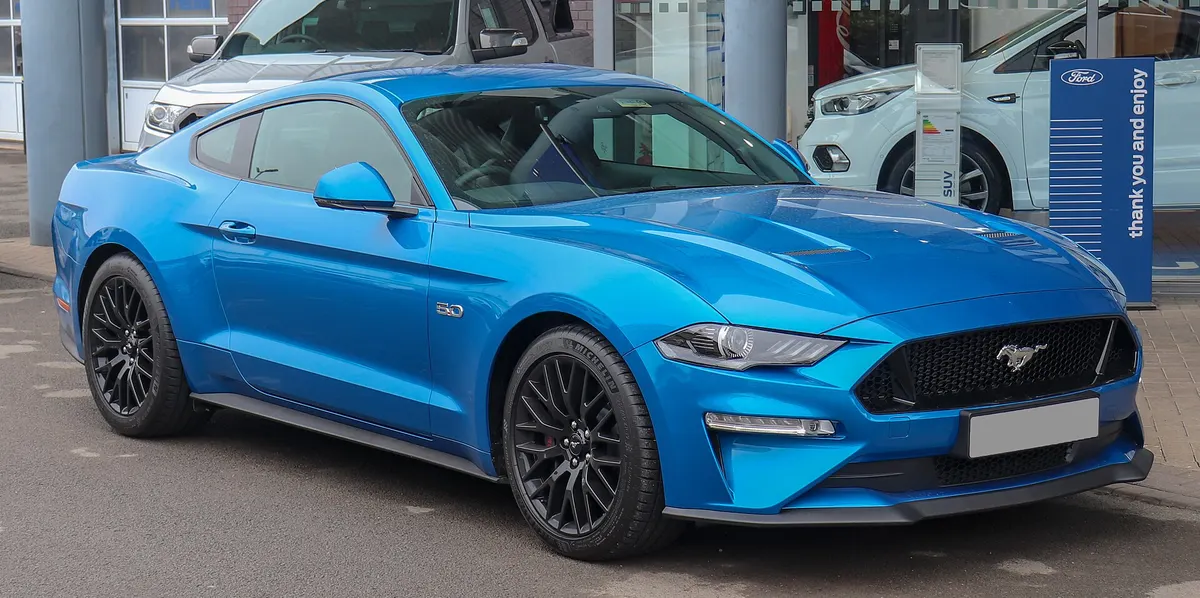
Engines
- 2.3L EcoBoost · 2.3L gasoline, 310 hp
- 5.0L Coyote V8 · 5.0L gasoline, 435 hp
- 5.2L Voodoo V8 · 5.2L gasoline, 526 hp
- 5.2L Predator V8 · 5.2L gasoline, 760 hp
- 3.7L Cyclone V6 · 3.7L gasoline
Transmissions
- MT82 (Getrag) · manual, 6-speed
- TR-3160 (Tremec) · manual, 6-speed
- 6R80 · automatic, 6-speed
- 10R80 · automatic, 10-speed
- Tremec TR-9070 · dct, 7-speed
Drivetrain
RWD
Body
coupe, convertible
Trims
EcoBoost, EcoBoost Premium, GT, GT Premium, Bullitt, Mach 1, Shelby GT350, Shelby GT350R, Shelby GT500
Ford Mustang part-number cross-reference
Start from the OEM number, then pick the brand you trust. Verified equivalents for the Ford Mustang (2015–2023).
Part links go to Amazon, and to eBay where Amazon does not stock the part. Affiliate links, so we may earn a commission if you buy. Your price is unchanged, and a commission never changes a verdict.
Oil filter
Verified via: LMR - FL-910S 2015-2023 Mustang EcoBoost, AmericanMuscle - FL-910S (Ford BE8Z-6731-AB), CarsSimplified FL910S cross-reference
Oil filter
Motorcraft
Ford AA5Z-6714-A; same filter 2015-17 and 2018-23 GT
Find Motorcraft oil filter on Amazon, 3.7LVerified via: CJ Pony Parts - FL-500S 3.7/5.0L Mustang, LMR - FL-500S Mustang GT/V6, CarsSimplified FL500S cross-reference
Oil filter
Motorcraft
Ford MU2Z-6731-B (interchange KR3Z-6731-A); cartridge element, not spin-on. Ford's 2019-2020 GT350 and 2020-2022 GT500 supplements print FL-2087
Find Motorcraft oil filter on Amazon, 5.2LVerified via: Ford (2019 GT350 supplement, parts table p47), Ford (2020 GT500 supplement, parts table p64), Steeda - FL-2087A GT350/GT500 5.2L, LMR - FL-2087-A GT350/GT500 cartridge, K-Man's Parts - FL-2087-A fitment
Oil filter
Motorcraft
Ford GR3Z-6731-A. Ford's 2015-2016 and 2017 GT350 supplements list FL-2069-ST. The 2018 supplement lists FL-2062, see the next card
Look up Motorcraft oil filter on AmazonVerified via: Ford (2015-2016 GT350 supplement, parts table p44), Ford (2017 GT350 supplement, parts table p44), K-Man's Parts - FL-2069-ST 2016-2017 GT350, Function Factory - 2015-2017 GT350 oil filter (GR3Z-6731-A)
Oil filter
Motorcraft
Ford's 2018 GT350 supplement lists FL-2062 (May 2018 second printing, parts table p45)
Check Motorcraft oil filter on AmazonVerified via: Ford (2018 GT350 supplement, parts table p45)
Engine air filter
Motorcraft
Ford FR3Z-9601-A. Ford's books list FA-1922 for the 2019-2020 Bullitt and 2021-2023 Mach 1, not FA-1918
See Motorcraft engine air filter on AmazonVerified via: LMR - FA-1918 Mustang 2.3/3.7/5.0, Steeda - FA-1918 (Ford FR3Z-9601-A), AmericanMuscle - FA1918 GT/EcoBoost/V6
Engine air filter
Motorcraft
the number Ford's GT350 supplements (2015-2020), 2019-2020 Bullitt pages and 2021-2023 Mach 1 pages list. Ford Performance M-9601-G is sold as a washable service filter (built by AIRAID)
Find Motorcraft engine air filter on AmazonVerified via: Ford (2015-2016 GT350 supplement, parts table p44), Ford (2019 owner's manual, Bullitt parts table p297), Ford (2021 owner's manual, Mach 1 parts table p342), CJ Pony Parts - M-9601-G 2015-2020 GT350/GT350R, Steeda - Ford Performance M-9601-G S550 air filter
Engine air filter
Motorcraft
Ford's 2020-2022 GT500 supplements list FA-1922, the same Motorcraft number as the GT350, Bullitt and Mach 1. M-9601-G does NOT fit the 2020-2022 GT500
Check Motorcraft engine air filter on AmazonVerified via: Ford (2020 GT500 supplement, parts table p64), Ford (2022 GT500 supplement, parts table p64)
Cabin air filter
Motorcraft
the number Ford's 2015 book prints. From the 2016 book on Ford lists FP-78, see the next card
See Motorcraft cabin air filter on AmazonVerified via: Ford (2015 owner's manual, parts table p269)
Cabin air filter
Motorcraft
Ford FR3Z-19N619-A, listed from Ford's 2016 book on. TRAP: many sellers list FP-70 for the S550 - that is the wrong (adjacent) number
Compare Motorcraft cabin air filter on AmazonVerified via: AmericanMuscle - FP78 (Ford FR3Z-19N619-A), Ford (2016 owner's manual, parts table p273), Ford (2019 GT350 supplement, parts table p47), Ford OEM Parts Online - FR3Z-19N619-A, Steeda - FR3Z-19N619-A S550/S650 cabin filter
Spark plugs
Motorcraft
iridium; Ford CYFS-12Y-2. Ford's 2015-2019 books list SP-537, and from 2020 SP-550, see the next card
Look up Motorcraft spark plugs on AmazonVerified via: Ford (2015 owner's manual, parts table p269), Ford (2019 owner's manual, parts table p295), MAPerformance - Motorcraft SP537 2015-2019 Mustang EcoBoost
Spark plugs
Verified via: Ford (2020 owner's manual, parts table p298), Ford (2023 owner's manual, parts table p342)
Spark plugs
Motorcraft
Ford's 2015, 2016 and 2017 books list SP-520 for the 3.7L
See Motorcraft spark plugs on AmazonVerified via: Ford (2015 owner's manual, parts table p269), Ford (2016 owner's manual, parts table p274), Ford (2017 owner's manual, parts table p274)
Spark plugs
Motorcraft
Ford's 2015 and 2016 books list SP-519 for the 5.0L
Compare Motorcraft spark plugs on AmazonVerified via: Ford (2015 owner's manual, parts table p269), Ford (2016 owner's manual, parts table p275)
Spark plugs
Motorcraft
platinum; Ford CYFS-12F-1X. Ford's 2017-2019 books list SP-548 for the 5.0L
Find Motorcraft spark plugs on AmazonVerified via: Ford (2017 owner's manual, parts table p275), Ford (2018 owner's manual, parts table p292), Ford (2019 owner's manual, GT p296 and Bullitt p297), AmericanMuscle - SP548 (CYFS-12F-1X) Mustang GT
Spark plugs
Motorcraft
Ford's 2020 and 2021 books list SP-551 for the 5.0L
Look up Motorcraft spark plugs on Amazon, 5.0LVerified via: Ford (2020 owner's manual, GT p299 and Bullitt p300), Ford (2021 owner's manual, GT p341 and Mach 1 p342)
Spark plugs
Motorcraft
Ford's 2022 and 2023 books list SP-589 for the 5.0L
Check Motorcraft spark plugs on Amazon, 5.0LVerified via: Ford (2022 owner's manual, parts table p344), Ford (2023 owner's manual, parts table p343)
Spark plugs
Motorcraft
Ford's 2015-2016, 2017 and 2018 GT350 supplements list SP-519. The 2019-2020 supplements list SP-581, see the next card
See Motorcraft spark plugs on Amazon, 5.2LVerified via: Ford (2015-2016 GT350 supplement, parts table p44), Ford (2017 GT350 supplement, parts table p44), Ford (2018 GT350 supplement, parts table p45)
Spark plugs
Motorcraft
Ford's 2019 and 2020 GT350 supplements list SP-581, gap 0.035-0.039 in
Compare Motorcraft spark plugs on Amazon, 5.2LVerified via: Ford (2019 GT350 supplement, parts table p47, gap p45), Ford (2020 GT350 supplement, parts table p49, gap p46)
Spark plugs
Motorcraft
iridium (retail SP-581-X); gap 0.037 in, plus or minus 0.002 in, per Ford's 2020 GT500 supplement
Find Motorcraft spark plugs on Amazon, 5.2LVerified via: Ford (2020 GT500 supplement, gap p61, parts table p64), Lethal Performance - SP-581 2020-2022 Shelby GT500, JDM Engineering - 2020 GT500 Motorcraft SP-581
Front brake pads
Ford
front disc pad set for non-Brembo cars (later Ford supersessions -P/-Q). Brake pads are caliper/package-specific - confirm the caliper on the car
Look up Ford front brake pads on AmazonVerified via: Ford OEM Parts Online - front brake pads FR3Z-2001-P, QuirkParts - 2015-2020 front disc brake pad set FR3Z-2001-A/Q
Front brake pads
Ford
Motorcraft BRF-1462; Performance Package Brembo front pad. Later superseded to FR3Z-2001-N
Check Ford front brake pads on AmazonVerified via: LMR - GT Performance Pack front brake pads (LRS-2200P), Mustang6G - OEM PP Brembo front pads FR3Z2001N (2015-2020)
Front brake pads
Verified via: Levittown Ford - FR3Z-2001-L GT350/GT350R front set, Ford OEM Parts Online - FR3Z-2001-L 2015-2020 front, LMR - GT350/R replacement front brake pads FR3Z-2001-L
Wiper blades
Verified via: Ford (2015 owner's manual, parts table p269)
Wiper blades
Motorcraft
Ford's 2016 book prints the same two numbers as 2017-2023 with the sides the other way round
Find Motorcraft wiper blades on AmazonVerified via: Ford (2016 owner's manual, parts table p273)
Wiper blades
Motorcraft
Ford FR3Z-17528-BA (driver) & FR3Z-17528-AA (passenger). Ford's 2017-2023 books list WW-2160 driver, WW-1964 passenger
Look up Motorcraft wiper blades on AmazonVerified via: AmericanMuscle - driver WW-2160 (FR3Z-17528-BA), AmericanMuscle - passenger WW-1964 (FR3Z-17528-AA), Ford (2017 owner's manual, parts table p273), Ford (2023 owner's manual, parts table p342)
Serpentine belt
Motorcraft
Ford FR3Z-8620-B; 6-rib molded-cog belt shared by 5.0 and 5.2 V8s
See Motorcraft serpentine belt on AmazonVerified via: LMR - JK6682 15-23 GT/GT350 serpentine belt, Ford OEM Parts Online - FR3Z-8620-B serpentine belt, Steeda - JK6682 (FR3Z-8620-B) V8 accessory drive
Serpentine belt
Motorcraft
Ford FR3Z-8620-C. CHANGEOVER: 2018+ EcoBoost uses a revised belt, Ford JR3Z-8620-A (Motorcraft JK6295) - verify by year
Compare Motorcraft serpentine belt on AmazonVerified via: AmericanMuscle - JK4534 15-17 EcoBoost serpentine belt, MAPerformance - JK4534 2015-2017 Mustang EcoBoost, Steeda - JK6295 (JR3Z-8620-A) 18-26 Mustang belt
Battery
Motorcraft
Group 96R. Listed in every 2015-2023 Ford Mustang book and in the GT500 supplements. The GT350 takes a different battery, see the next card
Find Motorcraft battery on AmazonVerified via: Ford (2015 owner's manual, parts table p269), Ford (2023 owner's manual, parts table p343), Ford (2020 GT500 supplement, parts table p64)
Battery
Motorcraft
the numbers Ford's GT350 supplements list. The 2015-2016 supplement recommends a 590 CCA 96R battery (Ford CR3T-10655-BA) for use below 0°F
Look up Motorcraft battery on AmazonVerified via: Ford (2015-2016 GT350 supplement, parts table p44), Ford (2017 GT350 supplement, parts table p44), Ford (2019 GT350 supplement, parts table p47)
Should I buy a 2015–2023 Ford Mustang?
Buy it, but buy the car and the previous owner, not just the spec sheet. The S550 is mechanically sound at its core. The Coyote V8 and the EcoBoost (2020+ block especially) are durable engines. But this is a muscle car, and a meaningful share of them were driven hard, launched repeatedly, or tracked. The two things that most separate a good buy from a headache are the transmission and how the car was used. The MT82 manual is the weak link of the lineup and gets worse with abuse; the 10-speed auto can shift harshly and may still be mid-reflash. A 2020+ EcoBoost auto, or a GT with a documented, sane history, is the safe-money pick. GT350s are special but demand a buyer who understands the oil-cooler recall and the track-overheating reality.
Best years
2020–2023 (revised EcoBoost block, mature 10R80 calibrations, Gen-3 Coyote), 2018–2020 GT (460-hp Gen-3 Coyote, well-sorted)
Years to avoid
2015–2016 EcoBoost (early slotted-block coolant-intrusion risk), 2015–2017 GT350 unless the 16S40 oil-cooler recall is documented as done, Any MT82 manual that has clearly been driven hard / drag-launched
Pre-Purchase Checklist for Ford Mustang
- ☐On any manual car: shift slowly through every gear cold AND warm. Feel for grinding into 2nd, a notchy/baulky 2nd–3rd shift, or lockout from 3rd. Some cold notchiness is 'normal' per Ford, but grinding and lockout are red flags.
- ☐On the GT (5.0): check the oil level and ask about consumption history. Ford's 2021-2023 books say hard or track driving can burn about a quart every 500 miles, and to check the level at every fill-up when the car is driven that way. The 3,000-mile figure in Ford's 2018-2023 books (3,100 in the 2017 book) is when a new engine's oil use settles, not a limit. Fresh top-off bottles in the trunk on a car sold as gently driven mean dig deeper.
- ☐Launch-test gently from a stop and watch/feel for wheel hop. Violent juddering of the rear under hard acceleration points to a car that's been hammered and possibly stressed driveline/IRS parts.
- ☐On 2015–2019 2.3 EcoBoost cars: look for any sign of coolant loss, white exhaust smoke on cold start, or misfire. Those are the coolant-intrusion tells. Pre-2020 blocks are the at-risk ones.
- ☐On the 10-speed automatic (2018+): drive it long enough to get harsh 1-2 and 2-3 shifts, shudder, or gear hunting. Ask whether the latest transmission reflash/TSB has been applied.
- ☐On a GT350: confirm the 16S40 oil-cooler-line recall was completed (VIN check), and ask honestly whether the car was tracked and how cooling was managed.
- ☐Inspect tires and brakes for track/abuse wear, and look underneath for curb/track scrapes, aftermarket clutch/driveline parts, and tune evidence.
- ☐Scan for stored codes and check that no powertrain/limp-mode events are logged.
Common Ford Mustang problems & repair costs
MT82 manual: notchy shifts, grinding, and 3rd-gear lockout
$300–$4,000Symptoms: Notchy, baulky shifts (worst when cold), occasional grind going into 2nd gear, and lockout from 3rd under fast/aggressive shifting. Early 2018 cars could break weak aluminum shift forks.
Fix: Mild cases improve with the correct fluid and a remote-shifter bushing/rebuild. Worn or damaged synchros and broken shift forks mean an internal repair or transmission replacement, which is where costs climb. The MT82 synchros were not designed for hard launch-style use, so history matters more than mileage.
Sources: CJ Pony Parts: MT82 specs, problems, and fixes, StangNet forum: MT82 troublesome thread
5.0 Coyote oil consumption
$0–$3,000Symptoms: Burning oil between changes, low oil level on the dipstick, occasional smoke under hard use. Ford's 2021-2023 books say hard driving and track use can burn about 1 quart per 500 miles. The 3,000-mile figure in Ford's 2018-2023 books (3,100 in the 2017 book) is when a new engine's oil use settles, not a tolerance.
Fix: Often managed simply by checking and topping off oil. Ford's 2021-2023 books treat heavy use under hard or track driving as possible, so on its own it isn't a 'fault.' A Ford TSB addressed excessive consumption with PCM reprogramming. Genuinely excessive consumption can point to ring/valve-seal wear, which is the expensive end.
Sources: Ford TSB 19-2365: 5.0L excessive oil consumption (NHTSA), Mustang6G forum: normal oil consumption for a 5.0
Wheel hop / rear-suspension judder
$200–$900Symptoms: Violent juddering or hopping of the rear wheels under hard acceleration from a stop. Felt sharply through the chassis; repeated hard launches can stress IRS and driveline components.
Fix: The factory stamped-steel IRS vertical links flex under load and the subframe shifts on launch. A subframe brace and/or upgraded vertical links largely cure it. On a used car, heavy wheel hop history is more a warning sign about how it was driven than an expensive repair by itself.
10R80 10-speed automatic harsh / erratic shifting
$150–$4,500Symptoms: Harsh or clunky 1-2 and 2-3 shifts, shudder, hesitation, gear hunting, and hard downshifts. Over 400 transmission-related NHTSA complaints on 2018–2021 EcoBoost cars alone; subject of a 2023 class action.
Fix: First step is the latest Ford reflash/calibration. Multiple TSBs exist, including TSB 24-2101 for 2017–2023 cars. Many cars are improved by software alone. Mechanical repairs (valve body, clutches) are the costly outcome if calibration doesn't resolve it.
Sources: ClassAction.org: Ford 10R80 harsh-shifting class action, Ford TSB: 10R80 harsh/delayed engagement (NHTSA)
2.3 EcoBoost coolant intrusion (pre-2020 block)
$1,000–$6,000Symptoms: Slow coolant loss, white smoke on cold start, misfire, rough idle. Caused by the slotted coolant-deck design between cylinders that could let coolant seep into a cylinder.
Fix: Ford revised the block for 2020 and later. On an affected car, fixes range from gasket/block work ($1,000–$3,000) to a full engine replacement when coolant has damaged internals ($4,000–$6,000). This is the EcoBoost's most serious issue. Verify before buying a pre-2020 turbo car.
Sources: Mustang Ecoboost forum: coolant intrusion / engine replacement, Cherish Your Car: Ford 2.3 EcoBoost problems (2020 redesign)
GT350 oil-cooler-line recall (16S40) & track overheating
$0–$1,500Symptoms: Recall: improperly crimped oil-cooler lines that can leak, causing oil-pressure loss, engine damage, and a fire risk. Separately, owners report the 5.2 going into powertrain-protection (limp) mode on track in as little as ~15 minutes due to heat.
Fix: Recall 16S40 replaced the oil-cooler hose assembly free of charge. Confirm it was done by VIN. Track overheating is managed with proper cooling upgrades and driving discipline; the underlying engine is robust when not starved or overheated.
Sources: FordMuscle: GT350/GT350R oil-cooler line recall (16S40), TorqueNews: GT350 owners suit over Voodoo engine track overheating
An S550 driven like a normal car is reasonably cheap to own: the Coyote and 2020+ EcoBoost are durable, parts are everywhere thanks to the huge Mustang aftermarket, and routine maintenance is straightforward. The cost spread is almost entirely about how the car was used. A hammered manual can need a four-figure transmission repair; a tracked GT350 can need cooling work; an abused car can chew tires, brakes, and clutches fast. Premium fuel, performance tires, and (on V8s) thirsty fuel economy are baked-in running costs. Buy a sanely-driven example and your biggest bills are normal wear. Buy someone's drag-strip toy and the driveline is where the money goes.
Cost calculator
What will this Ford Mustang cost you by a given mileage?
Drag to a mileage. We total the documented problems whose typical onset falls at or before it. The same cost ranges listed above, nothing new invented.
$0 estimated repair range
5-Year Maintenance Schedule & Cost to Own
Every scheduled service by mileage, fluid capacities, independent shop ranges, and parts cross-references.
Have a repair quote for this Ford Mustang?
Audit against OEM book times, uncover duplicate pad and rotor labor, and verify parts markups.
How to fix common Ford Mustang problems (DIY)
Engine air filter & cabin filter change
Tools: Flat screwdriver, Socket set (for some airbox clips)
- V6, EcoBoost and GT cars (Motorcraft FA-1918): unclip or unscrew the airbox lid and lift it to expose the panel air filter. The Bullitt, Mach 1, GT350 and GT500 take FA-1922 in Ford's books, a different element, so these three steps do not describe those cars.
- Lift out the old engine air filter, note its orientation, and drop the new one in seated flat.
- Re-clip the airbox lid, making sure it seals fully.
- For the cabin filter, locate the housing behind/under the glovebox area, release the cover, and slide the old filter out.
- Insert the new cabin filter with the airflow arrow pointing in the correct direction and close the cover.
Parts
- Engine air filter (S550 Mustang) · Amazon $15–$35
- Cabin air filter (S550 Mustang) · Amazon $12–$25
Install a rear subframe brace to reduce wheel hop
Tools: Floor jack + jack stands, Socket set + ratchet, Breaker bar, Torque wrench
- Safely raise the rear of the car and support it on jack stands; let the suspension hang.
- Locate the rear subframe mounting points and clean the contact surfaces.
- Position the brace/insert kit against the subframe per the kit instructions.
- Hand-start all hardware, then torque the brace and any subframe bolts to spec.
- Lower the car and confirm nothing contacts the brace at ride height; road-test a gentle launch to confirm reduced hop.
Parts
- Rear subframe brace / IRS support kit (S550) · Amazon $80–$200
5.0 / EcoBoost oil & filter change
Tools: Floor jack + jack stands or ramps, Oil filter wrench, Drain pan, Socket for drain plug
- Warm the engine briefly, then raise and support the car and place the drain pan under the plug.
- Remove the drain plug, let the oil fully drain, and replace the plug with a fresh washer where applicable.
- Remove the old oil filter, lightly oil the new filter's gasket, and hand-tighten the new filter.
- Refill with the correct grade and capacity of oil (check the owner's manual, since the 5.0 takes a large amount).
- Run the engine, check for leaks, then re-check the level on the dipstick after it settles.
Parts
- Motor oil, Motorcraft synthetic blend per Ford (grade by engine and year) · Amazon $35–$70
- Oil filter (S550 Mustang) · Amazon $8–$18
Some parts links are affiliate links. We may earn a commission at no cost to you. We only list parts that fit this generation.
The short version
The 2015–2023 Mustang (the S550) is the best all-around Mustang Ford had made up to that point. It finally got independent rear suspension, so it rides and corners like a modern car instead of a live-axle throwback. The engine lineup covers everything from daily commuter to track weapon: the 2.3 EcoBoost turbo-4, the 5.0 Coyote V8, and the exotic 5.2 GT350 and supercharged GT500.
But it’s a muscle car, and that’s the whole story when you’re buying used. A big share of these cars were driven hard, launched repeatedly, or tracked. The mechanical bones are good; the question is what the last owner did to them.
What that means when you’re shopping
The single most important call is the transmission. The MT82 manual is the lineup’s weak point: notchy, prone to grinding into 2nd, and able to lock you out of 3rd if you rush it. Shift through every gear cold and warm before you buy. The 10-speed automatic (2018+) has its own reputation for harsh, clunky shifting; the first fix is Ford’s latest reflash, so ask whether the TSBs were applied and test-drive it long enough to feel the low gears.
Then match the engine to the year. A pre-2020 2.3 EcoBoost carries the coolant-intrusion risk from the old slotted block. Check for coolant loss and cold-start smoke. The 5.0 Coyote is durable but uses some oil, especially hard-driven 2015–2017 cars; that’s a check-and-top-off item until it isn’t. GT350s are special but demand a buyer who confirms the 16S40 oil-cooler recall and understands track-day overheating.
Finally, read the abuse. Wheel hop history, scorched brakes, fresh aftermarket clutch or driveline parts, and a tune all tell you how this car lived. A sanely-driven 2020+ EcoBoost or a clean-history GT is the safe-money S550; someone’s old drag toy is where the four-figure bills hide.
How this file is built: failure modes and cost ranges are compiled from NHTSA complaint and recall data (including recall 16S40 and the 5.0 and 10R80 TSBs), reported class actions, and owner forums, then sanity-checked against shop-floor experience. Cost figures are independent-shop estimates and vary by region. Spot something off? Tell us.
Viral car myths, checked against this car
- Dangerous
Is the "$2 liquid that destroys engine sludge forever" real? Our shop-floor verdict.
An aggressive solvent flush on a high-mileage engine is a textbook way to spin a bearing. The viral 'kitchen-cabinet flush' is folklore that real shops spend money cleaning up after.
- Misleading
Is the "$1 Japanese oil trick" that stops engine wear forever real?
The 'Japanese oil trick' is almost certainly MoS2 (molybdenum disulfide), a real industrial friction modifier. It is German, not Japanese (Liqui Moly popularized it), sold openly at every parts store for $15-20, has real but modest measured friction benefits, and was never buried by anyone.
- Misleading
Is the "$2 liquid that stops any leak" really banned in 11 states?
Automotive stop-leak products are not banned in any US state. The products are real (Bar's Leaks, BlueDevil), they work in specific narrow situations, and they can permanently damage your cooling or oiling system if applied to the wrong leak.
Frequently asked questions
Is the Ford Mustang MT82 manual transmission really that bad?
It's the weakest part of the S550 lineup. The MT82 is notchy, can grind into 2nd (especially cold), and may lock you out of 3rd under hard, fast shifting. Its synchros weren't designed for repeated drag-style launches. Plenty of owners live with it fine by shifting deliberately and using the right fluid, but on a used car it pays to shift through every gear cold and warm before buying. If you want a great manual S550, the Tremec 3160 in the GT350 (and, per Ford's 2021-2023 books, the Mach 1) is in a different league.
Which Ford Mustang years should I avoid (2015–2023)?
Be most careful with 2015–2016 2.3 EcoBoost cars (pre-2020 block coolant-intrusion risk), any 2015–2017 GT350 where the 16S40 oil-cooler recall isn't documented as done, and any MT82 manual that's obviously been launched hard. The safer picks are 2020+ cars overall: revised EcoBoost block, more mature 10-speed calibrations, and the proven Gen-3 Coyote V8.
Does the 5.0 Coyote V8 burn oil, and is that a problem?
Some oil use is normal. Ford's 2021-2023 books say hard or track driving can burn about a quart every 500 miles and say to check the level at every fill-up when the car is driven that way. The 3,000-mile figure in Ford's 2018-2023 books (3,100 in the 2017 book) is when a new engine's oil use settles, not a limit. Hard-driven Gen-2 (2015–2017) GTs tend toward the higher end. Modest use is a check-and-top-off item, not a fault. Consumption well beyond that, or smoke under load, can mean ring or valve-seal wear, so ask the seller about oil history and check the level yourself.
What's the deal with the 10-speed automatic's harsh shifting?
The 10R80 has drawn hundreds of NHTSA complaints and a 2023 class action for harsh, clunky, or erratic shifting: jerking, shudder, and hard downshifts. The first fix is the latest Ford reflash/TSB (including TSB 24-2101), which resolves many cars. If software doesn't fix it, the repair moves to the valve body or internals, which gets expensive. Test-drive long enough to feel the low-gear shifts before buying.
Is a used GT350 a smart buy?
It can be a special car, but it needs an informed buyer. Confirm the 16S40 oil-cooler-line recall was completed by VIN, and be honest about track use. The 5.2 Voodoo can drop into limp mode from heat on track without proper cooling management. A well-kept, recall-complete GT350 with sensible history is a fantastic drive; a hard-tracked one with no cooling upgrades is a gamble.
Every Ford Mustang generation
The full case file run, beyond the generation before and after this one.
Cross-shopped rivals
Files on what buyers weigh against the Ford Mustang of this era.