Case file · HONDA-CIVIC-2006-2011 · 8th gen (FA/FG/FD)
Honda Civic 2006–2011Common problems, reliability & repair costs
The 8th-gen Civic is one of the most reliable compacts of its era, with one big asterisk. Early 1.8L (R18) engines from 2006–2008 are prone to a cracked engine block that leaks coolant, which Honda eventually covered with an extended warranty. Get a clean one and it runs to 250k+; buy the wrong year unaware and you're looking at an engine.
2009, 2010, 2011
2006–2008 (1.8L block-crack risk) +1 more
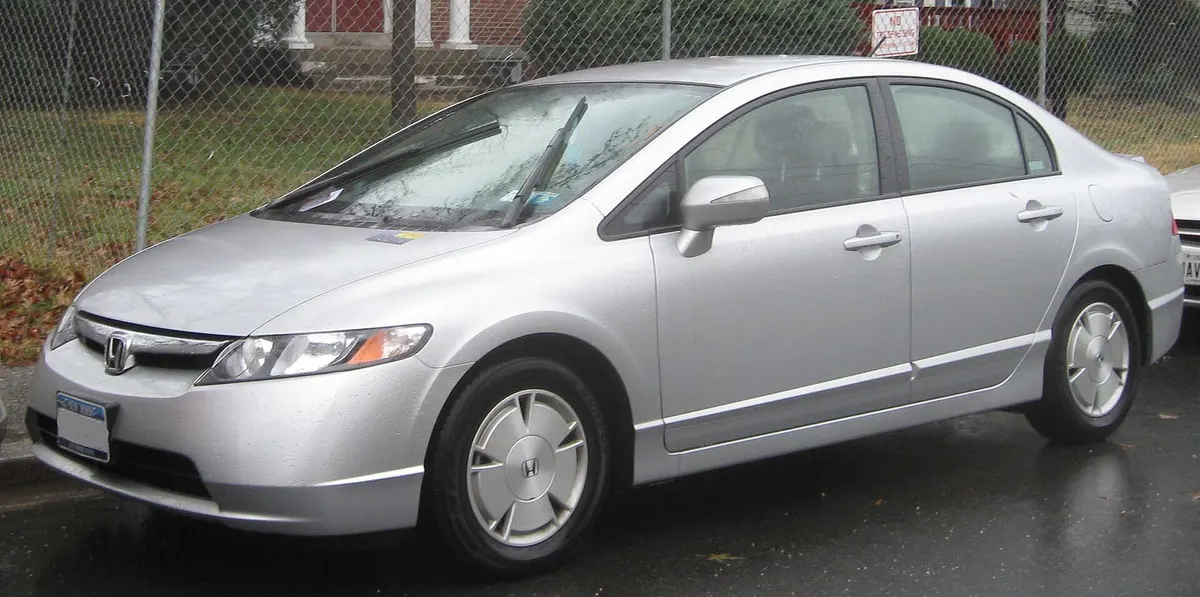
Engines
- R18A1 · 1.8L gasoline, 140 hp
- K20Z3 · 2.0L gasoline, 197 hp
- LDA2 (hybrid) · 1.3L hybrid, 110 hp
Transmissions
- automatic , 5-speed
- manual , 5-speed
- manual , 6-speed
- cvt
Drivetrain
FWD
Body
sedan, coupe
Trims
DX, LX, EX, EX-L, Si, Hybrid, GX (CNG)
Honda Civic part-number cross-reference
Start from the OEM number, then pick the brand you trust. Verified equivalents for the Honda Civic (2006–2011).
Part links go to Amazon, and to eBay where Amazon does not stock the part. Affiliate links, so we may earn a commission if you buy. Your price is unchanged, and a commission never changes a verdict.
Oil filter
Fram
Extra Guard; TG7317 (Tough Guard) and XG7317 (Ultra Synthetic) are the upgraded lines
Look up Fram oil filterVerified via: HondaPartsNow: Genuine Honda 15400-PLM-A02, HondaPartsNow: 2008 Civic oil filter fitment, Oil Filter Cross Reference: Honda 15400-PLM-A02, FinditParts: Honda 15400-PLM-A02 cross reference
Motor oil, 1.8L
Honda Genuine
Honda's own oil, sold by the quart at a dealer parts counter. This engine takes four of them. The cheaper Honda synthetic blend in the same weight is 08798-9132. Online parts sites list Honda oil as out of stock more often than not, because oil is awkward to ship; the parts counter is the reliable place to buy it.
Find Honda Genuine motor oil, 1.8l on AmazonMobil 1
Buy the 5-quart jug rather than four single quarts. The fill is 3.9, so you finish the job with about a quart left in the bottle for top-ups between changes.
Look up Mobil 1 motor oil, 1.8lPennzoil
All you have to match on the shelf is 5W-20 plus the API certification seal on the bottle. There is no special Honda approval to hunt for on this engine, and dexos1 is a GM spec that has nothing to do with this car.
Check Pennzoil motor oil, 1.8lCastrol
A current API SP jug bought today is correct for a 2006–2011 engine. API's own position is that the latest service category covers the older ones it replaced.
See Castrol motor oil, 1.8lValvoline
A store-brand full synthetic works here too, as long as the bottle reads 5W-20 and carries the API seal. Honda's manual also permits conventional oil in this weight at the same interval. Synthetic does not buy you extra miles on a Maintenance Minder car.
Compare Valvoline motor oil, 1.8lVerified via: Firestone: 2006–2011 Civic, 1.8L takes 5W-20, 3.9 quarts, AutoPadre, Civic oil capacity by engine: 1.8L R18A1/R18A4, 3.9 qt (3.7 L), 5W-20, College Hills Honda: Honda Genuine 5W-20 synthetic blend 08798-9132, sold by the quart, in stock, HondaPartsNow: Honda Genuine ULT FULL SYN (5W-20) 08798-9138, API: the latest service category includes the performance of each earlier one and can be used in older engines, Mobil: Extended Performance 5W-20 is a full synthetic meeting API SP/SQ and ILSAC GF-7A
Motor oil, Si (2.0L)
Honda Genuine
Honda's own 5W-30, by the quart. The Si needs five. The synthetic blend in the same weight is 08798-9134. Both show as out of stock at online parts sites often enough that a dealer parts counter is the practical place to get them.
Find Honda Genuine motor oil, si on AmazonMobil 1
One 5-quart jug is almost exactly the fill at 4.6 quarts, so there is very little left over. Do not plan on this bottle for top-ups as well.
Look up Mobil 1 motor oil, siPennzoil
Read the bottle before it goes in the cart. Several parts-store and quick-lube lookup screens print 5W-20 for this 2.0L (Firestone's Civic page is one of them), and Honda's manual does not agree with them.
Check Pennzoil motor oil, siCastrol
Some capacity lookups show the Si dropping to 5W-20 for 2010–2011. Year-specific guides for the 2011 car still show 5W-30, so use 5W-30 for every year of this Si.
See Castrol motor oil, siValvoline
Match 5W-30 plus the API certification seal and any mainstream brand is fine. This is the one place on this car where grabbing the wrong bottle actually matters. The Si spends real time at high rpm, which is why Honda asked for the heavier weight.
Compare Valvoline motor oil, siVerified via: OilsR.Us, 2008 Civic 2.0L K20Z3: 5W-30 at all temperatures, 4.6 quarts with filter, Costa Oil, 2011 Civic 2.0L: 5W-30 all temperatures, 4.6 quarts with a new filter (confirms 5W-30 through the last model year), AutoPadre: 2.0L K20Z3 capacity 4.6 qt (4.4 L); this page is also the source of the 2010–2011 5W-20 claim contradicted above, HondaPartsNow: Honda Genuine ULT FULL SYN (5W-30) 08798-9139, HondaPartsNow: Honda Genuine SYN BLEND (5W-30) 08798-9134, Mobil: Extended Performance 5W-30 full synthetic, API SQ / ILSAC GF-7A
Motor oil, Hybrid (1.3L)
Honda Genuine
Honda's own 0W-20, by the quart. Buy four and 3.4 goes in. This one is usually in stock at dealer parts sites, around 9 dollars a quart.
Find Honda Genuine motor oil, hybrid on AmazonMobil 1
The 5-quart jug covers the 3.4-quart fill with roughly a quart and a half left over, the most spare oil of any engine in this range.
Look up Mobil 1 motor oil, hybridPennzoil
There is no cheaper conventional option to look for on this engine: 0W-20 is not made as a conventional oil at all, so every bottle on the shelf is synthetic or a synthetic blend.
Check Pennzoil motor oil, hybridCastrol
Honda's manual does print one way out: a 5W-20 may be used if 0W-20 is not available. Read that as a get-you-home substitute when the shelf is empty, not as a cheaper plan.
See Castrol motor oil, hybridValvoline
0W-20 plus the API certification seal is the whole requirement. Nothing about the hybrid system changes the oil spec. The IMA battery is the expensive part of this car, not the oil.
Compare Valvoline motor oil, hybridVerified via: OilsR.Us, 2008 Civic Hybrid 1.3L: 0W-20, 3.4 quarts with filter (3.2 without), with the printed note that 5W-20 may be used if 0W-20 is unavailable, Firestone: 2006–2011 Civic 1.3L hybrid, 3.4 quarts, AutoPadre: 1.3L LDA2, 3.4 qt (3.2 L), 0W-20, College Hills Honda: Honda Genuine 0W-20 Ultimate Full Synthetic 08798-9137, in stock by the quart, Castrol: 0W-20 is not made as a conventional (mineral) oil; the grade exists only as full synthetic or synthetic blend, Mobil: Extended Performance 0W-20 full synthetic, API SP/SQ Resource Conserving, ILSAC GF-7A
Engine air filter
Verified via: College Hills Honda: 2006-2011 Civic air filter 17220-RNA-A00, Air Filter Cross Reference: Honda 17220-RNA-A00
Cabin air filter
Verified via: Bernardi Parts Honda: 80292-SDA-A01 fitment (Civic 2006-2011), FinditParts: Fram CF10134 cross reference
Spark plugs
Denso
Denso-branded OEM equivalent (Honda dual-sources this plug); listed as a direct cross for IZFR6K11S
Look up Denso spark plugsVerified via: HondaPartsNow: 9807B-561BW (IZFR6K-11S), fits 2006-2011 Civic, Sparkplug-crossreference: NGK IZFR6K11S crosses (Denso SKJ20DR-M11S, IK20TT, NGK 5266, Honda 9807B-561BW)
Front brake pads
Wagner
QuickStop ceramic, front, listed for 2008 Civic 1.8L on RockAuto
Find Wagner front brake padsBosch
Blue ceramic with hardware, front, listed for 2008 Civic 1.8L on RockAuto
Look up Bosch front brake padsPower Stop
Z17 low-dust ceramic with hardware (shown as 17465 on RockAuto)
Check Power Stop front brake padsVerified via: HondaPartsNow: Civic brake pad catalog (45022-SNE-A51, 2006-2011 non-Si front; supersedes 45022-SNE-A00/-SNA-A50), RockAuto: 2008 Civic 1.8L brake pads (Wagner ZD465A, Bosch BE465AH, Power Stop 17465)
Wiper blades
Bosch
26" and 22" hook-arm beam blades; sized to the 26/22 chart fit (Bosch's own fit guide was not fetchable)
Compare Bosch wiper bladesVerified via: AutoPadre, Civic wiper sizes 2006-2011: 26"/22", HondaPartsNow: OEM driver blade 76620-SNA-A02 (650 mm), Parts Universe: Bosch ICON 26A = 26", PartCatalog: Bosch 22A = 22", Amazon: Rain-X 5079281-2 = 26", Amazon: Rain-X 5079279-2 = 22", Amazon: Trico Force 25-260 = 26" (fits select Honda), Sixity Auto: Trico Force 25-220 = 22"
Serpentine belt
Honda (Bando)
Check Honda serpentine belt on AmazonGates
RockAuto lists this for w/ A/C + hydraulic PS; a shorter K070810 is listed for electric-PS-equipped cars. Match your old belt's length
See Gates serpentine beltVerified via: HondaPartsNow: 56992-RNA-A03 (Bando), 2007-2011 Civic; confirmed as the serp belt for a 2009 Civic in page Q&A, RockAuto: 2008 Civic 1.8L belts (Gates K070852/K070810, Dayco 5070852, Continental 4070852, ACDelco 7K852)
Battery
Factory size
Check Factory size battery on AmazonInterstate
Group 51R flooded, 500 CCA; Interstate's fitment page confirms it for the 2008 Civic 1.8L
See Interstate batteryPowerTex
Lithium drop-in in the 51R form factor; vehicle-specific listing for the 2008 Civic
Compare PowerTex batteryVerified via: Interstate Batteries: MT-51R fits 2008 Civic 1.8L (Group 51R, 500 CCA), PowerTex: 2008 Civic battery is BCI Group 51R
Should I buy a 2006–2011 Honda Civic?
Buy it, carefully. A well-maintained 8th-gen Civic with the 1.8L is a genuinely excellent, cheap-to-run used car that routinely passes 200,000 miles. The single thing that separates a great buy from a money pit is the 2006–2008 engine-block crack issue. On those years, confirm the block was either replaced under Honda's warranty extension or shows no sign of coolant loss. 2009–2011 1.8L cars are the safer pick. Avoid the Hybrid unless the IMA battery has been recently replaced.
Best years
2009, 2010, 2011
Years to avoid
2006–2008 (1.8L block-crack risk), Civic Hybrid (any year) unless IMA battery is documented-new
Pre-Purchase Checklist for Honda Civic
- ☐On 2006–2008 1.8L cars: check for coolant loss with no visible external leak, the classic cracked-block symptom. Look for low coolant, a faint sweet smell, or residue around the block.
- ☐Confirm whether Honda's engine-block warranty extension was used on this VIN (a Honda dealer can check by VIN).
- ☐Inspect rear tire inner edges for premature/uneven wear, which points to the known rear-camber issue.
- ☐Grab the engine and rock it at idle in gear. Excessive shudder means worn engine/transmission mounts.
- ☐Test the A/C on a hot day; failed compressors are common and expensive.
- ☐On the Si, check clutch engagement point and shift feel; listen for K20 valvetrain noise on cold start.
- ☐On the Hybrid, ask for IMA battery history and watch for the 'IMA' / check-engine light and reduced assist.
Common Honda Civic problems & repair costs
Cracked engine block (1.8L R18, 2006–2008)
$3,000–$5,000Symptoms: Slowly disappearing coolant with no obvious external leak; occasional sweet coolant smell; in later stages, overheating. The crack is typically near the freeze plug on the side of the block.
Fix: Short-block or full engine replacement. Honda issued a warranty extension to 10 years / unlimited mileage on affected 2006–2008 (and some early-2009) blocks (Si and Hybrid excluded), and many were replaced free. That window has now closed on every 8th-gen car, so a used/reman engine swap is the realistic fix today.
Sources: NHTSA complaints: 2007 Civic engine, CarComplaints: Civic engine
Premature rear tire wear (rear camber)
$150–$400Symptoms: Inner edges of the rear tires wear out fast, often well before the outer tread, even with regular rotation.
Fix: Rear alignment; for cars that keep eating tires, an aftermarket rear camber kit brings the angle back into spec. Budget for the kit plus alignment on top of tires.
Sources: CarComplaints: Civic suspension
A/C compressor failure
$700–$1,300Symptoms: A/C blows warm; sometimes a noise from the compressor clutch; debris through the system if the compressor grenades internally.
Fix: Compressor replacement, often with the receiver/drier and a system flush if the old compressor failed internally.
Sources: CarComplaints: Civic A/C
Worn engine / transmission mounts
$250–$700Symptoms: Shudder or clunk at idle in gear, on acceleration, and when shifting. Vibration felt through the cabin.
Fix: Replace the worn mount(s). The front/rear torque mounts go first; a common, very DIY-able fix.
Sources: CivicX / 8th-gen owner forums
Civic Hybrid IMA battery degradation
$2,000–$3,500Symptoms: IMA light, reduced electric assist, worse fuel economy. A Honda software update meant to manage it often reduced performance further, central to a class-action settlement.
Fix: IMA battery replacement (OEM or reconditioned). Factor this into any Hybrid purchase; it can exceed the car's value.
Sources: Civic Hybrid IMA class-action settlement (widely reported)
Outside the block issue, the 8th-gen Civic is cheap to keep: routine maintenance is simple, parts are everywhere and inexpensive, and the R18 is not an interference-disaster engine when maintained. Most owner spend is normal wear: brakes, tires (watch the rear-camber wear), mounts, and a possible A/C compressor. Budget the big numbers only for an at-risk early block or a tired Hybrid battery.
Cost calculator
What will this Honda Civic cost you by a given mileage?
Drag to a mileage. We total the documented problems whose typical onset falls at or before it. The same cost ranges listed above, nothing new invented.
$0 estimated repair range
5-Year Maintenance Schedule & Cost to Own
Every scheduled service by mileage, fluid capacities, independent shop ranges, and parts cross-references.
Have a repair quote for this Honda Civic?
Audit against OEM book times, uncover duplicate pad and rotor labor, and verify parts markups.
How to fix common Honda Civic problems (DIY)
Replace front engine (torque) mount
Tools: Floor jack + jack stands, Socket set (10–17mm), Breaker bar, Torque wrench
- Support the engine from below with a floor jack and a block of wood under the oil pan.
- Remove the through-bolt and bracket bolts for the worn mount.
- Lift the engine slightly to clear the old mount, then remove it.
- Install the new mount, hand-start all bolts, then torque to spec with the engine settled at its natural height.
- Lower the engine, reconnect anything moved, and test for shudder at idle in gear.
Parts
- Front engine mount (8th-gen Civic 1.8L) · Amazon $35–$70
- OEM Honda mount (alternative) · Honda parts $90–$140
Cabin & engine air filter change
Tools: Screwdriver (cabin filter cover)
- Open the glovebox, squeeze the side stops to drop it down, and pull the cabin filter housing cover.
- Slide out the old cabin filter; insert the new one with the airflow arrow pointing down.
- For the engine filter, unclip the airbox lid, drop in the new panel filter, and re-clip.
Parts
- Cabin air filter (8th-gen Civic) · Amazon $8–$15
- Engine air filter (8th-gen Civic) · Amazon $10–$20
Some parts links are affiliate links. We may earn a commission at no cost to you. We only list parts that fit this generation.
The short version
The 2006–2011 Honda Civic is a high point for cheap, dependable transportation, if you sidestep one well-known landmine. The 1.8-liter R18 engine in 2006–2008 cars can develop a crack in the engine block that slowly leaks coolant. It became widespread enough that Honda extended the warranty on affected engines to 10 years / unlimited mileage (Si and Hybrid excluded), and many blocks were replaced for free, though that window has since closed on every 8th-gen car.
That single issue is the difference between a $5,000 used car that lasts another decade and a $5,000 used car that needs a $4,000 engine.
What that means when you’re shopping
If you’re looking at a 2009–2011 1.8L Civic, you’ve mostly cleared the biggest risk. Buy on condition and maintenance history like any used car.
If you’re looking at a 2006–2008 car, treat the engine block as the first thing to clear. Coolant that disappears with no puddle under the car is the tell. A Honda dealer can check by VIN whether the warranty-extension repair was already performed; a car with a documented replacement block is arguably safer than one that was never touched.
Everything else on this generation is ordinary used-Civic stuff: rear tires that wear on the inside edge (a known camber quirk), an A/C compressor that may be on borrowed time, and engine mounts that get soft with age. None of those should scare you off. They’re cheap and well understood.
How this file is built: failure modes and cost ranges are compiled from NHTSA complaint and recall data, Honda’s own warranty-extension actions, and owner reporting, then sanity-checked against shop-floor experience. Cost figures are independent-shop estimates and vary by region. Spot something off? Tell us.
Viral car myths, checked against this car
- Outdated
Does a "$1 mineral" really double car battery life? The Epsom-salt reality.
The mineral is Epsom salt (magnesium sulfate). It was a real desulfation hack for serviceable flooded-cell batteries 40+ years ago. It does not work on modern sealed AGM or EFB batteries, and trying it on yours will void the warranty without helping the battery.
- Misleading
Is the "$2 liquid that stops any leak" really banned in 11 states?
Automotive stop-leak products are not banned in any US state. The products are real (Bar's Leaks, BlueDevil), they work in specific narrow situations, and they can permanently damage your cooling or oiling system if applied to the wrong leak.
- Misleading
Is the "$1 Japanese oil trick" that stops engine wear forever real?
The 'Japanese oil trick' is almost certainly MoS2 (molybdenum disulfide), a real industrial friction modifier. It is German, not Japanese (Liqui Moly popularized it), sold openly at every parts store for $15-20, has real but modest measured friction benefits, and was never buried by anyone.
Frequently asked questions
Which Honda Civic years should I avoid?
The 2006–2008 1.8L cars carry the cracked-engine-block risk. They're not automatically bad (many were repaired under Honda's warranty extension), but on those years you must verify the block is sound or already replaced. The 2009–2011 1.8L cars are the safer used buy.
Is the cracked engine block covered by Honda?
Honda extended the warranty on affected 2006–2008 (and some early-2009) engines to 10 years / unlimited mileage for the coolant-leak block crack. Si and Hybrid were excluded. Many cars were repaired free within that window, but it has now closed on every 8th-gen Civic, so today the repair is on you. That's exactly why you check for it before buying.
How many miles will an 8th-gen Civic last?
A sound 1.8L car that's been maintained routinely reaches 200,000–250,000 miles. The engine itself is durable; most retirements come from neglect or the specific issues listed above, not from the engine simply wearing out.
Is the Civic Hybrid worth buying used?
Only if the IMA hybrid battery has been recently replaced and documented. A degraded IMA battery costs $2,000–$3,500 to replace, which can exceed the car's value, and the factory software 'fix' often reduced performance. For most buyers the regular 1.8L is the smarter used purchase.
Every Honda Civic generation
The full case file run, beyond the generation before and after this one.
Cross-shopped rivals
Files on what buyers weigh against the Honda Civic of this era.