Case file · HONDA-CR-V-2007-2011 · 3rd gen (RE)
Honda CR-V 2007–2011Common problems, reliability & repair costs
The 3rd-gen CR-V is a roomy, dependable compact SUV with one engine and one transmission across the whole run, simple and durable. The catch is a cluster of known nuisance failures: an A/C compressor that can grenade and contaminate the whole system, oil-burning on 2008–2011 K24 engines (Honda extended the warranty), and door lock actuators that fail like clockwork. Buy a clean one and it runs to 250k; buy blind and you'll meet all three.
2010, 2011
2007 (earliest electronics, first-year door-lock and A/C wea +1 more
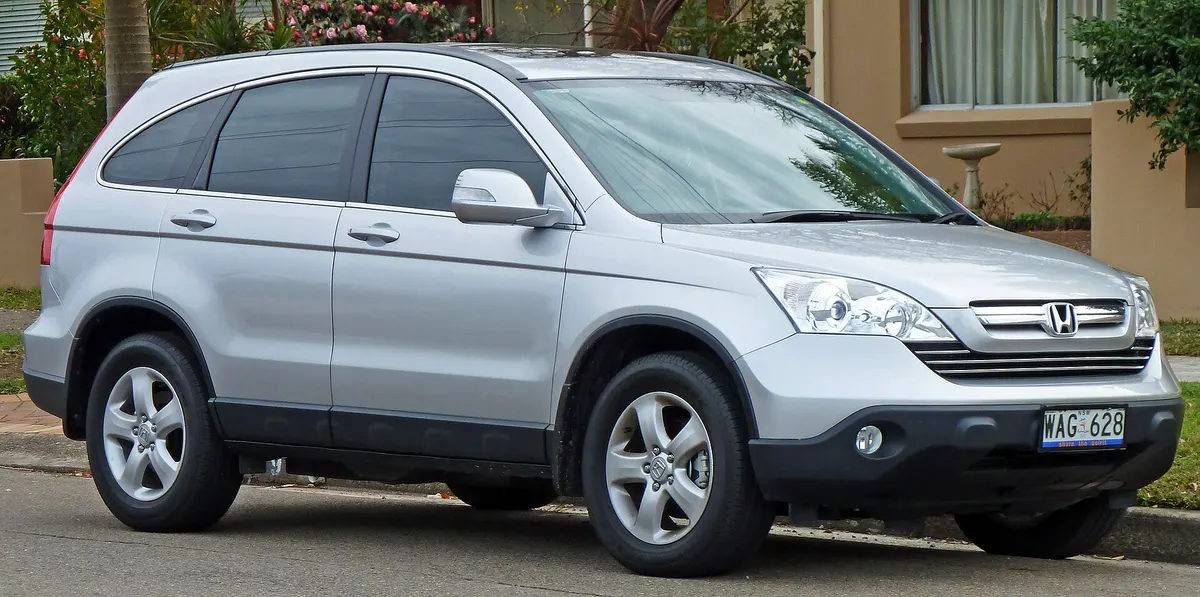
Engines
- K24Z1 · 2.4L gasoline, 166 hp
Transmissions
- automatic , 5-speed
Drivetrain
FWD / AWD
Body
suv
Trims
LX, EX, EX-L, SE
Honda CR-V part-number cross-reference
Start from the OEM number, then pick the brand you trust. Verified equivalents for the Honda CR-V (2007–2011).
Part links go to Amazon, and to eBay where Amazon does not stock the part. Affiliate links, so we may earn a commission if you buy. Your price is unchanged, and a commission never changes a verdict.
Engine oil filter
Wix
Wix 51356/51358 also listed as compatible on the cross-reference page
Look up Wix engine oil filterMobil 1
Bosch 3323 and Denso 150-2003 also verified on both cross-reference sources
Compare Mobil 1 engine oil filterVerified via: HondaPartsNow: 2009 CR-V OEM oil filter (15400-PLM-A02 current; 15400-RTA-003 shown as replaced by PLM-A02), oilfilter-crossreference.com: Honda 15400-PLM-A02 aftermarket equivalents, GETOPAUTO: 15400-PLM-A02 cross-reference and fitment guide (confirms CR-V fitment)
Engine air filter
Verified via: HondaPartsNow: CR-V air filter catalog by generation (17220-RZA-000 for 2007-2009), airfilter-crossreference.com: Honda 17220-RZA-000 aftermarket equivalents, PartsHawk: Wix 49058 (fits 2007-2009 CR-V; interchanges with 17220-RZA-000)
Engine air filter
Verified via: Bernardi Parts Honda: 17220-REZ-A00 (fits 2010-2011 CR-V only), airfilter-crossreference.com: Honda 17220-REZ-A00 aftermarket equivalents, PartsHawk: Wix 49230 (fits 2010-2011 CR-V)
Cabin air filter
Verified via: HondaPartsNow: CR-V cabin air filter catalog by generation (80292-SDA-407 / 80292-SDA-A01 for 2007-2011), airfilter-crossreference.com: Honda 80292-SDA-A01 aftermarket equivalents
Should I buy a 2007–2011 Honda CR-V?
Buy it, with your eyes open. The 3rd-gen CR-V is a genuinely good used SUV: one proven drivetrain, cavernous interior, cheap parts, and the easy path to 200,000+ miles. What separates a great buy from a headache is checking three specific things before you hand over money: the A/C compressor (a catastrophic internal failure trashes the whole system), oil consumption on 2008–2011 K24 engines (Honda extended the warranty for sticking piston rings), and the door lock actuators (a near-universal failure on this generation). 2010–2011 cars with documented oil-consumption repair already done are the sweet spot.
Best years
2010, 2011
Years to avoid
2007 (earliest electronics, first-year door-lock and A/C wear), Any year with undocumented A/C 'Black Death' history
Pre-Purchase Checklist for Honda CR-V
- ☐Run the engine, then pull the dipstick: check the oil level and look for blue smoke on a hard rev. Oil consumption on 2008–2011 K24 engines is the big-ticket issue.
- ☐Ask whether the oil-consumption warranty repair (piston rings / short block under Honda's extension) was performed; a Honda dealer can confirm by VIN.
- ☐Run the A/C on a hot day. Warm air plus any rattle/knock from the compressor is a red flag. A failed compressor can contaminate the entire system.
- ☐Cycle every door lock several times from the fob and the switch. Slow, erratic, or dead actuators are extremely common and add up fast across four doors.
- ☐Rock the engine at idle in gear and listen for clunk on acceleration. Worn/oil-leaking motor mounts are common here.
- ☐Try multiple cold starts; an intermittent no-crank (then it fires after a retry) points to the known weak starter.
- ☐On AWD cars, ask for rear differential fluid service history. The rear diff wants Honda Dual Pump fluid on a real interval or it shudders in tight turns.
Common Honda CR-V problems & repair costs
A/C compressor failure ('Black Death')
$1,200–$2,500Symptoms: A/C blows warm; sometimes a knock or rattle from the compressor before it quits. When the compressor fails internally, metal shavings and black contaminated oil get pumped through the condenser, expansion valve, and lines.
Fix: If the compressor 'grenades,' you cannot just bolt on a new compressor. The debris will kill it. The correct fix is a new compressor plus condenser, receiver/drier, and expansion valve, with the full system flushed. Honda issued a warranty extension covering A/C compressor clutch issues (TSB 12-072), but that coverage has expired.
Sources: 1A Auto: Top 5 3rd-gen CR-V problems, NHTSA complaints: 2009 CR-V, CarComplaints: CR-V A/C
Excessive oil consumption (sticking oil-control rings, K24)
$1,500–$4,000Symptoms: Oil level drops between changes with no visible leak; in worse cases blue smoke on a hard pull, fouled plugs, or hesitation. Often a quart every 1,500–3,000 miles when the rings stick.
Fix: Carbon deposits cause the oil-control rings to stick in their grooves. Honda's bulletin (12-089) and a warranty extension to 8 years covered piston-ring/short-block repair on affected 2008–2011 CR-Vs; many were fixed free. Out of coverage, the realistic fix is a ring job or short block. Meanwhile, monitor and top off oil.
Sources: Honda OEM warranty extension: oil consumption (sticking rings), MotorReviewer: K24 engine problems
Door lock actuator failure
$250–$450Symptoms: Doors lock right after you unlock them, lock/unlock at random while driving, buzz or grind from inside the door, or a lock that quits entirely. When one fails, others usually follow.
Fix: Replace the failed actuator(s), roughly $300–$400 per door at a shop, cheaper DIY. A 2014 class-action settlement led Honda to extend coverage (TSB 14-083 / 14-084) on the driver's door, but that program expired in 2015, so repairs are now out of pocket.
Sources: HondaProblems: 3rd-gen CR-V lock actuator failure, Go-Parts: 2007–2016 CR-V door lock actuator
Worn / oil-leaking motor mounts
$250–$700Symptoms: Vibration at idle, a clunk on acceleration or when shifting into gear, and sometimes an oil weep from the hydraulic side mount as it deteriorates.
Fix: Replace the failed mount(s). The side/front mounts go first; a common and well-documented job. Worth catching early. Excess movement from a collapsed mount stresses driveline parts.
Sources: Edmunds forums: CR-V engine mounts, CarComplaints: CR-V engine
Intermittent starter failure
$300–$600Symptoms: Turn the key and you get a click or nothing, then it cranks fine on a second try. The classic dying-starter pattern; eventually it won't start at all.
Fix: Replace the starter motor. A reman or OEM starter is a straightforward fix; the old hammer-tap trick is only a roadside band-aid.
Sources: 1A Auto: Top 5 3rd-gen CR-V problems
Day to day the 3rd-gen CR-V is cheap to run: one engine, one transmission, parts everywhere, and simple maintenance. Budget for the known items: an A/C system repair if the compressor lets go, door lock actuators as they fail one by one, motor mounts with age, and oil top-offs (or a ring job) on an oil-burning K24. AWD cars add the rear differential, which needs genuine Honda Dual Pump fluid on schedule or it shudders in tight, low-speed turns. None of this is exotic; it's just a list to price in before you buy.
Cost calculator
What will this Honda CR-V cost you by a given mileage?
Drag to a mileage. We total the documented problems whose typical onset falls at or before it. The same cost ranges listed above, nothing new invented.
$0 estimated repair range
5-Year Maintenance Schedule & Cost to Own
Every scheduled service by mileage, fluid capacities, independent shop ranges, and parts cross-references.
Have a repair quote for this Honda CR-V?
Audit against OEM book times, uncover duplicate pad and rotor labor, and verify parts markups.
How to fix common Honda CR-V problems (DIY)
Replace a door lock actuator
Tools: Phillips + Torx screwdrivers, Trim panel removal tool, Socket set (8–10mm), Electrical connector pick
- Disconnect the battery so you don't trip the window/airbag systems while working.
- Pop the trim clips and screws, then carefully remove the door panel and peel back the vapor barrier.
- Unbolt the latch/actuator assembly from the door edge and unclip its electrical connector and rods.
- Install the new actuator/latch, reconnect the rods and connector, and bolt it back in.
- Reconnect the battery and test lock/unlock from the switch and fob before reinstalling the panel.
Parts
- Door lock actuator (3rd-gen CR-V) · Amazon $25–$60
- Door panel clip set (replacements) · Amazon $8–$15
Replace a worn engine mount
Tools: Floor jack + jack stands, Socket set (12–17mm), Breaker bar, Torque wrench
- Support the engine from below with a floor jack and a block of wood under the oil pan.
- Remove the through-bolt and bracket bolts on the worn mount.
- Raise the engine slightly to free the old mount and pull it out.
- Fit the new mount, hand-start all bolts, then torque to spec with the engine resting at its natural height.
- Lower the engine and test for vibration at idle in gear.
Parts
- Engine mount (3rd-gen CR-V 2.4L) · Amazon $30–$70
- OEM Honda mount (alternative) · Honda parts $90–$160
Rear differential fluid change (AWD)
Tools: Ratchet + 3/8" drive (fill/drain plugs), Fluid pump or squeeze bottle, Drain pan
- With the car level, remove the fill plug first (so you know you can refill before you drain).
- Remove the drain plug and let the old fluid drain fully.
- Reinstall the drain plug with a fresh washer and torque to spec.
- Pump in genuine Honda Dual Pump fluid until it reaches the fill hole, then reinstall the fill plug.
Parts
- Honda Dual Pump rear diff fluid (DPSF) · Amazon $30–$50
- Drain/fill plug washers · Amazon $5–$10
Some parts links are affiliate links. We may earn a commission at no cost to you. We only list parts that fit this generation.
The short version
The 2007–2011 Honda CR-V is a sensible used SUV with a simple, durable formula: one 2.4L K24 engine, one 5-speed automatic, front- or all-wheel drive, and a huge interior for the footprint. Maintained, it runs to 200,000–250,000 miles without drama.
What you’re buying around is a short list of well-documented failures. The 2008–2011 engines can burn oil because the oil-control rings stick. Honda extended the warranty to 8 years and replaced many engines, but that window has closed. The A/C compressor can fail internally and send metal debris through the entire system, turning a simple repair into a $1,500–$2,500 one. And the door lock actuators fail so reliably that a 2014 class-action settlement forced a warranty extension (also now expired).
What that means when you’re shopping
Treat three checks as non-negotiable. Pull the dipstick and watch for blue smoke on a hard rev to gauge oil consumption. Then ask, by VIN, whether the warranty repair was already done. Run the A/C on a hot day and listen for any knock from the compressor. Then cycle every door lock a few times; slow or dead actuators are normal for this generation and add up across four doors.
A 2010–2011 car with the oil-consumption repair documented is the best version of this CR-V. Everything else is ordinary, cheap, well-understood maintenance, not a reason to walk away: motor mounts, the occasional weak starter, rear differential fluid on AWD models.
On the AWD models
The all-wheel-drive system is reliable but particular about fluid. The rear differential needs genuine Honda Dual Pump fluid on a real service interval; skip it and you’ll feel a shudder or hear noise in tight, slow turns like parking lots. It’s an easy, inexpensive service. Just make sure it’s been done.
How this file is built: failure modes and cost ranges are compiled from NHTSA complaint data, Honda’s own warranty-extension actions and service bulletins, owner forums, and parts/repair sources, then sanity-checked against shop-floor experience. Cost figures are independent-shop estimates and vary by region. Spot something off? Tell us.
Viral car myths, checked against this car
- Outdated
Does a "$1 mineral" really double car battery life? The Epsom-salt reality.
The mineral is Epsom salt (magnesium sulfate). It was a real desulfation hack for serviceable flooded-cell batteries 40+ years ago. It does not work on modern sealed AGM or EFB batteries, and trying it on yours will void the warranty without helping the battery.
- Dangerous
Is the "$2 liquid that destroys engine sludge forever" real? Our shop-floor verdict.
An aggressive solvent flush on a high-mileage engine is a textbook way to spin a bearing. The viral 'kitchen-cabinet flush' is folklore that real shops spend money cleaning up after.
Frequently asked questions
Which 2007–2011 Honda CR-V years are best to buy?
The 2010–2011 cars are the safest pick, especially one with the oil-consumption warranty repair already documented. The whole run shares the same engine and transmission, so the differences are mostly about how many of the known wear items (A/C, door locks, oil consumption) have already been addressed.
Is the oil consumption problem covered by Honda?
Honda extended the warranty to 8 years on affected 2008–2011 CR-V engines for sticking oil-control rings (bulletin 12-089), and many got a ring job or short block free. That coverage has since expired, so on a car still consuming oil the repair is now on you, which is why you check it before buying.
What is A/C 'Black Death' on the CR-V?
It's a catastrophic internal compressor failure that pumps metal debris and contaminated oil through the whole A/C system. You can't just replace the compressor. The debris will destroy the new one. A proper fix means new compressor, condenser, drier, and expansion valve plus a full system flush, which is why it gets expensive.
How many miles will a 3rd-gen CR-V last?
A well-maintained 2.4L CR-V commonly reaches 200,000–250,000 miles. The K24 engine and 5-speed automatic are durable; most big repairs come from the specific items on this list rather than the drivetrain simply wearing out.
Are the door lock problems expensive to fix?
Each actuator runs roughly $300–$400 at a shop, far less if you do it yourself. The catch is that failures tend to spread from door to door, so over time you may replace several. The old class-action warranty extension expired in 2015, so it's an out-of-pocket repair now.
Every Honda CR-V generation
The full case file run, beyond the generation before and after this one.
Cross-shopped rivals
Files on what buyers weigh against the Honda CR-V of this era.