Case file · HONDA-CR-V-2017-2022 · 5th gen (RW/RT)
Honda CR-V 2017–2022Common problems, reliability & repair costs
The 5th-gen CR-V is a roomy, efficient, well-built compact SUV, but the popular 1.5L turbo carries a real, documented oil-dilution problem (gasoline mixing into the engine oil) that's worst on 2017–2018 cars and in cold climates. Honda extended the powertrain warranty to cover it. Add an A/C compressor seal leak Honda also extended warranty for, a fuel-pump safety recall, and an AWD rear-differential issue, and this is a good SUV you have to buy with your eyes open.
2020, 2021, 2022
2017–2018 1.5L turbo (worst oil dilution, in cold climates e
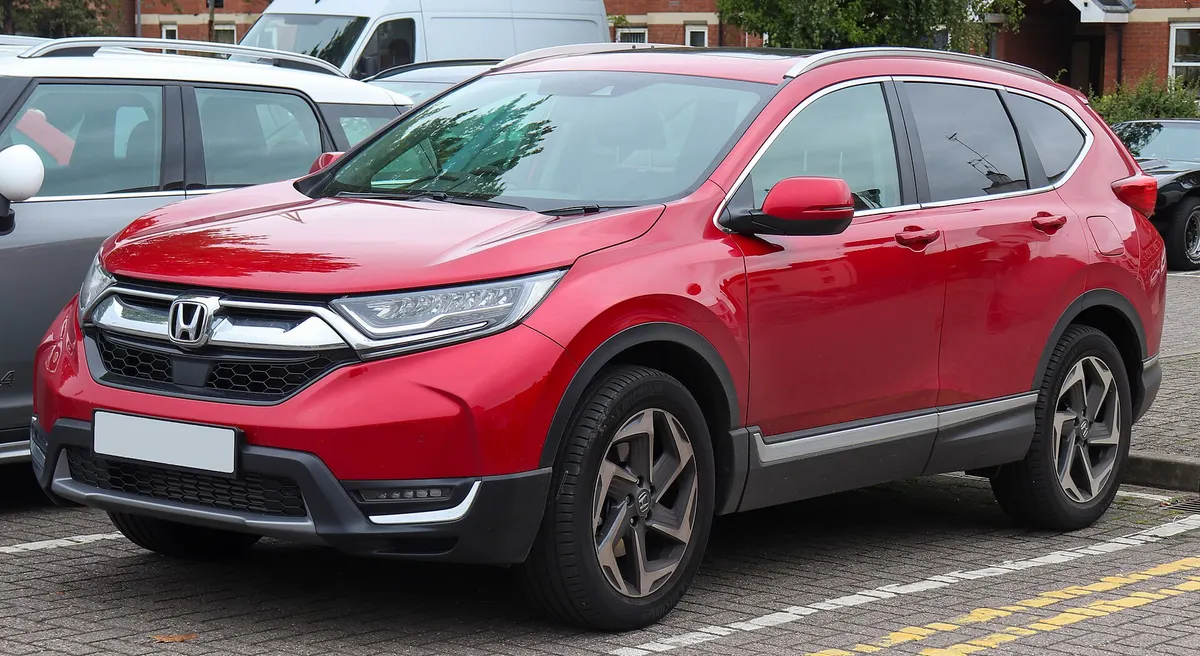
Engines
- L15BE · 1.5L gasoline, 190 hp
- K24W · 2.4L gasoline, 184 hp
- LFB2 (2.0L Atkinson + two-motor hybrid) · 2.0L hybrid, 212 hp
Transmissions
- cvt
- eCVT (Honda's label) · single-speed
Drivetrain
FWD / AWD
Body
suv
Trims
LX, EX, EX-L, Touring
Honda CR-V part-number cross-reference
Start from the OEM number, then pick the brand you trust. Verified equivalents for the Honda CR-V (2017–2022).
Part links go to Amazon, and to eBay where Amazon does not stock the part. Affiliate links, so we may earn a commission if you buy. Your price is unchanged, and a commission never changes a verdict.
Motor oil
Honda
Honda Ultimate Full Synthetic 0W-20, sold by the quart at any Honda dealer; exceeds API SN and ILSAC GF-6. It's the safe default, not a requirement. Any API-certified 0W-20 meets the same spec.
Find Honda motor oil on AmazonMobil 1
API SQ/SP, ILSAC GF-7A, dexos1 Gen 3, more approvals than this car needs. Ignore the 20,000-mile claim on the jug: on the 1.5T, follow the Maintenance Minder and change sooner if you do lots of short cold trips.
Look up Mobil 1 motor oilPennzoil
Independent lab sampling reads API SP / ILSAC GF-6A off the label. Common warehouse-club jug.
Check Pennzoil motor oilCastrol
Exceeds API SQ/SP, meets ILSAC GF-7. There is no cheaper conventional option in this grade. 0W-20 is only made as full synthetic or synthetic blend.
See Castrol motor oilValvoline
ILSAC GF-7A, API SQ/SP; Valvoline now labels it Advanced Protection. Stocked in 1-quart and 5-quart at most big-box stores.
Compare Valvoline motor oilVerified via: Honda 2017 CR-V Owner's Manual (US): recommended engine oil 0W-20 with the API Certification Seal, no dexos or HTO-06 named anywhere in the book (p. 556); change capacity including filter 3.7 US qt (3.5 L) 1.5L / 4.6 US qt (4.4 L) 2.4L (p. 562), EngineOilDB, 2018 CR-V capacity per engine: 1.5T 3.7 qt with filter / 3.4 without, 2.4L K24W 4.6 qt with filter / 4.4 without, both SAE 0W-20, College Hills Honda: Genuine Honda Ultimate Full Synthetic 0W-20, part 08798-9137 (exceeds ILSAC GF-6 and API SN), Mobil 1 Extended Performance 0W-20 product page: API SQ/SP, ILSAC GF-7A, dexos1 Gen 3, PQIA lab report: Pennzoil Platinum SAE 0W-20 label reads API SP / ILSAC GF-6A, Castrol EDGE: exceeds API SQ/SP/SN PLUS/SN, meets ILSAC GF-7 and GM dexos1 Gen 3, Valvoline, Advanced Protection Full Synthetic SAE 0W-20: ILSAC GF-7A, API SQ/SP, sold in 1 qt and 5 qt, Castrol USA: 0W-20 is sold only as full synthetic or synthetic blend, never as a conventional oil
Engine oil filter
Wix
Wix 51356/51358 also listed as compatible on the cross-reference page
Look up Wix engine oil filterMobil 1
Bosch 3323 and Denso 150-2003 also verified on both cross-reference sources
Compare Mobil 1 engine oil filterVerified via: HondaPartsNow: 2018 CR-V OEM oil filter (15400-PLM-A02 primary; RTA-003/PLM-A01 listed for LX 2.4L trims), oilfilter-crossreference.com: Honda 15400-PLM-A02 aftermarket equivalents, GETOPAUTO: 15400-PLM-A02 cross-reference and fitment guide (confirms CR-V fitment)
Engine air filter
Verified via: College Hills Honda: 17220-5AA-A00 Air Filter 1.5L Turbo (2017-2022 CR-V 1.5T, 2016-2021 Civic 1.5T), airfilter-crossreference.com: Honda 17220-5AA-A00 aftermarket equivalents, airfilter-crossreference.com: Fram CA12050 reverse lookup (maps to Honda 17220-5AA-A00)
Engine air filter
EPAuto
EPAuto's CA12259-designated panel filter; listing states it replaces 17220-5PH-A00 for CR-V 2.4L 2017-2019
Find EPAuto engine air filterFram
number verified via the fetched EPAuto GP259 (CA12259) listing tied to this exact application; FRAM's own site could not be fetched (blocked)
Look up Fram engine air filter, 2017-2019Verified via: HondaPartsNow: 17220-5PH-A00 genuine air cleaner element (fits 2017-2019 CR-V LX 2WD/AWD), Amazon: EPAuto GP259 (CA12259) engine air filter for Honda CR-V 2.4L 2017-2019, replaces 17220-5PH-A00
Engine air filter
Fram
The industry cross-reference designation for 17220-5K0-A00; scoped hybrid-only.
See Fram engine air filterEPAuto
CA11399-pattern panel filter; listing covers Accord Hybrid 2014-2022 and CR-V Hybrid 2020-2022.
Compare EPAuto engine air filterVerified via: College Hills Honda: 17220-5K0-A00 genuine air filter (Hybrid), fits 2014-2022 Accord Hybrid and 2020-2022 CR-V Hybrid, Honda Parts Hub: 17220-5K0-A00, 14-22 Accord Hybrid and 20-22 CR-V Hybrid engine air filter, airfilter-crossreference.com: Honda 17220-5K0-A00 aftermarket equivalents (Fram CA11399 among them), Amazon: EPAuto GP399 (CA11399), Accord Hybrid 2014-2022 / CR-V Hybrid 2020-2022
Cabin air filter
Fram
Fresh Breeze; cross-referenced to Honda 80291-T5R-A01 / 80292-TF0-G01
Look up Fram cabin air filterEPAuto
EPAuto's CF11182 equivalent; listing includes CR-V among fitted models
Check EPAuto cabin air filterVerified via: HondaPartsNow: 2019 CR-V cabin air filter (80291-T5R-A01; notes supersession to 80291-TF3-E01), Bernardi Parts Honda: 80291-T5R-A01 cabin pollen filter (fits CR-V 2017-2025; replaced by 80291-TF3-E01), airfilter-crossreference.com: Fram CF11182 reverse lookup (maps to Honda 80291T5RA01 / 80292-TF0-G01), Amazon: EPAuto CP182 (CF11182) cabin air filter, Honda CR-V among fitted models
Spark plugs
Honda (NGK)
NGK ILZKAR8J8SY iridium; the factory plug Honda's own catalog assigns to EX/EX-L/Touring trims this generation.
See Honda spark plugs on AmazonNGK
Same ILZKAR8J8SY plug in NGK's aftermarket box; also fits 2017-2020 Civic Si 1.5T.
Compare NGK spark plugsVerified via: HondaPartsNow: 2018 CR-V spark plugs by trim (12290-5PA-A01 NGK ILZKAR8J8SY for EX/EX-L/Touring), Honda Factory Parts: 12290-5PA-A01 (ILZKAR8J8SY) (NGK), 2017-2020 Honda applications, Amazon: NGK 95660 ILZKAR8J8SY Laser Iridium, listed for Honda CR-V 2017-2020 1.5T, Tunersports: NGK 95660 Laser Iridium, 17-20 Civic Si and 17-20 CR-V
Spark plugs
Honda (Denso)
Denso DXE22H-series iridium; the Denso-branded factory option for the 2.4L LX.
Find Honda spark plugs on AmazonHonda (NGK)
NGK DILKAR7H11GS; the NGK-branded factory option Honda lists for the same LX application. Either OEM plug is correct.
Look up Honda spark plugsNGK
Same DILKAR7H11GS Laser Iridium in NGK's aftermarket box; NGK and Walmart both scope it to 2015-2019 CR-V 2.4L.
Check NGK spark plugsVerified via: HondaPartsNow: 2018 CR-V spark plugs by trim (12290-5A2-A02 and 12290-RDF-A01 both assigned to 5 Door LX), HondaPartsNow: 12290-5A2-A02 genuine spark plug (fits 2017 CR-V LX 2WD/AWD; 2015-2019 CR-V among applications), NGK: 96964 DILKAR7H11GS Laser Iridium product page, Walmart: NGK 96964 DILKAR7H11GS, fits select 2015-2019 Honda CR-V 2.4L
Spark plugs
Honda (NGK)
NGK DILZKAR7D11S iridium; Honda's catalog assigns it to every 2020-2022 CR-V Hybrid trim.
See Honda spark plugs on Amazon, 2.0LNGK
Same DILZKAR7D11S plug under NGK's aftermarket stock number; mostly sold via marketplace listings, so the OEM box is the safer buy.
Compare NGK spark plugs, 2.0LVerified via: HondaPartsNow: 2020 CR-V Hybrid spark plug (12290-6C1-A01 DILZKAR7D11S, all hybrid trims), Bernardi Parts: 12290-6C1-A01 SPARK PLUG (DILZKAR7D11S) (NGK), eBay: NGK 12290-6C1-A01 DILZKAR7D11S / stock 95997, 18-22 Accord Hybrid and 20-22 CR-V Hybrid
Front brake pads
Honda
Front pad set with shims; superseded at the 2020 facelift by 45022-TLA-A10.
Find Honda front brake pads on AmazonAkebono
ProACT ultra-premium ceramic with hardware; same D2036 pad shape used across 2017-2022 gas cars.
Look up Akebono front brake padsPowerStop
Z17 Evolution ceramic with hardware; Walmart fitment lists 2017-2019 CR-V and 2020-2024 CR-V gas.
Check PowerStop front brake padsVerified via: HondaPartsNow: CR-V brake pad sets by year (45022-TLA-A01 for 2017-2019, all trims), Honda Automotive Parts: OEM 2017-2019 CR-V brake pads 45022-TLA-A01, PartsGeek: Akebono ACT2036 front pad set, Honda CR-V applications, Walmart: PowerStop 17-2036 front Z17 pads, 2017-2019 CR-V and 2020-2024 CR-V gas
Front brake pads
Honda
Front pad set for the facelifted gas cars; carries into the 6th gen catalog through 2026.
See Honda front brake pads on AmazonPowerStop
Z17 Evolution ceramic; Walmart fitment explicitly covers 2020-2024 CR-V gas (not the Hybrid).
Compare PowerStop front brake padsAkebono
PartsGeek scopes ACT2036 to 2017-2025 CR-V; some retailers list it only to 2019, so confirm on the fitment checker at purchase.
Find Akebono front brake padsVerified via: HondaPartsNow: CR-V brake pad sets by year (45022-TLA-A10 for 2020-2026 gas trims), Honda Car Parts Direct: 2020+ CR-V front pad set 45022-TLA-A10, Walmart: PowerStop 17-2036 front Z17 pads, 2020-2024 CR-V gas fitment, PartsGeek: Akebono ACT2036 front pad set, 2017-2025 CR-V scope
Front brake pads
Honda
Front pad set with shims and springs, scoped by Honda's catalog to the 2020-2022 CR-V Hybrid. No aftermarket equivalent verified for the Hybrid; the big pad brands scope their CR-V front sets to the gas cars.
Look up Honda front brake pads on AmazonVerified via: HondaPartsNow: CR-V Hybrid brake pad sets (45022-TLA-A50 front, 2020-2022 hybrid trims), Honda Automotive Parts: OEM 2020-2022 CR-V front disc pad set 45022-TLA-A50
Serpentine belt
Honda (Mitsuboshi)
Factory belt is stamped MITSUBOSHI or BANDO, not Honda; shared with the 1.5T Civic. No aftermarket SKU cleanly verified for this exact application, so buy OEM.
Check Honda serpentine belt on AmazonVerified via: HondaPartsNow: 2018 CR-V drive belts by trim (31110-59B-014 for EX/EX-L/Touring 1.5T), HondaPartsNow: 31110-59B-014 genuine belt, ACG (routing and Mitsuboshi/Bando note), Honda Automotive Parts: OEM serpentine belt 31110-59B-014 (2016+ Civic/CR-V 1.5T)
Serpentine belt
Honda (Mitsuboshi)
7-rib EPDM belt; drives alternator and water pump with A/C.
See Honda serpentine belt on AmazonDayco
7PK1440 Poly-V; Walmart and Dayco resellers scope it to 2015-2019 CR-V 2.4L and 2013-2017 Accord 2.4L.
Compare Dayco serpentine beltVerified via: HondaPartsNow: 2018 CR-V drive belts by trim (31110-5X6-J01 for 5 Door LX), Honda Factory Parts: 2017-2019 CR-V serpentine belt 31110-5X6-J01, Walmart: Dayco 5070567, fits select 2015-2019 CR-V and 2013-2017 Accord, Sixity Auto: Dayco serpentine belt, CR-V 2.4L application
Battery
Honda
Honda's generic Group 51R/500-amp dealer battery, the factory-fill size for 2017-2019.
Find Honda battery on AmazonInterstate
Group 51R, 500 CCA; the 51R option Interstate's CR-V fitment page returns alongside an MT-47/H5 upgrade.
Look up Interstate batteryVerified via: HondaPartsNow: 31500-SR1-100M genuine battery (51R/500Amp85), fits CR-V through 2019, AutoZone: 2019 CR-V Group 51R battery fitment category, Interstate Batteries: Honda CR-V fitment (MT-51R 500 CCA; MT-47/H5 650 CCA option)
Battery
Honda (Clarios)
H5EFB LN2 battery; supersedes 31500-TLA-A11 and 31500-TNY-A01 and runs through the 2026 catalog.
Check Honda battery on AmazonVerified via: HondaPartsNow: 31500-TLA-EFB100M genuine battery (H5EFB), Norm Reeves Honda: 31500-TLA-EFB100M battery (H5EFB LN2) (Clarios), CR-V application, Folsom Lake Honda: 2020-2025 Honda battery 31500-TLA-EFB100M
Battery
Honda
Honda's generic Group 51/500-amp battery assembly, the number Honda's catalog returns for all 2021 CR-V Hybrid trims.
See Honda battery on AmazonVerified via: HondaPartsNow: 2021 CR-V Hybrid car batteries (31500-SB2-100M, Battery Assembly 51/500Amp85, all hybrid trims), Honda Automotive Parts: 31500-SB2-100M vehicle battery (Group 51, 500 CCA, conventional), CRVGuide: CR-V battery size by year (2017-2022 gas and Hybrid both in the 51/51R family), CR-V Owners Club: 5th gen Hybrid stock 51R 12V battery replacement thread
Wiper blades
Honda
Driver-side 650 mm blade assembly; passenger side is 76630-TLA-A02 (425 mm). Same numbers on the gas and Hybrid catalogs.
Compare Honda wiper blades on AmazonBosch
Beam blades, sold as the 26A17A two-pack; hook-arm (9x3/9x4) compatible.
Find Bosch wiper bladesTrico
Trico Gold kit with 26 in, 17 in, and the 12 in rear in one box; Amazon fitment lists 2017-2020 CR-V (sizes unchanged through 2022).
Look up Trico wiper bladesVerified via: HondaPartsNow: 2018 CR-V wiper blades (76620-TLA-A02 650 mm driver, 76630-TLA-A02 425 mm passenger, 76730-TRN-H01 rear), HondaPartsNow: 2020 CR-V Hybrid wiper blades (same TLA front blade numbers as gas), WipersGuide: 2018 CR-V wiper fitment, 26/17/12 hook arms, Bosch ICON 26A17A among listed fits, Amazon: Trico Gold 18-2617-12B kit for 2017-2020 Honda CR-V
Should I buy a 2017–2022 Honda CR-V?
Buy it, but verify the engine, not just the body. A 5th-gen CR-V is spacious, fuel-efficient, and easy to live with, and most go the distance. The catch is the 1.5L turbo's oil-dilution issue: gasoline works its way into the oil, raising the oil level and, over many short cold trips, accelerating wear. It's worst on 2017–2018 cars, especially in cold climates; Honda issued software updates and extended the powertrain warranty to 6 years to cover it. On the used market, 2020–2022 cars are the calmer pick. If you want to sidestep the turbo entirely, hunt down a 2017–2019 LX with the 2.4L naturally aspirated engine. Whatever you buy, confirm the open recalls (fuel pump, A/C) are done and check the dipstick for a gas smell.
Best years
2020, 2021, 2022
Years to avoid
2017–2018 1.5L turbo (worst oil dilution, in cold climates especially)
Pre-Purchase Checklist for Honda CR-V
- ☐Pull the dipstick and smell the oil: a strong gasoline smell or an oil level above the full mark is the classic oil-dilution tell on the 1.5L turbo.
- ☐Ask if the oil-dilution software update (Product Update / service bulletin) was applied, and whether the extended 6-year powertrain warranty was ever used.
- ☐Check recall status by VIN at nhtsa.gov or owners.honda.com. The low-pressure fuel-pump recall (23V-858 / 24V-763) covers many 2018–2020 cars.
- ☐On AWD cars, ask about any loss-of-power episode or rear-differential service; the rear diff oil seal was the subject of an NHTSA investigation on 2018–2022 AWD models.
- ☐Run the A/C on a hot day and confirm it blows cold; the A/C compressor shaft seal can leak, and Honda extended that warranty to 10 years, so verify before paying out of pocket.
- ☐On 2017–2019 cars, test the infotainment: check for freezing, random reboots, or a screen stuck at full brightness, and confirm Bluetooth/CarPlay pair cleanly.
- ☐Confirm regular oil changes (more frequent is better on the turbo) and any transmission fluid service in the records. On gas cars that means CVT fluid (Honda HCF-2). On the 2020–2022 Hybrid it means the drive-unit fluid (Honda ATF DW-1). The Hybrid has no CVT.
Common Honda CR-V problems & repair costs
Oil dilution: gasoline mixing into the engine oil (1.5L turbo)
$0–$300Symptoms: Oil level rises above the full mark, a strong gasoline smell on the dipstick, and on early cars occasional cold-start misfires. Unburned fuel from the direct-injection turbo gets past the rings and collects in the crankcase, worst on short trips in cold weather. Over time the diluted oil protects the engine less well.
Fix: Honda's remedy was a software update (revised idle/warm-up and climate-control logic) plus an extended powertrain warranty to 6 years with no mileage cap for oil-dilution problems. Outside any warranty, the practical owner fix is more frequent oil changes and avoiding lots of very short cold trips. Catastrophic engine damage is rare; the bigger risk is long-term wear if it's ignored.
Sources: CarComplaints: 2017 CR-V engine (High Oil Level With Gas In Oil), CarComplaints: Honda oil dilution settlement (extended powertrain warranty), ClassAction.org: Honda oil dilution defect (CR-V, Civic, Accord)
A/C compressor shaft seal leak (weak or no cooling)
$0–$1,500Symptoms: A/C that gradually stops blowing cold as refrigerant leaks out. The compressor shaft seal can swell and deform after a change in refrigerant/oil spec, then leak.
Fix: Honda issued TSB A23-040 and extended the A/C compressor shaft-seal warranty to 10 years with no mileage limit, so the repair is often free at a dealer. Out of coverage, an independent shop replaces the compressor (and usually the receiver/drier) and recharges the system.
Sources: NHTSA TSB: 2017–22 CR-V A/C Compressor Shaft Seal Leak, CarComplaints: 2017 CR-V A/C
Low-pressure fuel pump failure (engine stall): safety recall
$0–$0Symptoms: A failure-prone fuel-pump impeller can deform and seize the pump, causing the engine to run rough, fail to start, or stall while driving.
Fix: Covered by recall. Dealers replace the fuel pump module free of charge. Recall 23V-858 (later expanded by 24V-763) covers a large group of 2017–2020 Honda/Acura vehicles, including many 2018–2020 CR-Vs. Verify the fix was performed by VIN; it's free, so there's no reason to skip it.
Sources: NHTSA: Recall 23V-858 Part 573 Safety Recall Report, Consumer Reports: Honda/Acura fuel pump recall
AWD rear differential oil-seal failure (loss of motive power)
$1,500–$3,000Symptoms: On all-wheel-drive cars, a failing rear-differential oil seal can let the diff seize, suddenly reducing or losing motive power, in some reported cases dropping from highway speed to around 10 mph.
Fix: NHTSA investigated about 1.7 million 2018–2022 AWD CR-V and HR-V vehicles and closed the probe in July 2024; Honda revised the seal spec and inspection process in late 2021. There was no broad recall, so out-of-warranty repair (rear differential / seal work) is on the owner. AWD buyers should ask about any power-loss episode and rear-diff service history.
Sources: Autoblog: NHTSA opens CR-V/HR-V differential investigation, Lemon Law Help: Honda CR-V/HR-V loss-of-power investigation
Infotainment glitches (freeze, reboot, connectivity)
$0–$600Symptoms: Touchscreen freezes or reboots on its own, occasionally gets stuck at full brightness at night, and Bluetooth / Apple CarPlay connections drop or won't pair reliably. Largely improved on 2020–2022 cars.
Fix: Try the available software updates first (often free at a dealer) and a hard reset. A persistently faulty head unit may need replacement, but most cases are software, not hardware.
Sources: Motor Illustrated: CR-V 5th gen (2017–2022) problems report
CVT shudder / hesitation at light throttle
$200–$500Symptoms: Some owners feel a shudder or brief hesitation under gentle acceleration at low speeds. Usually a drivability annoyance rather than a failure, but worth noting on a test drive.
Fix: A CVT fluid service with the correct Honda HCF-2 fluid resolves many cases. Keep the fluid on a sane interval. The CVT itself is generally durable when maintained. None of this applies to the 2020–2022 Hybrid. It has no CVT, and its drive unit takes Honda ATF DW-1, not HCF-2.
Sources: Motor Illustrated: CR-V 5th gen (2017–2022) problems report
Day to day, a 5th-gen CR-V is cheap to run: good fuel economy, common parts, and simple routine maintenance. The unusual thing about this generation is how much of the big-ticket risk is covered by Honda's own actions: the oil-dilution extended powertrain warranty (6 years), the A/C shaft-seal extended warranty (10 years), and the fuel-pump recall (free). That makes verifying paperwork and recall status the single most valuable thing a buyer can do. The real out-of-pocket exposure is an out-of-warranty AWD rear differential, a tired A/C system past the 10-year window, and the slow cost of ignoring oil dilution. On the 1.5L turbo, change the oil more often than the maximum interval, especially if you do lots of short cold trips.
Cost calculator
What will this Honda CR-V cost you by a given mileage?
Drag to a mileage. We total the documented problems whose typical onset falls at or before it. The same cost ranges listed above, nothing new invented.
$0 estimated repair range
5-Year Maintenance Schedule & Cost to Own
Every scheduled service by mileage, fluid capacities, independent shop ranges, and parts cross-references.
Have a repair quote for this Honda CR-V?
Audit against OEM book times, uncover duplicate pad and rotor labor, and verify parts markups.
How to fix common Honda CR-V problems (DIY)
Engine oil & filter change (1.5L turbo)
Tools: Floor jack + jack stands (or ramps), 17mm socket for drain plug, Oil filter wrench (cap-style 64–65mm), Drain pan + funnel
- Warm the engine briefly, shut it off, then raise and support the front of the car.
- Remove the under-engine splash shield, place the drain pan, and remove the drain plug to drain the old oil.
- Unscrew the oil filter, lightly oil the new filter's gasket, and hand-tighten the new filter.
- Reinstall the drain plug with a new crush washer and torque to spec.
- Refill with the specified 0W-20, run the engine, check for leaks, then recheck the level, and on this engine, sniff the dipstick for fuel smell.
Parts
- 0W-20 full-synthetic oil (~3.7 qt) · Amazon $25–$40
- Oil filter (5th-gen CR-V) · Amazon $6–$12
Engine & cabin air filter change
Tools: No tools needed for most of it (hand clips)
- Open the glovebox, squeeze the side stops to drop it fully, and pull the cabin-filter cover.
- Slide out the old cabin filter and insert the new one with the airflow arrow pointing down.
- At the engine, release the airbox clips, lift the lid, drop in the new panel filter, and re-clip the lid.
Parts
- Cabin air filter (5th-gen CR-V) · Amazon $10–$18
- Engine air filter (5th-gen CR-V) · Amazon $15–$25
Replace front wiper blades & cabin refresh
Tools: None (snap-on blades)
- Lift each wiper arm off the glass and find the release tab on the blade clip.
- Press the tab, slide the old blade down and off the hook.
- Slide the new blade on until it clicks, then gently lower the arm back to the glass.
Parts
- Wiper blade set (5th-gen CR-V sizes) · Amazon $25–$45
Some parts links are affiliate links. We may earn a commission at no cost to you. We only list parts that fit this generation.
The short version
The 2017–2022 Honda CR-V is a genuinely good compact SUV, spacious, efficient, and built to go the distance, that comes with a short list of well-documented asterisks. The biggest is oil dilution on the popular 1.5L turbo: gasoline works its way into the engine oil, raising the oil level and giving the dipstick a fuel smell. It’s worst on 2017–2018 cars and in cold climates with lots of short trips. Honda pushed out software updates and extended the powertrain warranty to six years to cover it.
The good news is how much of this generation’s risk Honda already paid for. The oil-dilution warranty extension, a 10-year extended warranty on the leaky A/C compressor seal, and a free fuel-pump recall mean a careful buyer’s job is mostly paperwork: confirm the updates and recalls were done by VIN.
What that means when you’re shopping
If you’re looking at a 2020–2022 CR-V, you’ve landed on the calmer end of the run: the oil-dilution updates were in place, the infotainment was sorted out, and the rear-differential seal had been revised. Buy on condition and service history.
If you’re looking at a 2017–2018 turbo car, treat the engine oil as the first thing to check: pull the dipstick, smell it for fuel, and confirm the oil-dilution software update was applied. None of this means walk away; it means verify.
Want to skip the turbo question entirely? Hunt for a 2017–2019 LX with the 2.4L naturally aspirated engine. No turbo, no oil dilution, just a plain, durable powertrain, and the quiet sleeper pick of this generation.
Everything else is ordinary used-CR-V stuff: an A/C system that might be on borrowed time (often covered), early infotainment quirks, and on the gas cars a CVT that’s happy as long as the fluid is fresh. The 2020–2022 Hybrid has no CVT at all. On AWD cars, ask one extra question about the rear differential and any loss-of-power episode.
How this file is built: failure modes and cost ranges are compiled from NHTSA complaint, recall, and investigation data, Honda’s own warranty extensions and service bulletins, CarComplaints reporting, and owner forums, then sanity-checked against shop-floor experience. Cost figures are 2024–2026 US independent-shop estimates and vary by region. Spot something off? Tell us.
Viral car myths, checked against this car
- Mostly False
Do shops lose money on cheap oil changes? We opened a real shop's books to find out.
A quick lube's true all-in cost is roughly $16–40 per car. Even a $59 special turns a gross profit before the upsells start. The 'below cost' story is only true at full-service shops doing far more work per visit, which is a different product wearing the same name.
Frequently asked questions
What is the oil-dilution problem on the Honda CR-V 1.5 turbo?
On the 1.5L turbo, unburned gasoline can get past the piston rings and collect in the oil, raising the oil level and giving the dipstick a fuel smell. It's worst on 2017–2018 cars and in cold climates with lots of short trips. Honda issued software updates and extended the powertrain warranty to 6 years for oil-dilution problems. It rarely destroys an engine, but it shouldn't be ignored. Change oil more often and avoid lots of very short cold drives.
Which Honda CR-V years are best to buy used?
The 2020–2022 cars are the calmer pick: oil-dilution updates were in place, the infotainment was improved, and the rear-differential seal spec was revised late in the run. If you want to skip the turbo entirely, look for a 2017–2019 LX with the 2.4L naturally aspirated engine: no turbo, no oil dilution, just a simpler powertrain.
Is the A/C problem on the 2017–2022 CR-V covered by Honda?
Often, yes. The A/C compressor shaft seal can leak, and Honda extended that warranty to 10 years with no mileage limit (TSB A23-040). If a 2017–2022 CR-V isn't blowing cold, have a Honda dealer check eligibility before paying for a condenser or compressor out of pocket.
Does the 5th-gen CR-V have a fuel pump recall?
Many do. Recall 23V-858 (later expanded by 24V-763) covers a large group of 2017–2020 Honda/Acura vehicles, including many 2018–2020 CR-Vs, for a fuel pump that can fail and stall the engine. Dealers replace it free. Check any car you're considering by VIN at nhtsa.gov or owners.honda.com.
Should I worry about the AWD rear differential?
It's worth a question, not a deal-breaker. NHTSA investigated 2018–2022 AWD CR-V and HR-V models for a rear-diff oil seal that could fail and cause loss of power, and closed the probe in 2024 after Honda revised the seal. There was no broad recall, so on an AWD car ask whether it ever lost power and whether the rear differential has been serviced.
Every Honda CR-V generation
The full case file run, beyond the generation before and after this one.
Cross-shopped rivals
Files on what buyers weigh against the Honda CR-V of this era.