Case file · JEEP-GRAND-CHEROKEE-2011-2021 · 4th gen (WK2) (WK2)
Jeep Grand Cherokee 2011–2021Common problems, reliability & repair costs
The WK2 Grand Cherokee looks and drives like a near-luxury SUV at a used-truck price, and that's exactly the trap. The good ones are the later, simply-equipped 3.6L cars. The expensive ones are early-build electrical gremlins (the TIPM), cylinder-head wear on 2011–2013 Pentastars, the Quadra-Lift air suspension that fails out of warranty, and the EcoDiesel's cooler problems. Buy on options and build year, not just mileage.
2017, 2018, 2019
2011 (worst year: TIPM electrical, early Pentastar heads) +2 more
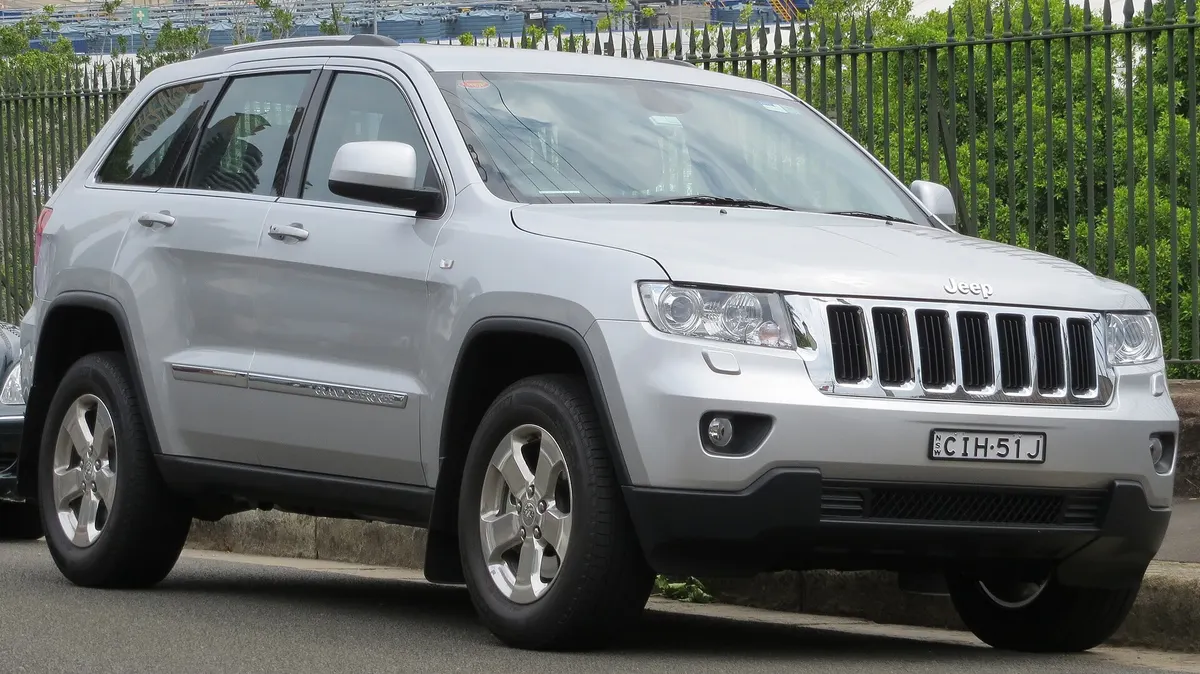
Engines
- 3.6L Pentastar V6 · 3.6L gasoline, 290 hp
- 5.7L HEMI V8 · 5.7L gasoline, 360 hp
- 6.4L HEMI V8 (SRT) · 6.4L gasoline, 470 hp
- 6.2L Supercharged V8 (Trackhawk) · 6.2L gasoline, 707 hp
- 3.0L EcoDiesel V6 · 3.0L diesel, 240 hp
Transmissions
- W5A580 · automatic, 5-speed
- automatic
- 845RE / 8HP70 (ZF 8-speed) · automatic, 8-speed
Drivetrain
RWD / 4WD
Body
suv
Trims
Laredo, Limited, Overland, Summit, Trailhawk, SRT, Trackhawk
Jeep Grand Cherokee part-number cross-reference
Start from the OEM number, then pick the brand you trust. Verified equivalents for the Jeep Grand Cherokee (2011–2021).
Part links go to Amazon, and to eBay where Amazon does not stock the part. Affiliate links, so we may earn a commission if you buy. Your price is unchanged, and a commission never changes a verdict.
Oil filter (3.6L Pentastar, 2011-2013 - EARLY cartridge)
Mopar
Mopar MO-744; cartridge element kit. Fits 2011-2013 Grand Cherokee and 2012-2013 Wrangler JK 3.6L.
Find Mopar oil filter on AmazonFram
Extra Guard cartridge; the correct Fram for the 2011-2013 3.6L, NOT CH11665 (that is the 2014-2021 filter)
Look up Fram oil filterWix
metal-free cartridge; Wix 57526 is the same element in the synthetic/XP line
Check Wix oil filterVerified via: JeepWorld - Mopar 68079744AD listed for 2011-2013 Grand Cherokee / 2012-2013 Wrangler JK 3.6L Pentastar, Amazon - FRAM CH10358 cartridge listed for the 3.6L Pentastar (2011-2013), Amazon - WIX 57526 listed for Chrysler/Dodge/Jeep 3.6L Pentastar (11-13)
Oil filter (3.6L Pentastar, 2014-2021 - LATE cartridge)
Verified via: oilfilter-crossreference - Mopar 68191349AC to Wix WL10010, Fram CH11665, Purolator L36296, O'Reilly Auto Parts - WIX WL10010 engine oil filter (Pentastar 3.6L application), Walmart - 68191349AC = MO-349 for Chrysler/Jeep/Dodge/RAM 3.2L/3.6L V6
Oil filter (HEMI V8 - 5.7L / 6.4L SRT / 6.2L Trackhawk)
Mopar
Mopar MO-899, the larger HEMI spin-on. A minority of later-5.7 references cite a smaller MO-339 (04892339AA), but retailer fitment (Quadratec 08-21) and brand lookups confirm 04884899AC across the whole WK2.
Check Mopar oil filter on AmazonWix
owner-confirmed on a 2015 GC 5.7; NAPA Gold 7899 and Carquest 84899 are the same filter
See Wix oil filterMopar
SRT/Trackhawk premium 'white' filter - optional upgrade on the 6.4/6.2
Compare Mopar oil filterVerified via: Quadratec - Mopar 04884899AC engine oil filter fits 08-21 Grand Cherokee WK/WK2 (incl. 5.7), AMSOIL vehicle lookup - 2015 Grand Cherokee 5.7L V8 (engine code EZH) oil filter
Oil filter (3.0L EcoDiesel)
Mopar
superseded by 68492616AA; earlier 68109834AA is the same fitment
Find Mopar oil filter on Amazon, 3.0LVerified via: oilfilter-crossreference - Fram CH11794 crosses to Mopar 68229402AA, Wix WL10060, Mann HU7018z (3.0 CRD diesel), FinditParts - WIX WL10060 engine oil filter cross-reference (3.0L EcoDiesel), IDParts - Mopar 68229402AA / 68492616AA EcoDiesel oil filter (Grand Cherokee & Ram 3.0L)
Engine air filter (3.6L / 5.7L / 6.4L gas)
Mopar
Diesel (3.0L EcoDiesel) uses Mopar 4861688AB; Trackhawk (6.2L) uses 53010798AD - both different airboxes.
Compare Mopar engine air filter on AmazonVerified via: FinditParts - Mopar 4861756AA cross-reference (Wix 49756, Purolator TA36116), Mopar eStore - 4861756AA air filter listed for 2012 Grand Cherokee SRT8 6.4L (also 3.6/5.7)
Cabin air filter
Mopar
superseded by 68606182AA. A diesel-specific cabin filter (Mopar 68260792AB) is also cataloged for 2014-2019 3.0L cars, but 68079487AB is listed as fitting all engines including the diesel.
Check Mopar cabin air filter on AmazonVerified via: Quadratec - Mopar 68079487AB cabin filter fits 11-22 Grand Cherokee WK2 (3.0 diesel, 3.6, 5.7, 6.2, 6.4), FinditParts - Mopar 68079487AB cross-reference (Wix 24017, Denso 453-6022, Mahle LA780, Bosch P3934WS)
Spark plugs (3.6L Pentastar)
Mopar
the plug Mopar packages is a Champion RER8ZWYCB4; the earlier ...AD revision is the same fitment. Later production also sourced NGK laser-iridium.
Check Mopar spark plugs on AmazonVerified via: JustForJeeps - Mopar SP149125AE for 2011-2021 Grand Cherokee WK2 3.6L (also JK 3.6, KL 3.2L), JeepGarage spark-plug specs thread - SP149125AD = Champion RER8ZWYCB4, .043 gap, 6 plugs
Spark plugs (5.7L HEMI, 2011-2013 - EARLY)
Verified via: JeepWorld - 5.7L HEMI plugs SPLZFR5C11 for '11-'13 Grand Cherokee WK2 (set of 16), AllMoparParts - Mopar SPLZFR5C11 5.7L HEMI spark plug
Spark plugs (5.7L HEMI, 2014-2021 - LATE, iridium)
Verified via: JustForJeeps - Mopar SP143877AA for 2014-2021 Grand Cherokee WK2 5.7L HEMI (set of 16), JeepGarage 5.7L spark-plugs thread - SP143877AA = NGK 1LZFR5E-11 iridium, .044 gap
Front brake pads (non-SRT)
Mopar
front disc brake pad kit; ...AB/AE are earlier revisions of the same kit
See Mopar front brake pads on AmazonWagner
OEX ceramic; fits gas and EcoDiesel WK2 (crosses to Mopar 68052369AB)
Compare Wagner front brake padsVerified via: JustForJeeps - Mopar front brake pads (68052369 series) for 2011-2022 Grand Cherokee WK2, IDParts - Wagner OEX1904A front pads for WK2, cross to Mopar 68052369AB, RockAuto - Akebono ACT1414 front brake pad set
Wiper blades
Aftermarket (match by length)
any J-hook beam blade in these sizes (Bosch ICON, Rain-X, Trico, etc.)
See Aftermarket wiper bladesVerified via: USAWipers - Jeep Grand Cherokee 2011-2021 wiper sizes (22/21 front, 11 rear), AutoPadre - Jeep Grand Cherokee wiper blade sizes by year
Serpentine belt (3.6L V6 & 3.0L EcoDiesel, 2011-2015)
Verified via: Quadratec - Mopar 05184647AB serpentine belt, 11-15 Grand Cherokee WK2 3.0L EcoDiesel & 3.6L Pentastar, AllMoparParts - Mopar 5184647AB serpentine drive belt (3.6L)
Battery (BCI group)
OE size
Check OE size battery on AmazonVerified via: ExtremeTerrain - Odyssey ODP-AGM94R (H7) fits 16-21 V8 HEMI Grand Cherokee WK2, PowerTex - 2021 Jeep Grand Cherokee BCI Group 94R / H7 battery
Should I buy a 2011–2021 Jeep Grand Cherokee?
Buy a late one, lightly optioned, and you'll be fine; buy an early loaded one and you're rolling the dice on four separate expensive systems. The sweet spot is a 2017–2021 3.6L Laredo or Limited on coil springs (not air), without the EcoDiesel. Those are genuinely good used SUVs. The cars to be careful with are 2011–2013 (TIPM electrical, early Pentastar heads), anything with Quadra-Lift air suspension (it fails out of warranty and is thousands to fix), and the EcoDiesel unless its EGR-cooler recall is done and the oil cooler has been addressed. A clean later 3.6L on steel springs is a different ownership experience than an early air-sprung diesel.
Best years
2017, 2018, 2019, 2020, 2021
Years to avoid
2011 (worst year: TIPM electrical, early Pentastar heads), 2014 (8-speed shift complaints, EcoDiesel cooler issues, recall-heavy), 2012–2013 (early Pentastar head wear)
Pre-Purchase Checklist for Jeep Grand Cherokee
- ☐On 2011–2013 3.6L cars: cold-start it and watch for a check-engine light / rough idle. Pull codes. P0300/P0302/P0304/P0306 (left-bank misfires) point at the known cylinder-head wear.
- ☐On any 2011–2013 car: test EVERY electrical function: remote start, power locks, horn, wipers, fuel pump priming. Erratic behavior or no-start/hard-start is the classic TIPM symptom. Check the VIN for recalls 14V-530, 15V-115 and 19V-813 (fuel pump relay in the TIPM).
- ☐Confirm whether the car has Quadra-Lift AIR suspension or steel coil springs. With the engine running, watch it raise/lower through its modes and listen for a constantly-running compressor or a 'Service Air Suspension' message.
- ☐On the EcoDiesel: confirm the EGR-cooler recall (NHTSA 20V-699 / FCA W79) was completed by VIN, and ask about oil-cooler history. Look for coolant loss with no external leak.
- ☐On 2014-2021 cars: test-drive at light throttle 40–60 mph and through stop-and-go. Harsh 1-2/2-1 shifts or a shudder at lockup is the 8-speed complaint. Ask if TCM software is up to date.
- ☐Pull up the carpet edges (front and rear footwells) and smell for must/mildew. The WK2 has a well-documented sunroof-drain/cowl water-leak problem that ruins electronics.
- ☐Check service records for cooling work; overheating from thermostat/EGR-cooler issues is common on heavily-complained years.
Common Jeep Grand Cherokee problems & repair costs
TIPM (Totally Integrated Power Module) failure
$600–$1,400Symptoms: Hard-start or no-start (often a stuck/failed fuel-pump relay), random electrical gremlins: doors locking themselves, horn or alarm going off, wipers running on their own, dead battery from a relay that won't shut off.
Fix: Replacement TIPM (programmed to the VIN) or a rebuilt unit; some owners do a fuel-pump-relay bypass as a cheaper interim fix for the most common no-start failure. The 2011 model has the most TIPM complaints on CarComplaints. Check the VIN for recalls 14V-530, 15V-115 and 19V-813 (fuel pump relay in the TIPM).
Sources: JeepProblems: Faulty TIPM, CarComplaints: Jeep Grand Cherokee
3.6L Pentastar left cylinder-head wear (misfires)
$1,500–$4,000Symptoms: Persistent misfire on the left bank (cylinders 2, 4, 6; codes P0302/P0304/P0306), rough idle, hesitation, loss of power, check-engine light. Caused by premature valve-guide and valve-seat wear.
Fix: Cylinder-head replacement (typically the left head). FCA issued TSB 09-002-14 and an extended warranty on affected 2011–2013 engines. Many were repaired free. Confirm by VIN. Out of coverage, it's a real head job.
Sources: Autoevolution: Pentastar V6 left cylinder head failure, Go-Parts: P0306 cylinder 6 misfire (2011–2018 GC)
Quadra-Lift air suspension failure
$1,200–$5,000Symptoms: 'Service Air Suspension' message, corner(s) sagging or won't raise, compressor running constantly or burned out, leaking air lines/struts. Failure rate climbs after about 60k miles.
Fix: Diagnose the actual leak first. It's often the front air-spring limit valves or harness, not the compressor everyone blames. Repairs range from a compressor (around $2,000+) to front air springs ($3,600–$5,000 at a dealer). A coil-spring conversion kit is a common out-of-warranty alternative.
Sources: Strutmasters: Jeep GC air suspension fix, Suncore: WK2 Quadra-Lift issues
EcoDiesel EGR cooler and oil cooler failure
$1,000–$4,000Symptoms: EGR cooler: thermal fatigue cracks it internally, letting coolant into the intake, a documented fire risk (subject of a federal recall). Oil cooler: coolant loss with no external leak; left unaddressed it can kill the engine.
Fix: The EGR cooler is covered by recall NHTSA 20V-699 (FCA W79, 2014-2019 Grand Cherokee 3.0L). Dealers replace the cooler (and inspect the intake) free. The oil cooler is NOT recalled despite widespread failures; budget for replacement, and don't ignore unexplained coolant loss on a diesel.
Sources: NHTSA Recall 20V-699 / EGR cooler report (PDF), JeepGarage: EcoDiesel oil cooler failure killed the engine
ZF 8-speed harsh shifting / torque-converter shudder
$200–$4,000Symptoms: Jerky 1-2/2-1 and low-gear shifts, delayed engagement into drive/reverse, and a light-throttle shudder around 40–60 mph from torque-converter lockup slip.
Fix: Start with a TCM software update and adaptive-learn reset (TSBs 18-034-20 and 21-013-21 address shift quality). That is cheap and often enough. Persistent cases trace to the valve body / mechatronic unit, which is the expensive end.
Sources: Cherish Your Car: GC transmission problems, JeepGarage: rough-shifting 8-speed thread
Sunroof-drain / cowl water leaks
$150–$2,000Symptoms: Wet carpet or floor pan (front or rear), musty smell, mold, and shorted electronics. Sunroof control modules, airbag sensors in the headliner, and interior lighting harnesses can fail when water tracks in.
Fix: Clear or reroute the sunroof drains and reseal the cowl/leak point first (cheap if caught early). The big bills come from drying out the interior and replacing electronics the water already killed. No recall, but multiple TSBs and class-action suits exist.
Sources: JeepGarage: multiple water-leak sources, passenger floor, Edmunds: Jeep Grand Cherokee water leaks
This is a more expensive SUV to own than its used price suggests, and the spread is huge depending on how it's equipped. A late 3.6L on coil springs is reasonable: normal SUV wear (brakes, tires, fluids) plus the occasional ignition coil or thermostat. Air suspension, the EcoDiesel, or an early electrical-troubled car each add a category of multi-thousand-dollar risk. The V8s drink fuel and eat tires and brakes; the SRT/Trackhawk are specialist machines. Whatever you buy, the WK2 rewards buying the simplest, latest version you can find and punishes buying the loaded early one.
Cost calculator
What will this Jeep Grand Cherokee cost you by a given mileage?
Drag to a mileage. We total the documented problems whose typical onset falls at or before it. The same cost ranges listed above, nothing new invented.
$0 estimated repair range
5-Year Maintenance Schedule & Cost to Own
Every scheduled service by mileage, fluid capacities, independent shop ranges, and parts cross-references.
Have a repair quote for this Jeep Grand Cherokee?
Audit against OEM book times, uncover duplicate pad and rotor labor, and verify parts markups.
How to fix common Jeep Grand Cherokee problems (DIY)
Replace ignition coil pack(s) on the 3.6L Pentastar
Tools: Socket set (8–10mm), Small extension, Flat screwdriver (connector clips)
- Pull the codes to identify the misfiring cylinder(s). Note: persistent left-bank misfires can be the head issue, not just a coil. Rule that out first.
- Remove the engine cover and locate the coil on top of the affected cylinder.
- Unclip the electrical connector and remove the single hold-down bolt.
- Pull the old coil straight up; transfer or replace the spark plug if it's due.
- Seat the new coil, reinstall the bolt and connector, and clear the codes.
Parts
- Ignition coil (3.6L Pentastar) · Amazon $15–$40 each
- Spark plug set (3.6L) · Amazon $30–$60 (set of 6)
Clear the sunroof drain tubes
Tools: Compressed air or a weed-trimmer line, Shop towels, Plastic trim tool
- Open the sunroof and locate the drain holes in the front corners of the sunroof tray.
- Gently feed compressed air (low pressure) or a soft trimmer line into each drain to dislodge debris.
- Confirm flow by pouring a small amount of water into the tray and watching it exit below the vehicle (front by the wheels).
- Dry any standing water in the footwells and check that the carpet underneath isn't already soaked.
Parts
- Sunroof drain cleaning tool kit · Amazon $8–$15
Replace the front air-spring (Quadra-Lift) with a coil-spring conversion
Tools: Floor jack + jack stands, Spring compressor (if reusing struts), Socket and wrench set, Torque wrench
- Diagnose first. Confirm the air spring/strut is the leak and not a valve or harness, so you don't convert unnecessarily.
- Safely lift and support the vehicle and remove the wheel.
- Disconnect the air line and electrical connector, then unbolt the top mount and lower strut bolts.
- Remove the air strut and install the coil-spring conversion strut per the kit instructions.
- Repeat per corner as needed, then deal with the suspension warning (most kits include a bypass module to silence the air-system fault).
- Torque everything to spec, reinstall wheels, and verify ride height and no warning lights.
Parts
- Quadra-Lift coil-spring conversion kit (WK2) · Amazon $300–$600
- Air-suspension bypass module · Amazon $60–$120
Some parts links are affiliate links. We may earn a commission at no cost to you. We only list parts that fit this generation.
The short version
The 2011–2021 Jeep Grand Cherokee (the WK2) is one of the best-value used SUVs on paper and one of the easiest to overpay for in practice. It looks and rides like something far more expensive, and that’s the problem. Air suspension, the EcoDiesel, and a stack of early electronics are what make it feel premium, and they are exactly the parts that turn into four-figure repair bills once the warranty is gone.
Sort the WK2 into two piles. The good pile is the later, lightly-equipped 3.6L on steel coil springs. The risky pile is anything early (electrical TIPM trouble, 2011–2013 Pentastar head wear), anything with Quadra-Lift air suspension, and the EcoDiesel.
What that means when you’re shopping
If you’re looking at a 2017–2021 3.6L Laredo or Limited on coil springs, you’ve sidestepped most of the landmines. Buy it like any used SUV: condition, records, a clean transmission test-drive.
If you’re looking at a 2011–2013 car, treat the electrical system and the engine as the two things to clear first. Test every electrical function for the TIPM, and pull codes for left-bank misfires (P0302/P0304/P0306) for the head issue. A dealer can check by VIN whether the head warranty extension was already used.
If the car has air suspension or the EcoDiesel, price in the risk. Air suspension fails out of warranty and costs thousands; the diesel’s EGR cooler is a recalled fire risk and its oil cooler isn’t recalled at all. Neither is a dealbreaker on a documented, sorted example. But on an unknown one, they’re how a cheap Jeep becomes an expensive one.
Everything else is ordinary big-SUV ownership: brakes, tires, fluids, the occasional coil pack, and keeping the sunroof drains clear so water never reaches the electronics.
How this file is built: failure modes and cost ranges are compiled from NHTSA recall data, manufacturer TSBs and warranty-extension actions, CarComplaints owner reports, and owner forums, then sanity-checked against shop-floor experience. Cost figures are independent-shop estimates and vary by region and trim. Spot something off? Tell us.
Viral car myths, checked against this car
- Misleading
Is the "$2 liquid that stops any leak" really banned in 11 states?
Automotive stop-leak products are not banned in any US state. The products are real (Bar's Leaks, BlueDevil), they work in specific narrow situations, and they can permanently damage your cooling or oiling system if applied to the wrong leak.
- Dangerous
Is the "$2 liquid that destroys engine sludge forever" real? Our shop-floor verdict.
An aggressive solvent flush on a high-mileage engine is a textbook way to spin a bearing. The viral 'kitchen-cabinet flush' is folklore that real shops spend money cleaning up after.
- Outdated
Does a "$1 mineral" really double car battery life? The Epsom-salt reality.
The mineral is Epsom salt (magnesium sulfate). It was a real desulfation hack for serviceable flooded-cell batteries 40+ years ago. It does not work on modern sealed AGM or EFB batteries, and trying it on yours will void the warranty without helping the battery.
Frequently asked questions
Which Jeep Grand Cherokee years should I avoid?
2011 is the worst. It has the most TIPM electrical complaints and is an early Pentastar with the head-wear risk. 2012–2013 share the head issue, and 2014 is recall-heavy with the new 8-speed's shift complaints and EcoDiesel cooler problems. The 2017–2021 3.6L cars are the safer used buy.
Is the 3.6L Pentastar cylinder-head problem covered?
On affected 2011–2013 engines, FCA extended the warranty for the left-head misfire issue, and many were repaired free. If the extension no longer covers a car, the head job is on you, so it matters before you buy. Confirm by VIN whether the repair was already done.
Should I buy a Grand Cherokee with air suspension?
Only with eyes open. Quadra-Lift rides nicely but fails out of warranty, and repairs run from about $1,200 to $5,000 depending on what's actually leaking. If you don't need the off-road height adjustment, a coil-spring car is cheaper to live with, or budget for a conversion kit down the road.
Is the EcoDiesel worth it?
It has great torque and range, but only buy one where the EGR-cooler recall (NHTSA 20V-699) is documented as completed and you've checked the oil-cooler history. Those two cooler failures are the diesel's signature problems, and the oil cooler isn't covered by any recall.
How reliable is the WK2 Grand Cherokee overall?
It's middling: better than its reputation if you pick a late, simply-equipped 3.6L, and worse than its reputation if you buy an early loaded car with air suspension or the diesel. The platform's value is real; the risk lives in the options and the build year.
Every Jeep Grand Cherokee generation
The full case file run, beyond the generation before and after this one.
Cross-shopped rivals
Files on what buyers weigh against the Jeep Grand Cherokee of this era.