Case file · NISSAN-ALTIMA-2013-2018 · 5th gen (L33)
Nissan Altima 2013–2018Common problems, reliability & repair costs
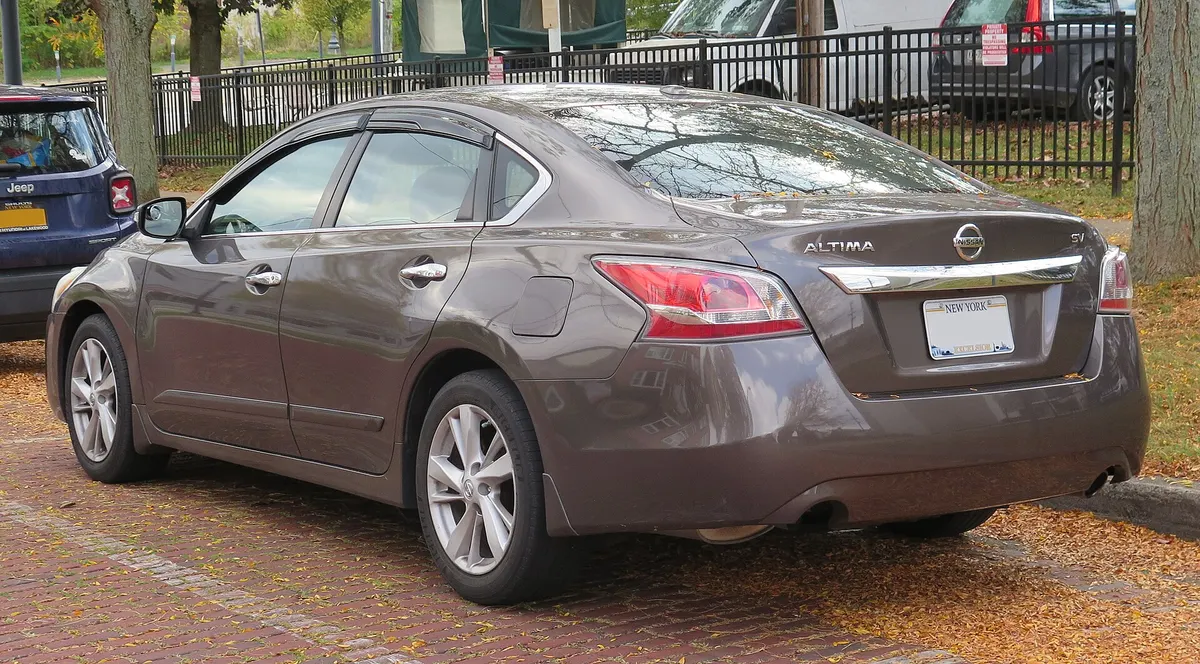
The L33 Altima is a roomy, comfortable, fuel-efficient midsize sedan that is dragged down by one thing: its Jatco CVT. Early 2013–2015 cars in particular are notorious for transmission shudder, overheating, and outright failure, which is why Nissan extended the CVT warranty to 84 months / 84,000 miles. Get one with a healthy (or already-replaced) transmission and it's a cheap, pleasant commuter. Buy blind and the gearbox can cost more than the car.
2016, 2017, 2018
2013 (worst CVT failure rate; CarComplaints 'avoid like the +1 more
Engines
- QR25DE · 2.5L gasoline, 182 hp
- VQ35DE · 3.5L gasoline, 270 hp
Transmissions
- Jatco JF011E / RE0F10x · cvt
Drivetrain
FWD
Body
sedan
Trims
S, SV, SL, SR, 3.5 SL, 3.5 SR
Nissan Altima part-number cross-reference
Start from the OEM number, then pick the brand you trust. Verified equivalents for the Nissan Altima (2013–2018).
Part links go to Amazon, and to eBay where Amazon does not stock the part. Affiliate links, so we may earn a commission if you buy. Your price is unchanged, and a commission never changes a verdict.
Motor oil
Nissan
Genuine Nissan 0W-20 full synthetic, sold in 1-quart bottles at any Nissan dealer, so one change is 5 bottles. It is the safe default, not a requirement. The manual asks for an API- or ILSAC-certified 0W-20, and any bottle with the API starburst on it qualifies. Nothing proprietary here: no dexos, no Honda HTO-06, no Nissan-only approval.
Find Nissan motor oil on AmazonMobil 1
API SQ and SP Resource Conserving, ILSAC GF-7A, more approvals than this car asks for. Sold as a 5-quart jug and as single quarts.
Look up Mobil 1 motor oilPennzoil
Independent lab sampling reads API SP / ILSAC GF-6A off the label. Usually the cheapest full-synthetic 0W-20 jug on a big-box shelf.
Check Pennzoil motor oilValvoline
ILSAC GF-7A, API SQ/SP. Valvoline's own store lists $41.99 for the 5-quart jug and $13.49 for a single quart, which is the price to beat.
See Valvoline motor oilCastrol
Exceeds API SQ/SP/SN PLUS, ILSAC GF-7. Worth knowing: 0W-20 is only sold as full synthetic or synthetic blend, so there is no cheap conventional version of this grade to hunt for.
Compare Castrol motor oilVerified via: AutoPadre, Nissan Altima oil capacity and viscosity by year and engine (2013-2018 2.5L QR25DE: 4.9 qt / 4.6 L, 0W-20), 2013 Nissan Altima Owner's Manual: p.9-2 capacities and viscosity (QR25DE 4-7/8 qt 0W-20, footnote *9 permitting conventional SAE 5W-30), 2018 Nissan Altima Owner's Manual: p.10-2 Genuine Nissan Motor Oil 0W-20 SN for both engines; p.10-6 requires an API- or ILSAC-certified oil, NissanPartsDeal: Genuine Nissan 0W-20 synthetic engine oil, 999PK-000W20N, 1 quart, Mobil 1 Extended Performance 0W-20 product page: API SQ / SP Resource Conserving, ILSAC GF-7A, PQIA lab report: Pennzoil Platinum SAE 0W-20 label reads API SP / ILSAC GF-6A, Valvoline, Advanced Full Synthetic SAE 0W-20: ILSAC GF-7A, API SQ/SP, sold in 1 qt ($13.49) and 5 qt ($41.99), Castrol EDGE: exceeds API SQ/SP/SN PLUS/SN; 0W-20 carries ILSAC GF-7
Motor oil, 3.5L V6
Nissan
Genuine Nissan 0W-20, 1-quart bottles. This is the number for a 2015-2018 V6 (6 bottles per change). For a 2013 or 2014 V6 the corresponding Nissan grade is 999PK-05W30NN, Genuine Nissan 5W-30, sold as a 6-pack of quarts. Genuine oil is the safe default, not a requirement. An API- or ILSAC-certified oil in the right grade meets the same spec.
Find Nissan motor oil, 3.5l v6 on AmazonMobil 1
Same product line, two grades. Pick by year. The 0W-20 carries API SQ/SP and ILSAC GF-7A. Buy the 5-quart jug plus one single quart.
Look up Mobil 1 motor oil, 3.5l v6Pennzoil
Lab sampling reads API SP / ILSAC GF-6A on the 0W-20 label. Commonly the cheapest full-synthetic jug in either grade.
Check Pennzoil motor oil, 3.5l v6Valvoline
ILSAC GF-7A, API SQ/SP on the 0W-20. Sold in both 1-quart and 5-quart, which is convenient for a 5-1/8-quart fill.
See Valvoline motor oil, 3.5l v6Castrol
Exceeds API SQ/SP/SN PLUS across the line. Unlike 0W-20, 5W-30 is also sold as conventional and as a blend. For this engine buy the full synthetic.
Compare Castrol motor oil, 3.5l v6Verified via: AutoPadre, Nissan Altima oil capacity and viscosity by year and engine (3.5L VQ35DE: 5.1 qt / 4.8 L all years; 5W-30 for 2013-2014, 0W-20 from 2015), 2013 Nissan Altima Owner's Manual: p.9-2 VQ35DE 5-1/8 qt at SAE 5W-30 (its own row, separate from the 2.5L's 0W-20), 2015 Nissan Altima Owner's Manual: p.9-2 one 0W-20 spec now covering both engines, and the one-year VQ35DE capacity misprint (4-7/8 qt printed against 4.8 L), 2018 Nissan Altima Owner's Manual: p.10-2 Genuine Nissan Motor Oil 0W-20 SN for both engines, VQ35DE 5-1/8 qt against 4.8 L, NissanPartsDeal: Genuine Nissan 5W-30 engine oil, 999PK-05W30NN (6 x 1 qt), NissanPartsDeal: Genuine Nissan 0W-20 synthetic engine oil, 999PK-000W20N, 1 quart, Mobil 1 Extended Performance 0W-20 product page: API SQ / SP Resource Conserving, ILSAC GF-7A, Castrol EDGE: exceeds API SQ/SP/SN PLUS/SN; sold in 0W-20 and 5W-30 among other grades
Oil filter
Fram
Extra Guard; XG6607 (Ultra) and TG6607 (Tough Guard) are the same fitment in Fram's other lines.
Look up Fram oil filterVerified via: NissanPartsDeal: 2015 Altima OEM oil filter (15208-65F0E for 2.5L), oilfilter-crossreference.com: Nissan 15208-65F0E alternatives, FinditParts: Nissan 15208-65F0E cross references
Engine air filter
Purolator
PurolatorTECH; retailer fitment confirms 2013-2018 Altima 2.5L.
Compare Purolator engine air filterVerified via: NissanPartsDeal: Altima OEM air filters by year (16546-3TA0A for 2013-2018 2.5L), Sixity Auto: Purolator TA46297 fitment + cross references (Wix 49073, K&N 33-2478, Fram CA11450, OEM 16546-3TA0A), airfilter-crossreference.com: Nissan 16546-3TA0A alternatives
Cabin air filter
Fram
Fresh Breeze; retailer fitment confirms 2013-2018 Altima. Do NOT use CF11173. That fits the previous 2007-2012 Altima.
Look up Fram cabin air filterVerified via: NissanPartsDeal: Altima OEM cabin filters by year (27277-3JC1A / 27277-3JC1B), airfilter-crossreference.com: Nissan 27277-3JC1A alternatives (Fram CF11776, EPAuto CP776), Walmart: FRAM CF11776 fitment (2013-2018 Nissan Altima), Amazon: EPAuto CP776 fitment (Altima 2013-2018)
Spark plugs
NGK
Laser Iridium, NGK stock 94702. Listed as a cross for Nissan 22401-3TA1B; retailer fitment 2013-2018 Altima 2.5L (also 2014-2020 Rogue 2.5L). Do NOT use DILKAR7B11 - that is the 3.5L VQ35DE plug, not the QR25DE plug.
Compare NGK spark plugsDenso
Iridium TT, Denso stock 4710. Retailer listing crosses it to 22401-3TA1B and fits 2013-2018 Altima 2.5L. Denso FXE20HE11C is the OE-style equivalent per the same cross-reference database.
Find Denso spark plugsVerified via: NissanPartsDeal - Altima OEM spark plugs (22401-3TA1B for 2013-2018 2.5L QR25DE), sparkplug-crossreference.com - Nissan 22401-3TA1B alternatives (NGK DF6H11A, Denso IXEH20ETT/FXE20HE11C), Walmart - Denso 4710 Iridium TT for 22401-3TA1B, fits select 2013-2018 Altima, CSP Racing - NGK 94702 = DF6H-11A Laser Iridium
Spark plugs
Nissan
VERIFIED: NissanPartsDeal's fitment table lists 22401-EW61C for 2007-2018 Altima 6 Cyl 3.5L VQ35DE (S, SE, SL, SR, SV, Tech), quantity 6 per vehicle, and OEM Parts Online carries the same number described 'Sedan, 3.5L'. Nissan's official parts store lists it for the 2016 Altima 3.5L VQ35DE (search-result text; the page itself blocked fetches). This is a Denso-made plug: the same catalogs cross it to Denso FXE22HR11. NissanPartsDeal's Altima plug index confirms the split: 22401-3TA1B is the 2013-2018 2.5L, 22401-EW61C is the 2007-2018 3.5L.
Look up Nissan spark plugs on AmazonNGK
Laser Iridium, heat range 7, pre-set gap .043-.044 in (1.1 mm), platinum ground. NGK.com's own fitment lists Nissan Altima S/SL/SR/SV in each of 2013, 2014, 2015, 2016, 2017 and 2018. Newparts shows it as OE-equivalent design for Altima 3.5 V6, gap 0.044 in, 105,000-mi OE interval. Sixity lists it for 2007-2018 Altima 3.5L V6. This is the plug the existing 2.5L card warns you NOT to use on the four-cylinder, which is correct: it is the V6 plug.
Check NGK spark plugsDenso
Iridium Long Life, gap 0.044 in. This is the OE-supplier plug behind Nissan 22401-EW61C. Sixity lists it for 2008-2016 Altima 3.5L V6 (gap 0.044), Walmart's Denso 3442 listing states 'fits select 2008-2018 Nissan Altima' and crosses it to 22401-EW61C, and Newparts' DILKAR7B11 cross-reference names FXE22HR11 / 3442 as the equivalent. Denso IXEH22TT (Iridium TT, stock 4712) appears in the same cross list but was not independently verified for this car, so it is omitted.
See Denso spark plugsVerified via: NissanPartsDeal 22401-EW61C: Plug-Spark, 6 per vehicle, fitment 2007-2018 Nissan Altima S/SE/SL/SR/SV/Tech 6 Cyl 3.5L VQ35DE, plus 350Z, Maxima, Murano, Pathfinder, Quest, Frontier 3.8L, NissanPartsDeal Altima spark plug index: 22401-EW61C = 2007-2018 3.5L VQ35DE; 22401-3TA1B = 2013-2018 2.5L QR25DE; 22401-JA01B = 2007-2013 2.5L, OEM Parts Online (Nissan dealer store) 22401-EW61C: Plug-Spark, description 'Coupe, 3.5L. Sedan, 3.5L.', MSRP $29.33 (fetched page), Official Nissan Parts Store 22401-EW61C, 2007-2026 Nissan; search-result text confirms 2016 Altima S/SE/SL/SR/SV/Tech 3.5L VQ35DE, 6 required (page blocked automated fetch, so this leg is search-snippet only), NGK.com 1406 DILKAR7B11 Laser Iridium: gap .043 in (1.1 mm), heat range 7, platinum ground, 100k longevity; fitment lists Nissan Altima S/SL/SR/SV for 2013 through 2018 (fetched page), Newparts NGK DILKAR7B11: stock 1406, pre-gap .044, Altima 3.5 V6 fitment with 105,000-mi OE interval, cross-reference numbers 1406, 4712, IXEH22TT, FXE22HR11, 3442, 9693, Sixity NGK Laser Iridium 6 pc for 2007-2018 Nissan Altima 3.5L V6: per-year table 2007 through 2018, gap 0.044 in, OE equivalent design, 105,000-mi interval, Sixity Denso Iridium Long Life 6 pc for 2008-2016 Nissan Altima 3.5L V6 (VQ35DE), gap 0.044 in, Walmart Denso 3442 FXE22HR11 listing: 'Fits select: 2008-2018 NISSAN ALTIMA', crosses 22401-EW61C (listing title and search text; the page itself served a bot check)
Front brake pads
Akebono
ProACT ultra-premium ceramic, hardware included. Retailer fitment 2013-2017+ Altima and 2014-2017 Leaf.
Find Akebono front brake padsWagner
OEX premium ceramic. Retailer fitment 2013-2022 Altima front and 2014-2017 Leaf.
Look up Wagner front brake padsBosch
QuietCast premium ceramic. Retailer fitment 2013-2017 Altima and 2014-2017 Leaf front.
Check Bosch front brake padsVerified via: NissanPartsDeal - D1060-3TA0A front pad kit (2013-2020 Altima), AutohausAZ - Akebono ProACT ACT1650 fitment (2013-2017 Altima), PartsHawk - Wagner OEX1650 fitment (2013-2022 Altima front), AutohausAZ - Bosch QuietCast BC1650 fitment (2013-2017 Altima front)
Wiper blades
Bosch
Sold as the paired set 28A16A; lengths match the Altima's 28"/16" spec.
See Bosch wiper blades on AmazonRain-X
Latitude Water Repellency 2-n-1: 5079282-2 is the 28" driver blade, 5079274-2 the 16" passenger blade.
Compare Rain-X wiper bladesVerified via: AutoPadre - Nissan Altima wiper sizes (2013-2018: 28" driver / 16" passenger), Amazon - Bosch ICON 28A16A set (28A & 16A), Amazon - Rain-X 5079282-2 (28" Latitude Water Repellency), Amazon - Rain-X 5079274-2 (16" Latitude Water Repellency), Rural King - Trico Force 25-280 (28"), Rural King - Trico Force 25-160 (16")
Serpentine / drive belt
Gates
Micro-V, aramid-cord EPDM, OE-exact for 2013-2018 Altima 2.5L (also 2014-2020 Rogue). Plain K060563 is the non-aramid listing for the same application.
Check Gates serpentine / drive beltDayco
Poly Rib, aramid-reinforced EPDM, 56.30". Cross-references Gates K060563A and OEM 11720-3TA0A; fits 2013-2018 Altima / 2014-2020 Rogue.
See Dayco serpentine / drive beltVerified via: NissanPartsDeal - Altima OEM drive belt (11720-3TA0A for 2013-2018 2.5L QR25DE), NewParts - Gates K060563A fitment (2013-2018 Altima 2.5L) + OEM crosses incl. 11720-3TA0A, FinditParts - Dayco A060563 cross references (Gates K060563A, Nissan 11720-3TA0A) + 2013-2018 Altima fitment
Battery
Interstate
Flooded Group 35, 550 CCA. Interstate's own fit tool confirms it for the Altima 2.5L (verified on the 2017 2.5L page).
Compare Interstate battery on AmazonExide
Marathon Max AGM Group 35, 650 CCA. Fitment chart includes 2013-2018 Altima 2.5L and 3.5L.
Find Exide batteryVerified via: CarSpecs - Nissan Altima battery group size (Group 35 for 2013-2018), Interstate Batteries - MT-35 fits 2017 Nissan Altima L4/2.5L (Group 35, 550 CCA), PartCatalog - Exide MX35 (Group 35, 650 CCA) fitment incl. 2013-2018 Altima, PowerTex - 2015 Altima battery page (BCI Group 35 / Q85)
Should I buy a 2013–2018 Nissan Altima?
Buy with your eyes open, or walk. The L33 Altima is a genuinely comfortable, spacious, fuel-efficient sedan that is cheap to buy used, and the price reflects the elephant in the room: the Jatco CVT. On 2013–2015 cars the transmission failure rate is high enough that CarComplaints flagged the 2013 as a car to 'avoid like the plague.' These can be fine purchases IF the CVT has already been replaced (ideally under Nissan's extended warranty) or shows zero shudder, whine, or overheating on a thorough test drive. The 2016–2018 cars are meaningfully better and the safer pick. On any year, factor in the open hood-latch recall and the 2.5L's appetite for oil. Treat a clean CVT history as non-negotiable, not a nice-to-have.
Best years
2016, 2017, 2018
Years to avoid
2013 (worst CVT failure rate; CarComplaints 'avoid like the plague'), 2014–2015 (still high CVT failure + power-train complaints)
Pre-Purchase Checklist for Nissan Altima
- ☐Drive it 20+ minutes including highway and stop-and-go. Any shudder, hesitation, whine, or a 'rubber-band' surge in RPM means a sick CVT. Walk away or price in a full transmission.
- ☐Ask for proof the CVT was replaced, and whether Nissan's 84-month/84,000-mile warranty extension was used (a Nissan dealer can confirm by VIN).
- ☐Check the open hood-latch recall status by VIN at nhtsa.gov. 2013–2018 Altimas were recalled (and re-recalled) for hoods that can fly open.
- ☐On the 2.5L QR25DE, check the oil level and color, and ask how much oil it uses between changes. High consumption is common past 100k.
- ☐Cold-start it before any warm-up: listen for a metallic timing-chain rattle from the front of the engine that fades after a few seconds.
- ☐On 2015–2017 cars, check the rear door latch recall remedy was done correctly (a re-recall covered doors that could open with the window down).
- ☐Inspect front suspension for clunks and uneven/inner tire wear. Control arms and bushings wear early on this car.
- ☐Confirm the CVT fluid was actually serviced on schedule; many were neglected, which accelerates failure.
Common Nissan Altima problems & repair costs
CVT transmission shudder, overheating, and failure
$3,000–$5,000Symptoms: Shudder or judder under light acceleration, hesitation, a whining or droning noise, RPM flaring without matching speed ('rubber-banding'), jerking, and in later stages overheating and a limp-mode warning before total failure. The factory transmission cooler is widely blamed for letting the CVT run too hot.
Fix: Reman or replacement CVT, often with an upgraded cooler. Nissan extended the CVT warranty to 84 months / 84,000 miles (from 60/60k) on affected cars, and a class-action settlement provided further coverage. Many units were replaced free. Out of coverage, a remanufactured CVT swap is the realistic fix and frequently approaches the car's value.
Sources: NHTSA TSB: Altima/Sentra/Versa CVT warranty extension, CarComplaints: 2014 Altima power train (205 complaints), Nissan CVT class action: BBB National Programs
Hood latch corrosion: hood can open while driving (recall)
$0–$250Symptoms: A poorly painted secondary hood latch corrodes and stops engaging. If the primary latch is released, the hood can fly up at speed and block the driver's view. Over 1.8 million Altimas were recalled.
Fix: Covered by recall (NHTSA 14V-565, 15V-116, 16V-029, 20V-315; Nissan re-recalled it because earlier fixes proved insufficient). Dealer installs a stronger release spring and warning label at no charge. Verify the remedy was performed; if corroded, the latch assembly itself is inexpensive.
Sources: Consumer Reports: Altima hood recall expanded, CarComplaints: hood-latch recall fix lawsuit
2.5L (QR25DE) oil consumption
$200–$4,000Symptoms: The engine progressively burns oil as piston rings wear, a quart every few thousand miles climbing toward a quart every 1,000–1,500 miles by ~150k. Low-oil light, blue smoke on startup, and engine damage if the level isn't watched.
Fix: Mild cases: monitor and top off. Keep oil at the full mark and stay on short oil-change intervals. Severe cases need a piston/ring job or, more commonly given the labor, a used or reman long-block. The cheap insurance is checking oil monthly.
Sources: Go-Parts: QR25DE 2.5L timing/engine reference, CarComplaints: 2013 Altima engine
Timing chain guide / tensioner rattle
$900–$2,000Symptoms: A metallic rattle from the front of the engine on cold start that fades after a few seconds as oil pressure builds. Caused by worn plastic chain guides and a weakening hydraulic tensioner. Affects both the QR25DE and VQ35DE.
Fix: Replace the timing chain kit (chain, guides, tensioner). It's labor-intensive on both engines. Catching it as a cold-start rattle is far cheaper than letting a guide break and the chain jump.
Sources: Go-Parts: 2003–2018 Altima timing chain kit guide, The Nissan Club: QR25DE timing chain slack
Premature front suspension wear
$300–$900Symptoms: Clunks over bumps, a loose or wandering front end, and uneven tire wear. Front control-arm bushings and ball joints wear earlier than expected. A 2013 recall also covered loose suspension/transverse-link bolts.
Fix: Replace worn control arms (the bushings usually aren't sold separately) and follow with an alignment. Check the 2013 suspension-bolt recall was addressed by VIN.
Sources: CarComplaints: 2013 Altima suspension/wheels, Endurance: Nissan Altima years to avoid
If the CVT is healthy, the L33 is cheap to run: parts are everywhere, the 2.5L returns strong real-world mpg, and routine maintenance is ordinary. The whole financial picture, though, hinges on the transmission. A CVT replacement out of warranty ($3,000–$5,000) can exceed the car's value, so the single best thing you can do is keep its fluid serviced and never let it overheat. Budget separately for the 2.5L's oil habit past 100k, an eventual timing-chain job, and front suspension wear. Confirm the hood-latch and any door-latch recalls are closed out. Those are free but safety-critical.
Cost calculator
What will this Nissan Altima cost you by a given mileage?
Drag to a mileage. We total the documented problems whose typical onset falls at or before it. The same cost ranges listed above, nothing new invented.
$0 estimated repair range
5-Year Maintenance Schedule & Cost to Own
Every scheduled service by mileage, fluid capacities, independent shop ranges, and parts cross-references.
Have a repair quote for this Nissan Altima?
Audit against OEM book times, uncover duplicate pad and rotor labor, and verify parts markups.
How to fix common Nissan Altima problems (DIY)
CVT fluid drain-and-fill (preventive)
Tools: Floor jack + jack stands, Socket set, Fluid pump / funnel, Drain pan, Torque wrench
- Warm the car briefly, then shut off and safely raise and support the front.
- Place the drain pan, remove the CVT drain plug, and let it fully drain; measure what comes out.
- Reinstall the drain plug with a new washer and torque to spec.
- Refill through the fill/charging port with the EXACT amount drained, using genuine Nissan NS-3 CVT fluid only. Wrong fluid kills these transmissions.
- Check level per the temperature-based procedure, then verify no leaks on a short drive.
Parts
- Genuine Nissan NS-3 CVT fluid (multiple quarts) · Amazon $80–$140
- CVT drain plug washer / crush washer · Amazon $5–$12
Engine air & cabin filter change
Tools: Screwdriver
- Open the glovebox, release the side stops to drop it down, and pull the cabin filter cover.
- Slide out the old cabin filter and insert the new one with the airflow arrow pointing down.
- Unclip the engine airbox lid, swap in the new panel filter, and re-clip the lid.
Parts
- Cabin air filter (2013–2018 Altima) · Amazon $8–$15
- Engine air filter (2013–2018 Altima) · Amazon $12–$22
Front control arm replacement
Tools: Floor jack + jack stands, Ball-joint separator / pickle fork, Socket + wrench set, Breaker bar, Torque wrench
- Raise and support the front, remove the wheel, and locate the lower control arm.
- Separate the ball joint from the steering knuckle with a separator tool.
- Remove the control-arm mounting bolts (front bushing and rear bushing/bracket).
- Install the new control arm, hand-start all bolts, then torque to spec with the suspension at ride height.
- Reinstall the wheel, lower the car, and get a front alignment afterward.
Parts
- Front lower control arm w/ ball joint (2013–2018 Altima) · Amazon $60–$130 each
Some parts links are affiliate links. We may earn a commission at no cost to you. We only list parts that fit this generation.
The short version
The 2013–2018 Nissan Altima (the L33) is a comfortable, spacious, fuel-efficient midsize sedan that you can buy used for very little money, and there’s a reason it’s cheap. Every one of these cars uses a Jatco CVT (continuously variable transmission), and on the early 2013–2015 cars in particular, that gearbox fails at an alarming rate: shudder, whining, RPM that flares without the car speeding up, overheating, and outright failure. NHTSA logged nearly 2,300 complaints on the 2013 alone, and Nissan extended the CVT warranty to 84 months / 84,000 miles to deal with the fallout.
That single component is the difference between a $6,000 car that commutes happily for years and a $6,000 car that needs a $4,000 transmission.
What that means when you’re shopping
If you’re looking at a 2016–2018 Altima, you’ve cleared the worst of the CVT risk. Buy on condition and service history like any used car, and still verify the recalls.
If you’re looking at a 2013–2015 car, treat the transmission as the first and biggest thing to clear. Drive it long enough to get it warm, in both highway and stop-and-go traffic, and feel for any shudder, hesitation, whine, or rubber-band surge. Ask whether the CVT was already replaced and whether Nissan’s warranty extension was used. A car with a documented new transmission is arguably safer than one that’s never been touched. Confirm the CVT fluid (genuine Nissan NS-3, never a substitute) was serviced on schedule.
Beyond the transmission, the rest is known territory. The 2.5L four-cylinder tends to start burning oil past 100,000 miles, so check the level and ask the owner how much it uses. Both engines can develop a cold-start timing-chain rattle with age. Front control arms and bushings wear early. And every 2013–2018 Altima is part of the hood-latch recall, a hood that can open while driving, which Nissan had to fix more than once; make sure the latest remedy is on the VIN.
None of that is a dealbreaker on the right car. The L33 is a lot of comfortable, frugal sedan for the money. Just buy the transmission first and the car second.
How this file is built: failure modes and cost ranges are compiled from NHTSA complaint and recall data, Nissan’s CVT warranty-extension and class-action actions, CarComplaints reporting, and owner forums, then sanity-checked against shop-floor experience. Cost figures are independent-shop estimates and vary by region. Spot something off? Tell us.
Viral car myths, checked against this car
- Dangerous
Is the "$2 liquid that destroys engine sludge forever" real? Our shop-floor verdict.
An aggressive solvent flush on a high-mileage engine is a textbook way to spin a bearing. The viral 'kitchen-cabinet flush' is folklore that real shops spend money cleaning up after.
- Misleading
Is the "$1 Japanese oil trick" that stops engine wear forever real?
The 'Japanese oil trick' is almost certainly MoS2 (molybdenum disulfide), a real industrial friction modifier. It is German, not Japanese (Liqui Moly popularized it), sold openly at every parts store for $15-20, has real but modest measured friction benefits, and was never buried by anyone.
Frequently asked questions
Which Nissan Altima years should I avoid?
The 2013 is the one to be most careful with. CarComplaints flagged it as a car to 'avoid like the plague,' driven by CVT transmission failures, and 2014–2015 carry the same risk. The 2016–2018 cars are notably better. On any L33 year, a documented healthy or replaced CVT matters more than the model year itself.
Is the Altima CVT covered by Nissan?
For affected cars Nissan extended the CVT warranty from 60 months/60,000 miles to 84 months/84,000 miles, and a class-action settlement added coverage. Many transmissions were replaced free within those windows. Most 2013–2015 cars are now past that coverage, so verify by VIN at a Nissan dealer before you buy. A car with an already-replaced CVT is the safer bet.
How long will a 2013–2018 Altima last?
The engines can run a long time, but longevity is gated by the CVT. With on-schedule CVT fluid service and an engine that isn't neglected, 150,000–200,000 miles is realistic. The cars that die early almost always die at the transmission, not the engine.
Is the hood-latch recall a big deal?
Yes. The hood can open at speed, and Nissan had to recall it more than once because the first fixes didn't fully solve it. The repair is free at a dealer. Always confirm by VIN that the latest remedy was performed before buying.
Does the 2.5L Altima really burn oil?
Many do as they age. The QR25DE four-cylinder commonly starts consuming oil past 100,000 miles as the piston rings wear, sometimes a quart every 1,000–1,500 miles by ~150k. It's manageable if you check the oil monthly and keep it topped off; ignore it and you risk engine damage.
Every Nissan Altima generation
The full case file run, beyond the generation before and after this one.
Cross-shopped rivals
Files on what buyers weigh against the Nissan Altima of this era.