Case file · NISSAN-PATHFINDER-2013-2016 · 4th gen (R52)
Nissan Pathfinder 2013–2016Common problems, reliability & repair costs
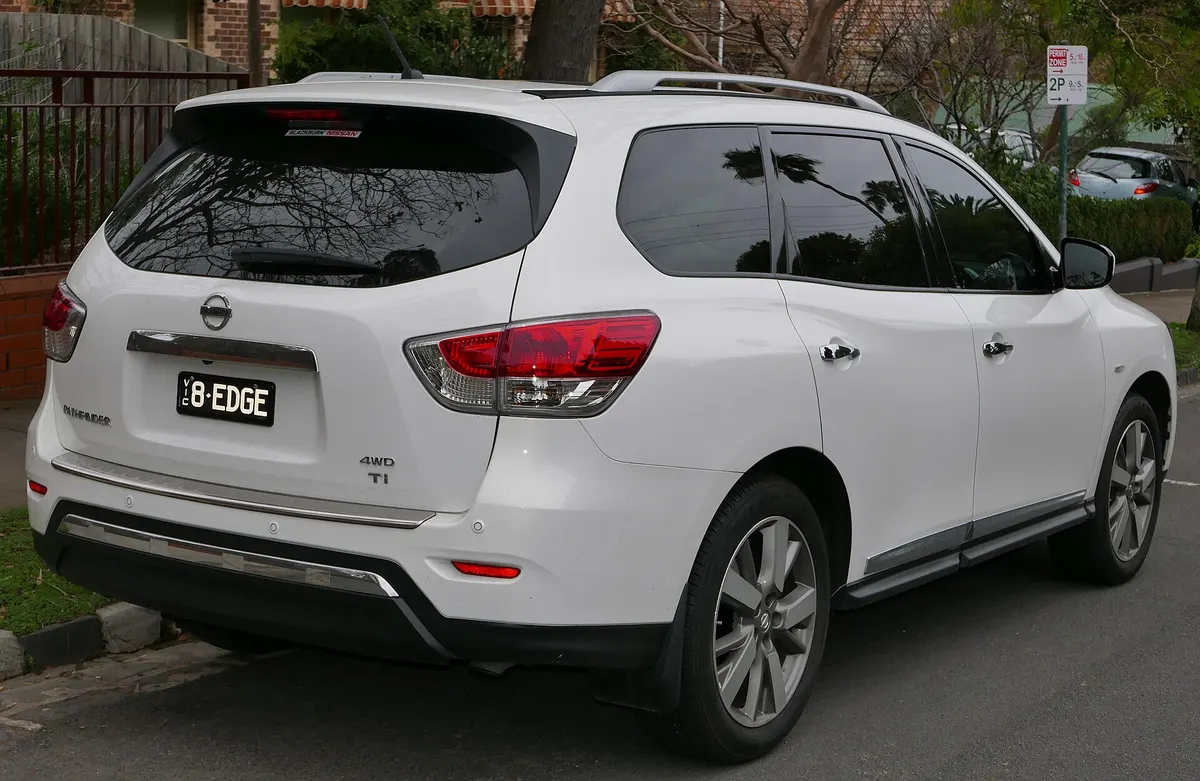
The 2013 redesign turned the Pathfinder from a body-on-frame truck into a car-based, three-row family crossover, and bolted a CVT to a 260-hp V6 that tows. That CVT is the whole story: the 2013–2016 cars are dogged by a Jatco continuously variable transmission that judders, slips, and fails, often before 100k miles. It ended in a class-action settlement, so have a Nissan dealer check the VIN for any extended coverage. The 3.5L V6 itself is solid. Buy one only with the transmission verified.
2015, 2016
2013 (worst CVT complaint volume, earliest design) +2 more
Engines
- VQ35DE · 3.5L gasoline, 260 hp
- QR25DER · 2.5L hybrid, 250 hp
Transmissions
- Jatco JF017E (CVT8 / CVT8HT) · cvt
Drivetrain
FWD / AWD
Body
suv
Trims
S, SV, SL, Platinum, Hybrid
Nissan Pathfinder part-number cross-reference
Start from the OEM number, then pick the brand you trust. Verified equivalents for the Nissan Pathfinder (2013–2016).
Part links go to Amazon, and to eBay where Amazon does not stock the part. Affiliate links, so we may earn a commission if you buy. Your price is unchanged, and a commission never changes a verdict.
Oil filter
Nissan
The common Nissan spin-on. 2013-2014 cataloged as 15208-65F0D; both supersede to 15208-65F0E, which Nissan lists for the 2013-2020 Pathfinder in BOTH the 3.5L V6 and the 2.5L Hybrid.
Find Nissan oil filter on AmazonFram
Extra Guard; XG6607 (Ultra) / TG6607 (Tough Guard) are the same fitment.
Look up Fram oil filterPurolator
PurolatorONE PL14612 / PurolatorBOSS PSL14612 are the same filter.
Compare Purolator oil filterVerified via: NissanPartsDeal - Pathfinder OEM oil filter (15208-65F0D superseded by 15208-65F0E, 3.5L V6 2013-2020), OEM Parts Online - 2015 Pathfinder SL Hybrid 2.5L L4 filters page (15208-65F0E fits the 2.5L Hybrid too), oilfilter-crossreference.com - Nissan 15208-65F0D crosses (Fram PH6607, Purolator L14612, Bosch 3300, Mobil 1 M1-108, K&N HP-1008, ACDelco PF1237), Paul's Travel Pictures - 2013-2016 Pathfinder VQ35DE oil change guide (Fram PH6607, Mobil 1 M1-108, Bosch 3300, Purolator PSL14612, K&N PS-1008, ACDelco PF1237)
Engine air filter
Nissan
Flat panel filter shared with other Nissan 3.5L V6 applications; the R52 Pathfinder 3.5L uses it 2013-2016.
Check Nissan engine air filter on AmazonFram
Extra Guard; crosses OE 16546-0Z000, but some Pathfinder owners report the aftermarket panel's gasket sits thick in the airbox - seat it carefully or prefer OEM / Wix 46116 / K&N.
See Fram engine air filterVerified via: airfilter-crossreference.com - Nissan 16546-0Z000 crosses (Fram CA4309, Wix 46116, K&N 33-2031-2, Purolator A24278, Hastings AF882, ACDelco A975C), Paul's Travel Pictures - 2013-2016 Pathfinder VQ35DE air filter guide (flat panel; K&N 33-2031-2, Wix 46116, Purolator A24278, Hastings AF882, ACDelco A975C, Champion CAP4309), NissanPartsDeal - Pathfinder air filter catalog (16546-0Z000 = 3.5L V6)
Engine air filter (Hybrid)
Nissan
Hybrid-specific engine air filter for the supercharged 2.5L QR25DER. No verified aftermarket cross-reference exists for this low-volume part (not listed in filter cross-reference databases) - OEM or dealer is the reliable source.
Compare Nissan engine air filter on AmazonVerified via: Official Nissan Parts Store - Air Filter 16546-3KY0A (2014-2016 Nissan, 2.5L QR25DER Hybrid), NissanPartsDeal - Pathfinder air filter catalog (16546-3KY0A = 2014 Pathfinder 4-cyl 2.5L QR25DER, distinct from the V6's 16546-0Z000)
Cabin air filter
Nissan
Behind the glovebox. Nissan lists it for the 2013-2016 Pathfinder in both 2.5L and 3.5L; updated to 27277-3JC1B (2015-2018). This is the R52 filter - do NOT use the older Frontier-platform 27277-VR00A (Fram CF10553 / Wix 24683).
Find Nissan cabin air filter on AmazonFram
Fresh Breeze; FDC11776 is the Drive (carbon) version, same fitment.
Look up Fram cabin air filterVerified via: NissanPartsDeal - Pathfinder cabin air filter (27277-3JC1A fits 2013-2016, 2.5L & 3.5L; updated to 27277-3JC1B), Walmart - WIX WP10009 cabin filter (fits select 2013-2018 Nissan Pathfinder), FRAM - CF11776 Fresh Breeze cabin air filter (Nissan Pathfinder application)
Spark plugs
Nissan
Denso-made OE iridium (= Denso FXE22HR11). Nissan lists it for the 2013-2020 Pathfinder 3.5L (VQ35DE and later VQ35DD).
See Nissan spark plugs on AmazonVerified via: NissanPartsDeal - Pathfinder spark plug (22401-EW61C, 2013-2020 3.5L V6; note Denso FXE22HR11), Paul's Travel Pictures - 2013-2016 Pathfinder VQ35DE spark plug guide (Denso FXE22HR11, NGK DILKAR7B11; 6 plugs; gap 0.043")
Spark plugs (Hybrid)
Nissan
OE plug for the supercharged 2.5L QR25DER; Nissan's manufacturer note is DILKAR7C9H. Different heat range from the V6 plug - do not substitute the V6's 22401-EW61C.
Look up Nissan spark plugs on AmazonVerified via: NissanPartsDeal - Pathfinder spark plug (22401-1KC1C, 2014-2015 Hybrid 2.5L QR25DER; note DILKAR7C9H), Sixity Auto - NGK Laser Iridium 4-pc set for 2014-2015 Nissan Pathfinder 2.5L L4 (DILKAR7C9H)
Front brake pads
Nissan
One front pad set across the whole generation and both engines. The REAR set is D4M60-9N00B - do not confuse them.
See Nissan front brake pads on AmazonAkebono
ProACT Ultra Premium ceramic, FRONT. Akebono is the OE brake supplier for these Nissans.
Compare Akebono front brake padsVerified via: NissanPartsDeal - Pathfinder front brake pad set (D1060-3JA0A, 2013-2020 all trims, 2.5L & 3.5L; rear is D4M60-9N00B), FinditParts - Akebono ACT1649 FRONT pads cross-reference (OE D1060-3JA0A; Bosch BC1649, Power Stop 17-1649, Wagner QC1649), PartsGeek - Akebono ACT1649 FRONT brake pad set, 2013-2020 Nissan Pathfinder
Wiper blades
Rear wiper
Rear-glass blade is a 12" (e.g. Trico 12-A / rear-specific fitment).
Compare Rear wiper wiper bladesVerified via: MyWiperSize - Nissan Pathfinder wiper sizes (2013-2020 R52: 26" driver / 17" passenger / 12" rear), Wiper Blades USA - 2013 Nissan Pathfinder wiper size chart (26"/17", rear 12")
Serpentine belt
Nissan
Nissan lists it for the 2013-2016 Pathfinder 3.5L VQ35DE; superseded by 11720-6TA0A.
Find Nissan serpentine belt on AmazonGates
Micro-V, 7-rib, 40.75" (metric 7PK1035). Fits 2013-2019 Pathfinder 3.5L V6.
Look up Gates serpentine beltVerified via: NissanPartsDeal - Pathfinder serpentine belt (11720-3JA0A, 2013-2016 3.5L VQ35DE; superseded by 11720-6TA0A), Walmart Business - Gates K070407 serpentine belt (fits 2013-2019 Nissan Pathfinder; = 7PK1035, 7-rib, 40.75")
Serpentine belt (Hybrid)
Nissan
Hybrid supercharger/accessory-drive belt; superseded by 11920-3KY0B. Routing differs from the V6 (supercharger), so the V6's 11720-3JA0A does NOT fit. Verified aftermarket options for this low-volume belt are thin - OEM/dealer is the reliable source.
See Nissan serpentine belt on AmazonVerified via: NissanPartsDeal - Pathfinder serpentine belt catalog (11920-3KY0A superseded by 11920-3KY0B, 2014 Pathfinder 2.5L QR25DER), Official Nissan Parts Store - Serpentine Belt 11920-3KY0B (2014-2016 Nissan)
Battery
BCI group
OE size, 550 CCA. Nissan's service battery is 999M1-ND35C (Group 35, 550 CCA, 113 min reserve). Dimensions ~9-1/16 x 6-7/8 x 8-7/8 in.
Compare BCI group battery on AmazonVerified via: Official Nissan Parts Store - 2016 Pathfinder battery 999M1-ND35C (Group 35, 550 CCA, 113 RC), CarSpecs.org - Nissan Pathfinder OE battery group size (Group 35, 550 CCA)
Should I buy a 2013–2016 Nissan Pathfinder?
Buy with caution, and only after the transmission checks out. As a package the R52 Pathfinder is appealing: roomy three rows, comfortable ride, a 5,000-lb tow rating on the V6 (3,502 lb on the Hybrid), cheap to buy used. The problem is the CVT, which has a real track record of failing on the 2013–2016 cars and costs $3,500–$5,000 to replace. The safest play is a 2015 or 2016 car with documented CVT service, no shudder on a test drive, and a Nissan dealer VIN check for recalls and any extended CVT coverage. Skip the 2013–2014 cars unless the transmission has already been replaced or you're getting it cheap enough to budget for one. Avoid the Hybrid: low volume, complex, and parts/support are thin.
Best years
2015, 2016
Years to avoid
2013 (worst CVT complaint volume, earliest design), 2014 (CVT issues continue), Hybrid (any year): rare, complex, poor support
Pre-Purchase Checklist for Nissan Pathfinder
- ☐Test drive at city speed and accelerate from 15 to 30 mph repeatedly. Feel for shudder, judder, hesitation, or a rubber-band lag. Any of those points at a failing CVT.
- ☐Have a dealer or shop check CVT fluid level and condition: it should be clean, not burnt-smelling or dark. Burnt fluid means heat damage inside. Nissan's manual gives no owner check for CVT fluid.
- ☐Ask for CVT fluid-change records. A serviced CVT lasts much longer than a neglected one.
- ☐Have a Nissan dealer check the VIN for open recalls, any extended CVT coverage, and whether the transmission was ever replaced.
- ☐On a 2013, confirm recall 14V-142 is done: certain 2013 cars built 04-18-2012 to 10-03-2012, CVT cooler hose. Check by VIN.
- ☐Check the VIN for recall 22V-420 (secondary hood latch, 2013-2016) and, on a 2014-2015 Hybrid, recall 21V-774 (hybrid control software can shut down the hybrid system and engine, a loss of drive power).
- ☐On AWD cars, make slow tight turns on dry pavement and listen/feel for binding or judder from the rear coupling.
- ☐Check the sun visors. A known interior nuisance is visors that won't stay up.
Common Nissan Pathfinder problems & repair costs
CVT judder, slip, and failure
$3,500–$5,000Symptoms: Shaking or juddering on acceleration (classically 15–30 mph), hesitation, surging, a rubber-band feel, whining, and eventually loss of power or refusal to move. CarComplaints data shows transmission as the #1 problem area, with a typical failure around 57k miles.
Fix: Replace the CVT (reman or new). There was a class-action settlement over this CVT, so have a Nissan dealer check the VIN for any extended coverage before paying out of pocket. Regular CVT fluid changes are the best prevention on a healthy unit.
Sources: CarComplaints: 2013 Pathfinder power train, Top Class Actions: Nissan Pathfinder transmission class action, CarComplaints: Jatco CVT8HT reliability lawsuit
CVT cooler hose detaches (2013 recall 14V-142)
$0–$0Symptoms: On certain early 2013 cars, the internal oil cooler hose can pop off due to inadequate clamping, dumping transmission fluid and causing a sudden loss of acceleration in traffic.
Fix: Recall 14V-142 covers certain 2013 cars built 04-18-2012 to 10-03-2012. Check by VIN that the repair was done. It costs the owner nothing. Separately, Nissan bulletin NTB13-071 (07-19-2013) covers 2013 cars leaking CVT fluid at the transmission-to-radiator cooler hose, at the radiator fitting or from a detached hose.
Sources: RepairPal: Nissan Pathfinder recalls, NHTSA: 2013 Pathfinder vehicle detail / recalls, NHTSA TSB: Nissan NTB13-071, 2013 Pathfinder CVT fluid leak at cooler hose
Sun visors won't stay up
$80–$200Symptoms: The plastic pivot inside the sun visor cracks and the visor flops down on its own, blocking the driver's view.
Fix: Replace the affected visor(s). A common, cheap nuisance fix. Aftermarket and used OEM visors are widely available.
Sources: CarComplaints: 2014 Pathfinder sun visors will not stay up
AWD rear coupling judder on slow turns
$200–$900Symptoms: On AWD cars, a vibration or judder felt from the rear when making slow, tight turns on dry pavement, traced to the electronically controlled coupling for the rear final drive.
Fix: A fluid service for the rear coupling resolves many cases per Nissan service guidance; persistent cases may need coupling work. Verify it's not being confused with CVT judder, which feels different and comes from the front.
If the CVT is healthy, the R52 Pathfinder is otherwise reasonable to own: the VQ35DE V6 is a known-durable engine, parts are common and affordable, and routine maintenance is straightforward. The catch is that the transmission dominates the risk picture. A single CVT replacement ($3,500–$5,000) can exceed half the car's value. The smart owner budgets for CVT fluid changes on schedule and treats any shudder as urgent rather than waiting it out.
Cost calculator
What will this Nissan Pathfinder cost you by a given mileage?
Drag to a mileage. We total the documented problems whose typical onset falls at or before it. The same cost ranges listed above, nothing new invented.
$0 estimated repair range
5-Year Maintenance Schedule & Cost to Own
Every scheduled service by mileage, fluid capacities, independent shop ranges, and parts cross-references.
Have a repair quote for this Nissan Pathfinder?
Audit against OEM book times, uncover duplicate pad and rotor labor, and verify parts markups.
How to fix common Nissan Pathfinder problems (DIY)
CVT fluid service (dealer or shop)
- Have a Nissan dealer or a shop do it. The owner's manual gives no owner procedure and says: when checking or replacement of CVT fluid is required, we recommend your NISSAN dealer for servicing.
- Ask for Genuine NISSAN CVT Fluid NS-3 only. Nissan warns that any other fluid will damage the CVT, which is not covered by the warranty.
- Ask the shop to note the old fluid's color and smell on the invoice. Burnt or dark fluid points at heat damage inside.
Replace sun visor
Tools: Trim pry tool, Phillips screwdriver
- Pop the small trim cap covering the inboard visor mount and remove the screw.
- Unclip the outboard pivot mount and unplug the visor wiring connector (if equipped with a lighted mirror).
- Plug in and seat the new visor, install the screw, and re-clip the pivot.
- Check that it holds position up and down before reinstalling the trim cap.
Parts
- Sun visor (2013–2016 Pathfinder) · Amazon $40–$90
Engine & cabin air filter change
Tools: Screwdriver (cabin filter cover)
- Open the glovebox, release the side stops to drop it down, and pull the cabin filter housing cover.
- Slide out the old cabin filter and insert the new one with the airflow arrow pointing down.
- Unclip the engine airbox lid, drop in the new panel filter, and re-clip the lid.
- The engine air filter link is for the 3.5L V6 (Nissan 16546-0Z000). The 2014-2015 Hybrid takes a different filter, Nissan 16546-3KY0A (see the parts desk).
Parts
- Cabin air filter (2013–2016 Pathfinder) · Amazon $10–$18
- Engine air filter (2013–2016 Pathfinder 3.5L V6) · Amazon $12–$22
Some parts links are affiliate links. We may earn a commission at no cost to you. We only list parts that fit this generation.
The short version
The 2013 Pathfinder was a clean-sheet redesign. Nissan dropped the old truck platform and built a comfortable, roomy, car-based three-row crossover. It rides well, seats seven, and Nissan rates it to tow 5,000 lb with the V6 (3,502 lb for the Hybrid). On paper it’s a lot of family SUV for the money.
In practice, one component decides whether you’ve bought a bargain or a headache: the Jatco CVT. On the 2013–2016 cars this transmission has a documented record of juddering, slipping, and failing, often between 50,000 and 100,000 miles. CarComplaints lists the transmission as the car’s #1 problem area, with a typical failure around 57,000 miles and repair bills near $4,600. The CVT problem ended in a class-action settlement, so have a Nissan dealer check the VIN for any extended coverage.
What that means when you’re shopping
Make the transmission the first thing you clear, not the last. Test drive at city speed and accelerate repeatedly from 15 to 30 mph. Feel for shudder or hesitation. Have a dealer or shop check the CVT fluid for color and burnt smell. Ask for fluid-change records. Have a Nissan dealer check the VIN for recalls, any extended CVT coverage, and whether the CVT was ever replaced. A 2015–2016 car with a clean, serviced transmission is the pick; a 2013–2014 car with an unknown CVT history is the one to walk away from.
Everything else is mostly minor: sun visors that won’t stay up, a bit of AWD coupling judder on slow turns. The engine is the least of your worries. The transmission is the whole decision.
How this file is built: failure modes and cost ranges are compiled from NHTSA complaint, recall, and TSB data, CarComplaints owner reports, the Jatco CVT class-action settlement record, and owner forums, then sanity-checked against shop-floor experience. Cost figures are independent-shop estimates and vary by region. Spot something off? Tell us.
Viral car myths, checked against this car
- Misleading
Is the "$2 liquid that stops any leak" really banned in 11 states?
Automotive stop-leak products are not banned in any US state. The products are real (Bar's Leaks, BlueDevil), they work in specific narrow situations, and they can permanently damage your cooling or oiling system if applied to the wrong leak.
Frequently asked questions
Which Nissan Pathfinder years should I avoid?
The 2013 and 2014 cars draw the most CVT complaints and are the earliest version of this transmission. Treat them as the highest risk. The 2015–2016 cars draw fewer complaints, but the CVT is a concern across the whole 2013–2016 run. Avoid the rare Hybrid regardless of year.
Is the Pathfinder CVT covered by a warranty extension?
There was a class-action settlement over this CVT. Coverage depends on the car, so have a Nissan dealer check the VIN before assuming you're on the hook for a transmission.
How long will a 2013–2016 Pathfinder last?
The VQ35DE V6 is durable and can run well past 200,000 miles. The limiting factor is almost always the CVT. A car with documented CVT fluid changes and no shudder on the test drive can be a long-term keeper; a neglected one may need a transmission long before the engine is tired.
Why does my Pathfinder shudder between 15 and 30 mph?
That classic low-speed judder is the signature symptom of the failing Jatco CVT on these cars, belt/pulley slip under load. Don't ignore it. Have a dealer or shop check the CVT fluid, and have the VIN checked for recalls and any extended coverage before the transmission gets worse.
Can I tow with a 2013–2016 Pathfinder?
Yes. Nissan's 2013-2016 manuals rate the V6 at 5,000 lb, and the 2014 Hybrid supplement rates the Hybrid at 3,502 lb. But towing stresses the CVT, which is the car's weak point. If you tow, follow Nissan's towing rule for CVT fluid in the maintenance schedule.
Every Nissan Pathfinder generation
The full case file run, beyond the generation before and after this one.
Cross-shopped rivals
Files on what buyers weigh against the Nissan Pathfinder of this era.