Case file · SUBARU-FORESTER-2014-2018 · 4th gen (SJ)
Subaru Forester 2014–2018Common problems, reliability & repair costs
The SJ Forester is a roomy, all-wheel-drive compact SUV that's genuinely useful and mostly dependable, but it carries two well-documented asterisks. The 2.5L FB25 engine was the subject of an oil-consumption class action (warranty extended to 8 years/100,000 miles), and the CVT had early teething problems that pushed Subaru to extend that warranty to 10 years/100,000 miles. Buy a clean, well-serviced one, ideally 2016+, and it's a solid long-hauler. Buy an early oil-burner with no service history and you can inherit someone else's headache.
2016, 2017, 2018
2014 (worst oil consumption + earliest CVT complaints) +1 more
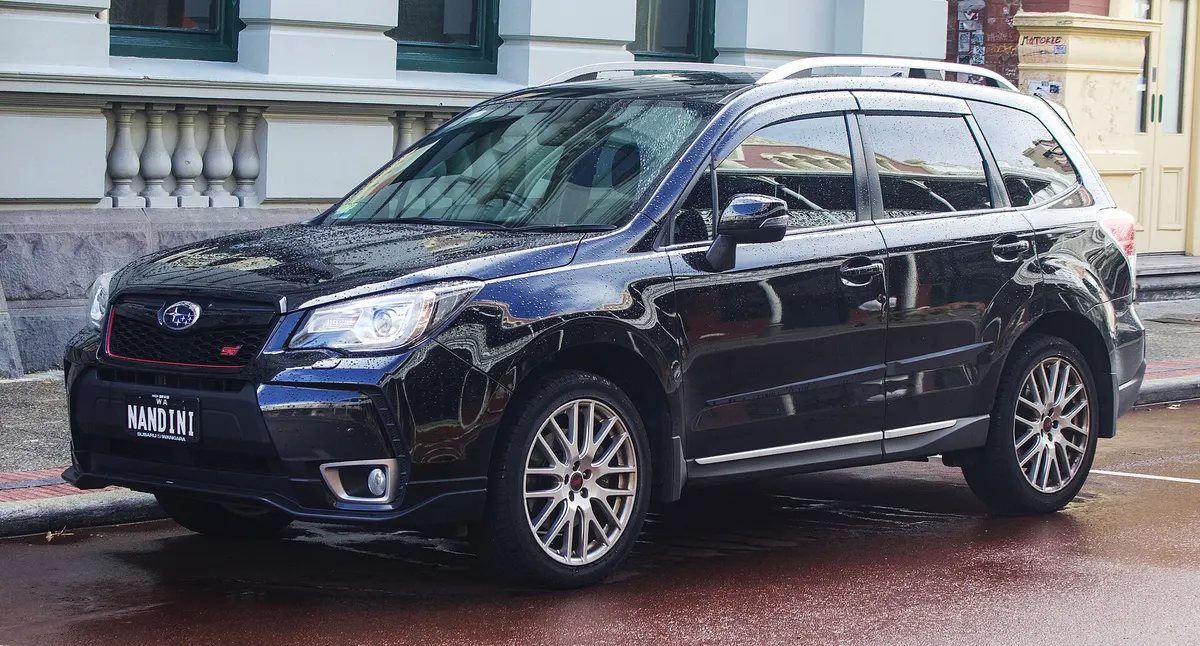
Engines
- FB25 · 2.5L gasoline, 170 hp
- FA20F (turbo) · 2.0L gasoline, 250 hp
Transmissions
- TR580 (Lineartronic) · cvt
- manual , 6-speed
Drivetrain
AWD
Body
suv
Trims
2.5i, 2.5i Premium, 2.5i Limited, 2.5i Touring, 2.0XT Premium, 2.0XT Touring
Subaru Forester part-number cross-reference
Start from the OEM number, then pick the brand you trust. Verified equivalents for the Subaru Forester (2014–2018).
Part links go to Amazon, and to eBay where Amazon does not stock the part. Affiliate links, so we may earn a commission if you buy. Your price is unchanged, and a commission never changes a verdict.
Oil filter
Fram
Fram's listed application for FB25 Subarus; enthusiast forums note its bypass-valve spec (13 psi) is lower than Subaru's 23.2 psi spec. Some owners prefer OEM.
Check Fram oil filterVerified via: SubaruPartsDeal: 2016 Forester OEM oil filter catalog (15208AA160), Mann Engineering: Subaru genuine oil filter 15208AA15A for FB20/FB25 (2014+ Forester), oilfilter-crossreference.com: Subaru 15208AA15A alternatives, Walmart: WIX 57055 fitment (2011-2018 Subaru Forester), Walmart: FRAM PH7317 fitment (2013-2023 Subaru Outback FB25)
Engine air filter
K&N
Washable/reusable drop-in panel; per air-filter cross-reference database.
Look up K&N engine air filterEPAuto
Listing explicitly covers Forester 2009-2018; equivalent to CA9997.
Check EPAuto engine air filterVerified via: SubaruPartsDeal: 16546AA12A fitment (2009-2018 Forester 2.5L), airfilter-crossreference.com: Subaru 16546AA12A alternatives, PartsGeek: 2009-2018 Subaru Forester air filter (Fram CA9997), Amazon: EPAuto GP997 (CA9997) fitment incl. Forester 2009-2018
Cabin air filter
Verified via: SubaruPartsDeal: Forester OEM cabin filters by year (72880FG000 for 2009-2018), airfilter-crossreference.com: Subaru 72880FG000 alternatives, Amazon: FRAM CF10930 for Subaru, Amazon: EPAuto CP930 (CF10930) fitment incl. Forester 2009-2018
Spark plugs
Subaru
The OE plug is NGK SILZKAR7B11; 22401AA781 supersedes 22401AA780 (2011-2014 catalog number).
Check Subaru spark plugs on AmazonNGK
Laser Iridium (OE plug sold aftermarket). Retailer application list includes 2014-2018 Forester 2.5i and 2.0XT.
See NGK spark plugsDenso
Iridium TT; listed as a cross for NGK SILZKAR7B11 in the cross-reference database (Denso VFXEH22 also listed). Verify gap (1.1 mm spec) before install.
Compare Denso spark plugsVerified via: SubaruPartsDeal - Forester OEM spark plugs (22401AA781 / SILZKAR7B11 for 2011-2018 2.5i), MAPerformance - NGK SILZKAR7B11 applications (2014-2018 Forester 2.5i, 2.0XT), sparkplug-crossreference.com - NGK SILZKAR7B11 alternatives (Denso IXEH22TT, VFXEH22)
Front brake pads
Subaru
2015-2017 2.5i. 2014 2.5i uses 26296SC010; 2018 2.5i uses 26296FJ030.
Find Subaru front brake pads on AmazonAkebono
ProACT ultra-premium ceramic with stainless hardware. Retailer fitment 2011-2018 Forester front.
Look up Akebono front brake padsWagner
OEX premium ceramic. Retailer fitment 2010-2018 Forester front.
Check Wagner front brake padsVerified via: SubaruPartsDeal - Forester OEM brake pad sets by year (26296FJ020 2015-2017 2.5i; 26296FJ030 2018 2.5i; 26296AJ010 / 26296SG000 for 2.0XT), SubaruPartsDeal - 2014 Forester front pad kits (26296SC010 for 2.5i, 26296AJ010 for 2.0XT), SubaruPartsDeal - 26296FJ030 front pad kit (2018 Forester 2.5i), PartsHawk - Akebono ACT1539 fitment (2011-2018 Forester front), PartsHawk - Wagner OEX1539 fitment (2010-2018 Forester front)
Wiper blades
Bosch
Sold as the paired set 26A17A; lengths match the Forester's 26"/17" spec (rear 14" is a separate conventional/rear blade).
See Bosch wiper blades on AmazonRain-X
Latitude Water Repellency 2-n-1: 5079281-2 is the 26" driver blade, 5079283-2 the 17" passenger blade.
Compare Rain-X wiper bladesTrico
Trico Force beam blades: 25-260 = 26" driver (fitment list includes Forester 2014+), 25-170 = 17" passenger (fitment list includes Forester 2014+).
Find Trico wiper bladesVerified via: AutoPadre - Subaru Forester wiper sizes (2014-2018: 26" / 17" / 14" rear), Wiper Haus - Bosch 2014-2018 Forester set (26" / 17" / 14"), Amazon - Bosch ICON 26A17A set (26A & 17A), Amazon - Rain-X 5079281-2 (26" Latitude Water Repellency), Amazon - Rain-X 5079283-2 (17" Latitude Water Repellency), FinditParts - Trico 25-260 (26" Force, fits Forester 2014-2026), FinditParts - Trico 25-170 (17" Force, fits Forester 2014-2024)
Serpentine / drive belt
Subaru
Supersession of 809221210; fits 2014-2018 Forester (also Crosstrek/Impreza of the era).
Look up Subaru serpentine / drive belt on AmazonGates
Micro-V, EPDM. Fitment: 2014-2018 Forester 2.5L (also 2015-2017 Impreza/WRX/Crosstrek). Cross-references OEM 23780AA130.
Check Gates serpentine / drive beltVerified via: FinditParts - Gates K060772 cross references (OEM Subaru 23780AA130 / 809221210) + 2014-2018 Forester 2.5L fitment, Walmart - Gates K060772 fits select 2014-2018 Subaru Forester, SubaruParts.com - 2014-2018 Subaru serpentine belt 23780AA130
Battery
Interstate
Flooded Group 35, 550 CCA. Interstate's own fit tool confirms it for the 2016 Forester H4/2.5L.
See Interstate battery on AmazonExide
Marathon Max AGM Group 35, 650 CCA. Fitment chart includes 2014-2018 Forester.
Compare Exide batteryVerified via: AutoPadre - Subaru Forester battery size (Group 35 for 2014-2018), Interstate Batteries - MT-35 fits 2016 Subaru Forester H4/2.5L (Group 35, 550 CCA), PartCatalog - Exide MX35 (Group 35, 650 CCA) fitment incl. 2014-2018 Forester, PowerTex - 2014 Forester battery page (BCI Group 35 / Q85)
Should I buy a 2014–2018 Subaru Forester?
Buy it, and lean toward the later years. A well-maintained SJ Forester is a practical, safe, all-weather family hauler with standard AWD and excellent visibility. The two things that separate a great buy from a gamble are the FB25 oil-consumption issue and the early-CVT reliability question. A 2016–2018 car with a documented service history clears most of the risk; both major defects are covered by extended Subaru warranties (8 yr/100k for oil, 10 yr/100k for the CVT), but those windows are closing or closed on older cars, so verify before you buy. The turbo XT is genuinely fun and durable but demands strict oil discipline. Skip any early car that's vague about oil top-offs or CVT behavior.
Best years
2016, 2017, 2018
Years to avoid
2014 (worst oil consumption + earliest CVT complaints), 2015 (improving but still has oil-consumption and CVT reports)
Pre-Purchase Checklist for Subaru Forester
- ☐Ask the seller how often they add oil between changes. A car needing a quart every 1,000–1,200 miles is exhibiting the known FB25 consumption problem. Pull the dipstick yourself and check the level and color.
- ☐Confirm whether the oil-consumption warranty extension (8 yr/100,000 mi) or any consumption-test repair was ever performed on this VIN. A Subaru dealer can check.
- ☐Test-drive for CVT behavior: feel for shudder, hesitation, or jerking on light throttle and from a stop. Any of those is a red flag on an early car.
- ☐Check the CVT warranty status (10 yr/100,000 mi) by VIN at a Subaru dealer; a car still inside coverage is a much safer bet.
- ☐Inspect the windshield closely for chips, stars, or stress cracks, especially on 2017–2018 cars. Replacement plus EyeSight camera recalibration is expensive.
- ☐Have the battery and parasitic draw checked, particularly on later cars that have sat; weak/dead-battery complaints are common.
- ☐Look underneath for rear coil-spring corrosion or breakage (more common on early, salt-belt cars) and check for any rear differential weeping.
- ☐Confirm all maintenance: CVT fluid service, differential fluid, and timing-chain-driven engine means no belt, but oil history is everything.
Common Subaru Forester problems & repair costs
Excessive oil consumption (FB25 2.5L)
$2,500–$6,000Symptoms: Oil level dropping noticeably between changes, sometimes a quart every 1,000–1,500 miles, often with no visible leak and little smoke. Low-oil warnings if not topped up. Worst on early-build cars.
Fix: Subaru's documented fix is an oil-consumption test followed by a piston-ring/short-block repair if it fails. The class-action settlement (Yaegar v. Subaru) extended the engine warranty to 8 years/100,000 miles for this issue and reimbursed prior repairs. Out of coverage, a ring/short-block job is the realistic fix; many owners simply manage it by checking and topping oil.
Sources: Subaru oil consumption class action (Class Law Group), Subaru settles oil-burning class action (Top Class Actions), NHTSA complaints: 2014 Forester engine
CVT (TR580) shudder, jerking, or failure
$3,000–$7,000Symptoms: Shudder or judder on light acceleration, hesitation or jerking from a stop, and in worst cases loss of drive. Most complaints cluster on the earliest cars; later builds and firmware are markedly better.
Fix: Fluid service and a reflash resolve many early shudder complaints; a failed transmission needs a reman or replacement unit. Subaru extended the CVT warranty to 10 years/100,000 miles on these cars, so confirm coverage before assuming the worst.
Sources: Subaru CVT reliability and common issues (Rick's Free Auto Repair Advice), NHTSA complaints: 2015 Forester powertrain
Spontaneous windshield cracking
$400–$1,300Symptoms: Cracks that appear with no obvious impact, often starting from the edge or low on the glass, sometimes overnight or in temperature swings. Tied to the acoustic-glass windshields Subaru introduced around MY2017.
Fix: Windshield replacement. On EyeSight-equipped cars the forward-facing camera must be recalibrated after replacement, which adds cost. A separate class action covered 2017–2019 Forester/Outback/Legacy with reimbursements and extended coverage for eligible owners.
Sources: Subaru cracked-windshield defect lawsuits (ClassAction.org), New ruling in Subaru cracked-windshield lawsuit (Torque News)
Parasitic battery drain / premature dead battery
$200–$600Symptoms: Car won't start after sitting a few days; repeatedly dead or weak battery despite the battery testing okay. Linked to parasitic draw from the vehicle's electronics rather than a single failed component.
Fix: Often a stronger replacement battery solves it; persistent cases need a parasitic-draw test to find the offending circuit or module. Many owners fit a higher-capacity battery as the practical fix.
Sources: Subaru Forester battery draining causes + diagnosis (Drivetrain Resource)
Rear coil spring breakage
$250–$600Symptoms: A clunk or sag at one rear corner, sometimes a broken coil found at inspection. More common on early cars in road-salt regions where corrosion plays a role.
Fix: Replace the broken spring (replacing in pairs is good practice) and inspect the mating perches for corrosion. A straightforward suspension job.
Brake lights fail to illuminate (recall)
$0–$150Symptoms: Brake lights may not come on when the pedal is pressed (or stay on), due to a brake-light switch issue. A safety recall covered a large number of these vehicles.
Fix: Recall repair: done free at a Subaru dealer if the VIN is open. Outside recall it's an inexpensive brake-light switch replacement. Verify the recall was completed by VIN.
Sources: NHTSA recalls: 2015 Forester
Outside the two big-ticket risks, the SJ Forester is reasonable to own. Routine maintenance is conventional, the FB25 is a timing-chain engine (no belt to replace), and AWD parts and service are widely available since Subaru sells these in volume. Plan for CVT fluid service, periodic differential fluid, brakes, tires, and the occasional battery. The numbers that hurt are an out-of-warranty ring/short-block repair, a failed CVT, or a windshield-plus-EyeSight-recalibration. Budget for those only on early, undocumented, or acoustic-glass cars.
Cost calculator
What will this Subaru Forester cost you by a given mileage?
Drag to a mileage. We total the documented problems whose typical onset falls at or before it. The same cost ranges listed above, nothing new invented.
$0 estimated repair range
Have a repair quote for this Subaru Forester?
Audit against OEM book times, uncover duplicate pad and rotor labor, and verify parts markups.
How to fix common Subaru Forester problems (DIY)
Engine oil & filter change (FB25)
Tools: Floor jack + jack stands or ramps, 17mm socket or wrench (drain plug), Oil filter cap wrench, Drain pan + funnel
- Warm the engine briefly, then safely raise and support the front of the car.
- Remove the drain plug and let the oil fully drain; replace the crush washer.
- Spin off the cartridge/filter, lube the new filter's seal, and install it to spec.
- Reinstall the drain plug, then refill with the correct synthetic oil (about 5 quarts).
- Run the engine, check for leaks, then recheck the level on level ground. Note the level so you can track consumption.
Parts
- Engine oil filter (FB25 Forester) · Amazon $8–$18
- Full synthetic 0W-20 oil (5 qt) · Amazon $25–$40
Replace cabin & engine air filters
Tools: Hands only (cabin filter behind glovebox), Flat screwdriver (airbox clips, if needed)
- Open the glovebox, squeeze in the side stops to drop it fully, and pull out the cabin-filter cover.
- Slide out the old cabin filter and insert the new one with the airflow arrow pointing down.
- Unclip the engine airbox lid, lift out the old panel filter, drop in the new one, and re-clip the lid.
Parts
- Cabin air filter (SJ Forester) · Amazon $10–$18
- Engine air filter (SJ Forester) · Amazon $15–$25
Replace a broken rear coil spring
Tools: Floor jack + jack stands, Socket set + breaker bar, Penetrating oil, Torque wrench
- Raise and support the rear, then remove the wheel on the affected side.
- Support the rear knuckle/lower arm with a jack to control spring tension.
- Loosen the lower shock or arm fasteners as needed and carefully relieve spring tension.
- Remove the old spring and isolators; transfer or replace the isolators on the new spring.
- Seat the new spring correctly, reassemble, torque fasteners to spec, and reinstall the wheel.
- Lower the car and check ride height; replacing both sides keeps the rear even.
Parts
- Rear coil spring (SJ Forester) · Amazon $40–$90 each
Some parts links are affiliate links. We may earn a commission at no cost to you. We only list parts that fit this generation.
The short version
The 2014–2018 Subaru Forester is one of the most practical compact SUVs of its era: standard all-wheel drive, huge glass and great visibility, a roomy cabin, and a strong safety record. For most buyers it’s a smart, dependable used car. But it carries two issues serious enough that Subaru extended warranties for both.
The first is oil consumption on the 2.5-liter FB25 engine. Enough owners reported the engine drinking oil between changes that it became a class-action settlement, with the engine warranty extended to 8 years / 100,000 miles and reimbursements for owners who’d already paid. The second is the early Lineartronic CVT, which had shudder and failure complaints concentrated on the first couple of model years, enough that Subaru pushed that warranty out to 10 years / 100,000 miles.
Neither of those should scare you off a good car. They should change which car you buy.
What that means when you’re shopping
If you’re looking at a 2016–2018 Forester, you’ve mostly cleared the worst of both risks. Buy on condition, service history, and a clean test drive like any used car.
If you’re looking at a 2014–2015 car, treat oil and the CVT as the first two things to verify. Ask how often the seller adds oil; a quart every 1,000–1,500 miles is the known consumption problem. On the drive, feel for any shudder or jerk from a stop. A Subaru dealer can tell you by VIN whether either extended warranty was ever used. A car with a documented ring/short-block repair or a serviced CVT is arguably safer than one that was never touched.
Two more things to eyeball: the windshield (2017+ acoustic glass cracks easily, and EyeSight recalibration makes replacement pricey) and the battery, since parasitic-drain dead-battery complaints are common across the generation. The turbo XT is genuinely good. Just confirm strict oil-change history, because turbos are less forgiving.
How this file is built: failure modes and cost ranges are compiled from NHTSA complaint and recall data, Subaru’s own class-action settlements and warranty extensions, and owner reporting, then sanity-checked against shop-floor experience. Cost figures are independent-shop estimates and vary by region. Spot something off? Tell us.
Viral car myths, checked against this car
- Misleading
Is the "$1 Japanese oil trick" that stops engine wear forever real?
The 'Japanese oil trick' is almost certainly MoS2 (molybdenum disulfide), a real industrial friction modifier. It is German, not Japanese (Liqui Moly popularized it), sold openly at every parts store for $15-20, has real but modest measured friction benefits, and was never buried by anyone.
- Outdated
Does a "$1 mineral" really double car battery life? The Epsom-salt reality.
The mineral is Epsom salt (magnesium sulfate). It was a real desulfation hack for serviceable flooded-cell batteries 40+ years ago. It does not work on modern sealed AGM or EFB batteries, and trying it on yours will void the warranty without helping the battery.
- Dangerous
Is the "$2 liquid that destroys engine sludge forever" real? Our shop-floor verdict.
An aggressive solvent flush on a high-mileage engine is a textbook way to spin a bearing. The viral 'kitchen-cabinet flush' is folklore that real shops spend money cleaning up after.
Frequently asked questions
Which Subaru Forester years should I avoid?
Lean away from the 2014 and, to a lesser degree, 2015 cars. Those carry the highest oil-consumption complaint rates on the FB25 engine and the earliest CVT reliability reports. They aren't automatically bad, since both issues are covered by extended Subaru warranties, but you have to verify the engine and transmission are sound or already repaired. The 2016–2018 cars are the safer used buy.
Is the Forester's oil consumption covered by Subaru?
Yes, for the affected FB25 engines. A class-action settlement extended the engine warranty to 8 years/100,000 miles for excessive oil consumption and reimbursed owners who'd paid for consumption tests or repairs. If a car is now outside that window, the repair is on you, which is exactly why you check oil habits before buying.
Are the early Forester CVTs reliable?
Mostly, with caveats. The TR580 CVT had shudder, jerking, and failure complaints concentrated on the earliest 2014–2015 cars, and Subaru extended the warranty to 10 years/100,000 miles in response. Later builds and firmware are considerably better, and Consumer Reports rates the 2016+ CVTs well. Test-drive for any shudder and confirm warranty status by VIN.
Why do Subaru windshields crack so easily?
Owners of 2017+ Foresters reported windshields cracking with no obvious impact, often from the edge. It's tied to the acoustic-glass windshields Subaru introduced around 2017 and became a separate class action for 2017–2019 models. Replacement is pricier than usual because EyeSight-equipped cars need the forward camera recalibrated afterward.
How many miles will a 2014–2018 Forester last?
A sound, well-maintained SJ Forester routinely reaches 200,000 miles. The FB25 and the AWD system are durable when serviced; most early retirements trace back to neglected oil consumption or an out-of-warranty CVT failure rather than the car simply wearing out. Documentation is the difference.
Every Subaru Forester generation
The full case file run, beyond the generation before and after this one.
Cross-shopped rivals
Files on what buyers weigh against the Subaru Forester of this era.