Case file · SUBARU-OUTBACK-2010-2014 · 4th gen (BR)
Subaru Outback 2010–2014Common problems, reliability & repair costs
The 4th-gen Outback is a practical, capable all-wheel-drive wagon, but which engine you get matters more than anything else. The 2010–2012 2.5L (EJ253) can develop head-gasket leaks; the 2013–2014 2.5L (FB25) was the subject of an oil-consumption class action over defective piston rings. The CVT and wheel bearings are the other things to watch. Buy on the engine, not the badge.
3.6R (any year, avoids the 2.5L and CVT issues), 2014
2013–2014 2.5L (FB25) with no oil-consumption documentation +1 more
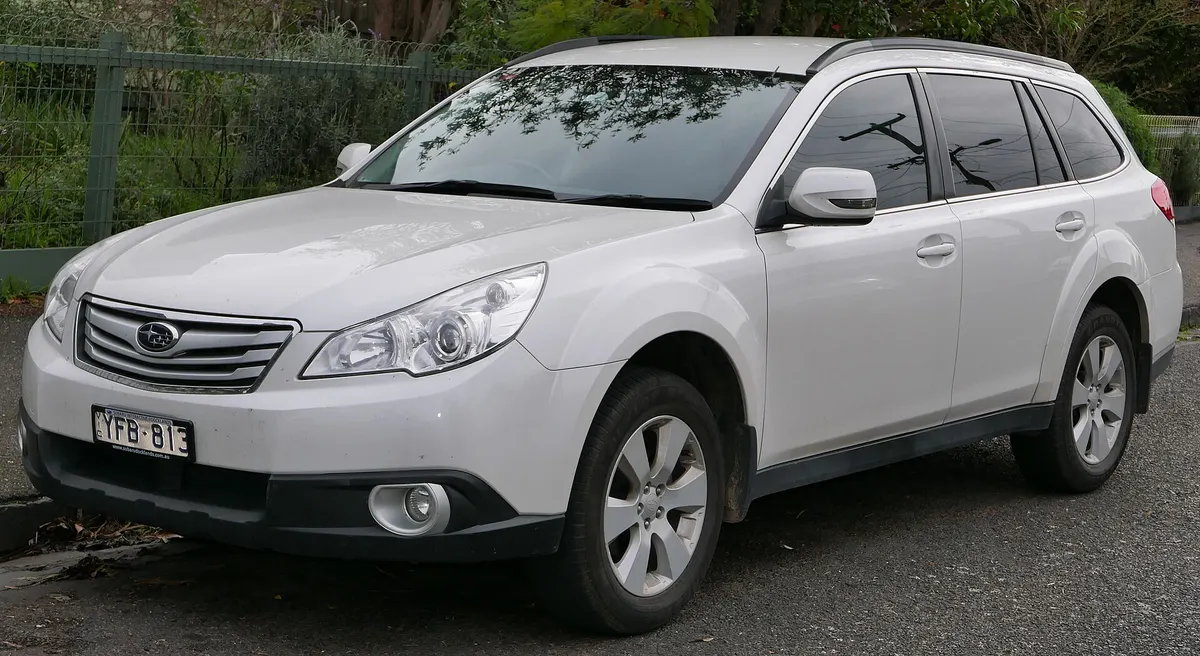
Engines
- EJ253 · 2.5L gasoline, 170 hp
- FB25 · 2.5L gasoline, 173 hp
- EZ36 (3.6R) · 3.6L gasoline, 256 hp
Transmissions
- TR690 (Lineartronic) · cvt
- automatic , 5-speed
- manual , 6-speed
Drivetrain
AWD
Body
wagon
Trims
2.5i, 2.5i Premium, 2.5i Limited, 3.6R, 3.6R Premium, 3.6R Limited
Subaru Outback part-number cross-reference
Start from the OEM number, then pick the brand you trust. Verified equivalents for the Subaru Outback (2010–2014).
Part links go to Amazon, and to eBay where Amazon does not stock the part. Affiliate links, so we may earn a commission if you buy. Your price is unchanged, and a commission never changes a verdict.
Oil filter
Verified via: parts.subaru.com - 15208AA100 Oil Filter Complete, Amazon - Subaru 2010-2012 Legacy/Outback OEM filters 15208AA100, O'Reilly - WIX 57712 fitment
Oil filter
Verified via: parts.subaru.com - 2014 Outback 15208AA15A, Walmart - WIX 57055 fits 2013-2018 Outback, Walmart - FRAM PH7317 fits 2013-2023 Outback
Oil filter
Verified via: parts.subaru.com - 15208AA031 (3.6L), PartCatalog - WIX 51334 Subaru Outback 3.6L application, go-parts - 2000-2019 Outback 3.6L Wix 51334
Engine air filter
Subaru
current number; supersedes 16546AA090 / 16546AA10A
Compare Subaru engine air filter on AmazonVerified via: subarupartsdeal - Outback air filter (2010-2014, both engines = 16546AA12A), parts.subaru.com - 2013 Outback 16546AA12A, Walmart - K&N 33-2304 fits 2008-2019 Outback
Cabin air filter
Verified via: parts.subaru.com - 2012 Outback 72880AJ00A, PartsGeek - WIX 24483 fits 2010-2019 Outback
Spark plugs
NGK
Laser Iridium, stock #5468, gap 0.043 in; NOTE the '-A-' suffix vs the 3.6L's SILFR6C11
Check NGK spark plugsVerified via: parts.subaru.com - 22401AA670 (NGK:SILFR6A), NGK.com - 5468 SILFR6A11 Laser Iridium
Spark plugs
Verified via: Amazon - NGK SILZKAR7B11 for Outback 2.5i 2013-2017, sixityauto - NGK Laser Iridium 2013-2017 Outback 2.5L H4
Spark plugs
NGK
OE Laser Iridium, stock #7505, gap 0.043 in; note '-C-' suffix vs the 2.5L EJ253's SILFR6A11
Compare NGK spark plugs on AmazonVerified via: NGK.com - 7505 SILFR6C11 Laser Iridium, Amazon - NGK SILFR6C11 for Outback 3.6R 2010-2014
Front brake pads
Subaru
superseded by 26296AG051; smaller front brake than the 6-cyl
Look up Subaru front brake pads on AmazonAkebono
ProACT ceramic; Akebono lists it replacing 26296AG000/AG050 (4-cyl kit) - some catalogs also cross it to the 6-cyl AJ010, so confirm by trim/caliper
Check Akebono front brake padsVerified via: Search/subaruparts - 26296AG000 superseded by 26296AG051 (2.5i), AutohausAZ - Akebono ACT1078 replaces 26296AG000, front Subaru
Front brake pads
Subaru
6-cylinder-specific front pad kit w/ hardware & shims (also Tribeca / turbo Forester)
See Subaru front brake pads on AmazonVerified via: SubaruPartsForYou - 26296AJ010 (6 Cyl Only, 2012-2014 Outback/Legacy), Amazon - Subaru 26296AJ010 front pads 2010-2014 Legacy/Tribeca/Outback
Wiper blades
Verified via: Amazon - Genuine Subaru 2010-2014 Outback wiper set SOA591U526/U519/R612, AutoPadre - Subaru Outback wiper sizes (26/19/14)
Drive belts
Subaru
EJ253 runs two belts: alt/PS + a separate A/C belt. A/C belt is a distinct part (not confirmed here). Owners report aftermarket length mismatches on this belt - Continental 4050347 cited as the correct alt/PS size.
Check Subaru drive belts on AmazonVerified via: subaruparts.com - 2003-2014 Subaru alternator belt 809218450, sixityauto - Gates alt/PS belt for 2005-2011 Outback 2.5L H4 (two-belt setup), Subaru Outback Forums - correct PS/alt & A/C belt part numbers thread
Serpentine belt
Verified via: parts.subaru.com - 2014 Outback V-belt 809221190, sixityauto - Gates Micro-V for 2013-2014 Outback 2.5L H4
Serpentine belt
Verified via: parts.subaru.com - Outback serpentine belt 809221130, newparts - Gates K060640 crosses 809221130 / 6PK1623
Battery
Verified via: AutoZone - Subaru Outback battery (Group 25), CarSpecs - Subaru Outback battery size (Group 25, 2010-2019)
Should I buy a 2010–2014 Subaru Outback?
Buy it for the all-weather capability, but choose the engine deliberately. The 3.6R six-cylinder is the no-drama pick: timing chain, conventional automatic, and none of the 2.5L's headline issues. Among the 2.5L cars, 2013–2014 FB25 models can burn oil (a class action got owners an 8-year/100,000-mile warranty extension), while 2010–2012 EJ253 cars can seep head gaskets with age. On any 2.5L CVT car, confirm the transmission shifts cleanly with no low-speed shudder. A well-documented example of either engine is a genuinely useful vehicle; an unchecked one can hand you a four- or five-figure repair.
Best years
3.6R (any year, avoids the 2.5L and CVT issues), 2014
Years to avoid
2013–2014 2.5L (FB25) with no oil-consumption documentation, 2010–2012 2.5L (EJ253) with any sign of coolant loss
Pre-Purchase Checklist for Subaru Outback
- ☐On 2013–2014 2.5L (FB25) cars: do an oil-level check and ask the seller how often they top off. Excessive oil consumption is the signature problem. A Subaru dealer can confirm by VIN whether the oil-consumption warranty extension or any consumption test was performed.
- ☐On 2010–2012 2.5L (EJ253) cars: check coolant level and look for oil/coolant seepage at the head-gasket mating surfaces and a sweet smell. Early head-gasket leaks start small.
- ☐On any 2.5L CVT car: drive from a stop and at light throttle around 20–40 mph; feel for shudder, vibration, or rpm climbing without speed (CVT/torque-converter symptoms).
- ☐Listen at each wheel for a cyclic hum/growl that changes with speed. Premature wheel-bearing wear is common on this generation.
- ☐Confirm timing-belt history on 2010–2012 EJ253 cars (belt, not chain, due around 105k miles); a missing record is a budget item.
- ☐Check the Takata passenger airbag recall status by VIN (2010–2014 Outback was included) and confirm the remedy was completed.
- ☐Look for blue smoke on a cold start or under hard acceleration on FB25 cars, a tell for oil burning past the rings.
- ☐Inspect the windshield and sunroof seals; water leaks and a binding sunroof are reported on this generation.
Common Subaru Outback problems & repair costs
Excessive oil consumption (2.5L FB25)
$1,500–$6,000Symptoms: Oil level drops noticeably between changes with no visible leak; low-oil warning light; sometimes blue smoke under load. Owners report needing to add a quart every 1,000–2,000 miles in bad cases.
Fix: Subaru attributed it to defective piston rings. A class-action settlement (Yaeger v. Subaru, 2016) extended the powertrain warranty to 8 years / 100,000 miles and, for cars that failed an oil-consumption test, covered a short-block/piston-ring repair. Many are out of pocket if past that window. Low end = a documented consumption test plus monitoring; high end = the ring/short-block job.
Sources: CarComplaints: 2013 Outback (oil consumption / FB engine piston rings), Top Class Actions: Subaru oil-burning settlement (Yaeger v. Subaru)
Head-gasket leak (2.5L EJ253)
$1,000–$2,200Symptoms: Slowly dropping coolant, a sweet smell under the hood, oily/coolant residue at the head-to-block seam, occasional overheating. Usually an external seep rather than a sudden failure.
Fix: Replace both head gaskets (the boxer layout means both sides come apart); shops typically resurface heads and refresh the timing belt and water pump while in there. The later FB25 (2013–2014) uses MLS gaskets and does not share this pattern.
Sources: Samarins: 2010–2014 Outback problems & buying guide, CarComplaints: 2010 Outback head-gasket failure
CVT shudder / valve-body fault (TR690 Lineartronic)
$1,500–$6,500Symptoms: Shudder or vibration at light throttle and low speed, jerky take-off, hesitation, rpm rising without matching acceleration, or a 'limp' mode.
Fix: Torque-converter shudder sometimes responds to a fluid service or a torque-converter replacement; valve-body/solenoid faults usually mean a valve-body or, in the worst cases, a CVT replacement. Subaru extended CVT warranties on some affected cars. Check by VIN. The 3.6R's conventional automatic avoids this.
Sources: Samarins: 2010–2014 Outback (CVT chain/shudder symptoms), CarComplaints: 2013 Outback (transmission failure reports)
Premature wheel-bearing failure
$300–$600Symptoms: Cyclic humming or growling that rises with road speed and often changes when you turn; can start surprisingly early for the mileage.
Fix: Replace the worn hub/bearing assembly (per corner). A well-known Subaru-of-this-era weak point; later production revised the bearing design.
Takata passenger airbag inflator (safety recall)
$0–$0Symptoms: No driving symptom. The risk is a passenger-front airbag inflator (non-desiccated PSAN) that can rupture and send fragments into the cabin when it deploys, especially after long heat/humidity exposure.
Fix: Recall remedy is free at any Subaru dealer. Check the VIN at the NHTSA recall lookup and confirm the inflator was replaced before buying.
Sources: NHTSA: Takata recall spotlight, Subaru: Takata airbag recall
Routine ownership is reasonable. AWD parts wear (tires must be matched in tread depth or you'll stress the center diff/CVT), brakes, and the wheel bearings are the everyday costs. The big-ticket risk is concentrated in the 2.5L drivetrain: an FB25 that burns oil or an EJ253 head-gasket job or a tired TR690 CVT can each run into the thousands. The 3.6R sidesteps all three at the cost of a few mpg. Keep all four tires matched, service the CVT fluid on schedule, and budget for one wheel bearing over the life of the car.
Cost calculator
What will this Subaru Outback cost you by a given mileage?
Drag to a mileage. We total the documented problems whose typical onset falls at or before it. The same cost ranges listed above, nothing new invented.
$0 estimated repair range
5-Year Maintenance Schedule & Cost to Own
Every scheduled service by mileage, fluid capacities, independent shop ranges, and parts cross-references.
Have a repair quote for this Subaru Outback?
Audit against OEM book times, uncover duplicate pad and rotor labor, and verify parts markups.
How to fix common Subaru Outback problems (DIY)
Replace a wheel hub / bearing assembly
Tools: Floor jack + jack stands, Socket set + large axle-nut socket (32–36mm), Breaker bar, Torque wrench, Bearing press or loaner press kit (if not a bolt-on hub)
- Loosen the axle nut with the wheel on the ground, then raise and support the corner and remove the wheel.
- Remove the brake caliper and rotor, and disconnect the ABS sensor.
- Unbolt the hub/knuckle hardware and separate the assembly; press out the old bearing (or unbolt the hub assembly on bolt-on designs).
- Press in / bolt up the new bearing and reassemble the knuckle.
- Reinstall rotor, caliper, ABS sensor, and wheel; torque the axle nut and lug nuts to spec.
- Test drive and confirm the hum is gone.
Parts
- Front wheel hub/bearing assembly (4th-gen Outback) · Amazon $60–$130
CVT fluid change (drain & fill)
Tools: Floor jack + jack stands, Socket set, Fluid pump / funnel, Drain pan
- Warm the transmission, then raise and level the car and place a drain pan under the CVT.
- Remove the drain plug, drain the old fluid, and measure what came out.
- Reinstall the drain plug with a new crush washer.
- Refill through the fill port with the CVT fluid your own manual specifies, matching the volume drained. One thing is settled: the orange High Torque CVTF is not it. Subaru's powertrain fluids bulletin 01-167-08R scopes that fluid to 2014 and later Forester Turbo and 2015 and later Legacy, Outback H-6 and WRX, none of which is a 2.5i of this generation. The same bulletin puts naturally aspirated non-H6 cars on the green CVTF-II but tags that line to the TR580 gearbox, and this car's transmission code is disputed, so confirm green CVTF-II against your manual or a dealer by VIN before you pour.
- Check the level per the procedure for this transmission and confirm no leaks.
Parts
- Subaru CVTF-II, green (SOA427V1610), the 2.5i Lineartronic fluid · Amazon $25–$40 per quart
- CVT drain plug crush washer · Amazon $3–$8
Engine & cabin air filter change
Tools: Screwdriver (airbox clips, if needed)
- Unclip the engine airbox lid, lift out the old panel filter, and drop in the new one.
- Open the glovebox, release the side stops to lower it, and pull the cabin-filter cover.
- Slide out the old cabin filter and insert the new one with the airflow arrow pointing the correct way.
Parts
- Engine air filter (4th-gen Outback) · Amazon $12–$22
- Cabin air filter (4th-gen Outback) · Amazon $10–$18
Some parts links are affiliate links. We may earn a commission at no cost to you. We only list parts that fit this generation.
The short version
The 2010–2014 Subaru Outback is a genuinely useful all-weather wagon, but it’s really three different cars depending on what’s under the hood, and that choice decides how worried you should be.
The 2013–2014 2.5L (FB25) is the engine behind the oil-consumption story: defective piston rings let some cars burn oil fast enough that a class-action settlement extended their warranty to 8 years / 100,000 miles. The 2010–2012 2.5L (EJ253) is an older design that can seep head gaskets as the miles pile up. And the 3.6R six-cylinder quietly avoids both, plus it skips the CVT in favor of a conventional automatic.
What that means when you’re shopping
If you’re set on the four-cylinder, do the engine homework. On a 2013–2014 car, check the oil level and ask how often the owner tops it off; a quart every 1,000–2,000 miles is a red flag. On a 2010–2012 car, watch the coolant and look for seepage at the head-gasket seams.
On any 2.5L car, the TR690 CVT is the other thing to test. From a stop and at light throttle, feel for shudder or rpm climbing without speed. A clean-shifting one is fine; a shuddering one can become a four- or five-figure repair.
If you’d rather not think about any of that, the 3.6R is the easy answer. It costs you a few mpg and removes the oil-consumption, head-gasket, and CVT questions in one move.
Everything else is normal used-Subaru territory: keep all four tires matched in tread depth (the AWD system and CVT don’t like mismatches), expect a wheel bearing at some point, and confirm the Takata passenger-airbag recall was completed by VIN.
How this file is built: failure modes and cost ranges are compiled from NHTSA recall data, the Subaru oil-consumption class-action settlement, CarComplaints reports, and owner forums, then sanity-checked against shop-floor experience. Cost figures are independent-shop estimates and vary by region. Spot something off? Tell us.
Viral car myths, checked against this car
- Misleading
Is the "$2 liquid that stops any leak" really banned in 11 states?
Automotive stop-leak products are not banned in any US state. The products are real (Bar's Leaks, BlueDevil), they work in specific narrow situations, and they can permanently damage your cooling or oiling system if applied to the wrong leak.
- Dangerous
Is the "$2 liquid that destroys engine sludge forever" real? Our shop-floor verdict.
An aggressive solvent flush on a high-mileage engine is a textbook way to spin a bearing. The viral 'kitchen-cabinet flush' is folklore that real shops spend money cleaning up after.
- Misleading
Is the "$1 Japanese oil trick" that stops engine wear forever real?
The 'Japanese oil trick' is almost certainly MoS2 (molybdenum disulfide), a real industrial friction modifier. It is German, not Japanese (Liqui Moly popularized it), sold openly at every parts store for $15-20, has real but modest measured friction benefits, and was never buried by anyone.
Frequently asked questions
Which Subaru Outback years should I avoid?
There's no single year to blanket-avoid. It's about the engine. The 2013–2014 2.5L (FB25) cars carry the oil-consumption risk, and the 2010–2012 2.5L (EJ253) cars can develop head-gasket leaks with age. If you want to sidestep both, the 3.6R six-cylinder (any year) is the cleaner buy. Whatever you pick, verify the specific issue for that engine before you commit.
Is the oil consumption covered by Subaru?
A class-action settlement (Yaeger v. Subaru, 2016) extended the powertrain warranty on affected 2013–2015 2.5L cars to 8 years / 100,000 miles and reimbursed owners who paid for consumption repairs by the 2016 claim deadline. Most cars are now past that window, so the repair would be on you, which is why the oil-level check matters before buying.
Should I get the 2.5L or the 3.6R?
The 3.6R is the lower-drama choice: timing chain, a conventional 5-speed automatic instead of the CVT, and none of the 2.5L's headline problems. The trade-off is a few mpg and a slightly higher fuel bill. The 2.5L is more economical and fine if you verify the engine and CVT, but the six-cylinder removes three of this generation's biggest worries at once.
Is the CVT reliable on this Outback?
The TR690 Lineartronic CVT in the 2.5L cars is the weakest link to test. Early units can shudder at light throttle and have valve-body/solenoid faults; a neglected one can need an expensive repair. Confirm clean, shudder-free shifting on a test drive, check whether Subaru extended the CVT warranty on that VIN, and keep the fluid serviced. The 3.6R doesn't use the CVT at all.
How many miles will a 4th-gen Outback last?
A well-maintained car, especially a 3.6R or a verified-clean 2.5L, can reach 200,000 miles. The things that cut a Subaru's life short here are an ignored head gasket or oil-consumption problem and a worn CVT, not the chassis. Match the tires, service the fluids, and the rest is ordinary upkeep.
Every Subaru Outback generation
The full case file run, beyond the generation before and after this one.
Cross-shopped rivals
Files on what buyers weigh against the Subaru Outback of this era.