Case file · SUBARU-WRX-2015-2021 · VA
Subaru WRX 2015–2021Common problems, reliability & repair costs
The first WRX to split fully from the Impreza. The WRX runs the FA20DIT direct-injection turbo flat-four; the STI keeps the older EJ257. Both are fun, capable AWD cars. But each has a serious engine bottom-end risk on hard-driven or tuned examples, plus a carbon-buildup tax from direct injection and a clutch that doesn't always survive its first 30k miles. Buy a documented-stock, documented-maintained car and it's a great daily; buy a mystery-history tuned one and you're gambling on a $6,000–$10,000 engine.
2018–2021 (later running changes, more documented-stock survivors), Any documented-stock car with full service history
2015–2016 (highest early-clutch complaint volume) +1 more
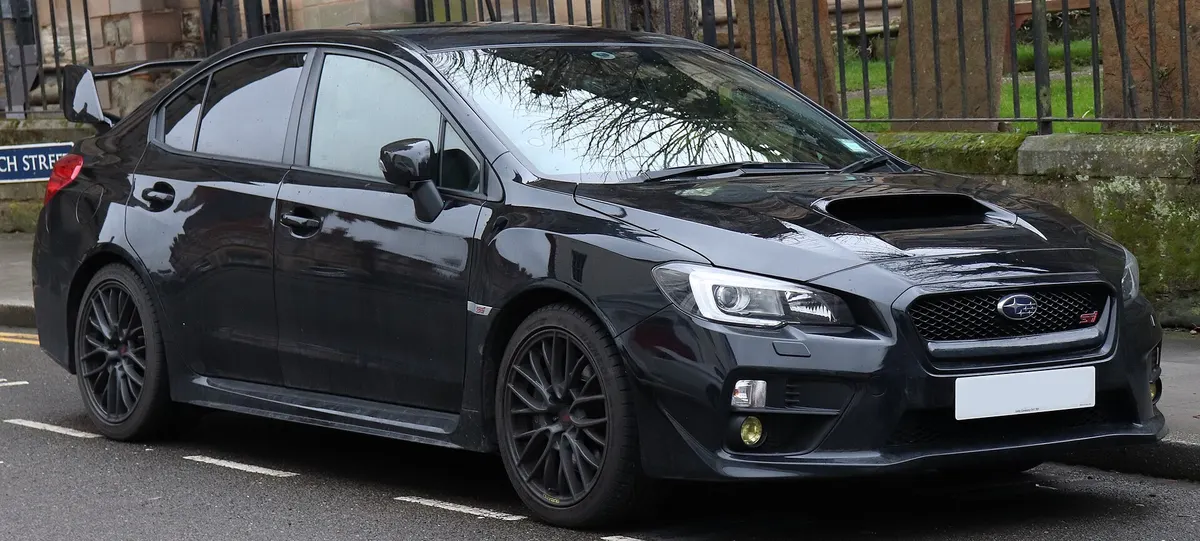
Engines
- FA20DIT · 2.0L gasoline, 268 hp
- EJ257 · 2.5L gasoline, 305 hp
Transmissions
- manual , 6-speed
- TR690 · cvt
Drivetrain
AWD
Body
sedan
Trims
Base, Premium, Limited, STI, STI Limited, STI Type RA, STI S209
Subaru WRX part-number cross-reference
Start from the OEM number, then pick the brand you trust. Verified equivalents for the Subaru WRX (2015–2021).
Part links go to Amazon, and to eBay where Amazon does not stock the part. Affiliate links, so we may earn a commission if you buy. Your price is unchanged, and a commission never changes a verdict.
Oil filter
Verified via: parts.subaru.com 15208AA15A (genuine, FA20 small filter), CarsSimplified Subaru small-filter cross-reference (15208AA15A/20A/160), oilfilter-crossreference.com 15208AA15A
Oil filter
Verified via: parts.subaru.com 15208AA100 (genuine, EJ20/EJ25 filter), Engine Oil Journal cross-reference chart (15208AA100), oilfilter-crossreference.com 15208AA100
Engine air filter
Verified via: parts.subaru.com 16546AA12A (genuine element air cleaner), SubiSpeed K&N 33-2304 fitment (2015+ WRX/STI, OEM 16546AA12A), airfilter-crossreference.com 16546AA12A
Engine air filter
Verified via: Subaru OEM Parts Online 16546AA180 (2019-2021 WRX STI, EJ257), Rallysport Direct K&N 33-5092 (STI 2019+; supersedes 33-2304), K&N 33-5092 official (2019 WRX STI 2.5L)
Cabin air filter
Verified via: parts.subaru.com 72880FG000 (genuine cabin filter), airfilter-crossreference.com 72880FG000, Amazon CF10930 fitment (replaces 72880FG000)
Spark plugs
NGK
Laser Iridium, heat range 8, gap 0.027in, NGK stock #96024; Subaru 22401AA830 supersedes 22401AA810
See NGK spark plugsVerified via: parts.subaru.com 2017 WRX ILKAR8H6 / 22401AA830, MAPerformance NGK ILKAR8H6 (2015-2021 WRX FA20DIT)
Spark plugs
NGK
Iridium, heat range 6; this is the EJ-engine plug. Do NOT use it in the WRX FA20DIT
Find NGK spark plugsVerified via: parts.subaru.com 22401AA670 (NGK SILFR6A), MAPerformance 22401AA670 (08-14 WRX / 08-18 STI EJ)
Spark plugs
Verified via: parts.subaru.com 2019 STI ILFR7H / 22401AA910, Subaru OEM Parts Online 22401AA910 (2018-2021 WRX STI), OAKOS 22401AA910 (ILFR7H, 18 STI Type RA & 19-21 STI)
Front brake pads
Verified via: parts.subaru.com 2015 WRX front pad kit 26296VA000, SubaruParts.com 26296VA000 (front brake pads)
Front brake pads
Subaru (superseded)
older number for the same 04-17 STI 4-piston pad; also FE042/FE041
Look up Subaru front brake padsVerified via: parts.subaru.com 2017 STI front pad 26296FE100, Import Image Racing 26296FE100 (Brembo front, 2004-2017 STI), Subaru Parts For You 26296FE100 (STI only, w/ hardware & shims)
Front brake pads
Verified via: SubaruParts.com 26296VA041 (2018-2021 WRX STI front), Flatirons Tuning 26296VA041 (18-21 STI / 22+ WRX Brembo front), Subaru OEM Parts Online 26296VA041 (supersedes VA040)
Wiper blades (front)
Any 26in + 16in beam blade
SOA591U416 is the 16in passenger; a few catalogs list a 15in passenger for 2019-2020
Find Any 26in + 16in beam wiper bladesVerified via: AllWiperSize Subaru WRX-STI (26in driver / 16in passenger), Import Image Racing Subaru OEM 16in passenger SOA591U416 (2015-2021 WRX/STI)
Serpentine belt
Verified via: SubaruParts.com 23780AA111 (2014-2021 serpentine belt), Import Image Racing 23780AA111 (WRX 2015-2021), Go-Parts Gates K060751 (2015-2020 WRX 2.0L)
Serpentine belt
Verified via: parts.subaru.com 809218460 (accessory drive belt 18x5x874), Amazon 809218460 (2012-2021 WRX STI 2.5L alternator serpentine belt), Import Image Racing 809218460 (STI 2008-2021)
Battery (BCI group)
BCI group size
Find BCI group size battery on AmazonJIS equivalent
factory battery is Group 35; not Group 25 (common mix-up with the Outback)
Look up JIS equivalent batteryVerified via: AutoZone battery fitment, Subaru WRX, IAG Performance Group-35/Q85 battery (02-14 WRX, 05-20 STI, 13-20 BRZ), AutoPadre Subaru WRX battery size (2013-2020, Group 35)
Should I buy a 2015–2021 Subaru WRX?
Buy with your eyes open. A stock-or-tastefully-maintained VA WRX/STI is a genuinely good performance daily: AWD grip, a real manual, parts and tuning support everywhere. But this is not a Camry, and the two biggest risks are both expensive engine jobs that the previous owner's habits largely decide. On the WRX (FA20DIT), the bottom-end bearings can let go even at stock power, and direct-injection carbon buildup is a when-not-if maintenance item. On the STI (EJ257), ringland and rod-bearing failure are the classic killers, far more likely on a tuned or detonation-damaged car. The single best move is to buy a documented-stock car with service records, walk away from any 'lightly tuned' car without a build sheet and dyno history, and budget for a clutch and a walnut-blast. Do that and the VA is a fair buy; skip the diligence and it can cost you an engine.
Best years
2018–2021 (later running changes, more documented-stock survivors), Any documented-stock car with full service history
Years to avoid
2015–2016 (highest early-clutch complaint volume), Any tuned/modified car without a build sheet, dyno, and tune history
Pre-Purchase Checklist for Subaru WRX
- ☐Demand the tune/mod history. A flash tune, downpipe, or big turbo on the FA20DIT or EJ257 dramatically raises bearing/ringland risk. No documentation = assume the worst and price accordingly (or walk).
- ☐Pull a recent oil sample / ask about oil consumption. The FA20DIT is known to drink oil; check the dipstick and ask how often they top off. Metallic glitter or a low level on a 'topped before sale' car is a red flag for bearing wear.
- ☐Cold-start and listen for bottom-end knock or a metallic rattle that quiets as it warms. That is the early bearing-failure tell. Have it inspected by a Subaru-literate shop before buying.
- ☐On the WRX manual, test the clutch hard: feel for judder/shudder when easing off from a stop, listen for a throwout-bearing whine that changes with the pedal. A clutch job here is transmission-out labor.
- ☐On the CVT (WRX automatic), drive it from cold at low speed and light throttle and feel for shudder or hesitation. That is the early TR690 torque-converter complaint.
- ☐Ask when (or if) the intake valves were ever walnut-blasted. Most VA WRXs past ~60k–80k miles are carrying significant carbon; a never-cleaned high-mileage car will feel down on power.
- ☐Check for an alignment/odd tire wear and listen for wheel-bearing growl at speed, a common chassis wear item.
- ☐Verify the EJ257 (STI) short-block warranty-extension status by VIN at a Subaru dealer if the car is within the window.
Common Subaru WRX problems & repair costs
FA20DIT connecting-rod / main bearing failure (WRX)
$6,000–$10,000Symptoms: Bottom-end knock or metallic rattle (often loudest cold), low oil pressure, sudden catastrophic failure sometimes with no prior warning. Spun bearings have been reported on near-new short blocks.
Fix: There is no cheap fix once a bearing spins. The realistic repair is a rebuilt/forged short block or a complete engine replacement (often an upgraded IAG/built short block on enthusiast cars). Critically, Subaru's crankshaft-bearing warranty extension applied to the EJ turbo short block, NOT the FA20DIT, so most WRX owners pay out of pocket. Strict oil-change discipline and avoiding sustained high-load/lean conditions is the main prevention.
Sources: CarComplaints: 2015 WRX engine problems, NASIOC: rod bearing failure stories (community thread), ClubWRX: spun bearing owner reports
EJ257 ringland & rod-bearing failure (STI)
$5,000–$9,000Symptoms: Cylinder-4 misfire, blue smoke, knock, low compression on one cylinder, sudden power loss. Ringland failure typically follows detonation; rod-bearing failure follows oil starvation or hard use.
Fix: Built or reman short block / full engine replacement. Subaru did extend the New Car Limited Powertrain Warranty on the turbocharged 2.5L EJ short block from 5yr/60k to 8yr/100k miles for the isolated crankshaft-bearing condition (TSB/warranty extension, covering 2012–2014 WRX and 2012–2017 STI). Verify by VIN. Beyond that window or for ringland failure, it's a paid rebuild.
Sources: NHTSA: Subaru crankshaft bearing service bulletin 02-181-19 (PDF), OEMDTC: Crankshaft Bearing Warranty Extension (2012–2014 WRX, 2012–2017 STI)
Intake-valve carbon buildup (FA20DIT)
$400–$900Symptoms: Slow, invisible power loss; rough cold idle in later stages; reduced airflow with no check-engine light. Direct injection sprays fuel past the valves, so nothing washes oil-vapor carbon off the intake-valve backs the way port injection does.
Fix: Walnut-blast the intake valves (media blasting the carbon off with the intake manifold removed). Recommended roughly every 60k–100k miles. Many owners add a quality air-oil separator (AOS) to cut the oil vapor feeding the buildup. This is maintenance, not a defect. Budget for it like brakes.
Sources: ThreePiece: FA20DIT carbon buildup explained, ClubWRX: carbon buildup on valves (owner thread)
Early clutch / flywheel / throwout-bearing failure (manual WRX)
$1,200–$2,200Symptoms: Clutch judder/shudder when releasing from a stop, slipping, a throwout-bearing whine that changes with pedal position, or outright clutch failure. CarComplaints lists clutch issues as the single most-complained-about area on the 2015 WRX.
Fix: Replace the clutch disc, pressure plate, throwout bearing, and usually the flywheel. That is transmission-out labor, which is most of the cost. Subaru issued a TSB and a release-bearing design change; some early cars were repaired under warranty. Out of warranty, many owners step up to a stronger aftermarket clutch.
Sources: CarComplaints: 2015 WRX clutch problems, ClubWRX: TSB for clutch shudder (owner thread)
Lineartronic CVT (TR690) torque-converter shudder
$600–$7,000Symptoms: Shudder, hesitation, or delayed engagement at low speed and light throttle, especially when cold. That is the classic torque-converter / valve-body symptom.
Fix: Mild cases are sometimes addressed with a fluid service or valve-body/solenoid work; a failed unit can mean a $4,000–$7,000 replacement. Subaru issued extended warranties and TSBs on Lineartronic units for shudder/valve-body issues. Check coverage by VIN. The manual avoids this entirely.
Sources: Rick's Free Auto Repair Advice: Subaru CVT reliability & common issues, Subaru Outback Forums: TR690 problems (owner thread)
Wheel-bearing wear
$250–$550Symptoms: Growl or hum from a corner that rises with speed and changes when you load the car in a turn. A normal high-mileage AWD wear item, reported across the chassis.
Fix: Replace the affected wheel-bearing/hub assembly. Straightforward per-corner job; not a design defect, just wear. But it's worth catching at inspection because owners often hear it and ignore it.
The VA WRX is cheap to feed in the small stuff. Parts, filters, brakes, and tuning support are everywhere. But it carries two big, lumpy risks that overshadow routine maintenance: an engine bottom-end failure (FA20DIT bearings on the WRX, EJ257 ringland/bearing on the STI) and a clutch or CVT job. Plan on premium fuel, more frequent oil changes than a normal commuter (the FA20DIT's oil appetite and bearing sensitivity make 3,000–5,000-mile changes cheap insurance), a walnut-blast every 60k–100k miles, and at least one clutch over a long ownership. Treat the engine-failure risk as the headline number: if you can't absorb a $6,000–$10,000 surprise, only buy a documented-stock car with records and a clean pre-purchase inspection.
Cost calculator
What will this Subaru WRX cost you by a given mileage?
Drag to a mileage. We total the documented problems whose typical onset falls at or before it. The same cost ranges listed above, nothing new invented.
$0 estimated repair range
Have a repair quote for this Subaru WRX?
Audit against OEM book times, uncover duplicate pad and rotor labor, and verify parts markups.
How to fix common Subaru WRX problems (DIY)
Engine + cabin air filter change
Tools: Flat screwdriver, Shop rag
- Unclip the airbox lid (no tools needed on most VA cars) and lift it to expose the panel filter.
- Lift out the old engine air filter, noting orientation; wipe out any debris in the box.
- Drop in the new panel filter and re-clip the lid.
- For the cabin filter, open the glovebox, release the side stops to drop it fully, and pull the filter housing cover.
- Slide out the old cabin filter and insert the new one with the airflow arrow pointing the same direction as the old one.
Parts
- Engine air filter (VA WRX/STI) · Amazon $15–$30
- Cabin air filter (VA WRX/STI) · Amazon $10–$20
Oil + filter change (FA20DIT / EJ257)
Tools: Floor jack + jack stands (or ramps), Oil filter wrench (cartridge/cap-style for FA, spin-on for EJ), Drain pan, funnel, torque wrench
- Warm the engine briefly, then lift the front and support it safely on stands.
- Remove the splash guard, position the drain pan, and remove the drain plug to drain the oil; replace the crush washer.
- Remove and replace the oil filter (the FA20DIT uses a top-mounted filter; the EJ257 a conventional spin-on); pre-fill if accessible.
- Reinstall the drain plug to spec, then refill with the correct Subaru-spec synthetic oil and weight.
- Run the engine, check for leaks, shut off, wait, and verify level on the dipstick. On the FA, recheck the level over the next few weeks. These engines can consume oil.
Parts
- Full-synthetic engine oil (Subaru-spec, correct weight) · Amazon $35–$60
- Oil filter (VA WRX FA20DIT / STI EJ257) · Amazon $8–$18
Install an air-oil separator (AOS) to slow carbon buildup
Tools: Socket set, Hose cutters, Pliers / hose-clamp tool, Shop towels
- Locate the PCV/crankcase-vent plumbing routing oil vapor toward the intake.
- Mount the AOS catch-can/separator per the kit's bracket location, away from extreme heat.
- Reroute the crankcase-vent hoses through the AOS inlet and outlet per the kit instructions, trimming hoses to length.
- Secure all hoses with clamps and confirm no kinks or vacuum leaks.
- Start the engine, check for leaks and correct idle, and plan to empty the AOS at oil-change intervals.
Parts
- Air-oil separator (AOS) kit for VA WRX FA20DIT · Amazon $150–$350
Some parts links are affiliate links. We may earn a commission at no cost to you. We only list parts that fit this generation.
The short version
The 2015–2021 Subaru WRX (VA chassis) is a genuinely good performance car with a genuinely real engine risk, and the two facts don’t cancel out. You have to manage them. The WRX uses the FA20DIT turbo flat-four; the STI keeps the older EJ257. Both engines can fail at the bottom end. The FA20DIT is documented to spin connecting-rod and main bearings, sometimes at stock power. The EJ257 cracks ringlands and spins bearings, mostly on tuned or detonation-damaged cars. Either failure is a $5,000–$10,000 job.
That’s the headline. Everything else is manageable.
What that means when you’re shopping
The previous owner decides most of your risk. A documented-stock car with full service records and a clean pre-purchase inspection is a fair buy. A “lightly tuned” car with no build sheet, no tune file, and no dyno history is a gamble on an engine. Price it that way or walk.
Beyond the bottom end, plan for three known costs. The FA20DIT’s direct injection bakes carbon onto the intake valves, so a walnut-blast every 60k–100k miles is normal maintenance, not a defect. The manual WRX’s clutch, flywheel, and throwout bearing are a documented early-failure point. CarComplaints lists clutch issues as the most-reported problem on the 2015 car, and it’s transmission-out labor. The CVT (WRX only) has early-unit torque-converter shudder complaints, so drive an automatic from cold and check for warranty coverage by VIN.
Buy on documentation and condition, not on color and wing. Demand records, get a Subaru-literate shop to listen for bottom-end knock before you hand over money, and budget like you’ll do a clutch and a carbon clean during your ownership. Do that and the VA WRX earns its reputation as a fun, capable AWD daily. Skip it and the car will find the gap in your diligence.
How this file is built: failure modes and cost ranges are compiled from NHTSA service-bulletin data (including the EJ crankshaft-bearing warranty extension, TSB 02-181-19), CarComplaints owner reports, and active WRX/STI owner forums, then sanity-checked against shop-floor experience. The FA20DIT was specifically confirmed to be excluded from Subaru’s EJ bearing warranty extension. Cost figures are 2024–2026 US independent-shop estimates and vary by region. Spot something off? Tell us.
Viral car myths, checked against this car
- Dangerous
Is the "$2 liquid that destroys engine sludge forever" real? Our shop-floor verdict.
An aggressive solvent flush on a high-mileage engine is a textbook way to spin a bearing. The viral 'kitchen-cabinet flush' is folklore that real shops spend money cleaning up after.
- Misleading
Is the "$1 Japanese oil trick" that stops engine wear forever real?
The 'Japanese oil trick' is almost certainly MoS2 (molybdenum disulfide), a real industrial friction modifier. It is German, not Japanese (Liqui Moly popularized it), sold openly at every parts store for $15-20, has real but modest measured friction benefits, and was never buried by anyone.
Frequently asked questions
Is the 2015–2021 Subaru WRX reliable?
It's reliable for the small stuff and risky for the big stuff. Routine maintenance is cheap and parts are everywhere, but the FA20DIT (WRX) can suffer connecting-rod/main bearing failure, sometimes even at stock power, and the EJ257 (STI) is prone to ringland and bearing failure, especially when tuned. Add a clutch that often needs replacing early and direct-injection carbon buildup, and you get a car that's only as reliable as its previous owner's discipline. Buy documented-stock with records.
Should I worry about a tuned WRX or STI?
Yes. Tuning is the single biggest multiplier on engine-failure risk for both engines. A flash tune, bigger turbo, or a car that's seen track abuse can crack a ringland or spin a bearing. If you're buying a modified car, demand a build sheet, the tune file, and dyno history, and have it inspected. No documentation means you should assume it was tuned poorly and price for an engine.
What is the walnut-blasting / carbon issue on the WRX?
The FA20DIT uses direct injection, which sprays fuel straight into the cylinder instead of over the intake valves. With no fuel washing them, oil vapor bakes into carbon on the back of the intake valves and slowly chokes airflow. Most cars past 60k–100k miles have meaningful buildup. The fix is a walnut-blast cleaning (roughly $400–$900), and an air-oil separator helps slow it. It's expected maintenance, not a defect.
Manual or CVT, which should I buy?
Most enthusiasts buy the manual, and it avoids the CVT's torque-converter shudder complaints entirely. The trade-off is the WRX clutch and throwout bearing are a documented early-wear point, so budget for a clutch. The CVT (WRX only) is fine for many owners but has reported early-unit shudder; if you buy one, drive it cold and check for any extended-warranty coverage by VIN.
Did Subaru cover the bearing failures under warranty?
Partly. Subaru extended the powertrain warranty on the turbocharged 2.5L EJ short block (covering 2012–2014 WRX and 2012–2017 STI) to 8 years / 100,000 miles for an isolated crankshaft-bearing condition, so check an STI by VIN. The WRX's FA20DIT was not part of that extension, so most FA20DIT bearing repairs come out of the owner's pocket.
Cross-shopped rivals
Files on what buyers weigh against the Subaru WRX of this era.