Case file · TOYOTA-4RUNNER-2010-2024 · 5th gen (N280 (GRN280/285))
Toyota 4Runner 2010–2024Common problems, reliability & repair costs
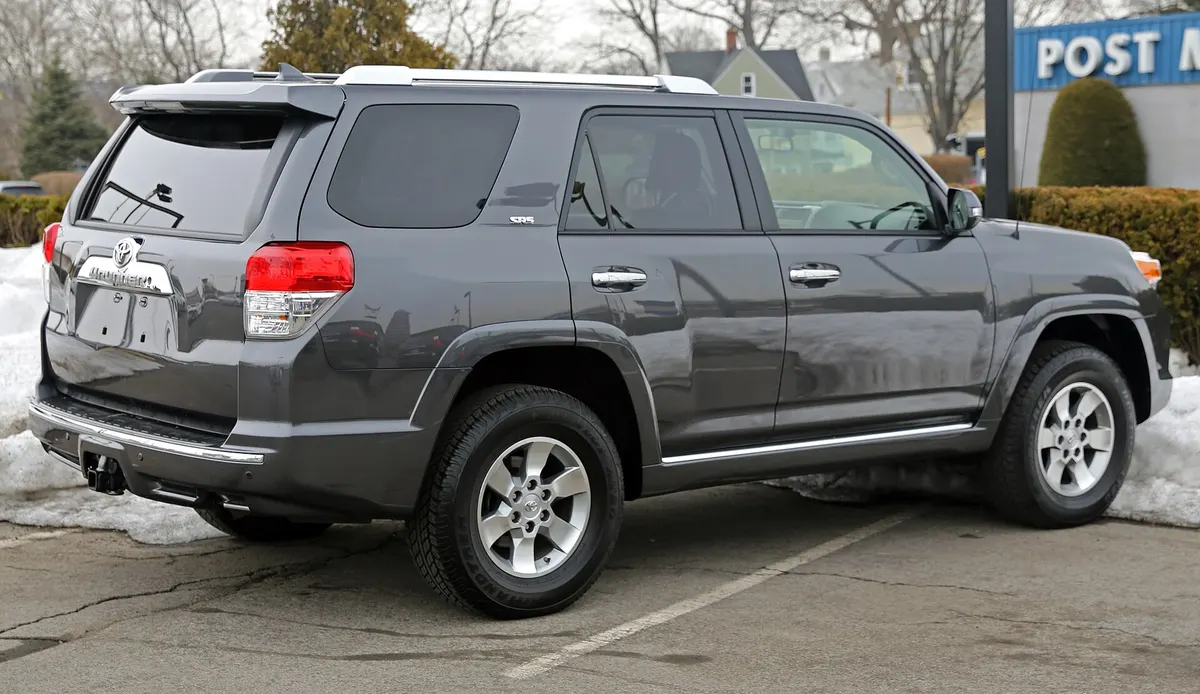
The 5th-gen 4Runner is about as close to bulletproof as a modern SUV gets. The 4.0L 1GR-FE V6 and its 5-speed automatic ran nearly unchanged for fifteen model years, and both routinely pass 250,000 miles. (2010-2011 2WD trucks also offered a 2.7L four-cylinder.) The headaches are small and well-known: an early-year smog-pump (SAIS) fault on California cars, a fuel filler that won't take gas, cheap door-lock actuators that die, and a dash that can crack. None of it threatens the drivetrain, which is the whole point of buying one.
2016–2019 (post-mid-cycle refresh, before price climb), 2020, 2021
None outright, but 2010–2013 California-emissions cars need +1 more
Engines
- 1GR-FE · 4.0L gasoline, 270 hp
- 2TR-FE · 2.7L gasoline
Transmissions
- automatic , 5-speed
- automatic
Drivetrain
RWD / 4WD
Body
SUV (4-door)
Trims
SR5, Trail / TRD Off-Road, TRD Pro, Limited, Venture, Nightshade
Toyota 4Runner part-number cross-reference
Start from the OEM number, then pick the brand you trust. Verified equivalents for the Toyota 4Runner (2010–2024).
Part links go to Amazon, and to eBay where Amazon does not stock the part. Affiliate links, so we may earn a commission if you buy. Your price is unchanged, and a commission never changes a verdict.
Oil filter (4.0L V6)
Verified via: ToyotaPartsDeal, 4Runner oil filter catalog (2010-2024: 04152-38010, replaced by 04152-YZZA5), 4Runners.com forum: 04152-YZZA5 replaceable-element oil filter for 5th gen, oilfilter-crossreference.com: Toyota 04152-YZZA5 alternatives, Walmart: FRAM Tough Guard TG10158, fits select 2010-2023 Toyota 4Runner
Engine air filter (4.0L V6)
Verified via: Toyota Parts & Service official air filter application chart (2023 FMPC): 2010- GRN28# V6 1GRFE = 17801-38051 (MVP 17801-YZZ13), ToyotaPartsDeal, 4Runner air filter catalog (2011-2024: 17801-38051; 2010-2012: 17801-38050), airfilter-crossreference.com: Toyota 17801-38051 alternatives
Oil filter (2.7L 2TR-FE)
Verified via: Toyota Parts & Service oil filter chart (2025 FMPC): 4Runner 2010- L4 (2TRFE) = 90915-YZZD1
Engine air filter (2.7L 2TR-FE)
Verified via: Toyota Parts & Service air filter chart (2025 FMPC): 4Runner 2010-2011 TRN28# L4 2TRFE = 17801-50040
Cabin air filter
Toyota
The dealer catalog lists 87139-50100 for every year
Look up Toyota cabin air filter on AmazonFram
Fresh Breeze with Arm & Hammer; cross list includes 87139-50100, 87139-07010 and 87139-07020
Check Fram cabin air filterVerified via: ToyotaPartsDeal, 4Runner cabin air filter catalog (2010-2024: 87139-50100), Toyota Parts & Service official cabin air filter chart (2022 FMPC): 2010-2013 = 87139-07010, 2014- = 87139-07020, FinditParts: FRAM CF10285 cross reference (lists Toyota 87139-50100/07010/07020, Wix 24511, Purolator C35667, K&N VF2000)
Should I buy a 2010–2024 Toyota 4Runner?
Buy it with confidence. This is one of the safest used-SUV purchases you can make. The 1GR-FE V6 and 5-speed auto are genuinely overbuilt, and because the platform barely changed for fifteen years, a 2012 and a 2022 share the same known issues and the same enormous parts supply. Shop on condition, not on year. The two things actually worth checking before money changes hands are a clear check-engine history (the early California smog-pump fault) and frame/underbody rust on trucks from salt states. A clean, maintained 4Runner is a 250,000-mile vehicle that holds its value better than almost anything in its class.
Best years
2016–2019 (post-mid-cycle refresh, before price climb), 2020, 2021
Years to avoid
None outright, but 2010–2013 California-emissions cars need the SAIS fault verified, 2010–2016 (confirm Takata airbag recall was completed)
Pre-Purchase Checklist for Toyota 4Runner
- ☐Scan for stored codes and check CEL history. P2440/P2441/P2442/P2445 point to the secondary air injection (smog pump) fault on 2010–2013 cars. Verify whether Toyota's warranty enhancement already covered it.
- ☐Fill the tank at the test drive. If the pump keeps clicking off or fuel backs up, the EVAP vent filter behind the rear wheel is clogged. Cheap to fix, but a useful negotiating point and a sign of heavy dusty-road use.
- ☐Work every door lock from the fob and the switch. Dead or intermittent actuators are extremely common; budget one or more.
- ☐Look hard at the frame, control arms, and brake/fuel lines on any truck from a salt-belt state. 5th-gen frames are far better than the recall-era 2003–2010 trucks, but surface-to-structural rust still happens.
- ☐Check the passenger-side dash near the airbag for cracks; confirm the open Takata airbag recall (2010–2016) was performed via VIN.
- ☐Feel for power-steering fluid weeping at the rack on higher-mileage or heavily off-roaded examples.
- ☐On 4WD trucks, engage and disengage 4HI/4LO on a test loop and confirm no warning-light cluster (VSC/A-TRAC). Usually a calibration or sensor issue, but verify.
- ☐Ask for the transmission fluid history. Toyota's normal schedule never replaces the fluid: the 2010-2014 guides inspect it, the 2015-2024 guides check the transmission for leaks. Its towing and heavy-load schedule replaces it at 60,000 and 120,000 miles. Use Toyota Genuine ATF WS.
Common Toyota 4Runner problems & repair costs
Secondary air injection (SAIS / smog pump) failure
$1,200–$2,500Symptoms: Check-engine light with codes P2440, P2441, P2442 or P2445. The smog pump or its switching valves stick; commonly triggered by moisture or debris getting into the air-injection plumbing. Usually no drivability change beyond the light and a failed smog test.
Fix: Toyota issued a warranty enhancement (10 years / 150,000 miles on affected vehicles) and dealers replaced the pump and valves free within that window. Out of coverage, an independent shop replaces the pump/valves, or owners fit a bypass kit to prevent recurrence. Confirm coverage by VIN before assuming you'll pay.
Sources: Tundra Headquarters: Toyota air-injection warranty enhancement, Tacoma World: SAIS P2440/P2442 (shared 1GR-FE issue)
Fuel tank won't accept gas (clogged EVAP vent filter)
$50–$250Symptoms: The gas pump clicks off after a few seconds, sometimes spraying fuel back out of the filler neck. The tank can take 10–20 minutes to fill in a slow trickle. Caused by a clogged plastic vent filter on the EVAP/charcoal-canister line. Trapped air can't escape, so back-pressure trips the pump's shutoff.
Fix: Replace the vent line filter assembly (Toyota part #77745-0E010, roughly $30–$40). Access is behind the driver's-side rear wheel. A very DIY-able job; a shop will charge mostly labor.
Sources: Toyota-4Runner.org: gas pump shutting off / can't fill fuel tank
Door lock actuator failure
$100–$580Symptoms: A door won't lock or unlock from the fob or the interior switch, or works intermittently. The driver's door usually goes first from the most use, but any door can fail. Widespread enough to have drawn owner litigation.
Fix: Replace the failed actuator. Dealers quote ~$400–$580 per door; aftermarket actuators run ~$30–$60 and it's about an hour per door as a DIY job, which is how most owners handle it.
Sources: Toyota-4Runner.org: door lock actuator failures (5th gen), RepairPal: 4Runner door lock actuator replacement cost
Dashboard cracking near the passenger airbag
$300–$1,200Symptoms: Cracks form in the dash, typically on the passenger side around the airbag seam, and spread over time with sun and heat exposure. Cosmetic in most cases, though owners worry about airbag deployment through a compromised panel.
Fix: Replacement dash pad or a dash cover/cap. Toyota ran warranty-enhancement programs for cracked/melting dashes on older 4Runners; coverage on 5th-gen cars is limited and time-boxed, so most owners pay out of pocket or fit a cover.
Sources: CarProblemZoo: Toyota 4Runner dashboard crack problems
Power steering rack seeping / leak
$800–$2,300Symptoms: Power-steering fluid weeping or dripping at the rack, low reservoir, and eventually a whine or heavy steering. More common on trucks that see real off-road impact loads.
Fix: Reseal or, more commonly, replace the steering rack. Dealer jobs reach the high end; an independent shop with an aftermarket or reman rack lands lower. Catch the seep early and it's just a fluid top-up to watch.
Sources: Toyota-4Runner.org: steering rack seeping repair cost
Takata airbag inflator recall
$0–$0Symptoms: No driver-noticeable symptom. The defect: Takata inflators can degrade with age, heat, and humidity and rupture on deployment, firing metal fragments into the cabin. Part of the industry-wide Takata recall.
Fix: Recall repair. Toyota replaces the inflator free of charge. Check the VIN at nhtsa.gov/recalls or with any Toyota dealer and confirm it was completed before you buy. This is non-negotiable on a 2010–2016 car.
Sources: NHTSA: Takata recall spotlight, Toyota: Takata airbag safety recall
This is a cheap SUV to keep relative to what it is. The 1GR-FE V6 has no timing belt to replace (it's a chain), no direct-injection carbon problem, and no turbo. Maintenance is oil, fluids, brakes, and tires. The 5-speed automatic is durable. Toyota's normal schedule never replaces the fluid: the 2010-2014 guides inspect it, the 2015-2024 guides check the transmission for leaks. Its towing and heavy-load schedule replaces it at 60,000 and 120,000 miles. Use Toyota Genuine ATF WS. The recurring small costs are the ones above: a smog-pump fix on early California cars, the odd door-lock actuator, an EVAP vent filter, and eventually a steering rack on high-mileage trucks. Fuel economy is the real running cost. High teens to low 20s mpg is normal, and that's the tax you pay for a body-on-frame, off-road-capable truck that lasts forever.
Cost calculator
What will this Toyota 4Runner cost you by a given mileage?
Drag to a mileage. We total the documented problems whose typical onset falls at or before it. The same cost ranges listed above, nothing new invented.
$0 estimated repair range
5-Year Maintenance Schedule & Cost to Own
Every scheduled service by mileage, fluid capacities, independent shop ranges, and parts cross-references.
Have a repair quote for this Toyota 4Runner?
Audit against OEM book times, uncover duplicate pad and rotor labor, and verify parts markups.
How to fix common Toyota 4Runner problems (DIY)
Replace the EVAP vent filter (fix the won't-fill-with-gas problem)
Tools: Socket set (10–12mm), Flat screwdriver / trim tool, Floor jack + jack stands (optional, for wheel-well access)
- Park safely, chock the wheels, and access the area behind the driver's-side rear wheel. Remove the wheel or turn the steering for room if needed.
- Remove the access panel / fender liner fasteners to expose the fuel-filler plumbing.
- Loosen the fuel pipe hold-downs and ease back the rubber surround at the filler neck.
- Locate the plastic vent filter assembly (Toyota #77745-0E010) on the EVAP/canister vent line and unclip it.
- Install the new filter, reconnect the vent line, and reassemble the hold-downs and panel.
- Refuel and confirm the pump no longer clicks off early.
Parts
- EVAP vent filter assembly (Toyota #77745-0E010) · Amazon $30–$45
Replace a door lock actuator
Tools: Trim removal tools, Phillips + flat screwdrivers, Socket set (8–10mm), Plastic fastener clips (spares)
- Remove the interior door panel: pull the trim, remove the screws behind, and unclip the panel, then peel back the vapor barrier.
- Disconnect the latch/actuator electrical connector and the lock and handle rods.
- Unbolt the latch assembly from the door edge and pull it out through the access hole.
- Transfer to the new actuator/latch assembly and reconnect the rods and connector.
- Test lock/unlock from the fob and switch BEFORE reassembling, then reinstall the barrier and panel.
Parts
- Door lock actuator (5th-gen 4Runner, front) · Amazon $30–$60
Engine + cabin air filter change
Tools: Screwdriver (airbox clips)
- Unclip the engine airbox lid, lift it, and swap the panel air filter (note orientation).
- Open the glovebox, release the side stops to drop it down, and pull the cabin filter cover.
- Slide out the old cabin filter and insert the new one with the airflow arrow pointing down, then reinstall the glovebox.
Parts
- Engine air filter (5th-gen 4Runner 4.0L V6) · Amazon $15–$25
- Cabin air filter (5th-gen 4Runner) · Amazon $10–$18
Some parts links are affiliate links. We may earn a commission at no cost to you. We only list parts that fit this generation.
The short version
The 5th-generation Toyota 4Runner (2010–2024) is one of the most boring cars to write a problem file about, and that’s the highest compliment you can pay a used SUV. Toyota built the same truck for fifteen model years: a 4.0-liter 1GR-FE V6 and an old-school 5-speed automatic (2010-2011 2WD trucks also offered a 2.7-liter four-cylinder), both deliberately under-stressed, both routinely running past 250,000 miles. There’s no turbo to blow, no timing belt to snap, no direct-injection carbon to scrape. The drivetrain is the reason you buy one, and the drivetrain almost never lets you down.
The problems that do exist are small, cheap, and well-documented. That’s the file.
What that means when you’re shopping
Because the truck barely changed, a 2012 and a 2022 share the same handful of known issues, so shop on condition and rust, not on model year.
Two things are worth clearing before money changes hands. First, on 2010–2013 California-emissions cars, the secondary air injection (smog) pump can throw a P244x code; check the check-engine history and whether Toyota’s warranty enhancement already covered it. Second, confirm any 2010–2016 truck had its Takata airbag recall completed. That one’s a safety item, not a maybe.
Everything else is ordinary 4Runner stuff and shouldn’t scare you off: a fuel filler that clicks off the pump (a ~$30 EVAP vent filter), door-lock actuators that die one at a time (cheap aftermarket parts, an hour each), a dash that can crack near the airbag, and on high-mileage or heavily off-roaded trucks, a steering rack that eventually weeps. And as with any body-on-frame truck from a salt state, get underneath and look at the frame.
Buy a clean, maintained one and you’ve got a 250,000-mile vehicle that will hold its value better than almost anything else you could park next to it.
How this file is built: failure modes and cost ranges are compiled from NHTSA recall data, Toyota’s own warranty-enhancement actions, and owner reporting on the major 4Runner forums, then sanity-checked against shop-floor experience. Cost figures are independent-shop estimates and vary by region. Spot something off? Tell us.
Viral car myths, checked against this car
- Mostly False
Does a "$3 liquid" really kill car rust permanently? The phosphoric-acid reality.
The $3 liquid is almost certainly phosphoric acid (sold as Ospho or Naval Jelly). It converts surface rust to iron phosphate. It does not kill rust 'permanently,' does not restore perforated steel, and was never buried by anyone. It has been on hardware store shelves continuously since the 1940s.
Frequently asked questions
Is the 5th-gen 4Runner actually reliable, or is that just hype?
It's earned. The 4.0L 1GR-FE V6 and its 5-speed automatic ran almost unchanged from 2010 to 2024 (2010-2011 2WD trucks also offered a 2.7L four-cylinder), both are conservatively built, and 250,000-plus miles on basic maintenance is routine. The known problems (smog pump, fuel filler, door locks, dash cracking) are real but minor and don't touch the drivetrain. That's the whole reason people pay a premium for these used.
Which 5th-gen 4Runner years should I avoid?
None are outright bad. The only year-specific caveat is 2010–2013 California-emissions cars, where the secondary air injection (smog pump) can fail. Verify the check-engine history and whether Toyota's warranty enhancement already covered it. Separately, confirm any 2010–2016 truck had its Takata airbag recall completed. After that, buy on condition and rust, not on year.
Why won't my 4Runner take gas at the pump?
Almost always a clogged EVAP vent filter on the charcoal-canister line behind the driver's rear wheel. Trapped air can't escape the tank, so back-pressure trips the pump's auto-shutoff and it clicks off (or sprays back). The fix is a ~$30 filter (Toyota #77745-0E010), common on trucks driven a lot on dusty or unpaved roads.
Do 5th-gen 4Runners have the frame-rust problem?
Far less than the 2003–2010 trucks that drew the famous frame-rot recall. The 5th-gen frame is more durable, but it's still a body-on-frame truck. In salt-belt states, inspect the frame, control arms, and brake/fuel lines closely on anything high-mileage. A garaged or southern truck is the safer rust bet.
How many miles will a 5th-gen 4Runner last?
With routine maintenance, 250,000 miles is a reasonable expectation and many go well past 300,000. The 1GR-FE V6 is one of the longest-lived gas engines Toyota has built. Most 4Runners are retired for rust or wear, not because the engine quit.
Every Toyota 4Runner generation
The full case file run, beyond the generation before and after this one.
Cross-shopped rivals
Files on what buyers weigh against the Toyota 4Runner of this era.