Case file · HONDA-ACCORD-2008-2012 · 8th gen (CP/CS/CU)
Honda Accord 2008–2012Common problems, reliability & repair costs
The 8th-gen Accord is roomy, comfortable, and mechanically tough, but it carries two well-documented headaches that defined the generation. The 3.5L V6's Variable Cylinder Management can drink oil and foul plugs, and almost every early car eats rear brake pads far too fast. Get a sorted four-cylinder or a V6 with the VCM software/piston fixes done and it'll run past 200k; buy one blind and you'll be chasing oil and brakes.
2011, 2012, 2.4L four-cylinder (any year, well-maintained)
2008–2010 V6 with no VCM/oil-consumption fix history +1 more
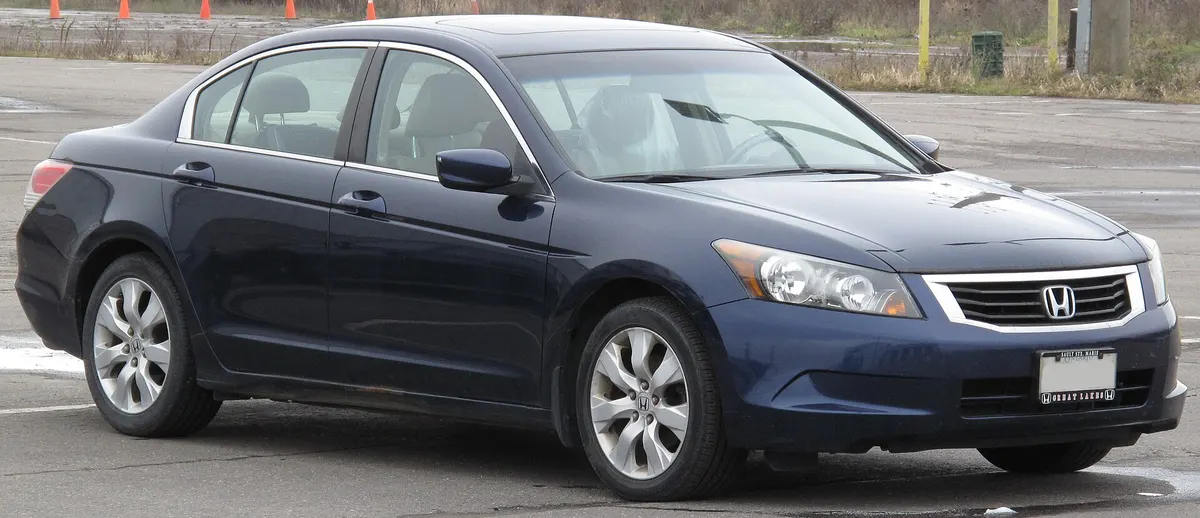
Engines
- K24Z2/K24Z3 · 2.4L gasoline, 177 hp
- J35Z2/J35Z3 · 3.5L gasoline, 271 hp
Transmissions
- automatic , 5-speed
- manual , 5-speed
- manual , 6-speed
Drivetrain
FWD
Body
sedan, coupe
Trims
LX, LX-P, EX, EX-L, EX-L V6, SE, Crosstour (2010+)
Honda Accord part-number cross-reference
Start from the OEM number, then pick the brand you trust. Verified equivalents for the Honda Accord (2008–2012).
Part links go to Amazon, and to eBay where Amazon does not stock the part. Affiliate links, so we may earn a commission if you buy. Your price is unchanged, and a commission never changes a verdict.
Oil filter
Fram
Extra Guard; TG7317 (Tough Guard) and XG7317 (Ultra Synthetic) are the upgraded lines
Look up Fram oil filterVerified via: HondaPartsNow: 2010 Accord oil filter fitment (incl. V6 trims), Oil Filter Cross Reference: Honda 15400-PLM-A02, FinditParts: Honda 15400-PLM-A02 cross reference
Engine air filter
Verified via: HondaPartsNow: Accord air filter by year/engine (R40 = 4cyl, R70 = V6), Air Filter Cross Reference: Honda 17220-R40-A00
Cabin air filter
Verified via: HondaPartsNow: 2010 Accord cabin air filter, HondaPartsNow: 2012 Accord cabin air filter, FinditParts: Fram CF10134 cross reference
Spark plugs
Verified via: HondaPartsNow: 12290-R40-A01 (ILZKR7B-11S), fits 2008-2011 Accord, Sparkplug-crossreference: NGK ILZKR7B11S crosses (Denso SXU22HCR11S/3461, NGK 5787, Honda 12290-R40-A01)
Front brake pads
Akebono
ProACT ceramic, front: LX/LX-P/LX-S (2008-2011) and SE (2011-2012) per NewParts fitment
Compare Akebono front brake padsAkebono
ProACT ceramic, front: EX/EX-L 2008-2012 per NewParts fitment; Akebono is the OE supplier
Find Akebono front brake padsPower Stop
Z17 ceramic, front: fits the LX-family pad shape (2003-2012 Accord per PartsHawk)
See Power Stop front brake padsVerified via: HondaPartsNow: Accord brake pad catalog (45022-TA5-X01 LX/SE; 45022-TE0-A61 EX/EX-L), RockAuto: 2010 Accord 2.4L front pads with trim splits (Wagner QC787/QC914, Bosch BE787H/BE914H), NewParts: Akebono ACT914 fits 2008-2012 Accord 2.4L LX/LX-P/LX-S/SE front, NewParts: Akebono ACT787 fits 2008-2012 Accord EX/EX-L front, PartCatalog: Wagner QC787 front, Accord EX/EX-L fitment, PartsHawk: Power Stop 17-914 front, 2003-2012 Accord
Wiper blades
Factory size
Compare Factory size wiper blades on AmazonBosch
19A's fitment list explicitly includes 2011-2012 Accord; 26A sized to the 26" chart fit
Find Bosch wiper bladesVerified via: WiperSizeChart, 2008 Accord: 26" driver / 19" passenger, PartCatalog: Bosch 19A = 19", Accord fitment listed, Parts Universe: Bosch ICON 26A = 26", Amazon: Rain-X 5079281-2 = 26", Amazon: Rain-X 5079276-2 = 19", Amazon: Trico Force 25-260 = 26" (fits select Honda), Amazon: Trico Force 25-190 = 19" (fits select Honda)
Serpentine belt
Honda (Bando)
See Honda serpentine belt on AmazonVerified via: HondaPartsNow: 56992-R40-A01 (Bando), 2008-2012 Accord; replaces 56992-R40-A02, RockAuto: 2010 Accord 2.4L belts (Gates K070721, Dayco 5070723, Continental 4070722, Bando 7PK1835, ACDelco 7K721)
Battery
Factory size
Compare Factory size battery on AmazonInterstate
Group 51R flooded, 500 CCA; Interstate's fitment page confirms it for the 2010 Accord 2.4L
Find Interstate batteryPowerTex
Lithium drop-in in the 51R form factor; vehicle-specific listing for the 2010 Accord
Look up PowerTex batteryVerified via: Interstate Batteries: MT-51R fits 2010 Accord 2.4L (Group 51R, 500 CCA), HondaAccordBattery: 2008-2012 Accord 2.4L uses Group 51R (500-590 CCA range), PowerTex: 2010 Accord battery is BCI Group 51R, AutoPadre: Accord battery chart (51R for 2010-2011 L4; lists 35 for 2012 L4, an outlier)
Should I buy a 2008–2012 Honda Accord?
Buy it, with your eyes open. A maintained 8th-gen Accord is a comfortable, durable, cheap-to-run used sedan that routinely passes 200,000 miles. Two things separate a good buy from a chore. First, the rear brakes: nearly every 2008–2010 car wears rear pads absurdly fast, so budget for that as normal upkeep, not a deal-breaker. Second, the V6's VCM oil consumption: on a V6, confirm it isn't burning a quart every few thousand miles and find out whether the TSB software update and (if needed) the piston/ring fix were done. The 2.4L four-cylinder sidesteps the worst of the oil drama and is the safer, simpler pick for most buyers.
Best years
2011, 2012, 2.4L four-cylinder (any year, well-maintained)
Years to avoid
2008–2010 V6 with no VCM/oil-consumption fix history, Any car with undisclosed rear-brake or oil-burning history
Pre-Purchase Checklist for Honda Accord
- ☐On any V6: check the oil level and condition, then ask the owner how often they top off. A quart every 3,000 miles or less is the VCM oil-consumption tell.
- ☐On a V6, pull a spark plug or ask for service history. Oil-fouled plugs and past misfire codes point to VCM-related consumption.
- ☐Ask whether Honda's VCM software update (TSB 11-033) and/or the piston/ring oil-consumption repair (TSB 12-087) were performed; get it in the records.
- ☐Inspect the REAR brake pads specifically. Inner edges wear out first on this car. Worn rears with healthy fronts is the known EBD pattern.
- ☐Cold-start a four-cylinder and listen for a 1–2 second rattle/grind at startup, the VTC actuator (TSB 09-010).
- ☐Check the power-steering reservoir level and look for reddish fluid weeping at the pump and rack seals.
- ☐Look at the A/C condenser through the grille for stone damage; test A/C output on a hot day.
Common Honda Accord problems & repair costs
V6 excessive oil consumption (VCM)
$300–$4,000Symptoms: Burning oil with no external leak, often a quart every 2,000–4,000 miles. VCM cycling cylinders on and off lets oil slip past the rings; that oil fouls spark plugs, which shows up as misfires, a rough idle, or a check-engine light. In bad cases you'll smell or see light smoke.
Fix: Start with Honda's VCM software update (TSB 11-033), fresh plugs, and an oil-consumption test. If consumption is severe, the real fix is the piston and oil-control-ring replacement (TSB 12-087), a major engine job. Many owners also fit an aftermarket VCM disabler to stop the cycling entirely.
Sources: MotorBiscuit: 7 common 8th-gen Accord problems, CarComplaints: 2008 Accord engine
Premature rear brake pad wear
$200–$450Symptoms: Rear pads wear out far faster than the fronts, sometimes in 15,000–26,000 miles instead of the usual 60k+. Inner pad edges go first. You may get a grinding noise from the rear long before you'd expect a brake job.
Fix: Replace rear pads (and rotors if scored). It tends to recur, so plan on rear pads as a regular maintenance item. A class-action settlement over the Electronic Brake Distribution system reimbursed many owners for pads and an EBD adjustment.
Sources: HondaProblems: Accord premature brake wear, CarComplaints: 2008 Accord brakes
Four-cylinder VTC actuator cold-start rattle
$350–$700Symptoms: A loud metallic rattle or grind for the first 1–2 seconds after a cold start. Oil drains out of the VTC actuator overnight, so there's a brief moment of metal-on-metal until oil pressure builds.
Fix: Replace the VTC actuator (TSB 09-010). The redesigned part stops the oil from draining back. The job doesn't require pulling the timing chain, which keeps labor reasonable. Brief, occasional rattle isn't urgent, but a worsening one should be addressed.
Sources: Underhood Service: Honda Accord/CR-V rattle at start-up, Honda OEMDTC: engine rattles at cold start (TSB 09-010)
Power-steering pump and rack seal leaks
$250–$900Symptoms: A reddish-brown puddle under the front of the car, a dropping reservoir level, and a whine or groan when turning, worst at low speed or first thing in the morning. Leaks usually start at the pump's front shaft seal, the reservoir, or the rack.
Fix: Replace the leaking pump or reseal/replace the rack, then flush and refill with genuine Honda PSF. Using the correct Honda fluid matters. Generic fluid can cause foaming and repeat leaks.
Sources: Honda Parts Online: diagnosing a failing power-steering pump
Starter and alternator wear (high-mileage)
$300–$700Symptoms: Slow or no crank, intermittent no-start, or a battery that won't stay charged. Normal high-mileage wear rather than a design defect.
Fix: Replace the starter or alternator as needed. Both are standard remove-and-replace jobs; the starter is the pricier of the two on labor.
A/C condenser stone damage and refrigerant leaks
$500–$1,000Symptoms: A/C blows warm or stops cooling after a season. The grille leaves the condenser exposed to road debris, so a stone strike can puncture it and let refrigerant out.
Fix: Replace the condenser, then evacuate and recharge the system. A grille guard or condenser screen can prevent a repeat.
Outside the V6 oil issue, the 8th-gen Accord is inexpensive to keep: parts are everywhere and cheap, the engines aren't fragile, and routine service is straightforward. The two line items to plan for are rear brakes (treat rear pads as a recurring expense on 2008–2010 cars) and, on a V6, oil: both the cost of consumption and the possibility of the larger piston/ring repair. A four-cylinder car avoids most of that and is the cheaper long-term ownership story.
Cost calculator
What will this Honda Accord cost you by a given mileage?
Drag to a mileage. We total the documented problems whose typical onset falls at or before it. The same cost ranges listed above, nothing new invented.
$0 estimated repair range
5-Year Maintenance Schedule & Cost to Own
Every scheduled service by mileage, fluid capacities, independent shop ranges, and parts cross-references.
Have a repair quote for this Honda Accord?
Audit against OEM book times, uncover duplicate pad and rotor labor, and verify parts markups.
How to fix common Honda Accord problems (DIY)
Rear brake pad replacement
Tools: Floor jack + jack stands, Lug wrench / breaker bar, Socket set (12–14mm), Brake caliper piston compressor or C-clamp, Wire brush
- Loosen the rear lug nuts, lift the car, support it on stands, and remove the rear wheels.
- Remove the two caliper bolts and swing the caliper up off the bracket; hang it so it doesn't dangle on the hose.
- Slide out the old pads and clips, then clean the bracket and lubricate the slide points.
- Compress the caliper piston back into the bore (this caliper does not need to be rotated).
- Fit the new clips and pads, reinstall the caliper and bolts, then remount the wheel and torque the lugs.
- Pump the brake pedal until firm before driving, and check the fluid level.
Parts
- Rear brake pad set (8th-gen Accord) · Amazon $25–$55
- Rear rotors (pair, if scored) · Amazon $50–$90
Spark plug replacement (four-cylinder)
Tools: 5/8 spark plug socket + extension, Ratchet, Torque wrench, Dielectric grease
- Let the engine cool, then unbolt and lift the engine cover and disconnect the coil-pack connectors.
- Remove the coil bolts and pull the coil packs straight up off the plugs.
- Use the plug socket to remove each old plug; check it for oil fouling (a VCM tell on the V6).
- Gap-check the new plugs, thread them in by hand, then torque to spec.
- Re-seat the coil packs, reconnect the connectors, and refit the engine cover.
Parts
- Iridium spark plugs (set of 4) · Amazon $30–$55
Cabin & engine air filter change
Tools: Screwdriver (cabin filter cover)
- Open the glovebox, release the side stops to drop it fully, and pull the cabin filter housing cover.
- Slide out the old cabin filter and insert the new one with the airflow arrow pointing down.
- For the engine filter, unclip the airbox lid, drop in the new panel filter, and re-clip the lid.
Parts
- Cabin air filter (8th-gen Accord) · Amazon $8–$15
- Engine air filter (8th-gen Accord) · Amazon $12–$22
Some parts links are affiliate links. We may earn a commission at no cost to you. We only list parts that fit this generation.
The short version
The 2008–2012 Honda Accord is a big, comfortable, genuinely durable used sedan, but two issues defined this generation, and you need to know both before you shop.
The first is the 3.5L V6’s Variable Cylinder Management. To save fuel, VCM shuts down cylinders under light load, and on many cars that cycling lets oil slip past the rings, so the engine burns oil (sometimes a quart every few thousand miles) and fouls its spark plugs. Honda issued a software update (TSB 11-033) and, for worse cases, a piston-and-ring repair (TSB 12-087).
The second is rear brakes. On 2008–2010 cars especially, the rear pads wear out shockingly fast, often in under 25,000 miles, thanks to the Electronic Brake Distribution system. It got bad enough to trigger a class-action settlement.
What that means when you’re shopping
If you’re looking at a four-cylinder (2.4L) Accord, you’ve dodged the biggest problem. Buy on condition and maintenance history, listen for a brief cold-start rattle (the VTC actuator, TSB 09-010), and budget for rear pads if it’s an earlier car.
If you’re looking at a V6, treat oil consumption as the first thing to clear. Check the oil level and condition, ask how often the owner tops off, and get the VCM software update and any piston/ring work into the records. A V6 that’s been sorted is a great car; one that’s quietly drinking oil is a future engine bill.
Everything else is ordinary high-mileage Accord stuff: a power-steering pump or rack that weeps, a starter or alternator at six figures, a stone-cracked A/C condenser. All cheap and well understood. None of it should scare you off the right car.
How this file is built: failure modes and cost ranges are compiled from NHTSA complaint data, CarComplaints.com reports, Honda’s own technical service bulletins, and owner reporting, then sanity-checked against shop-floor experience. Cost figures are independent-shop estimates and vary by region. Spot something off? Tell us.
Viral car myths, checked against this car
- Misleading
Is the "$1 Japanese oil trick" that stops engine wear forever real?
The 'Japanese oil trick' is almost certainly MoS2 (molybdenum disulfide), a real industrial friction modifier. It is German, not Japanese (Liqui Moly popularized it), sold openly at every parts store for $15-20, has real but modest measured friction benefits, and was never buried by anyone.
- Dangerous
Is the "$2 liquid that destroys engine sludge forever" real? Our shop-floor verdict.
An aggressive solvent flush on a high-mileage engine is a textbook way to spin a bearing. The viral 'kitchen-cabinet flush' is folklore that real shops spend money cleaning up after.
Frequently asked questions
Should I buy the four-cylinder or the V6 Accord?
For most buyers, the 2.4L four-cylinder is the smarter used pick. It's plenty quick, more economical, and avoids the V6's Variable Cylinder Management oil-consumption headache entirely. Get the V6 only if you want the extra power and you've confirmed the car isn't burning oil and has the VCM fixes documented.
Is the V6 oil consumption a deal-breaker?
Not automatically. Many V6 cars run fine after Honda's VCM software update (TSB 11-033), and the worst cases were repaired under the piston/ring service bulletin (TSB 12-087). The deal-breaker is buying one blind. Always check how much oil it uses and what work has been done before you commit.
Why do the rear brakes wear out so fast?
The 8th-gen Accord's Electronic Brake Distribution sends more force to the rear pads than the design could handle, so 2008–2010 cars often need rear pads in 15,000–26,000 miles. A class-action settlement reimbursed many owners. It's a known quirk. Budget for rear pads as routine maintenance rather than treating it as a fault.
How many miles will an 8th-gen Accord last?
A maintained four-cylinder commonly reaches 200,000–250,000 miles. The V6 is just as capable mechanically. The limiter is the VCM oil issue, which is manageable once you know about it. Most early retirements come from neglect, not the engine wearing out.
Every Honda Accord generation
The full case file run, beyond the generation before and after this one.
Cross-shopped rivals
Files on what buyers weigh against the Honda Accord of this era.