Case file · HONDA-ACCORD-2013-2017 · 9th gen (CR/CT)
Honda Accord 2013–2017Common problems, reliability & repair costs
The 9th-gen Accord is a genuinely good, long-lasting midsize sedan. Pick the 4-cylinder, not the V6. The 2.4L 4-cyl with the CVT is the reliable volume choice; the 3.5L V6 uses Honda's cylinder-deactivation (VCM) and is the one that drinks oil. Add a famously weak factory battery (and a fire-risk sensor recall) plus laggy infotainment, and the story is: get a clean 4-cylinder and it runs to 250k.
2015, 2016, 2017
2013 (first model year, most electrical/starter/battery comp +1 more
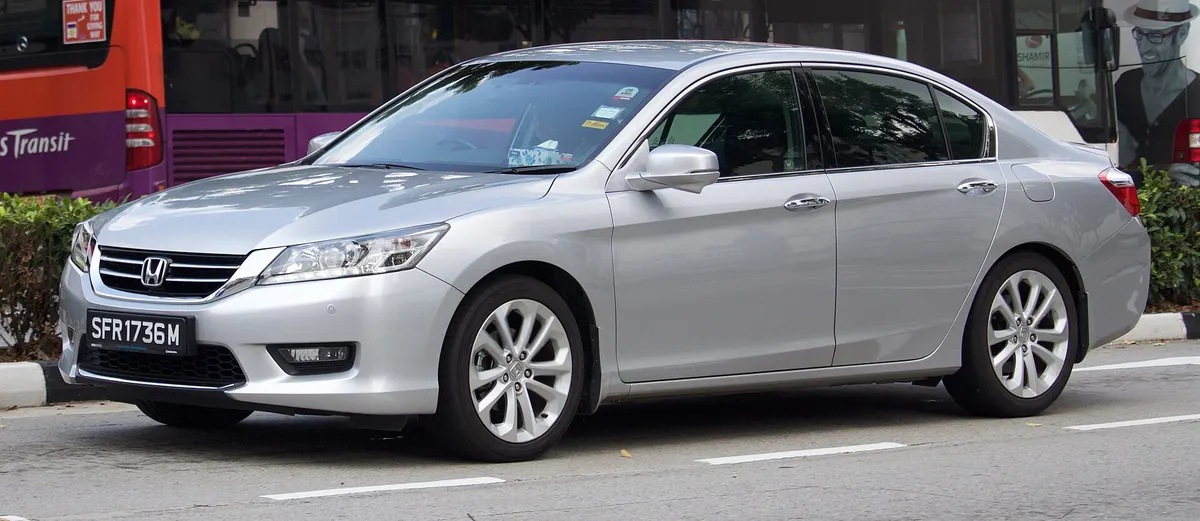
Engines
- K24W · 2.4L gasoline, 185 hp
- J35Y · 3.5L gasoline, 278 hp
- LFA (hybrid) · 2.0L hybrid, 196 hp
Transmissions
- cvt
- manual , 6-speed
- automatic , 6-speed
Drivetrain
FWD
Body
sedan, coupe
Trims
LX, Sport, EX, EX-L, Touring, Hybrid
Honda Accord part-number cross-reference
Start from the OEM number, then pick the brand you trust. Verified equivalents for the Honda Accord (2013–2017).
Part links go to Amazon, and to eBay where Amazon does not stock the part. Affiliate links, so we may earn a commission if you buy. Your price is unchanged, and a commission never changes a verdict.
Engine oil filter
Fram
Extra Guard; TG7317 (Tough Guard) and XG7317 (Ultra Synthetic) also cross-referenced
Check Fram engine oil filterVerified via: oilfilter-crossreference.com: Honda 15400-PLM-A02 equivalents, GETOPAUTO: 15400-PLM-A02 cross-reference guide, HondaPartsNow: 2015 Accord OEM oil filter (lists 15400-PLM-A02)
Engine air filter
EPAuto
sold as GP476 (CA11476); listed for Accord 2.4L 2013-2017 and Acura TLX L4 2015-2020
Check EPAuto engine air filterVerified via: airfilter-crossreference.com: Honda 17220-5A2-A00 equivalents, Amazon: EPAuto GP476 (CA11476) fitment listing
Cabin air filter
Fram
Fresh Breeze; FinditParts fitment shows Honda Accord 2003-2022 and cross-references 80292-T0G-A01
Compare Fram cabin air filterVerified via: College Hills Honda: 80292-SDA-407 fitment (Accord 4dr 2003-2022), supersedes 80292-T0G-A01, FinditParts: Fram CF10134 fitment and cross-references
Should I buy a 2013–2017 Honda Accord?
Buy it, and buy the 4-cylinder. A well-kept 2.4L Accord with the CVT is one of the safest used-midsize bets you can make; routine maintenance is simple and it routinely passes 200,000 miles. The V6 is lovely to drive but carries Honda's VCM oil-consumption risk, so only buy one if you'll check oil between changes and accept the possibility of top-up driving. On any year, confirm the battery-sensor recall (17V-418) was completed, expect to budget for a stronger battery, and live with infotainment that's slow by modern standards. The 2015–2017 4-cylinders are the sweet spot.
Best years
2015, 2016, 2017
Years to avoid
2013 (first model year, most electrical/starter/battery complaints), 2013–2014 V6 (heaviest VCM oil-consumption reporting)
Pre-Purchase Checklist for Honda Accord
- ☐On any V6: check the oil level on the dipstick and ask how much oil it uses between changes. A quart every 1,000–2,000 miles points to VCM-related consumption.
- ☐Confirm the battery management sensor recall (17V-418 / KG0) was completed. A Honda dealer can verify by VIN. This was a fire-risk recall.
- ☐Cold-start the car several times; listen for a grinding or no-engage starter, and ask whether the original battery/starter has been replaced.
- ☐On 4-cylinder cars, drive at low speed from a stop and watch for CVT shudder or clunky engagement; confirm the CVT fluid has been serviced.
- ☐Cycle the touchscreen, backup camera, and radio. Laggy or dead infotainment and a glitchy camera are common and pricey to replace.
- ☐On 2016–2017 cars, check the LED daytime running lights front and rear for flicker or dead segments (warranty-extended; see problems).
- ☐Inspect the front clip and hood for heavy rock-chipping and clearcoat peel. This generation chips easily.
Common Honda Accord problems & repair costs
V6 oil consumption from VCM (cylinder deactivation)
$150–$600Symptoms: Oil level dropping between changes with no obvious leak; in worse cases fouled spark plugs, misfires, and accelerated catalytic-converter wear. There is no low-oil-level warning, so it can sneak up on you.
Fix: There is no factory cure. It's inherent to the VCM design. Owners manage it by checking oil regularly and topping up; replacing the PCV valve and using the correct oil can help. Many fit an aftermarket VCM-disabling device. The real cost is the habit of monitoring oil, not a one-time repair (the range here is plugs/PCV/maintenance, not an engine).
Sources: Honda oil-consumption overview, DriveAccord VCM mega-thread
Weak factory battery, parasitic drain & fire-risk sensor recall
$200–$400Symptoms: Battery goes flat repeatedly, slow/no crank, dead battery after sitting. The undersized original battery struggles, and a separately recalled battery-management sensor could let moisture in and short, a fire risk.
Fix: Recall 17V-418 (Honda KG0) replaces the battery-management sensor for free. Verify it was done by VIN. Beyond that, owners commonly fit a larger, higher-CCA battery and chase any parasitic draw (VSA, A/C relay, charge-management settings). Budget for a better battery on purchase.
Sources: NHTSA/RepairPal recall 17V418000 (battery sensor fire), CarComplaints: 2013 Accord battery drains
Starter motor failure / won't engage
$350–$700Symptoms: Grinding on start, intermittent no-crank, or a complete no-start often appearing just after the 36k factory warranty. The weak battery makes it worse and can be misdiagnosed as 'just the battery.'
Fix: Starter replacement; Honda issued TSB 16-002 addressing a mounting/alignment contributor. It's a reasonably accessible part on most trims and not an exotic repair.
Sources: CarComplaints: 2013 Accord electrical (starter), MotorBiscuit: 9th-gen Accord common problems
Slow / glitchy infotainment and backup camera
$200–$900Symptoms: Unresponsive or laggy touchscreen, frozen audio, slow steering-wheel controls, and a backup camera that blanks, flickers, or shows static.
Fix: A battery disconnect/reset or software update fixes many cases. A genuinely failed display head unit or camera module is the expensive end; some owners retrofit an aftermarket head unit instead of paying for OEM.
CVT shudder / rough engagement (4-cylinder)
$200–$3,500Symptoms: Judder or clunk pulling away from a stop, occasional rough acceleration. A minority of cars saw earlier-than-expected CVT trouble, usually on neglected fluid.
Fix: Most cases are addressed by the correct CVT fluid service and Honda's control software update (TSB 15-077). Keep the fluid on schedule and these CVTs hold up well; a full replacement is the rare worst-case and the top of the range.
Sources: MotorBiscuit: 9th-gen Accord common problems, CoverageX: Accord problems by year (CVT)
LED daytime-running-light failure (2016–2017)
$0–$750Symptoms: DRL/LED segments flicker, dim, or die. The fault is in the LED assembly itself, not a swappable bulb.
Fix: Honda extended the DRL-LED warranty to 10 years / unlimited miles (TSB 19-042) for eligible 2016–2017 VINs, with reimbursement for prior out-of-pocket replacements, so verify eligibility before paying. Out of coverage, a headlight assembly runs into the hundreds per side.
Sources: Honda TSB 19-042 DRL LED warranty extension, CarComplaints: 2016 Accord LED DRLs burning out
A 4-cylinder 9th-gen Accord is cheap to run: parts are everywhere, the K24 is robust, and routine service is simple. Expect normal wear: brakes, tires, and almost certainly a better battery than the one Honda fitted. The V6 adds the oil-consumption habit (cheap per top-up, but ongoing) and slightly higher maintenance. Budget surprises live in electrical (starter, infotainment, camera) more than in the drivetrain. Confirm the battery-sensor recall and any LED warranty coverage and most owners spend little beyond maintenance.
Cost calculator
What will this Honda Accord cost you by a given mileage?
Drag to a mileage. We total the documented problems whose typical onset falls at or before it. The same cost ranges listed above, nothing new invented.
$0 estimated repair range
5-Year Maintenance Schedule & Cost to Own
Every scheduled service by mileage, fluid capacities, independent shop ranges, and parts cross-references.
Have a repair quote for this Honda Accord?
Audit against OEM book times, uncover duplicate pad and rotor labor, and verify parts markups.
How to fix common Honda Accord problems (DIY)
Upgrade the 12V battery (and clean terminals)
Tools: 10mm socket + ratchet, Wire brush / terminal cleaner, Memory-saver (optional, keeps radio code/clock)
- With the car off, loosen and remove the negative (black) terminal first, then the positive (red).
- Remove the hold-down bracket and lift the old battery out.
- Wire-brush the terminals and tray; set the new, higher-CCA battery in and secure the bracket.
- Reconnect positive first, then negative, and snug both clamps.
- Start the car and reset the clock/radio if needed.
Parts
- Group-size 51R battery, higher CCA (9th-gen Accord) · Amazon $160–$230
- Battery terminal cleaner / brush · Amazon $6–$12
Cabin & engine air filter change
Tools: Screwdriver (engine airbox clips, if needed)
- Open the glovebox, squeeze the side stops to drop it fully down, and pull the cabin-filter cover.
- Slide out the old cabin filter; insert the new one with the airflow arrow pointing down.
- For the engine filter, release the airbox clips, drop in the new panel filter, and re-secure the lid.
Parts
- Cabin air filter (9th-gen Accord) · Amazon $8–$16
- Engine air filter (9th-gen Accord) · Amazon $12–$22
Replace the PCV valve (V6, to help oil consumption)
Tools: Socket set (8–12mm), Pliers (for hose clamp)
- Locate the PCV valve on the V6. Access can require moving an intake hose or cover.
- Disconnect the breather hose and unscrew/unclip the old PCV valve.
- Fit the new valve, reconnect the hose, and make sure the clamp is seated.
- Start the engine and confirm a steady idle with no vacuum hiss.
Parts
- PCV valve (J35 V6) · Amazon $15–$35
Some parts links are affiliate links. We may earn a commission at no cost to you. We only list parts that fit this generation.
The short version
The 2013–2017 Honda Accord (9th generation) is one of the better used midsize sedans you can buy, with two caveats that decide whether you get a great one or an annoying one.
First: pick the 4-cylinder. The 2.4L K24 with the CVT is the reliable volume choice and has no significant oil-consumption pattern. The 3.5L V6 uses Honda’s VCM cylinder-deactivation, which is tied to oil consumption, heaviest on 2013–2014 cars. The V6 isn’t a grenade; it’s a car you have to keep topped up.
Second: the electrical system is the soft spot, not the drivetrain. The factory battery was undersized, a separately recalled battery-management sensor was a fire risk, starters fail early, and the infotainment is slow and occasionally glitchy.
What that means when you’re shopping
If you’re looking at a 2015–2017 4-cylinder, you’ve cleared most of the known risk. Buy on condition and service history like any used car, and plan to fit a better battery.
If you’re looking at a V6, treat oil consumption as the first thing to clear: check the dipstick, ask how much it uses between changes, and only buy if you’re fine topping up oil. A new PCV valve and the right oil help; many owners add a VCM-disabling device.
On any year, have a Honda dealer confirm by VIN that the battery-sensor recall (17V-418) was done. It’s a fire-risk recall, and it’s free. On 2016–2017 cars, check the LED daytime running lights; Honda extended that warranty to 10 years, so failures may still be covered.
Everything else here is ordinary used-Accord stuff: a starter that may be living on borrowed time, a CVT that wants its fluid changed, paint that chips easily, and infotainment that’s just slow. None of it should scare you off a clean 4-cylinder.
How this file is built: failure modes and cost ranges are compiled from NHTSA recall data, Honda TSBs and warranty-extension actions, CarComplaints reporting, and owner forums, then sanity-checked against shop-floor experience. Cost figures are independent-shop estimates and vary by region. Spot something off? Tell us.
Viral car myths, checked against this car
- Outdated
Does a "$1 mineral" really double car battery life? The Epsom-salt reality.
The mineral is Epsom salt (magnesium sulfate). It was a real desulfation hack for serviceable flooded-cell batteries 40+ years ago. It does not work on modern sealed AGM or EFB batteries, and trying it on yours will void the warranty without helping the battery.
- Dangerous
Is the "$2 liquid that destroys engine sludge forever" real? Our shop-floor verdict.
An aggressive solvent flush on a high-mileage engine is a textbook way to spin a bearing. The viral 'kitchen-cabinet flush' is folklore that real shops spend money cleaning up after.
Frequently asked questions
Which Honda Accord years should I avoid in this generation?
The 2013 model year drew the most electrical complaints as a first-year car: starter, battery, and infotainment. The 2013–2014 V6 is the one to be wary of for oil consumption. The 2015–2017 4-cylinders are the safest used buys.
Should I buy the 4-cylinder or the V6?
The 2.4L 4-cylinder. It's smooth enough, more economical, and avoids the V6's VCM oil-consumption issue. The V6 is more fun and very strong, but only buy one if you're willing to check oil between changes and top it up.
Is the Accord's CVT reliable?
Generally yes, when the fluid is serviced on schedule. Early cars could shudder or clunk off the line; Honda addressed much of it with a software update (TSB 15-077). Confirm the CVT fluid has been changed and you've cleared the main risk.
What's the deal with the battery and the recall?
Two separate things. The factory battery was undersized and many owners replace it with a stronger one. Separately, Honda recalled the battery-management sensor (17V-418) on 2013–2016 cars for a moisture-related short that's a fire risk. Verify by VIN that the recall was completed.
How many miles will a 9th-gen Accord last?
A maintained 4-cylinder commonly reaches 200,000–250,000 miles. The engine and CVT are durable; most expensive surprises are electrical, not drivetrain. Keep up with fluids and a healthy battery and these are long-haul cars.
Every Honda Accord generation
The full case file run, beyond the generation before and after this one.
Cross-shopped rivals
Files on what buyers weigh against the Honda Accord of this era.