Case file · HONDA-PILOT-2009-2015 · 2nd gen (YF3/YF4)
Honda Pilot 2009–2015Common problems, reliability & repair costs
The 2nd-gen Pilot is a boxy, genuinely durable three-row SUV built around Honda's proven J35 V6, with two real asterisks. Variable Cylinder Management (VCM) on 2009–2013 engines can burn oil badly enough that Honda settled a class-action lawsuit over it, and clear-coat peeling is common enough that Honda ran its own paint warranty extensions. Get a car with clean oil-consumption history and sound paint, and it's a 200k-mile family hauler; buy blind and you can inherit either problem.
2010, 2012, 2015
2009 (most engine/VCM complaints of the generation, per NHTS +2 more
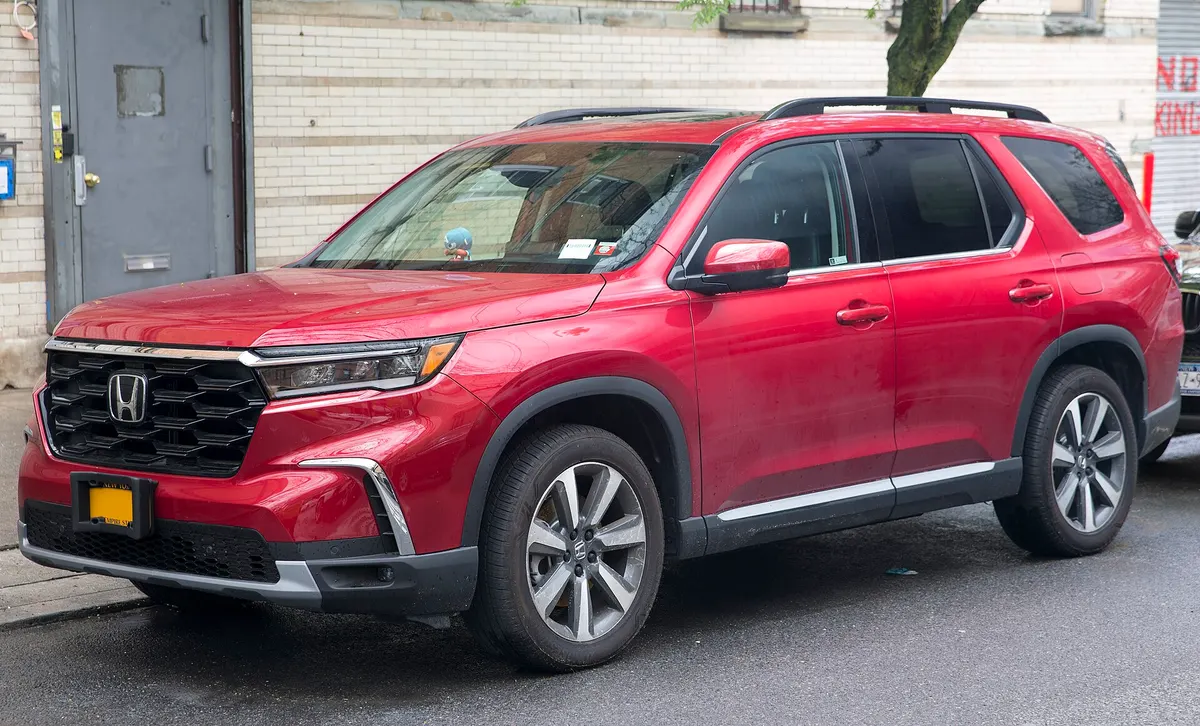
Engines
- J35Z4 · 3.5L gasoline, 250 hp
Transmissions
- PN3A · automatic, 5-speed
Drivetrain
FWD / AWD
Body
SUV (3-row)
Trims
LX, EX, EX-L, Touring, SE
Honda Pilot part-number cross-reference
Start from the OEM number, then pick the brand you trust. Verified equivalents for the Honda Pilot (2009–2015).
Part links go to Amazon, and to eBay where Amazon does not stock the part. Affiliate links, so we may earn a commission if you buy. Your price is unchanged, and a commission never changes a verdict.
Oil filter
Honda
Current genuine number, listed by HondaPartsNow as fitting 2003–2025 Pilot
Find Honda oil filter on AmazonVerified via: HondaPartsNow: Pilot oil filter 15400-PLM-A02 (2003–2025), Oilfilter-crossreference.com: Honda 15400-PLM-A02
Engine air filter
Verified via: Bernardi Parts Honda: 17220-RN0-A00 (Pilot 2009–2015), Air Filter Cross Reference: Honda 17220-RN0-A00
Cabin air filter
Honda
Superseded by current service number 80292-SDA-407 (shared across 2009–2022 Pilot)
Look up Honda cabin air filter on AmazonVerified via: HondaPartsNow: 80292-SDA-407 supersedes 80292-TZ3-A41, Air Filter Cross Reference: Honda 80292-SDA-407
Spark plugs
Verified via: HondaPartsNow: Pilot spark plug 12290-R70-A01 (2009–2011), Sparkplug-crossreference.com: NGK ILZKR7B11
Spark plugs
Verified via: HondaPartsNow: Pilot spark plug 12290-R71-L01 (2012–2015), Sparkplug-crossreference.com: NGK DILZKR7A11G
Front brake pads
Honda
Honda revised the service part number at the 2012 facelift, but the pad shape and aftermarket cross are unchanged, confirmed via RockAuto vehicle-specific fitment for both a 2011 and a 2014 Pilot
Look up Honda front brake pads on AmazonVerified via: HondaPartsNow: Pilot front brake pad sets by year, RockAuto: 2011 Honda Pilot 3.5L V6 front brake pads (Wagner ZD1378, Bosch BE1280H, Power Stop 171378), RockAuto: 2014 Honda Pilot 3.5L V6 front brake pads (same Wagner/Bosch/Power Stop numbers)
Wiper blades
Bosch
Driver/passenger beam blades; Bosch lists ICON 22A as fitting 2009–2023 Pilot
Look up Bosch wiper bladesVerified via: AutoPadre, Honda Pilot wiper sizes 2009–2015: 22"/21"/14", Honda Parts HQ: 76730-SZA-A02 rear wiper blade (2009–2015 Pilot), Amazon: Bosch ICON wiper blades, fits Honda Pilot
Serpentine belt
Honda (Bando OE supplier)
Honda's dealer part number changed across the 2012 facelift and could not be pinned to one clean number from available sources. The Bando/Gates/Dayco numbers below are confirmed vehicle-specific fits for both a 2011 and a 2014 Pilot via RockAuto, so match your old belt by length if buying OEM at a dealer counter
Check Honda serpentine belt on AmazonVerified via: RockAuto: 2011 Honda Pilot 3.5L V6 serpentine belt, RockAuto: 2014 Honda Pilot 3.5L V6 serpentine belt (identical part numbers)
Battery
Factory size
Check Factory size battery on AmazonVerified via: AutoZone: 2011 & 2013 Honda Pilot battery, Group 51R, Interstate Batteries: M-51R Acura/Honda battery
Should I buy a 2009–2015 Honda Pilot?
Buy it, but do the homework. This generation's problems are real, documented, and mostly avoidable with the right pre-purchase checks. The J35 V6 and PN3A 5-speed are fundamentally sound and routinely pass 200,000 miles. The risk isn't catastrophic failure, it's two specific, well-known defects: VCM-driven oil consumption (worst on 2009–2013 engines, the subject of a class-action settlement) and clear-coat paint peeling (worst on 2009–2011 and again on 2012–2014 White Diamond Pearl cars). Check oil-consumption history and inspect the paint carefully on the hood, roof, and fenders before you buy anything from this generation. A clean example with both boxes checked is a genuinely good used SUV.
Best years
2010, 2012, 2015
Years to avoid
2009 (most engine/VCM complaints of the generation, per NHTSA/CarComplaints data), 2011 (second-highest overall complaint count: electrical, paint, and engine), 2013–2014 (worst years for clear-coat/paint peeling complaints, especially White Diamond Pearl)
Pre-Purchase Checklist for Honda Pilot
- ☐Ask for oil-consumption/fill-up history or do a controlled oil-consumption check yourself (mark the dipstick, drive 1,000 miles, recheck). Excessive consumption between changes is the VCM tell on 2009–2013 engines.
- ☐Look for a documented oil-consumption warranty repair or engine replacement, and ask whether the vehicle was ever part of the Soto v. Honda VCM settlement claims process.
- ☐Inspect the hood, roof, fenders, and area around the fuel door closely in direct sunlight for early clear-coat lifting. Light, dull discoloration is the first stage, well before visible peeling.
- ☐Run the VIN at nhtsa.gov/recalls. On 2014–2015 cars specifically, confirm the Takata airbag inflator recall was completed.
- ☐Drive at a steady 25–45 mph and feel for a shudder or vibration through the floor/pedal, a sign of degraded transmission fluid, cheap to fix but a clue on maintenance history.
- ☐Have the alternator and the area just above it (the VVT spool valve, front of the cylinder head) inspected for oil wetness. A leaking spool valve slowly kills the alternator.
- ☐Brake-check at highway speed for pulsation in the wheel or pedal. Warped-feeling front rotors are extremely common and cheap, but worth a price adjustment.
- ☐Check timing-belt records. Honda prints no belt mileage or age limit for this generation. Maintenance Minder code 4 calls it, the same code as the first tune-up, which Honda's 2009 press kit puts near 100,000 miles. Every 2009–2015 book cuts it to 60,000 miles if you regularly drive above 110°F, below -20°F, or tow a trailer. Budget for it if there's no proof it was done.
Common Honda Pilot problems & repair costs
VCM oil consumption and engine misfire
$2,500–$6,000Symptoms: Oil level drops noticeably between changes with no visible leak; check-engine light with misfire codes (commonly P0300–P0306) as oil fouls spark plugs on the VCM-deactivated cylinders; rough idle, especially when VCM switches between 6- and 3-cylinder mode.
Fix: Honda settled a class action (Soto v. American Honda Motor Co., N.D. Cal. 3:12-cv-1377-SI) covering 2009–2013 Pilots with VCM-2 engines, extending the powertrain warranty to 8 years/unlimited miles for oil-consumption-related misfire repairs. That window is long closed now. Out of warranty, the honest fix for a car that's already burning oil badly is a short-block rebuild or replacement engine. An independent shop runs $2,500–$6,000 depending on whether it's a rebuild or a quality used/reman engine. Some owners manage it short-term with shorter oil-change intervals and closer level-checking, but that only slows the problem.
Sources: Top Class Actions: Honda Engine Misfire Class Action Settlement (2009–2013 Pilot, VCM-2), CarComplaints: 2009 Pilot excessive oil consumption (34 complaints)
VVT spool valve oil leak kills the alternator
$500–$1,400Symptoms: Intermittent battery/charge warning light, a whining noise from the alternator, or a battery that goes dead. The VVT (VCM) spool valve sits on the front cylinder head directly above the alternator; its gaskets degrade with age and drip oil straight onto it.
Fix: Replacing the alternator alone without fixing the leak just kills the next one. The spool valve assembly (or its gaskets) has to be addressed first or at the same time. Honda published service bulletin 20-023 ("Front Rocker Arm Oil Control Valve Leaks") describing the fix. At an independent shop, spool valve + alternator runs roughly $500–$1,400 depending on whether the full assembly or just the gasket is replaced.
Sources: Honda Service Bulletin 20-023: Front Rocker Arm Oil Control Valve Leaks (NHTSA TSB archive), Piloteers forum, VTEC spool valve leak, alternator damaged: replace both
5-speed automatic shudder from degraded transmission fluid
$150–$3,000Symptoms: A shudder or vibration felt through the floor/pedal at a steady 20–60 mph, worse under light throttle. Owners and independent techs trace it to transmission fluid that oxidizes faster than expected under VCM-related torque-converter lock-up cycling, not a broken part.
Fix: A drain-and-fill (or Honda's 'triple flush') with genuine Honda fluid clears most cases and is an easy DIY. See the repair below. The 2009–2011 books specify Honda ATF-Z1 and say do not mix it with other fluids. The 2012–2015 books specify ATF DW-1, and Honda parts catalogs list Z1 as discontinued with DW-1 (08200-9008) as its replacement. Left unaddressed for a long time, or on a car with real internal wear, a valve body or torque-converter replacement is the worst case at $1,500–$3,000+. Aftermarket 'universal' ATF can make the shudder worse; use genuine Honda fluid only.
Sources: CarComplaints: 2015 Honda Pilot transmission shudders, Piloteers forum: shudder problem fixed (fluid-related)
Clear-coat / paint peeling
$800–$4,000Symptoms: Light, dull discoloration on the hood, roof, fenders, or around the fuel door that progresses to the clear coat visibly lifting and chipping away, eventually exposing bare paint or metal underneath.
Fix: Honda offered goodwill repaints on 2009–2011 cars with documented peeling, and later extended paint warranty coverage on some 2013–2016 White Diamond Pearl vehicles. Both of those windows are effectively expired by now given the age of these cars. A partial repaint of the affected panels at an independent body shop runs roughly $800–$4,000 depending on how many panels are affected; a full repaint of a heavily affected car can run well beyond that. Treat visible peeling as a real cosmetic-and-resale issue, not something to ignore.
Sources: Consumer Reports: Honda Civic, CR-V, Odyssey, Pilot defective paint, CarComplaints: Honda Pilot body/paint problems
Front brake rotor warp / pulsation
$150–$450Symptoms: Vibration or pulsation felt in the steering wheel and brake pedal when braking, especially from highway speed. Technically uneven pad-material transfer and disc thickness variation, not true 'warping', but it feels the same to the driver.
Fix: Resurface if the rotors have enough material left, otherwise replace front rotors and pads together. Widely reported across this generation and cheap to fix; not a reason to walk away, just budget for it.
Takata airbag inflator recall
$0–$0Symptoms: No warning symptoms before deployment. Affected Takata inflators use ammonium-nitrate propellant that can degrade with heat/humidity and rupture on airbag deployment, sending metal fragments into the cabin.
Fix: Free inflator replacement under Honda's Takata recall campaign. Run the VIN at nhtsa.gov/recalls before buying any 2014–2015 Pilot and confirm the repair is done. If it isn't, get it scheduled immediately; this is not a negotiable maintenance item.
Sources: NHTSA: Takata Air Bag Recall Spotlight, Honda: Takata Airbag Inflator Recall Fact Sheet
Outside the two headline issues, a 2nd-gen Pilot is ordinary Honda-SUV money to run. The J35 uses a timing belt, so plan on $1,043–$1,542 for the belt/water-pump/tensioner service when the Maintenance Minder calls code 4 (Honda's 2009 press kit puts the first tune-up near 100,000 miles), or at 60,000 miles if you regularly drive above 110°F, below -20°F, or tow a trailer. Transmission fluid is a real service item, not a lifetime fill. The 2009–2011 books specify Honda ATF-Z1 and say not to mix it, the 2012–2015 books specify ATF DW-1, and Honda parts catalogs list Z1 as discontinued with DW-1 as its replacement. Fresh fluid keeps the shudder away and is cheap insurance. Front brake rotors wear unevenly enough that you should expect a resurface or replacement sooner than on some other SUVs. Keep an eye on oil level between changes on any 2009–2013 car regardless of documented history. A VCM engine that's starting to drink oil is the one thing that turns this into an expensive SUV fast.
Cost calculator
What will this Honda Pilot cost you by a given mileage?
Drag to a mileage. We total the documented problems whose typical onset falls at or before it. The same cost ranges listed above, nothing new invented.
$0 estimated repair range
5-Year Maintenance Schedule & Cost to Own
Every scheduled service by mileage, fluid capacities, independent shop ranges, and parts cross-references.
Have a repair quote for this Honda Pilot?
Audit against OEM book times, uncover duplicate pad and rotor labor, and verify parts markups.
How to fix common Honda Pilot problems (DIY)
Transmission fluid drain-and-fill (Honda ATF DW-1)
Tools: 3/8-in ratchet or square drive (drain plug), Drain pan, Funnel with long neck, Torque wrench, Ramps or jack + stands
- Warm the transmission with a short drive, park on level ground, and remove the drain plug; drain into a pan and measure what comes out.
- Replace the sealing washer, reinstall the drain plug, and torque to spec.
- Refill through the fill point with the same amount of genuine Honda ATF DW-1 you drained. The 2009–2011 books name ATF-Z1, which Honda parts catalogs list as discontinued and replaced by DW-1.
- Run the shifter through all gears with the engine idling, then recheck the level warm on level ground.
- For a shudder that's already present, repeat the drain-and-fill two more times with short drives in between so mostly-fresh fluid ends up in the torque converter.
Parts
- Honda ATF DW-1 automatic transmission fluid · Amazon $10–$14/qt
- Transmission drain plug sealing washer · Amazon $5–$10
VVT spool valve gasket replacement (alternator-saver)
Tools: Socket set (10mm–14mm), Torque wrench, Shop rags / brake cleaner, New gasket or full spool valve assembly
- Disconnect the battery negative terminal before starting.
- Locate the spool valve (VVT/VCM oil control valve) on the front of the cylinder head, directly above the alternator.
- Remove the mounting bolts and pull the spool valve assembly, noting oil residue on and below it. That confirms the source of an alternator-area leak.
- Clean the mating surface, install a new gasket (or the full assembly if the old one is damaged), and torque bolts to spec.
- Inspect the alternator itself for oil saturation; if it's already been running wet, replace it now rather than waiting for it to fail.
- Reconnect the battery and run the engine, checking for leaks and confirming the charge system reads normal.
Parts
- VVT/VCM spool valve gasket (2009–2015 Pilot 3.5L) · Amazon $10–$30
- Spool valve assembly (if gasket alone doesn't stop the leak) · Amazon $60–$120
Cabin & engine air filter change
Tools: None (hands only)
- Open the glovebox, squeeze the sides to release the stops, and swing it down to expose the cabin filter cover.
- Slide the old cabin filter out and insert the new one with the airflow arrow pointing the direction marked on the housing.
- Under the hood, release the airbox clips, lift the lid, and swap in the new engine air filter.
- Re-seat the airbox lid, snap the clips, and reinstall the glovebox.
Parts
- Cabin air filter (2009–2015 Honda Pilot) · Amazon $10–$18
- Engine air filter (2009–2015 Honda Pilot 3.5L) · Amazon $12–$22
Some parts links are affiliate links. We may earn a commission at no cost to you. We only list parts that fit this generation.
The short version
The 2nd-gen Pilot is a boxy, unglamorous three-row SUV built on Honda’s proven J35 V6 and a durable 5-speed automatic, and for most of the drivetrain, that reputation holds up. The catch is Variable Cylinder Management. On 2009–2013 engines, VCM is tied to a piston-ring defect that lets oil into the combustion chamber, fouling spark plugs and causing misfires badly enough that Honda settled a class-action lawsuit (Soto v. American Honda) and extended the powertrain warranty to 8 years/unlimited miles. That window has closed on every car in this generation now, so the risk is squarely on today’s buyer.
The second, unrelated issue is paint. Clear-coat peeling shows up often enough across this generation, worst on 2009–2011 cars and again on 2012–2014 White Diamond Pearl vehicles, that Honda ran its own goodwill and warranty-extension repaints for a while.
What that means when you’re shopping
Neither issue is a reason to rule out this generation, but both are things you can and should check before you buy. Ask for oil-consumption history, or do your own controlled check: mark the dipstick, drive 1,000 miles, and see how much the level drops. A car that isn’t burning oil today has a genuinely long life left in its J35. Separately, inspect the hood, roof, and fenders in direct sunlight for early clear-coat dulling. It’s the tell before actual peeling starts, and repainting affected panels runs into real money.
Everything else on this generation is ordinary used-SUV stuff: front brake rotors that pulsate sooner than you’d like, a transmission that shudders if the fluid’s never been changed, and, specific to this car, a VVT spool valve that leaks oil onto the alternator and quietly kills it if nobody catches the leak first. All three are well understood and not expensive to fix.
The one thing that matters more than model year
Honda’s 2009–2013 VCM problem doesn’t respect trim level or condition otherwise. A pristine, low-mile EX-L can still be burning oil, and a rough-looking LX might not be. Oil-consumption history is the single highest-value thing you can check on this generation, ahead of mileage, ahead of trim, ahead of even the paint.
How this file is built: failure modes and cost ranges are compiled from NHTSA complaint and recall data, Honda’s own service bulletins and warranty-extension actions, the Soto v. Honda class-action settlement record, CarComplaints data, and owner-forum reporting, then sanity-checked against shop-floor experience. Cost figures are independent-shop estimates and vary by region. Spot something off? Tell us.
Viral car myths, checked against this car
- Misleading
Is the "$1 Japanese oil trick" that stops engine wear forever real?
The 'Japanese oil trick' is almost certainly MoS2 (molybdenum disulfide), a real industrial friction modifier. It is German, not Japanese (Liqui Moly popularized it), sold openly at every parts store for $15-20, has real but modest measured friction benefits, and was never buried by anyone.
- Misleading
Is the "$2 liquid that stops any leak" really banned in 11 states?
Automotive stop-leak products are not banned in any US state. The products are real (Bar's Leaks, BlueDevil), they work in specific narrow situations, and they can permanently damage your cooling or oiling system if applied to the wrong leak.
Frequently asked questions
Is the Honda Pilot (2009–2015) a reliable car?
Mostly, with two well-documented exceptions. The J35 V6 and 5-speed automatic are fundamentally durable and routinely reach 200,000 miles. But 2009–2013 engines have a real VCM oil-consumption defect that Honda settled a class-action lawsuit over, and clear-coat paint peeling is common enough across the generation that Honda ran goodwill and warranty-extension repaints. Check both before buying, and the rest of the car is ordinary Honda-durable.
What is the best year to buy a 2009–2015 Honda Pilot?
2010, 2012, and 2015 tend to have fewer reported complaints than 2009, 2011, and the 2013–2014 paint-heavy years. That said, year alone isn't the whole story here. A documented oil-consumption history and a close paint inspection matter more than model year for this specific generation.
Which years of the Honda Pilot should I avoid?
Treat 2009 with the most caution. It has the highest engine/VCM complaint volume of the generation. 2011 is close behind on overall complaints. 2013–2014 White Diamond Pearl cars carry the highest paint-peeling complaint rates. None of these are automatic walk-aways, but each deserves extra inspection before you buy.
How many miles will a 2009–2015 Honda Pilot last?
A well-maintained J35 V6 that isn't burning oil will comfortably reach 200,000 miles, and the 5-speed automatic goes the distance too if the fluid is actually serviced. The VCM oil-consumption defect is the main thing that cuts an engine's life short on this generation. A car with no history of oil burning has a normal, long life ahead of it.
How much should I pay for a used 2009–2015 Honda Pilot?
Per Kelley Blue Book, dealer-listed prices for this generation currently run roughly $7,000 for a higher-mileage 2012 LX up to around $12,000 for a well-equipped 2014 EX, with Touring trims and lower-mileage examples toward the top of that range. Private-party prices run lower. Condition, mileage, and documented maintenance (especially oil-consumption and paint history) matter more than the sticker year.
What are the common problems with the 2009–2015 Honda Pilot?
VCM oil consumption and misfires (worst 2009–2013), clear-coat paint peeling (worst 2009–2011 and 2012–2014 White Diamond Pearl), a VVT spool valve oil leak that can kill the alternator, transmission shudder from degraded fluid, and front brake rotor pulsation. 2014–2015 cars also need their Takata airbag recall confirmed.
Does the 2009–2015 Honda Pilot burn oil?
Some of them do, seriously. Honda's VCM (Variable Cylinder Management) system on 2009–2013 engines is linked to a piston-ring defect that lets oil into the combustion chamber, fouling spark plugs and causing misfires, enough of a pattern that Honda settled a class-action lawsuit and extended the powertrain warranty to 8 years/unlimited miles for it. Always check oil-consumption history before buying a Pilot from this generation.
Does the Honda Pilot (2009–2015) have a timing belt or timing chain?
A timing belt, and the J35 is an interference engine, so a snapped belt bends valves. Honda's books print no belt mileage or age limit. Maintenance Minder code 4 calls it, the code Honda's 2009 press kit ties to a first tune-up near 100,000 miles, and every 2009–2015 book cuts it to 60,000 miles if you regularly drive above 110°F, below -20°F, or tow a trailer. A $1,043–$1,542 belt/water-pump job should be priced into any purchase without records.
Every Honda Pilot generation
The full case file run, beyond the generation before and after this one.
Cross-shopped rivals
Files on what buyers weigh against the Honda Pilot of this era.