Case file · HONDA-ODYSSEY-2011-2017 · 4th gen (RL5)
Honda Odyssey 2011–2017Common problems, reliability & repair costs
The 4th-gen Odyssey is a genuinely good minivan wearing two well-documented scars. Honda's torque-converter judder bulletins cover some 2012 and all 2013 Touring/Touring Elite vans and every 2014–2017 van, and a still-unresolved class action covers 2012–2013 Touring/Touring Elite and 2014–2016 vans. 2011–2013 vans also carry a VCM oil-consumption defect Honda settled with an 8-year/unlimited-mile warranty extension. Every 2011–2016 van also has a real second-row-seat safety recall, every 2011–2017 van has chronically short-lived front rotors, and 2011–2013 vans have paint that can peel off the roof. Buy a 2016–2017 and still test-drive for judder, or buy earlier with the recall and warranty-history homework done.
2016, 2017
2011–2013 (VCM oil-consumption settlement years, worst paint
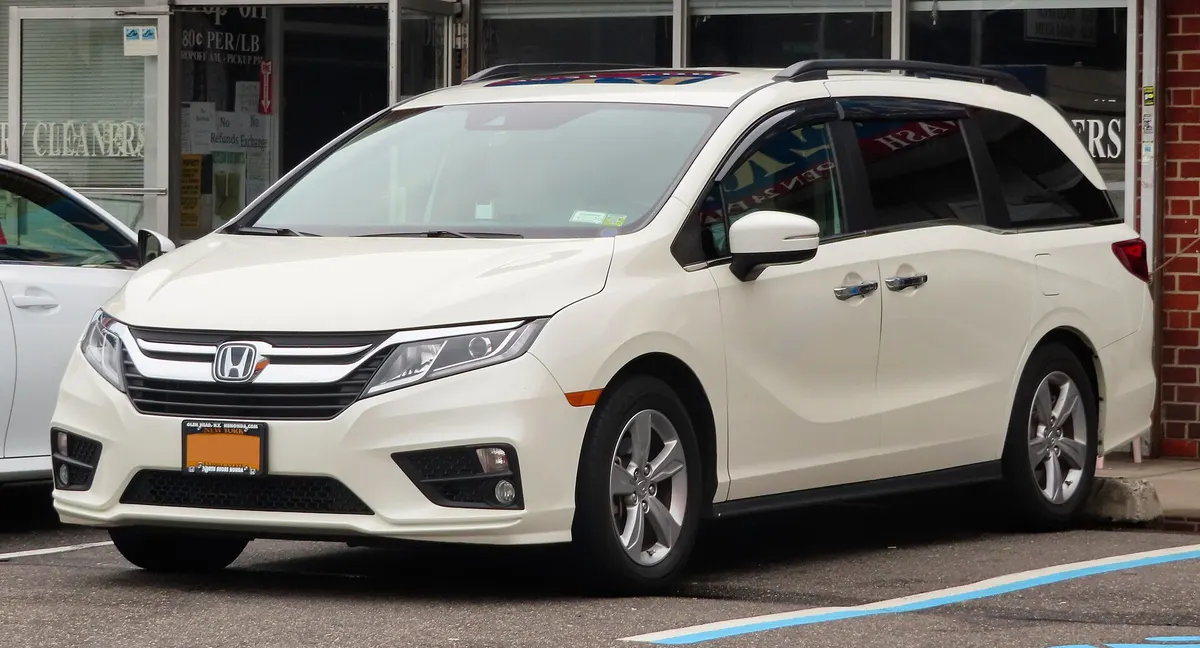
Engines
- J35Z8 · 3.5L gasoline, 248 hp
Transmissions
- automatic , 5-speed
- automatic , 6-speed
Drivetrain
FWD
Body
minivan
Trims
LX, EX, EX-L, SE, Touring (2011–2013: Touring/Touring Elite; 2014–2017: Touring/Elite)
Honda Odyssey part-number cross-reference
Start from the OEM number, then pick the brand you trust. Verified equivalents for the Honda Odyssey (2011–2017).
Part links go to Amazon, and to eBay where Amazon does not stock the part. Affiliate links, so we may earn a commission if you buy. Your price is unchanged, and a commission never changes a verdict.
Oil filter
Honda
Supersedes the original 15400-PLM-A01 fitted new; current genuine number
Find Honda oil filter on AmazonVerified via: HondaPartsNow: Odyssey oil filter (15400-PLM-A02, current), Oilfilter-crossreference.com: Honda 15400-PLM-A02
Engine air filter
Verified via: HondaPartsNow: Odyssey air filter (17220-RV0-A00, 2011-2017), Air Filter Cross Reference: Honda 17220-RV0-A00
Cabin air filter
Honda
Superseded by 80292-SDA-407 (same element as many later Honda V6 models)
Find Honda cabin air filter on AmazonFram
Fresh Breeze; the common Honda/Acura cabin-filter cross for the superseding 80292-SDA-407 number
Look up Fram cabin air filterVerified via: HondaPartsNow: Odyssey cabin air filter (80292-TZ3-A41, replaced by 80292-SDA-407), Bernardi Parts Honda: Fram CF10134 cross for 80292-SDA-407
Spark plugs
Verified via: HondaPartsNow: Odyssey spark plug (12290-R71-L01 / DILZKR7A11G, 2011-2017), Sparkplug-crossreference.com: Honda 12290-R71-L01 (NGK 92924)
Front brake pads
Verified via: HondaPartsNow: Odyssey front pad set (45022-TK8-A00, 2011-2014), Newparts: Akebono ACT1089 cross for 45022-TK8-A00
Front brake pads
Honda
Replaces 45022-TK8-A00. Do not use the 2011-2014 number
Check Honda front brake pads on AmazonVerified via: Bernardi Parts Honda: 45022-TK8-A00 superseded by 45022-TK8-A01, Newparts: Akebono ACT1089A cross-reference
Wiper blades
Honda size chart
Compare Honda size chart wiper blades on AmazonVerified via: AutoPadre: Honda Odyssey wiper sizes (26/22/16, 2011-2017)
Serpentine belt
Verified via: HondaPartsNow: Honda serpentine belt (56992-RV0-A05, fits 2005-2016/2017 Odyssey), AutoPartsPrime: 2013 Honda Odyssey serpentine belt (Gates K060841 / Dayco 5060840)
Battery
Factory size
Compare Factory size battery on AmazonVerified via: Interstate Batteries: MT-24F-1 fits 2013 Honda Odyssey V6 3.5L, Odyclub forum: AutoZone Duralast 24F-DL fitment on Odyssey
Should I buy a 2011–2017 Honda Odyssey?
Buy it, but treat 2011–2013 with real caution and 2016–2017 as the easier pick. The early years stack a VCM oil-burning/misfire defect Honda had to settle a lawsuit over and the worst of this generation's roof-paint complaints. The torque-converter judder is not an early-years problem: Honda's bulletins cover some 2012 and all 2013 Touring/Touring Elite vans and every 2014–2017 van, and a class action over it is still working through the courts. None of that is disqualifying on its own. The judder is usually a fluid-and-software fix, not a transmission replacement, and the oil-consumption warranty extension (8 years/unlimited miles from original purchase) covered a lot of engines, though that window has now closed on every one of these vans by age. Every 2011–2016 Odyssey also needs its VIN checked for the second-row-seat recall. Over 600,000 were recalled for seats that can move unexpectedly in a hard stop. A 2016 or 2017 sits outside the VCM settlement years and the paint-peel years, but inside the judder bulletin, so test-drive it for judder like any other year.
Best years
2016, 2017
Years to avoid
2011–2013 (VCM oil-consumption settlement years, worst paint-peel complaint volume, and the 2012–2013 Touring/Touring Elite judder bulletin)
Pre-Purchase Checklist for Honda Odyssey
- ☐Run the VIN at nhtsa.gov/recalls. The big one on this generation is the second-row outboard seat recall (16V933000, 2011–2016, ~634,000 vans). Honda adds a bracket and spring so the seats can't shift unexpectedly in a stop. Confirm it's done.
- ☐Test drive at a steady light throttle between 20 and 60 mph and feel for a shudder or vibration through the floor/seat, torque-converter judder. Honda's bulletins cover some 2012 and all 2013 Touring/Touring Elite vans and every 2014–2017 van, and it is reported across 5-speed and 6-speed cars.
- ☐Ask for oil-consumption history and check the dipstick cold: more than about a quart per 1,000 miles is the VCM-linked defect that led to Honda's 8-year/unlimited-mile powertrain warranty extension on 2008–2013 Odysseys. That window is now closed by age on every one of these vans, so a thirsty engine is your money now, not Honda's.
- ☐Brake hard from highway speed and feel for pulsation in the pedal or steering wheel. This generation is known for front rotors that warp within 15,000–20,000 miles. A recent rotor/pad job isn't a red flag; a car that's never had one might be due immediately.
- ☐Check the roof, hood leading edge, and upper door/quarter panels for a chalky, cloudy, or peeling clear coat, a documented issue on 2011–2013 vans, worst on Taffeta White and White Diamond Pearl. Honda's warranty extension (7 years from purchase) has expired on nearly all of these by now.
- ☐Cycle both power sliding doors fully open and closed several times. Doors that grind, move only partway, or stop mid-travel point to a worn sliding-door cable or motor, a known wear item on this generation, not usually cheap to ignore.
- ☐Check timing-belt records: the J35 is belt-driven. Honda schedules the belt by Maintenance Minder code 4, the same code as the first tune-up, which Honda's 2011 press kit puts near 100,000 miles. Honda cuts it to 60,000 miles if you regularly drive above 110°F or below -20°F, and the 2011 book adds frequent trailer towing.
Common Honda Odyssey problems & repair costs
Torque-converter judder / shudder
$150–$4,000Symptoms: A shudder or vibration felt through the floor or seat at a steady light throttle between roughly 20 and 60 mph, most noticeable during gentle acceleration or highway cruising. Root cause is transmission fluid that degrades faster than expected under intermittent high heat loads.
Fix: Honda's bulletins (17-052 for 2012 Touring/Touring Elite in a VIN range and every 2013 Touring/Touring Elite, 17-043 for every 2014–2017 Odyssey) call for a software update plus three drain-and-fills with genuine Honda ATF DW-1 in one visit, no flush machine. That clears most cars for $150–$300 out of warranty. Bulletin 17-044 says some vans still see the fluid deteriorate after the update and the judder may return, and then the fluid gets changed again even if the Minder has not asked. A van that still judders after fresh fluid and current software is the rare case needing a valve body or transmission, which is the $3,000–$4,000 end. A still-active class action (MacDougall v. American Honda) covers 2012 and 2013 Touring/Touring Elite plus 2014–2016 Odysseys for non-disclosure of the defect; check current case status before assuming you're covered.
Sources: Honda TSB: judder from the torque-converter lock-up clutch, 2012–2015 Odyssey, Honda Service Bulletin 17-043: 2014–17 Odyssey judder (NHTSA TSB archive), Honda Service Bulletin 17-044: judder after software update (NHTSA TSB archive), Honda Service Bulletin 17-052: 2012–13 Odyssey Touring judder (NHTSA TSB archive), MacDougall v. American Honda Motor Co., Odyssey transmission class action, ClassAction.org: Honda Odyssey transmission judder lawsuits
VCM oil consumption / engine misfire
$300–$5,000Symptoms: Oil disappearing well ahead of the normal change interval (some owners report a quart every 1,000 miles), followed by fouled spark plugs, a rough idle, or an outright misfire. Honda's Variable Cylinder Management deactivates three cylinders under light load, and the cylinder walls in those bores can pull oil past the rings during the on/off cycling.
Fix: Honda settled a 2013 class action covering 2008–13 Odyssey (among other VCM V6 models) with an 8-year/unlimited-mileage powertrain warranty extension and reimbursement for prior repairs, but that window is now closed on every one of these vans by age, so today it's an out-of-pocket problem. Early-stage cases are spark plugs and a PCV check (CarComplaints logs about $900 average for 'excessive oil consumption' repairs on 2012 vans); advanced bore/ring wear is a short-block or engine replacement, the $3,500–$5,000 end. Keep a dipstick habit. This engine can run low between changes without an oil-pressure warning.
Sources: Autoblog: Honda settles class-action lawsuit over oil-burning V6s (2008–13 Odyssey covered), CarComplaints: 2012 Honda Odyssey engine (excessive oil consumption, ~$900 avg)
Second-row outboard seat may unlatch (recall 16V933000)
$0–$0Symptoms: The second-row outboard seats have a release lever (for sliding the seat for third-row access) that can stay in the unlocked position; the seat can then move unexpectedly, including during a hard stop. Honda logged 46 reports of minor injury before the recall.
Fix: Formal NHTSA safety recall (16V933000, ~634,000 vans). Honda dealers install an added bracket and spring to both second-row outboard seats, free of charge. Confirm by VIN that it's been done; this is one of the most commonly still-open recalls on used examples of this generation.
Sources: NHTSA recall report 16V933000 (second-row outboard seats), Consumer Reports: Honda recalls 800,000 Odyssey minivans for seat issue
Premature front brake rotor warping
$250–$600Symptoms: Steering wheel or whole-vehicle shake under braking, often returning within a year or two of a rotor replacement. Owners and dealers alike report factory rotors that can't shed heat fast enough, especially in hilly terrain or heavy stop-and-go driving.
Fix: Replace pads and rotors as a set; Honda's own TSB paperwork calls for 'hat-style' rotors as the durability fix. Quality aftermarket rotor/pad combinations (see the DIY below) noticeably outlast the factory parts that keep warping every 15,000–20,000 miles.
Sources: CarComplaints: 2013 Honda Odyssey brakes (shakes when braking, 20 complaints), CarComplaints: 2014 Honda Odyssey brakes (warped rotors, 16 complaints)
Roof and body-panel clear coat peels
$800–$2,500Symptoms: Paint on the roof, the leading edge of the front fenders, or the upper doors/quarter panels turns chalky or cloudy, then cracks and peels down to primer or bare metal, usually starting on the roof.
Fix: Honda issued warranty extensions (TSBs including 19-056 and 19-058) covering repaint of the affected panels for 7 years from original purchase on specific paint codes. That window has now lapsed on nearly every 2011–2013 van. Out of warranty, a professional respray of the affected panels runs roughly $800–$2,500 depending on how much of the vehicle is affected.
Sources: NHTSA TSB: paint warranty extension (Taffeta White), CarComplaints: 2011 Honda Odyssey peeling paint on roof (9 complaints)
Power sliding door cable or motor failure
$300–$1,200Symptoms: A power sliding door that grinds, moves only a few inches, hesitates, or stops working entirely from both the switch and the handle. The internal cable that pulls the door along its track is the usual culprit; the door motor/actuator is the other common failure point.
Fix: A snapped cable alone is a moderate DIY (see repairs below) at mostly parts cost. A failed door motor/actuator assembly is the pricier end. RepairPal lists roughly $1,200 for a shop to replace a power sliding door motor on this van.
Sources: Enright Automotive: broken sliding door cable in 2011–2017 Honda Odysseys, Go-Parts: 2011–2017 Honda Odyssey sliding door motor diagnosis and replacement
Away from the headline issues, this generation is ordinary Odyssey money: oil changes, tires (budget every 40k–50k miles on a heavy van), and cabin/engine filters. The J35 uses a timing belt, not a chain, so plan on $1,043–$1,542 for the belt/water-pump service when the Maintenance Minder calls code 4 (Honda's 2011 press kit puts the first tune-up near 100,000 miles), or at 60,000 miles if you regularly drive above 110°F or below -20°F, or on a 2011 if you tow often. Brakes are a real recurring cost here, not a one-time item: budget a front pad-and-rotor job every 15,000–20,000 miles unless a prior owner already upgraded to better aftermarket rotors. Factor the second-row-seat recall into your first week of ownership if it isn't already done. It's free, but only if you make the appointment.
Cost calculator
What will this Honda Odyssey cost you by a given mileage?
Drag to a mileage. We total the documented problems whose typical onset falls at or before it. The same cost ranges listed above, nothing new invented.
$0 estimated repair range
5-Year Maintenance Schedule & Cost to Own
Every scheduled service by mileage, fluid capacities, independent shop ranges, and parts cross-references.
Have a repair quote for this Honda Odyssey?
Audit against OEM book times, uncover duplicate pad and rotor labor, and verify parts markups.
How to fix common Honda Odyssey problems (DIY)
Transmission fluid drain-and-fill (Honda ATF DW-1)
Tools: 3/8-in ratchet or square drive (drain plug), Drain pan, Funnel with long neck, Torque wrench, Ramps or jack + stands (level the van; on 2011–2013 vans, to check the fluid level)
- Warm the transmission with a short drive, then park on level ground and remove the drain plug; drain into a pan and note the volume that comes out.
- Replace the sealing washer, reinstall the drain plug, and torque to spec.
- Refill through the fill point with the same amount of genuine Honda ATF DW-1 you drained.
- Cycle the shifter through every gear with the engine idling. On a 2011–2013 van, recheck the level warm on level ground with the dipstick. The 2014–2017 books say to have a dealer check the fluid level, so on those years leave the level check to a dealer.
- For a van with judder, Honda's bulletins do all three drain-and-fills in one visit, 3.6 US qt of DW-1 each time, with a drive and a shifting cycle between drains, so mostly-fresh fluid ends up in the torque converter. A flush machine is not recommended.
Parts
- Honda ATF DW-1 automatic transmission fluid · Amazon $10–$14/qt
- Drain plug sealing washer · Amazon $5–$10
Front brake pad and rotor replacement
Tools: Floor jack + jack stands, Lug wrench / impact, C-clamp or brake caliper tool, Torque wrench
- Raise the front of the van, support on jack stands, and remove the wheels.
- Remove the caliper bolts, hang the caliper out of the way (don't let it dangle by the brake line), then remove the caliper bracket and old pads.
- Pull the old rotor off the hub; clean the hub face of any rust before installing the new one.
- Compress the caliper piston, install new pads and hardware, and torque the caliper bracket and caliper bolts to spec.
- Repeat on the other side, torque the wheels, then bed the new pads in with a series of moderate stops from around 40 mph, avoiding hard stops until they're seated.
Parts
- Front brake rotors and pads (2011–2017 Odyssey) · Amazon $120–$250/axle
Cabin & engine air filter change
Tools: None (hands only)
- Open the glovebox, squeeze the sides to release the stops, and swing it down to expose the cabin filter cover.
- Slide out the old cabin filter and insert the new one with the airflow arrow pointing the direction marked on the housing.
- Under the hood, release the airbox lid clips, lift the lid, and swap in the new engine air filter.
- Re-seat the airbox lid and snap the clips closed; reinstall the glovebox.
Parts
- Cabin air filter (2011–2017 Odyssey) · Amazon $10–$18
- Engine air filter (2011–2017 Odyssey 3.5L) · Amazon $12–$22
Some parts links are affiliate links. We may earn a commission at no cost to you. We only list parts that fit this generation.
The short version
The 4th-gen Odyssey is a genuinely capable minivan that carries two well-documented scars. Many of these vans can develop a torque-converter judder (a shudder at light throttle caused by transmission fluid that breaks down faster than expected). Honda’s bulletins cover some 2012 and all 2013 Touring/Touring Elite vans and every 2014–2017 van, and the judder is still the subject of active litigation. 2011–2013 vans also share Honda’s VCM oil-consumption defect, serious enough that Honda settled a lawsuit and extended the powertrain warranty to 8 years/unlimited miles. That window is closed on every one of these vans today, so what was once a free fix is now on the buyer.
Every model year in this generation, 2011 through 2016, also carries a real safety recall: over 600,000 second-row seats that can shift unexpectedly if their release lever stays unlocked.
What that means when you’re shopping
A 2016 or 2017 Odyssey is the easier buy: outside the VCM settlement and paint-peel years. It is still inside Honda’s judder bulletin, so test-drive for judder and ask for transmission fluid records. Buy on condition and maintenance history like any used minivan.
An 2011–2013 van isn’t automatically a bad buy (it can be a genuine deal, since the market has priced in these known issues), but the burden of proof is on the van. Confirm the seat recall was done by VIN, test-drive at a steady light throttle feeling for judder, check the oil level cold and ask for consumption history, and inspect the roof and front rotors while you’re at it.
What breaks on all of them
Regardless of year, budget for front brakes more often than you would on most vans. Factory rotors on this generation are known to warp within 15,000–20,000 miles, and quality aftermarket rotors are a straightforward upgrade. Power sliding door cables and motors wear out with age and use; a door that grinds or stops partway is telling you something before it fails outright. None of it should scare you off a well-priced, well-documented example. It should just change what you inspect before you sign.
How this file is built: failure modes and cost ranges are compiled from NHTSA recall and complaint records, Honda’s own TSBs and warranty-extension actions, CarComplaints data, and owner-forum and independent-shop reporting, then sanity-checked against shop-floor experience. Cost figures are independent-shop estimates and vary by region. Spot something off? Tell us.
Viral car myths, checked against this car
- Misleading
Is the "$1 Japanese oil trick" that stops engine wear forever real?
The 'Japanese oil trick' is almost certainly MoS2 (molybdenum disulfide), a real industrial friction modifier. It is German, not Japanese (Liqui Moly popularized it), sold openly at every parts store for $15-20, has real but modest measured friction benefits, and was never buried by anyone.
Frequently asked questions
Is the Honda Odyssey (2011–2017) a reliable minivan?
Mostly, with real caveats concentrated in 2011–2013. Those years combine a VCM oil-consumption defect Honda had to settle a lawsuit over and the worst of this generation's paint complaints. The torque-converter judder spans more years: Honda's bulletins cover some 2012 and all 2013 Touring/Touring Elite vans and every 2014–2017 van. 2014–2016 vans carry the same second-row-seat recall risk but fewer engine complaints. Buy on documented maintenance and VIN recall history, not just the model year.
What is the best year to buy a 2011–2017 Honda Odyssey?
2016 or 2017. They sit outside the 2008–2013 VCM settlement years and the 2011–2013 paint-peel years. They are inside Honda's judder bulletin like every 2014–2017 van, so test-drive for judder and ask for transmission fluid records. A 2016 also needs its second-row-seat recall confirmed by VIN.
How many miles will a 4th-gen Honda Odyssey last?
200,000 miles or more is realistic with routine maintenance, including the timing-belt service around 100,000 miles. The engine and transmission both go the distance when fluids are actually serviced. The judder and oil-consumption issues above are the exceptions, which is why the pre-buy checks matter more on this generation than on most used minivans.
How much should I pay for a used 2011–2017 Honda Odyssey?
Kelley Blue Book dealer-retail ranges run roughly $5,500–$7,500 for a 2011, $8,000–$10,000 for a 2013, and $9,500–$13,000 for a 2015, depending on trim and condition. Expect private-party prices somewhat lower. Treat an unusually cheap example as a reason to check the transmission and oil-consumption history more carefully, not less.
What are the common problems with the 2011–2017 Honda Odyssey?
Torque-converter judder (Honda bulletins: some 2012 and all 2013 Touring/Touring Elite, every 2014–2017), VCM-related oil consumption and misfires (mainly 2011–2013), a second-row-seat recall covering 2011–2016, front brake rotors that warp within 15,000–20,000 miles, roof/panel clear-coat peeling on 2011–2013, and power-sliding-door cables or motors wearing out over time.
Is the transmission judder on the Honda Odyssey a serious problem?
Usually not a wallet-emptying one. It's caused by transmission fluid that breaks down faster than expected under heat, and Honda's bulletin fix, a software update plus three drain-and-fills in one visit, resolves it in most cars for a few hundred dollars. Honda's follow-up bulletin 17-044 says the fluid can deteriorate again after the update and the judder may return, which calls for another fluid change. A minority of vans keep juddering and need a valve body or transmission, which is the expensive end. A class action over the defect is still active, so check its current status before assuming a fix is free.
Does the Honda Odyssey burn oil because of VCM?
On 2008–2013 models, yes, it was common enough that Honda settled a class action and extended the powertrain warranty to 8 years/unlimited miles. That warranty window is closed on every one of these vans now, so check the oil level yourself before buying. A van needing a quart every 1,000 miles is a real, and now out-of-pocket, problem.
Cross-shopped rivals
Files on what buyers weigh against the Honda Odyssey of this era.