Case file · TOYOTA-SIENNA-2011-2020 · 3rd gen (XL30)
Toyota Sienna 2011–2020Common problems, reliability & repair costs
The 3rd-gen Sienna is the default answer to 'which used minivan actually lasts.' The 3.5L V6 routinely clears 250k miles. The catch is the stuff bolted around it: power sliding doors that eat cables and were recalled for opening while driving, a new 8-speed transmission in 2017–2018 that launched half-baked, and a fuel-pump recall on late cars. Buy the right year with the recalls done and it's one of the safest used-family-hauler bets there is.
2015, 2016, 2019
2011 (first-year issues: doors, tie rods, tire wear; most co +1 more
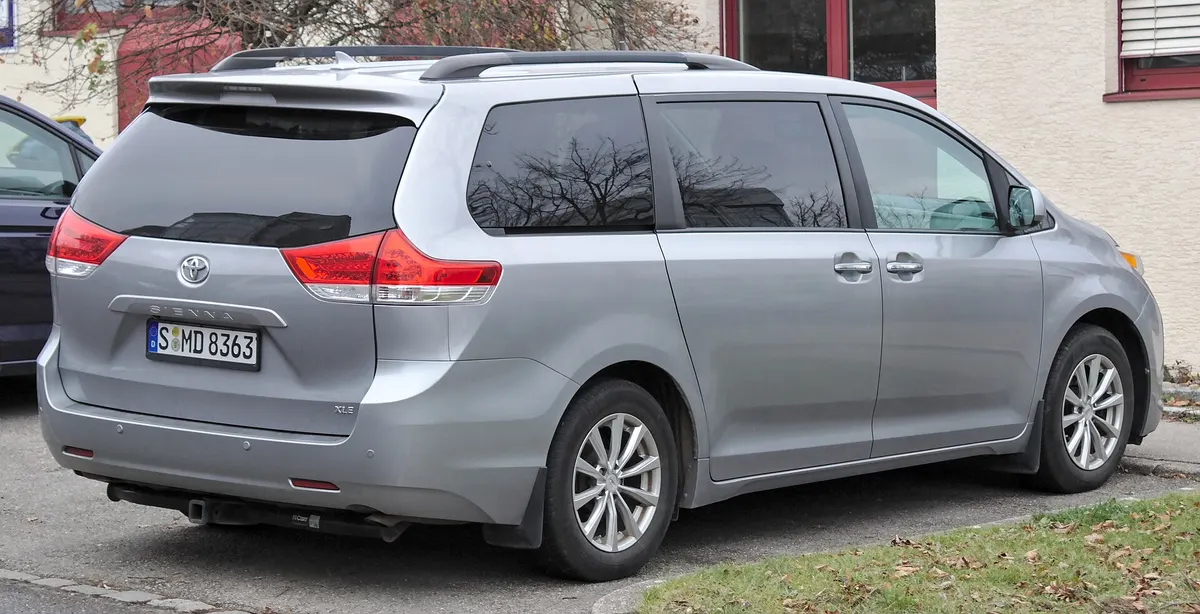
Engines
- 2GR-FE · 3.5L gasoline, 266 hp
- 2GR-FKS · 3.5L gasoline, 296 hp
- 1AR-FE · 2.7L gasoline, 187 hp
Transmissions
- automatic , 6-speed
- automatic , 8-speed
Drivetrain
FWD / AWD
Body
minivan
Trims
L, LE, SE, XLE, Limited
Toyota Sienna part-number cross-reference
Start from the OEM number, then pick the brand you trust. Verified equivalents for the Toyota Sienna (2011–2020).
Part links go to Amazon, and to eBay where Amazon does not stock the part. Affiliate links, so we may earn a commission if you buy. Your price is unchanged, and a commission never changes a verdict.
Oil filter
Toyota
Cartridge element + O-rings; the element alone is also cataloged as 04152-31090
Find Toyota oil filter on AmazonFram
Extra Guard cartridge; TG9972 is the Tough Guard version of the same element
Check Fram oil filterVerified via: ToyotaPartsDeal: Sienna OEM oil filters (04152-31090 for 2006-2020 Sienna, 2.7L 4-cyl and 3.5L V6), oilfilter-crossreference.com: Toyota 04152-31090 equivalents (Wix 57047, Fram CH9972/TG9972, Purolator L25608, Denso 150-3021, Mann ML1031)
Engine air filter
Verified via: ToyotaPartsDeal: Sienna OEM air filters (17801-0P051 for 2011-2020 Sienna, all engines), airfilter-crossreference.com: Toyota 17801-0P051 equivalents (Fram CA10755, Wix 49430/WA9891, Purolator A36116, Denso 143-3012, K&N 33-2457, Mann C22039)
Cabin air filter
Toyota
High-efficiency element; also cataloged/superseded as 87139-07020
See Toyota cabin air filter on AmazonVerified via: parts.toyota.com: Sienna cabin air filter 87139-07010, PartsGeek: 2011-2020 Toyota Sienna cabin air filter Wix 24483 / Fram CF10285, Sixity Auto: Denso 453-1019 (replaces Toyota 87139-07010/87139-07020, Wix 24483)
Spark plugs
Denso
Iridium; retail box 3417. This is the 4-cylinder plug, NOT the V6 plug
Compare Denso spark plugsVerified via: ToyotaPartsDeal: Sienna spark plugs (90919-01233, 2.7L 1AR-FE), Elmhurst Toyota Parts: 90919-01233 = Denso SK16HR11 iridium
Spark plugs
Denso
Iridium long-life, 120k-mile plug; OE for the 2GR-FE V6 (Sienna/Camry/Avalon/Highlander/RAV4 3.5L)
Look up Denso spark plugsVerified via: Elmhurst Toyota Parts: 90919-01247 = Denso FK20HR11, 3.5L 2GR V6 Sienna/Camry/Avalon/Highlander, Amazon: Denso FK20HR11 / 90919-01247, listed for Sienna/Avalon/Camry/Highlander/RAV4/Venza 3.5L V6 2GR-FE ONLY
Spark plugs
Verified via: Frontier Toyota Parts: 90919-01263 = Denso FK20HBR8 (Sienna/Tacoma/Camry/Highlander/Avalon), Sixity Auto: Denso 3491 (FK20HBR8) for 90919-01263
Front brake pads
Akebono
ProACT ceramic; Akebono is a Toyota OE friction supplier. Retailer fitment: 2011-2025 Sienna front
Find Akebono front brake padsVerified via: Frontier Toyota Parts: OEM front brake pad set 04465-0E010 (2011-2020 Sienna / 2010-2019 Highlander), CarParts.com: Akebono ACT1324A front ceramic pad set, 2015 Sienna 3.5L (crosses Wagner QC1324, Bosch BC1324, FMSI D1324), PartsGeek: Akebono ACT1324A front, 2011-2025 Toyota Sienna
Wiper blades
Bosch
Beam blades; size-coded numbers matched to the verified 28 in / 20 in front fitment
Compare Bosch wiper bladesVerified via: AutoPadre, Toyota Sienna wiper sizes (2011-2020: 28 in driver / 20 in passenger / 16 in rear), WiperSizeChart: 2015 Toyota Sienna wiper sizes (28 in / 20 in / 16 in)
Serpentine belt
Toyota
Bando 7PK1550; shared with Camry/Avalon/Highlander 3.5L V6
Find Toyota serpentine belt on AmazonGates
Micro-V; rebadged OE belt, crosses 90916-A2019 / 99367-C1550 / 99367-K1550
Look up Gates serpentine beltVerified via: Frontier Toyota Parts: 90916-A2019 drive belt, Avalon/Camry/Highlander/Sienna 3.5L V6, Newparts: Gates K070610 (crosses Toyota 90916-A2019, 99367-C1550/K1550)
Serpentine belt
Dayco
Main-drive multi-rib belt; retailer fitment 2017-2020 Sienna 3.5L V6
Compare Dayco serpentine beltVerified via: ToyotaPartsDeal: Sienna drive belts (90916-A2026, 2GR-FKS), PartsGeek: Dayco 5060615DR main-drive belt, 2017-2020 Toyota Sienna 3.5L V6
Battery
Factory size
Find Factory size battery on AmazonInterstate
Flooded, 750 CCA; Interstate's own lookup confirms fitment for 2015 Sienna V6 3.5L
Look up Interstate batteryVerified via: Interstate Batteries: MTP-24F for 2015 Toyota Sienna V6 3.5L (Group 24F, 750 CCA), AutoPadre: Toyota Sienna battery group size (24F across 2011-2020; 34R alternate on some years)
Should I buy a 2011–2020 Toyota Sienna?
Buy it. It's the used minivan to beat. The V6 powertrain is genuinely long-lived, and this generation's problems are mostly peripheral: sliding-door cables and latches, a rough first year (2011), and a rocky 8-speed launch in 2017–2018. The sweet spots are 2015–2016 (refreshed body, proven 6-speed) and 2019–2020 (more power, transmission software sorted, modern safety tech). On any candidate, run the VIN for open recalls (sliding door, fuel pump, and on 2011–2014 the Takata airbag) and cycle both power doors until you trust them. AWD versions add winter grip but come with run-flat tires, no spare, and a meaningfully higher tire budget.
Best years
2015, 2016, 2019, 2020
Years to avoid
2011 (first-year issues: doors, tie rods, tire wear; most complaints of the generation), 2017–2018 (early UA80E 8-speed hesitation/harsh-shift issues)
Pre-Purchase Checklist for Toyota Sienna
- ☐Cycle BOTH power sliding doors several times from the dash buttons, key fob, and door handles. Slow, grinding, or stalling movement means a fraying cable or tired motor. That is a known, common failure on 2011–2018.
- ☐Run the VIN at nhtsa.gov/recalls or Toyota's recall lookup. Key ones: sliding-door recall G04 (2011–2016), Denso fuel-pump recall (2017–2020), Takata airbag (2011–2014). Walk away from open safety recalls, or make the seller close them first.
- ☐On 2017–2018: drive it below 30 mph with light throttle. Hesitation off the line, a delayed or harsh 2-3 upshift, or a high-pitched whine points to the early 8-speed problem. Ask for records of the TSB software update or transmission replacement.
- ☐Cold start: listen at the front of the engine for a wobbling/rattling water pump bearing, and look for pink coolant crust or streaks below the pump.
- ☐On 2011–2012: check the front tires for uneven/inner-edge wear and feel for steering pull. The inner tie rods on the 2011 were a top complaint.
- ☐On AWD vans: confirm what tires are on it. Factory fitment is run-flats with NO spare tire; mismatched cheap tires or a bare trunk floor tells you how the last owner treated the tire budget.
- ☐Check that the second- and third-row seats latch, fold, and slide properly. Hardware is expensive and often ignored.
- ☐Look for oil seepage at the timing cover (common minor 2GR weep) and verify consistent oil-change records.
Common Toyota Sienna problems & repair costs
Power sliding door failures (cables and latches)
$400–$1,400Symptoms: Door won't open or close under power; grinding or straining motor noise; door stops mid-travel. The recalled latch fault is worse: a door that was blocked from opening could later unlatch and slide open while driving.
Fix: Two separate issues. The latch/wiring fault was safety recall G04 (NHTSA 16V-858, ~744,000 2011–2016 vans), fixed free. Verify by VIN that it's done. Snapped door cables are covered by warranty extension ZKD (from a class-action settlement) for 10 years from first sale on 2011–2018 vans; outside that window you're paying for a cable sub-assembly or full door-cable/motor repair per door.
Sources: NHTSA recall 16V-858 (Safety Recall G04), Toyota TSB T-SB-0141-18: power sliding door cable replacement, CarComplaints: Sienna sliding-door settlement approved
UA80E 8-speed transmission hesitation, harsh shifts, whine
$200–$6,000Symptoms: Hesitation accelerating from a stop or under 30 mph, delayed or slamming 2-3 upshift, high-pitched whine, occasionally a check-engine light or reduced power. Present from new on many vans.
Fix: Toyota issued software recalibrations in 2017, then TSB 0160-18 ('Transaxle Whine Noise, Harsh Shift, MIL ON, or Reduced Power') which authorizes a remanufactured transmission for the worst cases. The cause traces in part to a counter-drive-gear retaining nut whose locking tab wasn't properly staked at the factory. A class action covered 2017–2020 Sienna/Highlander. Under warranty this cost owners nothing; out of warranty a reman UA80E is $4,000–$6,000, while software-only fixes run a few hundred at a dealer. By 2019 the calibration was sorted and complaints dropped sharply.
Sources: CarComplaints: Toyota 8-speed transmission lawsuit, SiennaChat: 2017–2018 8-speed TSB thread, Consumer Reports: 2017 Highlander/Sienna transmission update
Denso fuel pump failure (engine stall)
$0–$900Symptoms: Engine stalls or won't restart, long cranking, rough running or hesitation under load, whining from the fuel tank area. Can fail without warning at speed.
Fix: The Denso low-pressure fuel pump impeller can swell in fuel and seize. Covered by Toyota's massive fuel-pump recall (NHTSA 20V-012 and its expansions). The pump assembly is replaced free. Verify by VIN that it's been done; an unrelated pump failure outside recall scope is a routine in-tank pump job at an independent shop.
Sources: NHTSA recall lookup: Toyota Sienna, Cars.com: 2019 Toyota Sienna recalls
Water pump leak / bearing failure (2GR-FE)
$500–$1,200Symptoms: Pink coolant weep or crust below the pump at the front of the engine, coolant loss, a soft metallic wobble at idle, belt squeal on cold start. Some pumps get noisy without ever leaking.
Fix: Replace the water pump (and thermostat while in there). Not an epidemic, but common enough that the Sienna forum maintains a dedicated how-to for 2GR-FE pumps, with documented failures as early as 36k miles. Straightforward independent-shop job. Don't ignore it; a seized pump takes the belt with it.
Sources: SiennaChat: failing water pump how-to (2GR-FE), RepairPal: Sienna water pump replacement cost
Inner tie-rod wear and premature tire wear (2011–2012)
$300–$1,500Symptoms: Uneven or fast front tire wear, steering pull or wander, clunk over bumps. CarComplaints ranks premature tire wear (avg ~$1,100 at ~42k mi) and loose inner tie rods (avg ~$2,200 at ~82k mi) as the 2011's top two problems.
Fix: Inner tie rods plus an alignment fixes most cases; the high-end quotes owners reported usually included a full steering-rack replacement plus new tires. On any 2011–2012, budget an alignment and tire check into the purchase.
Sources: CarComplaints: 2011 Toyota Sienna
Day to day this is a cheap van to keep: the V6 asks for oil, plugs at 120k on the 2011-2016 V6 (2012: no Toyota guide read), every 60k on the 2017-2020 2GR-FKS, and fluid services, and parts are everywhere. The budget lines that surprise people are the doors and the tires. A power-door cable job outside the warranty extension is real money per door, and AWD vans wear run-flats: no spare, higher per-tire cost, and owners report short tread life, so many switch to conventional tires and carry a repair kit. The 6-speed vans (2011–2016) have essentially no powertrain drama; on 2017–2018 confirm the transmission history before you buy, not after.
Cost calculator
What will this Toyota Sienna cost you by a given mileage?
Drag to a mileage. We total the documented problems whose typical onset falls at or before it. The same cost ranges listed above, nothing new invented.
$0 estimated repair range
5-Year Maintenance Schedule & Cost to Own
Every scheduled service by mileage, fluid capacities, independent shop ranges, and parts cross-references.
Have a repair quote for this Toyota Sienna?
Audit against OEM book times, uncover duplicate pad and rotor labor, and verify parts markups.
How to fix common Toyota Sienna problems (DIY)
Engine + cabin air filter change
Tools: None (hands only; small flathead helps on airbox clips)
- Unclip the airbox lid at the front of the engine bay, swing it up, and lift out the old panel filter.
- Drop in the new engine filter with the seal seated flat, and re-clip the lid.
- Open the glovebox, squeeze the sides to release the stops, and let it swing down.
- Slide the cabin filter cover off, pull the old filter, and insert the new one with the airflow arrow pointing the right way (marked on the housing).
- Re-hang the glovebox and confirm the fan sounds normal on high.
Parts
- Engine air filter (3rd-gen Sienna) · Amazon $12–$25
- Cabin air filter (3rd-gen Sienna) · Amazon $10–$20
Front brake pads and rotors
Tools: Floor jack + jack stands, Lug wrench / breaker bar, Socket set (14–17mm) and C-clamp or caliper piston tool, Torque wrench, Brake cleaner and caliper grease
- Loosen the front lugs, jack the van, set it on stands, and remove the wheels.
- Unbolt the caliper, hang it from the spring with a hook (never by the hose), and slide off the old pads.
- Remove the caliper bracket and old rotor; clean the hub face and mount the new rotor.
- Compress the caliper piston, install new pads with greased shims and slide pins, and reassemble.
- Torque caliper bolts and lugs to spec, then pump the brake pedal until firm BEFORE moving the van.
- Bed the pads: several moderate stops from 35 mph, no full stops or panic braking for the first 100 miles.
Parts
- Front brake pads + rotors kit (3rd-gen Sienna) · Amazon $80–$180
Serpentine belt replacement (3.5L V6)
Tools: 3/8 or 1/2 in ratchet / serpentine belt tool for the tensioner, Belt routing diagram (photograph the old belt before removal)
- With the engine cold, locate the automatic tensioner on the front of the engine (passenger side of the bay; the engine sits transverse).
- Photograph or sketch the belt routing before touching anything.
- Rotate the tensioner against spring pressure and slip the belt off the nearest pulley, then release slowly.
- Route the new belt per the diagram, leaving the tensioner or the topmost smooth pulley for last.
- Rotate the tensioner again, seat the belt, and confirm every rib sits centered on every pulley before starting.
- Start the engine and watch the belt run for 30 seconds: no walking, no squeal.
Parts
- Serpentine belt, 2011-2016 3.5L 2GR-FE · Amazon $20–$45
- Serpentine belt, 2017-2020 3.5L 2GR-FKS · Amazon $20–$45
Some parts links are affiliate links. We may earn a commission at no cost to you. We only list parts that fit this generation.
The short version
The 2011–2020 Sienna is the generation that made “just buy the Toyota” the standard minivan advice. The 3.5-liter V6 (port-injected 2GR-FE through 2016, the stronger direct-injected 2GR-FKS after) is one of the most durable engines Toyota ever built, and the 6-speed automatic it paired with through 2016 matches it.
The problems live around the powertrain, not in it. The power sliding doors are this generation’s signature headache: a latch/wiring fault serious enough that Toyota recalled about 744,000 vans (2011–2016) because a door could slide open while driving. The door cables also fray and snap, common enough that a class action forced a 10-year warranty extension on 2011–2018 vans. Then in 2017 Toyota swapped in a new 8-speed transmission that hesitated, whined, and shifted harshly; the worst units were replaced outright under TSB, and a class action followed. Late vans (2017–2020) also carry the industry-wide Denso fuel-pump stalling recall.
What that means when you’re shopping
Aim for 2015–2016 or 2019–2020. The 2015 refresh stiffened the body and upgraded the interior while keeping the proven 6-speed; by 2019 the 8-speed’s software was sorted and complaints fell off a cliff, and you get Toyota Safety Sense standard.
On any candidate: run the VIN through the recall lookup before you drive it. Sliding-door recall G04, the fuel-pump recall on 2017–2020, and Takata airbags on 2011–2014 should all show closed. Then spend five minutes cycling both power doors from every switch. A healthy door moves smoothly and quietly, and a graunching one is a repair you should price into the offer, not discover later.
On a 2017–2018, the transmission’s history is the whole conversation: records of the TSB update or a replacement transmission make it buyable; a seller who’s never heard of the issue on a van that stumbles off the line is your cue to find a 2019.
What it’s like to own
Cheap, mostly. Fluids, spark plugs (120k on 2011 and 2013-2016, 60k on 2017-2020), brakes, and tires cover most years of ownership, and every part is a commodity. The recurring 3rd-gen line items are a water pump somewhere in mid-life on 2011–2016 vans, door maintenance, and (on AWD vans) a tire budget roughly double what you’d guess, because run-flats wear fast and there’s no spare under the floor. The four-cylinder 2011–2012 base vans exist but are slow, rare, and worth skipping for the V6, which costs barely more to run.
How this file is built: failure modes and cost ranges are compiled from NHTSA recall documents (16V-858, the Denso fuel-pump recall), Toyota TSBs (T-SB-0141-18, 0160-18), CarComplaints data, and owner reporting on SiennaChat and ToyotaNation, then sanity-checked against shop-floor experience. Cost figures are independent-shop estimates and vary by region. Spot something off? Tell us.
Viral car myths, checked against this car
- Misleading
Is the "$2 liquid that stops any leak" really banned in 11 states?
Automotive stop-leak products are not banned in any US state. The products are real (Bar's Leaks, BlueDevil), they work in specific narrow situations, and they can permanently damage your cooling or oiling system if applied to the wrong leak.
- Misleading
Is the "$1 Japanese oil trick" that stops engine wear forever real?
The 'Japanese oil trick' is almost certainly MoS2 (molybdenum disulfide), a real industrial friction modifier. It is German, not Japanese (Liqui Moly popularized it), sold openly at every parts store for $15-20, has real but modest measured friction benefits, and was never buried by anyone.
Frequently asked questions
Which Toyota Sienna years should I avoid?
The 2011 (first year of the generation and by far its most complained-about, with tie-rod, tire-wear, and door issues) and 2017–2018, when the new 8-speed transmission launched with hesitation and harsh-shift problems that sometimes ended in a replacement transmission. The 2015–2016 and 2019–2020 vans are the safe picks.
Are the sliding door problems fixed, or will I be paying for them?
Depends on the van. The dangerous latch fault (door could open while driving) was a free safety recall on 2011–2016. Check by VIN that it was performed. The snapped-cable failure on 2011–2018 was covered by a class-action warranty extension for 10 years from the van's first sale, and that clock has run out on most of them now. If the doors on the van you're buying work smoothly today, you're fine; if they grind or stall, price a per-door repair into your offer.
Does the 3rd-gen Sienna have the Toyota V6 oil line failure?
We have not confirmed from a Toyota source whether this generation left the factory with the rubber VVT-i oil hose or the all-metal line. Run the VIN for open Toyota campaigns and look for oil spray around the engine. Ordinary timing-cover seepage is the only common oil complaint on these engines, and it's minor.
How many miles will a 3rd-gen Sienna last?
250,000 miles is a realistic target for a maintained V6 van, and plenty go further. The engine and the 6-speed transmission are rarely what kills these: neglect, rust, and accumulated door/interior wear are. Buy on maintenance history and condition.
Is the AWD Sienna worth it?
If you actually live in snow, yes. It was the only AWD minivan you could buy for most of this era. Go in with eyes open on tires: AWD vans use run-flats, there's no spare, and owners consistently report short tread life and high replacement cost. Many owners switch to conventional tires and carry an inflator kit.
Cross-shopped rivals
Files on what buyers weigh against the Toyota Sienna of this era.