Case file · TOYOTA-COROLLA-2014-2019 · 11th gen (E170)
Toyota Corolla 2014–2019Common problems, reliability & repair costs
The 11th-gen Corolla is one of the safest used-car bets on the road: a timing-chain 1.8L, a CVT that has held up far better than the internet feared, and complaint counts that drop off a cliff after 2014. The real to-do list is short: two free safety recalls to verify by VIN, a low-speed CVT shudder some cars develop, and a head unit that likes to die around 60k miles.
2017, 2018, 2019
None are true avoid years. 2014 simply has the most complain
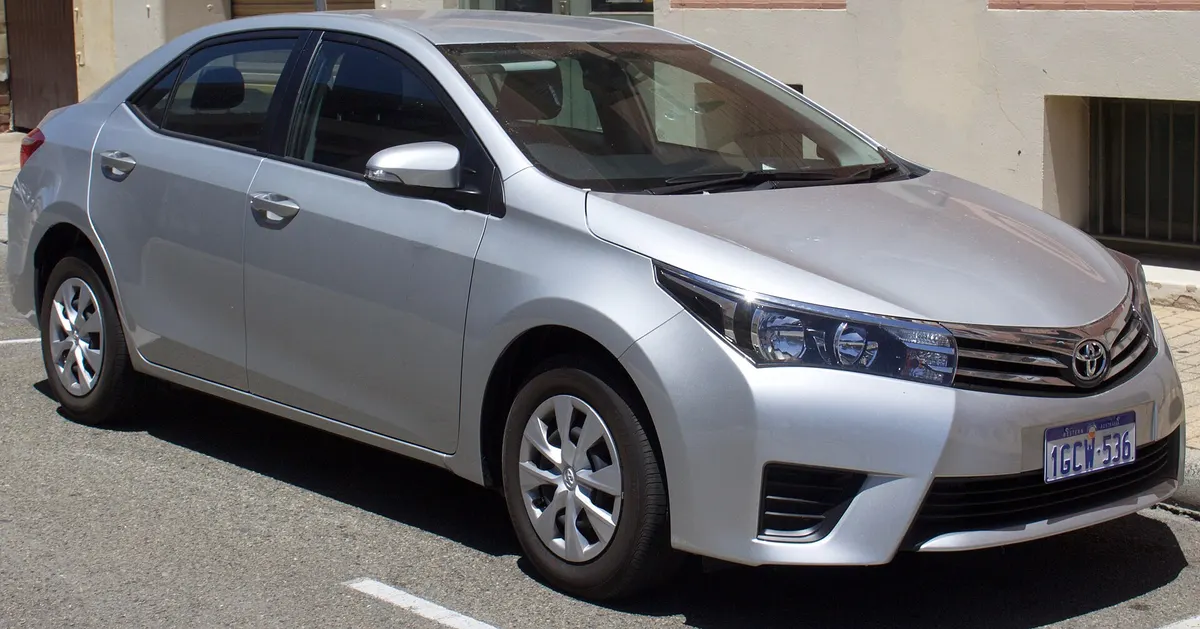
Engines
- 2ZR-FE · 1.8L gasoline, 132 hp
- 2ZR-FAE · 1.8L gasoline, 140 hp
Transmissions
- K313 (CVTi-S) · cvt
- automatic , 4-speed
- manual , 6-speed
Drivetrain
FWD
Body
sedan
Trims
L, LE, LE Eco, S, SE, XLE, XSE
Toyota Corolla part-number cross-reference
Start from the OEM number, then pick the brand you trust. Verified equivalents for the Toyota Corolla (2014–2019).
Part links go to Amazon, and to eBay where Amazon does not stock the part. Affiliate links, so we may earn a commission if you buy. Your price is unchanged, and a commission never changes a verdict.
Motor oil
Toyota Genuine Motor Oil
Toyota sells its own oil by the quart, not in a 5-quart jug, so five singles at dealer prices is the expensive way to do this job. The six-pack case is the cheaper unit and leaves you a spare quart for top-offs. Current bottles carry the API SP rating.
Find Toyota Genuine Motor motor oil on AmazonMobil 1
Look for 'SP' inside the round API donut on the back of the bottle. That's the current standard and it covers the older API SN this car was certified on. The dexos1 Gen 3 and Honda approvals printed on these same bottles are GM and Honda requirements; they don't apply to a Toyota, so don't shop for them or pay extra for them.
Look up Mobil 1 motor oilValvoline
API SP / ILSAC GF-6A on older bottles, GF-7A / API SQ on current ones, both fine here. Older labels and some store shelves still say 'Advanced Full Synthetic'; same product line.
See Valvoline motor oilVerified via: Toyota official parts catalog: Genuine Toyota Motor Oil 0W-20, 00279-0WQTE-01 (1 quart, API SP), ToyotaPartsDeal: 00279-0WQTE-6S, Genuine Toyota 0W-20, 6x1-quart case, Legacy Toyota: Corolla oil type and capacity by generation (0W-20 full synthetic, 4.4 qt / 4.2 L), Costa Oil: 2016 Corolla 1.8L oil guide (0W-20, 4.4 quarts including filter; 5W-20 listed only as a temporary substitute), 2019 Toyota Corolla Warranty & Maintenance Guide (Toyota, official: 0W-20 requirement and the 5W-20 substitute wording), Mobil 1 Extended Performance 0W-20 product page (full synthetic; API SP/SQ, ILSAC GF-7A), PQIA: Pennzoil Platinum Full Synthetic 0W-20 label reads API SP / ILSAC GF-6A, Valvoline: Advanced Protection Full Synthetic 0W-20 (ILSAC GF-7A, API SQ, API SP), PQIA: Castrol EDGE Advanced Full Synthetic 0W-20 label reads API SP / ILSAC GF-6
Oil filter
Verified via: ToyotaPartsDeal: 04152-YZZA6 OEM fitment (Corolla 1.8L), ToyotaPartsNow: 04152-YZZA6 fitment (Corolla 2009-2016), oilfilter-crossreference.com: 04152-YZZA6 alternatives, zFilters: 04152-YZZA6 cross reference, ToyotaPartsDeal: 2017 Corolla oil filter page (shows both cartridge and 90915 spin-on)
Engine air filter
Verified via: ToyotaPartsDeal: 17801-0T030 OEM fitment (Corolla 2009-2019 1.8L), airfilter-crossreference.com: 17801-0T030 alternatives
Cabin air filter
Verified via: ToyotaPartsDeal: Corolla cabin air filter (87139-07020, 2013-2019), airfilter-crossreference.com: 87139-07020 alternatives, CarKart, EPAuto CP285 (CF10285) fitment: Corolla 2009-2019
Spark plugs
Toyota (Denso SC16HR11)
Find Toyota spark plugs on AmazonDenso
same plug in Denso aftermarket packaging; retail listings show it for 2012-2019 Corolla
Look up Denso spark plugsDenso
the original OEM plug (Toyota 90919-01253, 2009-2016 Corolla); still a valid service part, now superseded by 90919-01275
Check Denso spark plugsNGK
Laser Iridium equivalent (NGK stock #4912); retail fitment verified for 2009-2015 Corolla 1.8L. The same 2ZR engine runs through 2019, but confirm your year in NGK's finder
See NGK spark plugsVerified via: ToyotaPartsDeal, Corolla spark plug catalog (90919-01275: 2009-2019 Corolla 1.8L; 90919-01253: 2009-2016, replaced by -01275), ToyotaPartsDeal, 90919-01253 fitment page (2009-2016 Corolla 1.8L; 'Replaced By: 90919-01275'), Walmart: Denso SC16HR11 (90919-01275) fits 2012-2019 Corolla, sparkplug-crossreference.com: Denso SC20HR11 crosses to Toyota 90919-01253 and NGK ILKAR7B11, Walmart: NGK ILKAR7B11 stock #4912, fits 2009-2015 Corolla
Front brake pads
Akebono
ProACT ultra-premium ceramic; fitment table explicitly covers 2014-2019 Corolla front
Find Akebono front brake padsBosch
QuietCast ceramic; explicit fitment table verified through 2015 Corolla (broader 'through 2019' claims exist in seller listings; confirm your year)
Check Bosch front brake padsVerified via: ToyotaPartsDeal: Corolla brake pad catalog (04465-02410 front, 2014-2019), Frontier Toyota: 04465-02410 front pad set, 2014-2019 Corolla sedan (NAP), PartCatalog, Akebono ACT1210A fitment: 2014-2019 Corolla front, PartsGeek: Wagner OEX1210A front pads, 2014-2019 Corolla, NewParts: Bosch BC1210 fitment table (Corolla front, through 2015 explicit)
Wiper blades
Verified via: WiperHaus, 2014-2019 Corolla set: 26"/16", OE numbers 85222-02280 / 85212-0R050, ToyotaPartsDeal: Corolla OEM wiper blades 85222-02280 (LH) / 85212-0R050 (RH), 2014-2019, Amazon: Bosch ICON 26A16A set (26A & 16A), McLendon's: Rain-X Latitude 16" = 5079274, Outdoor Supply Hardware: Rain-X Latitude 26" = 5079281, CARiD: Trico Force set VS-25-160-25-260 (26" driver + 16" passenger), TrailerJacks: Trico 26" + 16" set for 2009-2019 Corolla
Serpentine belt
Dayco
listed for 2010-2016 Corolla; also named in the 2014-2018 DIY guide
Compare Dayco serpentine beltVerified via: ToyotaPartsDeal: Corolla drive belt catalog (90916-A2024 2014-2019 2ZRFE/2ZRFAE, replaces 90916-02706; 90916-A2016/-02679 for 2010-2019), PaulsTravelPictures: 2014-2018 Corolla belt replacement guide (Toyota 90916-A2016 NA-built / 90916-02679 Japan-built; Bando 6PK1220; Dayco 5060485), Longo Toyota: 90916-A2016 serpentine belt, 2011-2019, PartsGeek: Bando 6PK1220 accessory drive belt, 2009-2022 Corolla, Walmart: Dayco 5060485 fits 2010-2016 Corolla
Battery
Factory spec
Find Factory spec battery on AmazonInterstate
550 CCA flooded; Interstate's own page recommends it for the 2016 Corolla 1.8L (MTP-35 is the 640 CCA step-up, also listed for this car)
Look up Interstate batteryVerified via: AutoPadre, Corolla battery size guide: Group 35 for 2014-2018 (lists H5/47 for 2019), Interstate Batteries: MT-35 recommended for 2016 Toyota Corolla L4/1.8L (550 CCA), Interstate Batteries: MTP-35 (group 35, 640 CCA; 2016 Corolla listed), BigTimeBattery: Optima D35 sold as Toyota Corolla battery, AutoZone: 2014 Toyota Corolla Group 35 battery category
Should I buy a 2014–2019 Toyota Corolla?
Buy it with confidence. This is about as low-risk as a used compact gets. The 1.8L is a chain-driven, port-injected engine with no systemic failure mode, and the K313 CVT's real-world record is far better than the 'CVTs always die' folklore. Your homework is administrative more than mechanical: run the VIN for the airbag-ECU recall (all years) and the fuel pump recall (2018–2019), confirm both were done free, then test-drive for low-speed CVT shudder and check the head unit works. 2017–2019 cars add standard Toyota Safety Sense P and carry the fewest complaints; 2014 has the most first-year noise. Skip nothing else. There's nothing else to skip.
Best years
2017, 2018, 2019
Years to avoid
None are true avoid years. 2014 simply has the most complaints (first year of the CVT and Entune) and the least refinement
Pre-Purchase Checklist for Toyota Corolla
- ☐Run the VIN at nhtsa.gov/recalls or toyota.com/recall: the airbag-ECU noise-filter recall covers 2014–2019, and 2018–2019 cars also fall under the Denso low-pressure fuel pump recall. Both fixes are free. Confirm they're done.
- ☐From a stop and again from a 10–25 mph roll, accelerate lightly and feel for shudder or rubber-band hesitation from the CVT, the one known soft spot on this drivetrain.
- ☐Ask for proof of a CVT fluid service if the car is past ~60k miles, and confirm Toyota CVT Fluid FE was used, not universal 'multi-vehicle' CVT fluid.
- ☐Test every function of the Entune head unit: radio, backup camera, Bluetooth, touch response. Dead or rebooting units are this generation's most-complained-about failure and run four figures at a dealer.
- ☐Run the A/C on max for several minutes and sniff for a musty, gym-sock smell from the vents. The evaporator mold issue is annoying and tends to come back.
- ☐On 2014–2016 cars, check for a stored P0455/P0456 EVAP code (or a check-engine light after fueling), a known fuel-tank filler-neck issue covered by a Toyota TSB.
- ☐On the highway portion of the test drive, make sure the car tracks straight; a handful of owners report wander/pull from the electric power steering, and you want an alignment baseline anyway.
- ☐Normal used-car diligence still applies: maintenance records, tire wear, brake life. There's no hidden landmine to hunt for on this one.
Common Toyota Corolla problems & repair costs
CVT shudder / hesitation at low speed
$150–$2,500Symptoms: Shudder or judder accelerating from a stop or from a slow roll around 10–30 mph; rubber-band hesitation when you tip into the throttle. Usually worse when warm. Outright failure is rare. Most cars just feel rough, not broken.
Fix: Start cheap: a drain-and-fill with Toyota CVT Fluid FE plus a dealer TCM/ECM software update resolves most shudder complaints. Persistent cases point to the torque converter ($1,200–$2,500 at an independent shop). Full CVT replacement exists in the complaint record but is genuinely uncommon on this generation. This is not a Nissan-grade CVT problem.
Sources: ToyotaNation: 11th-gen CVT driveline shudder thread, ToyotaNation, 2014 Corolla CVT problems: real or overblown?, Lemon Law Experts: Toyota CVT problems overview
Airbag ECU may fail to deploy airbags (recall 20V-024)
$0–$0Symptoms: Usually none until a crash. Electrical noise in certain collisions can corrupt the airbag control unit and prevent airbag and seat-belt pretensioner deployment. Some cars show an airbag warning light.
Fix: Free recall repair: dealers install a noise filter between the airbag ECU and its harness (about 2.9 million vehicles covered). Run the VIN and confirm it's been done. This is a checkbox, not a cost.
Sources: NHTSA recall 20V-024 owner notification (Toyota), Consumer Reports: Toyota recalls 2.9 million cars for airbag sensor
Entune head unit / radio failure
$300–$1,500Symptoms: Screen goes black or unresponsive, radio dead, backup camera gone with it, or the unit reboots and freezes randomly. The single most-complained-about problem on the 2014 car at CarComplaints.
Fix: Out of warranty, a dealer replacement head unit runs toward the high end (owners report ~$1,300 average). The pragmatic fix is a quality aftermarket head unit with a camera input for a fraction of that. This is a convenience failure, not a mechanical one.
Sources: CarComplaints: 2014 Toyota Corolla (radio/interior tops the list), Samarins: 2014–2019 Corolla used-car review, common problems
Musty A/C smell (evaporator mold)
$100–$1,500Symptoms: Sour, musty odor from the vents when the A/C starts, worst in humid climates. Comes from microbial growth on the evaporator core, common enough across Toyota's lineup that it drew a class-action suit and its own service bulletins.
Fix: Toyota's TSB procedure is an evaporator foam cleaning plus a new cabin filter ($100–$300 at a shop), and Toyota itself concedes there is no permanent mechanical fix, so it can return. Evaporator replacement ($900–$1,500) is the nuclear option few cars actually need. Running the fan with A/C off for the last few minutes of a drive keeps the core dry and the smell away.
Sources: CarComplaints news: Toyota A/C smell class action, ToyotaProblems: HVAC mold across Toyota models, Go-Parts: 2011–2019 Corolla A/C evaporator odor & replacement guide
EVAP codes P0455/P0456 from fuel-tank filler neck (TSB T-SB-0086-16)
$100–$450Symptoms: Check-engine light with a large or small EVAP leak code, often after refueling. No driveability effect, but it will fail an emissions inspection with the light on.
Fix: Toyota TSB T-SB-0086-16 traces it to filler-neck misalignment; the fix is inspecting and replacing the filler neck/cap area components. Cheap diagnosis first. A loose gas cap throws the same codes.
Sources: Samarins: 2014–2019 Corolla common problems (cites T-SB-0086-16)
Low-pressure fuel pump can fail and stall the engine (Denso recall, 2018–2019)
$0–$0Symptoms: Engine runs rough, warning lights, or stalls without warning, including at speed. Caused by a Denso pump impeller made of resin that swells after absorbing fuel.
Fix: Free recall repair (expansion of NHTSA 20V-012): dealers replace the fuel pump assembly with an improved unit. Verify by VIN on any 2018–2019 car; a completed recall makes this a non-issue.
Sources: NHTSA 20V-012 recall documentation (Toyota/Denso fuel pump), Consumer Reports: Toyota/Lexus fuel pump stalling recall
This is one of the cheapest cars in America to keep on the road. The 1.8L uses a timing chain (no belt service), parts are everywhere, and routine work is oil, filters, brakes, and tires. The two items worth budgeting beyond that: a CVT fluid drain-and-fill every 60k or so with the correct Toyota FE fluid (cheap insurance the owner's manual calls 'lifetime'), and a water pump or starter somewhere past 100k ($300–$500 each) as normal wear. Complaint volume falls every single year of the run: 2014 logged 112 CarComplaints entries, 2019 just 6.
Cost calculator
What will this Toyota Corolla cost you by a given mileage?
Drag to a mileage. We total the documented problems whose typical onset falls at or before it. The same cost ranges listed above, nothing new invented.
$0 estimated repair range
5-Year Maintenance Schedule & Cost to Own
Every scheduled service by mileage, fluid capacities, independent shop ranges, and parts cross-references.
Have a repair quote for this Toyota Corolla?
Audit against OEM book times, uncover duplicate pad and rotor labor, and verify parts markups.
How to fix common Toyota Corolla problems (DIY)
Engine & cabin air filter change
Tools: None required (hands only; small screwdriver helps on airbox clips)
- Open the glovebox, squeeze the sides to release the stops, and let it swing down to expose the cabin filter door.
- Slide the old cabin filter out and insert the new one with the airflow arrow pointing down.
- Under the hood, unclip the two airbox clips, lift the lid, and swap the engine air filter.
- Re-seat the airbox lid fully before snapping the clips. A bad seal lets unfiltered air past.
Parts
- Engine air filter (2014–2019 Corolla) · Amazon $10–$20
- Cabin air filter (2014–2019 Corolla) · Amazon $8–$15
CVT fluid drain and fill (K313)
Tools: Floor jack + jack stands (car must be level), Hex/socket set for drain and fill plugs, Fluid transfer pump, Drain pan and OBD-II scan tool that reads transmission fluid temperature
- With the car level on stands, remove the CVT drain plug and drain the old fluid; measure what came out.
- Refill through the fill plug with the same amount of Toyota Genuine CVT Fluid FE. This transmission takes FE only, not universal CVT fluid.
- Start the engine, run the shifter through all positions, and let the fluid reach the check temperature range (use the scan tool to watch trans temp).
- With the fluid in the specified temperature window, remove the level-check (overflow) plug and let excess dribble out until it slows to drips.
- Reinstall plugs with new gaskets, torque them, and test-drive for smooth low-speed engagement.
Parts
- Toyota Genuine CVT Fluid FE (4 quarts) · Amazon $45–$70
- CVT drain/overflow plug gaskets (K313) · Amazon $5–$12
Replace downstream (rear) oxygen sensor: P0138
Tools: 22mm O2 sensor socket or wrench, Penetrating oil, Jack + stands (sensor is on the exhaust after the catalytic converter)
- Confirm the code: P0138 (B1S2 high voltage) points at the downstream sensor behind the cat, not the upstream one.
- With the exhaust cool, soak the sensor threads with penetrating oil and unplug the sensor connector.
- Break the sensor loose with the O2 socket and thread it out.
- Apply anti-seize to the new sensor's threads only (most come pre-coated), install, torque snug, and reconnect.
- Clear the code and drive; verify it doesn't return over a few trips.
Parts
- Downstream oxygen sensor (2014–2019 Corolla 1.8L) · Amazon $40–$90
Some parts links are affiliate links. We may earn a commission at no cost to you. We only list parts that fit this generation.
The short version
The 2014–2019 Corolla (E170) is what people mean when they say “just buy a Corolla.” The 1.8-liter engine uses a timing chain, port injection, and no turbo. There is no cracked-block, no oil-burner scandal, no timing landmine on this one. Even the CVT, the part of the spec sheet that scares people, has built a solid record: the Aisin K313’s documented weakness is a low-speed shudder that usually responds to a fluid change and a software update, not a transmission.
The complaint data tells the story plainly. CarComplaints logs 112 entries for the 2014 car, then 75, 43, 37, 11… down to 6 for 2019. Most generations get worse as they age into the data; this one just gets quieter.
What that means when you’re shopping
Your pre-purchase work is mostly paperwork. Two free safety recalls cover parts of this run, the airbag ECU noise-filter fix (2014–2019) and the Denso fuel pump recall (2018–2019, engine can stall), so run the VIN before you run the test drive. A car with both recalls closed out has essentially no known safety baggage.
On the drive itself, do two things: accelerate gently from a stop and from a slow roll to feel for CVT shudder, and poke every function of the touchscreen. The Entune head unit is this generation’s most-complained-about part: dead screens around 60k miles, with dealer replacements quoted near $1,300. It’s the difference between a $300 aftermarket stereo and an awkward negotiation, so find it before you sign.
If you can stretch to a 2017–2019 car, do it: standard automatic emergency braking and the cleanest complaint record of the run. But there’s no year here we’d tell you to walk away from.
The honest downside
It’s slow, the road noise is real, and the base L’s 4-speed automatic belongs in a museum. None of that breaks. If you want excitement, this is the wrong file; if you want the car equivalent of a paid-off house, this is the one.
How this file is built: failure modes and cost ranges are compiled from NHTSA recall documents and complaint data, CarComplaints trends, Toyota TSBs, and owner-forum reporting, then sanity-checked against shop-floor experience. Cost figures are independent-shop estimates and vary by region. Spot something off? Tell us.
Viral car myths, checked against this car
- Mostly False
Do shops lose money on cheap oil changes? We opened a real shop's books to find out.
A quick lube's true all-in cost is roughly $16–40 per car. Even a $59 special turns a gross profit before the upsells start. The 'below cost' story is only true at full-service shops doing far more work per visit, which is a different product wearing the same name.
- Misleading
Is the "$1 Japanese oil trick" that stops engine wear forever real?
The 'Japanese oil trick' is almost certainly MoS2 (molybdenum disulfide), a real industrial friction modifier. It is German, not Japanese (Liqui Moly popularized it), sold openly at every parts store for $15-20, has real but modest measured friction benefits, and was never buried by anyone.
- Outdated
Does a "$1 mineral" really double car battery life? The Epsom-salt reality.
The mineral is Epsom salt (magnesium sulfate). It was a real desulfation hack for serviceable flooded-cell batteries 40+ years ago. It does not work on modern sealed AGM or EFB batteries, and trying it on yours will void the warranty without helping the battery.
- Dangerous
Is the "$2 liquid that destroys engine sludge forever" real? Our shop-floor verdict.
An aggressive solvent flush on a high-mileage engine is a textbook way to spin a bearing. The viral 'kitchen-cabinet flush' is folklore that real shops spend money cleaning up after.
Frequently asked questions
Is the CVT in the 2014–2019 Corolla reliable?
Yes, better than its reputation. The Aisin K313 has no widespread failure pattern; the documented complaint is low-speed shudder and hesitation, which usually clears up with a fluid change (Toyota FE fluid only) and a software update. Outright replacements show up in the record but are rare. Service the fluid every 60k miles and it's a non-story.
Which 2014–2019 Corolla years are best?
2017–2019. The facelift added standard Toyota Safety Sense P (automatic emergency braking, lane departure alert), and complaint counts are a fraction of the early cars: 2019 logged just 6 CarComplaints entries versus 112 for 2014. Just verify the 2018–2019 fuel pump recall was performed.
Does this generation have the Takata airbag recall?
No. The Takata inflator recall covers 2003–2013 Corollas, the prior generations. This generation has its own separate airbag recall: the airbag ECU noise-filter fix (2014–2019), which is free at any Toyota dealer. Run the VIN at nhtsa.gov/recalls to confirm it's done.
How many miles will a 2014–2019 Corolla last?
With basic maintenance, 250,000–300,000 miles is a realistic expectation. The 1.8L is chain-driven and port-injected with no systemic weakness, and the body and suspension have no generation-specific rot or failure pattern. Most of these cars will be retired by accidents or boredom, not breakdowns.
What should I budget for repairs on a used one?
Very little beyond routine wear. The realistic non-maintenance items: a CVT fluid service ($150–$300), possibly an aftermarket head unit if the Entune screen dies ($300–$600 installed), an A/C evaporator cleaning if it smells musty ($100–$300), and normal 100k+ wear like a water pump or starter ($300–$500). Both safety recalls are free.
Every Toyota Corolla generation
The full case file run, beyond the generation before and after this one.
Cross-shopped rivals
Files on what buyers weigh against the Toyota Corolla of this era.