Case file · TOYOTA-COROLLA-2020-2025 · 12th gen (E210)
Toyota Corolla 2020–2025Common problems, reliability & repair costs
The E210 Corolla is one of the safest used-car bets on the market: genuinely low failure rates, a hybrid that sips fuel, and nothing that eats engines or transmissions. The homework is recall paperwork, not mechanical dread: 2020 cars got the Denso fuel-pump recall, 2023 cars got steering-column recalls, and the 2.0L's plastic coolant bypass valve is the one part that likes to leak. Verify the recalls are done and buy on condition.
2024, 2025, 2022
None are true avoid years. 2020 (first-year: fuel-pump recal +1 more
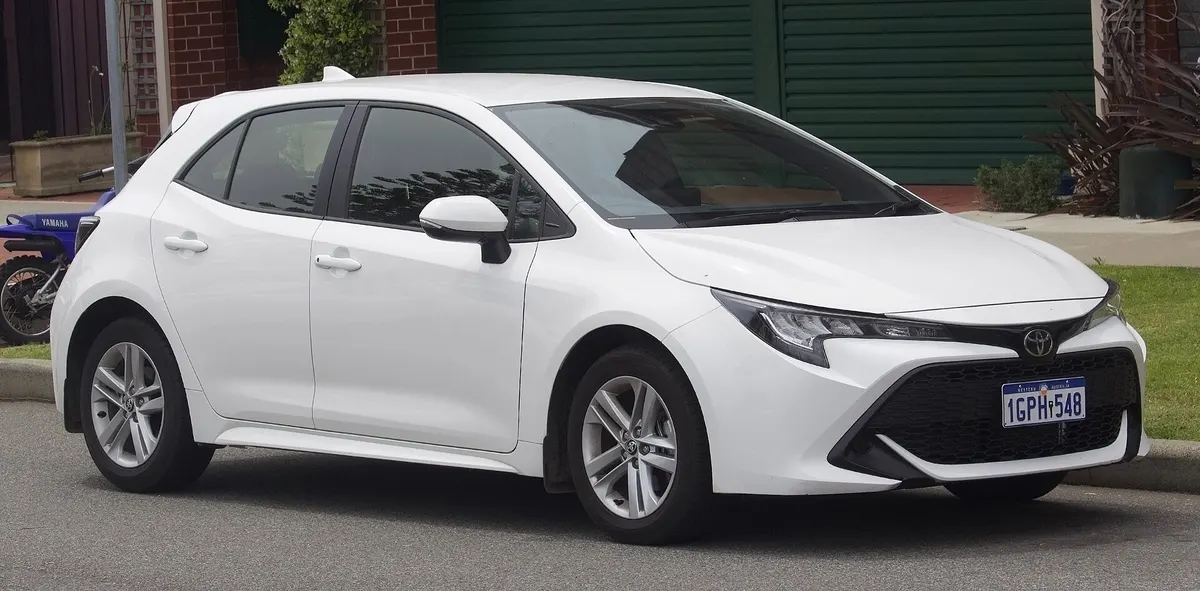
Engines
- 2ZR-FAE · 1.8L gasoline, 139 hp
- M20A-FKS · 2.0L gasoline, 169 hp
- 2ZR-FXE (hybrid) · 1.8L hybrid, 121 hp
Transmissions
- K120 · cvt
- cvt
- manual , 6-speed
- eCVT · cvt
Drivetrain
FWD / AWD
Body
sedan, hatchback
Trims
L, LE, SE, XLE, XSE, SE Apex Edition, Nightshade, Hybrid LE, Hybrid SE, Hybrid XLE
Toyota Corolla part-number cross-reference
Start from the OEM number, then pick the brand you trust. Verified equivalents for the Toyota Corolla (2020–2025).
Part links go to Amazon, and to eBay where Amazon does not stock the part. Affiliate links, so we may earn a commission if you buy. Your price is unchanged, and a commission never changes a verdict.
Engine oil filter
Fram
Listed cross for Toyota 90915-10009 (oilfilter-crossreference.com)
Look up Fram engine oil filterBosch
Listed cross for Toyota 90915-YZZF2; European catalog number F026407208
See Bosch engine oil filterVerified via: ToyotaPartsDeal: 2021 Corolla oil filter (90915-10009 for 1.8L & 2.0L), ToyotaPartsDeal: 90915-YZZF2 part page (Replaced by 90915-YZZN1), oilfilter-crossreference: Toyota 90915-10009 (OEM equivalents YZZF1/YZZF2; Fram, Wix crosses), oilfilter-crossreference: Toyota 90915-YZZF2 (Bosch, Denso crosses)
Engine air filter (2.0L M20A-FKS)
Verified via: ToyotaPartsDeal: 17801-F0020 fitment (2019-2024 Corolla 1.8L/2.0L; Camry, RAV4, Highlander), airfilter-crossreference: Toyota 17801-F0020 crosses, ToyotaPartsDeal: 2021 Corolla air filter listing (all three E210 engine codes)
Engine air filter (1.8L gas & hybrid)
Verified via: ToyotaPartsDeal: 17801-21060 fitment (2020-2024 Corolla; Prius family), airfilter-crossreference: Toyota 17801-21060 crosses
Cabin air filter
EPAuto
Activated-carbon; Amazon listing: fits Toyota Camry/Corolla/RAV4/Prius 2016-2025, replaces 87139-58010
See EPAuto cabin air filterMann
Charcoal; listed cross for Toyota 87139-58010 (airfilter-crossreference.com)
Look up Mann cabin air filterVerified via: ToyotaPartsDeal: 2021 Corolla cabin air filter (87139-58010, 87139-0E040, 87139-28020→0R030), airfilter-crossreference: Toyota 87139-58010 crosses, airfilter-crossreference: Toyota 87139-0E040 crosses, Amazon: EPAuto CP157 (CF12157) cabin air filter listing
Should I buy a 2020–2025 Toyota Corolla?
Buy it. The E210 is the rare used car where the honest advice is boring: pick the color and trim you like, verify the recall work is done, and drive it for 200,000 miles. Nothing in this generation eats engines, transmissions, or head gaskets. The real checklist is administrative. 2020 cars carry the Denso fuel-pump recall and 2023 cars carry steering-shaft and airbag spiral-cable recalls, all fixed free at any Toyota dealer, so run the VIN before you hand over money. On 2.0L cars, ask whether the coolant bypass valve has been replaced; it's the one part with a real pattern of failure, and it's a few hundred dollars, not thousands. The hybrid is the sleeper pick: cheapest to run, and its eCVT is the most durable drivetrain of the bunch.
Best years
2024, 2025, 2022
Years to avoid
None are true avoid years. 2020 (first-year: fuel-pump recall 20V-682 + the generation's highest complaint count), so verify recall completion, 2023 (steering intermediate shaft + airbag spiral-cable recalls), verify all recall work is done
Pre-Purchase Checklist for Toyota Corolla
- ☐Run the VIN at nhtsa.gov/recalls or Toyota.com/recall before anything else. On 2020 cars confirm the fuel-pump recall (20V-682) was performed; on 2023 cars confirm the steering intermediate shaft (24V-878), spiral cable (23V-480 / 25V-040), and brake-software (24V-708) recalls are closed.
- ☐On 2.0L cars, look for coolant residue or crusty pink deposits around the coolant bypass valve on the front of the engine, and check the coolant level against the reservoir marks. Ask if the valve was already replaced. A done valve is a plus.
- ☐Check for a maintenance-style warning light that won't clear. On these cars a P2681 coolant-valve fault can masquerade as a routine service reminder.
- ☐Test the A/C hard on a warm day and sniff the vents on startup. Weak cooling points to the condenser; a sour gym-sock smell is the known evaporator-odor issue (annoying, cheap to treat).
- ☐Ask when the 12V battery was last replaced, and if the car sat on the lot, ask them to load-test it in front of you. Early cars had a parasitic-drain software bug and chronically short battery life.
- ☐Inspect the windshield edge-to-edge in good light. This generation has an outsized number of stress-crack complaints, and a replacement runs $400–$1,100 because the camera behind the glass needs recalibration.
- ☐On CVT cars, do a full stop-and-go test drive: launches, 20–40 mph roll-ons, parking-lot creep. Light hesitation is normal CVT behavior; clunks, slams, or shudder are not.
- ☐On hybrids, confirm the car hasn't been sitting for weeks. A dead 12V from sitting is common and cheap, but it masks the car's true condition on a short test drive.
Common Toyota Corolla problems & repair costs
Coolant bypass valve leak (2.0L M20A)
$400–$900Symptoms: Coolant level slowly drops; pink crust or wet residue around the valve on the front of the engine; a warning that looks like a routine maintenance reminder but stores code P2681. Ignore it long enough and you're running low on coolant, which is how a cheap valve becomes engine damage.
Fix: Replace the coolant bypass valve and top off the coolant, a few-hundred-dollar job at an independent shop, $700–$900 at dealers per owner reports. The valve is plastic and fails young enough that a class action was filed covering 2019–2023 Corolla and RAV4 models. Some owners have had it fail twice, so keep receipts.
Sources: Top Class Actions: Toyota coolant bypass valve class action (2019–2023 Corolla/RAV4), CarComplaints / NHTSA: 2021 Corolla engine complaints
Low-pressure fuel pump failure, recall 20V-682 (Denso)
$0–$800Symptoms: Rough running, warning lights, or a sudden stall, sometimes at highway speed, with the car unwilling to restart. Caused by a Denso pump impeller that swells in fuel and binds inside the pump body.
Fix: Free under NHTSA recall 20V-682 (Toyota 20TA02): dealers replace the fuel pump assembly with an improved part, no charge, no time limit. The 2020 Corolla was swept into the 1.5-million-vehicle expansion of Toyota's Denso fuel-pump campaign. Only pay the $400–$800 out-of-pocket pump job if a VIN check somehow shows the car outside the recall scope. Check first.
Sources: NHTSA recall 20V-682: owner notification letter, Justia Recalls: 2020 Toyota Corolla fuel pump, campaign 20V682000
Steering-column defects on 2023 cars (two recalls) plus on-center wander complaints
$0–$0Symptoms: Recall side: manufacturing cracks in the steering intermediate shaft that can fracture and detach it from the column, and an under-welded spiral-cable connection that can silently deactivate the driver's airbag. Complaint side: owners also report the car wandering or oscillating in its lane at highway speed and lane-keep assist fighting the wheel.
Fix: All recall work is free: shaft replacement under 24V-878, spiral-cable inspection/replacement under 23V-480 and 25V-040, and a skid-control ECU software update under 24V-708 (brake-assist loss when turning). Run the VIN and confirm all four are closed before buying a 2023. The wander/lane-keep complaints have no recall. If it bothers you on the test drive, that's your answer.
Sources: Cars.com: 2023 Toyota Corolla recalls (24V-878, 23V-480, 25V-040, 24V-708), CarComplaints / NHTSA: 2023 Corolla steering complaints
A/C condenser failure and sour HVAC smell
$150–$1,500Symptoms: Two separate issues. A/C gradually blows warm, from refrigerant leaking out of the condenser at the front of the car. Or the A/C cools fine but breathes out a sour, gym-sock smell at startup, from mold on the evaporator core, common enough that Toyota wrote service bulletins for it.
Fix: The smell is cheap: an evaporator foam-cleaning treatment plus a charcoal cabin filter per Toyota's own TSBs (T-SB-0010-20 / T-SB-0022-20), $150–$300 at a shop, less DIY. A failed condenser is the real bill, $500–$1,200 at an independent shop for part, refrigerant, and labor. CarComplaints lists the failed condenser as a top 2020 complaint with a ~$2,100 average when done at dealers.
Sources: CarComplaints, 2020 Toyota Corolla (top problems: sour A/C smell, failed condenser)
12V battery drain / short battery life (early cars)
$0–$300Symptoms: Dead battery after the car sits a few days; repeated jump-starts; some owners on their second or third battery inside two years. Two known contributors: a telematics (DCM) software bug that kept modules awake with the ignition off, and the smart-key system's constant polling draw.
Fix: Have the dealer apply the DCM firmware fix (Toyota TSB addressing the 12V-depletion-when-off bug), which is free software. Beyond that it's a fresh battery ($150–$300 installed) and, for cars that sit, a battery tender. Not an engineering scandal, but the most common early-ownership annoyance on this generation.
Sources: ToyotaNation: 2020 Corolla LE dead battery twice (DCM/firmware discussion), ToyotaNation: 12V battery issues on 2020 Corolla
Windshield stress cracks
$400–$1,100Symptoms: A crack appears with no rock strike, sometimes overnight in a garage, typically starting at the edge of the glass and spreading. Owner reports span the sedan, hybrid, and hatchback; some owners are on their second or third windshield.
Fix: Replacement glass plus recalibration of the Toyota Safety Sense camera behind the mirror. The calibration is what pushes these past $1,000. No recall exists; comprehensive insurance with glass coverage is the practical defense. Inspect the glass carefully on any used example.
Sources: CarProblemZoo: Toyota Corolla windshield complaints (NHTSA data), ToyotaNation: cracked windshields thread
This is about as cheap as car ownership gets. Routine service is oil (0W-20 on the 1.8L gas, 0W-16 on the 1.8L hybrid, and on the 2.0L either 0W-16 or, on 2024 and 2025 cars, 0W-8), filters, tires, and brakes, and hybrids barely use their brakes thanks to regen. Budget one coolant bypass valve on 2.0L cars somewhere in the first 70k miles, a 12V battery more often than you'd expect on early cars, and treat CVT fluid as a real 60k-mile service item despite the 'lifetime' label. The recalls cost nothing but a dealer visit. RepairPal-class data puts the Corolla's annual repair spend near $360. That's roughly half the industry average, and nothing on this generation argues otherwise.
Cost calculator
What will this Toyota Corolla cost you by a given mileage?
Drag to a mileage. We total the documented problems whose typical onset falls at or before it. The same cost ranges listed above, nothing new invented.
$0 estimated repair range
5-Year Maintenance Schedule & Cost to Own
Every scheduled service by mileage, fluid capacities, independent shop ranges, and parts cross-references.
Have a repair quote for this Toyota Corolla?
Audit against OEM book times, uncover duplicate pad and rotor labor, and verify parts markups.
How to fix common Toyota Corolla problems (DIY)
Engine + cabin air filter change
Tools: None required (hands only; a small flathead helps with airbox clips)
- Open the glovebox, empty it, squeeze the sides to release the stops, and let it swing down to expose the cabin-filter door.
- Unclip the door, slide the old cabin filter out, and insert the new one with the airflow arrow pointing down. Refit the door and glovebox.
- Under the hood, release the metal clips on the airbox lid, lift it, and swap the engine air filter, rubber sealing lip seated all the way around.
- Re-clip the lid and give it a tug to confirm it's latched. Done. This is the single easiest money-saver on the car.
Parts
- Cabin air filter (activated-charcoal type recommended for the odor issue) · Amazon $10–$20
- Engine air filter · Amazon $12–$25
Replace the 12V battery
Tools: 10mm wrench or socket, 12mm socket for the hold-down bracket, OBD-II memory saver (optional but avoids re-teaching windows/radio)
- Plug a memory saver into the OBD port if you have one, then make sure the ignition is fully off and the key is away from the car.
- Disconnect the negative (–) terminal first with the 10mm, then the positive (+), and tuck the cables aside.
- Remove the hold-down bracket, lift the old battery straight out, and set the new one in the tray. Read the BCI group number off the battery that is in the car before you order, rather than trusting a chart: fitment sources disagree on this generation, and hybrids use a smaller sealed AGM than the gas cars.
- Refit the hold-down, connect positive first, negative last, and coat the terminals with a dab of dielectric grease.
- Start the car, let it idle a minute, and expect one-time relearns: auto-up windows may need a hold-at-top reset, and the radio may ask for setup again.
Parts
- 12V battery (match the group number on the battery in your car) · Amazon $130–$220
- Battery terminal brush + dielectric grease · Amazon $8–$15
Oil and filter change (M20A 2.0L shown)
Tools: Floor jack + jack stands or ramps, Oil-filter wrench: the E210 uses a spin-on filter (Toyota 90915-YZZF2, superseded by 90915-YZZN1), not a cartridge, Drain pan, funnel, torque wrench
- Warm the engine briefly, raise and support the front of the car, and remove the under-tray fasteners to reach the drain plug.
- Drain the oil, then replace the drain-plug gasket and torque the plug snug, not gorilla-tight; it's an aluminum pan.
- Spin off the old filter, wipe the sealing surface clean, smear fresh oil on the new filter's gasket, and spin it on hand-tight plus about three-quarters of a turn. No wrench-tight heroics.
- Refill with the certified grade printed in your own owner's manual, because the 2.0L changed inside this generation. The 1.8L gas takes 0W-20 and the 1.8L hybrid 0W-16, 4.4 qt with filter either way. An early 2.0L takes 0W-16 at 4.9 qt; the 2024 and 2025 manuals put the 2.0L on 0W-8 at 4.4 qt. Start, check for leaks, then verify the level on the dipstick after it settles.
- Reset the maintenance reminder through the gauge-cluster menu so a real warning doesn't get ignored later. Remember the coolant-valve fault mimics this light.
Parts
- Full synthetic oil, 5 qt, in the grade your manual names (0W-8, 0W-16 or 0W-20) · Amazon $25–$40
- Oil filter, spin-on (Toyota 90915-YZZF2 / 90915-YZZN1) · Amazon $8–$15
Some parts links are affiliate links. We may earn a commission at no cost to you. We only list parts that fit this generation.
The short version
The 12th-generation Corolla does what Corollas do: it starts, it runs, and it quietly embarrasses cars that cost more. Across 2020–2025 there is no cracked block, no grenading transmission, no engine-eating defect of any kind. What there is instead is paperwork: a stack of recalls and one leak-prone plastic part, all of which are cheap or free to deal with, as long as you know to check.
The three things worth your attention: 2020 cars were swept into Toyota’s massive Denso fuel-pump recall (the pump can fail and stall the car; replaced free under campaign 20V-682). 2023 cars picked up steering-column recalls, a cracking intermediate shaft and an airbag spiral-cable weld, plus a brake-software update, all free at any Toyota dealer. And 2.0L cars of any year carry a plastic coolant bypass valve with a documented habit of leaking between 30k and 70k miles, the subject of a class action covering 2019–2023 models.
What that means when you’re shopping
Run the VIN at nhtsa.gov/recalls before you even test drive. A 2020 or 2023 car with all recalls closed is exactly as good a buy as any other year. The defects were fixed with new parts on Toyota’s dime. An open recall isn’t a dealbreaker either; it’s a free dealer visit. What you don’t want is to discover it after a highway stall.
On 2.0L cars, spend thirty seconds looking at the front of the engine for pink coolant crust and ask point-blank whether the bypass valve was replaced. Then check the glass: this generation cracks windshields at a rate that filled NHTSA complaint pages, and replacements run $400–$1,100 because of camera recalibration.
Gas or hybrid?
The hybrid is the quiet winner. It’s the Prius powertrain in a normal-looking sedan: 50+ mpg, an eCVT with nothing in it to shudder or slip, and a 10-year/150,000-mile traction-battery warranty on these model years. If you find a 2023+ you also get more power (134 hp) and optional AWD. The gas 2.0L is the better drive; the 1.8L (2020–2022 L/LE) is the slowest and simplest of the three. There’s no wrong answer here. Just verify the 12V battery is healthy on any of them, because early cars ran through them.
How this file is built: failure modes and cost ranges are compiled from NHTSA recall and complaint records, CarComplaints data, the coolant-bypass-valve class action filings, Toyota service bulletins, and owner-forum reporting, then sanity-checked against shop-floor experience. Cost figures are independent-shop estimates and vary by region. Spot something off? Tell us.
Viral car myths, checked against this car
- Misleading
Is the "$2 liquid that stops any leak" really banned in 11 states?
Automotive stop-leak products are not banned in any US state. The products are real (Bar's Leaks, BlueDevil), they work in specific narrow situations, and they can permanently damage your cooling or oiling system if applied to the wrong leak.
- Outdated
Does a "$1 mineral" really double car battery life? The Epsom-salt reality.
The mineral is Epsom salt (magnesium sulfate). It was a real desulfation hack for serviceable flooded-cell batteries 40+ years ago. It does not work on modern sealed AGM or EFB batteries, and trying it on yours will void the warranty without helping the battery.
Frequently asked questions
Which 2020–2025 Corolla years are best?
2024 and 2025 are the sweet spot: post-facelift (more power, better tech), past the 2023 steering-column production defects, and past the early-car battery-drain software bug. 2022 is the value pick among pre-facelift cars. The 2020 first-year issues were sorted and it dodged the recalls that hit 2023. No year is a true avoid; 2020 and 2023 just require a recall-completion check.
What is the coolant bypass valve problem and how bad is it?
The 2.0L Dynamic Force engine uses a plastic coolant bypass valve that can crack and leak, usually between 30,000 and 70,000 miles, common enough that a class action covers 2019–2023 Corollas. Caught early it's a $400–$900 fix. The danger is that the warning looks like a routine maintenance reminder, so owners ignore it while the coolant drops. If your Corolla shows a service light you didn't expect, have it scanned. Code P2681 is this valve.
Is the Corolla's CVT reliable?
Yes. This generation's CVT record is genuinely good. The 2.0L's K120 'Direct Shift' CVT uses a real mechanical first gear for launches, which removes the highest-wear situation a CVT faces. The widespread torque-converter failures belonged to the 2019 model year (previous production, recall J07); 2020+ complaints are down to scattered reports of low-speed jolts. Change the fluid around every 60k miles and it should outlast your interest in the car.
Is the Corolla Hybrid worth buying used?
It's arguably the best buy of the generation. The hybrid system is the Prius drivetrain, one of the most proven powertrains ever sold, with 50+ mpg and an eCVT that has no belt or clutches to wear. Traction-battery failures in this era are rare and warrantied 10 years/150,000 miles on 2020+ cars. The one quirk: the 12V battery dies if the car sits for weeks, which is a jump-start annoyance, not a hybrid failure. From 2023 you can even get AWD.
How long will a 2020–2025 Corolla last?
With oil changes on schedule and coolant kept full (watch that bypass valve on 2.0L cars), 200,000–250,000 miles is a reasonable expectation. This generation has no engine- or transmission-killing defect to interrupt it. The limiting factors are ordinary: rust in salt states, accident history, and neglect. Buy on maintenance records, not the odometer.
Every Toyota Corolla generation
The full case file run, beyond the generation before and after this one.
Cross-shopped rivals
Files on what buyers weigh against the Toyota Corolla of this era.