Case file · TOYOTA-COROLLA-2003-2008 · 9th gen (E120/E130)
Toyota Corolla 2003–2008Common problems, reliability & repair costs
The 9th-gen Corolla is close to the safest used-car bet of its era, with two things to know going in. Early 1ZZ-FE engines (2003–2004) can burn oil thanks to a piston-ring design flaw Toyota quietly fixed mid-generation, and 2005–2008 cars were recalled for an engine control module that can crack and stall the car. Clear those two and a maintained example runs 250k+ on routine service.
2006, 2007, 2008
2003–2004 (1ZZ-FE oil-burning piston design; verify consumpt +1 more
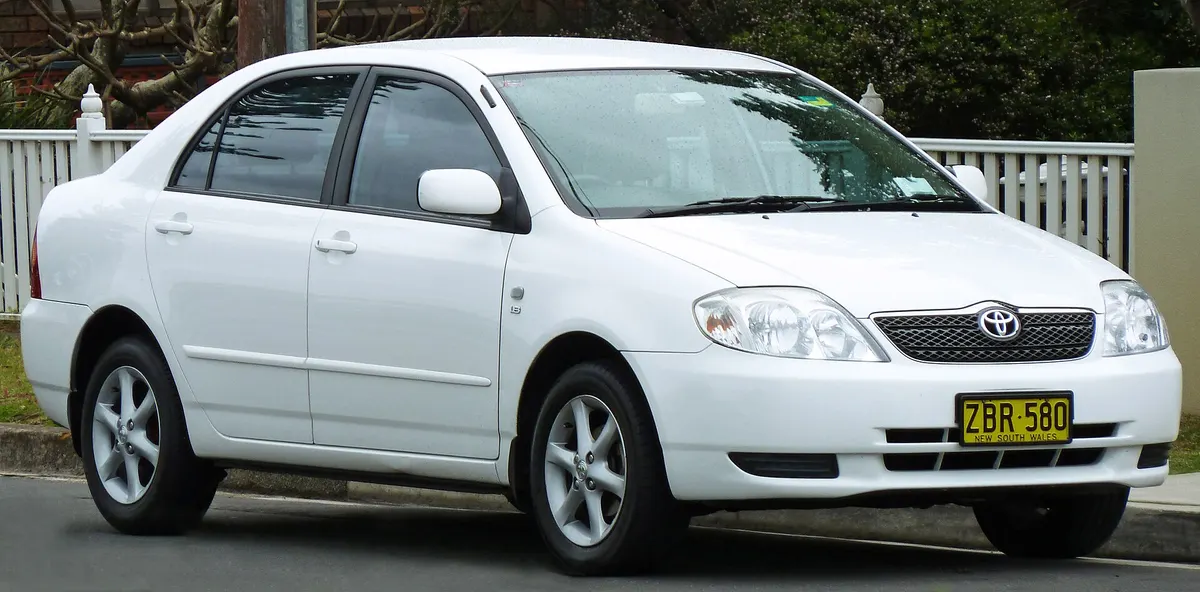
Engines
- 1ZZ-FE · 1.8L gasoline, 130 hp
- 2ZZ-GE · 1.8L gasoline, 170 hp
Transmissions
- C59 · manual, 5-speed
- automatic , 4-speed
- C60 · manual, 6-speed
Drivetrain
FWD
Body
sedan
Trims
CE, S, LE, XRS
Toyota Corolla part-number cross-reference
Start from the OEM number, then pick the brand you trust. Verified equivalents for the Toyota Corolla (2003–2008).
Part links go to Amazon, and to eBay where Amazon does not stock the part. Affiliate links, so we may earn a commission if you buy. Your price is unchanged, and a commission never changes a verdict.
Oil filter
Verified via: ToyotaPartsDeal: 2005 Corolla oil filter listing (90915-10003/10004 family), ToyotaPartsDeal: 90915-10004 fitment (Corolla 1.8L, replaced by 90915-YZZF1), Oil Filter Cross Reference: Toyota 90915-YZZF1 interchange
Engine air filter
Purolator
Listed interchange for Denso 143-3002 / 17801-22020 application
See Purolator engine air filterVerified via: ToyotaPartsDeal: 17801-22020 fitment (2003–2008 Corolla 1ZZ-FE/2ZZ-GE, replaced by 17801-YZZ03), Sixity Auto: Denso 143-3002 fitment and interchange, Air Filter Cross Reference: Toyota 17801-22020
Cabin air filter
Verified via: ToyotaPartsDeal: 88568-02020 fitment (2003–2008 Corolla/Matrix), Air Filter Cross Reference: Toyota 88568-02020
Should I buy a 2003–2008 Toyota Corolla?
Buy it. This is one of the best cheap used cars ever made, and the caveats are specific and checkable. On 2003–2004 cars, verify oil consumption before money changes hands: check the dipstick, look for blue smoke on startup and hard acceleration, and ask directly how much oil the seller adds between changes. On 2005–2008 cars, run the VIN for the ECM recall (10V-384) and the Takata airbag recalls and confirm both were done. They're free at any Toyota dealer. A 2006–2008 car with records is the low-drama pick and will likely outlast your interest in it.
Best years
2006, 2007, 2008
Years to avoid
2003–2004 (1ZZ-FE oil-burning piston design; verify consumption before buying), 2003 specifically (highest complaint year of the run; includes a cluster of transmission-failure reports)
Pre-Purchase Checklist for Toyota Corolla
- ☐On 2003–2004 cars: pull the dipstick cold. Low or dirty oil on a car being sold is a red flag. Watch the exhaust for blue smoke at cold start and during a hard pull in second gear.
- ☐Ask the seller point-blank how often they add oil between changes. A quart every 600–1,200 miles is the classic bad-piston pattern on early 1ZZ-FEs.
- ☐Run the VIN at toyota.com/recall or nhtsa.gov: confirm the ECM recall (10V-384, 2005–2008 cars) and the Takata front-passenger airbag inflator recalls are closed.
- ☐On automatics, check the fluid condition and shift quality. Flaring or harsh 1-2 shifts on a 2005–2008 car can also be a symptom of the cracked ECM, not just the transmission.
- ☐Turn the wheel lock-to-lock in a parking lot and drive over speed bumps. A clunk or creak from the top of the front suspension is worn strut mounts/bearings.
- ☐Confirm the check-engine light is OFF and actually works (illuminates with key-on). EVAP codes are this generation's most common CEL, and the car will fail emissions with one stored.
- ☐On an XRS: cold-start it and listen to the 2ZZ-GE, check for oil-change records, and make sure lift engages smoothly near 6,700 rpm on a test pull.
Common Toyota Corolla problems & repair costs
Excessive oil consumption (1ZZ-FE, 2003–2004)
$1,500–$3,500Symptoms: Oil level drops noticeably between changes, a quart every 600–1,200 miles in bad cases, often with no visible leak. Blue smoke at startup or under hard acceleration. Left unchecked, low oil can starve and ruin the engine.
Fix: The root cause is a piston design with too few oil-return holes; carbon clogs them, the oil ring sticks, and scraped oil burns in the cylinder instead of draining back. The real fix is mechanical: new pistons/rings (or a good used engine), which is why the bill is four figures. Many owners simply manage it: check the dipstick every fill-up and top off. Toyota revised the piston design during 2005, so mid-2005-and-later 1ZZ-FEs mostly don't do this.
Sources: ToyotaNation: when 1ZZ-FE pistons were modified to reduce oil consumption, 8020 Automotive: most common Toyota 1ZZ-FE engine problems, CarComplaints: Toyota Corolla engine problems
Engine control module (ECM) cracking: safety recall 10V-384
$0–$1,200Symptoms: Check-engine light, harsh or erratic automatic shifting, a no-start, or in the worst case the engine stalling while driving. Caused by cracks developing at solder points and varistors on the ECM circuit board due to a manufacturing defect.
Fix: Toyota recalled 2005–2008 Corolla and Corolla Matrix models (NHTSA campaign 10V-384) to inspect and replace faulty ECMs free of charge, rolled out in two phases starting late 2010. Recall repairs remain free at any Toyota dealer regardless of age. Run the VIN first. An out-of-pocket ECM replacement on a car that somehow slipped the net runs roughly $500–$1,200 at an independent shop.
Sources: NHTSA: Toyota safety recall A0J / 10V-384 notice (PDF), RepairPal: 2005–2008 Corolla and Matrix ECM recall, ToyotaNation: 05-08 Corolla/Matrix ECM recall thread
Takata front-passenger airbag inflator (recalled)
$0–$0Symptoms: No symptoms. That's the danger. The ammonium-nitrate inflator propellant degrades with years of heat and humidity; a degraded inflator can rupture in a crash and send metal fragments into the cabin.
Fix: Free replacement under the Takata recalls at any Toyota dealer. Corollas of this era went through multiple recall waves, including replacement of earlier interim inflators, so check the VIN at toyota.com/recall even if the seller says 'the airbag recall was done.' Do not skip this on a car you're about to daily-drive with a passenger.
Sources: Toyota: Takata airbag safety recall lookup, Consumer Reports: Toyota recalls Corolla/Matrix to replace Takata airbags again
EVAP system check-engine light (P0440/P0441/P0442/P0446)
$150–$800Symptoms: Check-engine light with EVAP codes; the car runs fine. Common culprits are a failed vapor canister purge valve (VSV), a loose or worn gas cap, or a charcoal canister saturated from years of topping off the tank past the click. The canister can even shed charcoal pellets into the vent valve.
Fix: Diagnose before throwing parts: gas cap first, then the purge valve (a cheap, very DIY-able part), then smoke-test for leaks. A saturated or pellet-shedding charcoal canister is the expensive end of the range. Not a safety issue, but the car will fail emissions testing with the light on.
Sources: RepairPal: Corolla EVAP canister problems, Olathe Toyota Parts: P0441 diagnostic guide, ToyotaNation: EVAP smoke test P0441/P0442/P0446 (solved)
Front strut mount / bearing clunk
$300–$800Symptoms: Clunking, creaking, or popping from the top of the front suspension over bumps or when turning the wheel at low speed. Toyota issued a service bulletin for a tapping noise from the front upper suspension on early cars.
Fix: Replace the strut mounts and bearing plates; at this age most shops will sensibly recommend complete loaded strut assemblies (strut, spring, mount as a unit) on both sides plus an alignment, which is the top of the cost range. Annoying, not dangerous. But it makes the car feel older than it is.
Sources: RepairPal: Corolla noise over bumps may be struts/bearing plates, ToyotaNation: strut mount making noise
Daytime running light (DRL) failures
$50–$400Symptoms: One or both DRLs stop working, flicker, or dim erratically. Causes range from cheap (bulbs, a blown fuse, a heat-melted bulb socket) to the DRL module/relay itself.
Fix: Work up from the cheap stuff: bulbs and sockets first (heat damage melting the plastic socket is common), then the fuse, then the DRL relay/module. RepairPal logs over a hundred owner reports of DRL problems on Corollas of this era, so it's a known quirk, not a mystery electrical gremlin.
Sources: RepairPal: reports of daytime running light problems (Corolla), ToyotaNation: DRLs stopped working
This is about as cheap as car ownership gets. Parts are everywhere and inexpensive, any shop can work on it, the timing chain means no belt-service bill, and fuel economy is mid-30s highway. The two budget wildcards are an early oil-burner (either live with topping off, or budget four figures for pistons/an engine) and, on a neglected car, deferred wear items arriving all at once: struts, mounts, brakes. On a mid-2005-or-later car with records, expect years of oil changes, tires, and not much else.
Cost calculator
What will this Toyota Corolla cost you by a given mileage?
Drag to a mileage. We total the documented problems whose typical onset falls at or before it. The same cost ranges listed above, nothing new invented.
$0 estimated repair range
5-Year Maintenance Schedule & Cost to Own
Every scheduled service by mileage, fluid capacities, independent shop ranges, and parts cross-references.
Have a repair quote for this Toyota Corolla?
Audit against OEM book times, uncover duplicate pad and rotor labor, and verify parts markups.
How to fix common Toyota Corolla problems (DIY)
Replace the EVAP purge valve (VSV)
Tools: 10mm socket and ratchet, Pliers for hose clamps, OBD2 scanner (to clear the code and confirm the fix)
- Confirm the code (P0441 is the usual purge-flow code) with an OBD2 scanner before buying parts.
- Locate the purge valve on the engine side of the EVAP plumbing, a small solenoid with two vacuum lines and an electrical connector.
- Unplug the connector, release the hose clamps, and swap in the new valve, matching hose positions.
- Clear the code and drive a few days of normal trips; the EVAP monitor takes multiple drive cycles to run and confirm the repair.
Parts
- EVAP purge valve / vacuum switching valve (2003–2008 Corolla) · Amazon $25–$60
Engine & cabin air filter change
Tools: None (screwdriver optional for airbox clips)
- Unclip the airbox lid at the front of the engine bay, lift it, and swap in the new engine air filter with the seal seated all the way around.
- Open the glovebox and squeeze the side stops to let it swing down past the catches.
- Pull the cabin filter cover, slide the old filter out, and insert the new one with the airflow arrow pointing down.
- Reseat the glovebox and clip the airbox shut.
Parts
- Engine air filter (2003–2008 Corolla) · Amazon $10–$18
- Cabin air filter (2003–2008 Corolla) · Amazon $8–$15
Replace the PCV valve (cheap insurance on an oil-using 1ZZ-FE)
Tools: Pliers or a small wrench, Rag (expect a little oil residue)
- Find the PCV valve threaded into the valve cover with a rubber hose attached.
- Pull the hose off, unscrew the old valve, and shake it. A stuck valve won't rattle.
- Thread in the new valve snugly and reattach the hose, checking the hose isn't cracked or spongy.
- Keep checking the dipstick every couple of fill-ups; a fresh PCV valve helps crankcase breathing but will not cure a true clogged-ring oil burner.
Parts
- PCV valve (2003–2008 Corolla 1.8L) · Amazon $8–$20
Some parts links are affiliate links. We may earn a commission at no cost to you. We only list parts that fit this generation.
The short version
The 2003–2008 Corolla is the car people mean when they say “just buy a Corolla.” It’s simple, cheap to run, chain-driven, and routinely outlives its owners’ patience. But this generation has two specific things you need to clear before handing over money.
First: 2003–2004 cars can burn oil. The early 1.8L 1ZZ-FE used pistons with too few oil-return holes; carbon clogs them, the oil rings stick, and the engine quietly consumes a quart every 600–1,200 miles with no leak and no drama, until it runs low. Toyota revised the pistons during 2005 production, so later cars mostly don’t do this.
Second: 2005–2008 cars were recalled for the engine computer. Solder joints on the ECM circuit board can crack, causing anything from harsh shifting to the engine stalling on the road (NHTSA recall 10V-384). The fix is free at any Toyota dealer, forever. But only if it was actually done.
What that means when you’re shopping
On a 2006–2008 car, you’re in the sweet spot: post-piston-fix engine, and the ECM and Takata airbag recalls are one free VIN check away from being resolved. Buy on condition and records like any used car.
On a 2003–2004 car, the price is usually lower for a reason. Check the dipstick cold, watch for blue smoke at startup, and ask the seller flat-out how much oil they add between changes. An early car that genuinely doesn’t burn oil is a fine buy; one that does is a top-off-forever car or a four-figure engine job. Price it accordingly.
Everything else here is small stuff: EVAP check-engine lights (usually a purge valve or a canister ruined by topping off the gas tank), clunky front strut mounts at higher mileage, and daytime running lights that flicker or die. None of it should kill a deal.
Run every VIN through toyota.com/recall before you buy. The Takata airbag inflator recalls touched this entire generation, some cars more than once, and the replacement is free.
How this file is built: failure modes and cost ranges are compiled from NHTSA recall and complaint data, CarComplaints owner reports, RepairPal problem data, and Toyota owner-forum reporting, then sanity-checked against shop-floor experience. Cost figures are independent-shop estimates and vary by region. Spot something off? Tell us.
Viral car myths, checked against this car
- Dangerous
Is the "$2 liquid that destroys engine sludge forever" real? Our shop-floor verdict.
An aggressive solvent flush on a high-mileage engine is a textbook way to spin a bearing. The viral 'kitchen-cabinet flush' is folklore that real shops spend money cleaning up after.
Frequently asked questions
Which 2003–2008 Corolla years should I avoid?
2003 and 2004 are the caution years. Those 1.8L engines have the piston design that clogs its oil-return holes and burns oil, and 2003 is also this generation's highest-complaint year on CarComplaints, including a cluster of transmission failures. None of that makes every early car bad, but on 2003–2004 you must verify oil consumption before buying. 2006–2008 are the safest picks.
Why does my 2003–2008 Corolla burn oil?
On 2003–2004 (and some early-2005) engines, the pistons have too few oil-return holes. Carbon clogs them, the oil-control rings stick, and oil that should drain back to the pan burns in the cylinders instead: no leak, no smoke at idle, just a dropping dipstick. Toyota revised the pistons during 2005. The permanent fix is pistons/rings or a replacement engine; the practical fix for many owners is checking the oil at every fill-up and topping off.
Was there a recall for the Corolla stalling or not starting?
Yes. NHTSA campaign 10V-384 covered 2005–2008 Corolla and Corolla Matrix models for an engine control module that can crack internally, causing warning lights, harsh shifting, no-starts, or stalling while driving. Toyota inspects and replaces the ECM free. Run your VIN at toyota.com/recall or nhtsa.gov to confirm it was done. Recall work stays free no matter the car's age.
How many miles will a 2003–2008 Corolla last?
250,000 miles is realistic on a maintained car, and higher isn't rare. The engine is chain-driven (no timing belt to replace), the transmissions are simple, and rust is the bigger long-term enemy in snow states. The main way these die early is an ignored early-build oil burner running low on oil.
Is the Corolla XRS worth buying?
It's a genuinely fun oddball. The 2005–2006 XRS uses the 170 hp 2ZZ-GE with an 8,200 rpm redline and a 6-speed manual, essentially a Celica GT-S drivetrain in a sedan. But it's not appliance-grade like the regular 1ZZ car: it demands frequent oil changes, many were driven hard, and parts specific to the 2ZZ cost more. Buy on maintenance records or walk.
Every Toyota Corolla generation
The full case file run, beyond the generation before and after this one.
Cross-shopped rivals
Files on what buyers weigh against the Toyota Corolla of this era.