Case file · TOYOTA-PRIUS-2004-2009 · 2nd gen (XW20) (XW20)
Toyota Prius 2004–2009Common problems, reliability & repair costs
The 2nd-gen Prius is one of the most durable, cheapest-to-run cars ever built. But every one on the road is now 17+ years old, and the things that fail are the expensive hybrid-era parts: the high-voltage battery, the brake actuator, the combination meter that goes dark, and the inverter's electric water pump. Buy one with documented history and the big-ticket items already addressed, and it will run past 250k. Buy blind and you can stack $5,000 of repairs onto a $6,000 car.
2007, 2008, 2009
2004–2005 (early MFD touchscreen failures, first steering-sh +1 more
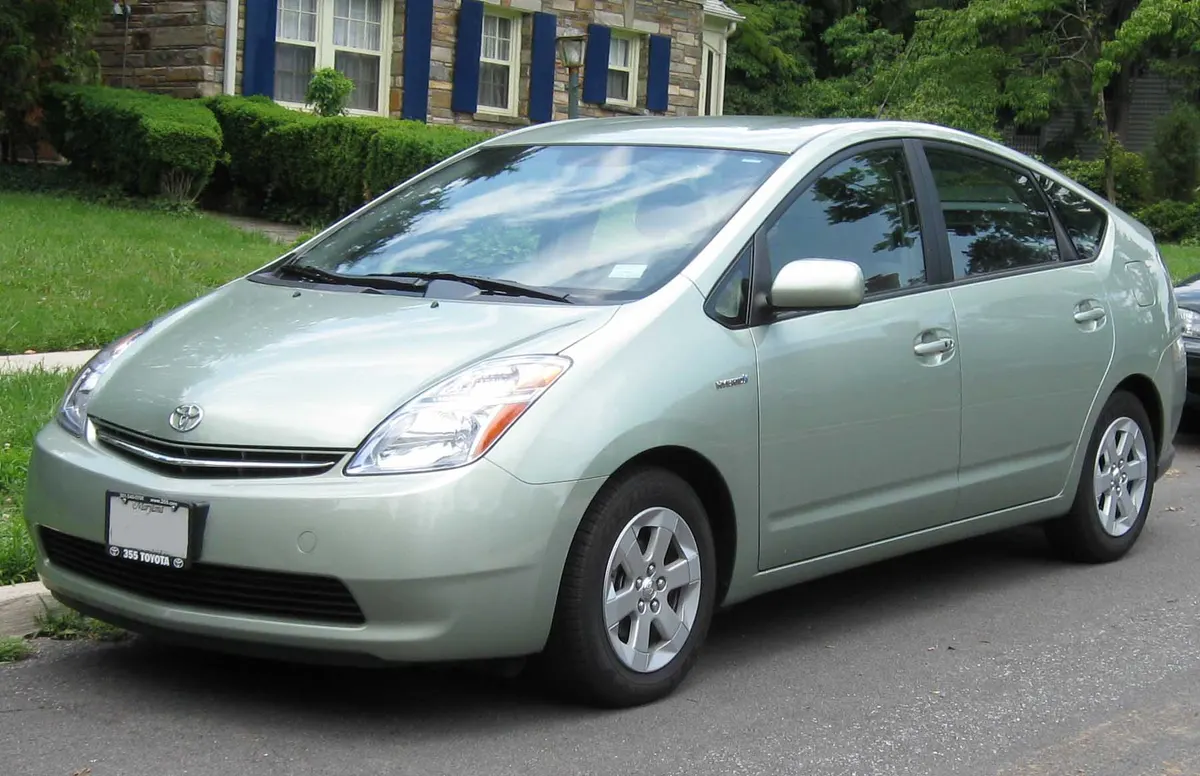
Engines
- 1NZ-FXE · 1.5L hybrid, 76 hp
Transmissions
- cvt
Drivetrain
FWD
Body
hatchback
Trims
Base (option packages 1–6), Touring (2007–2009)
Toyota Prius part-number cross-reference
Start from the OEM number, then pick the brand you trust. Verified equivalents for the Toyota Prius (2004–2009).
Part links go to Amazon, and to eBay where Amazon does not stock the part. Affiliate links, so we may earn a commission if you buy. Your price is unchanged, and a commission never changes a verdict.
Engine oil filter
Fram
Cross for Toyota 90915-YZZF1/90915-10003 family (oilfilter-crossreference.com, both directions)
Look up Fram engine oil filterPurolator
Listed cross for Fram PH4967 (oilfilter-crossreference.com)
See Purolator engine oil filterMobil 1
Listed cross for Fram PH4967 (oilfilter-crossreference.com)
Compare Mobil 1 engine oil filterVerified via: ToyotaPartsDeal: Prius oil filters by generation (2001-2009 1NZ-FXE = 90915-10003), ToyotaPartsDeal: 90915-10003 part page (Replaced by 90915-YZZN1), oilfilter-crossreference: Fram PH4967 (Wix, Purolator, Mobil 1 crosses; Toyota 90915-YZZF1 OEM), oilfilter-crossreference: Toyota 90915-YZZF1 (Fram PH4967, Denso 150-2000)
Engine air filter
Purolator
Listed cross for 17801-21040 (airfilter-crossreference.com)
See Purolator engine air filterVerified via: ToyotaPartsDeal: 2006 Prius air filter (17801-21040, 1.5L 1NZFXE), airfilter-crossreference: Toyota 17801-21040 crosses (notes 2004-2009 Prius 1.5L fitment)
Cabin air filter
Verified via: ToyotaPartsDeal: 2006 Prius cabin air filter (87139-47010 dust, 87139-47020 charcoal), ToyotaPartsDeal: Prius cabin filters by generation (87139-47010 = 2001-2009), airfilter-crossreference: Toyota 87139-47010 crosses (genuine sold as 87139-47010-83)
Should I buy a 2004–2009 Toyota Prius?
Buy it, as a documented car, not a cheap car. The powertrain concept is genuinely excellent: the engine and eCVT transaxle routinely outlast the rest of the vehicle. What you're really buying in 2026 is the service history of four expensive subsystems: the high-voltage battery, the brake actuator, the combination meter, and the inverter water pump. Then there's the catalytic converter, which thieves target more than almost any other car. A gen-2 with a recently replaced HV battery and quiet brake pump is a 250k-mile car for used-Corolla money. One with an original battery, a brake pump that runs constantly, and no paperwork is a rolling repair bill.
Best years
2007, 2008, 2009
Years to avoid
2004–2005 (early MFD touchscreen failures, first steering-shaft recall population, oldest batteries), Any year with an original, never-replaced HV battery and no recent hybrid health check
Pre-Purchase Checklist for Toyota Prius
- ☐Ask directly: has the high-voltage battery been replaced, and with what (new Toyota, remanufactured, or used)? Get the invoice. On the test drive, watch the energy screen. A battery whose charge bars swing rapidly from near-full to near-empty is on its way out.
- ☐Sit in the car with the door open and brake pedal pumped a few times, ignition on: listen near the driver's kick panel for the brake accumulator pump. A pump that runs every couple of pedal presses, or runs long and loud, points to the $2,000+ brake actuator failure.
- ☐Turn the car ON and confirm the entire digital dash (speedometer, fuel gauge) lights up instantly. A combination meter that's blank, flickers, or takes a while to wake is the known cluster failure. The warranty extension for it expired years ago.
- ☐Run the VIN through Toyota's recall lookup and confirm the steering intermediate shaft recalls (06V188 and 12V537) and the hybrid electric water pump recall (12V536) were performed.
- ☐Get under the car: confirm the catalytic converter is present, look for fresh weld seams or clamps (evidence of a prior theft and cheap replacement), and check whether a cat shield is already installed.
- ☐On cars over 150k miles, pull the dipstick, ask how much oil it uses between changes, and watch for blue smoke on hard acceleration after a long coast. Piston-ring oil consumption is the engine's one real aging problem.
- ☐If it has HID headlights (projector low beams), drive it at night or in a dark garage for a while. The known failure is lights that shut off randomly, not lights that are simply dead.
- ☐On 2004–2005 cars, poke every corner of the touchscreen and confirm climate and audio respond. The MFD's solder-joint failure makes the screen sluggish or unresponsive.
Common Toyota Prius problems & repair costs
High-voltage battery degradation (P0A80)
$1,500–$4,500Symptoms: Red triangle warning with check-engine light and code P0A80; charge-level bars on the energy screen swinging rapidly between nearly full and nearly empty; noticeable drop in fuel economy; engine running more than it used to. The NiMH pack fails by individual modules going weak, which is why 'rebalanced' packs often fail again.
Fix: Replace the pack. A remanufactured or refurbished pack installed at an independent hybrid shop typically runs $1,500–$2,800 with a 1–3 year warranty; a new Toyota pack installed lands roughly $3,500–$4,500 after Toyota raised gen-2 pack pricing sharply in 2025. Avoid single-module swaps and cheap 'reconditioned' packs with 90-day warranties. On a pack this old, the remaining original modules follow the first one quickly.
Sources: Earthling Automotive: 2025 Prius HV battery replacement cost guide, PriusChat: Gen 2 battery failure threads
Combination meter failure (dash goes dark)
$150–$1,000Symptoms: The digital instrument cluster goes completely blank or flickers, often intermittently at first and in cold weather. It takes the speedometer, the fuel gauge and the warning lights with it. The car still drives normally; you just have no speedometer. Caused by failing capacitors/solder joints on the cluster board.
Fix: Toyota acknowledged this with warranty extension ZTV (9 years from first use, no mileage limit). That window closed on every gen-2 years ago. Today the economical fix is a board-level repair: mail-in cluster repair services charge roughly $150–$350, plus removal/installation if a shop does it. A new replacement meter from Toyota plus programming can approach or exceed $1,000. Handy owners fix it with a soldering iron and a capacitor kit for under $20.
Sources: Earthling Automotive: Prius dash lights out / combination meter warranty extension, Art's Automotive: Prius combination meter repair
Brake actuator / accumulator pump failure (C1391, C1252)
$1,800–$4,500Symptoms: The brake accumulator pump (audible behind the driver's kick panel) runs more and more often, then loudly, then constantly. Codes C1391 (accumulator leak) or C1252 (pump motor) set with a chorus of ABS/brake warning lights. In a full failure you lose power brake assist. The pedal still works but requires far more force.
Fix: Replace the brake actuator/booster pump assembly. Internal seals wear and leak pressure back to the reservoir, working the pump to death. Independent-shop repairs commonly run $1,900–$3,000 with aftermarket or reman parts; dealers replacing the actuator and master cylinder assembly together have charged $4,000+. Toyota ran a warranty extension (ZJB) that has expired. Do not keep driving a car where the pump runs constantly.
Sources: Go-Parts: C1391 abnormal accumulator leak on 2004–2011 Prius, PriusChat: Brake accumulator failure C1391
Inverter electric water pump failure (P0A93)
$200–$600Symptoms: Master warning light with code P0A93; no visible coolant flow in the inverter reservoir with the car in READY mode. The electric pump circulates coolant through the inverter. If it stops and you keep driving, the inverter overheats and can shut the car down; a cooked inverter is a $2,000+ part.
Fix: Replace the inverter coolant pump. A cheap, well-known job (the part is roughly $80–$200; shops charge a few hundred all-in). Toyota recalled about 350,000 US 2004–2009 Prius for this pump in November 2012 (NHTSA 12V-536) because coil wire in the pump motor could corrode and break. Recall pumps were replaced free, but replacement pumps also wear out. Check the reservoir for flow at every oil change.
Sources: RepairPal, Toyota recall 12V536: water pump may fail, Torque News: why the 2004–2009 Prius sets P0A93
HID headlights shutting off intermittently
$150–$1,200Symptoms: One or both low-beam HID headlights turn off at random while driving, then come back after cycling the headlight switch. Distinct from a bulb that simply burns out. The shutoffs are sporadic and unpredictable, which is what made it a safety issue.
Fix: Usually failing HID bulbs (a pair of quality D4R bulbs runs $100–$300 installed); persistent cases need a ballast or ECU-side repair that can run $500–$1,200 at a dealer. Toyota settled a class action (Collado v. Toyota, final approval 2011) over this, with a 5-year/50,000-mile warranty extension and reimbursements. All of that expired long ago. Halogen-equipped cars don't have the issue.
Sources: Top Class Actions: Toyota Prius HID headlight settlement, Autoblog: Toyota settles Prius headlight lawsuit
Oil consumption at high mileage (1NZ-FXE piston rings)
$100–$3,500Symptoms: Oil level drops between changes with little or no visible leak, commonly a quart every 1,000–2,000 miles on high-mile cars; occasional blue smoke on acceleration after a long coast. The low-tension piston rings stick and wear with age and extended oil-change intervals.
Fix: Managed, not always repaired. Most owners simply shorten oil-change intervals, step up to a heavier oil, and check the dipstick every fuel stop. The engine will run for years like this if it never runs low. Piston-soak ring-cleaning treatments help moderate cases for under $200. The real fix is to re-ring the engine or install a good used engine. That runs $2,000–$3,500 and rarely makes financial sense unless the rest of the car is excellent.
Sources: PriusChat: 2nd gen Prius oil consumption and preventative maintenance, Torque News: reducing oil consumption on your Toyota Prius
Day to day, a healthy gen-2 Prius is about as cheap as car ownership gets: 45+ mpg, brake pads that last 100k+ miles thanks to regenerative braking, and an eCVT with essentially nothing in it to wear out. The money risk is lumpy, not steady. HV battery, brake actuator, and combination meter are each capable of a four-figure bill on a car that's only worth a few thousand dollars. Budget separately for theft exposure: the 2004–2009 Prius has among the highest catalytic-converter theft claim rates in the country (its converter is unusually rich in precious metals), and an OEM replacement runs $2,000+. A bolt-on cat shield ($150–$350 installed) and comprehensive insurance are cheap protection. The 12V auxiliary battery is small, hides in the hatch area, and causes bizarre electrical gremlins when weak. Replace it on age, not on symptoms.
Cost calculator
What will this Toyota Prius cost you by a given mileage?
Drag to a mileage. We total the documented problems whose typical onset falls at or before it. The same cost ranges listed above, nothing new invented.
$0 estimated repair range
Have a repair quote for this Toyota Prius?
Audit against OEM book times, uncover duplicate pad and rotor labor, and verify parts markups.
How to fix common Toyota Prius problems (DIY)
Replace the 12V auxiliary battery
Tools: 10mm socket + ratchet with extension, 12mm socket (hold-down bracket), Memory saver or second 12V source (optional, keeps presets)
- Open the hatch and remove the trunk floor panel and the right-side trim panel. The 12V battery lives in the right rear corner, not under the hood.
- Disconnect the negative terminal first, then the positive, then remove the hold-down bracket and vent tube.
- Lift the old battery out and set the new AGM battery (S46B24R size, with vent port) in place. A standard battery will not fit or vent correctly.
- Reattach the vent tube and hold-down, connect positive first, then negative.
- Power the car on and confirm it reaches READY; reset clock and radio presets.
Parts
- S46B24R AGM auxiliary battery (Gen 2 Prius) · Amazon $180–$260
Replace the inverter coolant pump
Tools: 10mm socket + ratchet, Pliers for hose clamps, Drain pan, Toyota SLLC coolant (pink) for top-off
- With the car OFF and cool, locate the small electric pump low on the driver's side of the engine bay, below the inverter reservoir.
- Place a drain pan underneath, disconnect the pump's electrical connector, and pull the two coolant hoses. Expect about a liter of coolant loss.
- Unbolt the pump from its bracket and transfer the bracket to the new pump.
- Install the new pump, reconnect hoses and connector, and refill the inverter reservoir with Toyota SLLC.
- Power the car to READY and watch the reservoir. Visible swirling coolant flow confirms the new pump is working; top off as air burps out.
Parts
- Inverter water pump (Gen 2 Prius, OEM Aisin) · Amazon $80–$200
Cabin & engine air filter change
Tools: None (hands only, maybe a small screwdriver)
- Open the glovebox, squeeze the sides to drop it past its stops, and pull the cabin filter cover.
- Slide out the old cabin filter and insert the new one with the airflow arrow pointing the right way.
- In the engine bay, unclip the airbox lid, swap the panel filter, and re-clip the lid.
Parts
- Cabin air filter (Gen 2 Prius) · Amazon $10–$18
- Engine air filter (Gen 2 Prius) · Amazon $12–$22
Some parts links are affiliate links. We may earn a commission at no cost to you. We only list parts that fit this generation.
The short version
The 2004–2009 Prius earned its reputation honestly: the Atkinson-cycle engine and the eCVT power-split transaxle are among the most durable powertrain combinations ever sold, and the car returns 45+ mpg while wearing out brake pads at half the normal rate. But every gen-2 on the road is now 17 to 22 years old, and what fails at this age isn’t the cheap stuff. It’s the high-voltage battery ($1,500–$4,500), the brake actuator ($1,800–$4,500), the combination meter that leaves you with no speedometer, and the inverter’s little electric water pump that can take out a $2,000 inverter if ignored.
None of these are mysteries. All of them are well documented, and three of them had official Toyota warranty extensions or recalls. Every one of those has now expired, except the recall work itself, which is free forever on unrepaired VINs.
What that means when you’re shopping
You are not really shopping for a car; you’re shopping for paperwork. A gen-2 with an invoice for a remanufactured or new HV battery, quiet brakes, a fully lit dash, and completed recalls (steering shaft, water pump) is one of the best sub-$10k used cars you can buy. The identical-looking car with an original battery and a brake pump that runs every few pedal presses is $4,000–$6,000 of deferred repairs wearing a Toyota badge.
Two things to check that most buyers skip: crawl under and look at the catalytic converter (this generation is a top theft target nationwide, and fresh welds mean it’s already been stolen once), and on 2004–2005 cars, poke the touchscreen everywhere, because the early MFD’s solder joints fail and take climate and audio control with them.
The battery question
Don’t let anyone tell you the battery is a coin flip. Original packs are now past their design life, full stop. The question is only whether it was already replaced and with what. Remanufactured packs from reputable hybrid shops carry 1–3 year warranties and cost less than half of Toyota’s price. Cheap eBay-grade “reconditioned” packs fail again quickly. Price the car accordingly.
How this file is built: failure modes and cost ranges are compiled from NHTSA recall records (06V188, 12V537, 12V-536), Toyota’s warranty-extension programs (ZTV combination meter, ZJB brake actuator), the Collado v. Toyota HID headlight class-action settlement, CarComplaints.com data, and PriusChat owner reporting, then sanity-checked against shop-floor experience. Cost figures are 2024–2026 US independent-shop estimates and vary by region. Spot something off? Tell us.
Viral car myths, checked against this car
- Outdated
Does a "$1 mineral" really double car battery life? The Epsom-salt reality.
The mineral is Epsom salt (magnesium sulfate). It was a real desulfation hack for serviceable flooded-cell batteries 40+ years ago. It does not work on modern sealed AGM or EFB batteries, and trying it on yours will void the warranty without helping the battery.
- Misleading
Is the "$2 liquid that stops any leak" really banned in 11 states?
Automotive stop-leak products are not banned in any US state. The products are real (Bar's Leaks, BlueDevil), they work in specific narrow situations, and they can permanently damage your cooling or oiling system if applied to the wrong leak.
- Dangerous
Is the "$2 liquid that destroys engine sludge forever" real? Our shop-floor verdict.
An aggressive solvent flush on a high-mileage engine is a textbook way to spin a bearing. The viral 'kitchen-cabinet flush' is folklore that real shops spend money cleaning up after.
Frequently asked questions
How much does a Gen 2 Prius hybrid battery cost to replace?
In 2025–2026, plan on $1,500–$2,800 installed for a quality remanufactured pack at an independent hybrid shop, or roughly $3,500–$4,500 for a new Toyota pack installed. Toyota raised gen-2 pack pricing sharply in early 2025. Be skeptical of very cheap 'reconditioned' packs with short warranties; on a 17+ year-old pack, the untouched modules tend to fail soon after the first one.
How long does a 2004–2009 Prius last?
The engine and eCVT transaxle are 250,000–300,000-mile components when the oil level is watched. Whether the whole car makes it that far usually comes down to whether the owner was willing to pay for one HV battery and possibly one brake actuator along the way. High-mileage examples with documented battery replacements are common and legitimate buys.
Should I worry about catalytic converter theft on a Gen 2 Prius?
Yes. Treat it as a real ownership cost, not a rumor. The 2004–2009 Prius has had among the highest cat-theft claim rates of any vehicle in the US because its converter is unusually rich in precious metals. If you buy one: install a cat shield ($150–$350), park somewhere lit or garaged, and carry comprehensive insurance. A stolen cat costs $2,000+ to replace with OEM.
Which years of the Gen 2 Prius are best?
2007–2009. They're the newest, they benefit from running production improvements, and they sit outside the worst of the early MFD touchscreen failures that cluster in 2004–2005. That said, on a car this old, individual history beats model year. A documented 2005 beats a mystery 2009.
Is the blank dashboard on these cars dangerous?
It's a known combination-meter failure. The whole digital cluster (including the speedometer) goes dark while the car drives normally. Toyota extended the warranty to 9 years, but that expired on every gen-2 long ago. It's illegal-to-ignore rather than car-killing: board-level repair services fix the cluster for $150–$350, and DIYers fix it with a capacitor kit.
Every Toyota Prius generation
The full case file run, beyond the generation before and after this one.
Cross-shopped rivals
Files on what buyers weigh against the Toyota Prius of this era.