Case file · TOYOTA-4RUNNER-2003-2009 · 4th gen (N210 (GRN210/UZN210))
Toyota 4Runner 2003–2009Common problems, reliability & repair costs
The 4th-gen 4Runner is one of the toughest, longest-lived SUVs ever sold in America. The drivetrains routinely clear 300,000 miles. The catch is under the truck, not in it: frames on 2003–2005 examples can rust badly enough to become structural, and unlike the Tacoma, the 4Runner never got a Toyota frame settlement. Buy on frame condition first, everything else second.
2008, 2009, 2007
2003–2005 (worst frame rust, cracked dashboards, highest com +1 more
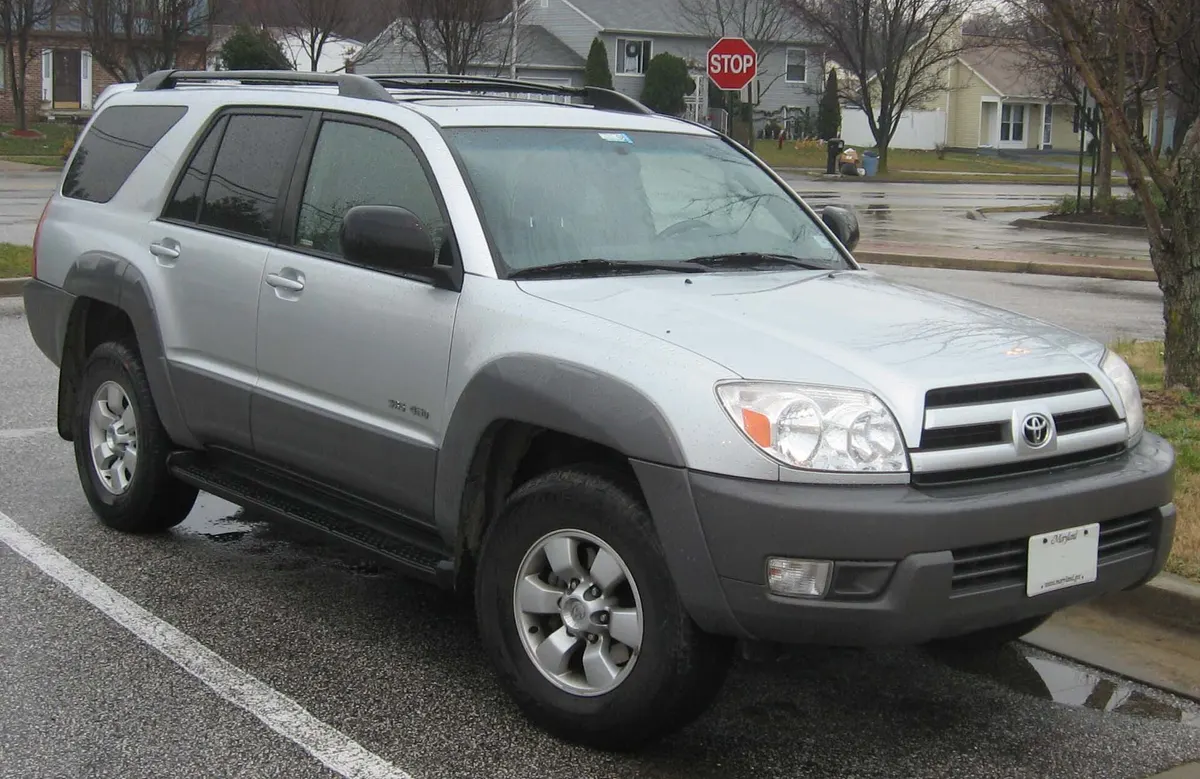
Engines
- 1GR-FE · 4.0L gasoline, 245 hp
- 2UZ-FE · 4.7L gasoline, 235 hp
- 2UZ-FE VVT-i · 4.7L gasoline, 270 hp
Transmissions
- A340F · automatic, 4-speed
- A750E/A750F · automatic, 5-speed
Drivetrain
RWD / 4WD
Body
suv
Trims
SR5, Sport Edition, Limited
Toyota 4Runner part-number cross-reference
Start from the OEM number, then pick the brand you trust. Verified equivalents for the Toyota 4Runner (2003–2009).
Part links go to Amazon, and to eBay where Amazon does not stock the part. Affiliate links, so we may earn a commission if you buy. Your price is unchanged, and a commission never changes a verdict.
Oil filter
Fram
Extra Guard; shorter than the tall YZZD3 dealer filter but same thread/gasket class per cross-reference listing
Compare Fram oil filterVerified via: ToyotaPartsDeal, 4Runner oil filter catalog (2003-2009: 90915-20004, replaced by 90915-YZZD3), Toyota-4Runner.org: correct oil filter part number for the V6 (YZZD3 confirmed for V6 and V8), oilfilter-crossreference.com: Toyota 90915-20004 alternatives, oilfilter-crossreference.com: Toyota 90915-YZZD3 alternatives
Engine air filter
Verified via: Toyota Parts & Service official air filter application chart (2023 FMPC): 2003-2009 GRN21# V6 1GRFE = 17801-0P010; UZN21# V8 = 17801-50040, airfilter-crossreference.com: Toyota 17801-0P010 alternatives, Frontier Toyota (dealer): Genuine 4.0L V6 engine air filter 17801-0P010, 4Runner/FJ Cruiser/Tacoma/Tundra
Cabin air filter
Verified via: Toyota Parts & Service official cabin air filter chart (2022 FMPC): 2003-2009 4Runner = 87139-47010-83 / YZZ81 / YZZ96, ToyotaPartsDeal, 4Runner cabin air filter catalog (2003-2009: 87139-47010), FinditParts: FRAM CF10285 cross reference (lists Toyota 87139-47010, Wix, Purolator, K&N, Bosch)
Should I buy a 2003–2009 Toyota 4Runner?
Buy it, but crawl under it first. Mechanically, the 4th-gen 4Runner is about as good as used SUVs get: the 4.7L V8 and 4.0L V6 both routinely pass 250,000–300,000 miles, and complaint counts drop off a cliff after 2005. The deal-breaker is frame rust. The 2003–2005 trucks rust worst, owners filed a class action, and NHTSA declined to open an investigation, so unlike Tacoma owners, 4Runner owners got no frame buyback or replacement program. A clean-frame southern truck from 2007–2009 is a near-bulletproof buy; a rust-belt 2003–2005 needs a lift inspection before you even discuss price. On V8s, check whether the secondary air injection system has already failed or been addressed. The dealer fix runs into the thousands.
Best years
2008, 2009, 2007
Years to avoid
2003–2005 (worst frame rust, cracked dashboards, highest complaint counts), Any year with an unrepaired rusty frame, regardless of mileage
Pre-Purchase Checklist for Toyota 4Runner
- ☐Put it on a lift (or get on the ground with a flashlight and a screwdriver) and probe the frame rails, crossmembers, and body mounts. Surface rust is normal; flaking, scaling, or metal you can dent with a screwdriver is a walk-away.
- ☐On 2005–2009 V8s, check for a check-engine light with codes P0418, P1445, or P2445. That's the secondary air injection failure. Ask if a bypass kit was installed (common) and confirm it passes emissions in your state.
- ☐Cold-start the engine and listen for a ticking that fades as it warms up. That's the classic cracked exhaust manifold symptom on both engines.
- ☐On Sport Editions, look for oil weeping at the shocks and the X-REAS hydraulic lines; a leaking system means replacing or deleting the whole setup.
- ☐Test firm, consistent brake pedal feel and watch for ABS/VSC warning lights. Master cylinder/booster assembly failures show up in complaint data and are expensive.
- ☐Inspect the dashboard for cracks (2003–2005): Toyota's warranty program for it expired in 2017, so it's your cost now.
- ☐On V8s, get proof of a timing belt and water pump service within the last 90,000 miles.
- ☐Verify the open recalls are done by VIN, including the side curtain airbag module (16V-065) and floor-mat pedal entrapment (11V-113) campaigns.
Common Toyota 4Runner problems & repair costs
Frame rust / structural corrosion
$500–$6,000Symptoms: Heavy scale and flaking on the frame rails and crossmembers, perforation you can push a screwdriver through, rusted-out body and suspension mounts. CarComplaints owner reports average roughly $1,400–$2,000 in rust repairs on 2003 and 2005 trucks. In the worst cases the truck fails safety inspection.
Fix: Caught early: wire-wheel, rust converter, and an annual oil-based undercoating (Fluid Film / Woolwax) keep a solid frame alive indefinitely. Caught late: plating or welding repair sections runs into the thousands, and unlike the Tacoma there is no Toyota frame-replacement program. A 2018 class action and a NHTSA defect petition (denied 2022) both failed to produce one. A truly perforated frame usually totals the truck economically.
Sources: CarComplaints news: 4Runner rusted-frame defect petition denied (NHTSA), Top Class Actions: 4Runner excessive rust class action, Toyota-4Runner.org: frame rust class action thread
Secondary air injection pump/valve failure (V8)
$300–$3,500Symptoms: Check-engine light with codes P0418, P1445, P2440/P2445; sometimes a loud vacuum-cleaner whir at cold start, or the engine going into limp mode. Root cause is the air pump ingesting moisture and debris, which then sticks the switching valves.
Fix: Dealer quotes for replacing the pump and valves (buried under the intake) commonly run $3,000–$4,000. Most owners install an electronic bypass kit (~$250–$400 plus install) instead. Check your state's emissions rules first. Toyota extended the warranty for this exact system on Tundra and Sequoia, but never for the 4Runner, so owners carry the cost.
Sources: Toyota-4Runner.org: 'Secondary Air Injection Pump Failure on V8s! Important!', CarComplaints: 2005 4Runner air injection pump failure, Go-Parts: P1445 on 2005–2009 4Runner (SAI valve stuck closed)
Cracked / sticky-melting dashboard
$150–$1,800Symptoms: Long cracks spreading across the dash top, or a shiny, sticky, melting-looking surface, worst in hot, sunny climates. Cosmetic, but it kills resale and there's a debated airbag-deployment concern in owner complaints.
Fix: Toyota's ZE6 warranty enhancement replaced 2003–2005 4Runner dashboards free (primary coverage ran through May 31, 2017). That window is closed. Today the honest options are a fitted dash cap or carpet cover ($50–$200 installed yourself) or a full dash replacement at $1,200–$1,800 with used or aftermarket parts.
Sources: Toyota Warranty Enhancement Program ZE6 (via NHTSA TSB archive), CarComplaints: 2004 4Runner cracked dashboard (33 complaints)
Cracked exhaust manifolds (cold-start tick)
$400–$2,500Symptoms: A ticking or chuffing noise from the engine bay that's loudest on cold start, speeds up with RPM, and quiets or disappears as the engine warms and the crack closes up. On the V6, a lazy P0420/P0430 can follow because the catalysts are built into the manifolds.
Fix: Replace the cracked manifold. On the V8, quality aftermarket manifolds solve it for roughly $400–$900 per side installed. On the V6, the integrated catalytic converters make OEM replacements expensive, at $1,000–$2,500 per bank at an independent shop. Plenty of owners live with the tick for years; it rarely strands anyone, but it can eventually cost you an emissions test.
Sources: Canadian Gearhead: fixing cracked exhaust manifolds on the V8 4Runner, Toyota-4Runner.org: V6 exhaust manifold leak discussion
Brake master cylinder / booster assembly failure
$1,200–$3,500Symptoms: ABS, VSC, and brake warning lights with an alarm; a hard or sinking pedal; owners report sudden loss of assist at speed. NHTSA logs 17 hydraulic-brake complaints on the 2004 alone, with dealer repair quotes of $3,100–$4,500 for the booster/master cylinder assembly.
Fix: Replace the brake booster pump/accumulator and master cylinder assembly. On these trucks it's an integrated (and expensive) unit. Independent shops and quality reman assemblies bring it well under the dealer quote. Never ignore the warning-light-plus-beeping stage; that's the system telling you assist is on the way out. No recall was ever issued.
Sources: CarComplaints: 2004 4Runner hydraulic brake complaints (NHTSA data), CarProblemZoo: 4Runner brake master cylinder problem reports
X-REAS suspension leaks (Sport Edition)
$800–$3,500Symptoms: Oil film or drips on the shocks or the crossed hydraulic lines, a floaty or clunky ride, one corner sitting low. X-REAS links diagonally opposite shocks with hydraulic lines and a center valve, so one leak degrades the whole system.
Fix: Two roads: replace with OEM X-REAS components (shocks alone run ~$1,500, plus roughly $1,000 more if lines/valves are needed, easily $3,500+ all-in), or do what most owners do and delete the system entirely, installing four quality conventional shocks for $800–$1,500 installed. The delete rides fine and ends the problem permanently.
Sources: 4Runners.com: X-REAS replacement cost thread, Shock Warehouse: how Toyota X-REAS works (and replacement options)
Away from the frame issue, a 4th-gen 4Runner is cheap to own for what it is: both engines are under-stressed, parts are plentiful, and most spend is ordinary wear on brakes, fluids, suspension bushings, and tires. Budget items specific to this truck: the V8's timing belt/water pump every ~90k miles ($600–$1,100), an annual undercoating if you're anywhere near road salt ($150–$250, the best money you'll spend), a possible exhaust manifold, and on V8s a one-time secondary air injection reckoning. Fuel is the real ownership tax. Expect 15–19 mpg.
Cost calculator
What will this Toyota 4Runner cost you by a given mileage?
Drag to a mileage. We total the documented problems whose typical onset falls at or before it. The same cost ranges listed above, nothing new invented.
$0 estimated repair range
Have a repair quote for this Toyota 4Runner?
Audit against OEM book times, uncover duplicate pad and rotor labor, and verify parts markups.
How to fix common Toyota 4Runner problems (DIY)
Frame rust inspection + oil-based undercoating
Tools: Jack stands or ramps, Wire brush / drill with wire wheel, Flashlight and a flathead screwdriver (probe), Fluid Film or Woolwax aerosol cans with extension wand
- Get the truck safely in the air and probe every frame rail, crossmember, and body mount with the screwdriver. Solid metal shrugs it off; rot flakes or punctures.
- Wire-brush loose scale down to sound metal and vacuum or blow out debris, especially inside the boxed rear rails.
- Treat any bare or surface-rusted metal with a rust converter and let it cure.
- Fog the frame with Fluid Film or Woolwax using the extension wand, inside the rails through the factory holes, not just the outside.
- Recheck and re-fog once a year, ideally each fall before salt season.
Parts
- Fluid Film rust inhibitor (aerosol, with wand) · Amazon $40–$70 (3–4 cans)
- Rust converter spray · Amazon $15–$25
X-REAS delete (convert to conventional shocks)
Tools: Floor jack + jack stands, Socket set + breaker bar, Penetrating oil (rusty hardware is guaranteed), Spring compressor for the front coilovers (or buy assembled units)
- Support the truck on stands and remove a wheel at a time, starting at the rear.
- Disconnect and remove the X-REAS hydraulic lines and center valve. Have a drain pan ready for the fluid.
- Unbolt each X-REAS shock and install the conventional replacement (front coilovers are easiest as pre-assembled units).
- Torque all mounts to spec with the suspension loaded at ride height.
- Cap or remove the line brackets, then test drive and get an alignment.
Parts
- Front + rear shock set (4th-gen 4Runner, X-REAS delete) · Amazon $250–$600
Engine & cabin air filter change
Tools: None (glovebox clips by hand)
- Unclip the airbox lid in the engine bay, swap in the new panel filter, and re-clip.
- Open the glovebox and squeeze the sides to drop it past its stops.
- Slide out the cabin filter tray, insert the new filter with the airflow arrow pointing the right way, and reassemble.
Parts
- Engine air filter (2003–2009 4Runner) · Amazon $12–$25
- Cabin air filter (2003–2009 4Runner) · Amazon $10–$18
Some parts links are affiliate links. We may earn a commission at no cost to you. We only list parts that fit this generation.
The short version
The 2003–2009 4Runner is the truck people mean when they say “Toyotas run forever.” The 4.7-liter V8 and 4.0-liter V6 are two of the most durable engines of the era, and complaint data falls off a cliff after 2005. The 2009 model logged just 3 complaints on CarComplaints against roughly 100 per year for 2003–2005.
The generation’s real enemy is rust. Frames on 2003–2005 trucks (and salt-state trucks through 2009) can corrode until they’re structurally compromised. Owners sued, and a federal defect petition was filed, but the 4Runner was excluded from Toyota’s Tacoma-era frame settlements, the class action produced no program, and NHTSA denied the petition in 2022. Nobody is coming to fix a rusty 4Runner frame except you.
What that means when you’re shopping
Frame first, everything else second. Get under the truck with a flashlight and a screwdriver, or pay a shop for an hour on a lift. Surface rust is normal on a 15–20-year-old body-on-frame SUV; scaling, flaking, or metal that gives under a screwdriver is a hard pass at any price. A clean southern frame is worth paying a premium for.
Pick your engine problem. The V8 (2005–2009) carries the secondary air injection failure. Dealer quotes run $3,000+, most owners fit a bypass kit, and Toyota extended the warranty for Tundra and Sequoia but never the 4Runner. The V6’s signature flaw is cracked exhaust manifolds with built-in catalysts, a cold-start tick that gets expensive if it trips the catalyst code. Neither issue kills the truck; both belong in your price negotiation.
Sport Edition = X-REAS check. The cross-linked hydraulic shocks ride nicely until they leak; then the honest fix is a full delete with conventional shocks.
Everything else is standard old-Toyota fare: a cracked dash on the early years (the free-replacement program expired in 2017), an expensive brake booster/master assembly if the warning lights start beeping, and normal wear items.
How this file is built: failure modes and cost ranges are compiled from NHTSA complaint and recall data, Toyota’s own warranty-enhancement documents, class-action records, and owner-forum reporting, then sanity-checked against shop-floor experience. Cost figures are independent-shop estimates and vary by region. Spot something off? Tell us.
Viral car myths, checked against this car
- Mostly False
Does a "$3 liquid" really kill car rust permanently? The phosphoric-acid reality.
The $3 liquid is almost certainly phosphoric acid (sold as Ospho or Naval Jelly). It converts surface rust to iron phosphate. It does not kill rust 'permanently,' does not restore perforated steel, and was never buried by anyone. It has been on hardware store shelves continuously since the 1940s.
Frequently asked questions
Which 4th-gen 4Runner years should I avoid?
2003–2005. Those years have the worst frame rust, the cracked-dashboard problem, and the highest complaint counts (roughly 90–105 per year on CarComplaints vs. 3–35 for 2006–2009). A rust-free 2003–2005 from a dry state can still be a fine truck, but 2007–2009 is the safer default, and 2008–2009 are the cleanest of the generation.
Will Toyota fix a rusted 4Runner frame like they did for Tacomas?
No. The Tacoma/Tundra/Sequoia frame settlements excluded the 4Runner. Owners filed a separate class action in 2018, and a petition asking NHTSA to investigate 2002–2006 4Runner frame corrosion was denied in 2022. There is no buyback and no frame-replacement program. Frame condition is entirely your risk, which is why you inspect before buying.
Should I buy the V6 or the V8?
Both are excellent. The 4.7L V8 is smoother, tows better (7,000+ lbs), and has full-time 4WD, but carries the secondary air injection risk (2005–2009) and a timing belt service. The 4.0L V6 is simpler and slightly cheaper to run, with cracked exhaust manifolds as its main quirk. Condition and frame beat engine choice every time.
How many miles will a 4th-gen 4Runner last?
300,000 miles is realistic for either engine with routine maintenance. These drivetrains are among the most durable Toyota ever built. In practice, rust kills far more 4th-gen 4Runners than mechanical failure does. A southern truck with maintenance records is effectively a lifetime vehicle.
What is X-REAS and is it a problem?
X-REAS is a hydraulic system on Sport Editions that cross-links diagonally opposite shocks to reduce body roll. It works well until it leaks, usually 90k–150k miles, and then repair means replacing much of the interconnected system ($3,500+ OEM). Most owners simply delete it and fit four conventional shocks for $800–$1,500, which is a permanent, good-riding fix.
Every Toyota 4Runner generation
The full case file run, beyond the generation before and after this one.
Cross-shopped rivals
Files on what buyers weigh against the Toyota 4Runner of this era.