Case file · TOYOTA-TACOMA-2005-2015 · 2nd gen (N220/N240 (GRN/TRN))
Toyota Tacoma 2005–2015Common problems, reliability & repair costs
The 2nd-gen Tacoma is the reason Tacomas hold their value like nothing else: overbuilt drivetrain, near-legendary engines, and a body that shrugs off abuse. The catch is underneath: 2005–2010 trucks were part of a massive frame-rust settlement, and 2005–2011 trucks had a leaf-spring recall. Buy a rust-free Southern/Western truck with documented recall work and it's close to immortal; buy a rotted Rust Belt one and the frame can total an otherwise-perfect truck.
2012, 2013, 2014
Any rust-belt 2005–2010 truck with an unaddressed frame (ver +1 more
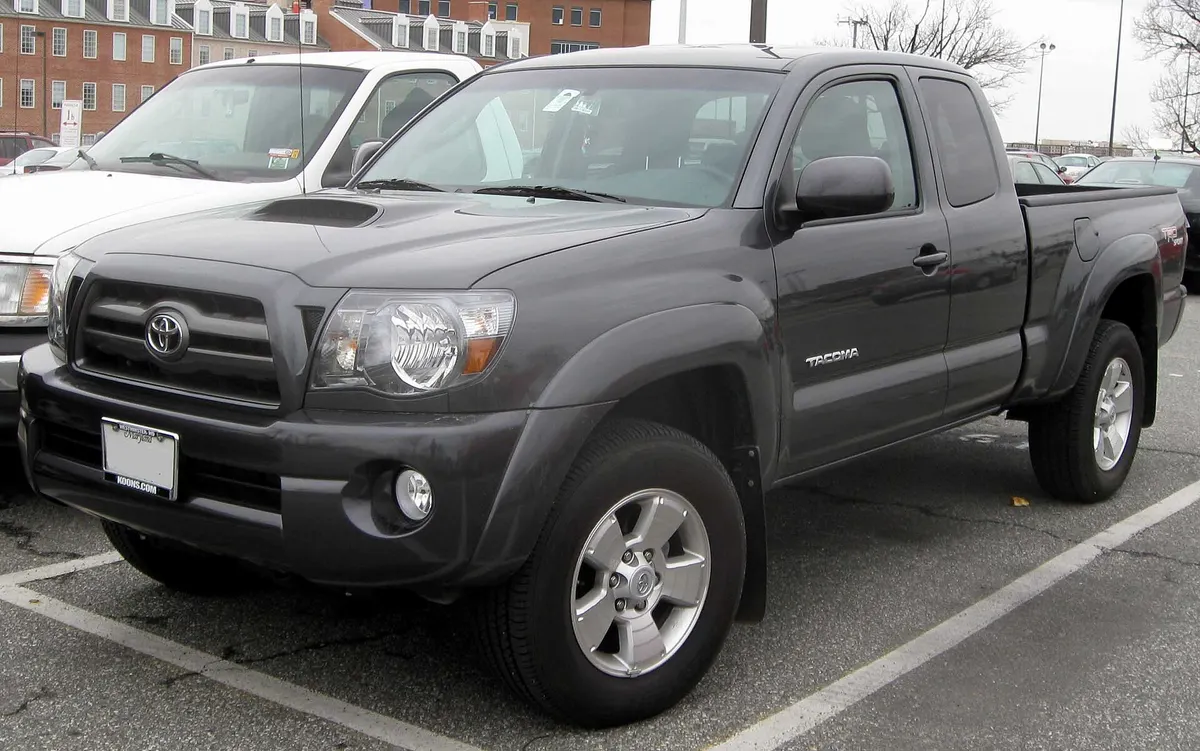
Engines
- 2TR-FE · 2.7L gasoline, 159 hp
- 1GR-FE · 4.0L gasoline, 236 hp
Transmissions
- automatic , 5-speed
- automatic , 4-speed
- manual , 5-speed
- manual , 6-speed
Drivetrain
RWD / 4WD
Body
Access Cab, Double Cab, Regular Cab
Trims
Base, PreRunner, SR5, TRD Sport, TRD Off-Road, X-Runner, TRD T|X Pro
Toyota Tacoma part-number cross-reference
Start from the OEM number, then pick the brand you trust. Verified equivalents for the Toyota Tacoma (2005–2015).
Part links go to Amazon, and to eBay where Amazon does not stock the part. Affiliate links, so we may earn a commission if you buy. Your price is unchanged, and a commission never changes a verdict.
Engine oil filter (spin-on)
Wix
Listed for both 2.7L and 4.0L; 51348XP extreme-duty version available
Look up Wix engine oil filterFram
Synthetic Endurance, per RockAuto for both engines; Extra Guard PH3614 crosses to the 2.7L's 90915-YZZG1
Check Fram engine oil filterVerified via: Toyota Genuine Oil Filters application chart (2005-2015 Tacoma: 1GR-FE = 90915-YZZD3, 2TR-FE = 90915-YZZG1/-YZZD1), RockAuto: 2010 Tacoma 4.0L V6 oil filters, RockAuto: 2010 Tacoma 2.7L L4 oil filters, Oil filter cross reference: Toyota 90915-YZZG1 (2.7L filter crosses)
Engine air filter (4.0L 1GR-FE V6)
Verified via: ToyotaPartsDeal: Tacoma OEM air filters (17801-0P010, 2005-2016), RockAuto: 2010 Tacoma 4.0L V6 air filters, Air filter cross reference: Toyota 17801-0P010 (fits Tacoma V6 2005-2015), Air filter cross reference: Wix 46888
Engine air filter (2.7L 2TR-FE)
Verified via: RockAuto: 2010 Tacoma 2.7L L4 air filters, Air filter cross reference: Wix 49155 (crosses to Toyota 17801-0C040), ToyotaPartsDeal: Tacoma OEM air filters (17801-0C040)
Cabin air filter
Purolator
TC35644 particulate and PBC35644 BOSS variants also listed on RockAuto
Compare Purolator cabin air filterVerified via: Toyota cabin air filter chart (Tacoma 2006-, 87139-YZZ09), ToyotaPartsDeal, RockAuto: 2010 Tacoma cabin air filters, airfilter-crossreference.com
Should I buy a 2005–2015 Toyota Tacoma?
Buy it, and inspect the frame first, every time. The 2nd-gen Tacoma's engines and transmissions are about as bulletproof as anything on the used market, and clean examples routinely run past 250,000 miles. The one thing that can total an otherwise-immortal truck is frame rot, which is why 2005–2010 trucks were part of a multi-billion-dollar frame-corrosion settlement. A Southern or Western truck with no underbody rust, or any truck with a documented warranty frame replacement, is a genuinely excellent buy. A rusty Rust Belt truck, even a clean-looking one up top, can need a frame, and that's often more than the truck is worth. The 4.0L V6 is the engine to have.
Best years
2012, 2013, 2014, 2015
Years to avoid
Any rust-belt 2005–2010 truck with an unaddressed frame (verify the recall/settlement frame inspection), 2005–2011 trucks with no record of the leaf-spring recall completed
Pre-Purchase Checklist for Toyota Tacoma
- ☐Crawl under it: inspect the frame rails, rear C-channel near the leaf-spring mounts, and around the catalytic converters for scaling, flaking, or perforation. Poke suspect spots. A screwdriver should not go through.
- ☐Run the VIN through Toyota / a dealer to confirm whether the frame was inspected or replaced under the corrosion settlement, and whether the leaf-spring recall was performed.
- ☐On 2005–2011 trucks, check the rear leaf springs for cracks or a broken leaf; ask for proof the recall was completed.
- ☐On a 5-speed automatic, drive it 30–45 mph and feel for a torque-converter shudder on light acceleration. It's common and fixable, but use it to negotiate.
- ☐Cold-start the engine and listen: timing-chain rattle on the 2.7L or persistent ticking on the V6 is worth investigating.
- ☐Check for a check-engine light; on the V6, secondary-air-injection codes (P2440-series) are a known nuisance.
- ☐Look for oil leaks at the front cover/timing area and confirm the water pump on a high-mile V6 has been done (or budget for it).
- ☐Inspect tailgate, bed, and rocker panels for rust on Northern trucks, and confirm 4WD actually engages on a test loop.
Common Toyota Tacoma problems & repair costs
Frame corrosion / rust-through
$0–$15,000Symptoms: Heavy scaling and flaking on the frame rails, rot in the rear C-channel near the leaf-spring mounts and around the cats, perforation you can push a screwdriver through. In severe cases the frame can crack.
Fix: Toyota settled a class-action covering 2005–2010 Tacomas requiring free frame inspection for 12 years from first sale; a frame with perforation over the threshold was replaced free of charge. Outside that coverage, a full frame replacement is a five-figure job that often exceeds the truck's value, which is why frame condition is the single most important thing to verify before buying.
Sources: Cherish Your Car: Tacoma frame recall summary, BHO Law: Toyota $3.4B rusty frame settlement
Rear leaf-spring fracture (recall)
$0–$600Symptoms: Cracked or broken rear leaf, clunking over bumps, sagging rear. A fractured leaf could shift and contact surrounding parts, including the fuel tank.
Fix: Toyota issued a safety recall (DIR filed Sept 2014) on roughly 690,000 2005–2011 Tacoma/PreRunner trucks. Dealers inspect the rear suspension and replace defective leaf springs (and any parts damaged by a broken leaf) free of charge. Confirm the recall was performed; out of pocket, a rear leaf-spring job is modest.
Sources: Equipment World: Toyota recalls 690,000 Tacomas for leaf springs, Tacoma World: leaf spring recall thread
Automatic transmission torque-converter shudder (5-speed automatic)
Symptoms: A shudder or vibration felt on light acceleration, commonly around 32–42 mph during the 2-3 shift, from the torque-converter lockup clutch.
Fix: Start with a drain-and-fill with fresh Toyota WS fluid, since old or dirty fluid can cause it. If the shudder persists, the torque converter clutch is the repair, and that is the worst case.
Sources: Transmission Repair Cost Guide: Tacoma torque-converter shudder, Tacoma World: TSB for transmission shudder
V6 water-pump failure & high-mileage head-gasket weeping
$400–$1,800Symptoms: Coolant weeping or drips from the front of the engine, a wet water-pump weep hole, low coolant, or a faint coolant smell. The water pump is the V6's recognized weak point; head-gasket seepage tends to show up at high mileage.
Fix: Water-pump replacement (accessory belt and related gaskets at the same time) is the common job. Head-gasket work is far less frequent and is the high end of the range. Neither is a chronic fleet-killer. The 1GR-FE is a durable engine when cooling-system maintenance is kept up.
Sources: MotorReviewer: 1GR-FE 4.0 V6 problems & reliability
2.7L oil leaks & timing-chain rattle
$200–$1,500Symptoms: Oil seepage at the timing cover and valve cover, occasional oil consumption, and a rattle at start-up or idle from a stretched timing chain or weak tensioner on neglected high-mile engines.
Fix: Reseal the leaking covers; address oil consumption with proper maintenance. A genuinely stretched chain plus tensioner/guides is the high end and is uncommon on well-maintained trucks. The 2TR-FE is otherwise a stout, simple engine.
Paint peeling / clear-coat failure
$500–$3,300Symptoms: Clear coat and paint peeling or flaking, especially on hood and roof of early trucks; cosmetic but spreads.
Fix: Repaint of affected panels. Largely a cosmetic/value issue rather than a mechanical one; factor it into price on early 2005s rather than treating it as a deal-breaker.
Mechanically this is one of the cheapest trucks to own per mile: the drivetrain is overbuilt, parts and know-how are everywhere, and the engines genuinely run to high mileage. Normal spend is wear-item stuff: brakes, tires, a V6 water pump, a clutch on manuals, fluids. The expensive risk lives underneath the truck, not in it: an un-inspected rotted frame on a Rust Belt 2005–2010 truck can be a five-figure problem that nothing else on the truck justifies. Buy clean (Southern/Western, or documented recall work) and the Tacoma's reputation for cheap, endless ownership holds up.
Cost calculator
What will this Toyota Tacoma cost you by a given mileage?
Drag to a mileage. We total the documented problems whose typical onset falls at or before it. The same cost ranges listed above, nothing new invented.
$0 estimated repair range
5-Year Maintenance Schedule & Cost to Own
Every scheduled service by mileage, fluid capacities, independent shop ranges, and parts cross-references.
Have a repair quote for this Toyota Tacoma?
Audit against OEM book times, uncover duplicate pad and rotor labor, and verify parts markups.
How to fix common Toyota Tacoma problems (DIY)
Replace the V6 water pump
Tools: Socket set + ratchet, Coolant drain pan, Serpentine belt tool, Torque wrench, Scraper for old gasket
- Drain the coolant and remove the serpentine belt, noting its routing.
- Remove the fan/fan shroud and any accessories blocking access to the pump.
- Unbolt the water pump, then clean the mating surface completely of old gasket material.
- Install the new pump with a fresh gasket/O-ring, torque the bolts in sequence to spec.
- Reinstall the belt and fan, refill with the correct coolant, and burp the system.
- Run to temperature and check for leaks and proper fan/cooling operation.
Parts
- Water pump (2nd-gen Tacoma 4.0L V6) · Amazon $45–$110
- Toyota Super Long Life Coolant (SLLC) · Amazon $20–$35
Automatic transmission drain-and-fill (shudder fix start, 5-speed automatic only)
Tools: Socket set, Fluid pump/funnel, Drain pan, Torque wrench
- 5-speed automatic only. The 4-speed takes Toyota ATF Type T-IV (2005 manual p394), not WS.
- Warm the transmission to operating temperature, then locate the drain and overflow/fill plugs.
- Remove the drain plug and drain the old WS fluid, measuring what comes out.
- Reinstall the drain plug and add the same measured amount of fresh Toyota WS fluid through the fill port.
- Bring the fluid to the correct check temperature per the procedure, then crack the overflow plug to set the exact level.
- Repeat the drain-and-fill if needed to refresh more fluid, then road-test for shudder.
Engine + cabin air filter change
Tools: Screwdriver (airbox clips if needed)
- Unclip the airbox lid, lift out the old engine panel filter, and drop in the new one.
- Cabin filter (2006-2015; a 2005 may have none): open the glovebox, release the side stops to lower it, and pull the cabin filter cover.
- Slide out the old cabin filter and insert the new one with the airflow arrow pointing down, then reassemble.
Parts
- Engine air filter (4.0L V6) · Amazon $12–$22
- Engine air filter (2.7L four-cylinder) · Amazon $12–$22
- Cabin air filter (2006-2015; a 2005 may have none) · Amazon $10–$18
Some parts links are affiliate links. We may earn a commission at no cost to you. We only list parts that fit this generation.
The short version
The 2005–2015 Toyota Tacoma is one of the best used trucks you can buy, and one of the most misunderstood. The engines (the 2.7L four and especially the 4.0L V6) and the transmissions behind them are about as durable as anything on the road. Clean trucks regularly pass 250,000 miles, which is why a used Tacoma costs more than its competitors of the same age.
The problem isn’t the truck. It’s the frame underneath it.
2005–2010 Tacomas were caught up in a massive frame-corrosion class action. Toyota agreed to inspect frames for 12 years from first sale and replace any that rotted past a set threshold, free of charge. Separately, about 690,000 2005–2011 trucks were recalled for rear leaf springs that could fracture and, in a worst case, puncture the fuel tank.
What that means when you’re shopping
Where the truck spent its life matters more than the model year. A Southern or Western truck with a clean underbody is a fantastic buy at almost any 2nd-gen year. A salt-belt truck can look perfect up top and have a frame that’s quietly rotting around the rear leaf mounts and catalytic converters.
So crawl under it. Check the frame rails, the rear C-channel, and the area near the cats. Poke at any heavy scaling. A screwdriver should not go through metal. Run the VIN to see whether the frame was inspected or replaced under the settlement, and whether the leaf-spring recall was completed. A truck with a documented warranty frame is arguably safer than one that was never looked at.
Everything else is ordinary Tacoma stuff and none of it should scare you off: a torque-converter shudder around 32–42 mph on the 5-speed automatic that starts with a fluid service, a V6 water pump that’s a known wear item, minor oil seepage on the 2.7L, and peeling paint on some early 2005s. Get the 4.0L V6 if you can, confirm the recalls, and buy on rust.
How this file is built: failure modes and cost ranges are compiled from NHTSA recall data, the Toyota frame-corrosion settlement, owner reporting, and engine-specific technical sources, then sanity-checked against shop-floor experience. Cost figures are independent-shop estimates and vary by region. Spot something off? Tell us.
Viral car myths, checked against this car
- Mostly False
Does a "$3 liquid" really kill car rust permanently? The phosphoric-acid reality.
The $3 liquid is almost certainly phosphoric acid (sold as Ospho or Naval Jelly). It converts surface rust to iron phosphate. It does not kill rust 'permanently,' does not restore perforated steel, and was never buried by anyone. It has been on hardware store shelves continuously since the 1940s.
- Misleading
Is the "$2 liquid that stops any leak" really banned in 11 states?
Automotive stop-leak products are not banned in any US state. The products are real (Bar's Leaks, BlueDevil), they work in specific narrow situations, and they can permanently damage your cooling or oiling system if applied to the wrong leak.
- Dangerous
Is the "$2 liquid that destroys engine sludge forever" real? Our shop-floor verdict.
An aggressive solvent flush on a high-mileage engine is a textbook way to spin a bearing. The viral 'kitchen-cabinet flush' is folklore that real shops spend money cleaning up after.
Frequently asked questions
Which Toyota Tacoma years should I avoid?
There's no bad engine year. The issue is rust. Be most careful with 2005–2010 trucks in salt-belt states, because those were part of the frame-corrosion settlement; verify the frame was inspected or replaced before buying. A clean Southern or Western truck of any 2nd-gen year is a strong buy, and 2012–2015 trucks are past most of the early-run niggles.
Is the Tacoma frame rust covered by Toyota?
It was. Toyota settled a large class-action covering 2005–2010 Tacomas that required free frame inspection for 12 years from first sale and free frame replacement if corrosion exceeded the set threshold. Much of that coverage has now expired, which is exactly why frame condition has to be checked on any used 2nd-gen Tacoma. Out of coverage, a frame is a five-figure repair.
Was there a leaf-spring recall on the 2nd-gen Tacoma?
Yes. Toyota recalled roughly 690,000 2005–2011 Tacoma and PreRunner trucks because a rear leaf could fracture and, in the worst case, puncture the fuel tank. The fix, inspection and free replacement of defective springs, is done at a dealer. Confirm the recall was completed on any truck in that range.
Is the lower ball joint recall the same one people mention with Tacomas?
That's a different generation. The lower ball joint recall (NHTSA 05V225) covers 2001–2004 first-gen Tacomas, not the 2005–2015 second gen. If you see it referenced for a 2nd-gen truck, it doesn't apply. The recalls that matter on this generation are the frame-corrosion settlement and the 2005–2011 leaf-spring recall.
How many miles will a 2nd-gen Tacoma last?
The drivetrain routinely goes 250,000–300,000-plus miles with basic maintenance. It's a big part of why these trucks hold their value. The limiting factor on a high-mile Tacoma is almost always the body and frame, not the engine or transmission.
Every Toyota Tacoma generation
The full case file run, beyond the generation before and after this one.
Cross-shopped rivals
Files on what buyers weigh against the Toyota Tacoma of this era.