Case file · TOYOTA-TACOMA-2016-2023 · 3rd gen
Toyota Tacoma 2016–2023Common problems, reliability & repair costs
The 3rd-gen Tacoma holds its value like almost nothing else, and the truck itself mostly earns it. The frame, drivetrain, and 3.5L V6 go the distance. The catches: a 6-speed automatic that hunts and hesitates (mostly fixed by free software updates), a pile of first-year recalls on 2016–2017 trucks, peeling paint on white ones, and a plastic coolant pipe buried at the back of the V6 that gets expensive purely because of labor. Buy a 2020+ or a sorted early truck and it's a 250k-mile machine.
2020, 2021, 2022
2016–2017 (three recalls, worst transmission complaints, ear
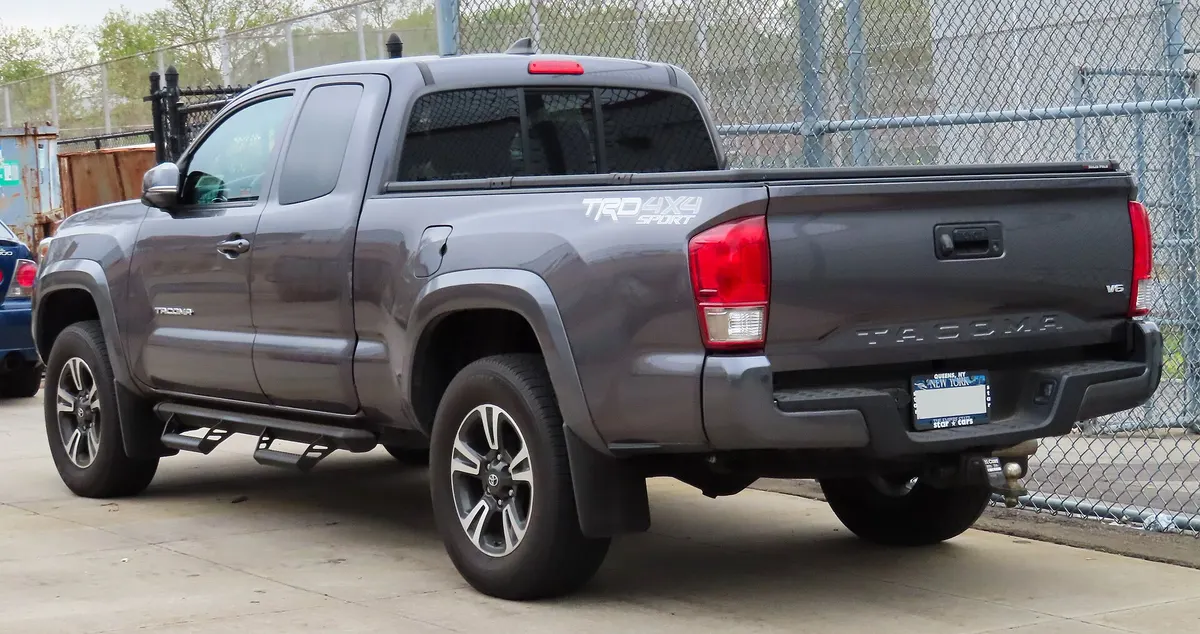
Engines
- 2GR-FKS · 3.5L gasoline, 278 hp
- 2TR-FE · 2.7L gasoline, 159 hp
Transmissions
- AC60E/AC60F · automatic, 6-speed
- manual , 6-speed
Drivetrain
RWD / 4WD
Body
Access Cab, Double Cab
Trims
SR, SR5, TRD Sport, TRD Off-Road, Limited, TRD Pro
Toyota Tacoma part-number cross-reference
Start from the OEM number, then pick the brand you trust. Verified equivalents for the Toyota Tacoma (2016–2023).
Part links go to Amazon, and to eBay where Amazon does not stock the part. Affiliate links, so we may earn a commission if you buy. Your price is unchanged, and a commission never changes a verdict.
Oil filter
Fram
Extra Guard cartridge; TG9972 is the Tough Guard version of the same element
Check Fram oil filterVerified via: ExtremeTerrain: Toyota 04152-YZZA1 (fits 2016-23 3.5L Tacoma), OilFilter-CrossReference: Toyota 04152-YZZA1 equivalents, Getopauto: 04152-YZZA1 cross-reference guide, Toyota autoparts: Genuine 04152-YZZA1 element
Engine air filter
Wix
Retailer fitment page lists 2016-2022 Tacoma (2023 not shown on that page)
Look up Wix engine air filterVerified via: PartsHawk: Wix WA10085 fitment (2016-2022 Tacoma), AirFilter-CrossReference: Toyota 17801-0P100 equivalents, Amazon: Genuine Toyota engine air filter 17801-0P100
Cabin air filter
Denso
Toyota's chart lists 87139-YZZ09 as the standard replacement for the factory-installed 88508-01010
Compare Denso cabin air filterVerified via: Toyota Cabin Air Filters chart 2022 (Tacoma 2006- : OE 88508-01010, replacement 87139-YZZ09), Sixity Auto: Denso 453-6058 (replaces 87139-YZZ09, 88508-01010, Wix 24871, Bosch P3752, Purolator C35644), Newparts: Denso 453-6058 Tacoma fitment
Spark plugs
Denso
Iridium; this is the OE plug in Denso retail packaging (Toyota's chart lists FK20HBR8 as the factory plug for 2016+ Tacoma V6)
Compare Denso spark plugsVerified via: Toyota Genuine Spark Plugs chart 2021 (Tacoma 2016- V6 2GR-FKS: FK20HBR8 / 90919-01263), SparkPlug-CrossReference: Denso FK20HBR8 (fits Tacoma; ref 90919-01263)
Front brake pads
Akebono
ProACT ceramic; retailer fitment: Tacoma with 4-piston caliper, 6-lug (listed 2005-2021 on fetched page)
Look up Akebono front brake padsPowerStop
Z23 Evolution Sport carbon-fiber ceramic; fetched fitment 2016+ Tacoma front
See PowerStop front brake padsVerified via: Toyota autoparts: front disc brake pad kit 04465-04090, PartsHawk: Akebono ACT976 fitment, Bumper To Bumper: Wagner QC976 fitment (2005-2023 Tacoma front), TheYotaGarage: PowerStop Z23-976 (2016-2023 Tacoma front)
Wiper blades
Bosch
22A listed for Tacoma front-left through 2023; 20A page shows Tacoma front-right rows for 2021-2024 (size matches all 2016-2023)
Find Bosch wiper bladesRain-X
Blade part numbers verified by length; matched to the 22"/20" sizes confirmed for this truck
Look up Rain-X wiper bladesVerified via: WiperHaus, 2016-2023 Tacoma set: 22"/20", OE 85222-04040 / 85212-0E050, AutoPadre: Tacoma wiper sizes 2016-2023 (22"/20"), PartCatalog: Bosch ICON 20A fitment (Tacoma front right), Amazon: Rain-X Latitude 5079279-1 (22"), Amazon: Rain-X Latitude 5079277-1 (20")
Serpentine belt
Gates
Micro-V; retailer fitment 2016-2020 Tacoma 3.5L V6, replaces Toyota 90916-A2037
See Gates serpentine beltBando
OE-profile designation; Bando number from the same interchange list
Find Bando serpentine beltVerified via: YotaShop: 90916-A2037 fan/alternator belt, Tacoma 3.5L 2GR-FKS 2015-2022 (7PK2120), Sixity Auto: Gates K070835 (replaces 90916-A2037, Dayco 5070835, Bando 7PK2120; fits 2016-2020 Tacoma 3.5L)
Battery
Factory size
Look up Factory size battery on AmazonInterstate
Flooded, 750 CCA; Interstate's fitment lookup confirms for 2018 Tacoma V6 3.5L (both engines)
Check Interstate batteryVerified via: Interstate Batteries: MTP-24F for 2018 Tacoma V6 3.5L (Group 24F, 750 CCA), ExtremeTerrain: Odyssey ODX-AGM24F (Group 24F, 840 CCA, 2016-2023 Tacoma)
Should I buy a 2016–2023 Toyota Tacoma?
Buy it, but buy the right year and pay attention to recall history. The bones of this truck are excellent, which is why used prices stay stubborn. The 2016–2017 trucks carry the generation's baggage: three separate safety recalls (rear differential leak, crank position sensor, plus the worst of the transmission-software complaints) and the highest complaint counts by far. A 2016–2017 with all recalls performed and the transmission reflash done is a fine truck at a discount; a 2020–2023 truck is the low-drama pick. On 2022–2023, confirm the rear-axle-nut recall inspection was done. Whatever the year, budget mentally for the rear coolant-pipe job on a high-mile V6 and walk away from any white truck with bubbling clear coat unless it's priced for a repaint.
Best years
2020, 2021, 2022, 2023
Years to avoid
2016–2017 (three recalls, worst transmission complaints, early paint problems, fine ONLY with documented fixes)
Pre-Purchase Checklist for Toyota Tacoma
- ☐Run the VIN at toyota.com/recall. On 2016–2017: confirm the rear differential leak recall (H0G) and crank position sensor recall (H0H) show completed. On 2022–2023: confirm the rear axle nut recall (24V-152) inspection was done.
- ☐Drive it at 35–45 mph on a slight grade with light throttle. Constant up-and-down gear hunting or a lurch when rolling into the throttle means the transmission software updates likely haven't been applied. A dealer can reflash it, but use it to negotiate.
- ☐Cold-start the V6 and look at the rear of the engine (top of the bellhousing area) for pink coolant residue or crusty dried coolant. The plastic water outlet/crossover pipe leak starts small and the fix is labor-heavy.
- ☐On white (Super White 040) trucks especially: check the roof, hood, and bed rails in direct sun for clear-coat bubbling, chalking, or peeling. A proper repaint runs into the thousands.
- ☐Crawl under the rear and check the differential carrier gasket area and axle ends for gear-oil wetness, and eyeball the leaf spring packs for missing silencer pads.
- ☐Bounce-test and listen: a dry squeak from the rear over driveways or speed bumps is the classic leaf-spring silencer-pad noise. Cheap to fix, useful to haggle with.
- ☐Check for rodent damage under the hood. Chewed harnesses show up often enough on these (soy-insulated wiring) that a five-minute look is worth it, because harness repairs get expensive.
Common Toyota Tacoma problems & repair costs
6-speed automatic gear hunting, hesitation, and delayed engagement
$0–$450Symptoms: Constant hunting between gears at 35–45 mph and highway speeds, sluggish or delayed downshifts, a lurch or hesitation rolling into the throttle from low speed, and clunky low-speed shifts. Transmission is the top complaint category on the 2016 (44 CarComplaints reports plus a much larger NHTSA drivetrain pile) and the most-reported 2017 problem.
Fix: This is shift programming, not broken hardware. Toyota issued TSB software updates (starting with TSB-0077-16, with later revisions) that recalibrate the shift logic. Dealers apply them free, even out of warranty, and 2019+ trucks mostly shipped with the updated calibration. Owner results range from transformed to merely improved. If shifting is still harsh after the reflash, a fluid exchange at an independent shop is the next cheap step before anyone talks about opening the transmission.
Sources: Tacoma World: transmission TSB software fixed shifting, CarComplaints: 2016 Tacoma transmission complaints
Rear differential oil leak (safety recall, 2016–2017)
$250–$3,500Symptoms: Gear oil weeping from the rear differential carrier gasket; whining or humming from the rear as fluid drops; in the worst case the differential can be damaged or seize, which is why NHTSA recall 17V-285 (Toyota recall H0G, ~228,000 trucks) was issued in April 2017.
Fix: Under the recall, dealers inspect for leaks, retorque or replace the carrier gasket and fasteners, and replace the whole differential carrier if it's already damaged, all free. Recall work doesn't expire, so an open recall on a used 2016–2017 is a free fix waiting at any Toyota dealer. Paying out of pocket on a leaker that was ignored: a gasket reseal runs a few hundred at an independent shop; a chewed-up carrier assembly runs into the thousands.
Sources: NHTSA: Safety Recall H0G technical instructions (17V-285), Safety Recall H0G: rear differential leak, 2016–2017 Tacoma
Crank position sensor failure / stalling (safety recall, 2016–2017 V6)
$0–$400Symptoms: Check-engine light, rough running, misfires, and in some cases the engine stalls, including at highway speed. Root cause was excess anti-corrosion coating on the crankshaft timing rotor confusing the crank position sensor; NHTSA recall 17V-356 (Toyota recall H0H), announced June 2017.
Fix: Dealers replace the crank position sensors with a revised design free under the recall. Check the VIN and have it done if it's open. Outside the recalled population, a failed crank sensor on this engine is an ordinary repair at an independent shop: modest part cost plus an hour or two of labor.
Sources: NHTSA: Safety Recall H0H technical instructions (17V-356), Safety Recall H0H: crankshaft position sensor, 2016–2017 Tacoma
Coolant leak from plastic rear water outlet / crossover pipe (3.5L V6)
$700–$2,200Symptoms: Slow coolant loss with drips or crusty pink residue at the rear of the engine, up against the firewall; sweet coolant smell after a drive. Toyota published a TSB for coolant leaks from the water outlet pipe at the rear of the 2GR-FKS. The part is cheap plastic; the location is the problem.
Fix: Replace the plastic water outlet/crossover assembly and gaskets. It's buried between the engine and firewall, so the bill is nearly all labor. Dealers have quoted around $2,000 and Toyota's own book time on the involved version of the job is steep; independent shops typically land lower. Don't ignore it: it's a slow leak until it isn't, and the V6 does not tolerate overheating.
Sources: NHTSA TSB: coolant leak from rear of engine, water outlet pipe (2GR-FKS), Tacoma World: 2GR-FKS coolant leak
Paint peeling / clear-coat failure (worst on Super White 040)
$1,500–$4,000Symptoms: Clear coat bubbling, chalking, and peeling in sheets: hood, roof, bed rails, and tops of doors first. Body/paint is the worst-rated problem category for the Tacoma on CarComplaints, and 2017 paint repairs there average about $3,600.
Fix: There's no cheap fix for failed adhesion. Affected panels need to be stripped and resprayed, and spot fixes tend to peel again at the edges. Toyota ran a customer support program covering repaints for peeling Super White paint on eligible vehicles; have a dealer run the VIN before paying for anything. On other colors, it's a negotiation item, not a warranty item.
Sources: Tacoma World: 3rd gen Super White peeling paint, CarComplaints: 2017 Tacoma (paint problems)
Squeaky rear leaf springs
$50–$350Symptoms: A dry squeak or squeal from the rear end over bumps, driveways, and speed bumps, embarrassing on a nearly new truck, harmless mechanically. Caused by the leaves rubbing where the silencer pads between them wear or shift.
Fix: Toyota's TSB T-SB-0273-17 procedure: unload the springs, clean the grime out from between the leaves (no grease, since it attracts dirt and makes it worse), and replace the silencer pads. A very DIY-able job; a shop will do it in an hour or two. Aftermarket pad kits and dry-film lubes are the long-term cure if it comes back.
Sources: Toyota TSB T-SB-0273-17: rear suspension silencer pad squeak (NHTSA copy), Tacoma World: leaf spring squeak solved
Day to day, a 3rd-gen Tacoma is cheap to own: simple maintenance, huge parts and knowledge base, strong resale that offsets almost any repair you'll ever do. The realistic budget items are the rear coolant-pipe job on a V6 past 80k (labor-heavy), tires and brakes like any midsize truck, and, on early trucks, whatever recall and TSB work the previous owner skipped, most of which a Toyota dealer still does free. Paint is the one problem where the bill can genuinely sting. Rodents like the soy-insulated wiring, so garage parking or deterrents are cheaper than harness repairs that run well into four figures.
Cost calculator
What will this Toyota Tacoma cost you by a given mileage?
Drag to a mileage. We total the documented problems whose typical onset falls at or before it. The same cost ranges listed above, nothing new invented.
$0 estimated repair range
5-Year Maintenance Schedule & Cost to Own
Every scheduled service by mileage, fluid capacities, independent shop ranges, and parts cross-references.
Have a repair quote for this Toyota Tacoma?
Audit against OEM book times, uncover duplicate pad and rotor labor, and verify parts markups.
How to fix common Toyota Tacoma problems (DIY)
Rear differential fluid change + leak inspection
Tools: 24mm socket or wrench (drain/fill plugs), Fluid pump or squeeze bottle, Drain pan, Torque wrench
- With the truck level (ramps or on the ground with clearance), clean around both plugs and remove the fill plug FIRST. If it won't open, you don't want an already-drained diff.
- Remove the drain plug and drain the old gear oil; inspect it for glitter or a burnt smell, and inspect the carrier gasket area for the seep this generation is known for.
- Reinstall the drain plug with a new gasket and torque it.
- Pump in 75W-85 gear oil (or what your door-jamb/manual specifies) until it just runs back out of the fill hole.
- Reinstall the fill plug with a new gasket, torque it, and recheck for seepage after a week of driving.
Parts
- 75W-85 synthetic gear oil (approx. 3 qts) · Amazon $30–$55
- Drain/fill plug gaskets (Toyota 12157-10010 style crush washers) · Amazon $5–$12
Fix squeaky leaf springs (clean + replace silencer pads)
Tools: Floor jack + jack stands, Pry bar or large flathead, Brake cleaner + rags, Basic socket set
- Jack the rear of the frame and support it on stands so the axle droops and the leaf packs unload and separate slightly.
- Clean between the leaves with brake cleaner and a dry rag. Get the grit out; do NOT grease the leaves (Toyota's own TSB warns it attracts dirt and brings the squeak back).
- Pry the leaf tips apart gently and swap in new silencer pads where the old ones are worn, shifted, or missing.
- Lower the truck, bounce the rear a few times, and confirm the squeak is gone over a driveway lip or speed bump.
Parts
- Leaf spring silencer pad kit (Tacoma) · Amazon $15–$40
- Dry-film spray lube (Boeshield T-9 or similar, optional) · Amazon $15–$25
Cabin & engine air filter change
Tools: None (hands only; maybe a small flathead)
- Open the glovebox, squeeze the sides to drop it past its stops, and pull the cabin filter cover.
- Slide out the old cabin filter and insert the new one with the airflow arrow pointing the right way.
- Unclip the engine airbox lid, swap the panel filter, and re-clip. Check the box for acorns and shredded insulation while you're in there (rodents love these trucks).
Parts
- Engine air filter (2016–2023 Tacoma) · Amazon $12–$25
- Cabin air filter (2016–2023 Tacoma) · Amazon $10–$20
Some parts links are affiliate links. We may earn a commission at no cost to you. We only list parts that fit this generation.
The short version
The 2016–2023 Tacoma is the truck that made “Toyota tax” a phrase. The frame, axles, and both engines are genuinely long-haul hardware, and resale value proves the market knows it. But this generation launched rough: 2016–2017 trucks got a rear-differential-leak recall, a crank-position-sensor stalling recall, and a 6-speed automatic whose shift programming annoyed enough owners that transmission is the top complaint category on the 2016.
Here’s the good news buried in that list: almost all of it is free to fix. Recall work never expires, and the transmission cure is a dealer software reflash, no parts, no bill.
What that means when you’re shopping
Run every VIN at toyota.com/recall before you drive it. On a 2016–2017, you want the differential recall (H0G) and crank sensor recall (H0H) showing complete, and you want the transmission to hold a gear at 40 mph without hunting. If it won’t, the reflash probably hasn’t been done. On a 2022–2023, confirm the rear-axle-nut recall (24V-152) inspection happened. 2020–2023 trucks are the low-drama pick, which the market already prices in.
Two condition checks matter more than anything on the window sticker: coolant residue at the back of the V6 (the plastic crossover pipe: cheap part, brutal labor location, roughly $700–$2,200 at an independent shop) and the paint. White trucks especially can shed clear coat off the hood, roof, and bed rails, and a proper repaint runs thousands. Toyota covered some Super White repaints under a customer support program, and a dealer can check the VIN.
The “cracked block” thing, debunked
Forums will tell you the 3.5L V6 cracks blocks. The record says: individual engine failures exist. A Tacoma World thread has tracked a few dozen across years of production, including at least one confirmed cracked block, mostly fixed under warranty. But there’s no recall, no TSB, and no statistical pattern across a million-plus trucks. Nearly every “my Tacoma is losing coolant” story that gets diagnosed ends at the plastic water outlet pipe, not the block. Check for the leak; don’t fear the engine.
How this file is built: failure modes and cost ranges are compiled from NHTSA recall documents and TSBs, CarComplaints data, and owner reporting on Tacoma World, then sanity-checked against shop-floor experience. Cost figures are independent-shop estimates and vary by region. Spot something off? Tell us.
Viral car myths, checked against this car
- Misleading
Is the "$2 liquid that stops any leak" really banned in 11 states?
Automotive stop-leak products are not banned in any US state. The products are real (Bar's Leaks, BlueDevil), they work in specific narrow situations, and they can permanently damage your cooling or oiling system if applied to the wrong leak.
- Mostly False
Does a "$3 liquid" really kill car rust permanently? The phosphoric-acid reality.
The $3 liquid is almost certainly phosphoric acid (sold as Ospho or Naval Jelly). It converts surface rust to iron phosphate. It does not kill rust 'permanently,' does not restore perforated steel, and was never buried by anyone. It has been on hardware store shelves continuously since the 1940s.
- Misleading
Is the "$1 Japanese oil trick" that stops engine wear forever real?
The 'Japanese oil trick' is almost certainly MoS2 (molybdenum disulfide), a real industrial friction modifier. It is German, not Japanese (Liqui Moly popularized it), sold openly at every parts store for $15-20, has real but modest measured friction benefits, and was never buried by anyone.
Frequently asked questions
Which 3rd-gen Tacoma years should I avoid?
2016–2017 carry the generation's problems: the rear differential leak recall, the crank position sensor recall, the loudest transmission complaints, and the worst of the paint reports. None of that makes them automatic no-buys, since recalls are fixed free forever and the transmission fix is a free reflash, but on those years you're buying the paper trail, not just the truck. 2020–2023 are the cleanest years; on 2022–2023, verify the rear-axle-nut recall inspection was done.
Is the Tacoma transmission problem a real defect?
It's real but it's software, not broken parts. The 6-speed auto was calibrated hard for fuel economy and it hunts, hesitates, and lurches, worst on 2016–2017. Toyota's TSB reflashes (starting with TSB-0077-16) recalibrate the shift logic free at any dealer, and most owners report a clear improvement. There is no pattern of these transmissions actually failing internally.
Do 3rd-gen Tacomas have cracked engine blocks?
Mostly no. That claim is bigger on forums than in the data. There are documented individual engine failures on the 2GR-FKS (a long-running Tacoma World thread tracks a few dozen, including at least one cracked block, most fixed under warranty), but out of well over a million trucks that's noise, not a pattern. The coolant loss people attribute to 'the block' almost always traces to the plastic water outlet pipe at the rear of the engine, a known, fixable, labor-heavy leak.
What's the deal with the 2022–2023 rear axle recall?
NHTSA recall 24V-152 (about 381,000 trucks, 2022–2023): welding debris on the rear axle could let retaining nuts loosen and, worst case, let parts separate from the axle. Warning signs are vibration, abnormal rear-end noise, or gear-oil leaks. Dealers inspect and retighten free, and repair anything already damaged. It's a real safety item but a quick free fix. Just confirm by VIN that it's done.
How many miles will a 3rd-gen Tacoma last?
250,000 miles is a realistic target for a maintained truck, and the 2.7L four may outlive the body. The drivetrain isn't the limiting factor: neglect, rust in salt states, and deferred small fixes are. That longevity is exactly why used prices barely move; you rarely get a 3rd-gen Tacoma cheap, you get one that's merely fair.
Every Toyota Tacoma generation
The full case file run, beyond the generation before and after this one.
Cross-shopped rivals
Files on what buyers weigh against the Toyota Tacoma of this era.