Case file · TOYOTA-PRIUS-2016-2022 · 4th gen (XW50) (XW50)
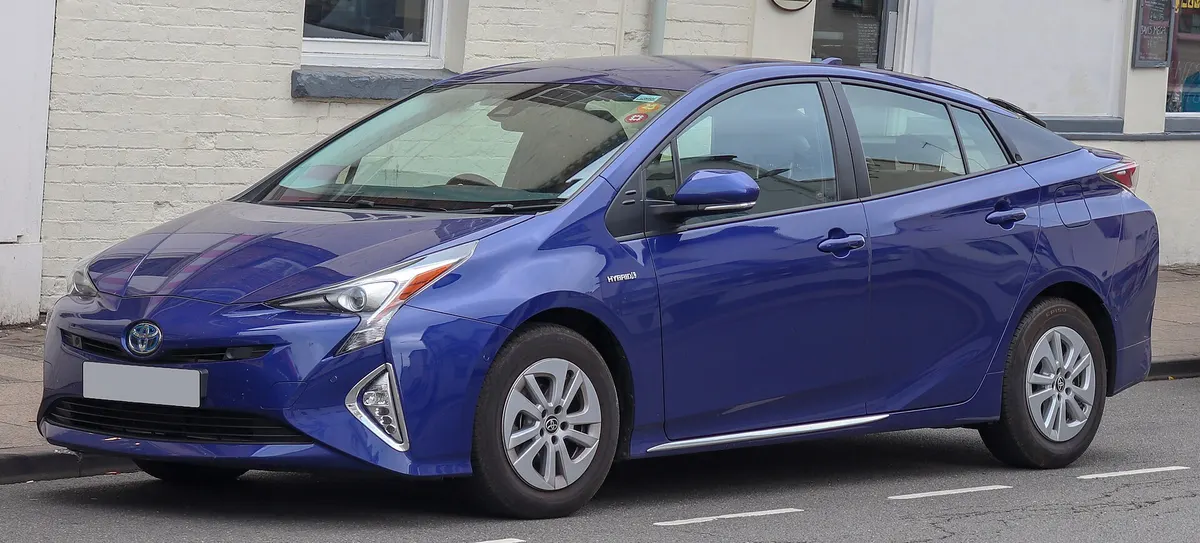
Toyota Prius 2016–2022Common problems, reliability & repair costs
The 4th-gen Prius is one of the most dependable used cars money can buy. The engine, hybrid system, and eCVT just don't break. What owners actually deal with is different: a windshield that cracks easily on 2016–2017 cars (there was a class action), a short-lived 12-volt battery, catalytic converter thieves who love this car, and a handful of recalls you need to confirm were done. Clear those and it's a 250k-mile appliance.
2020, 2021, 2022
None are true avoid years, but 2016–2017 carry the windshiel
Engines
- 2ZR-FXE · 1.8L hybrid, 121 hp
- 2ZR-FXE (Prius Prime) · 1.8L phev, 121 hp
Transmissions
- P610 · cvt
Drivetrain
FWD / AWD
Body
hatchback
Trims
Two, Two Eco, Three, Three Touring, Four, Four Touring, L Eco (2019+), LE (2019+), XLE (2019+), Limited (2019+), LE / XLE AWD-e (2019+), Prime Plus / Premium / Advanced (2017–2019), Prime LE / XLE / Limited (2020+)
Toyota Prius part-number cross-reference
Start from the OEM number, then pick the brand you trust. Verified equivalents for the Toyota Prius (2016–2022).
Part links go to Amazon, and to eBay where Amazon does not stock the part. Affiliate links, so we may earn a commission if you buy. Your price is unchanged, and a commission never changes a verdict.
Engine oil filter (cartridge, early gen-4)
Verified via: ToyotaPartsDeal: Prius OEM oil filters (04152-37010 element kit listed for 2010-2018 1.8L; 04152-YZZA6 shown as its replacement), oilfilter-crossreference.com: Toyota 04152-YZZA6 cross references
Engine oil filter (spin-on, later gen-4)
Fram
Listed as cross for both 90915-YZZN1 and 90915-10003; TG4967 / XG4967 same family
Look up Fram engine oil filter, 1.8LPurolator
Crossed via Toyota 90915-10003 (the number Toyota vendor pages list for 2017-2022 Prius; YZZN1 is its current replacement)
Check Purolator engine oil filterVerified via: ToyotaPartsDeal: Prius OEM oil filters (90915-10003 listed for 2017-2022 Prius 1.8L 2ZR-FXE; 90915-YZZN1 shown as replacement), oilfilter-crossreference.com: Toyota 90915-YZZN1 cross references, oilfilter-crossreference.com: Toyota 90915-10003 cross references
Engine air filter
Wix
Wix global-catalog number (US 5-digit equivalent not shown on fetched sources)
Look up Wix engine air filterVerified via: ToyotaPartsDeal: Prius OEM air filters (17801-21060 for 2016-2022 Prius 1.8L 2ZR-FXE), airfilter-crossreference.com, Toyota 17801-21060 (fitment shown: Prius 2016-2021, Corolla 2020-2022)
Cabin air filter
Verified via: ToyotaPartsDeal: Prius OEM cabin air filters (87139-58010 for 2016-2022 Prius 1.8L), airfilter-crossreference.com: Toyota 87139-58010 cross references
Should I buy a 2016–2022 Toyota Prius?
Buy it with confidence. This is one of the safest used-car bets on the road. The drivetrain is close to bulletproof, and the complaint counts collapse after 2017. Your real checklist is external: confirm the recalls were performed (parking brake on 2016–2017, engine wire harness on 2016–2018, brake booster pump on 2019, ECU software on 2022), inspect the windshield history on 2016–2017 cars, look underneath for catalytic converter theft evidence, and budget for a 12-volt battery if it's more than four years old. A 2019–2022 car with records is about as low-risk as used cars get; the Prime adds cheap EV commuting if you can charge at home.
Best years
2020, 2021, 2022
Years to avoid
None are true avoid years, but 2016–2017 carry the windshield-crack complaints and the most recalls to verify
Pre-Purchase Checklist for Toyota Prius
- ☐Run the VIN through Toyota's recall lookup (toyota.com/recall). This generation has several: parking brake cable (2016–2017), engine wire harness (2016–2018), brake booster pump (2019), blank instrument display (2019), and hybrid-shutdown ECU software (2022). All are free fixes. Confirm they're done.
- ☐On 2016–2017 cars, inspect the windshield edge-to-edge for chips and cracks, and ask how many windshields the car has had. Replacements need a Toyota Safety Sense camera recalibration. Make sure any past replacement included it.
- ☐Get under the rear of the car (or on a lift) and look at the catalytic converter: shiny new welds, a rattling heat shield, or an aftermarket converter means it's been stolen once already. A bolted-on cat shield is a plus, not a red flag.
- ☐Check the 12-volt battery date code (it's under the hood on this generation, not in the trunk) and have it load-tested. A weak 12V causes bizarre electronics behavior and no-starts long before it's obviously dead.
- ☐Watch the dash on startup: a red triangle, 'Check Hybrid System' message, or persistent low hybrid-battery bars point to an aging HV pack. Note the trim too. Lithium-ion and NiMH packs are not interchangeable.
- ☐On AWD-e cars (2019+), remember the rear motor only works below 43 mph and there's no mechanical connection, so test for warning lights rather than expecting to feel it. Check the rear underbody for rust or damage around the motor.
- ☐On a Prime, charge it fully and confirm real-world EV range is still in the ~20–25 mile ballpark, verify the charging cable is present, and know that 2017–2019 cars seat four, not five.
- ☐Ask for oil-change records. The engine is tough, but it still wants its 0W-16/0W-20 changed on schedule, and at 100k+ an EGR clean is cheap insurance even though gen-4 clogging is rare.
Common Toyota Prius problems & repair costs
Windshield cracks easily (2016–2017)
$400–$1,200Symptoms: Small pebble strikes that other cars shrug off leave chips that grow into long cracks, sometimes within days. Multiple owners report replacing the windshield two, three, even four times. CarComplaints logs an $800–$850 average repair around 18,000 miles, and a March 2018 class action targeted 2016–2017 models.
Fix: Windshield replacement plus recalibration of the Toyota Safety Sense camera behind the mirror. The calibration is what pushes the price up over a plain glass swap. Comprehensive insurance with glass coverage is the practical defense; many owners also switched to OEM glass on the theory the original was cut thin for weight.
Sources: CarComplaints: 2016 Prius windshield cracks easily (25 complaints), CarComplaints news: Prius windshield class action (2016–2017)
Brake booster pump failure: loss of brake assist (2019 recall)
$0–$3,500Symptoms: Brake warning lights, deactivated Vehicle Stability Control, and a hard pedal with sharply reduced braking power if the booster pump dies. Stored trouble codes in the C13xx family.
Fix: Free under NHTSA recall 19V-544. Dealers inspect and replace the brake booster pump. Confirm by VIN that it was performed. Outside a recalled VIN, a failed booster/actuator assembly on a hybrid is a $2,000–$3,500 job at an independent hybrid shop, which is exactly why you check first.
Sources: NHTSA: 2019 Toyota Prius recalls (19V-544), Automotive Fleet: Toyota recalls several models for brake booster pump
Engine wire harness chafing at the power control unit (2016–2018 recall)
$0–$1,500Symptoms: Usually none until it's serious. The harness insulation wears through where it contacts the PCU cover, and a short can cause warning lights, hybrid-system shutdown, or in the worst case a fire. Part of a ~1-million-vehicle global recall.
Fix: Free under NHTSA recall 18V-579 (Toyota campaign J0T): dealers inspect the harness, add protective sleeving, and replace the harness if damage is found. Verify completion by VIN. An out-of-pocket harness replacement (e.g., rodent damage, which this engine bay also attracts) runs several hundred to $1,500.
Sources: NHTSA: 2017 Toyota Prius recalls (18V-579), Consumer Reports: Toyota Prius recall for fire risk
12-volt battery drain / short lifespan
$180–$450Symptoms: Car won't 'ready' after sitting a few days, ghost warning lights across the dash, radio/HVAC resets, remote start or SmartKey acting up. On this generation the 12V moved from the trunk to the engine bay, but it's still a small battery doing a lot of computer duty, and cars that sit, including Primes left plugged in for days, kill it early.
Fix: Replace the 12V (AGM/EFB, LN1 size), a straightforward under-hood job on this generation, and rule out parasitic drain if a fresh battery dies again; a normal key-off draw is only ~25 mA. A cheap battery maintainer solves it for low-mileage cars.
Sources: PriusChat: mysterious 12V battery drain (gen 4), Hometown Hybrids: Prius 12V battery issues
Catalytic converter theft
$1,500–$3,500Symptoms: You start the car and it sounds like a race car. The converter was sawn off overnight. Because a hybrid's converter runs cooler, it carries a heavier load of precious metals, making the Prius the single most-targeted car for converter theft in the western US per Carfax data. A thief needs under five minutes.
Fix: Replacement converter plus whatever pipe and O2 sensor wiring went with it; OEM units are the expensive end. Prevention is the real fix: a bolt-on aluminum cat shield made for the gen-4 runs about $150–$300 plus simple installation, and comprehensive insurance covers theft (minus deductible).
Sources: CBS Los Angeles, Carfax: Prius is the top catalytic converter theft target in the West, MillerCAT: cat shield for 2016–2022 Prius (gen 4)
Hybrid (traction) battery degradation at high age/mileage
$1,900–$4,500Symptoms: Falling fuel economy, battery gauge swinging rapidly between nearly full and nearly empty, engine running more than it used to, and eventually a red triangle with a hybrid-system warning. Genuinely rare on this generation so far, but the earliest cars are now a decade old, so it's the number to know.
Fix: Replace the pack. Gen-4 cars use either lithium-ion or NiMH depending on trim (AWD-e is always NiMH) and they are NOT interchangeable, so the car must be matched correctly. Aftermarket/reman packs run roughly $1,900–$3,400 installed; a new OEM pack at a dealer sits at the top of the range. Toyota's hybrid-battery warranty is 8yr/100k on 2016–2018 cars and 10yr/150k from 2020.
Sources: Greentec Auto: 2016–2022 Prius hybrid battery replacement, RepairPal: Prius hybrid high-voltage battery replacement cost
Day to day, a gen-4 Prius is about the cheapest car in America to run: 50+ mpg, brakes that last 100k+ miles thanks to regen, no belts on the engine, no conventional transmission service, and an eCVT with nothing in it to slip. Real owner spend is tires, a 12V battery every 3–5 years, fluids, and insurance. The scary-sounding numbers (hybrid pack, brake booster, stolen converter) are either rare, covered by a recall you can verify for free, or preventable with a $200 shield. Budget like a Corolla, then park it somewhere lit.
Cost calculator
What will this Toyota Prius cost you by a given mileage?
Drag to a mileage. We total the documented problems whose typical onset falls at or before it. The same cost ranges listed above, nothing new invented.
$0 estimated repair range
Have a repair quote for this Toyota Prius?
Audit against OEM book times, uncover duplicate pad and rotor labor, and verify parts markups.
How to fix common Toyota Prius problems (DIY)
Replace the 12-volt auxiliary battery
Tools: 10mm socket and ratchet, 12V memory saver (or a second small 12V source), optional but avoids resetting windows/radio, Battery terminal brush
- Make sure the car is fully off, then open the hood. On this generation the 12V lives in the engine bay (right side), not the trunk like older Priuses.
- Connect a memory saver if you're using one, then disconnect the negative terminal first, positive second.
- Remove the battery hold-down bracket (10mm) and lift the old battery out.
- Set the new LN1-size AGM/EFB battery in place, reinstall the hold-down, and clean the terminals.
- Reconnect positive first, negative last, then press Start. Expect the ready light immediately; re-initialize the auto-up windows if needed (hold the switch up for a few seconds).
Parts
- 12V AGM battery, LN1 size (2016–2022 Prius) · Amazon $180–$260
Install a catalytic converter anti-theft shield
Tools: Jack and jack stands (or ramps), Socket set + security bits (usually included with the shield), Torque wrench
- Raise and support the car safely on stands or ramps. Never work under a car on a jack alone.
- Locate the catalytic converter mid-way along the exhaust and test-fit the shield against the existing underbody mounting points.
- Install the clamps/brackets per the kit instructions. The good gen-4 kits are drill-less and use existing holes.
- Secure the shield with the supplied tamper-resistant hardware and torque evenly.
- Lower the car, start it, and listen for any new rattle; re-check hardware after a week of driving.
Parts
- Cat shield for gen-4 Prius (aluminum, tamper-proof hardware) · Amazon $150–$300
Cabin & engine air filter change
Tools: None (hands only; maybe a small screwdriver)
- Open the glovebox, squeeze the sides to drop it past the stops, and pull the cabin filter cover.
- Swap in the new cabin filter with the airflow arrow pointing the right way, and reseat the glovebox.
- Under the hood, unclip the airbox lid, lift it, and swap the engine air filter.
- Re-clip the lid and make sure it's fully seated all the way around.
Parts
- Cabin air filter (2016–2022 Prius) · Amazon $10–$18
- Engine air filter (2016–2022 Prius) · Amazon $12–$22
Some parts links are affiliate links. We may earn a commission at no cost to you. We only list parts that fit this generation.
The short version
The 2016–2022 Prius is the generation where Toyota’s hybrid formula finished maturing. The 1.8-liter engine, the eCVT power-split transmission, and the hybrid battery are all so durable that the car’s actual problem list barely involves the drivetrain. What it involves instead: a windshield on 2016–2017 cars that cracks from pebble strikes other cars ignore (25+ logged complaints and a 2018 class action), a 12-volt battery that dies young and strands cars that sit, and thieves. The Prius is the most-targeted car in the western US for catalytic converter theft.
Layer on a handful of recalls, all fixed free at any Toyota dealer, and you have the whole file: parking brake cable (2016–2017), engine wire harness fire risk (2016–2018), brake booster pump (2019), blank instrument cluster (2019), and hybrid-shutdown ECU software (2022).
What that means when you’re shopping
Start with the VIN, not the test drive. Toyota’s recall lookup tells you in thirty seconds whether the free safety fixes were done; an un-recalled 2019 with a tired brake booster pump is a $2,000–$3,500 problem that should have cost zero.
On a 2016–2017, add two checks: windshield history (replacements need a camera recalibration for the driver-assist system, so make sure it happened) and the recall list above. On any year, get eyes on the catalytic converter: fresh welds mean it’s been stolen once, and a bolted-on shield means a previous owner was paying attention.
Then relax. The complaint counts tell the story: 47 for 2016, dropping to one or two per year by 2020–2022. That’s appliance territory.
What this generation fixed (the gen-3 baggage)
If you’ve read horror stories about Prius EGR valves clogging, blown head gaskets, and oil burning, that’s the 2010–2015 third gen. Toyota revised the EGR system for this generation and those failures largely didn’t carry over. Same for the giant Denso fuel pump recall that hit most of the Toyota lineup in 2020: the Prius was excluded. Don’t pay a discount price expecting gen-3 problems; don’t let a seller charge extra for “having done” fixes this car never needed.
Prime and AWD-e, in one minute
The Prime (2017–2022) adds an 8.8 kWh plug-in pack good for ~25 EV miles, a genuine money-saver if you charge at home. Buy a 2020+ if you need five seats. AWD-e (2019+) adds a small rear electric motor that helps from 0–6 mph and engages up to 43 mph when the fronts slip: great for snow, near-zero added maintenance, always NiMH-battery-equipped.
How this file is built: failure modes and cost ranges are compiled from NHTSA recall and complaint data, CarComplaints owner reports, Toyota’s own recall campaigns, and owner-forum reporting (PriusChat), then sanity-checked against shop-floor experience. Cost figures are independent-shop estimates and vary by region. Spot something off? Tell us.
Viral car myths, checked against this car
- Outdated
Does a "$1 mineral" really double car battery life? The Epsom-salt reality.
The mineral is Epsom salt (magnesium sulfate). It was a real desulfation hack for serviceable flooded-cell batteries 40+ years ago. It does not work on modern sealed AGM or EFB batteries, and trying it on yours will void the warranty without helping the battery.
- Misleading
Is the "$2 liquid that stops any leak" really banned in 11 states?
Automotive stop-leak products are not banned in any US state. The products are real (Bar's Leaks, BlueDevil), they work in specific narrow situations, and they can permanently damage your cooling or oiling system if applied to the wrong leak.
Frequently asked questions
Which 2016–2022 Prius years are best, and are any worth avoiding?
There are no true avoid years. This generation's complaint counts are tiny and shrink every year (CarComplaints logs 47 complaints for 2016 down to 1–2 for 2020–2022). If you're choosy, 2020–2022 cars are the sweet spot: past the windshield-complaint era, past the 2019 brake-booster and instrument-display recalls, and covered by Toyota's longer 10-year/150k hybrid-battery warranty. A 2016–2017 car is still a fine buy once you verify its recalls are done and its windshield history is clean.
Was the Prius part of the big Toyota/Denso fuel pump recall?
No. The massive 2020 Denso low-pressure fuel pump recall (NHTSA 20V-012 and its expansions) swept in most of the Toyota and Lexus lineup, but the Prius was one of the few models excluded. If a seller or a forum post tells you a 2018–2019 Prius 'needs the fuel pump recall,' they're confusing it with other Toyotas. Check the VIN at nhtsa.gov to see exactly what applies.
How long does the gen-4 hybrid battery last, and what does it cost?
Plan on 10–15 years and 150,000–200,000+ miles; failures on this generation are still uncommon. When one does age out, replacement runs roughly $1,900–$3,400 installed for aftermarket/remanufactured packs, up to $4,500 for a new OEM pack at a dealer. Note the chemistry: most front-drive trims use lithium-ion, base and all AWD-e cars use NiMH, and they don't interchange. Warranty was 8yr/100k through 2019 and 10yr/150k from 2020.
Is the Prius AWD-e real all-wheel drive?
It's real but modest, and that's by design. A small 7-hp electric induction motor drives the rear wheels from a stop to 6 mph, then only engages up to 43 mph when the fronts slip. There's no driveshaft and almost nothing extra to maintain, and it only costs about 2 mpg. It's excellent for snowy commutes and slick hills; it is not an off-road or towing feature.
Is the Prius Prime worth it over the regular Prius?
If you can plug in at home, yes: the Prime's 8.8 kWh pack gives about 25 miles of EV range, which covers many daily commutes for pennies, and it drives like a normal Prius after the charge runs out. Two catches on used ones: 2017–2019 Primes seat four (the fifth seat arrived in 2020), and you should confirm the battery still delivers close to its rated EV range before buying.
Every Toyota Prius generation
The full case file run, beyond the generation before and after this one.
Cross-shopped rivals
Files on what buyers weigh against the Toyota Prius of this era.