Case file · MAZDA-MAZDA3-2019-2026 · 4th gen (BP)
Mazda Mazda3 2019–2026Common problems, reliability & repair costs
The 4th-gen Mazda3 is the most reliable Mazda3 yet: NHTSA complaint counts drop off a cliff after the first year, the engines are chain-driven, and there's no CVT anywhere in the lineup. The things to check are specific: a cylinder-deactivation software recall on 2019 cars (stall risk, plus a shudder owners still report), a phantom emergency-braking recall on 2019–2020s, and oil-burning valve stem seals on 2021–2022 turbos that drew a class-action settlement. Clear those by VIN and this is a 200k-mile compact that drives like something more expensive.
2022, 2023
2019 (first year: six recalls and the most complaints; only +1 more
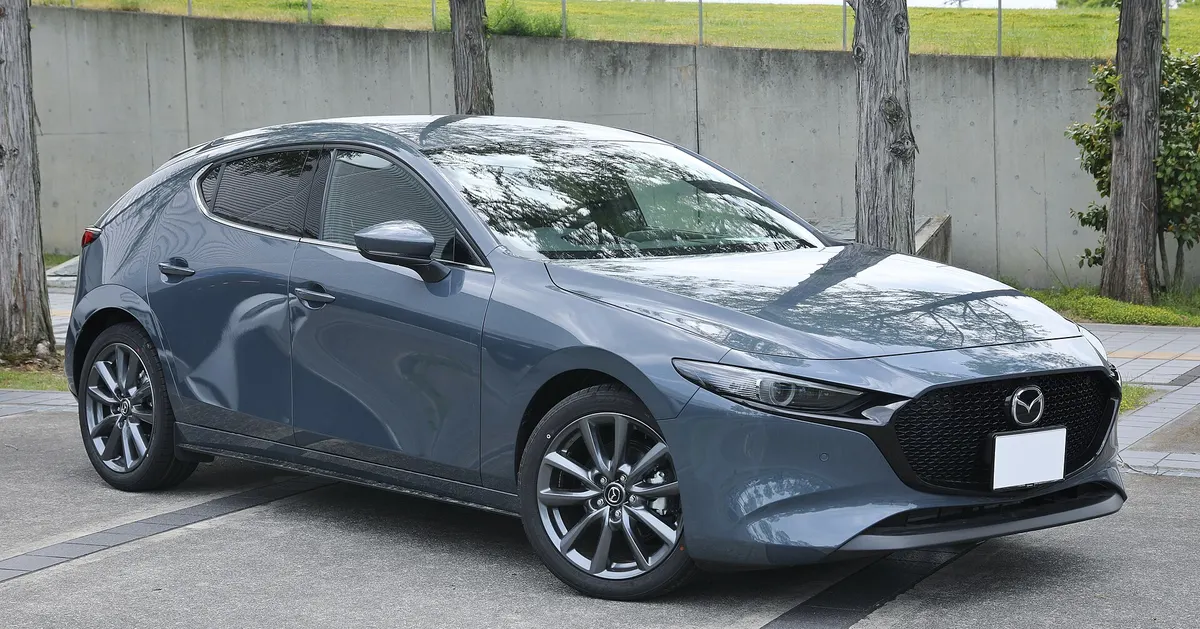
Engines
- PY-VPS (SkyActiv-G 2.5) · 2.5L gasoline, 186 hp
- PE-VPS (SkyActiv-G 2.0) · 2.0L gasoline, 155 hp
- PY-VPTS (SkyActiv-G 2.5 Turbo) · 2.5L turbo gasoline, 250 hp
Transmissions
- SkyActiv-Drive · automatic, 6-speed
- manual , 6-speed
Drivetrain
FWD / AWD
Body
sedan, hatchback
Trims
Base / 2.5 S, Select, Preferred, Premium, Premium Plus, Carbon Edition, 2.5 Turbo, 2.5 Turbo Premium Plus
Mazda Mazda3 part-number cross-reference
Start from the OEM number, then pick the brand you trust. Verified equivalents for the Mazda Mazda3 (2019–2026).
Part links go to Amazon, and to eBay where Amazon does not stock the part. Affiliate links, so we may earn a commission if you buy. Your price is unchanged, and a commission never changes a verdict.
Oil filter
Mazda
Value line PE01-14-302A-MV; superseded/updated as 1WPE-14-302. A SMALL SPIN-ON canister despite the catalog word 'cartridge.' SkyActiv-spec: high bypass, no anti-drainback valve.
Find Mazda oil filter on AmazonWix
The SkyActiv-specific spin-on; retailer fitment runs through the 2021 Mazda 3 and owners cross it as functionally identical to the OEM -MV filter. Same trap as the prior gen, with one correction: Wix 51358 does thread on (same M20x1.5) and misses on media, 21 micron against 15, plus it lists an anti-drainback valve the 57002's spec sheet does not. Wix 51348 does NOT thread on at all, its thread is 3/4-16 and Wix catalogs it to the CX-5 2.2 turbo diesel. Use 57002.
Look up Wix oil filterVerified via: Mazda USA parts catalog: PE01-14-302A cartridge, oil filter, PartsHawk: Wix 57002 fitment (2012–2021 Mazda 3 / 3 Sport), Mazda3Revolution: 2019 Mazda 3 oil filter thread (PE01-14-302A on the 2019 2.5)
Engine air filter
Mazda
Panel filter shared with the CX-30. Early cars also catalogued as PAJ8-13-3A0A.
See Mazda engine air filter on AmazonFram
Extra Guard; Fram's own catalog lists 2019+ Mazda 3 2.0L and 2.5L.
Compare Fram engine air filterVerified via: FRAM: CA12668 Extra Guard engine air filter (official catalog page), mazdaparts.org: 2019–2025 Mazda 3 engine air filter (PAH9-13-3A0A), Amazon: A-Premium filter, replaces PAH9-13-3A0, Mazda 3 2019–2024 2.0L/2.5L
Cabin air filter
Mazda
Supersedes BDTS-61-J6X. Fitment 2019–2025 Mazda 3 per Mazda dealer catalogs.
Find Mazda cabin air filter on AmazonFram
Fresh Breeze cross for BDGF/BDTS-61-J6X; aftermarket kits list it for 2019–2022 Mazda3 and 2020–2022 CX-30.
Look up Fram cabin air filterVerified via: Mazda-Parts (dealer catalog): BDGF-61-J6X cabin filter, 2019–2025 Mazda 3, MazdaSwag: BDGF-61-J6X supersedes BDTS-61-J6X (2019–2021 Mazda 3, 2020–2021 CX-30), Amazon: cabin filter listing crossing CF12773 / BDTS-61-J6X / BDGF-61-J6X
Spark plugs
Mazda
NGK-made laser-iridium OE plug, carried over from the prior SkyActiv generation. Do not substitute a generic heat range on these high-compression engines.
Check Mazda spark plugs on AmazonVerified via: Mazda USA parts catalog: PE5R-18-110 spark plug, Mazda3, Amazon: Genuine Mazda PE5R-18-110 iridium plugs (set of 4), Mazda3Revolution: 2019 2.5 spark plug replacement (ILKAR7L11 is the factory plug), NewParts: NGK ILKAR7L11 application data
Wiper blades
Verified via: AutoPadre, Mazda 3 wiper sizes by year (2019+: 26/17), OttoBlades: 2019 Mazda 3 hatchback wiper set, 26 + 17, MazdaShop USA: OEM wiper blades, Mazda3 sedan & hatchback 2019–2026, AllWiperSize: Mazda 3 chart (front 26/17, rear 14 hatch)
Battery
Factory size
Owner-verified on 2019 cars; OE flooded units run roughly 450–550 CCA depending on build. Match CCA to OE or higher and confirm the tray/hold-down before buying.
Compare Factory size battery on AmazonInterstate
Flooded Group 35, 640 CCA. A common step-up replacement owners fit to this generation.
Find Interstate batteryVerified via: Mazda3Revolution: battery for 2019 Mazda 3 (Group 35 confirmed), Interstate Batteries: MTP-35 (Group 35, 640 CCA)
Should I buy a 2019–2026 Mazda Mazda3?
Buy it. This is one of the strongest used-compact bets on the market, and the honest fault list is short. NHTSA logged 114 complaints against the 2019 and under 30 a year for 2022–2023; the engines are chain-driven with no CVT and no chronic hardware failure on the naturally aspirated cars. Do three things: run the VIN for the 2019-heavy recall set (cylinder-deactivation software 19V-497, phantom braking 19V-907, lug nuts 19V-425), cruise at a steady 40–55 mph and feel for cylinder-deactivation shudder on the 2.5, and on a 2021–2022 Turbo demand oil-consumption history. Those years' valve stem seals drew a class-action settlement. A 2022–2023 car sidesteps nearly all of it.
Best years
2022, 2023
Years to avoid
2019 (first year: six recalls and the most complaints; only buy with every recall closed by VIN), 2021–2022 2.5 Turbo unless oil-consumption/valve-seal history is documented (settlement years)
Pre-Purchase Checklist for Mazda Mazda3
- ☐Run the VIN at NHTSA.gov/recalls before anything else. 2019 cars carry six campaigns: cylinder-deactivation software (19V-497), false emergency braking (19V-907), and wheel lug nuts (19V-425) are the big three. All are free dealer fixes, forever.
- ☐On any 2.5 non-turbo: hold a steady, light-throttle 40–55 mph cruise and feel for a shudder or drone when cylinder deactivation engages. Ask the dealer to confirm the latest PCM calibration is installed.
- ☐On 2019–2020 cars: confirm the Smart Brake Support recall is closed, then leave the driver assists on during the test drive and note any unprompted hard braking.
- ☐On a 2021–2022 2.5 Turbo: check the oil level cold, and ask for oil-consumption test or valve-stem-seal replacement records. The settlement extended the powertrain warranty to 84 months/84,000 miles on affected VINs. Some cars are still covered.
- ☐Run the infotainment hard for the whole drive. Screen freezes and reboots are usually cured by a dealer software update, but budget the visit if you see one.
- ☐Inspect the windshield closely on HUD-equipped cars: chips spread, and replacement with camera recalibration runs $400–$1,200.
- ☐Confirm the automatic's fluid has been serviced by 75k–100k miles. On the rare manual hatch, test the clutch normally. This generation has no repeat of the 2014–2016 clutch pattern.
Common Mazda Mazda3 problems & repair costs
Cylinder-deactivation faults on the 2.5 (rocker arm / HLA software)
Symptoms: Worst case: loss of power or an engine stall while driving, the recall condition. Day-to-day: a shudder, drone, or vibration at light throttle around 40–55 mph when the system drops to two cylinders, which clears the moment you add gas. Engines that ran long on the bad calibration showed misfires and valvetrain damage.
Fix: Mazda recalled 304,882 vehicles (NHTSA 19V-497, Mazda 3719F), including 2019 Mazda3s built September 2018 through May 2019, to reprogram the software controlling the hydraulic lash adjusters that switch cylinders on and off. The fix is free at any Mazda dealer. Mazda also established a new service cylinder head assembly for these engines (Service Alert SA-031/21, listing misfire, burnt valves, and rocker arm as search keywords). That is evidence that some engines needed hardware repair, handled under warranty. Verify the recall is closed by VIN; if a shudder persists afterward, later PCM calibrations exist.
Sources: NHTSA recall 19V-497: Mazda dealer notice, Rocker Arm Concern, recall 3719F, Mazda Service Alert SA-031/21: new cylinder head assembly for 2.5 with cylinder deactivation, Mazda3Revolution: cylinder deactivation issues thread (shudder reports)
Smart Brake Support false activation (phantom emergency braking)
Symptoms: The car brakes hard on its own for an obstacle that isn't there, usually with a warning chime and a brake alert in the cluster. Forward-collision-avoidance is the dominant NHTSA complaint category on early cars of this generation.
Fix: Recalled: NHTSA 19V-907 / Mazda 4219L, covering 35,390 US 2019–2020 Mazda3s built September 25, 2018 through October 23, 2019. The fix is an SBS software update (some cars also got an instrument-cluster update). Free at any Mazda dealer. Check the VIN and confirm it's closed before buying.
Sources: NHTSA recall 19V-907: owner notification letter, Mazda USA: statement on recall of certain 2019–2020 Mazda3 vehicles, Mazda safety recall 4219L: sudden deceleration from false brake activation
Oil consumption on the 2.5 Turbo (valve stem seals)
Symptoms: Low-oil warning light well before the next scheduled oil change; needing to add oil between changes. The defect is on the exhaust side of the engine. Bad valve stem seals let oil past.
Fix: A class-action settlement (court-approved October 8, 2024) covers 2021–2022 Mazda3s with the 2.5 turbo, along with same-era CX-30, CX-5, CX-9, and Mazda6 turbos. Benefits: valve stem seal replacement, powertrain warranty extended from 60 months/60,000 miles to 84 months/84,000 miles, and reimbursement for documented oil-related costs (claim window closed October 2025, but the warranty extension rides with the VIN). On a used 2021–2022 turbo, ask for seal-replacement or oil-consumption-test records; 2023+ turbos have no documented pattern.
Sources: Mazda Valve Stem Seal Settlement: official settlement site (covered vehicles, benefits), Top Class Actions: Mazda valve stem seal settlement summary
Mazda Connect infotainment freezes, reboots, black screens
Symptoms: Screen reboots on its own mid-drive, freezes, or goes black; CarPlay/Android Auto dropouts; on some navigation cars a faulty SD card triggers reboots in cold weather.
Fix: Mostly software this time. Dealer software updates under Mazda's TSBs (repair guides cite TSB 16-001/22 for 2019–2022 cars) cure the bulk of it, and a bad nav SD card is a cheap swap. Note the Mazda Connect class-action settlement and CSP13 warranty extension you may read about apply to the OLD 2014–2018-era system, not this generation. Outright hardware failure of this generation's unit is not a documented pattern the way the old CMU was.
Sources: Mazda3Revolution: infotainment reboots while driving (4th-gen thread), Go-Parts: 2014–2025 Mazda infotainment failure guide (TSBs, CSP13 scope)
Windshields that chip and crack easily (expensive with HUD)
$400–$1,200Symptoms: Small rock chips that spread into full cracks quickly; some owners report cracks appearing above the defroster area without an obvious impact point.
Fix: Replacement glass. The money problem is equipment: cars with the head-up display and the windshield-mounted camera need the right glass plus camera recalibration, which is what pushes the bill to the top of the range: aftermarket glass starts around $400, OEM glass with recalibration runs $600–$1,200. Glass coverage on your insurance is the practical answer.
Sources: CarComplaints: 2019 Mazda3 visibility/windshield complaints, Glass.net: Mazda 3 windshield replacement cost guide
Cheap to run, and cheaper than the spec sheet suggests. Timing is by chain on every engine, the automatic is a conventional 6-speed (no CVT anywhere), consumables are compact-car priced, and the prior generation's seizing-rear-caliper saga did not carry over. The recalls that define the 2019–2020 cars are all free software fixes at any Mazda dealer, forever. Budget realistically for glass (chips spread, and HUD windshields are $400–$1,200 installed), a dealer software visit if the screen acts up, and on 2021–2022 turbos a quart of oil in the trunk until you've confirmed the valve-seal fix. The turbo takes 87 octane happily but only makes its full 250 hp on 93. That's a fuel-budget decision, not a reliability one.
Cost calculator
What will this Mazda Mazda3 cost you by a given mileage?
Drag to a mileage. We total the documented problems whose typical onset falls at or before it. The same cost ranges listed above, nothing new invented.
$0 estimated repair range
Have a repair quote for this Mazda Mazda3?
Audit against OEM book times, uncover duplicate pad and rotor labor, and verify parts markups.
How to fix common Mazda Mazda3 problems (DIY)
Cabin & engine air filter change
Tools: None (maybe a small flathead for the airbox clips)
- Open the glovebox, squeeze the sides to drop it past its stops, and pull the cabin-filter cover behind it.
- Slide the old cabin filter out and insert the new one with the airflow arrow pointing the right way.
- Refit the cover and glovebox.
- Under the hood, release the airbox clips, lift the lid, swap the panel filter, and re-clip.
Parts
- Cabin air filter (2019–2024 Mazda3) · Amazon $10–$20
- Engine air filter (2019–2024 Mazda3) · Amazon $12–$25
Engine oil & filter change (2.5 non-turbo)
Tools: Floor jack + jack stands or ramps, Socket set (drain plug) + oil filter wrench, Drain pan, funnel, new crush washer
- Warm the engine briefly, then raise and support the front of the car.
- Drain the oil, then replace the drain-plug crush washer and snug the plug to spec.
- Spin off the old filter and lightly oil the new filter's gasket before installing. On the SkyActiv 2.5 it's a small spin-on canister, not a cartridge.
- Refill with 0W-20 full synthetic (confirm the exact capacity for your engine in the owner's manual), start, check for leaks, then recheck the level after it settles.
- Reset the oil-life reminder through the cluster menu.
Parts
- Oil filter (Mazda PE01-14-302A / Wix 57002) · Amazon $6–$12
- 0W-20 full synthetic oil, 5 qt · Amazon $25–$40
Spark plug replacement (2.5 non-turbo)
Tools: Ratchet + extension + 14mm thin-wall spark plug socket, 10mm socket (coil bolts), Torque wrench
- Remove the engine cover and unplug the four ignition coils.
- Unbolt and pull each coil, then blow debris out of the plug wells before loosening the plugs.
- Remove the old plugs and thread the new ones in by hand. These are pre-gapped laser-iridium plugs; don't re-gap them against a hard gauge.
- Torque the plugs to spec, refit the coils and connectors, and refit the cover.
- Start the engine and confirm a smooth idle with no misfire codes.
Parts
- NGK ILKAR7L11 laser iridium plugs (set of 4, OEM Mazda PE5R-18-110) · Amazon $40–$70
Some parts links are affiliate links. We may earn a commission at no cost to you. We only list parts that fit this generation.
The short version
The 4th-gen Mazda3 (BP) is the generation where Mazda’s “premium compact” pitch and the reliability data finally line up. NHTSA complaint counts tell the story plainly: 114 on the first-year 2019, then a steep drop to under 30 a year by 2022–2023. Every engine is chain-driven, the automatic is a conventional 6-speed instead of a CVT, and there is no repeat of the last generation’s seizing rear calipers or dying infotainment computers.
What the 2019–2020 cars do carry is a stack of first-year recalls: all software, all free, forever. The two that matter: the cylinder-deactivation recall (NHTSA 19V-497, part of a 304,882-vehicle campaign), where bad valve-lash-adjuster software could stall the engine, and the Smart Brake Support recall (19V-907), where the car could slam the brakes for an obstacle that wasn’t there. The one genuine hardware fault of the generation belongs to the 2021–2022 2.5 Turbo: valve stem seals that burn oil, settled by class action with a powertrain warranty extension to 84 months/84,000 miles.
What that means when you’re shopping
Start with the VIN at NHTSA.gov. It takes two minutes and tells you whether the software recalls were ever done. An open recall is still a free dealer fix, so it’s a scheduling nuisance, not a negotiating problem.
Then drive the car the way the problems show up. Hold a steady, light-throttle 40–55 mph and feel for the cylinder-deactivation shudder on the 2.5. Leave the driver assists on and note any phantom-braking flinch on a 2019–2020. Run the touchscreen the whole time. On a 2021–2022 Turbo, pull the dipstick cold and ask directly for oil-consumption or valve-seal paperwork. The settlement warranty may still be riding on the VIN.
2022–2023 cars are the sweet spot: past every first-year recall, past the worst turbo-seal build window, with almost nothing on file at NHTSA. A fully-recalled 2019 is the value play; just confirm all six campaigns show closed.
What it’s like to own
Uneventful, which is the point. Consumables are compact-car cheap, the brakes wear normally, and there’s no timing belt line-item ever. The honest recurring costs are glass and possibly one dealer software visit if the screen develops a reboot habit. These windshields chip easily, and a HUD car needs $400–$1,200 of glass and recalibration. Service the automatic’s fluid by 75k–100k even though the schedule shrugs, and keep oil changes on time: the cylinder-deactivation hardware lives on clean oil pressure.
How this file is built: failure modes and cost ranges are compiled from NHTSA recall documents and complaint data, Mazda’s own service alerts and dealer notices, the court-approved valve-stem-seal settlement, and owner-forum reporting, then sanity-checked against shop-floor experience. Cost figures are independent-shop estimates and vary by region. Spot something off? Tell us.
Viral car myths, checked against this car
- Misleading
Is the "$1 Japanese oil trick" that stops engine wear forever real?
The 'Japanese oil trick' is almost certainly MoS2 (molybdenum disulfide), a real industrial friction modifier. It is German, not Japanese (Liqui Moly popularized it), sold openly at every parts store for $15-20, has real but modest measured friction benefits, and was never buried by anyone.
- Dangerous
Is the "$2 liquid that destroys engine sludge forever" real? Our shop-floor verdict.
An aggressive solvent flush on a high-mileage engine is a textbook way to spin a bearing. The viral 'kitchen-cabinet flush' is folklore that real shops spend money cleaning up after.
Frequently asked questions
Is the 2019+ Mazda3 a reliable car?
Yes, measurably. NHTSA logged 114 complaints against the first-year 2019 and the count collapses from there: under 50 for 2020, under 30 a year for 2022–2023. Every engine is chain-driven, there's no CVT and no dual-clutch anywhere in the lineup, and the naturally aspirated cars have no chronic hardware failure. The real issues are specific and checkable: first-year recalls (all free software fixes), cylinder-deactivation shudder on the 2.5, and oil consumption on 2021–2022 turbos.
Which Mazda3 years should I avoid?
None are true landmines, but 2019 demands homework: it's the first-year car with the most complaints of the generation and six recalls, among them cylinder-deactivation software, phantom emergency braking, and loose lug nuts. Every fix is free at a Mazda dealer, so a 2019 with all recalls closed is a fine car. The other caution is the 2021–2022 2.5 Turbo, whose valve stem seals can burn oil; buy one with documented seal replacement or consumption records. 2022–2023 cars have almost nothing on file. That's the sweet spot.
How many miles will a Mazda3 last?
200,000–250,000 miles is a realistic ceiling with routine maintenance, and there's no self-destructing component in the drivetrain to stop you. Timing is by chain and the 6-speed automatic is a conventional, durable unit. Be honest about the averages, though: fleet-wide data (iSeeCars) shows only about one in ten Mazda3 sedans actually reaches 200k, because compacts get driven hard and maintained cheap. The car can do it; most owners don't.
What are the common problems with the 2019+ Mazda3?
Four things are actually documented: cylinder-deactivation faults on the 2.5 (a stall-risk software recall on 2019s, plus a light-throttle shudder some owners report), false emergency-braking activations on 2019–2020 (recalled, free software fix), oil consumption on 2021–2022 turbos (valve stem seals, class-action settlement with an 84-month/84k powertrain warranty extension), and infotainment freezes/reboots that dealer software updates usually cure. Windshields also chip easily and are pricey to replace on HUD cars. That's the whole list. This generation has no equivalent of the old seizing-caliper or dying-CMU sagas.
Does the Mazda3 turbo burn oil?
The 2021–2022 2.5 Turbo can. Defective exhaust-side valve stem seals let oil past, and owners saw low-oil warnings between changes. It was real enough that Mazda settled a class action: affected cars get valve stem seal replacement and a powertrain warranty extension from 60 months/60,000 miles to 84 months/84,000 miles. On a used 2021–2022 turbo, ask for the seal-replacement or oil-consumption-test paperwork. 2023-and-later turbos have no documented oil-burning pattern.
Is the cylinder deactivation on the Mazda3 a problem?
It's this generation's biggest engine story, but it's mostly a software story. Mazda recalled 304,882 vehicles, including 2019 Mazda3s, because the software controlling the deactivation hardware could cause power loss or a stall (NHTSA 19V-497); the fix is a free reprogram. Separately, some owners report a shudder at light throttle around 40–55 mph when the system engages, and Mazda established a new service cylinder head for engines that suffered valvetrain damage. Verify the recall by VIN, drive the car at a steady 45–55 mph, and if it's smooth, don't lose sleep over it.
Does the Mazda3 have a timing belt or chain?
A chain, on every engine in this generation: the 2.0, the 2.5, and the 2.5 Turbo. There's no scheduled replacement interval; the chain is designed to last the life of the engine as long as oil changes happen on time. That's one less four-figure maintenance item versus belt-driven rivals.
Cross-shopped rivals
Files on what buyers weigh against the Mazda Mazda3 of this era.