Case file · MAZDA-CX-5-2017-2021 · 2nd gen (KF)
Mazda CX-5 2017–2025Common problems, reliability & repair costs
The KF-generation CX-5 ran nine model years, 2017 through 2025, and it's one of the most reliable compact SUVs of its era, but not paperwork-free. The 2018–2019 non-turbo cars carry two safety recalls (a cylinder-deactivation software fix and a Denso fuel pump), the 2019–2020 turbos have a known cracked-cylinder-head issue, and the early infotainment units fail with ghost touches and reboot loops. The 2022 facelift brought standard AWD, and remarkably the 2022–2025 cars have zero NHTSA safety recalls; their known trouble spots are LED headlight cooling fans and a torque-converter chirp covered by TSBs. Verify the history and any year is a strong used buy.
2023, 2024, 2025
None outright, but treat 2018–2019 (two recalls), 2019–2020
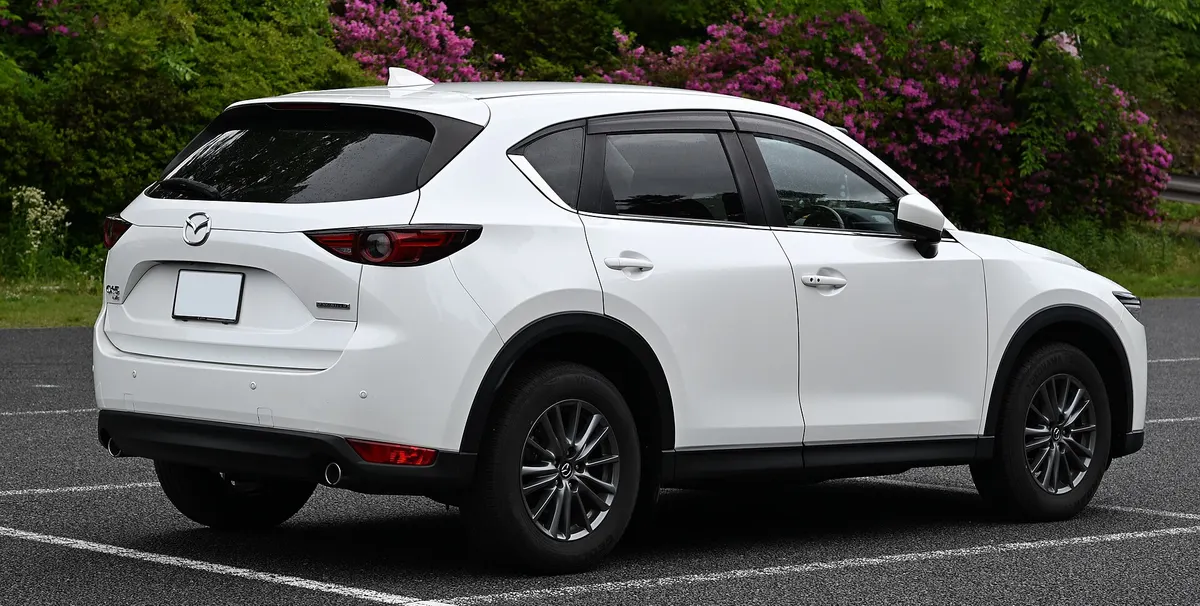
Engines
- PY-VPS (Skyactiv-G 2.5) · 2.5L gasoline, 187 hp
- PY-VPTS (Skyactiv-G 2.5T) · 2.5L turbo gasoline, 256 hp
- SH-VPTR (Skyactiv-D 2.2) · 2.2L twin-turbo diesel diesel, 168 hp
Transmissions
- SKYACTIV-Drive · automatic, 6-speed
Drivetrain
FWD / AWD
Body
suv
Trims
Sport, Touring, Grand Touring, Grand Touring Reserve, Signature, Carbon Edition, 2.5 S / S Select / S Preferred / S Premium / S Premium Plus (2022–2025), 2.5 Turbo / Carbon Turbo / Turbo Premium / Turbo Signature (2022–2025)
Mazda CX-5 part-number cross-reference
Start from the OEM number, then pick the brand you trust. Verified equivalents for the Mazda CX-5 (2017–2025).
Part links go to Amazon, and to eBay where Amazon does not stock the part. Affiliate links, so we may earn a commission if you buy. Your price is unchanged, and a commission never changes a verdict.
Oil filter
Mazda
Superseded to PE01-14-302B; also sold value-line as PE01-14-302A-MV / 1WPE-14-302. Small SPIN-ON canister (M20x1.5 thread) despite Mazda cataloging it 'cartridge, oil filter.' Skyactiv-specific spec (15-micron, 11-14 psi bypass, no anti-drainback). Mazda has bulletined NOT to use this NA filter on the 2.5T turbo.
Find Mazda oil filter on AmazonWix
The Skyactiv-specific spin-on: M20x1.5, 15-micron media, 11-14 psi bypass, no anti-drainback valve listed. TRAP: do not substitute the generic small spin-ons the cross-ref aggregators list against this number. Wix 51358 and Ecogard X4612 do thread on (same M20x1.5) and miss on media, 21 micron and 30 micron at 97% against 15 here, and both list an anti-drainback valve this filter's spec sheet does not list. Note the bypass is NOT the difference for 51358, it is 11-14 psi like the 57002. Wix 51348 is a separate error and cannot be fitted at all: its thread is 3/4-16, and Wix catalogs it to the CX-5 2.2 turbo diesel.
Look up Wix oil filterNAPA Gold
Physically the Wix 57002 (NAPA Gold is built by Wix), the same Skyactiv-spec filter.
Check NAPA Gold oil filterPurolator
PureONE; Purolator states it meets/exceeds Mazda's Skyactiv high-flow requirement. Retailer fitment confirms 2017-2020 CX-5 2.5. On Fram, the reason is spec and not absence: Fram's own part finder DOES return PH6607, TG6607, XG6607 and FE6607 for the 2019 CX-5 2.5L, and Wix's interchange equates XG6607 to Wix 51365, which is 21-micron media with an anti-drainback valve against the Skyactiv 15-micron build. So a Fram number exists, we just do not recommend one.
See Purolator oil filterVerified via: PartsHawk: WIX 57002 (Mazda SkyActiv-G, 11-14 psi bypass, 15 micron), O'Reilly Auto Parts: WIX 57002 oil filter, Amazon: Mazda PE01-14-302 / PE01-14-302B fitment (Mazda 3/6/CX-5 2.0/2.5), Sixity Auto: Purolator ONE fits 2013-2020 CX-5 2.0L/2.5L
Oil filter
Mazda
The turbo-specific filter, larger than the NA PE01-14-302. Original PY8W-14-302 was Japanese (Tokyo Roki); superseded to 1WPY-14-302 (Thailand-built). Mazda bulletined NOT to fit the NA PE01-14-302 on the turbo. NO aftermarket filter is cleanly verified to the turbo spec. Wix does cross its NA 57002 to the turbo: its own vehicle lookup returns 57002 for the 2019 CX-5 2.5T and also for the 2019 CX-9, which is turbo-only. Whether one filter can satisfy both the NA and turbo requirements is disputed among owners, and that dispute is inference rather than measurement, because Mazda does not publish filter specifications. On Fram, be careful, because the common version of this warning is wrong: XG6607 IS cataloged to a turbo car, Fram's own part finder returns it for the 2019 CX-9 2.5L. The real reason to be wary of it is different and checkable: Wix's interchange equates XG6607 to Wix 51365, which is 21-micron media with an anti-drainback valve, against the 15-micron no-valve build of the Skyactiv filter. XG7317 is the one genuinely not cataloged here, appearing in neither Fram result. Use the Mazda OEM turbo filter, or confirm any substitute by published spec rather than by an aggregator cross.
Compare Mazda oil filter on AmazonVerified via: Mazda USA parts: turbo oil filter PY8W-14-302. Reads 'Fits CX-5 (2019 - 2025)' and shows the W/TURBO and 2500CC engine diagrams. READ THE FITS LINE, NOT THE TITLE: the title echoes whatever real model is in the URL, so an MX-5 Miata slug returns 'Mazda MX-5 Miata' in the title even though this filter does not fit one. The Fits line is the part that refuses, and on that MX-5 slug it declines to name MX-5 and falls back to a generic list. That refusal is what makes this a real source, unlike the parts.kia.com pages cited elsewhere in this repo, whose vehicle name is slug-derived throughout, Mazdas247: PY8W-14-302 (2019 CX-5 2.5T, shared CX-9; superseded 1WPY-14-302), WIX vehicle lookup: run 2019 / Mazda / CX-5 and it returns 57002 for all three gas rows including the 2.5L Turbo, and 2019 / Mazda / CX-9 (turbo-only) returns 57002 as well. The lookup is a POST so there is no stable deep link, you have to run the search, Fram part finder: 2019 CX-9 2.5L (turbo-only) returns XG6607, so Fram DOES catalog it to a PY8W-14-302 car, Fram part finder: 2019 CX-5 2.5L returns the same four filters, WIX interchange: XG6607 equals WIX 51365 (21 micron, anti-drainback), which is the concrete reason to be wary of it, Mazdas247: owners disputing whether one filter serves turbo and NA. Owner inference, not measurement, and the thread notes Mazda does not publish filter specs
Engine air filter
Mazda
Also value-line -MV. Shared with 2014+ Mazda 3 / Mazda 6 Skyactiv NA. Rigid panel filter.
Find Mazda engine air filter on AmazonWix
Panel filter; retailer fitment covers 2013-2022 (naturally aspirated) CX-5. Also cataloged internationally as WA9774.
Look up Wix engine air filterEPAuto
Equivalent to Mazda PE07-13-3A0A; listing explicitly covers CX-5 2.0L/2.5L NA and is marked 'Not Turbo.'
Check EPAuto engine air filterVerified via: PartsGeek: WIX 49247 air filter (2013-2025 CX-5), Walmart: WIX 49247 fitment (2013-2018 CX-5, 2012-2018 Mazda 3), Amazon: EPAuto GPA0A (PE07-13-3A0A), CX-5 2.0/2.5 'Not Turbo'
Engine air filter
Mazda
The turbo-specific air filter (made in Japan). Do not use the NA PE07-13-3A0A on the turbo; the size is different.
See Mazda engine air filter on AmazonFram
Extra Guard; Walmart/retailer fitment 2019-2023 CX-5 (2.5T), 2016-2021 CX-9.
Compare Fram engine air filterWix
Turbo-correct Wix panel filter (crosses to PY8W-13-3A0). NOT Wix 49247. That is the NA filter and is often wrongly recommended for the turbo.
Find Wix engine air filterVerified via: Walmart: FRAM CA12167 fits 2019-2023 CX-5, 2016-2021 CX-9, Amazon: CA12167 cross to PY8W-13-3A0 / WA9790 (CX-5/CX-9/Mazda6 2.5T), MazdaSwag: genuine OEM 2.5L Turbo air filter PY8W133A0
Cabin air filter
Mazda
Also KD45-61-J6X-9U and value-line -MV. Denso is the OE supplier. Shared with 2014+ Mazda 3 / Mazda 6.
Look up Mazda cabin air filter on AmazonVerified via: PartsHawk: Denso 453-6044 cabin filter for Mazda CX-5 (2013-2021), PartsGeek: Mazda CX-5 cabin air filter WIX 24103 (2013-2026), Amazon: EPAuto CPJ6X (KD45-61-J6X), CX-5 2013-2025
Spark plugs
Mazda
NGK-made OE plug (also PE5R-18-110A). Mazda also used a Denso-made OE plug, PE5S-18-110. High-compression Skyactiv-G. Use this exact plug, not a generic heat range. Do NOT fit the colder turbo plug (PY8V-18-110) here.
Find Mazda spark plugs on AmazonNGK
Laser Iridium, NGK stock #94124, the OE plug sold aftermarket. Fitment CX-5 2014-2023 2.5L NA. Pre-gapped ~0.044 in.
Look up NGK spark plugsVerified via: Mazda USA parts: spark plug PE5R18110A (CX-5), NewParts: NGK ILKAR7L11 (94124), replaces PE5R-18-110, PaulsTravelPictures: 2017-2022 CX-5 2.5L spark plug guide (ILKAR7L11)
Spark plugs
Mazda
NGK-made OE turbo plug (insulator imprint 'DILKAR7M8'), heat range 7, iridium, reach 26.5 mm, gap ~0.030 in. Shared with CX-9 and Mazda6 2.5T. Do NOT fit the NA PE5R-18-110 here.
Check Mazda spark plugs on AmazonNGK
The OE turbo plug sold aftermarket (double iridium, heat range 7). Fitment CX-5/Mazda6/CX-9 2.5T 2016-2021.
See NGK spark plugsVerified via: MazdaSwag: genuine OEM spark plug 2.5L Turbo PY8V18110, eBay: Mazda OEM NGK DILKAR7M8 fits Mazda6/CX-5/CX-9 2016-2021 2.5L Turbo, Mazdas247: replaced CX-5 turbo's spark plugs (DILKAR7M8, gap 0.030 in)
Front brake pads
Mazda
Front pad sub-set; supersedes through K0Y1-33-28ZA and K0Y1-33-28ZB. This is the smaller NA-caliper pad (FMSI D1623 family), carried over from the 2013-2016 car. Turbo cars use a bigger caliper and a different pad.
Compare Mazda front brake pads on AmazonAkebono
ProACT ultra-premium ceramic with hardware; retailer fitment 2013-2021 CX-5 (naturally aspirated front).
Find Akebono front brake padsVerified via: OEM Parts Online: front brake pads K0Y1-33-28ZB, 2013-2020 CX-5, Walmart: Akebono ACT1623 fits 2013-2021 CX-5 (front)
Front brake pads
Mazda
Turbo-specific front pad sub-set (bigger dual-piston caliper). Mazda revised the turbo front pad more than once; supersession/updated numbers include TAY0-33-28Z (2021 Carbon) and TNY9-33-28ZA (per TSB 04-001/22). Confirm the exact number by VIN; do NOT fit the NA K0Y1-33-28Z pad.
Look up Mazda front brake pads on AmazonAkebono
ProACT ceramic for the turbo's larger front brake; retailer fitment 2019-2025 CX-5 2.5T front. This is the correct aftermarket pad for the turbo. The NA ACT1623 does not fit.
Check Akebono front brake padsVerified via: Mazda USA parts: front caliper pad sub-set KGY0-33-28Z (CX-5, turbo), PartsGeek: Akebono ACT1258 front pad, 2019-2025 CX-5 (2.5T)
Wiper blades
Bosch
Beam blades: 24A = 24 in driver, 18A = 18 in passenger, sold as the 24A18A pair. Matches the CX-5's 24/18 in front spec. Verify sizes at purchase.
See Bosch wiper blades on AmazonFactory size
Front driver 24 in, front passenger 18 in, rear 14 in. Any quality beam blade in these sizes fits; the front hook/bayonet adapter is included with most kits.
Compare Factory size wiper bladesVerified via: AutoPadre: Mazda CX-5 wiper sizes (24/18 front, 14 rear), MyWiperSize: Mazda CX-5 wiper sizes, Wiper Haus: 2017-2025 CX-5 Bosch wiper blade set
Serpentine belt
Mazda
Supersedes PY01-15-909; drives the alternator and AC compressor on the 2.5L. Several Mazda parts sellers explicitly label PY01-15-909A '2.5L Non-Turbo,' while others list it fitting the turbo too. Catalogs conflict, so on a 2.5T confirm the belt by VIN. No single aftermarket number is listed here: Gates numbers for this application conflict across sources (159PP64 'stretch fit' vs 159EV58 vs K060-series), so match by the exact belt at the counter.
Find Mazda serpentine belt on AmazonVerified via: MazdaSwag: serpentine belt PY01-15-909A (2014-2021, 2.5L Non-Turbo), RealMazdaParts: serpentine belt PY01-15-909A (2014-2025 Mazda 2.5L)
Battery
Factory size
US KF CX-5 uses a flooded Group 35, ~550 CCA (AutoZone lists it as 35-DL / 35SA). AGM Group 35 is a common drop-in upgrade in the same tray. NOTE: cars fitted with i-ELOOP / i-stop (mainly non-US markets) instead require a Group Q85 EFB battery. US CX-5s in this range are Group 35.
Look up Factory size battery on AmazonInterstate
Flooded Group 35, ~550 CCA; Interstate fitment confirms the 2020 CX-5 2.5L.
Check Interstate batteryInterstate
AGM Group 35, a spill-proof higher-output upgrade in the same Group 35 case.
See Interstate batteryVerified via: AutoZone: 2018 Mazda CX-5 battery (Group 35, 550 CCA, flooded), Interstate Batteries: MT-35 fitment for 2020 Mazda CX-5 (2.5L)
Should I buy a 2017–2025 Mazda CX-5?
Buy it, after a VIN check. Across all nine years the KF CX-5 is a genuinely reliable, well-built compact SUV with no chronic mechanical rot, and it drives better than almost everything in its class. The homework depends on the year. On 2018–2019 non-turbo cars, confirm the cylinder-deactivation PCM recall (19V-497) and the Denso fuel pump recall (21V-875) were both performed. On 2019–2020 turbos, confirm the cylinder head hasn't leaked coolant (or was already replaced under Mazda's program); on 2021 turbos, check oil consumption against the valve-stem-seal campaign. The 2022–2025 facelift cars are the lowest-drama pick: standard AWD, zero NHTSA safety recalls, and complaint counts well below the earlier years. Two things to check: listen for a humming LED headlight cooling fan (2019–2023, whole-assembly money out of warranty) and for a chirp on the 3–4 upshift (TSB 05-005/23). A 2023–2025 with clean records is about as safe as used-SUV buying gets; a documented 2020–2021 NA car is the budget version of the same bet.
Best years
2023, 2024, 2025
Years to avoid
None outright, but treat 2018–2019 (two recalls), 2019–2020 turbo (head-crack exposure), and 2022–2023 (headlight-fan and 6AT-chirp TSBs) as verify-first years
Pre-Purchase Checklist for Mazda CX-5
- ☐Run the VIN on NHTSA or Mazda's recall lookup. On 2018–2019 cars, both the PCM/rocker-arm recall (19V-497) and the Denso fuel pump recall (21V-875) must show as completed.
- ☐On 2019–2020 turbos, check for coolant smell, a slowly dropping reservoir, or residue near the exhaust manifold side of the head. Those are the cracked-cylinder-head tells. Ask if the head was replaced under Mazda's coverage.
- ☐On 2021 turbos, ask for oil-consumption history and whether the valve-stem-seal campaign (SSPD5) was performed. More than a quart between changes is the red flag.
- ☐Work the touchscreen hard for five minutes: watch for the cursor jumping on its own (ghost touch), random reboots, or frozen menus. Screen and CMU repairs run hundreds of dollars.
- ☐Feel the rear wheels after a test drive. A hot rear wheel means a sticking caliper or electric parking brake, a known early-KF issue that eats pads and rotors.
- ☐Inspect the windshield edge-to-edge in good light; this generation cracks more easily than most, and replacements need camera/radar recalibration.
- ☐Check the headlights for internal condensation. Mazda calls light edge fogging normal, but a unit holding water is a four-figure part.
- ☐On 2019–2023 cars, stand by each headlight with the engine running and listen for a hum or whir. That's the LED cooling fan's bearings going. The lamp is a sealed unit, and out of warranty a replacement assembly runs $1,800–$2,800 per side.
- ☐On any cylinder-deactivation car (2018–2024 non-turbo), listen for a short chirp or squeak right as the transmission shifts from 3rd to 4th under light throttle. That's the torque-converter wear pattern in TSB 05-005/23. Treat it as a warranty-or-walk-away item, since the fix is a new torque converter.
- ☐Buying a 2024 non-turbo? Check the VIN's 8th digit: M means it has cylinder deactivation and i-stop, L means it was built without them during the parts shortage. Neither is a defect. Just know which engine you're getting.
- ☐On the 2019 diesel, confirm you have a shop nearby willing to work on it. The engine is fine, the support network is thin.
Common Mazda CX-5 problems & repair costs
Cylinder-deactivation rocker arm defect (2.5L non-turbo)
$0–$4,500Symptoms: Engine misfire, ticking or knocking from the top end, check-engine light, loss of power. In the worst cases an intake rocker arm dropped out of position and contacted internal parts. Some owners needed valvetrain repairs or engine replacement. Caused by PCM software mismanaging the hydraulic lash adjusters when switching out of cylinder-deactivation mode.
Fix: Safety recall 19V-497 (Mazda 3719F): dealers reprogram the PCM free. The recall covered roughly 224,000 CX-5s across 2018–2019. Cars that suffered valvetrain damage before the reflash need rocker arm/lash adjuster replacement or, rarely, a cylinder head. That's the four-figure end if it somehow wasn't covered. Verify recall completion by VIN before buying.
Sources: NHTSA recall 19V-497 report (PDF), Mazda USA statement on recall 3719F, Mazdas247: CD trouble on 2018 CX-5/Mazda6
Denso low-pressure fuel pump failure (stall risk)
$0–$900Symptoms: Hard starting, rough running, sudden stall while driving with possible no-restart. The pump impeller can crack and deform. This is part of Denso's multi-million-unit pump defect that hit many brands.
Fix: Safety recall 21V-875 (Mazda 5321K): dealers replace the low-pressure fuel pump free. If a specific car somehow falls outside the recall population and the pump dies, an independent-shop pump replacement runs roughly $400–$900. Check the VIN. Many owners never brought theirs in.
Sources: NHTSA campaign 21V875000 (RepairPal summary), Consumer Reports: Mazda fuel pump recall
2.5T cracked cylinder head and oil consumption (turbo only)
$1,500–$5,000Symptoms: Two separate turbo issues. Pre-mid-2020 builds: coolant leak from a crack at the cylinder head near the exhaust manifold, so a sweet smell, a dropping reservoir, eventual overheating. 2021 builds: oil consumption of a quart every 2,000–4,000 miles from defective exhaust valve stem seals.
Fix: Head cracks were addressed under a Mazda customer service program and the powertrain warranty (head replacement); out of coverage, a head job at an independent shop is $2,500–$5,000. The 2021 oil burning got campaign SSPD5 / TSB 01-003/23, which replaced all eight exhaust valve stem seals without pulling the head, plus a class-action settlement. Out of pocket that job runs roughly $1,500–$3,000. Verify campaign status by VIN on any turbo.
Sources: Mazda TSB: 2019–2020 CX-5 2.5T cylinder head coolant leak (NHTSA PDF), Mazdas247: valve stem seal class-action settlement
Infotainment ghost touch / CMU reboot loops
$150–$1,200Symptoms: The screen registers touches nobody made: menus open themselves, the radio changes stations, navigation inputs itself. Separately, the Connectivity Master Unit (CMU) can freeze or reboot in a loop. A corrupted navigation SD card causes some reboot cases.
Fix: Ghost touch is the screen; reboots are the CMU. Different parts, different fixes. Mazda issued a screen repair kit TSB and a CMU warranty extension (Customer Service Program CSP13, 2016–2020 CX-5) covering reboot/freeze failures. Out of coverage: screen repair a few hundred dollars, full CMU replacement pushing four figures. Free tricks first: pull the nav SD card, or disconnect the touch ribbon cable and drive it from the commander knob.
Sources: Mazdas247: 2017 CX-5 ghost touch thread, Go-Parts garage guide: CX-5 infotainment failures
Rear brake caliper / electric parking brake dragging
$400–$1,200Symptoms: Grinding from the rear, one rear wheel hot after driving, parking-brake warning light flickering, rear pads worn to the backing plates far ahead of schedule. Caused by seizing rear calipers or an electric parking brake actuator that doesn't fully release.
Fix: Replace the sticking caliper(s), plus pads and rotors if they've been cooked. Mazda issued revised rear calipers and TSB 04-001/18 for the EPB not releasing. Early-2017-build cars are the most exposed. Any rear brake work on this car requires putting the EPB into maintenance mode first.
Sources: RepairPal: CX-5 premature rear brake failure, Mazdas247: 2017 CX-5 caliper issue
Windshield cracks easily
$350–$1,100Symptoms: Cracks appearing from small chips or seemingly nothing. Owners report cracks spreading while parked or forming in front of them while driving. Insurance-deductible territory, but it repeats often enough on this generation that owners noticed.
Fix: Windshield replacement. The catch on this generation: cars with Smart City Brake Support / i-Activsense need the windshield-mounted camera and sensor recalibrated after glass work, which adds real money. Use glass rated for the ADAS package and insist on calibration. Dealers typically deny warranty coverage by blaming road debris.
Sources: CarComplaints: CX-5 windshield breaks easily, Mazdas247: windshield crack on 2018 CX-5
LED headlight cooling-fan failure (buzzing headlights)
$200–$2,800Symptoms: A hum, whir, or grinding buzz from one or both headlight assemblies whenever the car is on. The LED units have an internal cooling fan whose bearings wear prematurely, and because the full LED beam doubles as the daytime running light, the fans run every minute the car does. A failed fan lets the LEDs overheat. Owners report dimmed or dead low beams following the noise. On the 2022 model year, 23 of the 62 NHTSA complaints on file are exterior-lighting complaints, almost all describing this fan.
Fix: The lamp is a sealed unit. No fan-only repair exists. Mazda's TSBs SA-013-23 and 09-015-23 have dealers replace the whole front combination light assembly, free under the 3-year/36,000-mile warranty, and note the supplier's production process was fixed. Out of warranty it's ugly: dealer quotes in NHTSA complaints run $2,450–$2,800 per assembly (CarComplaints logs an $1,800 average), and owners report Mazda goodwill covering part of it. The low end here is a reported $200 copay. Listen for the hum before you buy.
Sources: CarComplaints: Mazda TSB 09-015-23b (2023 CX-5 headlight), Go-Parts garage guide: 2017–2025 CX-5 headlight failure points, Mazdas247: 2022 CX-5 headlight issue, NHTSA complaint data, 2022 CX-5 (23 of 62 complaints: exterior lighting)
Torque-converter chirp on the 3–4 upshift (6AT, cylinder-deactivation cars)
$0–$4,000Symptoms: A short chirp or squeak from the transmission on the 3-to-4 upshift under light throttle. Mazda calls it a stick-slip noise. Cause per Mazda: the torque converter's lock-up clutch wears and sheds iron powder into the ATF, and the contaminated fluid then makes the 3–4 clutch chatter. Turbos are outside the bulletin; it targets cylinder-deactivation cars (VIN 8th digit M).
Fix: TSB 05-005/23 (NHTSA MC-10246127): dealers replace the torque converter and ATF, covered under Mazda's 5-year/60,000-mile powertrain warranty on verified complaints. Book labor is 7.7 hours FWD / 10.0 hours AWD. Out of warranty, that job at an independent shop is roughly $2,000–$4,000, and badly contaminated fluid can take the transaxle with it. This bulletin is the strongest argument for servicing the 'lifetime' ATF around 60k.
Sources: Mazda TSB 05-005/23: chirp noise from automatic transaxle (NHTSA PDF), Mazdas247: CX-5 chirp noise on 3–4 upshift, bulletin 05-005/23, The Globe and Mail: CX-5 transmission chirping sound Q&A
Day to day, a KF CX-5 costs about what a Toyota RAV4 does to keep. The naturally aspirated 2.5 is easy on parts, and most of the scary-sounding items above were fixed free under recalls and service programs. Budget for the quirks instead: rear brakes may need attention earlier than the fronts (backwards from most cars), a windshield claim is more likely than average and comes with ADAS calibration cost, and the transmission deserves an ATF service around 60k despite the 'lifetime fluid' talk. Mazda's own torque-converter bulletin (05-005/23) is the proof. On 2019–2023 cars the wildcard is the LED headlight cooling fan: fine under warranty, $1,800–$2,800 a side after it. 2019–2020 turbos carry the head/seal history; buy one with documented campaign work and it's a non-issue. The 2022–2025 turbos postdate both campaigns and just want 93 octane to earn their horsepower.
Cost calculator
What will this Mazda CX-5 cost you by a given mileage?
Drag to a mileage. We total the documented problems whose typical onset falls at or before it. The same cost ranges listed above, nothing new invented.
$0 estimated repair range
Have a repair quote for this Mazda CX-5?
Audit against OEM book times, uncover duplicate pad and rotor labor, and verify parts markups.
How to fix common Mazda CX-5 problems (DIY)
Cabin & engine air filter change
Tools: Phillips screwdriver
- Open the glovebox, press in the side stops, and swing it down to expose the cabin filter door.
- Unclip the door and slide out the old cabin filter, noting the airflow arrow direction.
- Insert the new cabin filter with the arrow matching, then reinstall the door and glovebox.
- Under the hood, release the airbox clips (and the one screw on some years), lift the lid, and swap the engine air filter.
- Re-seat the lid so the sealing edge sits flush before clipping it shut.
Parts
- Cabin air filter (2017–2025 Mazda CX-5) · Amazon $10–$18
- Engine air filter (2017–2025 Mazda CX-5 2.5 non-turbo) · Amazon $12–$25
Rear brake pads (with electric parking brake maintenance mode)
Tools: Floor jack + jack stands, Socket set + 14/17mm sockets, Caliper piston tool, OBD2 tool or the pedal/switch procedure to enter EPB maintenance mode, Brake grease
- Put the electric parking brake into maintenance mode BEFORE touching anything. On the CX-5 this retracts the EPB motor so the piston can be compressed. Skipping this step damages the actuator.
- Loosen the rear lugs, jack the car, and support it on stands.
- Remove the caliper slide bolts, hang the caliper on a hook, and pull the old pads.
- Compress the piston, clean and grease the slide pins. This is exactly where the known sticking-caliper problem starts, so inspect the pins and boots carefully.
- Fit new pads, reinstall the caliper, torque the lugs, then take the EPB out of maintenance mode and cycle it a few times.
- Pump the pedal firm before moving, then bed the pads with several moderate stops.
Parts
- Rear brake pads (2017–2021 Mazda CX-5) · Amazon $30–$70
- Rear rotors (pair, if scored from a dragging caliper) · Amazon $70–$140
Spark plug replacement (2.5L non-turbo)
Tools: Ratchet + 6-inch extension, 14mm thin-wall spark plug socket, 10mm socket (coil bolts), Torque wrench
- With the engine cold, remove the engine cover and disconnect each ignition coil connector.
- Remove the coil hold-down bolts and pull the coils straight up.
- Blow debris out of the plug wells, then remove the old plugs with the thin-wall socket.
- Thread the new plugs in by hand first, then torque to spec. Do not guess on aluminum heads.
- Reinstall coils and connectors, refit the cover, and confirm a smooth idle.
Parts
- Iridium spark plugs, set of 4 (Skyactiv-G 2.5) · Amazon $30–$60
Some parts links are affiliate links. We may earn a commission at no cost to you. We only list parts that fit this generation.
The short version
The 2017–2025 Mazda CX-5 (the KF generation) is the rare used SUV where the honest answer is mostly good news. It ran nine model years, 2017 through 2025, with a substantial facelift for 2022. Across all of them it’s screwed together well, the naturally aspirated 2.5 is durable, and there’s no equivalent of a chronic transmission or engine-eating defect running through the whole generation.
What the early years have instead is paperwork. The 2018–2019 cars carry two safety recalls: a PCM reflash for the cylinder-deactivation rocker-arm defect (19V-497) and the Denso low-pressure fuel pump replacement (21V-875). Both fixes are free and permanent, but neither helps you if the previous owner ignored the letters. The 2019–2020 turbos had a cylinder-head cracking issue and many 2021 turbos burned oil through bad valve stem seals; Mazda covered both under service campaigns.
The 2022–2025 cars have no recalls at all. Zero, per NHTSA, across four model years. Their known irritations are cheaper but real: LED headlight cooling fans that hum and then die (2019–2023, whole-assembly replacement), and a torque-converter chirp on the 3–4 upshift that Mazda documented in TSB 05-005/23.
What that means when you’re shopping
Run the VIN through NHTSA’s recall lookup before you even drive the car. On a 2018–2019, both recalls showing “completed” turns the two scariest items on this page into non-events. On any turbo, ask directly: has the head ever been replaced, has the oil-consumption campaign (SSPD5) been done, and does the coolant reservoir hold level?
Then check the cheap stuff that actually annoys owners: work the touchscreen hard for five minutes (ghost touches and reboot loops are the known failure on 2017–2020 cars, and Mazda extended CMU coverage under CSP13), feel the rear wheels for heat after the test drive (sticking rear calipers on early cars), and scan the windshield, which cracks more easily on this generation than most and costs extra to replace because of camera recalibration.
On 2019–2023 cars, add two ears to the checklist: stand by each headlight with the car running and listen for the cooling-fan hum, and listen for a chirp on the 3-to-4 upshift during the test drive. Neither kills the car, but the headlight is $1,800–$2,800 a side out of warranty, and the chirp means a torque converter under Mazda’s powertrain warranty or a four-figure job outside it.
The 2022–2025 facelift years
For 2022 Mazda made i-Activ AWD standard on every trim, restyled the nose and tail around new LED lighting, stiffened the body and retuned the dampers for a quieter ride, smoothed out the 6-speed automatic, and redesigned the seats. The trim ladder switched to the 2.5 S / Turbo naming (the old Grand Touring Reserve became the 2.5 Turbo). The turbo had already been re-rated to 256 hp on 93 octane from 2021; it stayed available every year through 2025, alongside the 187-hp naturally aspirated 2.5.
The oddity worth knowing: a parts shortage led Mazda to build some 2024 non-turbos without cylinder deactivation and i-stop. The VIN’s 8th digit tells you which you’re looking at: M with, L without. Some shoppers actively hunted the L cars for their simplicity; either way it’s a disclosure item, not a defect. For 2025, the final year, Mazda brought back the base 2.5 S at a lower price and made wireless Apple CarPlay and Android Auto available across more of the lineup.
The generation ended because its replacement arrived: Mazda revealed the all-new third-generation CX-5 on July 10, 2025, on sale in early 2026 as a 2026 model. That makes the 2025 the last and most debugged KF, with four straight recall-free model years closing out the run.
The engines, ranked by used-buyer risk
The naturally aspirated 2.5 is the safe pick. 2017 doesn’t even have cylinder deactivation, 2020 onward postdates the recall populations, and the same basic engine soldiered on to the generation’s last day (and into the next one). The 2.5T is a genuinely strong engine once its campaign work is documented, and on 2022–2025 cars there’s no campaign work to document, since those turbos sit outside both the head-crack and valve-seal windows. The one-year-only 2019 diesel is a curiosity: nothing wrong mechanically, but you’ll be hunting for shops and parts for as long as you own it.
Nothing here should scare you off a clean, documented car. This generation earns its reputation. You’re verifying history, not gambling on it. And the newer the car, the shorter the history to verify: NHTSA complaint counts fall every year from 2022 (62) through 2025 (25), against 262 for 2019 alone.
How this file is built: failure modes and cost ranges are compiled from NHTSA recall and TSB data, Mazda’s own service campaigns and statements, CarComplaints records, and owner-forum reporting, then sanity-checked against shop-floor experience. Cost figures are independent-shop estimates and vary by region. Spot something off? Tell us.
Viral car myths, checked against this car
- Misleading
Is the "$1 Japanese oil trick" that stops engine wear forever real?
The 'Japanese oil trick' is almost certainly MoS2 (molybdenum disulfide), a real industrial friction modifier. It is German, not Japanese (Liqui Moly popularized it), sold openly at every parts store for $15-20, has real but modest measured friction benefits, and was never buried by anyone.
- Misleading
Is the "$2 liquid that stops any leak" really banned in 11 states?
Automotive stop-leak products are not banned in any US state. The products are real (Bar's Leaks, BlueDevil), they work in specific narrow situations, and they can permanently damage your cooling or oiling system if applied to the wrong leak.
- Dangerous
Is the "$2 liquid that destroys engine sludge forever" real? Our shop-floor verdict.
An aggressive solvent flush on a high-mileage engine is a textbook way to spin a bearing. The viral 'kitchen-cabinet flush' is folklore that real shops spend money cleaning up after.
Frequently asked questions
Is the 2017–2025 Mazda CX-5 reliable?
Yes. It's one of the better bets in the used compact-SUV market, and the record actually improves as the generation ages. The big-sounding early items (rocker arm, fuel pump) were safety recalls fixed free, the 2022–2025 cars have zero NHTSA safety recalls, and the infotainment, headlight-fan, and brake quirks are annoyances, not deal-breakers. The one structural caution is the 2019–2021 turbo engine's head-crack and oil-consumption history; verify the campaign work on those.
Which CX-5 years are the safest used buy?
2023–2025. They're facelift cars with standard AWD, zero NHTSA safety recalls, the lowest complaint counts of the whole run (25–59 filed per year versus 262 for 2019), and they sit past the 2019–2023 headlight-fan complaint spike. On a tighter budget, a 2020–2021 naturally aspirated car postdates the recall populations and the turbo head issue and remains an excellent buy. A 2018–2019 with both recalls documented as completed is cheaper still and nearly as good.
Do I need to worry about cylinder deactivation?
The engine-damage worry applies only to 2018–2019 non-turbo cars, and only if recall 19V-497 was never performed. Check the VIN on NHTSA's site in 30 seconds. After the PCM reflash, the cylinder-deactivation system has not shown a pattern of repeat engine failures. The related item on later CD cars (through 2024) is the transmission-side chirp in TSB 05-005/23. Listen on the 3–4 upshift. The turbo, the 2017 model year, and the shortage-built 2024s (VIN 8th digit L) don't have cylinder deactivation at all.
Is the 2.5 turbo engine safe to buy?
Yes, with paperwork. Turbos built before mid-2020 had a cylinder-head cracking issue (coolant leak at the exhaust manifold) covered under a Mazda program, and many 2021s burned oil from bad exhaust valve stem seals. Campaign SSPD5 replaced the seals and a class action followed, with the settlement covering the 2021 CX-5. The 2022–2025 turbos postdate both windows and have no equivalent pattern on record. A turbo with documented campaign completion and no coolant/oil history is a strong engine.
Are there any recalls on the 2022–2025 Mazda CX-5?
No. As of mid-2026, NHTSA lists zero safety recalls for the 2022, 2023, 2024, and 2025 CX-5. That's unusual for any four-year stretch and it's the quiet argument for the facelift cars. The recalls people associate with this generation (rocker arm 19V-497, fuel pump 21V-875) apply to 2018–2019 cars only. Still run the VIN on nhtsa.gov before buying. Recalls can be issued at any time.
Is 2025 the last year of the Mazda CX-5?
It's the last year of this generation, not the nameplate. Mazda revealed an all-new third-generation CX-5 on July 10, 2025. It is larger, with a Google-based infotainment system, launching in early 2026 as a 2026 model with the 187-hp 2.5 and 6-speed automatic, and a hybrid to follow in 2027. That makes 2025 the final, most-sorted year of the KF platform, often exactly what you want in a used car.
Should I buy the rare 2019 CX-5 diesel?
Only as an enthusiast choice. The Skyactiv-D 2.2 was sold for one model year, Signature AWD only, and Mazda dropped it for low demand. Nothing is inherently wrong with it, but parts support and diesel-experienced Mazda techs are scarce, and resale is a coin flip. The 2.5T does the torque job with a normal support network.
Every Mazda CX-5 generation
The full case file run, beyond the generation before and after this one.
Cross-shopped rivals
Files on what buyers weigh against the Mazda CX-5 of this era.