Case file · CHEVROLET-EQUINOX-2018-2024 · 3rd gen (D2XX)
Chevrolet Equinox 2018–2024Common problems, reliability & repair costs
The 3rd-gen Equinox is a competent, roomy family crossover with a 1.5L turbo engine that demands attention. The 2018–2020 cars carry the real risk: turbochargers that fail (sometimes from frozen condensation in cold climates), a brake vacuum pump that can suddenly leave you with a rock-hard pedal, and oil consumption/leak complaints on the 1.5L. Post-refresh 2022–2024 cars are the calmer pick. The rare 1.6L diesel (2018–2019) is quietly the most durable engine of the bunch.
2022, 2023, 2024
2018 (first-year bugs, highest complaint counts: fuel gauge, +1 more
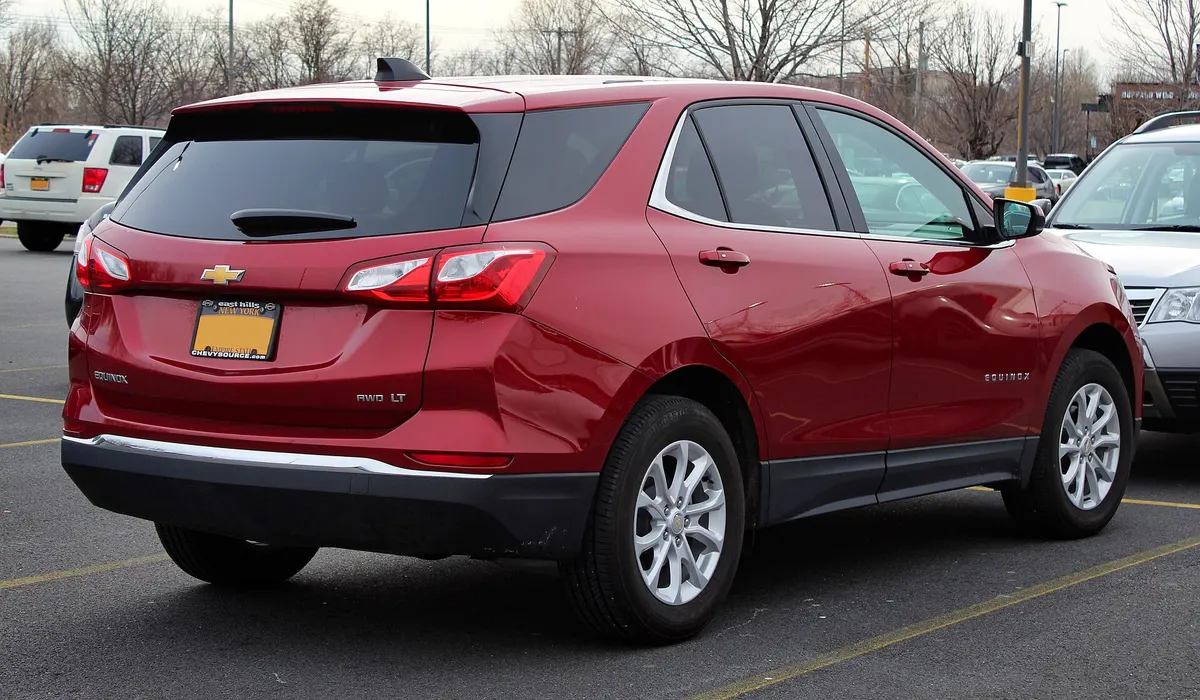
Engines
- LYX · 1.5L turbo gasoline, 170 hp
- LTG · 2.0L turbo gasoline, 252 hp
- LH7 · 1.6L turbo-diesel diesel, 137 hp
Transmissions
- 6T45 · automatic, 6-speed
- 9T50 · automatic, 9-speed
- automatic , 6-speed
Drivetrain
FWD / AWD
Body
SUV (compact crossover)
Trims
L, LS, LT, Premier, RS (2022–2024)
Chevrolet Equinox part-number cross-reference
Start from the OEM number, then pick the brand you trust. Verified equivalents for the Chevrolet Equinox (2018–2024).
Part links go to Amazon, and to eBay where Amazon does not stock the part. Affiliate links, so we may earn a commission if you buy. Your price is unchanged, and a commission never changes a verdict.
Oil filter
ACDelco
Turbo-preferred variant: high-temp silicone anti-drainback valve; forums recommend it over PF64 for the turbo heat
Look up ACDelco oil filterGM
GM OE number for the PF64 spin-on. Verified 09-17-2026 at the GM Parts Giant catalog cited below, which enumerates this exact part as '2018-2024 Chevrolet Equinox, 4 Cyl 1.5L, 4 Cyl 2.0L'. That is a genuine-parts retailer catalog rather than GM's own, and it states fitment per part number, so it carries the claim.
Check GM oil filterFram
Extra Guard; Tough Guard = TG10060, Ultra Synthetic = XG10060 (same spin-on)
Compare Fram oil filterVerified via: GM Parts Giant: Equinox oil filter (25206377 fits 1.5L & 2.0L, 2018-2024), Chevy Equinox Forum: PF64 / UPF64R spin-on confirmation, Walmart: Wix WL10290 fits 2018-2019 Equinox / Cruze, AutoZone: Fram Extra Guard PH10060 spin-on
Oil filter
Wix
Cartridge (NapaGold 100331). Shared with the 1.6L diesel Cruze and Terrain. NOTE: neighbor number WL10290 is the GAS filter. Do not swap
Look up Wix oil filterVerified via: GM Parts Giant: Equinox oil filter kit 55588497 (1.6L diesel), Walmart: Wix WL10331 fits 17-19 Cruze/Equinox/Terrain diesel, Oilfilter-crossreference: Wix WL10331 to Fram CH10246
Engine air filter
GM
GM OE number listed on the 1.6L diesel, same A3240C-shape panel per diesel specialist IDParts
Find GM engine air filterVerified via: PartsGeek: ACDelco A3240C fits 2018-2025 Equinox, IDParts: Equinox/Terrain 1.6L diesel air filter 84390002 / A3240C, Amazon: Fram CA12260 (A3240C / 23279657) 2018-2022 Equinox/Terrain
Cabin air filter
ACDelco
ACDelco GM-OE retail number; CF1184C is the Professional-line equivalent. This is the Equinox filter (also used on 2019+ Silverado). NOT CF188, which is the 2014-2018 K2XX Silverado filter
Compare ACDelco cabin air filterVerified via: GM Parts Giant: cabin filter 13508023 fits 2018-2024 Equinox (all engines), Amazon: Equinox cabin filter for GM 13508023 (2018-2024), Go-Parts: Bosch 6091C cabin filter 2018-2023 Equinox
Spark plugs
Verified via: GM Parts Giant: 1.5L spark plug GM 12683541 (2018-2024), Walmart: ACDelco 41-156 iridium fits 2018-2020/2022-2023 Equinox LT, Amazon: NGK 94374 LTR6IX Iridium IX, 2018-2020 Equinox 1.5L
Spark plugs
GM
GM OE number for the 2.0T LTG plug. Do NOT use the 1.5L's 41-156 here. The LTG takes a distinct plug. NGK equivalent could not be verified for this exact app, so it is omitted
Find GM spark plugsVerified via: GM Parts Giant: 2.0L spark plug GM 12681659 (2018-2020), eBay: OEM ACDelco 41-125 / GM 12681659 iridium set for LTG 2.0T
Glow plugs (1.6L diesel)
Verified via: GM Parts Giant: spark plug page notes the diesel uses glow plug assembly 55596430, IDParts: 1.6L diesel Equinox is a distinct diesel powertrain (glow-plug, not spark)
Front brake pads
ACDelco
Gold/Advantage ceramic; fits 2018-2020 Equinox (and 2016-2019 Malibu)
See ACDelco front brake padsVerified via: GM Parts Giant: front pad 84259368, 2018-2020 (1.5L/2.0L/1.6 diesel), Walmart: ACDelco Gold ceramic 14D1886CH, 2018-2020 Equinox
Front brake pads
Verified via: GM Parts Giant: front pad 84775617, 2021-2024, PartsGeek: ACDelco 17D2345CH front pad set, 2021-2023 Equinox
Wiper blades
Rear wiper
Liftgate wiper. GM's 2021-2024 manuals print 30 cm (12 in), and the 2018-2020 manuals print the same 30 cm blade. Front is 24 in + 18 in beam
See Rear wiper wiper bladesVerified via: WiperBladesUSA: 2019 Equinox 24 in / 18 in front, Chevrolet 2021 Equinox owner's manual (wiper blades: rear 30.0 cm, 12 in), Chevrolet 2022 Equinox owner's manual (wiper blades: rear 30.0 cm, 12 in)
Serpentine belt
Verified via: GM Parts Giant: Equinox drive belt by engine (1.5L 12654472, 2.0L 12664598, diesel 55571050), Paul's Travel Pictures: 2018-2022 Equinox single serpentine belt replacement (config)
Battery
BCI group
Find BCI group battery on AmazonVerified via: AutoZone: 2019 Equinox battery (Group 48/H6 AGM options), O'Reilly: ACDelco AGM Group Size 48 battery
Should I buy a 2018–2024 Chevrolet Equinox?
Buy the right year, not just the right price. The 2018–2020 cars carry the generation's concentrated risk: turbo failures on the 1.5L, the brake vacuum pump that can suddenly harden the pedal (now the subject of a class action), and oil consumption/leak complaints. 2018 specifically is the worst-complaint year with first-year bugs like fuel gauges that stop at 3/4. A 2022–2024 car (post-refresh, 1.5L/6-speed only) is the safer used buy: same basic drivetrain but past the worst of the early-build issues, and cheap to run when healthy. On any 1.5L, treat oil-change history as non-negotiable. The turbo and the vacuum pump both live or die by clean oil. A documented 2018–2019 diesel is a sleeper pick if you can find one.
Best years
2022, 2023, 2024
Years to avoid
2018 (first-year bugs, highest complaint counts: fuel gauge, turbo, brakes), 2018–2020 1.5L with no oil-change records (turbo + oil-consumption risk years)
Pre-Purchase Checklist for Chevrolet Equinox
- ☐Cold-start the engine and listen to the turbo: whining, whistling, or blue-gray smoke on startup points to a tired turbocharger, the 1.5L's signature failure.
- ☐Check the oil level and condition on the dipstick before the test drive. A low or dirty dipstick on a 1.5L is a walk-away sign; ask for oil-change receipts.
- ☐Look for oil seepage around the valve cover, dipstick tube, and turbo area. PCV-related crankcase pressure pushes oil out of these spots on the 1.5L.
- ☐Pump the brake pedal with the engine running, then at idle for several minutes: any 'Service Brake Assist' message or a suddenly hard pedal means the mechanical brake vacuum pump is dying (2018–2022).
- ☐Run the VIN at recalls.nhtsa.dot.gov. This generation has 15+ campaigns, including the 2021–2022 fuel pump stalling recall (23V013) and rear-seat LATCH anchor recall (2020–2023).
- ☐On a 2.0T, hold 35–45 mph on a light throttle and feel for a fine shudder. Torque-converter shudder on the 9-speed is a known pattern with a TSB.
- ☐On a 2018, fill the tank and watch whether the gauge actually reads full. Stuck-at-3/4 fuel senders are a documented first-year fault.
- ☐Verify the stop/start system cycles cleanly at a long idle: batteries weakened by the auto-stop duty cycle throw brake/traction warnings and jerky restarts.
Common Chevrolet Equinox problems & repair costs
Turbocharger failure / cold-weather turbo icing (1.5L LYX)
$250–$2,500Symptoms: Loss of power, check-engine light with overboost/underboost codes (P0234 is the classic), whining or grinding from the turbo, blue-gray exhaust smoke. In cold climates, oil-and-moisture condensate can freeze inside the turbo wastegate regulator solenoid and the intercooler below about 0°F, causing sudden power loss. GM addressed the freeze-up pattern in PIP5812C and TSB 22-NA-002 (solenoid replacement plus ECM software). Outright turbo bearing failures also occur, and a failing turbo can take the engine with it if it dumps oil or debris.
Fix: For the cold-weather fault: wastegate regulator solenoid replacement plus the dealer software update is the fix, and it's cheap. For a mechanically failed turbo: turbocharger replacement at an independent shop, typically $1,200–$2,500 parts and labor. If the failure contaminated the oil system, budget more. Some owners on the forums report full engine replacements under powertrain warranty.
Sources: CarComplaints: 2018 Equinox turbo failure in cold temperatures, GM Authority: GM small-turbo winter performance loss (PIP5812C), Terrain/Equinox forum: turbo failure reports
Brake vacuum pump failure: hard pedal, reduced brake assist
$400–$4,500Symptoms: Brake pedal suddenly becomes very hard to press, often with a 'Service Brake Assist' message and longer stopping distances. The 1.5L uses an engine-driven mechanical vacuum pump for brake boost; its output degrades (dirty oil accelerates it) or the pump seizes outright. Brakes are the single biggest complaint category on the 2018 at NHTSA (124 complaints on CarComplaints' tally). In the worst reported cases a seized pump has damaged the camshaft it rides on, turning a brake repair into an engine repair.
Fix: Vacuum pump replacement runs roughly $400–$900 at an independent shop. If the pump seized and took the camshaft/timing components with it, owners report bills in the $2,500–$4,500 range. GM ran a special coverage for the same failure on 2014–2018 vehicles (N182202780), and the 2018–2022 trucks are now the subject of a class-action lawsuit. Check your VIN and keep records. Clean, on-schedule oil changes are the best prevention.
Sources: NHTSA: 2018 Chevrolet Equinox complaints & recalls, GM special coverage N182202780: brake assist vacuum pump (NHTSA TSB archive), CarBuzz: class action over GM brake vacuum pump failures, Terrain/Equinox forum: '18–'22 vacuum pump failure thread
Oil consumption and PCV-related oil leaks (1.5L)
$150–$4,500Symptoms: Oil level drops noticeably between changes with no puddle on the ground; oil seepage around the dipstick tube and valve cover. On the 1.5L, a clogged or stuck PCV system builds crankcase pressure and pushes oil past seals. Oil pooled on top of the engine near the dipstick tube is the classic tell. Heavier consumption (owners adding a quart or more between changes) shows up in RepairPal and forum reporting on 2018–2021 cars. Note: the widely reported piston-ring class actions cover the previous generation's 2.4L, not this engine. The 3rd-gen issue is real but less uniform.
Fix: Start cheap: PCV/valve cover replacement and fixing the leak points runs $150–$500 and resolves many cases. True internal consumption is a bigger conversation. Document usage with the dealer while under the 5-year/60k powertrain warranty, because the fix at that point is pistons/rings or an engine, which runs well into four figures out of warranty. Between fixes, check the dipstick monthly; the low-oil consequence on this engine is the turbo and vacuum pump above.
Sources: RepairPal: Equinox excessive oil/gas consumption problem page, Terrain/Equinox forum: turbo-area oil leak thread, CarComplaints: 2018 Equinox engine problems
Transmission shudder and rough shifting
$250–$2,800Symptoms: On 2.0T cars with the 9T50 nine-speed: a fine vibration or shudder at steady light throttle around 25–45 mph, classic torque-converter clutch shudder, covered by GM TSB 21-NA-152. On 1.5L cars with the 6T45 six-speed: harsh or confused shifting, especially in cold weather, and occasional 'revs but no power' complaints on early cars.
Fix: For 9-speed shudder, the TSB-directed first step is a fluid exchange with Mobil 1 Synthetic LV ATF HP ($250–$450). It resolves most cases without hard parts. If shudder returns, a torque converter replacement runs $1,500–$2,800 independent. For the 6-speed, a fluid service and software check is the sane first move; widespread hard-part failure is not the pattern on this generation.
Sources: Chevy Equinox forum: 2019 Premier 2.0L transmission shudder, GearFixes: Chevy Equinox transmission problems (TSB 21-NA-152), Terrain/Equinox forum: trans shudder thread
Fuel pump module failure, stalling (recalled)
$0–$1,100Symptoms: Engine stumbles, loses power, or stalls outright because the fuel pump module doesn't consistently deliver enough fuel. GM recalled about 23,000 2021–2022 Equinox and GMC Terrain vehicles for this in January 2023 (GM N222372310 / NHTSA 23V-013); dealers replace the fuel pump free.
Fix: If the VIN is covered, the fix is a free fuel pump replacement at any Chevy dealer. Run the VIN before buying. Outside recall coverage, a fuel pump module replacement runs roughly $600–$1,100 at an independent shop. Separately, 2018 cars have a documented fuel-gauge fault where the gauge stops at 3/4 after a fill-up (fuel sender/module seating), annoying rather than dangerous, but budget a sender if it bothers you.
Sources: NHTSA recall report 23V-013: inadequate fuel pump flow, GM Authority: Equinox recalled for inadequate fuel pump flow, CarComplaints: 2018 Equinox fuel gauge stops at 3/4
Weak batteries and stop/start misbehavior
$200–$450Symptoms: Auto stop/start stops working or restarts with a jerk; random 'Service Brake Assist' / 'Service Traction Control' messages; multiple warnings that clear after a battery replacement. The stop/start duty cycle is hard on the battery, and owners, especially in stop-and-go use, report replacing batteries every 2–3 years. A marginal battery is behind a surprising share of this generation's electrical gremlins.
Fix: Load-test the battery first whenever this car throws odd warnings. It's the cheapest diagnosis you'll ever do. Replace with the correct AGM-type battery where equipped. If stop/start behavior still misbehaves on a healthy battery, have the battery sensor and connections checked before chasing bigger parts.
Sources: Chevrolet Forum: 2019 Equinox auto stop/start malfunction thread, Terrain/Equinox forum: auto stop stopped working again
A healthy 3rd-gen Equinox is cheap to run: parts are everywhere, the 1.5L sips fuel, and routine service is simple. The money risk is concentrated, not spread out: the turbo, the brake vacuum pump, and oil consumption are all on the 1.5L and all made worse by stretched oil changes, so the single best ownership habit is oil on schedule (or early) and a monthly dipstick check. Budget for a battery every 2–3 years thanks to stop/start, and run the VIN for open recalls. This generation has had 15+ campaigns and several of the scary-sounding failures (fuel pump stalling, LATCH anchors) are free fixes at the dealer.
Cost calculator
What will this Chevrolet Equinox cost you by a given mileage?
Drag to a mileage. We total the documented problems whose typical onset falls at or before it. The same cost ranges listed above, nothing new invented.
$0 estimated repair range
5-Year Maintenance Schedule & Cost to Own
Every scheduled service by mileage, fluid capacities, independent shop ranges, and parts cross-references.
Have a repair quote for this Chevrolet Equinox?
Audit against OEM book times, uncover duplicate pad and rotor labor, and verify parts markups.
How to fix common Chevrolet Equinox problems (DIY)
Engine & cabin air filter change
Tools: Flat screwdriver or 7mm socket (airbox clips/screws)
- Open the airbox lid on the passenger side of the engine bay, behind the headlight (screws or clips), lift out the old engine filter, and drop the new one in with the seal seated flat.
- Close the lid and confirm the clips/screws are snug. A leaking airbox feeds unfiltered air to a turbo engine.
- For the cabin filter, open the glovebox, squeeze the sides to drop it past its stops, and remove the filter door behind it.
- Slide the old cabin filter out, note the airflow arrow, and insert the new one the same way.
- Reset the glovebox and test the fan. Airflow should be noticeably stronger if the old filter was dirty.
Parts
- Engine air filter (2018–2024 Equinox 1.5L) · Amazon $12–$25
- Cabin air filter (2018–2024 Equinox) · Amazon $10–$20
Battery replacement (stop/start AGM)
Tools: 10mm socket and ratchet, Battery terminal brush, Memory saver (optional but keeps radio/window settings)
- Buy the correct group-size battery and match the type. Stop/start cars typically take an AGM battery, and a cheap flooded battery will die young in this duty cycle.
- With the ignition off, disconnect the negative terminal first, then the positive, then remove the hold-down clamp.
- Lift the old battery out (they're heavy; mind your back) and clean the tray and terminals.
- Set the new battery in, secure the hold-down, and connect positive first, then negative.
- Drive it for 15–20 minutes and confirm stop/start resumes working and no brake/traction warnings appear. Those messages on this car are very often just a weak battery.
Parts
- AGM battery (2018–2024 Equinox, check group size) · Amazon $180–$260
Front brake pads and rotors
Tools: Floor jack + jack stands, Socket set + breaker bar, C-clamp or caliper piston tool, Torque wrench, Brake cleaner + high-temp brake grease
- Loosen the front lug nuts, jack the car, set it on stands, and remove the wheels.
- Remove the two caliper guide-pin bolts, hang the caliper with a hook (never by the hose), and slide out the old pads.
- Remove the caliper bracket, pull the old rotor (a mallet helps if it's rust-stuck), and clean the hub face thoroughly.
- Install the new rotor and bracket, compress the caliper piston slowly with the reservoir cap loosened, and fit the new pads with grease on the contact tabs.
- Reinstall the caliper, torque everything to spec including the lugs, and pump the pedal until firm before moving the car.
- Bed the pads: 6–8 moderate stops from 35 mph, no full stops, then drive gently for 10 minutes to cool.
Parts
- Front brake pads and rotors kit (2018–2024 Equinox) · Amazon $90–$180
Some parts links are affiliate links. We may earn a commission at no cost to you. We only list parts that fit this generation.
The short version
The 2018–2024 Equinox is a sensible family crossover with one engine doing almost all the work: the 1.5-liter turbo. That engine is fine when it’s cared for and expensive when it’s not. The generation’s three real problems all live on the 1.5L: turbocharger failures (including a cold-weather freeze-up GM patched with software), a mechanical brake vacuum pump that can suddenly leave you with a rock-hard pedal, and oil consumption/leaks. All three are made worse by dirty or low oil.
The complaints cluster hard in 2018–2020. The 2022 refresh simplified the lineup to the 1.5L and six-speed, and those later cars have been notably quieter.
What that means when you’re shopping
If you’re looking at a 2022–2024 car, you’re past the worst of it. Buy on condition, service records, and a VIN recall check like any used car.
If you’re looking at a 2018–2020 car, the oil-change history is the inspection. Cold-start it and listen to the turbo, check the dipstick before the test drive, look for oil around the valve cover and dipstick tube, and idle it long enough to make sure no “Service Brake Assist” message appears. A 2018 with no records and a hard pedal is two four-figure repairs waiting to happen; the same car with a folder of receipts is a legitimately cheap family hauler.
Two wildcard picks: the 2.0T (2018–2020) is genuinely quick but check for the 9-speed’s torque-converter shudder, and the 1.6L diesel (2018–2019) is the generation’s most durable engine if you can find one and drive enough highway miles to suit it.
The recall homework
This generation has had 15+ recall campaigns, and several scary-sounding failures are free fixes: the 2021–2022 fuel pump stalling recall (NHTSA 23V-013), the 2020–2023 rear LATCH anchor recall, and the 2024 door striker recall. Five minutes at recalls.nhtsa.dot.gov with the VIN is the highest-value step in buying one of these.
How this file is built: failure modes and cost ranges are compiled from NHTSA complaint and recall data, GM’s own TSBs and special-coverage bulletins, CarComplaints.com data, and owner-forum reporting, then sanity-checked against shop-floor experience. Cost figures are independent-shop estimates and vary by region. Spot something off? Tell us.
Viral car myths, checked against this car
- Misleading
Is the "$1 Japanese oil trick" that stops engine wear forever real?
The 'Japanese oil trick' is almost certainly MoS2 (molybdenum disulfide), a real industrial friction modifier. It is German, not Japanese (Liqui Moly popularized it), sold openly at every parts store for $15-20, has real but modest measured friction benefits, and was never buried by anyone.
- Dangerous
Is the "$2 liquid that destroys engine sludge forever" real? Our shop-floor verdict.
An aggressive solvent flush on a high-mileage engine is a textbook way to spin a bearing. The viral 'kitchen-cabinet flush' is folklore that real shops spend money cleaning up after.
- Misleading
Is the "$2 liquid that stops any leak" really banned in 11 states?
Automotive stop-leak products are not banned in any US state. The products are real (Bar's Leaks, BlueDevil), they work in specific narrow situations, and they can permanently damage your cooling or oiling system if applied to the wrong leak.
- Outdated
Does a "$1 mineral" really double car battery life? The Epsom-salt reality.
The mineral is Epsom salt (magnesium sulfate). It was a real desulfation hack for serviceable flooded-cell batteries 40+ years ago. It does not work on modern sealed AGM or EFB batteries, and trying it on yours will void the warranty without helping the battery.
Frequently asked questions
Which Chevy Equinox years should I avoid?
2018 is the year with the highest complaint counts: first-year bugs (fuel gauge stuck at 3/4), plus the turbo, brake vacuum pump, and oil-consumption risks all concentrated there. 2018–2020 1.5L cars in general deserve extra scrutiny. The 2022–2024 post-refresh cars are the safest used buy of this generation.
Is the Equinox 1.5 turbo engine reliable?
It's adequate when maintained and unforgiving when it isn't. The known weak points (turbocharger failures, the brake vacuum pump, and PCV/oil consumption issues) are all oil-quality-sensitive. A 1.5L with documented on-time oil changes is a reasonable buy; one with no records is a gamble. Cold-climate cars also had a known freeze-up issue in the turbo wastegate solenoid that GM fixed with a solenoid and software update (TSB 22-NA-002).
What about the diesel Equinox?
The 1.6L diesel (2018–2019 only) is quietly the most durable engine of the generation. It's GM's long-running European diesel, and owner reports show high-mileage examples with little beyond sensors and batteries. It was dropped for 2020 due to low demand, so they're rare. If you find a clean one at a fair price and drive enough highway miles to keep the emissions system happy, it's a sleeper pick.
Was the Equinox recalled for stalling?
Yes. GM recalled about 23,000 2021–2022 Equinox and GMC Terrain vehicles in January 2023 (NHTSA 23V-013) because the fuel pump module could starve the engine and cause a stall. The fix is a free fuel pump replacement. Run any candidate VIN at recalls.nhtsa.dot.gov; this generation has 15+ campaigns overall and open recalls are free money.
How many miles will a 3rd-gen Equinox last?
150,000–200,000 miles is realistic for a 1.5L that's had clean oil its whole life; the drivetrain itself isn't fragile. The cars that die early die from the same story: stretched oil changes leading to turbo or vacuum-pump failure, or unmonitored oil consumption running the engine low. Check the dipstick monthly and this is a long-haul car.
Every Chevrolet Equinox generation
The full case file run, beyond the generation before and after this one.
Cross-shopped rivals
Files on what buyers weigh against the Chevrolet Equinox of this era.