Case file · CHEVROLET-CRUZE-2016-2019 · 2nd gen (D2XX)
Chevrolet Cruze 2016–2019Common problems, reliability & repair costs
The second-gen Cruze fixed most of what plagued the first one, then tripped over a new problem. The 1.4L LE2 turbo in 2016–2017 cars can crack a piston (almost always cylinder 1) from low-speed pre-ignition, and the fix is a partial engine rebuild. GM updated the pistons and calibration for 2018, and those last two model years are genuinely solid used cars. Chevy killed the Cruze in early 2019, so this is the end of the line.
2018, 2019
2016–2017 (cracked-piston / LSPI risk on the 1.4L LE2)
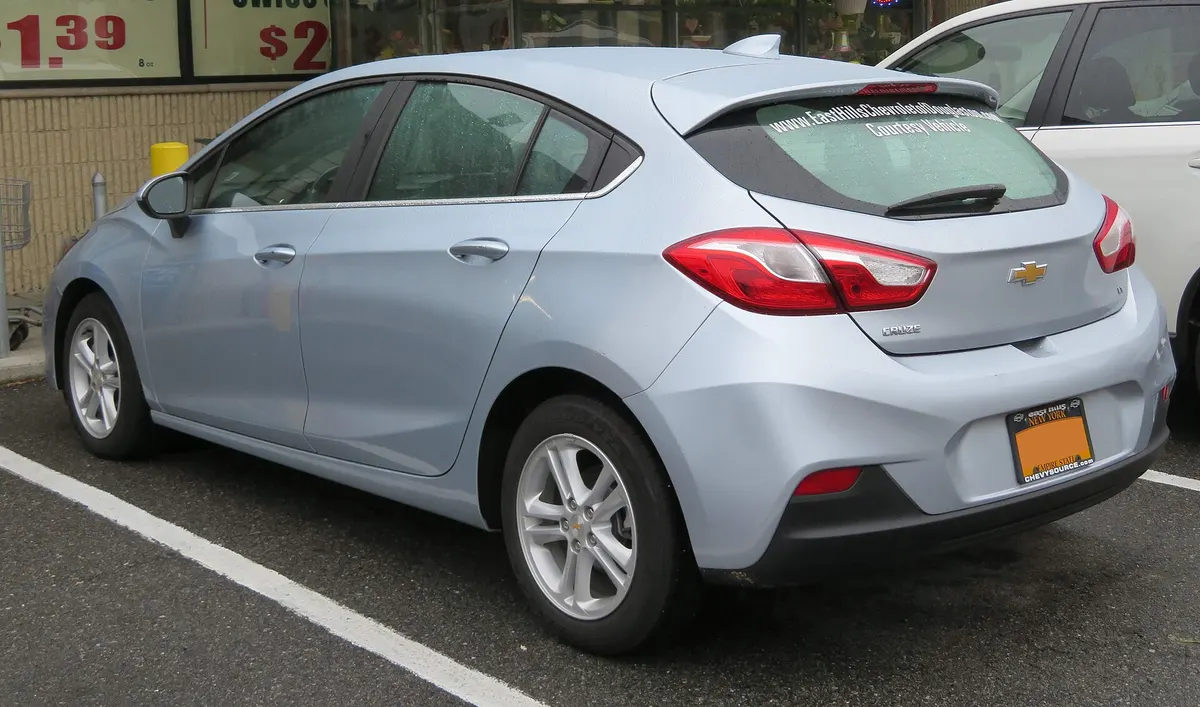
Engines
- LE2 · 1.4L gasoline, 153 hp
- LH7 · 1.6L diesel, 137 hp
Transmissions
- manual , 6-speed
- 6T35 · automatic, 6-speed
- automatic , 9-speed
Drivetrain
FWD
Body
sedan, hatchback
Trims
L, LS, LT, Premier, Diesel, RS (appearance package)
Chevrolet Cruze part-number cross-reference
Start from the OEM number, then pick the brand you trust. Verified equivalents for the Chevrolet Cruze (2016–2019).
Part links go to Amazon, and to eBay where Amazon does not stock the part. Affiliate links, so we may earn a commission if you buy. Your price is unchanged, and a commission never changes a verdict.
Oil filter
Verified via: GM 2016 Cruze owner's manual, maintenance replacement parts (printed p336), GM 2017 Cruze owner's manual, maintenance replacement parts (printed p362)
Oil filter
Verified via: GM 2018 Cruze owner's manual, maintenance replacement parts (printed p360), GM 2019 Cruze owner's manual, maintenance replacement parts (printed p335)
Oil filter
Wix
Cartridge; shared with the 1.6L diesel Equinox/Terrain. NOTE: neighbor WL10290 is a gas-engine filter. Do not swap
Look up Wix oil filterVerified via: Walmart: WIX WL10331 fits 17-19 Chevrolet/GMC Cruze/Equinox/Terrain diesel, eBay: WIX WL10331 for Chevrolet Cruze 2017-2019 L4-1.6L, FRAM: CH10246 Extra Guard, 2017-2019 Cruze 1.6L diesel (98 cid), GM 2018 Cruze owner's manual, maintenance replacement parts, 1.6L diesel PF2264G / 55588497 (printed p360)
Engine air filter
Fram
Extra Guard; crosses ACDelco A3202C / GM 13367308 / Wix WA10646 / Purolator A21388
Compare Fram engine air filterK&N
Washable drop-in; K&N catalogs it for the 2016-2019 Cruze 1.4L gas
Look up K&N engine air filterVerified via: GM Parts Giant: Cruze air filter (gas 13367308 sedan, 84083965 hatch), Amazon: Fram CA12112 fits 2016-2019 Cruze 1.4L (crosses A3202C / 13367308 / WA10646), K&N: 33-5075 air filter, Chevrolet Cruze 1.4L L4 gas, GM 2018 Cruze owner's manual, maintenance replacement parts, 1.4L 13367308 / A3202C (printed p360)
Engine air filter
Verified via: GM 2016 Cruze owner's manual, maintenance replacement parts (printed p336)
Engine air filter
ACDelco
GM OE = 39030321; diesel-specific air cleaner element
Find ACDelco engine air filter on AmazonVerified via: IDParts (diesel specialist): Cruze Gen2 1.6L diesel air filter 39030321 / A3220C, GM Parts Giant: Cruze air filter, 39030321 fits 2017-2019 1.6L diesel
Cabin air filter
Verified via: GM 2016 Cruze owner's manual, maintenance replacement parts (printed p336)
Cabin air filter
ACDelco
GM 13356916 in the 2017 book, GM 13508023 in the 2018 and 2019 books
See ACDelco cabin air filter on AmazonVerified via: GM 2017 Cruze owner's manual, maintenance replacement parts (printed p363), GM 2018 Cruze owner's manual, maintenance replacement parts (printed p360), GM 2019 Cruze owner's manual, maintenance replacement parts (printed p336)
Spark plugs
ACDelco
GM 12673527. GM prints the gap for replacement plugs, so check it before install
Look up ACDelco spark plugs on AmazonVerified via: GM 2016 Cruze owner's manual, maintenance replacement parts (printed p336), GM 2018 Cruze owner's manual, replacement parts (printed p361) and engine specifications gap (printed p365)
Spark plugs
ACDelco
GM 12686362. GM prints the gap for replacement plugs, so check it before install
See ACDelco spark plugs on AmazonVerified via: GM 2019 Cruze owner's manual, replacement parts (printed p336) and engine specifications gap (printed p340)
Glow plugs
Verified via: GM Parts Giant: Cruze glow plug 55596430, 2017-2019 1.6L diesel, IDParts (diesel specialist): Cruze Diesel Gen2 glow plug 55596430 (65G)
Front brake pads
GM
GM OE front pad set; ACDelco Gold ceramic front kit with clips = 19427987
Look up GM front brake pads on AmazonBosch
QuietCast ceramic, front, FMSI D1844. Shared with the Chevy Volt/Bolt front. NOT 14D1802/BC1802. That 1802 family is the Colorado/Canyon, a common mis-cross
Check Bosch front brake padsVerified via: GM Parts Giant: Cruze front pad 42793332, 2016-2019 (1.4L & 1.6L diesel), NewParts: Bosch BC1844 front pads, 2016-2019 Cruze L/LS/LT/Premier + Diesel (FMSI D1844)
Wiper blades
OE size
GM's books print 70 cm (27.6 in) driver and 60 cm (23.6 in) passenger. 28 in and 24 in are the nearest US sizes. WARNING: many retailers mis-list this car as 24 in / 18 in. Liftgate models add a 25 cm rear blade (2018-2019 books)
See OE size wiper blades on AmazonVerified via: GM 2019 Cruze owner's manual, wiper blade sizes (printed p336), Otto Blades: 2019 Cruze wiper set, 28 in driver + 24 in passenger, WiperBladesUSA: 2019 Chevrolet Cruze wiper size chart
Serpentine belt
Verified via: GM Parts Giant: Cruze drive belt 12638808 (1.4L) / 55571050 (1.6L diesel), Shea Chevrolet Parts: V-ribbed serpentine belt 12638808, 2016-2019 Cruze
Serpentine belt
GM
GM OE generator & A/C compressor belt; shared with the 1.6L diesel Equinox
Find GM serpentine belt on AmazonVerified via: GM Parts Giant: Cruze drive belt 55571050, 2017-2019 1.6L diesel, GMPartsDirect: GM serpentine belt 55571050, 2017-2019 (Cruze/Equinox/Terrain 1.6L diesel)
Battery
BCI group
OE ~520 CCA. Match the replacement number on the original battery label. GM says a standard battery in place of an AGM one shortens battery life
Look up BCI group battery on AmazonVerified via: AutoZone: 2017 Chevrolet Cruze battery (Group 47 / H5), PowerTex Batteries: 2018 Cruze BCI Group 47 (H5)
Should I buy a 2016–2019 Chevrolet Cruze?
Buy a 2018 or 2019 with confidence; buy a 2016 or 2017 only after clearing the piston issue. The second-gen Cruze is a real improvement over the first (lighter, more efficient, and free of the old PCV-and-coolant circus at the same scale), but the early LE2 engine's cracked-piston failure is expensive enough ($2,500–$5,000) to total out a cheap car. On 2016–2017 cars, a documented engine repair or the updated ECM calibration plus clean compression is what separates a bargain from a gamble. The 2018–2019 cars got revised pistons and rank among the most reliable compacts of their years. Run every VIN through the recall lookup. This generation collected several (fuel-tank sensor, rear-brake caliper gas, start/stop accumulator bolts), all fixed free.
Best years
2018, 2019
Years to avoid
2016–2017 (cracked-piston / LSPI risk on the 1.4L LE2)
Pre-Purchase Checklist for Chevrolet Cruze
- ☐On 2016–2017 cars: cold-start the engine and listen for a miss or rough idle. A flashing check-engine light or stored P0300 misfire code on cylinder 1 is the cracked-piston signature. Walk away or price in an engine.
- ☐Ask whether the ECM calibration update (GM's LSPI mitigation, TSB 18-NA-171) was applied, and whether pistons or the engine were ever replaced. A documented repair with the updated parts is a plus, not a red flag.
- ☐Run the VIN through GM's recall lookup. This generation had recalls for the fuel-tank pressure sensor (2016–2018 LS, NHTSA 18V-304), rear brake caliper pistons (2018–2019, NHTSA 19V-645), and start/stop transmission accumulator bolts (2018–2019, GM N202313440).
- ☐Check the coolant level cold and look for drips or crusty residue at the plastic water outlet, thermostat housing, water pump, and turbo coolant lines, the 1.4L's known leak points.
- ☐Press the brake pedal firmly with the car stopped. A soft or spongy pedal on a 2018–2019 is the symptom of the caliper-piston recall condition. The fix is a free brake bleed at a dealer.
- ☐Ask for oil-change records. GM's 2016-2017 books call for SAE 5W-30 meeting dexos1 (ACDelco dexos1 Synthetic Blend recommended). The 2018 book calls for 0W-20 meeting dexos1 second generation, and the 2019 book for full synthetic 0W-20 meeting dexos1. Records showing the right oil on schedule are what you want to see.
- ☐On automatics, confirm smooth engagement and no slipping or flaring between gears on a test drive, and verify the auto stop/start system restarts cleanly.
- ☐On the diesel: check for emissions warnings or a 'reduced engine power' history, ask about DEF top-offs and highway use, and budget for NOx sensors as a wear item.
Common Chevrolet Cruze problems & repair costs
Cracked pistons from LSPI (1.4L LE2, 2016–2017)
$2,500–$5,000Symptoms: Sudden rough running and vibration with the check-engine light on or flashing, a P0300 (or cylinder 1) misfire code, and low compression on cylinder 1. Low-speed pre-ignition (fuel igniting before the spark under low-RPM, high-load driving) spikes cylinder pressure beyond what the piston ring lands can take.
Fix: Replace the damaged piston(s), in practice often all four with updated parts, or swap in a used/reman engine, then flash the newest ECM calibration, which GM released specifically to reduce LSPI (TSB 18-NA-171). GM's 2018 book calls for 0W-20 meeting dexos1 second generation and the 2019 book for full synthetic 0W-20 meeting dexos1, where the 2016-2017 books called for dexos1 5W-30. The 2018–2019 engines got revised pistons and don't show this failure at the same rate.
Sources: CarComplaints: 2017 Cruze cracked piston (22 complaints), CruzeTalk: 'Dreaded cracked piston got me', GM TSB 18-NA-171: rough running, misfire, low compression (referenced in owner reports)
Coolant leaks (water outlet / water pump / turbo coolant lines)
$150–$900Symptoms: Coolant level that keeps dropping, sweet smell after driving, drips or crusty residue at the plastic water outlet or thermostat housing, seepage at the water pump, and wet spots where the turbo coolant lines meet their crimped fittings. Left alone it ends in overheating.
Fix: Replace the failed part. The plastic water outlet and thermostat housing are the usual first offenders, followed by the water pump and turbo coolant feed/return lines. A popular durability upgrade is swapping the plastic outlet for an aluminum aftermarket piece, which is cheap and eliminates that failure point. It's a smaller problem than on the first-gen Cruze, but the same plastic-parts pattern persists.
Sources: RepairPal: Chevrolet Cruze coolant leak, FixMyOldRide: Chevy Cruze coolant leak symptoms and repair, CruzeTalk: water pump still leaking after replacing
Stalling / dies while driving and check-engine electrical complaints (2016)
$300–$1,500Symptoms: Engine cuts out while driving or won't restart, check-engine light with driveability complaints, and assorted electrical faults: radio/display glitches and warning messages. CarComplaints puts 'dies while driving' at an average $1,100 repair around 42,000 miles and check-engine-light complaints around $500 at 36,000 miles on the 2016.
Fix: No single root cause. Reported fixes range from sensors and ignition parts to fuel-system and module repairs, which is why diagnosis matters more than parts-swapping here. Get any stalling 2016 scanned and diagnosed before buying; a car with an unexplained stall history is a pass.
Sources: CarComplaints: 2016 Chevrolet Cruze problems, ChevroletProblems: 2nd-gen (2016–2019) Cruze problems
Automatic transmission slipping and the start/stop accumulator-bolt recall
$0–$3,500Symptoms: For the recall condition: transmission fluid leaking from the start/stop accumulator, which can progress to slipping and a loss of propulsion, and leaking fluid near hot parts is a fire risk. Separately, a small number of 2018 owners report slipping or harsh engagement on the 6-speed auto.
Fix: The recall (GM N202313440) is free: dealers inspect the start/stop transmission accumulator and replace it if bolts are loose or missing. A supplier software error let some leave the factory that way. Verify by VIN that it was done. Slipping outside the recall condition means a proper transmission diagnosis; a rebuild or replacement is the worst case.
Sources: Cars.com: 2018 Chevrolet Cruze recalls, CruzeTalk: recall on 2018–2019 Cruze (accumulator bolts), CarComplaints: 2018 Chevrolet Cruze problems
Diesel emissions-system faults (1.6L LH7, 2017–2019)
$300–$1,500Symptoms: Check-engine light with emissions or DEF warning messages, escalating to a 'reduced engine power' limp mode and, if ignored, a speed limit or no-restart countdown. Usual culprits are NOx sensors, DEF heaters/injectors, and EGR/DPF hardware, especially on cars that live in short-trip city driving.
Fix: Replace the failed sensor or DEF component and clear the fault. NOx sensors run roughly $300–$600 each installed and are best treated as consumables on any modern diesel. The engine itself is well-regarded; the aftertreatment plumbing around it is where the money goes. Regular highway runs keep the DPF and DEF system happiest.
Sources: Edmunds forums: Cruze diesel reduced engine power, CruzeTalk: check engine light / emissions system (diesel)
A sorted second-gen Cruze is cheap to run: parts are plentiful, the LE2 sips fuel, and routine service is simple. The two budget items that separate it from a Civic are oil quality and plastic cooling parts: feed it the oil its book names on schedule (dexos1 5W-30 in the 2016-2017 books, 0W-20 meeting dexos1 second generation in the 2018 book, full synthetic 0W-20 dexos1 in the 2019 book) and expect a water outlet, thermostat housing, or coolant line before 100k. The 2016–2017 piston risk is the one genuinely expensive unknown; the diesel trades gas-engine risks for emissions-hardware costs. Confirm the free recall work is done and normal wear (brakes, tires, battery) covers most of the rest.
Cost calculator
What will this Chevrolet Cruze cost you by a given mileage?
Drag to a mileage. We total the documented problems whose typical onset falls at or before it. The same cost ranges listed above, nothing new invented.
$0 estimated repair range
5-Year Maintenance Schedule & Cost to Own
Every scheduled service by mileage, fluid capacities, independent shop ranges, and parts cross-references.
Have a repair quote for this Chevrolet Cruze?
Audit against OEM book times, uncover duplicate pad and rotor labor, and verify parts markups.
How to fix common Chevrolet Cruze problems (DIY)
Replace the plastic water outlet / thermostat housing (aluminum upgrade)
Tools: Metric socket set, Drain pan, Hose-clamp pliers, Funnel for coolant fill
- With the engine cold, drain the coolant into a clean pan from the radiator drain.
- Remove the hoses and the electrical connector from the plastic water outlet at the end of the cylinder head.
- Unbolt the outlet, remove it, and clean the mating surface.
- Install the new outlet (an aluminum aftermarket unit is the popular durability upgrade) with a fresh gasket/O-ring, torquing the bolts evenly.
- Refill with Dex-Cool, bleed the cooling system, and run the engine to temperature.
- Check for leaks and a stable temperature reading, then re-check the level after a day of driving.
Parts
- Aluminum water outlet (1.4L LE2 Cruze) · Amazon $40–$80
- Dex-Cool coolant (1 gal) · Amazon $15–$25
Replace spark plugs on the 1.4L turbo
Tools: 5/8" spark plug socket + extension, Torque wrench, Gap gauge
- With the engine cold, remove the engine cover and unbolt/unplug the ignition coil pack.
- Blow debris out of the plug wells, then remove the four plugs.
- Gap the new plugs to spec (turbo engines are sensitive to gap; check, don't assume).
- Thread the new plugs in by hand, torque to spec, and reinstall the coil pack.
- Start the engine and confirm a smooth idle with no misfire.
Parts
- Iridium spark plugs, set of 4 (1.4L LE2 Cruze) · Amazon $25–$50
Cabin & engine air filter change
Tools: Screwdriver (airbox clips)
- Open the glovebox and release it to access the cabin filter door behind it.
- Slide out the old cabin filter and insert the new one with the airflow arrow oriented correctly.
- Unclip the engine airbox lid, swap in the new panel filter, and re-clip.
Parts
- Cabin air filter (2016–2019 Cruze) · Amazon $10–$18
- Engine air filter (2016–2019 Cruze) · Amazon $12–$22
Some parts links are affiliate links. We may earn a commission at no cost to you. We only list parts that fit this generation.
The short version
The 2016–2019 Cruze is the car the first generation should have been: lighter, quicker, better on fuel, and rid of the old PCV-and-water-pump routine as a defining trait. Then the new 1.4-liter LE2 turbo introduced its own landmine: in 2016–2017 cars, low-speed pre-ignition can crack a piston, almost always cylinder 1. One day the car runs fine; the next it’s misfiring with low compression and a $2,500–$5,000 estimate.
GM’s response tells you which years to buy. The company updated the ECM calibration and revised the pistons for 2018. Its 2018 owner’s manual also calls for 0W-20 meeting dexos1 second generation and the 2019 manual for full synthetic 0W-20 meeting dexos1, where the 2016-2017 books called for dexos1 5W-30. The 2018–2019 cars are genuinely reliable compacts (Consumer Reports ranked the 2018 among the best in class), and the 2019 has almost no complaints on record.
What that means when you’re shopping
On a 2016 or 2017, the engine is the whole negotiation. Cold-start it and listen for a miss. Scan for stored misfire codes. A documented piston or engine replacement with the updated calibration is a good sign. That car already took its medicine. No records plus a rough idle means walk.
On a 2018 or 2019, buy on condition and confirm the free recall work by VIN: the rear-brake caliper bleed (the symptom is a spongy pedal), the start/stop transmission accumulator bolt inspection, and, on 2016–2018 LS models, the fuel-tank pressure-sensor shield. All no-charge at any Chevy dealer.
Whichever year, glance at the cooling system. The plastic water outlet, thermostat housing, and turbo coolant lines still fail like they did on the old car, just less often: cheap fixes if you catch them, an overheated engine if you don’t. And ask about oil: a Cruze that’s had the dexos-spec oil its book names, on schedule, is a meaningfully safer bet than one raised on the cheapest quick-lube special.
The diesel wildcard
The 2017–2019 1.6L diesel is the sleeper of the lineup: quiet, 240 lb-ft, 700-plus miles per tank, and available with a 9-speed automatic, or with a manual in 2017-2018 (GM’s 2019 engine table lists the diesel with the automatic only). Its risks are all in the emissions plumbing: NOx sensors, DEF hardware, and the particulate filter cost real money out of warranty and hate short trips. A highway-commuter diesel with records is a great buy; a city-driven one is a slow-motion repair bill.
End of the line
Chevrolet ended Cruze production in March 2019 and closed the Lordstown plant, exiting the compact-sedan business in North America. There is no next generation. The upside for owners: millions of Cruzes on the road mean parts supply and aftermarket support aren’t going anywhere.
How this file is built: failure modes and cost ranges are compiled from NHTSA recall and complaint data, GM service bulletins, CarComplaints data, and owner reporting on CruzeTalk and Edmunds forums, then sanity-checked against shop-floor experience. Cost figures are independent-shop estimates and vary by region. Spot something off? Tell us.
Viral car myths, checked against this car
- Misleading
Is the "$2 liquid that stops any leak" really banned in 11 states?
Automotive stop-leak products are not banned in any US state. The products are real (Bar's Leaks, BlueDevil), they work in specific narrow situations, and they can permanently damage your cooling or oiling system if applied to the wrong leak.
- Dangerous
Is the "$2 liquid that destroys engine sludge forever" real? Our shop-floor verdict.
An aggressive solvent flush on a high-mileage engine is a textbook way to spin a bearing. The viral 'kitchen-cabinet flush' is folklore that real shops spend money cleaning up after.
- Misleading
Is the "$1 Japanese oil trick" that stops engine wear forever real?
The 'Japanese oil trick' is almost certainly MoS2 (molybdenum disulfide), a real industrial friction modifier. It is German, not Japanese (Liqui Moly popularized it), sold openly at every parts store for $15-20, has real but modest measured friction benefits, and was never buried by anyone.
Frequently asked questions
Which second-gen Chevy Cruze years should I avoid?
Be careful with 2016 and 2017. Those years carry the 1.4L LE2's cracked-piston risk from low-speed pre-ignition (a $2,500–$5,000 failure) plus the bulk of the generation's stalling and check-engine complaints. They're not automatically bad buys, but you need clean compression, no misfire history, and ideally the updated ECM calibration or a documented engine repair. The 2018 and 2019 cars got revised pistons and are the safe pick.
What is the Chevy Cruze cracked piston problem?
On 2016–2017 1.4L turbos, low-speed pre-ignition (fuel igniting before the spark during low-RPM, high-load driving) can spike cylinder pressure and crack a piston, almost always cylinder 1. You get a sudden misfire (P0300), rough running, and low compression. GM addressed it with an ECM calibration update and revised pistons for 2018. Its 2018 book also moves the oil to 0W-20 meeting dexos1 second generation, and the 2019 book to full synthetic 0W-20 meeting dexos1, from dexos1 5W-30 in 2016-2017. The repair is piston or engine replacement.
Is the 2018–2019 Chevy Cruze reliable?
Yes. They're the best of the breed. The piston design was updated, complaint volume dropped sharply (the 2019 has almost none on record), and the platform's other issues are minor. Just verify the two free recalls were done: the rear-brake caliper bleed (spongy pedal) and the start/stop transmission accumulator bolt inspection.
Why was the Chevy Cruze discontinued?
GM ended Cruze production in March 2019 as it shifted its North American lineup away from small cars toward crossovers and trucks, closing the Lordstown, Ohio plant that built it. There's no next generation in the US, so parts remain plentiful, but this file is the end of the Cruze line.
Is the Cruze diesel worth buying used?
For the right owner. The 1.6L 'whisper diesel' is quiet, torquey, and can top 50 mpg highway with 700+ miles of range. The catch is the emissions system: NOx sensors, DEF components, and the DPF are wear items that cost real money out of warranty, and short-trip city driving accelerates their demise. If you drive highway miles and keep records, it's a gem; if you drive 3 miles to work, buy the gas car.
Cross-shopped rivals
Files on what buyers weigh against the Chevrolet Cruze of this era.