Case file · NISSAN-SENTRA-2013-2019 · 7th gen (B17)
Nissan Sentra 2013–2019Common problems, reliability & repair costs
The B17 Sentra is a roomy, cheap-to-buy compact with one serious liability: the Jatco CVT. The 2013–2017 cars in particular are prone to CVT slipping, shuddering, and outright failure, and the engine is genuinely underpowered. It can be a fine econo-box if you buy a documented one and treat the transmission fluid as a maintenance item, but a neglected CVT here is a $3,000–$4,500 repair on a car that isn't worth much.
2018, 2019
2013 (most-complained-about year: CVT, brakes, recalls) +1 more
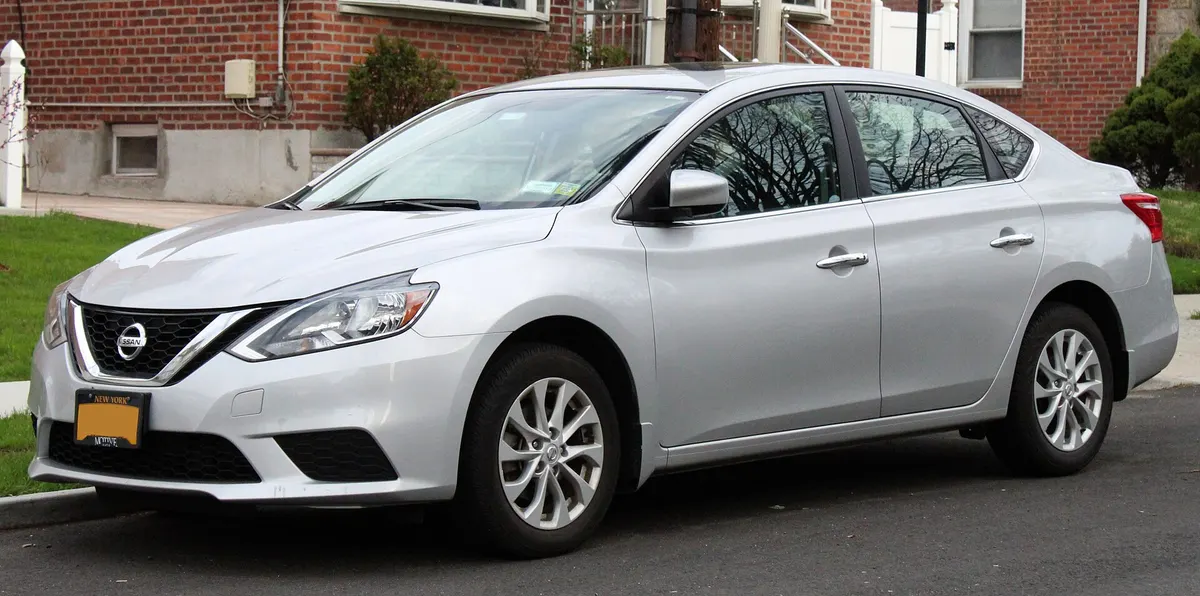
Engines
- MRA8DE · 1.8L gasoline, 130 hp
- MR16DDT · 1.6L turbo gasoline, 188 hp
Transmissions
- Jatco CVT7 (JF015E) · cvt
- manual , 6-speed
- Jatco (SR Turbo-specific) · cvt
Drivetrain
FWD
Body
sedan
Trims
S, SV, SR, SL, FE+, SR Turbo, NISMO
Nissan Sentra part-number cross-reference
Start from the OEM number, then pick the brand you trust. Verified equivalents for the Nissan Sentra (2013–2019).
Part links go to Amazon, and to eBay where Amazon does not stock the part. Affiliate links, so we may earn a commission if you buy. Your price is unchanged, and a commission never changes a verdict.
Oil filter
Nissan
current number; supersedes 15208-65F0D (2013-2015 1.8L) and 15208-65F0C (2017-2019 1.6T). Both engines converge on this filter.
Find Nissan oil filter on AmazonFram
Extra Guard; XG6607 (Ultra Synthetic) and TG6607 (Tough Guard) are the same filter in Fram's other lines.
Look up Fram oil filterPurolator
PurolatorONE is PL14612 (retailer fitment confirms 2016 Sentra MRA8DE 1.8L); PurolatorTECH is TL14612.
Check Purolator oil filterVerified via: NissanPartsDeal: Sentra oil filters by year/engine (15208-65F0D 2013-2015 1.8L, 15208-65F0C 2017-2019 1.6T, all supersede 15208-65F0E), oilfilter-crossreference.com: Nissan 15208-65F0E alternatives (Fram PH6607, Denso 150-2004, Mann W67/1), CarParts: Purolator PL14612 fitment (2016 Nissan Sentra MRA8DE 1.8L)
Engine air filter
Nissan
the widely-sold B17 Sentra panel filter; catalogs also list 16546-JG30A / 16546-5RB1A as alternate/superseding numbers, but aftermarket makers all cross to 30P00. NOT the Juke's 16546-17B00.
Find Nissan engine air filter on AmazonFram
Extra Guard; Ultra version is XGA6900. Fitment confirmed 2007-2019 Sentra / 2019 Sentra 1.8L.
Check Fram engine air filterVerified via: NissanPartsDeal: Sentra air filters (16546-30P00 for 2007-2019, 1.6T/1.8L/2.5L), PartsGeek: Wix 46044 fits 2007-2019 Nissan Sentra (OE 16546-30P00), Walmart: Fram Ultra XGA6900 fits 2007-2019 Nissan Sentra
Cabin air filter
Fram
Fresh Breeze; Fram's own catalog lists it as replacing 27277-3DF0A for 2013-2019 Sentra. Do NOT use CF11776, which is the 2013-2018 Altima filter, nor CF11173 (2007-2012 Altima).
Compare Fram cabin air filterVerified via: Nissan (official): 27277-3DF0A cabin filter, 2013-2020 Sentra, FRAM: CF11177 Fresh Breeze replaces Nissan 27277-3DF0A, CarParts: Wix 24012 fitment (2016 Nissan Sentra 1.8L)
Spark plugs
Nissan
= NGK DILKAR6A-11 iridium (the California/service plug). The 49-state factory-fill was platinum NGK PLZKAR6A-11 = Nissan 22401-CK81B. Do NOT use DILKAR7E9HS, which is the 1.6 turbo plug.
Look up Nissan spark plugs on AmazonNGK
Laser Iridium; the OE-equivalent plug for the MRA8DE, sold as the direct cross for Nissan 22401-JA01B.
Check NGK spark plugsVerified via: NissanPartsDeal: Sentra spark plugs (22401-JA01B and 22401-CK81B for 1.8L MRA8DE), sparkplug-crossreference.com: Nissan 22401-JA01B = NGK DILKAR6A-11, gap .044, Paul's Travel Pictures: 2013-2015 Sentra 1.8L plug guide (NGK PLZKAR6A-11 49-state / DILKAR6A-11 California)
Spark plugs
Nissan
= NGK DILKAR7E9HS Laser Iridium (direct-injection turbo plug). Same plug also fits the Juke 1.6T. This is the adjacent SKU to the 1.8L's DILKAR6A-11, and not interchangeable.
See Nissan spark plugs on AmazonNGK
Laser Iridium; retailer fitment confirms 2017-2019 Sentra (SR Turbo/NISMO) and 2015-2017 Juke.
Compare NGK spark plugsVerified via: NissanPartsDeal: Sentra spark plugs (22401-1TT1C for 1.6L MR16DDT, NGK DILKAR7E9HS), Nissan (official): 22401-1TT1C spark plug, 2015-2019, Walmart: NGK DILKAR7E9HS fits 2017-2019 Nissan Sentra, 2015-2017 Juke
Front brake pads
Nissan
base 1.8L front pad, 2007-2019; 2019 supersession is D1060-EM30D. Do not fit this to the SR Turbo/NISMO (that car uses D1060-9AJ0A).
Find Nissan front brake pads on AmazonAkebono
ProACT ultra-premium ceramic with hardware; retailer fitment 2007-2019/2020 Sentra.
Look up Akebono front brake padsWagner
ThermoQuiet/OEX ceramic (semi-met is ZD815); same FMSI D815 family. Raybestos equivalents are EHT815AH / ATD815AC.
Check Wagner front brake padsVerified via: NissanPartsDeal: Sentra brake pads (D1060-EM30C base 1.8L vs D1060-9AJ0A 1.6T Nismo/SR), PartsGeek: Akebono ACT815A front pad set, 2007-2020 Nissan Sentra, Advance Auto Parts: Akebono ProACT ACT815A front ceramic pads (Nissan/Infiniti)
Front brake pads
Nissan
replaces D1060-JN00A; the bigger front pad shared with the earlier Sentra SE-R. A verified brand-cross for this specific pad was not confirmed, so aftermarket numbers are omitted rather than guessed.
See Nissan front brake pads on AmazonVerified via: Nissan (official): D1060-9AJ0A front pads, 2016-2019 Sentra Nismo/SR 1.6L turbo, Chapman Nissan: Genuine D1060-9AJ0A front brake pads
Wiper blades
OE sizes
same sizes across 2013-2019. Note the passenger blade is 15 in, not the Altima's 16 in.
Compare OE sizes wiper blades on AmazonFitment note
hook-arm fitment; Trico, Bosch, Michelin, and Rain-X beam blades in these sizes fit.
Find Fitment note wiper bladesVerified via: AutoPadre: Nissan Sentra wiper sizes (28 in driver / 15 in passenger), USAWipers: 2013-2019 Nissan Sentra 28 in / 15 in, TrailerJacks: 2013-2019 Nissan Sentra Michelin 28 in & 15 in set
Serpentine belt
Nissan
the MRA8DE has electric power steering, so this belt runs the alternator and A/C. The 1.6T MR16DDT uses a different belt (not covered here).
Look up Nissan serpentine belt on AmazonVerified via: Nissan (official): 11720-3SG0B serpentine belt, 2013-2019 Sentra, Go-Parts: Gates K060480A serpentine belt, 2013-2019 Sentra 1.8L, Amazon: Gates Micro-V serpentine belt, Nissan Sentra 1.8L 2013-2019
Battery
BCI group size
Nissan OE battery 999M1-NB35C is Group 35 rated ~550 CCA / 100 min reserve; aftermarket Group 35 batteries for this car run ~550-640 CCA.
See BCI group size battery on AmazonVerified via: AutoPadre: Nissan Sentra battery Group 35 (2013-2019), CarSpecs: Nissan Sentra battery Group 35, Batteries Plus: 2015 Nissan Sentra 1.8L battery fitment
Should I buy a 2013–2019 Nissan Sentra?
Buy with your eyes open, or walk. The B17 Sentra is cheap for a reason. The Jatco CVT in the 2013–2017 cars fails often enough that it dominates the ownership story. If you must have one, strongly prefer a 2018–2019 car (improved CVT and updated software), get a pre-purchase inspection focused on the transmission, and confirm the CVT fluid has actually been changed. Better still, find the rare 6-speed manual or an SR Turbo with the manual. Avoid the worst-rated early cars (2013–2015) unless the CVT has documented recent work and the price reflects the risk.
Best years
2018, 2019
Years to avoid
2013 (most-complained-about year: CVT, brakes, recalls), 2014–2015 (same CVT and drivetrain issues)
Pre-Purchase Checklist for Nissan Sentra
- ☐Drive it from cold and hot: feel for CVT shudder, hesitation, or a flare in RPM that doesn't match acceleration. Those are the classic belt-slip tells.
- ☐Ask for proof the CVT fluid was changed (Nissan called it lifetime; independent shops change it ~every 30k). No record on an early car is a red flag.
- ☐Check whether the car is within the CVT class-action coverage (extended to 7 years / 84,000 miles on affected years) and whether any CVT repair was already done.
- ☐Test the brakes hard from speed; pump the pedal at a stop. A pedal that sinks toward the floor points to the known early master-cylinder problem.
- ☐Scan for stored codes including P0101 (MAF/airflow). There's a TSB for an illuminated MIL with P0101 on 2013–2015 cars.
- ☐Confirm recall work is done by VIN (fuel-pump relay stall recall and others apply to early cars).
- ☐On SR Turbo / DI cars, listen for cold-start rattle and ask about any carbon-cleaning history.
Common Nissan Sentra problems & repair costs
CVT transmission failure (Jatco CVT7)
$3,000–$4,500Symptoms: Shuddering or juddering at steady speed, hesitation then a sudden surge, RPM flaring without matching acceleration, whining or grinding noise, jerking, and in late stages loss of power or limp mode. Overheating can trigger warning lights and accelerate the damage.
Fix: Reman or replacement CVT; some early failures are addressed with valve-body or software work but most are full unit replacements. Nissan's class-action settlement extended coverage on affected years to 7 years / 84,000 miles. Outside that window the repair is on the owner and can exceed the car's value. Changing the CVT fluid on schedule is the single best prevention.
Sources: CarComplaints: 2013 Sentra CVT failure, NHTSA: 2013 Nissan Sentra complaints, Nissan Sentra CVT class-action settlement (widely reported)
Brake master-cylinder failure (pedal sinks to floor)
$300–$700Symptoms: Brake pedal goes spongy and travels toward or all the way to the floor, sometimes intermittently. Pumping may temporarily restore some pedal. Reported at surprisingly low mileage.
Fix: Master-cylinder replacement and brake-system bleed. NHTSA's defects office opened an investigation into 2013–2014 Sentra/Versa brakes. On any early car, treat a sinking pedal as urgent.
Sources: CarComplaints: 2013 Sentra master cylinder, The Car Connection: 2013–14 Sentra/Versa brake investigation
Engine stalling (fuel-pump relay / control module recalls)
$0–$400Symptoms: Engine stalls or loses power while driving. Two distinct early-car causes: a CVT control-module fault (2013 recall) and a fuel-pump relay that can fail (2014 recall).
Fix: Recall remedies are free at a Nissan dealer. Confirm completion by VIN. Out-of-recall stalling on these cars is typically traced to the relay, ignition components, or sensors.
Sources: NHTSA: 2013 Nissan Sentra recalls, CarParts: Nissan Sentra reliability and common problems
MIL on with P0101 (mass airflow / airflow code)
$100–$350Symptoms: Check-engine light with code P0101 (mass-airflow circuit range/performance). May come with no obvious driveability change.
Fix: Nissan issued a TSB for this. Fix ranges from cleaning/replacing the MAF sensor to an ECM reprogram per the bulletin; diagnose before throwing parts at it.
A/C and heater complaints
$200–$1,200Symptoms: A/C blows warm, weak cooling, or intermittent operation; some heater/blower complaints. Lower volume than the transmission and brake issues but recurring.
Fix: Depends on cause: recharge and leak repair on the low end, compressor or condenser replacement on the high end. Have it diagnosed rather than assuming the worst.
Sources: CarComplaints: 2013 Sentra AC/heater
Set the CVT aside and the B17 Sentra is genuinely cheap to run: parts are common and inexpensive, the 1.8L is simple, and routine maintenance is light. The catch is that the CVT can erase years of those savings in one repair. Budget for proactive CVT fluid changes (~every 30k miles) as cheap insurance, keep up with brakes, and treat any transmission shudder as a stop-and-diagnose event, not a wait-and-see. On a documented later car driven gently, total cost of ownership is low; on a neglected early car, it's a coin flip on the transmission.
Cost calculator
What will this Nissan Sentra cost you by a given mileage?
Drag to a mileage. We total the documented problems whose typical onset falls at or before it. The same cost ranges listed above, nothing new invented.
$0 estimated repair range
Have a repair quote for this Nissan Sentra?
Audit against OEM book times, uncover duplicate pad and rotor labor, and verify parts markups.
How to fix common Nissan Sentra problems (DIY)
Change the CVT fluid (the maintenance that matters most)
Tools: Floor jack + jack stands, Drain pan, Socket set, Fluid pump / funnel for the fill, OBD2 scanner with CVT temp readout (for correct fill temp)
- Warm the car briefly, then lift and support it level. Fill level on a CVT is temperature-sensitive.
- Place the drain pan, remove the drain plug, and measure exactly how much fluid comes out so you can match it.
- Reinstall the drain plug; refill through the fill/charging port with the correct Nissan NS-3 CVT fluid (only NS-3).
- Bring the fluid to the specified temperature window using the scanner, then set the level per the charging-pipe procedure.
- Clear any codes, test drive, and recheck for leaks. Repeat a drain-and-fill again soon on a neglected car to dilute old fluid.
Parts
- Nissan NS-3 CVT fluid (use only NS-3) · Amazon $15–$25 per quart
- CVT drain plug crush washer · Amazon $3–$8
Cabin & engine air filter change
Tools: Screwdriver (cabin filter cover)
- Open the glovebox, release the side stops to drop it fully, and pull the cabin-filter cover.
- Slide out the old cabin filter; insert the new one with the airflow arrow pointing down.
- For the engine filter, unclip the airbox lid, drop in the new panel filter, and re-clip.
Parts
- Cabin air filter (B17 Sentra) · Amazon $8–$15
- Engine air filter (B17 Sentra) · Amazon $10–$20
Front brake pads & rotors
Tools: Floor jack + jack stands, Lug wrench, Caliper piston compressor / C-clamp, Socket and hex set for caliper bolts, Torque wrench
- Loosen lug nuts, lift the front, support on stands, and remove the wheels.
- Unbolt the caliper, hang it from the spring (don't stress the hose), and remove the old pads.
- Compress the caliper piston, then remove the bracket and slide off the old rotor.
- Fit the new rotor, reinstall the bracket, install new pads, and rebuild the caliper onto the bracket.
- Torque everything to spec, pump the pedal until firm before moving, and bed the brakes in gently.
Parts
- Front brake pad set (B17 Sentra) · Amazon $25–$55
- Front rotors (pair) · Amazon $40–$90
Some parts links are affiliate links. We may earn a commission at no cost to you. We only list parts that fit this generation.
The short version
The 2013–2019 Nissan Sentra is a lot of cheap, comfortable compact car, and its story is almost entirely about one part: the Jatco CVT. On the 2013–2017 cars especially, this transmission is prone to shuddering, slipping, overheating, and outright failure, often between 60,000 and 100,000 miles. It was the subject of a class-action settlement that extended coverage to 7 years / 84,000 miles on affected years.
The other recurring knock is the engine. The 130-hp 1.8L is genuinely underpowered, and the CVT’s droning under hard acceleration makes it feel slower than it is. That’s a driveability complaint, not a defect, but it’s a real part of living with the car.
What that means when you’re shopping
If you’re looking at a 2013–2015 Sentra, treat the transmission as the whole ballgame. Drive it cold and hot, feel for any shudder or RPM flare, and demand proof the CVT fluid was actually serviced. No record on an early car is a walk-away signal unless the price already reflects a possible $3,000–$4,500 transmission.
A 2018–2019 car is the safer used buy, since the CVT and its software were improved, but you should still get a transmission-focused pre-purchase inspection. The smartest move on this generation, if you can find it, is the rare 6-speed manual or an SR Turbo, which sidesteps the CVT’s worst reputation and fixes the power problem with 188 hp.
Two early-car safety notes: some 2013–2014 cars suffered premature brake master-cylinder failure (a pedal that sinks to the floor), which NHTSA investigated, and early cars had stall-related recalls. Confirm by VIN that the recall work is done.
How this file is built: failure modes and cost ranges are compiled from NHTSA complaint, recall, and TSB data, CarComplaints owner reports, the Nissan CVT class-action settlement, and owner reporting, then sanity-checked against shop-floor experience. Cost figures are independent-shop estimates and vary by region. Spot something off? Tell us.
Viral car myths, checked against this car
- Mostly False
Do shops lose money on cheap oil changes? We opened a real shop's books to find out.
A quick lube's true all-in cost is roughly $16–40 per car. Even a $59 special turns a gross profit before the upsells start. The 'below cost' story is only true at full-service shops doing far more work per visit, which is a different product wearing the same name.
- Misleading
Is the "$1 Japanese oil trick" that stops engine wear forever real?
The 'Japanese oil trick' is almost certainly MoS2 (molybdenum disulfide), a real industrial friction modifier. It is German, not Japanese (Liqui Moly popularized it), sold openly at every parts store for $15-20, has real but modest measured friction benefits, and was never buried by anyone.
- Outdated
Does a "$1 mineral" really double car battery life? The Epsom-salt reality.
The mineral is Epsom salt (magnesium sulfate). It was a real desulfation hack for serviceable flooded-cell batteries 40+ years ago. It does not work on modern sealed AGM or EFB batteries, and trying it on yours will void the warranty without helping the battery.
- Dangerous
Is the "$2 liquid that destroys engine sludge forever" real? Our shop-floor verdict.
An aggressive solvent flush on a high-mileage engine is a textbook way to spin a bearing. The viral 'kitchen-cabinet flush' is folklore that real shops spend money cleaning up after.
Frequently asked questions
Which Nissan Sentra years should I avoid?
The 2013 car is the most-complained-about of the generation, and 2014–2015 share its CVT, brake, and drivetrain issues. If you're buying a B17 Sentra, the 2018–2019 cars are the safer pick, with an improved CVT and software updates, but you should still verify the transmission on any of them.
Is the Nissan Sentra CVT covered by a recall or warranty extension?
It wasn't a recall, but a class-action settlement extended CVT coverage on affected years to 7 years or 84,000 miles, whichever comes first. Many cars fall outside that window now, which is exactly why the transmission has to be checked before you buy. Out of coverage, a CVT replacement runs $3,000–$4,500.
How long will a B17 Sentra last?
The 1.8L engine itself can comfortably pass 150,000–200,000 miles when maintained. The limiting factor is almost always the CVT. A car whose CVT fluid has been changed on a real schedule, or one with the 6-speed manual, has a much better shot at high mileage than a neglected early automatic.
Is the Sentra underpowered?
The 130-hp 1.8L is widely described as underpowered, especially with the CVT droning under acceleration. It's fine as basic transportation but not lively. If you want real punch, the 2017–2019 SR Turbo with 188 hp is the one to find, ideally with the 6-speed manual.
Should I change the CVT fluid even though Nissan called it lifetime?
Yes. Independent transmission shops almost universally recommend changing the CVT fluid roughly every 30,000 miles. The fluid breaks down from heat, and clean fluid is the single most effective way to extend the life of a Jatco CVT. Use only Nissan NS-3 fluid.
Cross-shopped rivals
Files on what buyers weigh against the Nissan Sentra of this era.