Case file · HONDA-CIVIC-2016-2021 · 10th gen (FC/FK)
Honda Civic 2016–2021Common problems, reliability & repair costs
The 10th-gen Civic is a genuinely good used car with a lopsided history: the 2016 launch year absorbed most of the pain, with engine and parking-brake recalls plus A/C and electronics complaints, while 2019–2021 cars are among the most trouble-free compacts you can buy. The two things to check on any of them: fuel diluting the oil on early 1.5L turbos, and an A/C condenser that Honda quietly covered with a 10-year warranty extension.
2019, 2020, 2021
2016 (launch-year recall cluster: 2.0L piston snap rings, pa +1 more
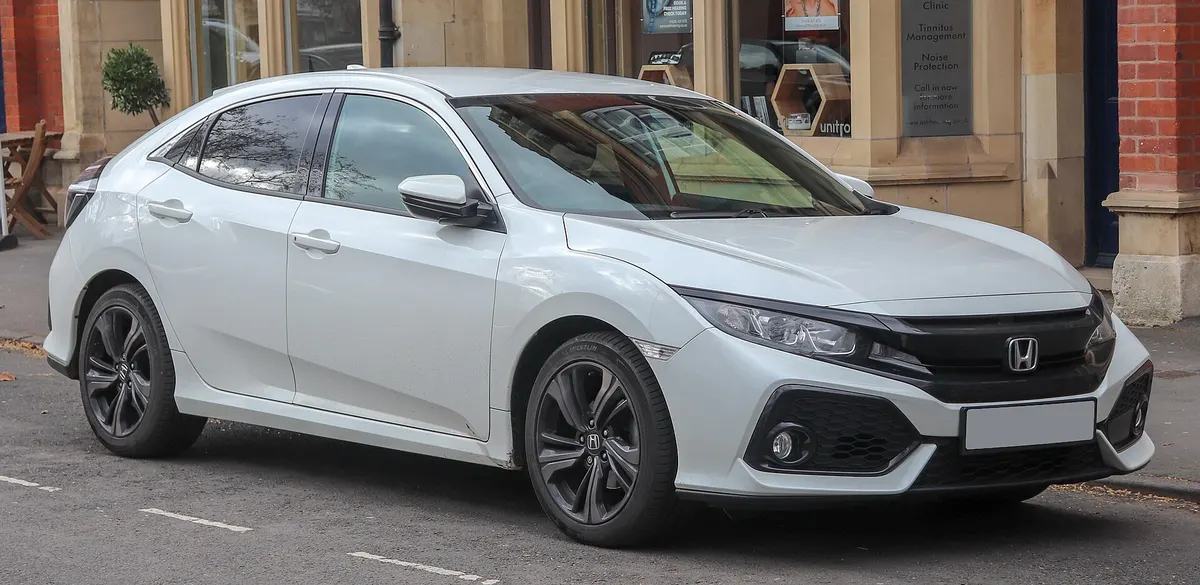
Engines
- K20C2 · 2.0L gasoline, 158 hp
- L15B7 · 1.5L turbo gasoline, 174 hp
- K20C1 · 2.0L turbo gasoline, 306 hp
Transmissions
- cvt
- manual , 6-speed
Drivetrain
FWD
Body
sedan, coupe, hatchback
Trims
LX, Sport, EX, EX-T, EX-L, Touring, Si, Type R
Honda Civic part-number cross-reference
Start from the OEM number, then pick the brand you trust. Verified equivalents for the Honda Civic (2016–2021).
Part links go to Amazon, and to eBay where Amazon does not stock the part. Affiliate links, so we may earn a commission if you buy. Your price is unchanged, and a commission never changes a verdict.
Engine oil filter
Fram
Extra Guard; Fram lists Civic fitment 2001-2023. XG7317 is the Ultra Synthetic tier
Look up Fram engine oil filterVerified via: oilfilter-crossreference.com Honda 15400-PLM-A02, zFilters Honda 15400-PLM-A02 cross reference, HondaPartsNow genuine 15400-PLM-A02 (2000-2021 Honda models)
Engine air filter (1.5L turbo)
Fram
Extra Guard; Fram/Partsource list 2016-2021 Civic + 2017-2022 CR-V 1.5L
Look up Fram engine air filterVerified via: College Hills Honda 17220-5AA-A00 (2016-2021 Civic 1.5T), airfilter-crossreference.com Honda 17220-5AA-A00, Partsource: FRAM CA12050 (2016-2021 Civic fitment), Amazon: Ecogard XA10498 (2016-2021 Civic 1.5L)
Engine air filter (2.0L)
Fram
Extra Guard; Fram lists 2016-2023 Civic + 2023 HR-V. XGA12051 is the Ultra Air tier
Look up Fram engine air filter, 2.0LEcogard
Listing: fits 2016-2025 Civic 2.0L (search-listing verification only)
See Ecogard engine air filterVerified via: College Hills Honda 17220-5BA-A00 (2016-2026 Civic 2.0L non-hybrid, not Type R), airfilter-crossreference.com Honda 17220-5BA-A00, BrickSeek: FRAM CA12051 (2016-2023 Civic fitment)
Cabin air filter
Verified via: Bernardi Parts 80292-TBA-A11 (Civic sedan 2016-2021, coupe 2016-2020, hatch 2017-2021), PRL Motorsports genuine 80292-TBA-A11 (fits all 2016-2021 Civic), airfilter-crossreference.com Honda 80292-TBA-A11, Walmart: FRAM CF11182 (2016-2023 Civic listing)
Should I buy a 2016–2021 Honda Civic?
Buy it, and let the model year do the risk sorting for you. A 2019–2021 Civic is close to the safest used-compact purchase there is: the launch-year defects were engineered out, the oil-dilution software updates were in place from the factory, and complaint volumes are a fraction of 2016's. Earlier cars are still worth buying, but with homework: on a 2016, confirm every open recall is closed (2.0L piston snap-ring inspection, parking-brake software); on any 2016–2018 1.5T, check the oil level and smell for gas, especially if the car lived somewhere cold. The A/C condenser can fail on any year. Honda extended that warranty to 10 years from first sale, so early cars are aging out of coverage now. Nothing here is a money pit on the scale of a failed transmission or engine; it's a checklist car, not a gamble car.
Best years
2019, 2020, 2021
Years to avoid
2016 (launch-year recall cluster: 2.0L piston snap rings, parking-brake software; highest complaint volume of the generation by far), 2016–2018 1.5T in cold climates, unless the oil-dilution updates are documented
Pre-Purchase Checklist for Honda Civic
- ☐Run the VIN through NHTSA's recall lookup (nhtsa.gov/recalls). This generation has several: 2016 2.0L piston snap rings, 2016 electric parking brake software, and the 2018–2020 Denso fuel pump. All are free fixes. Confirm they're done.
- ☐On 1.5T cars (EX and up, Si): pull the dipstick. Oil above the full mark or a gasoline smell on the stick is the classic fuel-dilution tell. Ask whether the Honda 'product update' (software + oil change) was performed.
- ☐Test the A/C hard on a warm day. Weak or warm air points to the known condenser leak. Check whether the car is still inside Honda's 10-year condenser warranty extension (measured from the original sale date, and void on salvage/branded titles).
- ☐On CVT cars, hold light throttle at 20–40 mph and feel for a rumble-strip shudder. Ask for proof of CVT fluid changes. The fix for shudder is fluid, the cause is usually neglect.
- ☐Cycle the infotainment: Bluetooth pairing, backup camera, volume. The 2016–2018 units are known to freeze and reboot; most fixes are software updates, but a flaky head unit is a bargaining chip.
- ☐On a 2016 2.0L specifically, listen for any knocking or unusual bottom-end noise on cold start. The snap-ring recall repair was an inspection, and you want a paper trail on this VIN.
- ☐On Si and Type R, check clutch takeup and look for signs of hard use. These were bought by people who drove them like they meant it.
Common Honda Civic problems & repair costs
Fuel dilution of engine oil (1.5L turbo)
$80–$300Symptoms: Oil level rising above the full mark on the dipstick, gasoline smell from the oil or in the cabin, occasionally a misfire or hesitation. The direct-injected 1.5T runs cool on short trips, so unburned fuel washes past the rings and collects in the oil instead of evaporating off.
Fix: Honda's fix was a free 'product update' of new engine/transmission software plus an oil change, backed by a one-year powertrain-warranty extension on over a million 1.5T Civics and CR-Vs and a class-action settlement. Those windows have closed, so the practical fix today is the updated software (if never applied), shorter oil-change intervals, and longer drives. No epidemic of blown engines materialized, but a diluted-oil car deserves an oil analysis before you assume the bottom end is healthy.
Sources: Consumer Reports: Honda extends warranty on 1.5T engines, CarComplaints: Honda oil dilution settlement approved, CivicX forum: oil dilution owner reports
A/C condenser refrigerant leak
$600–$1,200Symptoms: A/C gradually blows warmer, then quits. The condenser was not built to spec. Pinholes develop in the tube walls and the refrigerant leaks out. Often misdiagnosed as 'just needs a recharge' until it leaks down again.
Fix: Condenser replacement plus evacuation and recharge. Honda extended the condenser warranty to 10 years from the original purchase date, unlimited miles (TSB 19-091, later expanded), so check coverage before paying. The covered years are not identical across the generation: the sedan and coupe and the hatchback carry different ranges, and the Type R was handled under a separate bulletin, so confirm by VIN rather than by model year. Exclusions: rock/debris damage and salvage or branded titles. 2016 cars are aging out of the window now; later years may still be covered.
Sources: Honda TSB, Warranty Extension: 2016-2021 Civic A/C Condenser, RepairPal: Civic A/C condenser replacement cost, CivicX forum: condenser warranty extension thread
Denso fuel pump impeller failure (recall)
$400–$900Symptoms: Hard start, no start, or an engine stall while driving. The pump impeller was over-dried during manufacturing, absorbs fuel, swells, and seizes the pump.
Fix: Free fuel-pump-module replacement under recall: 20V-314 for 2018–2019 Civic Hatchback/Type R, expanded by 21V-215 as part of Honda's 2.6-million-vehicle Denso pump recall covering 2017–2020 models. Run the VIN first; only pay the $400–$900 out-of-pocket pump job if the VIN genuinely isn't included.
Sources: NHTSA recall 20V-314: 2018-19 Civic Hatchback fuel pump, American Honda statement: 2017-2020 fuel pump recall
CVT torque-converter shudder
$150–$3,000Symptoms: Rumble-strip vibration or surging at 15–40 mph under light acceleration. Caused by degraded CVT fluid letting the torque-converter clutch engage roughly, not by the belt-and-pulley CVT hardware itself failing.
Fix: Caught early, a drain-and-fill with genuine Honda HCF-2 fluid (sometimes twice, plus a software update) cures it for a couple hundred dollars. Ignored for tens of thousands of miles, it can take out the torque converter or, rarely, the transmission. That's the $1,500–$3,000 end of the range. This CVT routinely clears 150k–200k miles when the fluid is changed every 25k–30k.
Sources: CivicX forum: CVT surging at low speeds, Rohnert Park Transmission: Honda CVT problems guide
Missing piston pin snap rings (2.0L, 2016 only)
$3,000–$5,500Symptoms: Engine knock, cylinder-wall damage, stalling, and in the worst case sudden engine failure. Roughly 34,000 early 2016 cars were built with piston pin circlips missing or improperly seated, bad enough that Honda issued a stop-sale weeks after launch.
Fix: The recall fix was a free borescope inspection of all four cylinders, with pistons or the engine replaced as needed. Every affected 2016 should have been through it by now. Verify by VIN. The cost range above is what an unrepaired failure would run today (used/reman engine swap); a car with a documented recall repair carries no ongoing risk. The 1.5T was never affected.
Sources: CivicX forum: 2016 piston pin snap ring recall thread, NHTSA: 2016 Honda Civic recalls
Infotainment freezing and Bluetooth dropouts
$0–$500Symptoms: Touchscreen freezes or reboots randomly, Bluetooth won't pair or drops mid-call, backup camera lags. Worst on 2016 cars. Electronics were among that year's top complaint categories.
Fix: Most cases are cured by head-unit software updates Honda released over the years (free to cheap at an independent shop or dealer). A genuinely dead unit means a used or refurbished head-unit swap at the top of the range. Annoying, not mechanical.
Sources: HondaProblems: 10th-gen Civic complaint breakdown, CarComplaints: Honda Civic by year
Day to day, a 10th-gen Civic is about as cheap as modern car ownership gets: strong fuel economy (the 1.5T sedan touches 40+ mpg highway), inexpensive consumables, and a huge parts ecosystem. The real-money items are all listed above, and two of them, the fuel pump and the 2016 recalls, are free if the paperwork is in order. Budget honestly for a condenser on an out-of-warranty car and for CVT fluid every 25k–30k miles, which is the cheapest transmission insurance in the business. The 2016 model year accounts for the large majority of this generation's complaints (457 on CarComplaints vs. 16–21 for 2020–2021), so the year you pick matters more than anything you'll spend on maintenance.
Cost calculator
What will this Honda Civic cost you by a given mileage?
Drag to a mileage. We total the documented problems whose typical onset falls at or before it. The same cost ranges listed above, nothing new invented.
$0 estimated repair range
5-Year Maintenance Schedule & Cost to Own
Every scheduled service by mileage, fluid capacities, independent shop ranges, and parts cross-references.
Have a repair quote for this Honda Civic?
Audit against OEM book times, uncover duplicate pad and rotor labor, and verify parts markups.
How to fix common Honda Civic problems (DIY)
CVT fluid drain-and-fill (HCF-2)
Tools: Floor jack + jack stands (or ramps), 3/8-in ratchet (drain bolt takes the square drive directly), Drain pan, Funnel with long hose, Torque wrench
- Warm the transmission with a short drive, then raise and level the car and place the drain pan under the CVT drain bolt.
- Remove the drain bolt with the 3/8-in ratchet drive and let the fluid drain fully. Expect roughly 3.5–4 quarts out.
- Reinstall the drain bolt with a new sealing washer and torque to spec.
- Refill through the dipstick/filler with the same amount of genuine Honda HCF-2 that came out. HCF-2 only. Universal CVT fluid is how shudder stories start.
- Start the car, cycle through the gear positions, then recheck the level warm on level ground.
- If you're chasing an existing shudder, drive 100–200 miles and repeat the drain-and-fill once more.
Parts
- Honda HCF-2 CVT fluid (4 quarts) · Amazon $60–$90
- CVT drain plug sealing washer (18mm) · Amazon $5–$10
Engine oil + filter change (with a dilution check)
Tools: Ramps or jack + stands, 17mm socket or wrench (drain bolt), Oil filter wrench, Drain pan + funnel
- Before draining, pull the dipstick on a cold engine: on a 1.5T, oil above the full mark or a gas smell is your fuel-dilution warning. Worth an oil analysis if it's pronounced.
- Warm the engine briefly, raise the car, and drain the oil via the 17mm drain bolt.
- Spin off the old filter, oil the new filter's gasket, and install it hand-tight plus a quarter turn.
- Reinstall the drain bolt with a fresh crush washer and refill with 0W-20 full synthetic (about 3.7 qt on the 1.5T, 4.4 qt on the 2.0L, verify against the dipstick).
- Run the engine, check for leaks, and recheck the level. On a short-trip 1.5T, consider 5,000-mile intervals instead of stretching the maintenance minder.
Parts
- 0W-20 full synthetic oil (5 qt) · Amazon $25–$40
- Oil filter (2016-2021 Honda Civic) · Amazon $7–$15
Cabin & engine air filter change
Tools: None (hands only for the cabin filter; airbox clips by hand or flat screwdriver)
- Open the glovebox, squeeze the sides to release the stops, and let it swing down past the damper arm.
- Pop the cabin filter cover, slide the old filter out, and insert the new one with the airflow arrow pointing down.
- For the engine filter, release the airbox lid clips, swap the panel filter, and re-clip the lid.
- Close everything up and confirm the glovebox stops re-seat.
Parts
- Cabin air filter (2016-2021 Honda Civic) · Amazon $10–$18
- Engine air filter (2016-2021 Honda Civic) · Amazon $12–$25
Some parts links are affiliate links. We may earn a commission at no cost to you. We only list parts that fit this generation.
The short version
The 10th-gen Civic tells a very clean story: 2016 took the bullets, 2019–2021 got the medals. The launch year shipped with missing piston snap rings in some 2.0L engines (a stop-sale and recall within weeks of launch), a parking-brake software recall, and a pile of A/C and electronics complaints: 457 complaints on CarComplaints against just 16–21 for the 2020–2021 cars. By 2019 the platform was thoroughly debugged, and late 10th-gens are among the most dependable used compacts money can buy.
The generation’s two signature issues are both well-documented and both came with factory backing: fuel diluting the engine oil on 2016–2018 1.5L turbos (free software updates, a warranty extension, and a class-action settlement), and A/C condensers that leak refrigerant through pinholes, covered by a 10-year warranty extension across most of this generation.
What that means when you’re shopping
Buying a 2019–2021: buy on condition and history, like any used car. The one universal check is the Denso fuel pump recall on 2018–2020 cars, a free fix verified in minutes with the VIN at nhtsa.gov/recalls.
Buying a 2016–2018: the checklist gets longer, not scarier. Pull the dipstick on any 1.5T. Oil sitting above the full mark or smelling of gasoline means the dilution issue is live on this car. On a 2016, demand paperwork showing the piston snap-ring inspection and parking-brake reflash were done. And test the A/C properly: the condenser warranty runs 10 years from first sale, which means 2016s are aging out of coverage right about now, turning a free repair into a $600–$1,200 one.
CVT cars: feel for a rumble-strip shudder at 20–40 mph on light throttle. It’s fluid, not doom, but it’s also proof the seller skipped maintenance, and it’s your negotiating leverage.
The manuals in the Sport, Si, and Type R sidestep the CVT question entirely and are mechanically stout. Just inspect them like the enthusiast cars they are.
How this file is built: failure modes and cost ranges are compiled from NHTSA recall and complaint data, Honda’s own TSBs and warranty-extension bulletins, CarComplaints statistics, and owner-forum reporting, then sanity-checked against shop-floor experience. Cost figures are independent-shop estimates and vary by region. Spot something off? Tell us.
Viral car myths, checked against this car
- Dangerous
Is the "$2 liquid that destroys engine sludge forever" real? Our shop-floor verdict.
An aggressive solvent flush on a high-mileage engine is a textbook way to spin a bearing. The viral 'kitchen-cabinet flush' is folklore that real shops spend money cleaning up after.
- Misleading
Is the "$1 Japanese oil trick" that stops engine wear forever real?
The 'Japanese oil trick' is almost certainly MoS2 (molybdenum disulfide), a real industrial friction modifier. It is German, not Japanese (Liqui Moly popularized it), sold openly at every parts store for $15-20, has real but modest measured friction benefits, and was never buried by anyone.
Frequently asked questions
Which 10th-gen Civic years should I avoid?
2016 is the year that earned the caution: it launched with an engine recall (2.0L piston snap rings), a parking-brake software recall, and by far the generation's highest complaint volume: 457 on CarComplaints versus 16–21 for 2020–2021. A 2016 with all recalls documented is fine; an unverified one isn't worth the discount. 2019–2021 are the standout used buys.
Is the 1.5 turbo's oil dilution a dealbreaker?
No. It's a management item, not a death sentence. Fuel thinning the oil was real on 2016–2018 cars, worst in cold climates and on short trips, and Honda answered with free software updates, a warranty extension, and a class-action settlement. There was no wave of destroyed engines. Buy with the updates confirmed, change the oil a little early, and check the dipstick level occasionally.
Should I buy the 2.0L or the 1.5 turbo?
The 2.0L is the simpler engine, port-injected with no turbo and no dilution history, and it's plenty for commuting. The 1.5T is meaningfully quicker and more efficient, and from 2019 on its early issues were sorted. On a tight budget with cold winters, the 2.0L is the lower-risk pick; otherwise the 1.5T is the better car.
Is the Civic's CVT reliable long-term?
Yes, with one condition: change the fluid. Honda's CVT regularly clears 150k–200k miles, but the fluid is not lifetime no matter what a seller implies. The known failure pattern, torque-converter shudder at 15–40 mph, traces back to old fluid, and a $150–$300 drain-and-fill (genuine HCF-2 only) usually cures it when caught early.
How do I know if the A/C condenser is still covered?
Honda extended the condenser warranty to 10 years from the car's original first-sale date with no mileage limit, eventually covering most of this generation. The sedan and coupe and the hatchback carry different year ranges and the Type R was handled separately, so the model year alone does not answer it. A car first sold in June 2017 and inside the covered range is covered until June 2027. Exclusions: physical/rock damage and any salvage or branded title. A dealer can confirm coverage by VIN. Do this before paying for a condenser out of pocket.
Every Honda Civic generation
The full case file run, beyond the generation before and after this one.
Cross-shopped rivals
Files on what buyers weigh against the Honda Civic of this era.