Case file · HONDA-CIVIC-2022-2026 · 11th gen (FE/FL)
Honda Civic 2022–presentCommon problems, reliability & repair costs
The 11th-gen Civic is one of the best compacts you can buy used right now. Grown-up, efficient, and mechanically solid. Its one defining fault is 'sticky steering': a steering-gearbox defect that triggered an NHTSA investigation and a 1.7-million-vehicle recall covering 2022–2025 cars. The fix is free at any Honda dealer, so the whole buying question comes down to one line on a recall printout.
2024 (refresh, most steering fixes already in the field), 2025+ (hybrid added; buy with recalls verified done)
No year is a hard avoid, but do not buy any 2022–2023 car wi +1 more
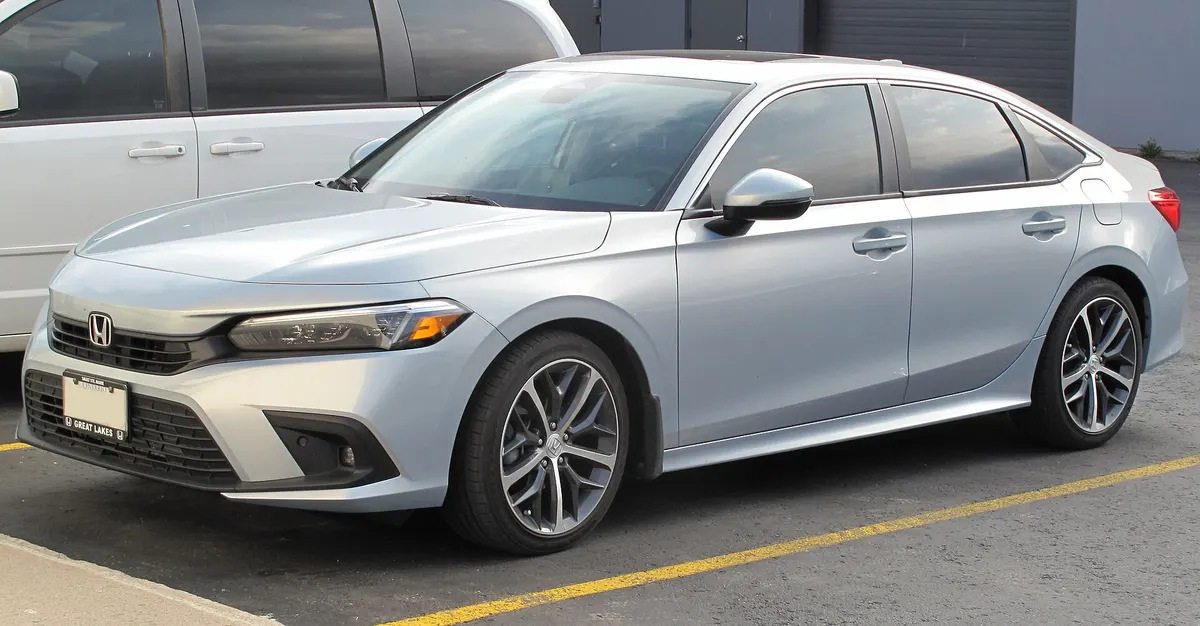
Engines
- K20C2 · 2.0L gasoline, 158 hp
- L15B7 · 1.5L turbo gasoline, 180 hp
- L15CA · 1.5L turbo gasoline, 200 hp
- K20C1 · 2.0L turbo gasoline, 315 hp
- 2.0L two-motor hybrid · 2.0L hybrid, 200 hp
Transmissions
- cvt
- manual , 6-speed
- e-CVT · cvt
Drivetrain
FWD
Body
sedan, hatchback
Trims
LX, Sport, EX, EX-L, Touring, Sport Touring, Si, Sport Hybrid (2025+), Sport Touring Hybrid (2025+), Type R (2023+)
Honda Civic part-number cross-reference
Start from the OEM number, then pick the brand you trust. Verified equivalents for the Honda Civic (2022–present).
Part links go to Amazon, and to eBay where Amazon does not stock the part. Affiliate links, so we may earn a commission if you buy. Your price is unchanged, and a commission never changes a verdict.
Engine oil filter
Fram
Extra Guard; Fram lists Civic 2001-2023. XG7317 (Ultra Synthetic) cited by 11th-gen owners
Look up Fram engine oil filterWix
57356XP (synthetic XP tier) is the version 11th-gen owners report using
Check Wix engine oil filterVerified via: CivicXI owners forum: 15400-PLM-A02 confirmed standard OEM filter on 11th gen, oilfilter-crossreference.com Honda 15400-PLM-A02, Walmart: Fram PH7317 (fits select 2001-2023 Honda Civic)
Engine air filter (2.0L)
Ecogard
Listing: fits 2016-2025 Civic 2.0L (search-listing verification only)
Look up Ecogard engine air filterVerified via: College Hills Honda 17220-5BA-A00 (2016-2026 Civic 2.0L non-hybrid, not Type R), BrickSeek: FRAM CA12051 (2016-2023 Civic fitment)
Engine air filter (1.5L turbo)
Verified via: College Hills Honda 17220-64A-A00 (2022-2026 Civic 1.5L, 2023-2026 Accord/CR-V non-hybrid), Honda Parts Hub 17220-64A-A00 (2022-2026 Civic 1.5L/CR-V/Accord)
Cabin air filter
Fram
Fresh Breeze; Fram lists Civic through 2023 - same element family as the superseded 80292-TBA-A11
Compare Fram cabin air filterWix
Cross-referenced to the superseded 80292-TBA-A11 number (same element per Honda supersession)
Find Wix cabin air filterVerified via: College Hills Honda 80291-TF3-E01 (2016-2026 Civic), Bernardi Parts 80291-TF3-E01 (Civic 2022-2026; replaces 80292-TBA-A11, 80291-T5R-A01), Walmart: FRAM CF11182 (2016-2023 Civic listing)
Spark plugs (1.5L turbo and Si)
NGK
The plug Honda's owner's manual names for 1.5L engine models; the Civic Sedan manual covers the Si
See NGK spark plugsVerified via: Honda 2024 Civic Sedan owner's manual, specifications: 1.5L engine models NGK DILKAR8P8SY (the same page lists manual transmission fluid for 1.5L models, which only the Si has), HondaPartsNow 2022 Civic spark plugs: 12290-6A0-A01 fits EX, Si, Touring, EX-L, Sport Touring, HondaPartsNow 2026 Civic spark plugs: 12290-6A0-A01 fits 4 Door Si
Spark plugs (2.0L, 2022-2024)
Honda
Honda's catalog also lists 12290-RDF-A01 (NGK DILKAR7H11GS) for these cars
Compare Honda spark plugs on AmazonVerified via: Honda 2022 Civic Sedan owner's manual, specifications: 2.0L engine models NGK DILKAR7H11GS, DILKAR7G11GS, Denso DXE22HQR-D11S, HondaPartsNow 2024 Civic spark plugs: 12290-5A2-A02 fits 2.0L LX and Sport, 4 and 5 door, Bernardi Parts 12290-5A2-A02 (Denso DXE22HQR-D11S)
Spark plugs (2.0L gas and hybrid, 2025-2026)
NGK
The plug Honda's 2025 hatchback and hybrid owner's manuals name for CVT models
See NGK spark plugs, 2025-2026Verified via: Honda 2025 Civic Hatchback owner's manual, specifications: CVT models NGK DILZKAR7G11Y, Honda 2025 Civic Sedan Hybrid owner's manual, specifications: NGK DILZKAR7G11Y, HondaPartsNow 12290-6MA-J01: 2025-2026 Civic LX and Sport CVT, 2025-2026 Civic Hybrid
Spark plugs (Type R)
NGK
The plug Honda's 2025 hatchback owner's manual names for manual transmission models
Find NGK spark plugs, TypeVerified via: Honda 2025 Civic Hatchback owner's manual, specifications: manual transmission models NGK ILZKAR8J8SY, HondaPartsNow 2024 Civic spark plugs: 12290-5PA-A01 fits 5 Door Type R
12V battery (gas cars, not the Type R)
Honda
Enhanced flooded battery, not AGM. H5 is the same case size as BCI group 47
Look up Honda 12v battery on AmazonVerified via: HondaPartsNow 31500-TLA-EFB100M, BATTERY (H5EFB): 2022-2026 Civic gas trims including Si; hybrid and Type R not listed, Hybrid Racing: 2022-and-up Civic moved to the H5 / Group 47 tray
Should I buy a 2022–present Honda Civic?
Buy it, after one specific check. The 11th-gen Civic is mechanically one of the strongest compacts of its era: proven engines, a durable CVT, and Honda's mature hybrid system from 2025. The generation's defining fault, sticky steering, is covered by a free recall repair (NHTSA 24V-744) on every affected 2022–2025 car, so your entire job as a buyer is confirming that recall is done and the steering feels clean on a highway-speed test drive. On 1.5L turbo cars, plan on short oil-change intervals and check the oil for a fuel smell. The 2.0L non-turbo and the 2025+ hybrid are the lowest-risk picks.
Best years
2024 (refresh, most steering fixes already in the field), 2025+ (hybrid added; buy with recalls verified done)
Years to avoid
No year is a hard avoid, but do not buy any 2022–2023 car without proof the steering recall (24V-744) has been performed, 2022 first-year cars carry the most complaints overall (steering, electrical, Honda Sensing)
Pre-Purchase Checklist for Honda Civic
- ☐Run the VIN at nhtsa.gov/recalls or a Honda dealer and confirm the steering-gearbox recall (24V-744) shows COMPLETED. This is the single most important check on this generation.
- ☐Test drive at 40–70 mph on a straight road: feel for notchy, sticky spots or momentary extra effort when making small steering corrections. Any stickiness = recall not done or repair needed.
- ☐On 1.5L turbo cars, pull the dipstick: oil level above the fill mark or a gasoline smell in the oil means fuel dilution. Ask for oil-change receipts and walk if there's no service history.
- ☐On a 2025 car (gas or hybrid), verify the high-pressure fuel-pump recall (24V-763) inspection was done; sniff for raw fuel smell at idle.
- ☐Test the A/C on a hot day and confirm it blows genuinely cold. 2022–2023 cars have a known condenser-leak pattern Honda has been tracking.
- ☐Watch the dash on the test drive: false forward-collision or lane-departure alerts on an empty road are a known Honda Sensing complaint, and dealers often can't reproduce them later.
- ☐On Si and manual hatchbacks, check clutch take-up point and listen for grinding into 2nd/3rd on quick shifts (hard-driven examples).
- ☐Confirm 12V battery health (free test at any parts store). Weak original batteries triggering electrical gremlins and warning-light cascades are a common early-ownership complaint.
Common Honda Civic problems & repair costs
Sticky steering (EPS gearbox worm gear)
$0–$1,500Symptoms: Steering momentarily 'catches' or sticks when making small corrections, most noticeable at 40–70 mph on the highway; takes extra effort to break it loose, then can overshoot. NHTSA logged well over a thousand complaints and at least 14 crashes across affected Honda/Acura models. It's the dominant complaint on this generation, 698 NHTSA steering complaints on the 2022 alone.
Fix: Free under recall: Honda recalled ~1.7 million 2022–2025 vehicles (NHTSA 24V-744, issued Oct 2024) to regrease the gearbox and fit an improved worm-gear spring. Before the recall, dealers replaced whole EPS gearboxes under TSB 23-037. Cost only becomes real ($900–$1,500 for a gearbox at an independent) if you skip the free recall. Don't. Verify completion by VIN before buying.
Sources: Honda press release: 1.7M-vehicle steering gearbox recall, Consumer Reports: Honda/Acura steering recall, CarComplaints: 2022 Civic steering (698 NHTSA complaints)
Oil dilution (1.5L turbo)
$60–$200Symptoms: Oil level creeps above the full mark on the dipstick; gasoline smell in the oil or around the car; oil analysis shows high fuel content. Caused by fuel washing past the rings before the engine fully warms up, a direct-injection trait this engine family is known for.
Fix: There is no 'repair'. It's a management problem. Honda revised the 11th-gen L15 (including thermostat/warm-up changes) and owners report it's far better than the 10th gen, but forum oil analyses still catch dilution on short-trip cars in cold climates. Run shorter oil-change intervals (3,500–5,000 miles), let the engine warm up, and avoid chronic short trips. Cost shown is the extra annual oil-change spend, not a repair.
Sources: Civic11Forum: Does the 2022 Civic have an oil dilution problem?, Civic11Forum, owner report: dilution + fuel smell at 2.5 years
A/C stops blowing cold (condenser leak)
$400–$1,200Symptoms: A/C gradually or suddenly blows warm; the tell is an oil stain (escaped refrigerant oil) on the condenser face. Honda issued service communications asking dealers to inspect 2022–2023 Civics with this exact complaint before repairing. This is the same condenser weakness that hit the 2016–2021 generation hard enough to earn a warranty extension.
Fix: Condenser replacement plus refrigerant recharge. In warranty it's free. Push the dealer to document the leak while covered. Out of warranty, an independent shop does condenser + recharge for roughly $400–$800; add more if the compressor also took damage. If you're quoted a repair on a low-mileage car, ask Honda corporate about goodwill given the model's condenser history.
Sources: APA: Honda Civic condenser defect & warranty extension history, Civic11Forum: AC no longer blows cold air
Honda Sensing false alerts / phantom braking
$0–$400Symptoms: Forward-collision warnings or automatic emergency braking with nothing ahead; lane-departure system tugging the wheel or alerting on clear roads; adaptive cruise dropping out. On the 2022 Civic, lane-departure malfunction is a top-3 CarComplaints issue (average ~8,000 miles), and NHTSA has been investigating phantom braking across Honda's CMBS-equipped lineup.
Fix: Start free: dealers update Honda Sensing software and recalibrate/reposition the front radar and camera under warranty. Out of warranty, a camera/radar recalibration runs $150–$400. Be realistic. Many owners report dealers 'can't reproduce' the fault, and some level of weather-triggered nuisance alerts is inherent to the system. Document occurrences with dashcam footage if you pursue a warranty claim.
Sources: CarComplaints: 2022 Civic (lane departure top-3 problem), Carscoops: NHTSA phantom-braking probe of Honda CMBS
High-pressure fuel pump crack: fuel leak (2025 gas & hybrid)
$0–$600Symptoms: Fuel smell while idling or driving; in the worst case, a visible leak. A defective pump core can crack and the crack grows with use. Fire risk. Part of a ~721,000-vehicle Honda recall issued October 2024 that includes the 2025 Civic and Civic Hybrid.
Fix: Free under recall 24V-763: dealers inspect the high-pressure fuel pump and replace it if it's from the defective batch. Any fuel smell on a 2025 car = straight to the dealer, don't drive it hard in the meantime. Cost shown only applies if a pump fails outside recall scope at an independent shop.
Sources: Honda press release: 720k-vehicle high-pressure fuel pump recall, NHTSA recall report 24V-763 (PDF)
Weak 12V battery / early electrical gremlins
$150–$300Symptoms: Dead battery after short periods of sitting, cascading warning lights, no-start with clicking, auto idle-stop behaving erratically or refusing to engage. Electrical-system complaints cluster on the 2022 (34 NHTSA complaints) and owners on the 11th-gen forum report repeated drains on low-mileage cars, usually traced to a marginal factory battery plus short-trip driving that never fully recharges it.
Fix: Load-test the battery first (free at parts stores). Most cases end with a quality replacement battery; dealers replaced many under the 3-year warranty. If a new battery keeps dying, have a parasitic-draw test done before throwing parts at it. The erratic idle-stop complaints usually trace back to the same weak battery. The system disables itself when voltage is marginal.
Sources: CarComplaints: 2022 Civic electrical / erratic idle stop, Civic11Forum: 2022 Civic Touring battery woes
Day-to-day, this is a cheap car to own: the big fault (steering) is a free recall fix, routine service is basic, and parts are everywhere. The real ownership costs are behavioral. 1.5T cars want oil changes every 3,500–5,000 miles (about one extra change a year versus the maintenance-minder schedule) and the CVT wants fluid every 25–30k miles, which is roughly what Honda itself prints. The Maintenance Minder attaches no mileage to the CVT at all, but Honda does publish one severe number for it, 25,000 miles for regular low-speed mountain driving. So the short interval is the factory figure, not a correction to it. Budget a battery early, and treat any warranty-period A/C weakness or Sensing fault as a use-it-or-lose-it dealer visit. The 2025+ hybrid adds almost no ownership cost. Honda's two-motor system has a strong record in the Accord and there's no conventional transmission to service.
Cost calculator
What will this Honda Civic cost you by a given mileage?
Drag to a mileage. We total the documented problems whose typical onset falls at or before it. The same cost ranges listed above, nothing new invented.
$0 estimated repair range
5-Year Maintenance Schedule & Cost to Own
Every scheduled service by mileage, fluid capacities, independent shop ranges, and parts cross-references.
Have a repair quote for this Honda Civic?
Audit against OEM book times, uncover duplicate pad and rotor labor, and verify parts markups.
How to fix common Honda Civic problems (DIY)
Oil & filter change (1.5L turbo, the dilution defense)
Tools: Floor jack + jack stands or ramps, Socket set (17mm drain plug), Oil filter wrench (65mm cap style), Drain pan + funnel
- Warm the engine 2–3 minutes, then raise the front of the car and set stands.
- Pull the 17mm drain plug and drain into the pan; replace the crush washer.
- Spin off the oil filter with the cap wrench, oil the new gasket, install hand-tight plus a quarter turn.
- Refill with 0W-20 full synthetic (about 3.7 quarts on the 1.5T), start, check for leaks.
- Recheck the level after it settles, and smell the dipstick. On a 1.5T, fuel smell in fresh-ish oil means shorten your interval.
Parts
- Full synthetic 0W-20 oil (5 qt) · Amazon $25–$40
- Oil filter (2022+ Honda Civic 1.5T) · Amazon $8–$15
Cabin & engine air filter change
Tools: None (hands only; maybe a small screwdriver)
- Open the glovebox, squeeze the sides to release the stops, and lower it fully.
- Unclip the cabin filter cover, slide the old filter out, insert the new one with the airflow arrow pointing down.
- Under the hood, unclip the airbox lid, swap the panel engine filter, and re-clip.
- Buy the engine filter by engine, not by year. The 2.0L and the 1.5 turbo take different parts and the two links below are split on purpose.
- Reset nothing. There is no service light for either filter, so just note the mileage.
Parts
- Cabin air filter (2022–2026 Honda Civic, all trims) · 80291-TF3-E01 · Amazon $10–$18
- Engine air filter, 2.0L non-turbo only (LX/Sport, not Type R, not hybrid) · 17220-5BA-A00 · Amazon $12–$22
- Engine air filter, 1.5L turbo only (EX/Touring/Sport Touring/Si) · 17220-64A-A00 · Amazon $12–$22
12V battery replacement
Tools: 10mm socket or wrench, Memory saver (optional but keeps radio/window settings)
- Confirm the battery is actually the problem with a load test first, free at any parts store.
- Disconnect the negative terminal, then the positive, then the hold-down bracket.
- Swap in the new battery (match the group size on the old one), reconnect positive first, then negative.
- Drive 20+ minutes; the idle-stop system relearns and re-enables itself once it trusts the new battery.
Parts
Some parts links are affiliate links. We may earn a commission at no cost to you. We only list parts that fit this generation.
The short version
The 2022+ Honda Civic is the compact to beat, and its reliability record backs that up, with one loud exception. A defective worm gear inside the electric power-steering gearbox makes the wheel momentarily stick during small corrections at highway speed. It generated hundreds of NHTSA complaints (698 on the 2022 model year alone), a federal investigation, and finally a 1.7-million-vehicle recall in October 2024 covering 2022–2025 Civics.
Here’s the part that matters: the fix is free, forever, at any Honda dealer. That turns the scariest fault on this generation into a paperwork check.
What that means when you’re shopping
Run the VIN at nhtsa.gov/recalls before you even drive the car. If the steering recall (24V-744) shows completed, you’re looking at one of the safest used-car bets on the market. If it shows open, that’s not a dealbreaker. It’s a free dealer appointment. But the price should reflect the hassle, and the test drive should confirm the steering feels clean at 40–70 mph.
Engine choice is the second decision. The 2.0L non-turbo (LX/Sport) is the simplest and most worry-free. The 1.5L turbo is quicker and thirstier for attention: it still mildly dilutes its oil on short-trip, cold-climate duty, so it wants 3,500–5,000-mile oil changes and an owner who actually did them. Ask for receipts. The 2025+ hybrid is the sleeper pick: 200 hp, ~49 mpg, and Honda’s proven two-motor system with almost nothing extra to maintain. Just confirm the 2025 fuel-pump recall inspection is done.
The smaller stuff
Test the A/C hard on 2022–2023 cars. The condenser-leak pattern from the last generation carried into early 11th-gen production, and Honda has been inspecting complaint cars. Expect the occasional Honda Sensing nuisance alert (it’s a complaint magnet, and dealers often can’t reproduce it), and don’t be surprised if the original 12V battery taps out early. It’s a $150–$300 annoyance, not a defect that says anything about the car.
Bottom line
An 8/10 car where the missing two points are a recall printout and an oil-change habit. Verify the steering recall, pick the engine that matches your patience level, and this generation should give you the least eventful decade of ownership in the class.
How this file is built: failure modes and cost ranges are compiled from NHTSA complaint and recall data (campaigns 24V-744 and 24V-763), Honda’s own press releases and service bulletins, CarComplaints.com data, and 11th-gen owner-forum reporting, then sanity-checked against shop-floor experience. Cost figures are independent-shop estimates and vary by region. Spot something off? Tell us.
Viral car myths, checked against this car
- Misleading
Is the "$1 Japanese oil trick" that stops engine wear forever real?
The 'Japanese oil trick' is almost certainly MoS2 (molybdenum disulfide), a real industrial friction modifier. It is German, not Japanese (Liqui Moly popularized it), sold openly at every parts store for $15-20, has real but modest measured friction benefits, and was never buried by anyone.
- Dangerous
Is the "$2 liquid that destroys engine sludge forever" real? Our shop-floor verdict.
An aggressive solvent flush on a high-mileage engine is a textbook way to spin a bearing. The viral 'kitchen-cabinet flush' is folklore that real shops spend money cleaning up after.
- Outdated
Does a "$1 mineral" really double car battery life? The Epsom-salt reality.
The mineral is Epsom salt (magnesium sulfate). It was a real desulfation hack for serviceable flooded-cell batteries 40+ years ago. It does not work on modern sealed AGM or EFB batteries, and trying it on yours will void the warranty without helping the battery.
Frequently asked questions
Is the 11th-gen Civic's sticky steering fixed?
Yes, for free. Honda recalled roughly 1.7 million 2022–2025 vehicles (NHTSA campaign 24V-744, October 2024) to regrease the steering gearbox and install an improved worm-gear spring; earlier complaint cars got whole new gearboxes under TSB 23-037. Any Honda dealer performs it at no cost. Before buying, run the VIN and confirm the recall shows completed, then feel for sticking on a highway-speed test drive.
Does the 2022+ Civic 1.5 turbo still have the oil dilution problem?
It's much better than the 2016–2021 generation, since Honda revised the engine's warm-up behavior for the 11th gen. But it's not gone. Short-trip driving in cold climates still puts fuel in the oil on some cars. The defense is cheap: change oil every 3,500–5,000 miles instead of waiting for the maintenance minder, and check the dipstick for a rising level or fuel smell. If that discipline sounds annoying, buy the 2.0L non-turbo or the hybrid.
Which 11th-gen Civic year is the best buy?
2024 and later. By then the steering fix was in production, the refresh had landed, and from 2025 you can get the excellent 200-hp hybrid. That said, a 2022–2023 car with the steering recall documented as done is a perfectly good buy and usually cheaper. The recall repair makes the cars mechanically equivalent.
Is the 2025 Civic Hybrid reliable?
Early signs are strong. It uses Honda's two-motor hybrid system, which has years of solid history in the Accord and CR-V, and its e-CVT has no belt or conventional gearset to wear. The one open item is the high-pressure fuel-pump recall (24V-763) covering the 2025 Civic and Civic Hybrid, a free inspection/replacement. Verify it's done, and treat any fuel smell as an immediate dealer visit.
How long will an 11th-gen Civic last?
There's no structural reason a maintained one won't do what Civics do, 200,000+ miles. The engines are proven designs, and the known faults (steering, condenser, battery) are all fixable or recall-covered rather than progressive killers. The honest caveat: the oldest cars are only a few model years old, so 200k claims are projection from Honda's track record, not observed fleet data yet.
Every Honda Civic generation
The full case file run, beyond the generation before and after this one.
Cross-shopped rivals
Files on what buyers weigh against the Honda Civic of this era.