Case file · HONDA-CR-V-2023-2026 · 6th gen (RS)
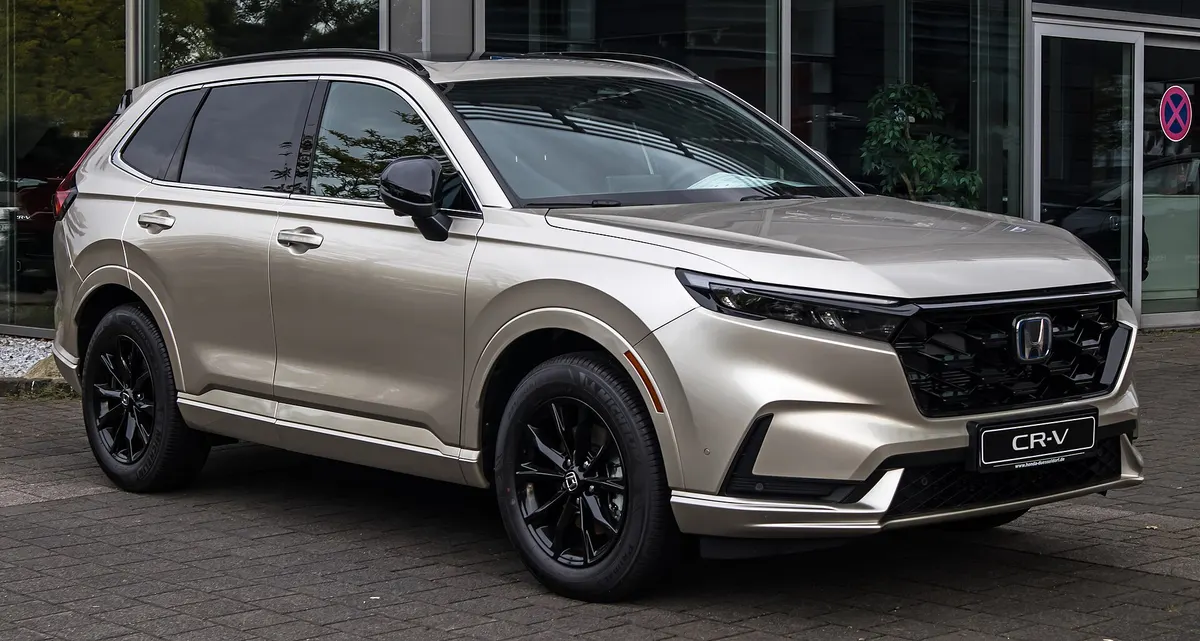
Honda CR-V 2023–2026Common problems, reliability & repair costs
The current CR-V is fundamentally a good vehicle with a rocky launch. The 2023–2025 cars were caught in Honda's massive 'sticky steering' gearbox recall, and the 2023 Hybrid collected three of its own recalls (transmission, battery module, fuel pump). Every one of them has a free fix. The job when buying used is verifying the fixes actually happened. Long-term durability data simply doesn't exist yet, and we say so.
2025, 2026
2023 Hybrid early builds: three recalls; fine IF all are ver +1 more
Engines
- L15BE · 1.5L gasoline, 190 hp
- LFB (2.0L two-motor hybrid) · 2.0L hybrid, 204 hp
Transmissions
- cvt
- e-CVT · cvt
Drivetrain
FWD / AWD
Body
suv
Trims
LX, EX, EX-L, Sport, Sport-L, Sport Touring, TrailSport (2026, hybrid)
Honda CR-V part-number cross-reference
Start from the OEM number, then pick the brand you trust. Verified equivalents for the Honda CR-V (2023–2026).
Part links go to Amazon, and to eBay where Amazon does not stock the part. Affiliate links, so we may earn a commission if you buy. Your price is unchanged, and a commission never changes a verdict.
Engine oil filter
Fram
TG7317 (Tough Guard) and XG7317 (Ultra Synthetic) are the same application in higher tiers
Look up Fram engine oil filterPurolator
PurolatorONE version is PL14610; Mobil 1 M1-110 and Denso 150-2003 also cross per the same lookups
Compare Purolator engine oil filterVerified via: HondaPartsNow: CR-V oil filter (fits 1997-2026 CR-V incl. 1.5T trims), HondaPartsNow: CR-V Hybrid oil filter (15400-PLM-A02, 2023-2025 Hybrid), oilfilter-crossreference.com: Honda 15400-PLM-A02 alternatives, GetOpAuto: 15400-PLM-A02 cross-reference guide
Engine air filter (1.5T)
Verified via: HondaPartsNow: CR-V engine air filters (17220-64A-A00, 2023-2026 1.5T trims), College Hills Honda: 17220-64A-A00 (2023-2026 CR-V non-hybrid)
Engine air filter (hybrid)
Wix
Wix panel listed for 2023-2025 Honda Accord/CR-V; retailers cross it to 17220-6MA-J01. Confirm hybrid application on your VIN before ordering
Check Wix engine air filterVerified via: College Hills Honda: 17220-6MA-J01 (2023-2026 CR-V Hybrid), HondaPartsNow: genuine 17220-6MA-J01 (2023-2025 CR-V Hybrid fitment), FleetFilter: Wix WA11996 (Honda Accord/CR-V 23-25)
Cabin air filter
Fram
Fresh Breeze; covers the 80292-TF0-G01 / 80291-TF3-E01 application
Compare Fram cabin air filterEPAuto
Sold as CF11182 equivalent; listed for CR-V within 2009-2025 select models
Find EPAuto cabin air filterVerified via: College Hills Honda: 80291-TF3-E01 (2017-2026 CR-V; supersession list), HondaPartsNow: genuine 80291-TF3-E01 (2017-2026 CR-V; replaces 80292-TF0-G01 et al.), Amazon: EPAuto CP182 (CF11182) listing
Should I buy a 2023–2026 Honda CR-V?
Buy it, with a VIN check, not a leap of faith. The bones are good: proven 1.5T, an excellent hybrid system, and no fundamental engine or transmission design flaw identified so far. But 2023–2025 cars sit inside the 1.7-million-vehicle sticky-steering recall (24V-744), and the 2023 Hybrid specifically stacked up three more recalls: e-CVT (23V-588), high-voltage battery module (24V-745), and high-pressure fuel pump (24V-763). All are free dealer fixes; your job is running the VIN and confirming they're closed. Cars built after August 30, 2024 got the improved steering gearbox from the factory, which makes late-2024 and newer the cleanest pick. Be honest with yourself about one more thing: nobody, including us, knows how this generation holds up at 150,000 miles yet.
Best years
2025, 2026
Years to avoid
2023 Hybrid early builds: three recalls; fine IF all are verified closed by VIN, Any 2023–2024 without the steering recall (24V-744) completed
Pre-Purchase Checklist for Honda CR-V
- ☐Run the VIN at Honda's recall site (recalls.honda.com) or NHTSA before you even drive it. On any 2023–2025, confirm the steering gearbox recall (24V-744) shows completed.
- ☐On a 2023 Hybrid, confirm all three hybrid recalls are closed: e-CVT (23V-588), high-voltage battery module (24V-745), and high-pressure fuel pump (24V-763).
- ☐Test drive at highway speed for at least 15–20 minutes. Sticky steering shows up as momentary extra effort off-center or a wheel that doesn't self-center. It often won't appear in a 5-minute lot drive.
- ☐On a 1.5T that lived on short trips: pull the dipstick. Oil above the full mark or a gasoline smell in the oil is the fuel-dilution tell. Ask for oil-change receipts.
- ☐Check the 12V battery date code and health, especially on a hybrid that sat on a dealer lot. Deep discharges from sitting are a known pattern and shorten battery life.
- ☐Sniff for raw fuel smell around the engine bay and rear underbody on hybrids (fuel pump and fuel line recalls both presented as fuel odor).
- ☐Cycle the infotainment screen, cameras, and driver-assist features; owners have reported screen blackouts and occasional false automatic-braking events to NHTSA.
Common Honda CR-V problems & repair costs
Sticky steering (steering gearbox friction)
$0–$2,400Symptoms: Momentary increase in steering effort (a 'stick' or 'catch'), usually at highway speed after driving a while; steering wheel slow to return to center; sometimes a notchy or clicking feel. This drove 369 of the 2023 CR-V's NHTSA steering complaints and roughly 10,000 warranty claims before the recall.
Fix: Free under NHTSA recall 24V-744 (issued Oct 2024, ~1.7M Honda/Acura vehicles): the dealer replaces the worm gear spring and re-greases the gearbox, or replaces the whole steering gearbox if needed. Honda's TSBs 23-037 and 24-052 covered it before the recall. The dollar range above is what an out-of-pocket gearbox replacement runs. You should never pay it; verify recall completion instead. Vehicles built on or after Aug 30, 2024 have the improved gearbox from the factory.
Sources: NHTSA recall report 24V-744 (PDF), Honda: 1.7M vehicles recalled for steering gearboxes, CarComplaints: 2023 CR-V (steering is the top category), CR-V Owners Club: 6G sticky steering megathread
Hybrid e-CVT failure / loss of drive power (2023)
$0–$0Symptoms: Charging-system warning message, then loss of drive power; in the worst case the vehicle won't restart. Root cause: a generator-motor resolver cover damaged during manufacturing that can separate and cut the resolver wires.
Fix: Free under NHTSA recall 23V-588 (Honda codes NFG/HFF, letters mailed Oct 2023): the dealer replaces the e-CVT transmission outright. On a used 2023 Hybrid, confirm by VIN that this was done. It's a full transmission swap, so you actually want a car that had the work.
Sources: NHTSA recall report 23V-588 (PDF), Honda: 2023 Accord/CR-V Hybrid eCVT generator rotor recall
Hybrid high-pressure fuel pump cracks (fuel leak)
$0–$0Symptoms: Fuel smell while idling or driving. Cracks form at the solenoid core of the improperly produced high-pressure fuel pump and can grow with use, risking a leak and fire.
Fix: Free under NHTSA recall 24V-763 (~720,000 Accord/Civic/CR-V Hybrids, letters mailed from Dec 2024): the dealer inspects the pump and replaces it if it's from a bad lot. A separate, smaller 2025-only recall (25V-378) covered a fuel hose left loose at assembly: same symptom, fuel smell. Both are VIN-checkable.
Sources: NHTSA recall report 24V-763 (PDF), Honda: ~720,000 vehicles recalled for high-pressure fuel pumps
12V battery drains dead while parked
$180–$400Symptoms: Car sits 2–4 weeks, 12V battery is flat; after a jump, a wall of driver-assist and system fault messages that usually clear after a drive. Owners report dealers finding 'no problem' and calling the parasitic draw normal. The always-on telematics and keyless radios slowly drain the small 12V battery, and the hybrid's is smaller than most.
Fix: No recall. This is a live-with-it. If the car sits more than a couple of weeks, put it on a battery maintainer. A 12V battery that's been deep-cycled a few times is permanently weakened; replace it rather than fighting it. Not covered as a defect, so budget the battery.
Sources: CR-V Owners Club: battery drain / short storage time, Edmunds forums: Honda CR-V dead battery issues
Oil dilution on the 1.5T (carried-over question mark)
$100–$300Symptoms: Oil level creeping above the full mark, gasoline smell on the dipstick. The 5th gen (2017–2022) made this famous; the 6th-gen L15BE is meaningfully improved, but a class action names newer 1.5T Hondas including the 2023 CR-V, and short-trip owners still report fuel in the oil. We are not aware of any confirmed engine failures from it on this generation.
Fix: There's no 'fix'. It's a usage-pattern issue with direct-injection turbo engines that never fully warm up. Mitigation: let the engine warm up properly, avoid a diet of exclusively 2-mile trips, and shorten oil-change intervals (the cost range above is roughly the extra annual oil-change spend). Check the dipstick monthly if your driving is mostly short hops.
Sources: ClassAction.org: suit alleges oil dilution in newer CR-V/Civic/Accord, The Autopian: why short trips hurt newer Honda 1.5Ts
Day-to-day, this generation is cheap to own so far: normal-spec tires and brakes, inexpensive filters, and the hybrid barely touches its brake pads thanks to regen. Every headline problem above is a free recall repair. The real out-of-pocket risks are a 12V battery ($180–$400) if the car sits, and slightly more frequent oil changes on a short-trip 1.5T. The honest caveat: these cars are young. Nobody has real 150k-mile cost data on the 6th gen yet, and anyone who claims otherwise is guessing.
Cost calculator
What will this Honda CR-V cost you by a given mileage?
Drag to a mileage. We total the documented problems whose typical onset falls at or before it. The same cost ranges listed above, nothing new invented.
$0 estimated repair range
5-Year Maintenance Schedule & Cost to Own
Every scheduled service by mileage, fluid capacities, independent shop ranges, and parts cross-references.
Have a repair quote for this Honda CR-V?
Audit against OEM book times, uncover duplicate pad and rotor labor, and verify parts markups.
How to fix common Honda CR-V problems (DIY)
Cabin & engine air filter change
Tools: None required (maybe a small flathead for the airbox clips)
- Open the glovebox, squeeze the sides to release the stops, and lower it to expose the cabin filter cover.
- Slide out the old cabin filter and insert the new one with the airflow arrow pointing the direction marked on the housing.
- For the engine filter, release the airbox lid clips, lift the lid, and swap the panel filter.
- Re-clip the lid and reset the glovebox. Done.
Parts
- Cabin air filter (2023+ CR-V) · Amazon $10–$18
- Engine air filter (2023+ CR-V) · Amazon $12–$25
Oil & filter change (1.5T): your best defense against dilution
Tools: Floor jack + jack stands or ramps, Oil filter wrench (65mm cap style), Drain pan and funnel, Torque wrench (drain bolt)
- Warm the engine a few minutes, then raise and support the front of the car safely.
- Drain the oil via the drain bolt; replace the crush washer every time.
- Spin off the old filter, oil the new filter's gasket, and install hand-tight plus a quarter turn.
- Refill with 0W-20 full synthetic to spec (about 3.7 qt on the 1.5T), check the dipstick, and reset the Maintenance Minder.
- While you're there: smell the old oil. A strong gasoline odor means shorten your interval.
Parts
- OEM-spec oil filter (Honda 1.5T) · Amazon $8–$15
- 0W-20 full synthetic oil (5 qt) · Amazon $25–$40
Replace the 12V battery (or keep it alive with a maintainer)
Tools: 10mm socket or wrench, Memory saver (optional but avoids re-learning settings)
- Buy the correct group-size AGM/EFB battery for your trim. The hybrid's 12V is smaller than the gas car's; match what's in the tray.
- Disconnect the negative terminal first, then positive, then the hold-down bracket.
- Swap the battery, reconnect positive first, negative last, and snug the hold-down.
- Expect a few system messages on first start; most clear after a short drive. Recalibrate windows/sunroof if needed per the manual.
- If the car regularly sits 2+ weeks, skip the drama entirely: connect a smart battery maintainer.
Parts
- Replacement 12V battery (2023+ CR-V, verify group size) · Amazon $140–$250
- Smart battery maintainer / tender · Amazon $30–$60
Some parts links are affiliate links. We may earn a commission at no cost to you. We only list parts that fit this generation.
The short version
The 6th-gen CR-V is a good design that stumbled out of the gate on manufacturing quality. The defining issue is “sticky steering”, an improperly built steering gearbox on 2023–2025 cars that causes a momentary catch in the wheel at highway speed. It generated hundreds of NHTSA complaints and roughly 10,000 warranty claims before Honda recalled about 1.7 million vehicles (24V-744) in October 2024. The fix is free, and cars built after August 30, 2024 have the corrected gearbox from the factory.
The 2023 Hybrid had a rougher launch still: recalls for an e-CVT that could lose drive power (23V-588, fixed with a full transmission replacement), a high-voltage battery module that could spark (24V-745), and a high-pressure fuel pump that could crack and leak fuel (24V-763, which also covers 2024–2025 hybrids).
Notice the pattern: these are factory mistakes with free fixes, not design flaws that will haunt the car forever. That’s genuinely different from something like the 8th-gen Civic’s cracking blocks.
What that means when you’re shopping
Run the VIN before you fall in love. Honda’s recall lookup (or NHTSA’s) tells you in 30 seconds whether the steering recall, and on a hybrid all three hybrid recalls, show completed. A 2023 with every recall closed and a discount to match is a rational buy. A 2025–2026 build is the low-homework choice.
On the 1.5T, the old oil-dilution question follows the engine: improved on this generation, but a class action names the 2023, and short-trip cars still show fuel in the oil. Regular highway driving makes it a non-issue; an all-short-hops life means checking the dipstick and changing oil early. The hybrid sidesteps it entirely and is our pick if the recalls check out.
Small stuff to know: the 12V battery goes flat if the car sits a few weeks (hybrids especially, use a maintainer), and owners have reported infotainment blackouts and occasional phantom-braking events to NHTSA, neither of which has risen to a recall.
What we don’t know yet
This is a current-generation car, and we won’t pretend otherwise. There is no meaningful data on how the L15BE or the two-motor hybrid system behaves at 150,000–200,000 miles, how the CVT ages, or what rust and trim durability look like at year ten. The early signals are decent; that’s all they are. This file will get updated as the fleet ages.
How this file is built: failure modes come from NHTSA recall reports (24V-744, 23V-588, 24V-745, 24V-763), NHTSA complaint data, CarComplaints.com, Honda’s own recall announcements, and owner reporting on the CR-V Owners Club and Edmunds forums, then sanity-checked against shop-floor experience. Because this generation is young, we’ve listed fewer problems rather than padding with guesses. Cost figures are independent-shop estimates and vary by region. Spot something off? Tell us.
Viral car myths, checked against this car
- Outdated
Does a "$1 mineral" really double car battery life? The Epsom-salt reality.
The mineral is Epsom salt (magnesium sulfate). It was a real desulfation hack for serviceable flooded-cell batteries 40+ years ago. It does not work on modern sealed AGM or EFB batteries, and trying it on yours will void the warranty without helping the battery.
- Misleading
Is the "$1 Japanese oil trick" that stops engine wear forever real?
The 'Japanese oil trick' is almost certainly MoS2 (molybdenum disulfide), a real industrial friction modifier. It is German, not Japanese (Liqui Moly popularized it), sold openly at every parts store for $15-20, has real but modest measured friction benefits, and was never buried by anyone.
Frequently asked questions
Is the Honda CR-V sticky steering problem fixed?
There's a fix, and it's free. NHTSA recall 24V-744 (October 2024) covers 2023–2025 CR-Vs built before August 30, 2024: dealers replace the worm gear spring and re-grease or replace the steering gearbox. Cars built after that date got the improved gearbox from the factory. On any used 2023–2025, run the VIN and confirm the recall shows completed. Some owners report the symptom took months to develop, so a completed recall matters more than a clean test drive.
Should I avoid the 2023 CR-V?
Not automatically, but it's the year that demands homework. The 2023 sits in the steering recall, and the 2023 Hybrid adds three more: e-CVT (23V-588), high-voltage battery module (24V-745), and high-pressure fuel pump (24V-763). Every one is a free dealer repair, and a 2023 with all recalls verified closed is a fair buy at the right discount. A 2025–2026 is simply the lower-effort choice.
Does the 2023+ CR-V 1.5 turbo still have oil dilution problems?
Improved, not officially closed. The widespread complaints belong to the 2017–2022 generation, and Honda revised the engine and its software since. But a class action names newer 1.5T models including the 2023 CR-V, and short-trip drivers still report fuel smell in the oil. Practical answer: if your driving includes regular 20+ minute trips, don't sweat it; if it's all 5-minute hops in a cold climate, check the dipstick monthly and change oil more often, or buy the hybrid, which doesn't have the issue.
How reliable is the 6th-gen CR-V long-term?
Honest answer: nobody knows yet. The oldest cars are barely three years old, and the highest-mileage examples are just crossing 100k. What we can say: there's no known fundamental design flaw in the engines or transmissions, the launch problems were manufacturing defects with free recall fixes, and the underlying hardware comes from proven Honda families. That's a good starting hand, not a 250k-mile guarantee. We'll update this file as real data accumulates.
Every Honda CR-V generation
The full case file run, beyond the generation before and after this one.
Cross-shopped rivals
Files on what buyers weigh against the Honda CR-V of this era.