Case file · NISSAN-ROGUE-2021-2024 · 3rd gen (T33)
Nissan Rogue 2021–presentCommon problems, reliability & repair costs
The third-gen Rogue is roomy, efficient, and pleasant to drive, and it's at the center of one of the biggest engine recalls of the decade. The 1.5L VC-Turbo three-cylinder used from 2022 onward can suffer engine bearing failure, sometimes seizing outright with metal shavings in the oil pan. The two bearing campaigns now total over 670,000 Rogue recall actions covering 2022–2025, plus a 318,781-vehicle throttle-body recall on 2024–2025 cars. The 2021 with the conventional 2.5L four-cylinder dodges the engine issue entirely, but carries its own stack of first-year recalls. The T33 stays on sale through a '2026.5' update while the all-new 2027 Rogue Hybrid arrives in late 2026.
2021 (2.5L, with all recall work verified done), Any 2022–2025 with a documented replacement engine installed under the recall
2022–2025 1.5L VC-Turbo until recall 25V437/26V080/26V081 wo +1 more
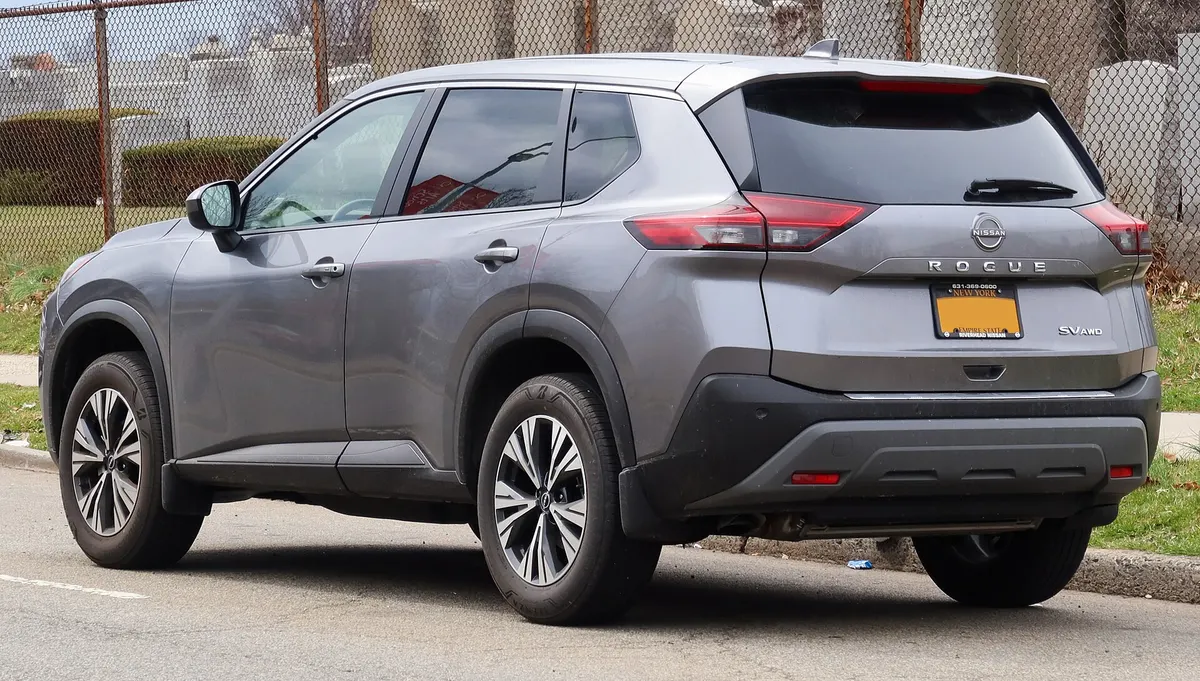
Engines
- PR25DD · 2.5L gasoline, 181 hp
- KR15DDT · 1.5L gasoline, 201 hp
Transmissions
- Xtronic · cvt
Drivetrain
FWD / AWD
Body
suv
Trims
S, SV, Rock Creek (added 2025), Dark Armor (added 2026.5), SL, Platinum
Nissan Rogue part-number cross-reference
Start from the OEM number, then pick the brand you trust. Verified equivalents for the Nissan Rogue (2021–present).
Part links go to Amazon, and to eBay where Amazon does not stock the part. Affiliate links, so we may earn a commission if you buy. Your price is unchanged, and a commission never changes a verdict.
Oil filter
Nissan
Same filter for both engines; current supersession of legacy 15208-9E01A
Find Nissan oil filter on AmazonVerified via: AMSOIL lookup - 2021 Rogue 2.5L PR25DD to Wix 51358, Wix 51358 cross-reference (OEM 15208, Fram PH7317, Bosch 3323, Purolator, Mobil 1), Nissan OEM 15208-65F1E - T33 Rogue application
Engine air filter (2.5L)
K&N
Washable; the SAME K&N panel also fits the 1.5L turbo despite different OEM numbers
Check K&N engine air filterVerified via: NissanPartsDeal by-engine catalog - 2021 Rogue 2.5L to 16546-6RA0A, Nissan OEM 16546-6RA0A (2021 Rogue)
Engine air filter (1.5L turbo)
Verified via: NissanPartsDeal by-engine catalog - Rogue 1.5L 3-cyl to 16546-6RC1A, K&N 33-3174 fits 2023 Rogue 1.5L 3-cyl (carparts.com)
Cabin air filter
Verified via: Fram Fresh Breeze CF12552 - Nissan Rogue application, K&N VF2076 - Nissan Rogue cabin air filter, Nissan OEM cabin filter 27277-6RC0B
Spark plugs (2.5L)
Nissan
Iridium; shared with 2019+ Altima/Sentra 2.5L PR25DD. Different plug from the 1.5L turbo.
Compare Nissan spark plugs on AmazonVerified via: NissanPartsDeal by-engine catalog - 2021 Rogue 2.5L to 22401-6LD1C, Denso DXE22H11C (stock 3529) cross-ref to 22401-6LD1C
Spark plugs (1.5L turbo)
Nissan
DIFFERENT plug from the 2.5L. A reliable branded aftermarket cross for this new VC-Turbo was not verifiable; use the OEM part until one is confirmed.
Look up Nissan spark plugs on AmazonVerified via: NissanParts.cc - OEM plug for T33 Rogue 1.5L VC-Turbo (22401-6RC1E), OEM Parts Online 22401-6RC1E (Rogue)
Front brake pads
Nissan
FRONT set; supersedes D1060-6RA0A. 2024 1.5L variant is D1060-6RR0C. REAR pads are D4060-6RA0C - do not confuse D1060 (front) with D4060 (rear).
Check Nissan front brake pads on AmazonVerified via: Nissan OEM front pad set D1060-6RA1A (2021-2025 Rogue), NissanPartsDeal brake pad set - front vs rear by position
Wiper blades
Nissan
Driver-side blade. Sizes: 26 in driver / 17 in passenger (front), 12 in rear.
See Nissan wiper blades on AmazonTrico / Rain-X / Bosch (by size)
Front pair; beam-style blades fit
Compare Trico / Rain-X / Bosch wiper bladesVerified via: WiperBladesUSA - 2022 Rogue sizes (26/17 front, 12 rear), Nissan OEM wiper blade 28890-6RR0A (2021-2025 Rogue)
Serpentine belt (2.5L)
Nissan
2.5L accessory drive belt (shared with 2019-2023 Altima 2.5L); supersedes 11720-6CA0A
Look up Nissan serpentine belt on AmazonVerified via: NissanPartsDeal by-engine catalog - 2021 Rogue 2.5L to 11720-6CA0B, Nissan OEM 11720-6CA0B (2019-2023 Nissan 2.5L)
Serpentine belt (1.5L turbo)
Nissan
1.5L turbo drive belt; supersedes 11720-6RC0A (the number most retailers still list)
Check Nissan serpentine belt on AmazonVerified via: NissanPartsDeal by-engine catalog - Rogue 1.5L 3-cyl to 11720-6RC0D, Nissan OEM 11720-6RC0A (2021-2024 Rogue 1.5L, prior number)
Battery
Nissan
Group 35 across S/SV/SL/Platinum, flooded. Nissan publishes no cold-cranking figure for this generation, so match the label on the battery in the car rather than a catalogue number
See Nissan battery on AmazonAny BCI Group 35
e.g. Duralast / DieHard / EverStart Group 35; match or exceed OE CCA
Compare Any BCI Group 35 batteryVerified via: AutoZone - Nissan Rogue Group 35 battery, Advance Auto Parts - 2021 Rogue batteries
Should I buy a 2021–present Nissan Rogue?
Split decision by engine. The 2021 with the proven 2.5L four-cylinder is a reasonable used buy once you verify its long list of first-year recalls (fuel pump, brake calipers, wheel nuts, fuel hose) was completed. The engine itself is conventional and durable. The 2022–2025 cars with the 1.5L VC-Turbo are a different conversation: a documented bearing-failure defect has triggered two recalls covering essentially the entire production run (the February 2026 campaign pulled 2025s in), a third recall covers breaking throttle-body gears on 2024–2025, and the primary remedy is software plus an oil-pan inspection, not a redesigned engine. Some engines have seized at under 20,000 miles. If you want a 2022–2025, buy one with the recall work documented, a clean oil-pan inspection, remaining powertrain warranty, and a flawless oil-change history, and price in the uncertainty. The 2026 carries the same engine with no recall against it yet, but 'yet' is doing real work in that sentence, and the all-new 2027 Rogue Hybrid landing in late 2026 gives you negotiating leverage on any outgoing T33. Otherwise, buy the 2021 or a rival.
Best years
2021 (2.5L, with all recall work verified done), Any 2022–2025 with a documented replacement engine installed under the recall
Years to avoid
2022–2025 1.5L VC-Turbo until recall 25V437/26V080/26V081 work (as applicable) and a clean oil-pan inspection are documented, 2023–2025 (highest bearing-seizure exposure, recalled again in Feb 2026 after the first fix)
Pre-Purchase Checklist for Nissan Rogue
- ☐Run the VIN through NHTSA's recall lookup (nhtsa.gov/recalls). On 2022–2024 cars, confirm 25V437 (engine bearing) is closed; on 2023–2025, confirm 26V080 (bearing, second campaign); on 2024–2025, confirm 26V081 (throttle body) and 24V748 (rearview camera); on 2021s, confirm the fuel pump (21V957), rear brake caliper (21V286), wheel nut (21V186), and fuel hose (21V068) campaigns; on 2026s, confirm the spare-tire recall (25V912).
- ☐On the 1.5L VC-Turbo: cold-start the engine and listen for knock, rattle, or metallic noise. The documented failure signature is engine knock followed by loss of power, with metal shavings in the oil pan.
- ☐Ask whether the dealer's oil-pan debris inspection was performed under the recall and what it found. A documented clean inspection (or a replacement engine) is worth real money.
- ☐Demand oil-change receipts on 1.5L cars. Nissan identified overheated, degraded oil as a contributing factor in bearing seizures. A neglected turbo triple is the worst-case buy.
- ☐Test drive from a full stop repeatedly: hesitation, rubber-band lag, or shudder under light throttle at 15–40 mph points to the CVT judder complaints on this generation.
- ☐Cycle the infotainment and backup camera several restarts in a row. Reboot loops and blank camera screens were recalled multiple times (22V527, 22V772, and 24V748 on 2024–2025 cars) and should be fixed by software.
- ☐On 2022s, sniff for fuel odor inside and around the car; thin-walled and punctured fuel tanks were both recalled that year.
- ☐Look closely at the rear hatch glass for a replacement (aftermarket logo, fresh urethane) and ask directly whether it ever shattered. Spontaneous rear-window shattering on 2021–2025 cars has 100+ NHTSA complaints and a class-action lawsuit, with no recall to fix it.
- ☐Check how much of the 5-year/60,000-mile powertrain warranty remains. On a VC-Turbo car, remaining coverage should heavily influence what you pay.
Common Nissan Rogue problems & repair costs
VC-Turbo engine bearing failure / seizure (1.5L KR15DDT)
$7,000–$14,000Symptoms: Engine knock or metallic rattle, sudden loss of motive power, stalling at speed, check-engine light, metal chunks or shavings found in the oil pan. NHTSA logged 1,878 incidents including 12 crashes/fires before the first recall. On 2025 cars, owners report 'Engine Malfunction Power Reduced Service Now' warnings at low mileage. A bearing failure can breach the block and discharge hot oil, creating a fire risk.
Fix: NHTSA opened investigation PE23-018 in December 2023; Nissan recalled 443,899 VC-Turbo vehicles (348,554 of them Rogues) in June 2025 under 25V437. Dealers inspect the oil pan for metal debris, replace the engine if debris traces to the bearings, and otherwise change the oil and reprogram the ECM. Seizures continued after the first countermeasure, so Nissan recalled 323,917 more Rogues, model years 2023–2025, in February 2026 under 26V080, citing overheated, degraded oil as a contributing factor; owner letters mailed April 8, 2026. The 26V080 remedy is an ECM reprogram, a trouble-code inspection, and a test drive, escalating to an oil-pan inspection and free engine replacement if codes point to the bearings. Out of warranty and outside the recall path, a replacement KR15DDT is a five-figure job. Get the recall work and inspection results documented before buying.
Sources: NHTSA Part 573 recall report 25V437 (engine bearing defect), NHTSA Part 573 recall report 26V080 (bearing seizure, oil degradation), WardsAuto: Nissan recalls 642k Rogues over engine damage, throttle body, ProblemsByVin, 2025 Nissan Rogue: 169 NHTSA complaints, 3 recalls, Nissan Forums, NHTSA investigation: loss of motive power / engine failure
Throttle-body gear failure: sudden loss of drive power (1.5L KR15DDT)
Symptoms: Sudden loss of drive power while driving, check-engine light, reduced-power limp mode. The gears inside the electronic throttle-body assembly can fracture and break, cutting throttle response without warning.
Fix: Recall 26V081, announced the same day as the second bearing recall in February 2026, covers 318,781 2024–2025 Rogues with the VC-Turbo (Nissan campaigns R25E2/R25E3). Dealers reprogram the ECM and replace the electronic throttle body if needed, free. This is a separate defect from the bearing issue. A 2024 or 2025 needs BOTH February 2026 campaigns closed. Verify by VIN before purchase.
Sources: NHTSA recall acknowledgement 26V081 (throttle-body gears), WardsAuto: Nissan recalls 642k Rogues over engine damage, throttle body, The Weekly Driver, used Rogue: 3 VC-Turbo recalls buyers must check
CVT judder, shudder, and hesitation from a stop
$300–$5,500Symptoms: Shudder or vibration under light acceleration, rubber-band hesitation pulling away from a stop or merging, lag on cold starts. 'Acceleration issue' is the top-reported 2023 engine complaint on CarComplaints (average ~13,000 miles), drivetrain complaints run through all four launch-era years, and owners of 2025 cars report the same low-speed hesitation pattern.
Fix: Start cheap: a CVT fluid service and any applicable Nissan software reflash resolve many judder complaints. Persistent judder with stored judder codes can mean belt/pulley wear, and the fix escalates to valve body or full CVT replacement, which runs $4,000–$5,500 at an independent shop. This Xtronic is better than the failure-prone unit in the prior generation, but it is not vindicated yet; buy with a long test drive.
Sources: Nissan Forums: 2023 Rogue transmission hesitation at start-up, CarComplaints: 2023 Nissan Rogue, Lemberg Law: 2025 Nissan Rogue reported problems (hesitation, power loss)
Fuel pump failure and stalling (2021)
$500–$1,100Symptoms: Engine stall while driving, sometimes with no restart. Caused by abnormal wear between the pump brush and commutator that overheats and melts pump components.
Fix: Recall 21V957 (Nissan campaign R21B8) covered roughly 27,000 2021 Rogues. Dealers replace the fuel pump assembly free. Verify by VIN that it was done; a failed pump outside recall coverage runs $500–$1,100 at an independent shop. The 2021 also logged 24 NHTSA fuel-system complaints beyond the recall population.
Sources: CarComplaints: Rogue fuel pump recall after stalled engines, NHTSA: 2021 Nissan Rogue recalls & complaints
Fuel tank defects and gas smell in the cabin (2022)
$1,200–$2,200Symptoms: Fuel odor inside or around the vehicle, visible leak in a worst case. 'Gas smell inside car' is a top-reported 2022 complaint (average ~21,000 miles), and 2022 logged 42 NHTSA fuel-system complaints.
Fix: Two 2022-only recalls: 22V259 for a fuel tank with a too-thin bottom wall (dealers replace the tank, lock ring, gasket, and o-ring) and 22V660 for tanks punctured during vehicle modifications. Both fixes are free by VIN. A tank replacement out-of-pocket is $1,200–$2,200. Any persistent fuel smell on a 2022 is a walk-away or fix-before-purchase item.
Sources: NHTSA: 2022 Nissan Rogue recalls & complaints, CarComplaints: 2022 Nissan Rogue
Infotainment reboot loops and backup camera blackouts
$0–$300Symptoms: Center screen continuously reboots on restart, rearview camera shows a blank screen in reverse, intermittent electrical gremlins. The 2021 alone logged 47 NHTSA electrical complaints.
Fix: Three software recalls: 22V527 (SiriusXM 'Not Subscribed' state reboots the head unit and kills the camera), 22V772 (infotainment reboot loop on 2021–2022), and 24V748 (blank reverse camera on 2024–2025 Rogues; owner letters mailed December 2024). All are fixed free via dealer or over-the-air update. Confirm software is current at purchase; a genuinely failed head unit outside these campaigns is an $800+ part, but that's the exception.
Sources: NHTSA: 2021 Nissan Rogue recalls (22V527, 22V772), NHTSA: 2024 Nissan Rogue recalls (24V748), Cars.com: 2025 Nissan Rogue recalls (24V748 scope includes 2025)
Rear hatch window shatters spontaneously
$250–$600Symptoms: Rear hatch glass shatters with no impact, while parked, after closing a door, or during normal driving. Owners describe a pop or bang, then the glass collapsing into the cargo area. NHTSA has logged over 100 complaints of shattered rear windshields on 2023–2025 Rogues, and 'visibility' is the top 2025 complaint category (68 of 169 total complaints, average ~13,400 miles).
Fix: No recall exists. A class-action lawsuit filed in January 2026 in the Middle District of Tennessee alleges 2021–2025 Rogues use thin soda-lime rear glass prone to spontaneous failure; Nissan has declined warranty coverage in documented cases, leaving owners to claim it on comprehensive insurance. Reported out-of-pocket costs run roughly $260–$350 for glass and trim (more if the wiper or defroster grid is damaged). On a used car, check for replacement rear glass and ask about shattering history. A prior comprehensive claim should show on the vehicle history report.
Sources: Carscoops: Nissan Rogue rear-window class action (Jan 2026), Lemberg Law: Nissan Rogue rear window shattering investigation, ProblemsByVin, 2025 Nissan Rogue complaint breakdown (visibility: 68)
Automatic emergency braking (AEB) malfunction
$250–$1,200Symptoms: False forward-collision warnings, phantom braking with nothing ahead, or AEB/warning lights with the system disabled. 'AEB malfunction' is a top-ranked 2021 brake complaint on CarComplaints (average 31,000 miles), continuing a complaint pattern from the prior generation.
Fix: Diagnosis first: many cases are a blocked or misaligned front radar or a software calibration issue. Fixes range from sensor cleaning/recalibration (~$250) to radar unit replacement ($700–$1,200). No recall covers this on the T33. Document any warning lights on the test drive and negotiate accordingly.
Sources: CarComplaints: 2021 Nissan Rogue (AEB malfunction), NHTSA: 2021 Nissan Rogue complaints
Day to day, a healthy T33 Rogue is cheap to run: 30+ mpg, inexpensive consumables, and most of the known defects are covered by free recall work. The financial risk is concentrated in two places: the 1.5L VC-Turbo's bearing issue (a five-figure engine if you're ever outside warranty and recall coverage) and the CVT (budget for fluid services every 30,000 miles as cheap insurance, which is deliberately shorter than Nissan's own 60,000 severe figure rather than a restatement of it, because a replacement is $4,000+). On the 1.5L, never stretch oil-change intervals. Nissan itself identified degraded, overheated oil as a contributing factor in bearing seizures. Carry comprehensive insurance with a glass-friendly deductible: the rear-window shattering problem has no recall, and Nissan has declined warranty coverage in documented cases. Factor remaining powertrain warranty (5yr/60k) directly into the price you pay.
Cost calculator
What will this Nissan Rogue cost you by a given mileage?
Drag to a mileage. We total the documented problems whose typical onset falls at or before it. The same cost ranges listed above, nothing new invented.
$0 estimated repair range
5-Year Maintenance Schedule & Cost to Own
Every scheduled service by mileage, fluid capacities, independent shop ranges, and parts cross-references.
Have a repair quote for this Nissan Rogue?
Audit against OEM book times, uncover duplicate pad and rotor labor, and verify parts markups.
How to fix common Nissan Rogue problems (DIY)
Oil and filter change (do this religiously on the 1.5L)
Tools: Floor jack + jack stands or ramps, Oil filter wrench, Drain pan, 14mm socket for drain plug
- Warm the engine briefly, raise the front of the vehicle, and remove the splash-shield access panel.
- Drain the oil, inspect what comes out. On the 1.5L, any glitter or metallic flecks means stop and get the recall oil-pan inspection done before driving further.
- Replace the filter, refit the drain plug with a new crush washer, and refill with the specified 0W-20.
- Run the engine, check for leaks, verify level on the dipstick, and reset the maintenance reminder.
Parts
- 0W-20 full synthetic oil (5-3/8 qt on the 2.5L, 5 qt on the 1.5L turbo) · Amazon $25–$40
- Oil filter (2021–2024 Nissan Rogue) · Amazon $8–$15
Cabin & engine air filter change
Tools: None (screwdriver optional for airbox clips)
- Open the glovebox, release the side stops, and drop it down to expose the cabin filter cover.
- Slide out the old cabin filter and insert the new one with the airflow arrow pointing the correct direction.
- Unclip the engine airbox lid, swap in the new panel filter, and re-seat the lid clips.
- Confirm the glovebox stops re-engage and the airbox lid sits flush.
Parts
- Cabin air filter (2021–2024 Nissan Rogue) · Amazon $10–$18
- Engine air filter (2021–2024 Nissan Rogue) · Amazon $12–$25
12V battery replacement
Tools: 10mm socket or wrench, Battery terminal brush, Memory saver (optional but recommended)
- With the ignition off, connect a memory saver if you have one to preserve radio and window settings.
- Disconnect the negative terminal first, then positive, then remove the battery hold-down bracket.
- Swap in the correct group-size AGM/flooded replacement, clean the terminals, and refit the hold-down.
- Reconnect positive first, then negative, and cycle each window fully up to re-learn auto-up if needed.
Parts
- Replacement battery (2021–2024 Nissan Rogue) · Amazon $140–$220
Some parts links are affiliate links. We may earn a commission at no cost to you. We only list parts that fit this generation.
The short version
The T33 Rogue (2021–present) is genuinely good at being a family crossover: quiet, roomy, efficient. The problem lives under the hood of most of them. From 2022 on, every Rogue got the KR15DDT 1.5-liter VC-Turbo three-cylinder, and that engine can destroy its own bearings. Owners reported knocking, sudden loss of power, and metal shavings in the oil pan; NHTSA opened an investigation in December 2023, and Nissan has since run two bearing recalls: 443,899 VC-Turbo vehicles in June 2025 (25V437), then 323,917 Rogues from 2023–2025 again in February 2026 (26V080) after engines kept seizing following the first fix. A same-day third campaign (26V081) covered breaking throttle-body gears on 318,781 2024–2025 cars. That’s over 670,000 Rogue recall actions on the bearing issue alone, with many cars recalled twice.
The 2021 model year skipped all of this: it uses the conventional 2.5-liter four-cylinder from the prior generation, which has no comparable defect. Its baggage is ordinary first-year stuff, all fixable free by VIN: a fuel pump recall that caused stalling, plus recalls for brake calipers, wheel nuts, and a fuel hose.
The 2025–2026 cars (and the generation’s expiration date)
Nissan kept the T33 going well past its original coverage window. The 2025 added the off-road-flavored Rock Creek trim (all-terrain tires, tubular roof rack, hill-descent control, an off-road camera view) while upper trims run the 12.3-inch Google-built-in infotainment; Rock Creek keeps the smaller 8-inch screen. Mid-2026 brought a “2026.5” update that added the Dark Armor grade: an SV dressed in gloss-black trim, 19-inch black wheels, a panoramic moonroof, and heated seats/steering wheel. The lineup starts at $29,490.
Two things matter more than the trim shuffle. First, the recalls followed the newer cars: the February 2026 bearing campaign explicitly includes 2025 models, and the throttle-body recall covers 2024–2025. The 2026 has no engine recall against it so far, its only campaign to date being a 4,655-vehicle spare-tire compliance recall (25V912), but it carries the same engine and has no track record yet. Second, this generation now has an expiration date: the all-new 2027 Rogue Hybrid with Nissan’s e-POWER system arrives in late 2026. A lame-duck platform with a recall history is a car you negotiate on, hard.
One more later-years item that never got a recall: rear hatch windows that shatter on their own. NHTSA has logged over 100 complaints on 2023–2025 cars, glass exploding while parked or after closing a door, and a January 2026 class action alleges the 2021–2025 rear glass is defectively thin. Nissan has declined warranty coverage in documented cases; owners eat the deductible on comprehensive insurance.
What that means when you’re shopping
Want the safe pick? Buy a 2021, confirm every recall is closed, and enjoy the boring engine.
Want a 2022–2025? The math changes. Insist on: recall work documented (every applicable engine campaign: 25V437 on 2022–2024, 26V080 on 2023–2025, 26V081 on 2024–2025), the oil-pan inspection result, oil-change receipts (Nissan identified degraded, overheated oil as a contributing factor in seizures), and remaining powertrain warranty. A car that already received a replacement engine under the recall is arguably the best 1.5L buy on the market. The fix is real and it’s documented.
On any year, take a long test drive: the Xtronic CVT draws steady complaints about judder and hesitation from a stop, and while it’s far better than the CVT that plagued the previous Rogue, persistent shudder is either leverage or a reason to keep walking. Cycle the infotainment through a few restarts too. Reboot loops and dead backup cameras were recalled three separate times and should already be patched. And look hard at the rear hatch glass: replacement glass, fresh urethane, or an aftermarket logo means it probably shattered, and there’s no recall paying for the next one.
The one habit that matters if you own one
If you own a 1.5L car: never stretch an oil change. Overheated, degraded oil is Nissan’s own named contributing factor in bearing seizures. Fresh oil is the cheapest engine insurance this platform has, and check what drains out. Glitter in the oil means stop driving and get the recall inspection done.
How this file is built: failure modes and cost ranges are compiled from NHTSA recall reports (25V437, 26V080, 26V081, 24V748, 25V912, 21V957, 22V259, and others), the NHTSA PE23-018 investigation record, CarComplaints and NHTSA complaint data, the January 2026 rear-window class-action reporting, Nissan’s own 2026.5 and 2027 Rogue announcements, and owner-forum reporting, then sanity-checked against shop-floor experience. Cost figures are independent-shop estimates and vary by region. Spot something off? Tell us.
Viral car myths, checked against this car
- Misleading
Is the "$1 Japanese oil trick" that stops engine wear forever real?
The 'Japanese oil trick' is almost certainly MoS2 (molybdenum disulfide), a real industrial friction modifier. It is German, not Japanese (Liqui Moly popularized it), sold openly at every parts store for $15-20, has real but modest measured friction benefits, and was never buried by anyone.
- Outdated
Does a "$1 mineral" really double car battery life? The Epsom-salt reality.
The mineral is Epsom salt (magnesium sulfate). It was a real desulfation hack for serviceable flooded-cell batteries 40+ years ago. It does not work on modern sealed AGM or EFB batteries, and trying it on yours will void the warranty without helping the battery.
Frequently asked questions
Which Nissan Rogue years should I avoid?
Within this generation, the risk is engine-based, not year-based: 2022–2025 cars carry the 1.5L VC-Turbo and its bearing-failure recalls (25V437 and 26V080, over 670,000 Rogue recall actions combined, with many cars recalled twice). The 2023–2025 cars were recalled a second time in February 2026 after the first fix didn't stop seizures, and 2024–2025 cars carry a third recall (26V081) for breaking throttle-body gears. The 2021 has the conventional 2.5L and avoids the engine issue, but verify its own recalls (fuel pump, brake calipers, wheel nuts) were completed.
Is the Nissan 1.5L VC-Turbo three-cylinder engine reliable?
Its record so far is poor. NHTSA opened an investigation in December 2023 after reports of engine knock, power loss, and metal shavings in oil pans; Nissan recalled 443,899 VC-Turbo vehicles in 2025 for defective bearings, then recalled 323,917 2023–2025 Rogues again in February 2026 when seizures continued, alongside a separate 318,781-vehicle throttle-body recall. Failures have occurred under 20,000 miles. Some engines are fine, and confirmed-bad ones get replaced free under the recall, but this is not an engine with a clean bill of health yet.
Does the 2021 Rogue have the engine problem?
No. The recall paperwork technically lists '2021–2024 Rogue,' but only vehicles equipped with the VC-Turbo engine are affected, and US Rogues didn't get the 1.5L VC-Turbo until the 2022 model year. The 2021's 2.5L PR25DD is a conventional naturally aspirated four-cylinder with no comparable defect pattern.
Is the engine recall fix actually a fix?
Partially. Under recall 25V437, dealers inspect the oil pan for metal debris. Engines with confirmed bearing debris get replaced free, which genuinely resolves those cars. Engines that pass get fresh oil and an ECM reprogram, which manages the risk rather than removing it; seizures after the first countermeasure are what triggered the second recall (26V080) in February 2026, whose remedy is again software-first: ECM reprogram, trouble-code inspection, and a test drive, escalating to engine replacement only if codes point to the bearings. A car with a documented replacement engine is arguably the safest 1.5L buy.
Why do Nissan Rogue rear windows shatter?
A January 2026 class-action lawsuit alleges 2021–2025 Rogues use thin soda-lime rear hatch glass prone to spontaneous failure. Owners report the glass exploding with no impact, sometimes while parked. NHTSA has logged over 100 shattered-rear-window complaints on 2023–2025 cars. There is no recall, and Nissan has declined warranty coverage in documented cases, so owners typically claim it on comprehensive insurance. On a used car, check whether the rear glass has been replaced and ask why.
Is the 2026 Nissan Rogue affected by the engine recall?
Not so far. The bearing recalls stop at model year 2025, and the only 2026 campaign to date is a minor spare-tire compliance recall (25V912, 4,655 vehicles). But the 2026 carries the same 1.5L VC-Turbo, Nissan's fixes have been software-and-oil countermeasures rather than a redesigned engine, and the model is too new to have a complaint record. Treat it as unproven, not cleared, and note the all-new 2027 Rogue Hybrid arrives in late 2026, which is real negotiating leverage on any leftover T33.
Is the CVT in the 2021–2024 Rogue as bad as older Nissan CVTs?
No. The notorious failure wave hit the 2014–2020 generation and earlier. The T33's Xtronic draws complaints about judder, shudder, and hesitation from a stop rather than mass failures, and the hesitation reports continue on 2025 cars. Take a long test drive, budget for fluid services every 30,000 miles, which is our own call and half of Nissan's 60,000 severe number, and treat persistent shudder as a negotiating point or a reason to walk.
Every Nissan Rogue generation
The full case file run, beyond the generation before and after this one.
Cross-shopped rivals
Files on what buyers weigh against the Nissan Rogue of this era.