Case file · HYUNDAI-TUCSON-2022-2026 · 4th gen (NX4)
Hyundai Tucson 2022–presentCommon problems, reliability & repair costs
The fourth-gen Tucson fixed the last generation's two landmines, the dual-clutch transmission and the rod-bearing recall engine, and replaced them with a long recall sheet and two watch items. The recalls (rollaway shifters, phantom braking, two fire risks, a blanking gauge cluster) are all free fixes, so they're a VIN check, not a wallet problem. The watch items are the 2.5L's oil appetite and a 12V battery that drains on early cars. Verify the paperwork and this is one of the better used compact SUVs of its era.
2023, 2024
2022 (first-year teething, highest complaint volume: 12V dra +1 more
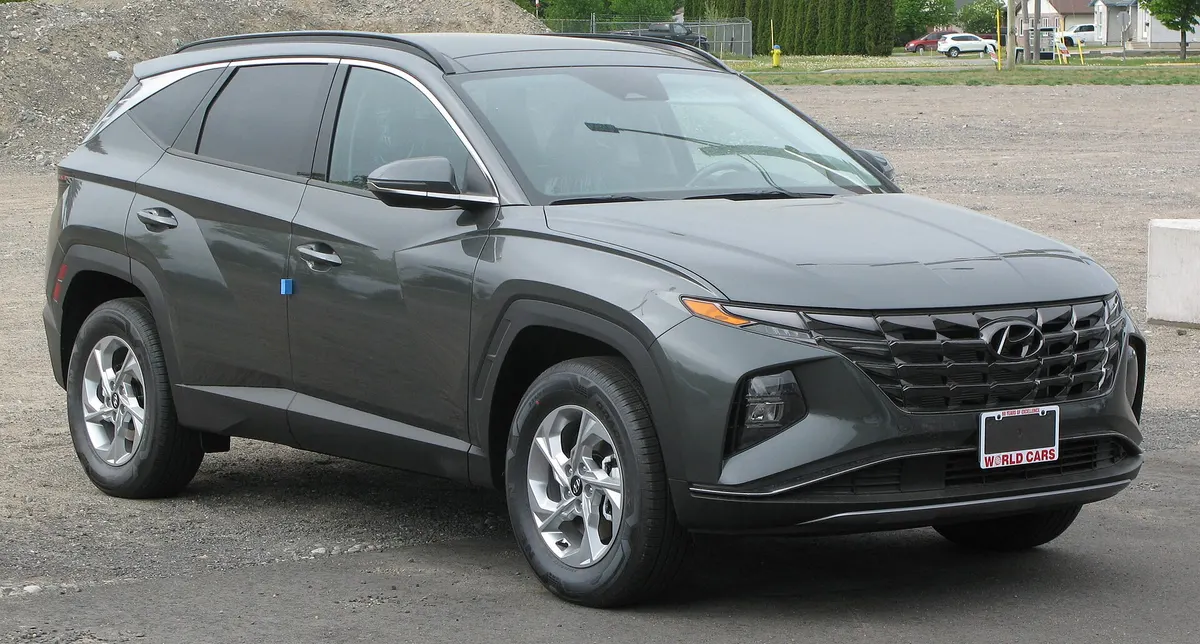
Engines
- G4KN · 2.5L gasoline, 187 hp
- G4FT (hybrid) · 1.6L turbo hybrid, 226 hp
- G4FT (plug-in) · 1.6L turbo phev, 261 hp
Transmissions
- automatic , 8-speed
- automatic , 6-speed
Drivetrain
FWD / AWD
Body
suv
Trims
SE, SEL, XRT, N Line, Limited, Hybrid Blue, Hybrid SEL Convenience, Hybrid Limited, Plug-in Hybrid SEL, Plug-in Hybrid Limited
Hyundai Tucson part-number cross-reference
Start from the OEM number, then pick the brand you trust. Verified equivalents for the Hyundai Tucson (2022–present).
Part links go to Amazon, and to eBay where Amazon does not stock the part. Affiliate links, so we may earn a commission if you buy. Your price is unchanged, and a commission never changes a verdict.
Oil filter
Hyundai
superseded by 26350-2S001; same cartridge as the Sonata/Santa Fe/Santa Cruz/K5/Sorento 2.5. Do NOT buy the prior-gen 26300-35505 spin-on. It does not fit this engine.
Find Hyundai oil filter on AmazonPremium Guard
widely cross-listed for the 26350-2S000 application (2.5L Hyundai/Kia)
Look up Premium Guard oil filterVerified via: HyundaiPartsDeal: Tucson oil filter OEM catalog (26350-2S000/2S001 = GDI; 26350-2M000 = TCI/GDI), Walmart: Wix-listed 26350-2S000 fitment, 2022-2024 Tucson 2.5L, Amazon: 26350-2S000 / PG99527EX cross for 2022+ Tucson 2.5L
Oil filter
Hyundai
shared with Elantra Hybrid, Kona, Santa Fe HEV, Sorento HEV and other 1.6T hybrid applications
Check Hyundai oil filter on AmazonVerified via: FinditParts: Wix WL10473 cross-reference (26350-2M000, 100473, S45017), Amazon: Baldwin P40152 (replaces 26350-2M000 / WL10473)
Engine air filter
Hyundai
shared with Sonata/K5/Sorento/Santa Cruz 2.5. Aftermarket catalogs lagged this application early. Verify any aftermarket number against 28113-N9000 before buying.
Look up Hyundai engine air filter on AmazonVerified via: Hyundai OEM Parts Online: 28113-N9000 (2022-2026), Wholesale Hyundai Parts: 2022 Tucson engine air filter 28113N9000
Engine air filter
Hyundai
hybrid-specific, different from the 2.5L filter; shared with Sportage/Sonata/Santa Fe/Sorento hybrid applications
Check Hyundai engine air filter on AmazonVerified via: Hyundai OEM Parts Online: 28113-P0400 (2022-2026 Tucson), Wholesale Hyundai Parts: 28113P0400 (1.6L / 1.6L turbo)
Cabin air filter
Hyundai
interchangeable with the shared Hyundai/Kia number 97133-L1000 (Sonata/Santa Fe/Elantra/K5/Sorento era); aftermarket listings commonly cross both
See Hyundai cabin air filter on AmazonVerified via: Hyundai OEM Parts Online: 97133-N9100 (2022-2026), Amazon: OEM 97133-N9100 fitment (Tucson Hybrid 2022-23, Kia Niro 2023-25), Amazon: aftermarket cross listing 97133-L1000 / 97133-N9100 (Tucson 2022-2024)
Spark plugs
Hyundai
the 2.5L GDI plug per Hyundai's own catalog. Aftermarket cross-references for this number were thin at verification time. Buy OEM or verify any substitute against 18871-11070.
Compare Hyundai spark plugs on AmazonVerified via: HyundaiPartsDeal: Tucson spark plug OEM catalog (18871-11070 = 2.5L GDI, 2022-2026), Wholesale Hyundai Parts: 18871-11070 (Tucson 2.5L, 2020-23)
Spark plugs
Hyundai
factory plug is the NGK SILZKR8J; do not interchange with the 2.5L's 18871-11070
Find Hyundai spark plugs on AmazonVerified via: HyundaiPartsDeal: Tucson spark plug OEM catalog (18875-08085 = 1.6T TCI/GDI, 2022-2026), Hyundai Forums: Tucson hybrid OEM plug = NGK SILZKR8J (18875-08085)
Wiper blades
Factory sizes
Check Factory sizes wiper blades on AmazonAny beam blade (Bosch, Rain-X, Trico, Michelin)
sizes are consistent across fitment charts for 2022+; note the rear shrank from the prior generation's 14 in
See Any beam blade wiper bladesVerified via: AutoPadre, Hyundai Tucson wiper sizes (2022+: 26/16 front, 11 rear), WiperSizeChart: 2022 Hyundai Tucson (26/16/11)
Battery (12V)
Factory fit
match AGM with AGM, since these cars have stop-start. The Hybrid's 12V is a 15Ah lithium unit under the rear seat with a reset button (behind the driver's door keyhole cover); it is not a standard BCI battery and is effectively a dealer/specialist item.
Compare Factory fit battery on AmazonAny AGM Group 47/H5 or 48/H6 (Interstate, DieHard, Duralast, Odyssey)
owners document H6 AGM (~760 CCA) replacements on 2.5L cars; verify the group size physically installed in YOUR car before ordering
Find Any AGM Group 47/H5 batteryVerified via: Hyundai Forums: battery replacement on a 2022 gas Tucson (AGM group-size discussion), Tucson Forum: what is the 12V battery in the 2022 Tucson HEV (15Ah lithium, under rear seat)
Should I buy a 2022–present Hyundai Tucson?
Buy it with the recall printout in hand. Nothing on this generation has (so far) risen to an engine-replacement recall, and the failure modes that made the 2016–2018 cars scary are gone. But the NX4 has accumulated one of the longer recall sheets in the class: a rollaway defect on the 2025, phantom braking on 2025–2026, a blanking instrument cluster on 2025–2026, a tow-harness fire risk on 2022–2024 cars with the factory hitch, an oil-pump fire risk on some 2023s, and a power-steering failure on some 2024s. Every one is fixed free at a Hyundai dealer, which turns the whole list into a 5-minute VIN check. The money questions are the two things without a recall: the 2.5L's documented oil consumption (check the dipstick, demand oil records) and the early cars' 12V battery drain (confirm the battery-management software update). Complaint volume is heavily front-loaded in the first-year 2022s; a 2023–2024 with clean paperwork is the sweet spot.
Best years
2023, 2024
Years to avoid
2022 (first-year teething, highest complaint volume: 12V drain, hesitation, windshield claims), Any 2025 until the rollaway, phantom-braking, and cluster recalls show completed on the VIN
Pre-Purchase Checklist for Hyundai Tucson
- ☐Run the VIN at nhtsa.gov/recalls before anything else. This generation's big ones: rollaway (24V-877, 2025), phantom braking (26V-316, 2025–2026), blank instrument cluster (26V-461, 2025–2026), tow-harness fire (25V-893, 2022–2024 with factory hitch), ISG oil-pump fire (23V-526, some 2023s), power-steering loss (24V-412, some 2024s). All free fixes. Walk away from a seller who won't let you check.
- ☐If the car has the factory tow hitch (2022–2024), treat recall 25V-893 as mandatory before purchase. The harness module can short and Hyundai logged three fires. Owners were told to park outside until repaired.
- ☐On the 2.5L: pull the dipstick cold and ask the seller point-blank how much oil it uses between changes. The 2.5 Smartstream family has documented oil-consumption reports up to a quart per 1,000 miles. No oil-change records = price it accordingly.
- ☐Ask whether the 12V battery-management software update was done and whether the battery has ever been replaced. Early cars (2022–2023, hybrids especially) are known to drain the 12V flat in days of sitting.
- ☐Test-drive in stop-and-go traffic. On the 2.5L, feel for hesitation rolling into the throttle around 2,000–3,000 rpm; on the hybrid, feel for a stumble when it hands off between electric and gas. Software updates address some of it. A car that lurches badly deserves a dealer scan first.
- ☐On 2025–2026 cars: confirm the front-camera software (26V-316) and cluster software (26V-461) updates are done, and watch for any uncommanded braking on your test drive.
- ☐Inspect the windshield edge-to-edge. Spontaneous-crack complaints cluster on the 2022, replacements average around $1,500 because the ADAS camera needs recalibration, and insurers don't always waive the deductible.
- ☐On hybrids: know that the 12V battery is a lithium unit under the rear seat with a reset button (behind the driver's door keyhole cover). If the seller mentions using that button regularly, the drain problem isn't fixed.
Common Hyundai Tucson problems & repair costs
Excessive oil consumption (2.5L Smartstream G4KN)
Symptoms: Oil level drops noticeably between changes with no leak and no smoke. Owner and shop reports across the 2.5 Smartstream family (Sonata, Santa Fe, Santa Cruz, Tucson) document rates up to a quart per 1,000–2,000 miles on affected engines. Engine problems are the single biggest NHTSA complaint category on the 2022 Tucson, including stall and died-while-driving reports.
Fix: There is no recall. The dealer path is a formal oil-consumption test (top off, drive a set interval, measure); failing it puts the repair, rings or an engine, under the 10-year/100,000-mile powertrain warranty for the original owner (5/60 for subsequent owners). Your job as an owner is dipstick checks at every fill-up and paper records of every top-up, because that documentation is what wins the warranty claim. Run it low and you're into bearing-failure territory no warranty adjuster will enjoy discussing.
Sources: Hyundai Forums: 2.5L Smartstream engine oil problems and defects thread, Apex Tech Nation: Hyundai/Kia 2.5 Smartstream common problems (oil burn), CarComplaints: 2022 Tucson engine problems (largest NHTSA category)
12V battery drain, car dead after sitting (gas and hybrid)
Symptoms: Vehicle won't start after sitting for a few days, sometimes overnight. 'Car will not start, engine does not turn over' is the most-reported 2022 Tucson complaint on CarComplaints, at an average of just 6,000 miles. Hybrid owners report having to pop the driver's door keyhole cover to press the hidden 12V reset button repeatedly. Parasitic draw from the telematics (Bluelink), body control, and smart-key modules is the commonly identified culprit.
Fix: Hyundai rolled out a battery-management-system (BMS) software update, dealer-installed on earlier cars and factory-installed from the 2023s, and replaced batteries under warranty. On a used car: confirm the update is done, have the battery load-tested, and treat a seller's 'it just needs a jump' as a live defect, not a quirk.
Sources: CarComplaints: 2022 Tucson electrical problems, Tucson Forum: 2022 Tucson battery issue thread, Hyundai Forums: dead battery, '22 Tucson Hybrid
Phantom braking: forward-collision system brakes for nothing (recall on 2025–2026)
$0–$0Symptoms: The Forward Collision-Avoidance Assist system slams or pulses the brakes with no obstacle present, often at speed, with traffic behind. Hyundai's own investigation logged 376 field reports including four crashes and four alleged injuries before the recall. A separate civil suit over 2025 Tucson phantom braking was already underway.
Fix: NHTSA recall 26V-316 (May 2026) covers 421,078 vehicles: 2025–2026 Tucson, Tucson Hybrid, Tucson Plug-in Hybrid, and Santa Cruz. The front camera software reads objects as closer than they are; the remedy is a free camera software update, with owner letters from July 2026. If a 2025–2026 test drive produces an uncommanded brake event, the update isn't done. Get it done.
Sources: The Brake Report: Hyundai recalls 421,078 vehicles for phantom braking (26V-316), NHTSA recall acknowledgement: 26V-316, Autoblog: Hyundai sued over alleged phantom braking
Powertrain hesitation: 8-speed lag and hybrid handoff stumble
Symptoms: On the 2.5L: a pause, then a lurch, rolling into the throttle between roughly 2,000–3,000 rpm. Owners describe it as turbo lag on a car with no turbo. On the hybrid: a stumble or momentary loss of drive when the system transitions between electric and gas. NHTSA drivetrain complaints on the 2022 include died-while-driving reports at an average of 11,000 miles.
Fix: Hyundai's answer has been software: TCU/HCU updates through dealers (a hybrid control-unit logic update is documented in NHTSA TSB records). Many owners report improvement, not elimination; it's a drivability annoyance on most cars, not a failure. A car that hesitates badly enough to feel unsafe merging deserves a dealer software check and a scan for stored codes before you buy it, not after.
Sources: Hyundai Forums: engine/transmission hesitates, 2022 Tucson Limited, Tucson Forum: 2022 Tucson engine/transmission jerk, CarComplaints: 2022 Tucson drivetrain complaints
Tow-hitch wiring harness fire risk (recall, 2022–2024 with factory hitch)
$0–$0Symptoms: Usually none until the trailer lights fail, or worse. The Mobis tow-harness control module was installed where water can get in; moisture can kill the trailer lighting or short the module. Hyundai confirmed three fires, no injuries, and advised owners to park outside until repaired.
Fix: NHTSA recall 25V-893 (Hyundai recall 290) covers 51,587 2022–2024 Tucsons with the accessory tow hitch harness. Dealers replace the harness with a better-sealed module, free; owner letters went out from February 2026. If you're shopping a hitch-equipped car, this is a before-money-changes-hands item.
Sources: NHTSA recall acknowledgement: 25V-893, TFLcar: 51,000+ 2022–2024 Tucsons recalled for wiring-related fire risk, CBT News: Hyundai recalls over 51,000 Tucsons over tow hitch fire risk
Windshield cracking without impact
$800–$1,800Symptoms: Cracks that appear or spread with no stone strike. Owners report cracks starting at the edge, sometimes while parked. 'Significant cracked windshield, no impact, not driving' is a top-three 2022 Tucson complaint on CarComplaints, at an average 13,000 miles.
Fix: Replacement glass plus recalibration of the windshield-mounted ADAS camera is what pushes the bill toward the CarComplaints-reported ~$1,500 average. No recall exists; some owners got goodwill assistance, many went through insurance. Budget the recalibration. A bargain glass quote that skips it isn't a complete repair on this car.
Sources: CarComplaints: 2022 Hyundai Tucson problem summary (windshield complaint, ~$1,500 avg)
Routine running costs are unremarkable. Filters and pads are cheap, and both engines use ordinary service parts (note both use cartridge oil filters, not the old spin-on). What's different about this generation is how much of its risk is recall-shaped: the scary stuff (fires, rollaway, phantom braking, blank cluster) is all free to fix, so the real cost exposure is concentrated in three places: an out-of-warranty 2.5L that was allowed to run low on oil, a 12V battery habit on early cars, and windshield replacements that carry an ADAS-recalibration surcharge. Hyundai's 10-year/100,000-mile powertrain warranty applies to the original owner only; used buyers get 5 years/60,000 miles from the original sale date, which many of these cars have already burned through. One more reason the oil paperwork matters more than the odometer.
Cost calculator
What will this Hyundai Tucson cost you by a given mileage?
Drag to a mileage. We total the documented problems whose typical onset falls at or before it. The same cost ranges listed above, nothing new invented.
$0 estimated repair range
Have a repair quote for this Hyundai Tucson?
Audit against OEM book times, uncover duplicate pad and rotor labor, and verify parts markups.
How to fix common Hyundai Tucson problems (DIY)
Engine air filter + cabin air filter change
Tools: None required (the airbox lid unclips by hand)
- Unclip the airbox lid in the engine bay, lift it, and pull the old panel filter. The 2.5L and the hybrid use different filters (28113-N9000 vs 28113-P0400). Match your engine, not just the year.
- Seat the new engine filter with the sealing edge flat, then re-clip the lid.
- Open the glovebox and release the side stops to let it swing down.
- Unclip the cabin-filter cover behind it, slide the old filter out, and insert the new one (97133-N9100) with the airflow arrow pointing down.
- Re-hang the glovebox stops and close it up.
Parts
- Engine air filter (2022+ Tucson, check 2.5L vs hybrid part number) · Amazon $12–$25
- Cabin air filter (2022+ Tucson) · Amazon $10–$20
Oil change (cartridge filter, read this before buying parts)
Tools: Floor jack + jack stands or ramps, Socket set (drain plug), Oil filter cap wrench (cartridge housing), Drain pan + funnel
- Buy the right filter first: unlike older Tucsons, both NX4 engines use a cartridge element, not a spin-on can: 26350-2S000/2S001 for the 2.5L, 26350-2M000 for the hybrid/PHEV. The old 26300-35505 spin-on does not fit.
- Warm the engine briefly, raise and support the front, and drain the oil at the plug; replace the crush washer.
- Open the filter housing with a cap wrench, swap the cartridge and the O-rings that come in the box (a smear of fresh oil on the new O-rings), and torque the cap snug. Plastic housings crack when gorilla-tightened.
- Refill with the grade printed on the oil cap / in the manual, start it, check for leaks, then re-check the level on flat ground.
- On the 2.5L: log date, mileage, and oil added, and check the dipstick at every fuel fill-up between changes. Consumption paperwork is what turns a warranty argument into a warranty approval.
Parts
- Oil filter cartridge kit (2.5L: 26350-2S000; hybrid: 26350-2M000) · Amazon $6–$15
- Full synthetic oil, 5–6 qt (match the cap/manual spec for your engine) · Amazon $25–$45
Replace the wiper blades (26" / 16" / 11")
Tools: None
- Buy by size, not by guesswork: 26-inch driver, 16-inch passenger, 11-inch rear on this generation.
- Lift the front arms, press the release tab, and slide each old blade off its hook.
- Click the new blades on until the tab seats, and lower the arms gently.
- For the rear, rotate the blade perpendicular to the arm to unhook it, then reverse to install.
Parts
- Front wiper blade pair, 26 in + 16 in (2022+ Tucson) · Amazon $20–$40
- Rear wiper blade, 11 in · Amazon $8–$15
Some parts links are affiliate links. We may earn a commission at no cost to you. We only list parts that fit this generation.
The short version
The fourth-generation Tucson is Hyundai’s do-over, and mechanically it worked: the hesitating dual-clutch transmission is gone (every US car uses a conventional automatic, 8-speed on the 2.5L and 6-speed on the hybrids), and there’s no rod-bearing engine recall hanging over it the way the Theta II era hung over half of Hyundai’s lineup.
What this generation has instead is paperwork. Eight recall campaigns and counting, including a 2025 shifter that can leave Park without a foot on the brake (24V-877), phantom braking on 421,078 2025–2026 cars (26V-316), a gauge cluster that can go blank while driving (26V-461), and two separate fire risks: the factory tow-hitch harness on 2022–2024s (25V-893, three confirmed fires, park-outside advisory) and an oil-pump controller on some 2023s (23V-526). Every one of them is a free fix at any Hyundai dealer.
The two things a recall won’t fix for you: the 2.5L Smartstream’s documented oil consumption (owner reports across this engine family run as high as a quart per 1,000 miles) and a 12V battery that drains flat on early cars until the battery-management software update is applied.
What that means when you’re shopping
Start at nhtsa.gov/recalls with the VIN. On this generation that five-minute check clears more risk than any test drive: rollaway, phantom braking, blank cluster, two fire risks, and a power-steering recall on some 2024s, all resolved for free. A hitch-equipped 2022–2024 with the harness recall open is the one configuration we’d refuse to drive home.
Then do the two checks the government can’t do for you. Pull the 2.5L’s dipstick cold and ask exactly how much oil it uses between changes. Records or a discount, pick one. And ask whether the 12V battery software update was done; a seller who casually mentions jump-starting it “sometimes” is describing the known defect.
The 2023–2024 cars are the sweet spot: past the first-year complaint spike, before the 2025 recall cluster, usually with factory battery software. The 2022 isn’t a bad car. It’s just the year that did the beta testing.
The one habit that saves this car
Same habit as the last generation, new reason: check the oil at every fill-up. There’s no recall and no knock-sensor safety net for the 2.5’s consumption, just the 10-year/100,000-mile powertrain warranty (original owner; 5/60 used), and warranty engines go to owners who show up with a top-up log, not a story.
How this file is built: failure modes and recall facts are compiled from NHTSA recall records (24V-877, 25V-893, 26V-316, 26V-461, 23V-526, 24V-412, 23V-038), CarComplaints data, and owner-forum reporting, then sanity-checked against shop-floor experience. Cost figures are independent-shop estimates and vary by region. This generation is still in production, so this file will grow. Spot something off? Tell us.
Viral car myths, checked against this car
- Outdated
Does a "$1 mineral" really double car battery life? The Epsom-salt reality.
The mineral is Epsom salt (magnesium sulfate). It was a real desulfation hack for serviceable flooded-cell batteries 40+ years ago. It does not work on modern sealed AGM or EFB batteries, and trying it on yours will void the warranty without helping the battery.
- Misleading
Is the "$1 Japanese oil trick" that stops engine wear forever real?
The 'Japanese oil trick' is almost certainly MoS2 (molybdenum disulfide), a real industrial friction modifier. It is German, not Japanese (Liqui Moly popularized it), sold openly at every parts store for $15-20, has real but modest measured friction benefits, and was never buried by anyone.
- Dangerous
Is the "$2 liquid that destroys engine sludge forever" real? Our shop-floor verdict.
An aggressive solvent flush on a high-mileage engine is a textbook way to spin a bearing. The viral 'kitchen-cabinet flush' is folklore that real shops spend money cleaning up after.
Frequently asked questions
Is the Hyundai Tucson a reliable car?
The 2022+ generation is shaping up better than the one before it. The dual-clutch transmission and the recall-grade engine failures of 2016–2018 are gone. What it has instead is a long list of recalls (all fixed free) and two watch items with no recall: oil consumption on the 2.5L and 12V battery drain on early cars. A car with the recalls closed, the battery software updated, and oil records is a solid buy; we score it 6/10 with the caveat that the generation is young.
What are the biggest problems with the 2022 Hyundai Tucson?
By complaint volume: no-starts from 12V battery drain (the top complaint, at an average of just 6,000 miles), engine issues on the 2.5L including oil consumption and stall reports, powertrain hesitation rolling into the throttle, and windshields that crack without an impact (about $1,500 to replace because the ADAS camera needs recalibration). The 2022 is the generation's highest-complaint year; 2023 and 2024 log far fewer.
What years of the Hyundai Tucson should I avoid?
In this generation, the 2022 carries the first-year teething: most of the battery-drain, hesitation, and windshield complaints. The 2025 picked up three big recalls (rollaway shifter, phantom braking, blanking gauge cluster), but all three are free software or rewiring fixes, so a 2025 with completed recalls is fine. The riskiest buy isn't a year. It's any 2022–2024 with the factory tow hitch and the fire-risk harness recall still open.
Does the Hyundai Tucson have a CVT or a dual-clutch transmission?
Neither, in North America. The 2.5L uses a conventional 8-speed torque-converter automatic, and the Hybrid and Plug-in Hybrid use a conventional 6-speed automatic with the electric motor built in. The problem-prone 7-speed dry dual-clutch died with the previous generation. Dual-clutch Tucsons exist in other markets, but no US-spec 2022+ Tucson has one.
Is the Hyundai Tucson Hybrid reliable?
Its powertrain layout is genuinely conservative: a turbo four plus a regular 6-speed automatic, no CVT, no DCT. No hybrid-specific powertrain recall has hit US cars as of this writing. The hybrid's known annoyances are the 12V lithium battery going flat on early cars (there's a hidden reset button behind the driver's door keyhole cover; the real fix was a battery-management software update) and a stumble some owners feel when it hands off between electric and gas. The 2025–2026 hybrids share the phantom-braking and instrument-cluster recalls, both free software updates.
Why does my Hyundai Tucson battery keep dying?
Parasitic drain. The telematics (Bluelink), body-control, and smart-key modules on early 2022–2023 cars can pull the 12V down in days of sitting, and it was the most-reported 2022 Tucson complaint. Hyundai's fix is a battery-management-system software update (factory-installed from the 2023s onward) plus a healthy battery. If a dealer only swaps the battery without the update, expect a repeat.
How many miles will a 2022 Hyundai Tucson last?
Honest answer: nobody knows yet. The oldest cars are only a few years old, so there's no documented ceiling. The engineering suggests the usual 150,000–200,000-mile crossover life is achievable, and the single biggest variable is documented on this engine family already: oil. A 2.5L that's checked and topped religiously has no known reason to die young; one that's run low is how you meet the bottom of a warranty-denial letter.
Cross-shopped rivals
Files on what buyers weigh against the Hyundai Tucson of this era.