Case file · HYUNDAI-TUCSON-2016-2021 · 3rd gen (TL)
Hyundai Tucson 2016–2021Common problems, reliability & repair costs
The third-gen Tucson is really two different vehicles. The 2016–2018 cars carry the two big landmines: a 7-speed dual-clutch transmission that hesitates from a stop (it drew a class-action settlement) and a 2.0L engine with rod-bearing and oil-consumption problems serious enough for a recall. The 2019–2021 cars dropped the DCT, and complaint volume falls off a cliff. Buy late, verify the recalls, and it's a sensible cheap crossover.
2019, 2020, 2021
2016–2018 1.6T (7-speed DCT hesitation/shudder, the class-ac +1 more
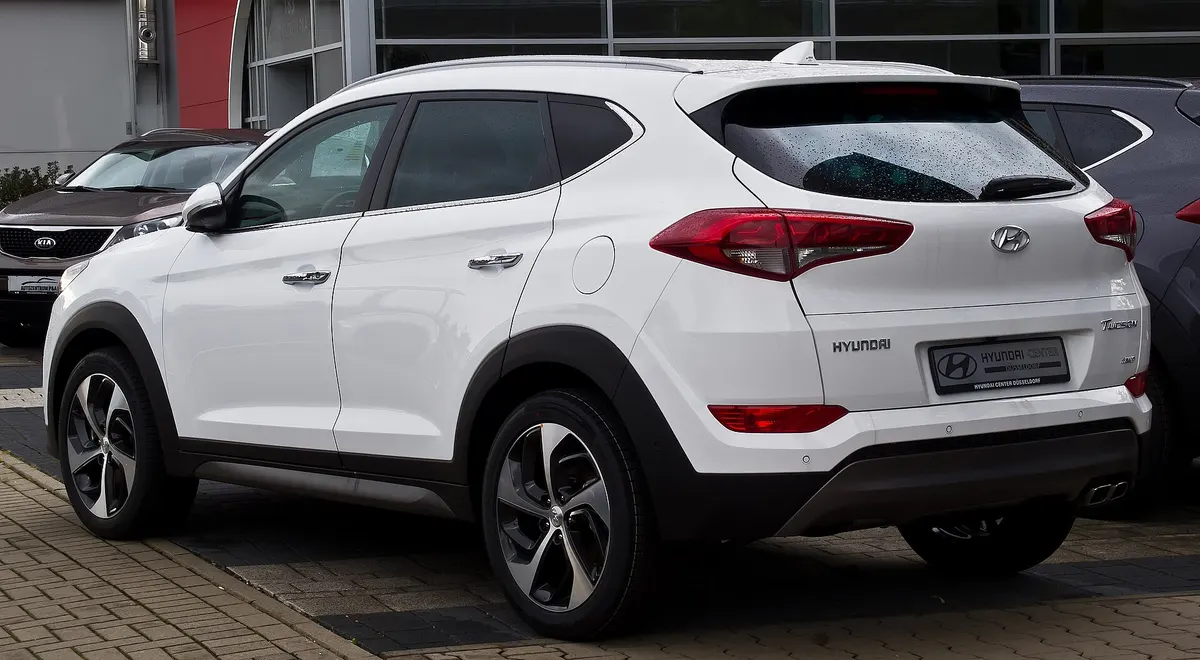
Engines
- Nu G4NC · 2.0L gasoline, 164 hp
- Gamma G4FJ (1.6T) · 1.6L turbo gasoline, 175 hp
- Theta II G4KJ · 2.4L gasoline, 181 hp
Transmissions
- automatic , 6-speed
- D7UF1 · dct, 7-speed
Drivetrain
FWD / AWD
Body
suv
Trims
SE, Eco, Value, SEL, Sport, Night, Limited, Ultimate
Hyundai Tucson part-number cross-reference
Start from the OEM number, then pick the brand you trust. Verified equivalents for the Hyundai Tucson (2016–2021).
Part links go to Amazon, and to eBay where Amazon does not stock the part. Affiliate links, so we may earn a commission if you buy. Your price is unchanged, and a commission never changes a verdict.
Oil filter
Hyundai
the universal small Hyundai/Kia spin-on (75mm tall, 80mm OD, M20x1.5 thread); supersedes 26300-35503/35504/35500. One filter covers all three Tucson engines and all years.
Find Hyundai oil filter on AmazonVerified via: FinditParts: Hyundai 26300-35505 cross-reference (Fram PH9688/TG9688/XG9688), FRAM: PH9688 Extra Guard spin-on oil filter for select Hyundai/Kia vehicles, OEM Parts Online: 26300-35505 fitment (2004-2021 Tucson, GDI/MPI/TCI-GDI), zFilters: Wix 51334 cross-reference (Hyundai 26300-355xx, Fram PH9688, Purolator L14459)
Engine air filter
Verified via: FinditParts: FRAM CA12065 cross-reference (OEM 28113-D3300, Wix WA10335, Mahle LX4492, Purolator A39156, Denso 143-3824), Walmart: FRAM CA12065 fitment (2016-2021 Hyundai Tucson, 2017-2022 Kia Sportage), OEM Parts Online: 28113-D3300 fitment (2016-2021 Tucson)
Cabin air filter
Hyundai
current number covering 2016-2021; interchangeable with the 2016-2018-era 97133-D3000 and 97133-D1000 revisions.
Look up Hyundai cabin air filter on AmazonWix
authoritative cross for OEM 97133-D3000; some catalogs also list the newer Wix number WP10265 for this application. Verify by year
See Wix cabin air filterVerified via: airfilter-crossreference: Hyundai 97133-D3000 (Wix WP2176, Mann CU23019, Hengst E4961LI), Amazon: OEM 97133-D3200 fitment (Tucson 2015-2021, Sportage 17-20); Fram CF12160 cross via 97133-D1000/D3000, hyundaipartsdeal: Tucson cabin air filter OEM catalog (97133-D3200 2016-2021; D1000/D3000 2016-2018)
Spark plugs
Hyundai
factory laser-iridium = NGK SILZKR7B11 (stock 9723), gap 0.044 in / 1.1mm. Note the E-firing-end variant SILZKR7E11 (18849-11070) is the 2.4L plug. Do NOT interchange.
Look up Hyundai spark plugs on AmazonVerified via: sparkplug-crossreference: Hyundai 18846-11070 (NGK SILZKR7B11 / stock 9723), Amazon: NGK Laser Iridium SILZKR7B11 (9723) for Hyundai Tucson 2.0L L4 2014-2020
Spark plugs
Hyundai
factory laser-iridium = NGK SILZKR7E11 (stock 92315), gap 0.043-0.044 in / 1.1mm. Same G4KJ plug used in the 2.4 Sonata/Sorento. Distinct from the 2.0L's SILZKR7B11 (E vs B firing end) and from the 1.6T turbo plug.
See Hyundai spark plugs on AmazonVerified via: Amazon: Genuine OEM 18849-11070 = NGK SILZKR7E11 (Hyundai Tucson/Sonata 2.4L G4KJ, Kia Sorento), Sixity: 2018-2020 Hyundai Tucson 2.4L NGK Laser Iridium plugs
Spark plugs
Hyundai
turbo-specific plug = NGK SILZKR8E8G, gap 0.8mm, heat range 8. Dealer/OE item with limited aftermarket consumer availability; do not substitute the NA-engine SILZKR7B11/7E11 plugs.
Find Hyundai spark plugs on AmazonVerified via: hyundaipartsdeal: Tucson spark plug OEM catalog (18849-08080, TCI/GDI turbo, 2016-2018), Hyundai Forums: 2017/2018 1.6T plug (NGK SILZKR8E8G = Hyundai 18849-08080, gap 0.8mm)
Front brake pads
Hyundai
front disc brake pad kit; superseded by 58101-D3A10 / 58101-D3A11. Catalogs also cross-list 58101-F2A50 and 58101-D7A10 for some trims/markets. Confirm by VIN, though the aftermarket D1847 pad covers the mainstream fitment.
Check Hyundai front brake pads on AmazonVerified via: OEM Parts Online: Hyundai 58101-D3A00 front disc brake pad set (Tucson), PartsGeek: 2016-2021 Tucson front pads (Akebono ACT1847, Wagner ZD1847), Amazon: OEM 58101-D3A00 = D1847 front pad (Hyundai Tucson)
Wiper blades
Any beam/conventional blade (Bosch, Rain-X, Trico, Michelin)
sizes consistent across sellers for 2016-2021; the SUV has a rear wiper (14 in), unlike the sedan-based Hyundai models
Look up Any beam/conventional wiper bladesVerified via: AutoPadre: Hyundai Tucson wiper sizes (26/16 front, 14 rear), Amazon: 2016-2021 Tucson wiper set 26 in + 16 in front, 14 in rear
Serpentine belt
Hyundai
6-rib, ~1780mm. Shared with Elantra/Kona 1.8L/2.0L Nu.
Check Hyundai serpentine belt on AmazonVerified via: Sixity/Bando: 6PK1780 = Gates K060700 = Hyundai 25212-2E300 (Tucson 2.0L), Amazon: Gates K060700 / 6PK1780 fitment (Hyundai Tucson 2015-2021 2.0L; replaces 252122E300), OEM Parts Online: Hyundai 25212-2E300 serpentine belt (2015-2021)
Serpentine belt
Hyundai
6-rib, ~1010mm. Same Theta-family belt as the 2.4 Sonata/Santa Fe/Optima/Sorento. Some 2.4 applications also carry a separate small water-pump belt (25212-2GGB0).
Find Hyundai serpentine belt on AmazonVerified via: Amazon: Genuine OEM 25212-2GGA1 ribbed belt (Hyundai Tucson 18-21, Santa Fe/Sonata, Kia Sportage/Optima/Sorento), Autodoc: OE 252122GGA1 cross to Gates/ContiTech 6PK1010
Serpentine belt
Hyundai
6-rib, ~2125mm single serpentine. NOT the previous-gen (LM) 2.4 belt 25212-2G760. That is a different, adjacent number for the 2011-2016 cars.
Check Hyundai serpentine belt on Amazon, 1.6LContinental/Bando
Gates Micro-V equivalent also cataloged for the 1.6L turbo
See Continental/Bando serpentine beltVerified via: eBay: Gates V-Ribbed belt for Hyundai Tucson TL/TLE 1.6L T-GDi G4FJ (OEM 25212-2B760), Hyundai OEM Parts Direct: 25212-2B760 serpentine belt, Amazon: 6PK2125 serpentine belt (Hyundai/Kia 1.6T & Theta applications)
Battery
BCI group size
Compare BCI group size battery on AmazonAny Group 47 / H5 (Duralast, DieHard, Interstate, Optima)
AGM (~680 CCA) or EFB/flooded (~650 CCA); if the car came with AGM, replace with AGM
Find Any Group 47 / H5 batteryVerified via: AutoPadre: Hyundai Tucson battery size guide (Group 47/H5), AutoZone: 2018 Hyundai Tucson battery fitment (Group 47/H5)
Should I buy a 2016–2021 Hyundai Tucson?
Buy the back half of the generation. A 2019–2021 Tucson with the 6-speed auto is a legitimately sensible used crossover: cheap, roomy, easy to service, and its complaint numbers are a tiny fraction of the early cars'. The 2016–2018 cars demand real diligence: the 1.6T's dual-clutch transmission can hesitate and shudder from a stop badly enough that Hyundai settled a class action over it, and the 2.0L engine carries rod-bearing and oil-consumption risk that led to a recall on the 2017. Neither early powertrain is an automatic no. A car with the recall work done, the updated software, and documented oil history can be a bargain, but you have to verify, not hope. Whatever the year, run the VIN for open recalls before money changes hands; this generation has a park-outside ABS fire recall that costs nothing to fix and is inexcusable to leave open.
Best years
2019, 2020, 2021
Years to avoid
2016–2018 1.6T (7-speed DCT hesitation/shudder, the class-action powertrain), 2016–2018 2.0L with no oil-history paperwork (bearing wear + oil consumption)
Pre-Purchase Checklist for Hyundai Tucson
- ☐Run the VIN at nhtsa.gov/recalls or a Hyundai dealer. Two recalls matter most: the ABS-module fire recall (20V-543, all years, free fuse kit) and the 2.0L engine rod-bearing recall (21V-727, MY2017, free inspection, engine replacement if damaged). Walk away from any seller who won't let you check.
- ☐On 1.6T cars: test-drive in stop-and-go traffic, not just the highway. From a stop, roll into the throttle repeatedly. Hesitation, shudder, or a pause-then-lurch is the known DCT failure pattern, and it gets worse when the clutches are hot.
- ☐Ask whether the DCT's TCU software updates and any clutch replacements were done under warranty or the class-action settlement; a Hyundai dealer can pull the service history by VIN.
- ☐On 2.0L cars: pull the dipstick. A low reading on a car the seller says was 'just serviced' points to the well-documented oil-consumption problem. Ask directly how much oil it uses between changes.
- ☐Cold-start the engine yourself and listen for a deep knock or rattle that rises with rpm, the classic worn rod-bearing sound on these engines. A P1326 (Knock Sensor Detection System) code stored in the ECU is a deal-breaker.
- ☐Confirm the KSDS knock-sensor software update was installed (dealer can verify by VIN). It's the early-warning system for bearing failure and matters for goodwill coverage.
- ☐Cycle the door locks from the fob several times and listen at each door; failing door-lock actuators are a common, annoying repair on these.
- ☐On 2019–2021 2.4L cars: same cold-start listen. It's the Theta II family. Tucson complaint volume is low, but the engine's history has earned the 30 seconds of attention.
Common Hyundai Tucson problems & repair costs
7-speed DCT hesitation, shudder, and delayed engagement (1.6T)
$1,500–$4,500Symptoms: Car hesitates or refuses to move when accelerating from a stop, then engages abruptly with a lurch; shudder and judder at low speed; worse in hot weather and stop-and-go traffic when the dry clutches overheat. Codes like P073F and P172B show up on affected cars. CarComplaints ranks 2017's 'hesitates when starting from a stop' as the model's worst problem, averaging about $4,200 when repairs land out of pocket.
Fix: Hyundai issued TSBs and TCU software updates (including a judder-detection logic update), and dealers replaced clutch assemblies and clutch actuators under warranty on many cars. The Wylie v. Hyundai class-action settlement added reimbursement for DCT repairs and cash compensation for repeat visits. Out of warranty, a clutch-pack and actuator job at an independent shop runs roughly $1,500–$4,500. Software alone tames some cars; others need the hardware.
Sources: NHTSA TSB: DCT judder detection and TCU software update (MC-10201469), CarComplaints: Hyundai Tucson worst problems, BBB National Programs: Hyundai Dual Clutch Transmission class action (Wylie v. Hyundai), Car Talk Community: 2016 Tucson dual-clutch problems
2.0L Nu engine rod-bearing wear → knock, stall, possible fire
$4,500–$8,000Symptoms: Knocking noise that gets louder with rpm, oil-pressure or check-engine light, loss of power, then sudden engine seizure, sometimes at highway speed. A thrown rod can hole the block and leak oil onto hot components, which is the fire scenario that drove the recall.
Fix: NHTSA recall 21V-727 (September 2021) covers 82,268 MY2017 Tucsons with the 2.0L Nu GDI built May 2016–December 2017: dealers run a bearing-clearance inspection and replace the engine free if it fails, and all affected cars get the Knock Sensor Detection System (KSDS) software. Neighboring 2016 and 2018 model years log the same complaint pattern without being in the recall population, so document any knock and push Hyundai for goodwill. Outside coverage, a replacement engine is a $4,500–$8,000 job.
Sources: RepairPal: Recall 21V-727, connecting rod bearings wear prematurely, NHTSA Part 573 Safety Recall Report 21V-727, Carscoops: 2017 Tucson recall could mean replacement engine
Excessive oil consumption (2.0L, some 1.6T)
$3,500–$7,000Symptoms: Oil level drops noticeably between changes with no visible leak or blue smoke. Owner reports commonly land around a quart per 1,000 miles; documented forum cases include a 2017 SE burning nearly 3 quarts in 3,000 miles and a 2018 at 3 quarts per 1,000. Run it dry and you're into the bearing-failure scenario above.
Fix: Root causes reported are low-tension piston rings and carbon buildup sticking the rings. The dealer path is a formal oil-consumption test (top off, drive a set mileage, measure); fail it and Hyundai has replaced engines under the powertrain warranty or goodwill, though some owners report denial fights first. Paying out of pocket, a piston-ring job or used/reman engine runs $3,500–$7,000. Interim survival is simple: check the dipstick every fill-up and keep oil in it.
Sources: Hyundai Forums: oil consumption problem in Hyundai Tucson, Tucson Forum: denied engine replacement, oil consumption issues, CarComplaints/NHTSA: 2016 Tucson engine problems
ABS module electrical short: engine-compartment fire risk (recall)
$0–$0Symptoms: Usually none until it's too late. The ABS module can corrode internally and short even with the car parked and off. Hyundai counted at least a dozen engine-compartment fires and told owners to park outside until repaired. An ABS warning light can precede it.
Fix: NHTSA recall 20V-543 (later expanded to roughly 652,000 Tucsons across 2016–2021): dealers install a multi-fuse kit in the ABS circuit and update the software, free. This is a VIN-lookup-and-done item. There is no reason to own one of these with the recall open.
Sources: RepairPal: Recall 20V-543, ABS module shorts causing fire hazard, Hyundai Recall 195: ABS unit may cause engine compartment fire, The Brake Report: Hyundai Tucson recall grows to 652,024
Door-lock actuator failure
$200–$450Symptoms: One door stops responding to the fob or the lock button, often after a period of groaning or slow operation, so the car won't fully lock itself. Failed actuators can also cycle continuously and drain the battery. Owners report repeat failures, sometimes on more than one door.
Fix: Replace the actuator/latch assembly in the affected door. Shop cost runs roughly $260–$430 per door parts-and-labor; it's a very doable DIY (door panel off, three bolts, one connector) with aftermarket actuators available cheap.
Sources: RepairPal: Tucson door lock actuator replacement cost, CARHP: 2016 Hyundai Tucson problems (door lock actuator complaints)
Day-to-day, a third-gen Tucson is cheap to run: parts are plentiful, routine service is unremarkable, and the 6-speed automatic cars in particular hold no surprises. The money risk is concentrated in the 2016–2018 powertrains. A DCT clutch job or a 2.0L engine can each exceed the car's market value out of pocket, which is why the paperwork (recall completion, KSDS software, oil records, settlement repairs) is worth more on this car than on almost anything else in the class. On 2.0L cars, budget for oil top-ups between changes and treat dipstick checks as part of ownership. Everything else is normal wear plus the occasional door-lock actuator.
Cost calculator
What will this Hyundai Tucson cost you by a given mileage?
Drag to a mileage. We total the documented problems whose typical onset falls at or before it. The same cost ranges listed above, nothing new invented.
$0 estimated repair range
Have a repair quote for this Hyundai Tucson?
Audit against OEM book times, uncover duplicate pad and rotor labor, and verify parts markups.
How to fix common Hyundai Tucson problems (DIY)
Engine air filter + cabin air filter change
Tools: None required (Phillips screwdriver optional for airbox clips)
- Unclip the airbox lid in the engine bay, lift it, and pull the old panel filter.
- Seat the new engine filter with the sealing edge flat, then re-clip the lid.
- Open the glovebox, squeeze both side stops inward, and let it swing down.
- Unclip the cabin-filter cover behind it, slide out the old filter, and insert the new one with the airflow arrow pointing down.
- Re-hang the glovebox stops and close it up.
Parts
- Engine air filter (2016–2021 Tucson) · Amazon $10–$20
- Cabin air filter (2016–2021 Tucson) · Amazon $10–$18
Oil change (do it on time; this engine punishes neglect)
Tools: Floor jack + jack stands or ramps, 17mm socket or wrench (drain plug), Oil filter wrench, Drain pan + funnel
- Warm the engine briefly, then raise and support the front of the car.
- Drain the oil via the 17mm plug; replace the crush washer and torque the plug snug, not gorilla-tight.
- Swap the spin-on filter (light coat of oil on the new gasket, hand-tight plus a quarter turn).
- Refill with the spec oil, start, check for leaks, then re-check the level on flat ground.
- On the 2.0L especially: log the date and mileage, and check the dipstick every fuel fill-up between changes. Consumption is this engine's tell.
Parts
- Oil filter (2016–2021 Tucson) · Amazon $5–$12
- Full synthetic 5W-30 (5 qt) · Amazon $25–$40
Replace a failed door-lock actuator
Tools: Trim removal tools, Phillips screwdriver, 10mm socket, Torx bits (latch bolts)
- Pry the door panel free (screws hide behind the handle trim and pull cup), then disconnect the switch harnesses and peel back the vapor barrier.
- Disconnect the lock and latch cables from the interior handle side.
- Remove the three Torx bolts on the door edge holding the latch/actuator assembly.
- Fish the assembly out through the door cavity, unplug it, and plug in the new unit.
- Bolt it back, reconnect cables, and test lock/unlock from the fob and switch before reinstalling the panel.
Parts
- Door lock actuator / latch assembly (2016–2021 Tucson) · Amazon $30–$90
Some parts links are affiliate links. We may earn a commission at no cost to you. We only list parts that fit this generation.
The short version
The 2016–2021 Tucson splits cleanly down the middle. From 2016–2018, the optional 1.6-liter turbo came bolted to a 7-speed dry dual-clutch transmission that hesitates, shudders, and sometimes flat refuses to move from a stop, bad enough that Hyundai issued TSBs, a limited recall, and ultimately settled a class action (Wylie v. Hyundai) covering repairs and repeat-visit compensation. The base 2.0-liter from the same years has its own file: premature rod-bearing wear that can seize the engine (recalled on the 2017) and oil consumption that owners document at a quart per 1,000 miles or worse.
For 2019, Hyundai dropped the DCT entirely and paired every engine with a conventional 6-speed automatic. Complaint counts collapse: the 2016 logs hundreds, the 2021 logs a handful.
What that means when you’re shopping
A 2019–2021 car is the easy recommendation. Buy on condition and history like any used crossover, with one cold-start listen to the 2.4 (it’s from the Theta II family, which has earned permanent skepticism even though Tucson-installed units complain rarely).
On a 2016–2018 car, the price discount is real and so is the homework. Drive it in traffic and launch from a stop repeatedly. A hot, irritated DCT can’t hide. Pull the 2.0L’s dipstick and ask pointed questions about oil use. Then run the VIN: the 2017 engine recall and the all-years ABS fire recall (the “park outside” one, fixed by a free fuse kit) should both show completed. A car with a replaced engine or documented settlement transmission work is arguably safer than an untouched one.
The one habit that saves this car
If you end up owning a 2.0L, check the oil at every fuel fill-up. That’s it. That’s the habit. Oil consumption on this engine is gradual and silent until it isn’t, and the difference between “annoying top-ups” and “$6,000 engine” is whether the level ever hit the bottom of the dipstick. The KSDS knock-sensor software Hyundai pushed as part of the recall campaign is your second line of defense; make sure it’s installed.
How this file is built: failure modes and cost ranges are compiled from NHTSA recall and complaint data (recalls 21V-727 and 20V-543), Hyundai TSBs, the Wylie v. Hyundai DCT settlement record, CarComplaints data, and owner-forum reporting, then sanity-checked against shop-floor experience. Cost figures are independent-shop estimates and vary by region. Spot something off? Tell us.
Viral car myths, checked against this car
- Dangerous
Is the "$2 liquid that destroys engine sludge forever" real? Our shop-floor verdict.
An aggressive solvent flush on a high-mileage engine is a textbook way to spin a bearing. The viral 'kitchen-cabinet flush' is folklore that real shops spend money cleaning up after.
- Misleading
Is the "$1 Japanese oil trick" that stops engine wear forever real?
The 'Japanese oil trick' is almost certainly MoS2 (molybdenum disulfide), a real industrial friction modifier. It is German, not Japanese (Liqui Moly popularized it), sold openly at every parts store for $15-20, has real but modest measured friction benefits, and was never buried by anyone.
Frequently asked questions
Which Hyundai Tucson years should I avoid?
2016–2018 are the risk years. The 1.6T's 7-speed dual-clutch is the hesitation/shudder transmission that produced a class-action settlement, and the 2.0L from those years carries rod-bearing and oil-consumption risk (the 2017 was recalled for it). The 2019–2021 cars dropped the DCT for a conventional 6-speed automatic and generate a small fraction of the complaints.
Is the Tucson's dual-clutch transmission fixable?
Often, yes. Hyundai's TCU software updates calm some cars, and clutch-pack and actuator replacements fix others, and many were done under warranty or through the Wylie v. Hyundai settlement, which also reimbursed out-of-pocket DCT repairs. Out of warranty today, budget $1,500–$4,500 at an independent shop. Some owners simply never love how a dry DCT drives in traffic; test-drive one in stop-and-go before you commit.
Does the 2016–2021 Tucson have the Hyundai engine recall?
Partly. The MY2017 Tucson's 2.0L Nu GDI was recalled (NHTSA 21V-727) for premature rod-bearing wear: free inspection, free engine if it fails, plus the KSDS knock-detection software. The 2019–2021 Tucson's 2.4L is from the Theta II family behind Hyundai's larger engine settlement, but Tucson-installed 2.4s show low complaint volume. Run any VIN at nhtsa.gov/recalls before buying.
Why does my Tucson say to park outside?
That's the ABS-module recall (NHTSA 20V-543, expanded to about 652,000 Tucsons, 2016–2021). The module can corrode, short, and start an engine-compartment fire even while parked and off. The fix is a free fuse kit and software update at any Hyundai dealer. Get it done and the advisory goes away.
How many miles will a 3rd-gen Tucson last?
A 2019–2021 car, or an early car with a sound (or replaced) engine and a behaving transmission, is a realistic 150,000–200,000-mile vehicle with ordinary maintenance. The ones that die young die from the known issues, a run-dry 2.0L or a worn-out DCT, not from general fragility. Oil discipline is the single biggest life-extender on this engine.
Cross-shopped rivals
Files on what buyers weigh against the Hyundai Tucson of this era.