Case file · HYUNDAI-SONATA-2015-2017 · 7th gen (pre-facelift) (LF)
Hyundai Sonata 2015–2017Common problems, reliability & repair costs
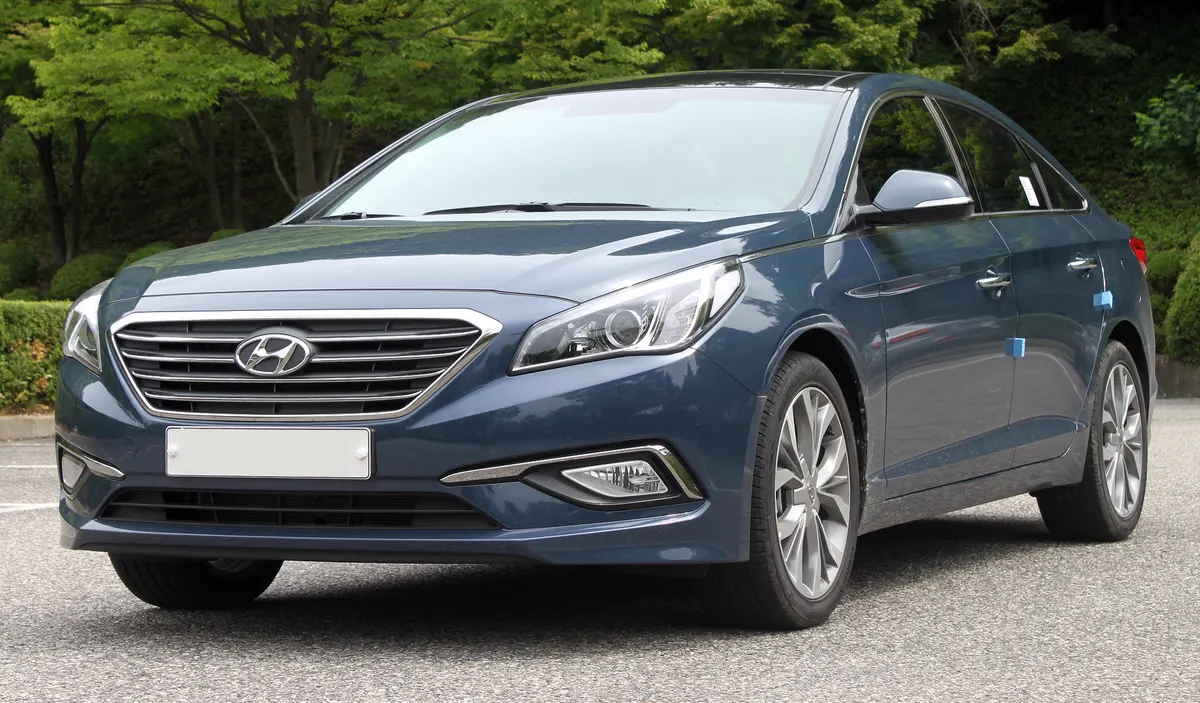
The LF Sonata is a roomy, well-equipped midsize sedan sold under the shadow of Hyundai's Theta II engine saga. The 2.4L and 2.0T engines in these years are covered by a class-action settlement with a lifetime short-block warranty, which turns the scariest problem on the spec sheet into a manageable one, if the paperwork and software updates are in order. The 1.6T Eco's dual-clutch gearbox and a quart-a-thousand-miles oil habit on some 2.4s are the other files to read before you buy.
2017
2015 (highest complaint volume of the three years; earliest +2 more
Engines
- Theta II 2.4 GDI (G4KJ) · 2.4L gasoline, 185 hp
- Theta II 2.0T GDI (G4KH) · 2.0L turbo gasoline, 245 hp
- Gamma 1.6 T-GDI (G4FJ) · 1.6L turbo gasoline, 178 hp
- Nu 2.0 GDI hybrid · 2.0L hybrid, 193 hp
Transmissions
- A6MF/A6LF · automatic, 6-speed
- D7UF1 · dct, 7-speed
Drivetrain
FWD
Body
sedan
Trims
SE, Eco, Sport, Limited, Sport 2.0T, Limited 2.0T, Hybrid SE, Hybrid Limited, Plug-in Hybrid
Hyundai Sonata part-number cross-reference
Start from the OEM number, then pick the brand you trust. Verified equivalents for the Hyundai Sonata (2015–2017).
Part links go to Amazon, and to eBay where Amazon does not stock the part. Affiliate links, so we may earn a commission if you buy. Your price is unchanged, and a commission never changes a verdict.
Oil filter
Hyundai
Prior revision the -35505 supersedes; interchangeable. A few catalogs still list -35504 for the 2017 SE, but the -35505 is the current part.
Look up Hyundai oil filterFram
Extra Guard; XG9688 is the synthetic Ultra version, TG9688 the Tough Guard
Check Fram oil filterVerified via: Parts Hyundai OEM listing 26300-35505 (Sonata fitment, current spin-on), FindItParts Hyundai 26300-35504 + cross-reference (aftermarket equivalents), Fram part finder: 2016 Sonata 2.4L returns PH9688, XG9688, TG9688 and FE9688, which names both numbers above. Verified for the 2.4L only, not the 2.0T, 1.6T or hybrid
Engine air filter
Hyundai
Revised/service number cross-listed for the 2.4L; also shown for Kia Optima 2.4
Check Hyundai engine air filterVerified via: HyundaiPartsDeal - 2016 Sonata Hybrid air filter = 28113-C1100, Amazon - Genuine OEM Hyundai Air Filter 28113-C1100
Engine air filter
Verified via: Amazon - Genuine OEM 28113-C1500 (Sonata Eco 1.6 & 2.0T 2015-19, Kia Optima 1.6 & 2.0T), OEM Parts Online - 2015-2019 Sonata Engine Air Filter 28113-C1500
Cabin air filter
Hyundai
Listed as the interchangeable OE number for the non-hybrid (OE cross C2H79-AP000)
Look up Hyundai cabin air filterMarvel
Aftermarket equivalent; many brands use the CF12151 designation for this filter
Check Marvel cabin air filterVerified via: Walmart / RareElectrical - cabin filter fits Sonata 2015-2017, 97133-C2000 / C2H79-AP000, Amazon (CARORY) - 97133-C2000 explicitly for NON-hybrid Sonata gas 2015-2019 (OE# C2000, C2H79-AP000, C1000)
Cabin air filter
Verified via: OEM Parts Online - 2016-2019 Sonata Cabin Air Filter 97133-C1010 (hybrid), Hyundai OEM Parts Direct - 97133-C1010 Sonata cabin filter
Spark plugs
NGK
Laser Iridium, gap ~1.1mm (0.043-0.044 in). Heat range 7 (hotter than the turbo plugs)
Find NGK spark plugsVerified via: PlugSpecs - Sonata 2.4L: NGK SILZKR7E11, gap .043 in (1.1mm), Amazon - NGK Laser Iridium for Hyundai Sonata 2.4L 2015-2019
Spark plugs
NGK
Colder heat range 8 for the turbo; gap ~0.9mm. Older Hyundai rev was 18849-09075 (SILZKR7E9G)
Check NGK spark plugsVerified via: Hyundai Forums - 2.0T plugs: NGK SILZKR8E9 = Hyundai 18849-09085, 0.9mm gap, PlugSpecs - Sonata 2.0L: Denso ZXU20HCR8, gap .031 in (0.8mm), heat range 8
Spark plugs
NGK
Dealer-spec turbo plug, heat range 8, gap ~0.8mm. Earlier rev 18849-08072 (shared with Veloster 1.6T)
Find NGK spark plugs, 1.6TVerified via: Hyundai Forums - 2017 Sonata 1.6T spark plugs (NGK SILZKR8-series / 18849-080xx), PlugSpecs - Sonata 1.6L: Denso ZXU20HCR8, gap .031 in (0.8mm), heat range 8
Front brake pads
Verified via: OEM Parts Online - 2015-2017 Sonata Front Brake Pads 58101-C2A10, Hyundai OEM Parts Direct - 58101-C2A10 (2015-2017 Sonata)
Front brake pads
Verified via: OEM Parts Online - 2015-2017 Sonata Front Brake Pads 58101-C2A20 (larger rotor), Hyundai OEM Parts Direct - 58101-C2A20 (2015-2017 Sonata)
Front brake pads
Verified via: OEM Parts Online - 2016-2019 Sonata Front Brake Pads 58101-E6A10 (hybrid), HyundaiPartsDeal - 58101-E6A10 genuine front disc brake pad kit
Wiper blades
Verified via: WindshieldWipers.com - 2016 Sonata blades 26 in and 18 in, WiperSizeChart - 2016 Hyundai Sonata wiper sizes
Serpentine (drive) belt
Verified via: Hyundai OEM Parts Direct - 25212-2G760 (2011-2016 Sonata 2.4L), Parts Hyundai - 25212-2G760 fits 2011-2016 Hyundai
Serpentine (drive) belt
Verified via: OEM Parts Online - 25212-2GGA1 (2015-2021, Sonata 2.0L Turbo), Amazon - Genuine OEM 25212-2GGA1 (Sonata 15-19, Santa Fe/Tucson/Optima 2.0)
Serpentine (drive) belt
Verified via: Parts Hyundai - 25212-2B720 (Gamma 1.6, fits 2013-2023 Hyundai), Amazon - 25212-2B720 serpentine belt, Sonata 2015-2019 1.6L (Veloster/Elantra/Kia)
Battery (12V)
BCI group
Check BCI group battery on AmazonBCI group
Larger alternate fitment (~850 CCA / 80Ah) listed for some trims/engines; shares the tray footprint with Group 48. Verify against the installed battery.
See BCI group batteryVerified via: Interstate Batteries - MTX-48/H6 fitment for 2016 Sonata gas, Hyundai Forums - Sonata battery replacement Group 48 / H6
Should I buy a 2015–2017 Hyundai Sonata?
Buy it with the file open. A 2015–2017 Sonata 2.4 or 2.0T is one of the cheapest ways into a spacious, safe midsize sedan, because the Theta II reputation crushed resale. The engine risk is real but uniquely well-covered: the class-action settlement gives these cars a lifetime warranty on the short block, so the play is to verify by VIN that the KSDS software campaign (953) is done, the recalls are closed, and any past engine work was documented at a Hyundai dealer. Walk away from any 2.4 that's a quart low with no leak, and skip the Eco unless you've test-driven the dual-clutch in stop-and-go traffic and can live with it. A 2017 with records is the pick.
Best years
2017
Years to avoid
2015 (highest complaint volume of the three years; earliest build), Eco 1.6T (any year) unless you accept the dual-clutch behavior, Any 2.4/2.0T with unexplained oil loss or an open engine campaign
Pre-Purchase Checklist for Hyundai Sonata
- ☐Run the VIN at a Hyundai dealer (or hyundaiusa.com/recalls): confirm Campaign 953 (KSDS knock-sensor software) is completed and no engine recall or campaign is open.
- ☐Check the oil level and condition on the dipstick cold, then ask directly how much oil it uses between changes. A 2.4 that's a quart or more low with no visible leak is the oil-consumption pattern. Walk or price it in.
- ☐Cold-start the engine and listen for a rod-bearing knock (a deep rhythmic knock from the bottom end). Any knock on a Theta II is a stop-the-deal finding until inspected.
- ☐On an Eco, drive it in stop-and-go traffic: creep, roll into throttle from 5 mph, do a few uphill starts. Judder, hesitation, or a rubber-band launch is the known DCT behavior. Decide if you can live with it before you buy.
- ☐If it has the panoramic sunroof, verify recall 152 (wind-deflector anchor plate) was performed and inspect the glass and surround for prior separation or resealing.
- ☐With the passenger seat empty, check the airbag status light; then sit a passenger in it and confirm the light switches correctly. A flashing seat-belt light with an empty seat points to the occupant-sensor mat failure.
- ☐Confirm the ABS software recall (134) and the 2015 front passenger seat-belt buckle recall (130) show closed on the VIN report.
- ☐Get service records showing oil changes at 5,000-mile intervals or better. The Theta II punishes long oil-change intervals harder than most engines.
Common Hyundai Sonata problems & repair costs
Theta II engine bearing failure: knock, stall, seizure (2.4 GDI / 2.0T)
$4,500–$7,500Symptoms: Deep knocking from the bottom end (worst at cold start), check-engine light with DTC P1326 after the KSDS update, reduced-power limp mode, sudden stall while driving, or outright seizure. Root cause: connecting-rod bearings wear and shed metal debris into the oil.
Fix: Short-block or complete engine replacement. Here's the part that matters: the Theta II class-action settlement (final approval 2021) covers 2011–2019 Sonatas with the 2.4 GDI and 2.0T, giving a LIFETIME warranty on the short block (block, crank, rods, bearings, pistons) for original and subsequent owners, plus the Campaign 953 KSDS software that detects bearing wear early and forces limp mode instead of a highway seizure. If the failure qualifies, Hyundai replaces the engine free. The out-of-pocket range above is for cars denied coverage (missing maintenance records, non-OEM engine, or damage judged unrelated). Note this generation was NOT part of the earlier 2011–2014 metal-debris recall (17V-226). Coverage here comes from the settlement, not that recall.
Sources: Hyundai Theta Engine Settlement (official site), Hyundai: KSDS engine software campaign announcement, NHTSA: 2015 Hyundai Sonata complaints/recalls
Excessive oil consumption (2.4 GDI)
$2,500–$5,500Symptoms: Oil level drops a quart every 1,000–2,000 miles with no external leak and no visible smoke. Often discovered when the low-oil light comes on between changes, which on this engine can finish off the rod bearings.
Fix: Piston-ring wear is the usual culprit; the real fix is rings or a replacement engine. Hyundai's path is a dealer oil-consumption test (documented top-offs over 1,000-mile intervals); if consumption is verified and the bearing-failure criteria are met, the settlement's lifetime short-block warranty can cover a new engine. But pure oil-burning without a bearing failure is frequently denied, which is why owners end up paying or living with a quart-per-thousand habit. If you own one, check the dipstick monthly and keep every receipt.
Sources: CarComplaints: 2016 Sonata excessive oil consumption, Hyundai Forums: 2017 Sonata excessive oil consumption thread
Eco 7-speed dual-clutch (D7UF1) judder and hesitation
$200–$2,500Symptoms: Shudder and hesitation launching from a stop, delayed engagement rolling into throttle at low speed, rubber-band feel on uphill starts. Worse in hot weather. Owners describe pressing the gas and getting nothing, then a lurch.
Fix: Start with the TCM/ECM software updates (Hyundai TSB 16-01-057 and later judder-detection logic). A reflash is cheap and reduces the behavior for many cars but rarely eliminates it. Persistent judder means clutch-pack replacement. The dry-clutch behavior was the subject of a class action and lemon-law claims; some of it is inherent to the design, so test-drive before buying rather than planning to 'fix' it after.
Sources: NHTSA TSB: DCT judder detection and TCU software (MC-10201469), Wirtz Law: Hyundai DCT defects, 2016–2017 models, Hyundai Forums: 2015 Sonata 1.6 Eco DCT problems
Panoramic sunroof panel detachment (recall 152)
$0–$1,500Symptoms: Wind noise or rattle from the sunroof, then in the failure case the glass panel separates from the vehicle while driving. Caused by a bonding defect in the sunroof wind-deflector anchor plate. Separate owner reports of exploding/shattering sunroof glass exist on this generation too.
Fix: Recall 152 (began December 2016) has dealers repair the wind-deflector anchor plate free. It covers Sonatas built May 2014–March 2016 and 2015–2016 Hybrids with the panoramic roof. Verify it's done by VIN. A shattered glass panel outside recall terms runs $800–$1,500 at an independent glass/trim shop.
Sources: Hyundai: Sonata panoramic sunroof recall campaign 152, Cars.com: 2016 Hyundai Sonata recalls
Passenger occupant-sensor mat failure (airbag light)
$400–$900Symptoms: Airbag warning light on, passenger seat-belt reminder flashing with the seat empty, or 'passenger airbag off' shown with an adult in the seat. Diagnostic code B1448 (occupant classification sensor mat defect) is the classic finding.
Fix: The weight-sensing mat in the passenger seat cushion fails; Hyundai sells it only as a seat-cushion/base assembly, so the fix is replacing that assembly and clearing the code. Worth fixing promptly. With the SRS light on, the airbags may not deploy correctly in a crash. A widespread Hyundai/Kia failure pattern across this era, well documented on Sonata.
Sources: Hyundai Forums: OCS mat sensor defect / airbag light fix, CarProblemZoo: Sonata airbag light complaints (NHTSA data)
Day-to-day, an LF Sonata is cheap to run: parts are inexpensive, the 6-speed automatic is durable, and routine service is simple. The budget wildcards are all engine-adjacent: top-off oil between changes on a consuming 2.4, and the time cost of dealer visits if the KSDS light ever trips (the engine replacement itself should be Hyundai's bill under the lifetime short-block warranty, but the claims process demands maintenance records). Insurance note: some 2015 Sonatas fall under the Hyundai theft-vulnerability era only if they use a turn-key ignition. Push-button cars are immune. Do oil changes on Hyundai's own schedule with the right spec oil and keep receipts. On the 2.4 that is 3,750 miles if you match Hyundai's severe conditions and 7,500 if you genuinely do not, and the turbos are shorter still. On this engine, paperwork is worth money.
Cost calculator
What will this Hyundai Sonata cost you by a given mileage?
Drag to a mileage. We total the documented problems whose typical onset falls at or before it. The same cost ranges listed above, nothing new invented.
$0 estimated repair range
5-Year Maintenance Schedule & Cost to Own
Every scheduled service by mileage, fluid capacities, independent shop ranges, and parts cross-references.
Have a repair quote for this Hyundai Sonata?
Audit against OEM book times, uncover duplicate pad and rotor labor, and verify parts markups.
How to fix common Hyundai Sonata problems (DIY)
Engine & cabin air filter change
Tools: None (hand-release clips); small screwdriver optional
- Unclip the airbox lid in the engine bay, lift it, and swap in the new engine air filter with the pleats facing the same way.
- Open the glovebox, squeeze the sides to release the stops, and let it swing down.
- Slide the cabin filter cover off, pull the old filter, and insert the new one with the airflow arrow pointing down.
- Reset the glovebox stops and clip the airbox shut.
Parts
- Engine air filter (2015–2017 Sonata) · Amazon $10–$20
- Cabin air filter (2015–2017 Sonata) · Amazon $8–$15
Spark plug replacement (2.4 GDI)
Tools: 3/8" ratchet + extensions, 14mm thin-wall spark plug socket, 10mm socket (coil bolts), Torque wrench
- Remove the engine cover and unplug the four ignition coil connectors.
- Remove each coil hold-down bolt and pull the coils straight up out of the plug wells.
- Blow or vacuum debris out of the wells before removing the old plugs.
- Remove the old plugs, thread the new iridium plugs in by hand, then torque to spec (do NOT overtighten in the aluminum head).
- Reinstall coils and connectors, refit the cover, and confirm a smooth idle.
Parts
- Iridium spark plugs, set of 4 (2.4 GDI Sonata) · Amazon $28–$60
Front brake pad replacement
Tools: Floor jack + jack stands, Lug wrench / 21mm socket, 14mm socket (caliper guide bolts), C-clamp or piston compressor, Brake grease
- Jack the front, support on stands, and remove the wheels.
- Remove the two caliper guide bolts, swing the caliper up, and hang it so the hose isn't stressed.
- Pull the old pads and shims; compress the piston back with the C-clamp (crack the reservoir cap first).
- Grease the contact points and slide pins, seat the new pads, and re-bolt the caliper.
- Repeat on the other side, refit wheels, and pump the pedal firm before moving the car.
Parts
- Front brake pad set (2015–2017 Sonata) · Amazon $30–$70
Some parts links are affiliate links. We may earn a commission at no cost to you. We only list parts that fit this generation.
The short version
The 2015–2017 Sonata is a comfortable, well-built midsize sedan attached to one of the biggest engine scandals of the decade. The Theta II engines can wear their connecting-rod bearings, shed metal into the oil, and knock, stall, or seize. Those are the 2.4 in most cars and the 2.0T in the Sport/Limited turbos. It was bad enough to produce a $1.3 billion class-action settlement.
Here’s the twist that makes these cars interesting used buys: that settlement gave 2011–2019 Sonata Theta II cars a lifetime warranty on the short block, for subsequent owners too, plus knock-sensor software (Campaign 953) that catches bearing wear early and forces limp mode instead of a highway seizure. The market prices these cars like the risk is uncovered. It mostly isn’t, if the paperwork is right.
What that means when you’re shopping
Three things decide whether a specific car is a deal or a headache:
The VIN report. A Hyundai dealer can confirm Campaign 953 is done and the recalls are closed: panoramic sunroof (152), ABS software (134), the 2015 seat-belt buckle (130). Open campaigns are a to-do list; a knock at cold start is a hard no until inspected.
The dipstick. Some 2.4s burn a quart every 1,000–2,000 miles through worn rings. That’s a separate problem from the bearing failure, and Hyundai frequently won’t cover it on its own. Check the level cold and ask the seller point-blank about top-offs.
The trim. The Eco’s 1.6T engine is fine, but its dry dual-clutch judders and hesitates from a stop. Software helps, it doesn’t cure. It’s also outside the engine settlement entirely. Test-drive one in traffic before committing. The plain 2.4 with the 6-speed automatic is the sane pick; a 2017 with records is the best of the run.
Owning one
Keep oil changes on Hyundai’s own schedule rather than a round number, 3,750 miles on severe duty and 7,500 otherwise on the 2.4, keep every receipt, and check the dipstick monthly. If the check-engine light ever blinks with a chime and the car drops into reduced power, that’s the knock-sensor system doing its job. Drive straight to a Hyundai dealer, because that failure is the one the lifetime warranty exists for.
How this file is built: failure modes and cost ranges are compiled from NHTSA complaint and recall data, the Hyundai Theta II class-action settlement terms, Hyundai service campaigns and TSBs, CarComplaints data, and owner-forum reporting, then sanity-checked against shop-floor experience. Cost figures are independent-shop estimates and vary by region. Spot something off? Tell us.
Viral car myths, checked against this car
- Misleading
Is the "$1 Japanese oil trick" that stops engine wear forever real?
The 'Japanese oil trick' is almost certainly MoS2 (molybdenum disulfide), a real industrial friction modifier. It is German, not Japanese (Liqui Moly popularized it), sold openly at every parts store for $15-20, has real but modest measured friction benefits, and was never buried by anyone.
- Dangerous
Is the "$2 liquid that destroys engine sludge forever" real? Our shop-floor verdict.
An aggressive solvent flush on a high-mileage engine is a textbook way to spin a bearing. The viral 'kitchen-cabinet flush' is folklore that real shops spend money cleaning up after.
Frequently asked questions
Is the 2015–2017 Sonata covered by the Hyundai engine settlement?
Yes, if it has the 2.4 GDI or 2.0T Theta II engine. The class-action settlement (approved 2021) covers 2011–2019 Sonatas with those engines and extends the short-block warranty to LIFETIME for original and later owners, plus the Campaign 953 knock-sensor software. The Eco's 1.6T and the Hybrid use different engine families and are NOT covered.
Which 2015–2017 Sonata years and trims should I avoid?
2015 has the highest complaint volume and the seat-belt-buckle and ABS-software recalls on top of the engine issues; 2017 is the cleanest of the three. Trim-wise, skip the Eco unless you've test-driven its dual-clutch in traffic and accept the low-speed judder. Any 2.4 losing oil with no leak should be walked away from or priced as needing an engine claim.
Will Hyundai pay for a new engine if mine fails?
Often, yes. A rod-bearing failure on a 2.4 or 2.0T falls under the settlement's lifetime short-block warranty, and many owners have gotten free replacement engines. Denials happen too, usually for missing oil-change records, a non-OEM replacement engine already installed, or failures Hyundai attributes to neglect. Keep maintenance receipts and get the KSDS software installed; it's the difference between a warm claim and a fight.
Is oil consumption on the 2.4 covered under the settlement?
Not automatically. The lifetime warranty targets the bearing/seizure failure; a 2.4 that burns oil through worn piston rings but hasn't tripped the failure criteria is frequently denied. The path is a dealer-documented oil-consumption test. In the meantime, check the dipstick every 1,000 miles, because running low is exactly what kills the rod bearings the warranty does cover.
How long will a 2015–2017 Sonata last?
A 2.4 or 2.0T that survives (or gets a warranty-replacement engine) is honestly good for 200,000 miles. The rest of the car (6-speed auto, suspension, electronics) holds up well for the class. The engine is the whole story: one with the software update, closed recalls, and a documented oil habit under control is a legitimately long-lived cheap sedan.
Every Hyundai Sonata generation
The full case file run, beyond the generation before and after this one.
Cross-shopped rivals
Files on what buyers weigh against the Hyundai Sonata of this era.