Case file · HYUNDAI-SONATA-2020-2026 · 8th gen (DN8)
Hyundai Sonata 2020–2026Common problems, reliability & repair costs
The eighth-gen Sonata finally leaves the Theta II engine scandal behind. Its Smartstream engines are a clean-sheet start, and complaint volumes are a fraction of the 2011–2019 cars. But this generation has its own file: a 2.5L oil-consumption pattern Hyundai handles through a formal consumption-test TSB, a 2020–2023 fuel-tank recall announced in late 2025, and two recalls on the N Line's 290-hp turbo and wet dual-clutch. All manageable, if you check the paperwork before you buy.
2024, 2025
2020–2022 2.5L cars with no oil-consumption history: verify +1 more
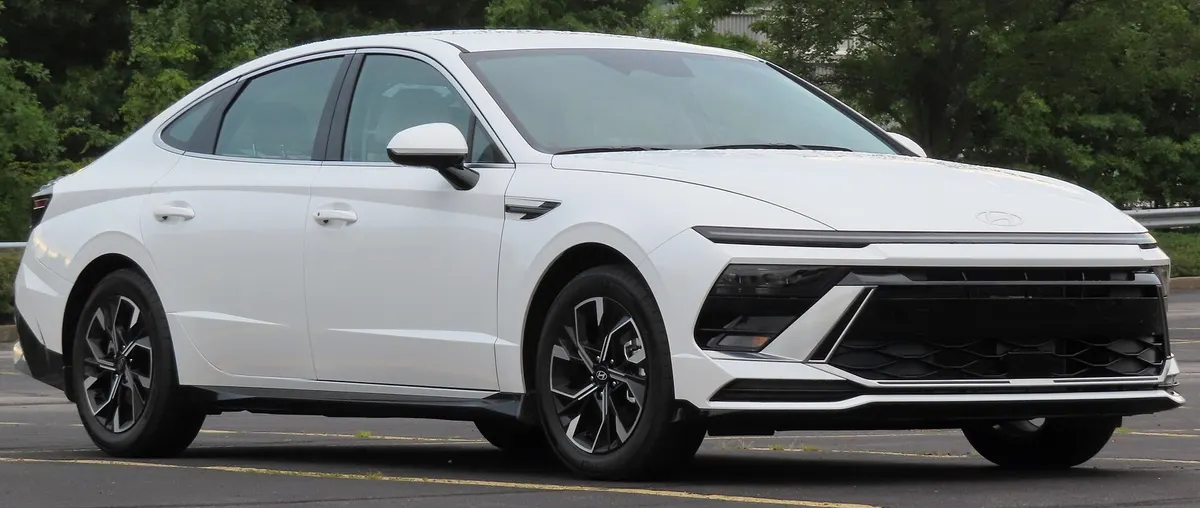
Engines
- Smartstream G2.5 GDI (G4KN) · 2.5L gasoline, 191 hp
- Smartstream G1.6 T-GDI · 1.6L turbo gasoline, 180 hp
- Smartstream G2.5 T-GDI · 2.5L turbo gasoline, 290 hp
- Smartstream G2.0 GDI HEV · 2.0L hybrid, 192 hp
Transmissions
- automatic , 8-speed
- dct , 8-speed
- automatic , 6-speed
Drivetrain
FWD / AWD
Body
sedan
Trims
SE, SEL, SEL Plus, Limited, N Line, SEL Sport (2026), Hybrid Blue, Hybrid SEL, Hybrid Limited
Hyundai Sonata part-number cross-reference
Start from the OEM number, then pick the brand you trust. Verified equivalents for the Hyundai Sonata (2020–2026).
Part links go to Amazon, and to eBay where Amazon does not stock the part. Affiliate links, so we may earn a commission if you buy. Your price is unchanged, and a commission never changes a verdict.
Oil filter
Fram
Ultra Synthetic; PH9688 (Extra Guard) and TG9688 (Tough Guard) are the same fit in lower lines. Cross-listed to Hyundai 26300-35505.
Look up Fram oil filterVerified via: HyundaiPartsDeal: genuine 26300-35505 engine oil filter, Hyundai OEM Parts Online: oil filter 26300-35505, PartsHawk: Fram XG9688 cross-references Hyundai 26300-35505
Engine air filter
Verified via: HyundaiPartsDeal: genuine 28113-L1000 air filter, K&N cross-reference: Hyundai 28113-L1000, Amazon: Wix WA11090 listing crossing 28113-L1000 (Sonata 2020–2025)
Cabin air filter
Hyundai
Related genuine number listed for Sonata in Hyundai catalogs (also used across Elantra/Santa Fe/K5); interchangeable per retailer cross-listings
Check Hyundai cabin air filterVerified via: Hyundai OEM Parts Online: 2020–2023 Sonata cabin air filter 97133-L0000, Hyundai OEM Parts Direct: 97133-L0000 (2020–2023 Sonata), HyundaiPartsDeal: genuine 97133-L1000 filter
Wiper blades
Factory size
See Factory size wiper blades on AmazonVerified via: WiperSizeChart: 2020 Hyundai Sonata wiper sizes, WindshieldWipers.com: 2020 Sonata blade set 26" / 18"
Should I buy a 2020–2026 Hyundai Sonata?
Buy it, with the dipstick and the VIN report, not the brochure. The DN8 is the first Sonata in a decade you can shop without the Theta II cloud: its Smartstream engines are a different family, complaint volumes are low by Sonata standards, and the transmissions (outside the N Line's DCT) have no real rap sheet. The two things that decide a specific car: oil consumption on 2020–2022 2.5L builds, where you walk from any car that's a quart low with no explanation, and recall status, because the 2020–2023 fuel-tank check-valve recall (286) only started mailing letters in January 2026 and many cars won't have it done yet. On an N Line, confirm the DCT recall work and drive it in traffic before you commit. A 2024–2025 facelift car is the cleanest pick; a 2023 with the recall closed and steady oil level is the value pick.
Best years
2024, 2025
Years to avoid
2020–2022 2.5L cars with no oil-consumption history: verify before, not after, 2021–2022 N Line until recalls 236 (DCT oil pump) and 207 (fuel pipe) show closed on the VIN
Pre-Purchase Checklist for Hyundai Sonata
- ☐Run the VIN at nhtsa.gov/recalls or hyundaiusa.com: on 2020–2023 cars confirm recall 286 (fuel-tank check valve, NHTSA 25V-796) is done. Owner letters only began January 2026, so assume it's open until proven closed.
- ☐Check the 2.5's oil level cold and ask the seller directly how much oil it uses between changes. A quart low with no leak is the documented consumption pattern. Walk or price in an engine claim.
- ☐Ask whether the car has been through Hyundai's oil-consumption test (TSB 23-EM-008H). Paperwork from that test is valuable. It's the on-ramp to a warranty engine repair.
- ☐On an N Line: confirm recall 236 (TCU software / transmission inspection) and recall 207 (high-pressure fuel pipe) are closed, then drive it in stop-and-go traffic. Low-speed judder or hesitation is the known wet-DCT behavior.
- ☐On 2020–2023 cars, take a sniff test around the trunk and rear seats for raw fuel and listen for a popping noise from the rear. Both are documented symptoms of the fuel-tank check-valve defect.
- ☐On a Hybrid, ask if the 12V battery has ever died while parked and whether the dash 12V-reset switch has been needed. Repeated dead-12V events are a documented pattern, especially on 2020–2021 cars.
- ☐On 2020 cars, confirm the trunk-latch recall (221, NHTSA 22V-196) is closed; on 2021 cars, the windshield-bonding recall (216).
- ☐If the car has Digital Key, test the phone pairing and BlueLink account transfer before money changes hands. Owner forums document long activation fights, and you want that sorted while the seller is still motivated.
Common Hyundai Sonata problems & repair costs
Excessive oil consumption (2.5L Smartstream GDI)
$0–$8,500Symptoms: Oil level drops between changes with no external leak and little or no visible smoke. Owner reports run up to a quart per 1,000–2,000 miles. Often discovered via a low-oil warning between services. Root cause reported as oil-control-ring carbon/stiction on this high-compression direct-injection engine.
Fix: Hyundai's path is TSB 23-EM-008H: an oil change with the dipstick sealed, a 1,000-mile consumption test, then a combustion-chamber (piston-ring) cleaning procedure if consumption is verified, escalating to piston or engine replacement in documented cases. Under Hyundai's powertrain warranty (10 yr/100k original owner, 5 yr/60k subsequent owners) that work is free, which is why the $0 low end is real. Out of warranty, repair-cost guides put an installed replacement engine at $7,000–$8,500. Unlike the old Theta II saga there is no recall and no class settlement here. Your leverage is documentation, so log the dipstick and keep receipts.
Sources: Hyundai TSB 23-EM-008H: oil consumption inspection and repair guidelines (NHTSA copy), Hyundai Forums: 2021 2.5 Smartstream oil consumption thread, CherishYourCar: Hyundai 2.5 engine problems and repair costs
Fuel-tank check-valve defect: tank can expand, touch hot exhaust, and melt
Symptoms: Popping noise from the rear of the car, check-engine light, hard starting or a no-start, or gasoline odor in or around the cabin. A damaged check valve lets vacuum/pressure distort the tank until it contacts hot exhaust components; a melted tank can leak fuel and raise fire risk.
Fix: Recall 286 (NHTSA 25V-796), filed November 2025 and covering 85,043 US Sonatas, has dealers inspect and replace the check valve, replace the fuel-tank assembly if damaged, and update the engine-control software, all free. Owner letters began mailing January 16, 2026, so plenty of cars haven't had it done yet. Run the VIN before you buy; this is a free fix, not a negotiating discount.
Sources: NHTSA recall acknowledgement 25V-796 (fuel-tank check valve), TFLcar: 2020–2023 Sonata fuel-tank check-valve recall explained
N Line 8-speed wet DCT: oil-pump fault (loss of drive) plus low-speed manners
$0–$3,500Symptoms: Recall side: transmission warning lights and DTC P1C2D03, then a fail-safe mode that gives roughly 20–30 seconds of drive before the clutches disengage and the car loses all motive power. Everyday side: jerky or hesitant launches, shudder creeping in stop-and-go traffic, abrupt parking-lot manners, all classic dual-clutch behavior, worst when the clutch packs are hot.
Fix: Recall 236 (NHTSA 22V-746, ~56,000 vehicles including 2021–2022 Sonata N Line, Santa Fe, and Santa Cruz) covers a TCU software update and transmission inspection/replacement free of charge. Confirm it by VIN. The drivability quirks are addressed with software updates first; repair guides put a clutch-pack replacement beyond warranty at $3,000+. Some low-speed DCT behavior is inherent to the design. Test-drive in traffic and decide whether you can live with it, rather than planning to fix it later.
Sources: NHTSA Part 573 safety recall report 22V-746 (8DCT electric oil pump), RepairPal: recall 22V-746 affected models (2021–2022 Sonata, Santa Fe, Santa Cruz), Hyundai Forums: Sonata N Line issues thread, CherishYourCar: Hyundai 2.5T / DCT repair costs
N Line high-pressure fuel-pipe leak at the fuel rail
Symptoms: Fuel odor under the hood or visible fuel seepage at the pipe connection between the high-pressure fuel pump and the fuel rail. A leak in the engine bay is a fire risk.
Fix: Recall 207 (NHTSA 21V-524) covers 2.5L-turbo cars: dealers inspect and tighten or replace the fuel pipe free of charge. Only applies to the N Line on this model; the 2.5 NA and 1.6T are not involved. Verify closure on the VIN report. It's a quick fix, but an open fuel recall on a turbo engine is not something to drive around on.
Sources: Cars.com: 2021 Hyundai Sonata recalls (21V-524 fuel pipe)
Hybrid 12V battery drain and lockouts
Symptoms: Car dead after sitting for a few days: no power, key fob unresponsive, BlueLink unreachable, sometimes repeatedly. The DN8 Hybrid uses an integrated lithium-ion 12V accessory battery with a dash-mounted 12V-reset switch; pressing it usually wakes the car, but that treats the symptom, not the drain. Owners report dealer findings ranging from parasitic draws in the electrical box to no-fault-found; solar-roof cars appear in multiple reports.
Fix: First move when stranded is the 12V BATT RESET switch left of the steering wheel, then start the car promptly to recharge. The durable fix is a proper parasitic-draw diagnosis at a dealer. Module software updates and electrical-box repairs have resolved documented cases; some owners went through lemon-law channels on repeat failures. If you're shopping a Hybrid, ask directly about dead-battery history.
Sources: Hyundai Forums: 2020 Sonata Hybrid dead 12V battery after sitting (solar-roof car), Hyundai Forums: lockout and dead battery, 2021 Sonata Hybrid Limited, Green Car Reports: 2020 Hyundai hybrids' integrated lithium-ion 12V battery
Routine costs are low: the 2.5/8AT combo is simple to service, parts are cheap and shared across the Hyundai/Kia family, and the Hybrid's 6-speed automatic avoids CVT drama entirely. The budget wildcard is the 2.5's oil habit. Check the dipstick monthly, log it, and keep every receipt, because Hyundai's powertrain warranty (10 yr/100k original owner, 5 yr/60k subsequent) plus the consumption-test TSB is the whole safety net; there is no Theta-style class settlement backstopping this engine. Early-build cars carry a stack of free recall fixes (fuel tank, trunk latch, windshield, N Line items), and closing them costs nothing but a dealer visit. One modern-car note: Digital Key and BlueLink setup generated real owner frustration on 2020–2021 cars (activation errors, app updates breaking phone pairing), so sort account transfer at purchase, not after.
Cost calculator
What will this Hyundai Sonata cost you by a given mileage?
Drag to a mileage. We total the documented problems whose typical onset falls at or before it. The same cost ranges listed above, nothing new invented.
$0 estimated repair range
Have a repair quote for this Hyundai Sonata?
Audit against OEM book times, uncover duplicate pad and rotor labor, and verify parts markups.
How to fix common Hyundai Sonata problems (DIY)
Engine & cabin air filter change
Tools: None (hand-release clips); small screwdriver optional
- Unclip the airbox lid in the engine bay, lift it, and swap in the new engine air filter with the pleats facing the same way.
- Open the glovebox and squeeze the side stops to let it swing down.
- Slide the cabin filter cover off, pull the old filter, and insert the new one with the airflow arrow pointing down.
- Reset the glovebox stops and clip the airbox shut.
Parts
- Engine air filter (2020–2025 Sonata) · Amazon $12–$25
- Cabin air filter (2020–2025 Sonata) · Amazon $10–$20
Oil change with a consumption log (2.5L)
Tools: Floor jack + jack stands or ramps, 17mm socket or wrench (drain plug), Oil filter wrench, Drain pan + funnel
- Warm the engine a few minutes, then raise and support the front of the car.
- Drain the oil, replace the drain-plug washer, and torque the plug snug, not gorilla-tight.
- Spin off the old filter, oil the new gasket, and install the new spin-on filter hand-tight plus a quarter turn.
- Refill with full-synthetic oil in the viscosity printed in the owner's manual and on the oil cap, then check the level on flat ground.
- The part that matters on this engine: photograph the dipstick at the fill, then re-check and log it every 500–1,000 miles. That log is your evidence if consumption ever reaches TSB territory.
Parts
- OEM oil filter (Hyundai 26300-35505) · Amazon $5–$12
- Full-synthetic oil, 6 qt (viscosity per owner's manual) · Amazon $25–$45
Front brake pad replacement
Tools: Floor jack + jack stands, Lug wrench / 21mm socket, 14mm socket (caliper guide bolts), C-clamp or piston compressor, Brake grease
- Jack the front, support on stands, and remove the wheels.
- Remove the two caliper guide bolts, swing the caliper up, and hang it so the hose isn't stressed.
- Pull the old pads and shims; compress the piston back with the C-clamp (crack the reservoir cap first).
- Grease the contact points and slide pins, seat the new pads, and re-bolt the caliper.
- Repeat on the other side, refit the wheels, and pump the pedal firm before moving the car.
Parts
- Front brake pad set (2020–2025 Sonata, match your trim/rotor size) · Amazon $35–$80
Some parts links are affiliate links. We may earn a commission at no cost to you. We only list parts that fit this generation.
The short version
The eighth-generation Sonata is the one where Hyundai finally changed the subject. The 2011–2019 cars were defined by the Theta II engine scandal; this car dropped that engine family entirely for the new Smartstream lineup: a 191-hp 2.5, a 1.6 turbo (2020–2023), the N Line’s 290-hp 2.5 turbo (2021+), and a 192-hp hybrid. None of it is covered by, or needs, the Theta II settlement. Complaint volumes per year run a small fraction of what the old cars logged.
That doesn’t make it a blank file. The 2.5 has a documented oil-consumption pattern, worst on 2020–2022 builds, that Hyundai manages through a formal consumption-test TSB instead of a recall. In late 2025, Hyundai recalled every 2020–2023 Sonata because a damaged fuel-tank check valve can let the tank distort into hot exhaust parts and melt. And the N Line carries two recalls of its own: a fuel-pipe leak and a DCT oil-pump fault that can cut drive power on the road.
What that means when you’re shopping
Every one of those problems is either free to fix or checkable before purchase:
The VIN report. Recall 286 (fuel tank) only started mailing letters in January 2026, so assume any 2020–2023 car still needs it. N Lines add 236 (DCT) and 207 (fuel pipe); 2020 cars the trunk latch; 2021 cars the windshield bonding. All free, but open items are your to-do list.
The dipstick. On a 2.5, oil level and oil history are the whole ballgame. A seller who can show steady levels or receipts is selling a better car than one with a detailing-fresh engine bay and no paperwork.
The trim. The 2.5 with the conventional 8-speed automatic is the low-drama pick. The N Line is quick and legitimately fun, but it’s a wet dual-clutch, so drive it in traffic first. The Hybrid is efficient and CVT-free; just ask about dead-12V history on 2020–2021 cars.
The 2024 facelift (fresh styling, available AWD, 1.6T dropped) has the cleanest record so far, and 2024–2025 cars are the best-years pick on the evidence to date.
Owning one
Check the dipstick monthly on a 2.5 and log it. Photos with odometer readings are cheap insurance, because the consumption TSB and the powertrain warranty respond to documentation. Keep oil changes on schedule with the manual’s spec. If a Hybrid plays dead after sitting, the dash 12V-reset switch wakes it; repeat episodes deserve a real parasitic-draw diagnosis, not a bigger battery.
How this file is built: failure modes and cost ranges are compiled from NHTSA recall filings and complaint data, Hyundai TSBs (including 23-EM-008H), CarComplaints volumes, repair-cost guides, and owner-forum reporting, then sanity-checked against shop-floor experience. Cost figures are independent-shop estimates and vary by region. Spot something off? Tell us.
Viral car myths, checked against this car
- Misleading
Is the "$1 Japanese oil trick" that stops engine wear forever real?
The 'Japanese oil trick' is almost certainly MoS2 (molybdenum disulfide), a real industrial friction modifier. It is German, not Japanese (Liqui Moly popularized it), sold openly at every parts store for $15-20, has real but modest measured friction benefits, and was never buried by anyone.
- Dangerous
Is the "$2 liquid that destroys engine sludge forever" real? Our shop-floor verdict.
An aggressive solvent flush on a high-mileage engine is a textbook way to spin a bearing. The viral 'kitchen-cabinet flush' is folklore that real shops spend money cleaning up after.
- Outdated
Does a "$1 mineral" really double car battery life? The Epsom-salt reality.
The mineral is Epsom salt (magnesium sulfate). It was a real desulfation hack for serviceable flooded-cell batteries 40+ years ago. It does not work on modern sealed AGM or EFB batteries, and trying it on yours will void the warranty without helping the battery.
Frequently asked questions
Is the Hyundai Sonata a reliable car?
The 2020–2026 generation has been notably more reliable than the 2011–2019 Theta II cars. Complaint volumes per model year are a fraction of what the older Sonatas logged. The realistic picture: a durable 8-speed automatic, quiet electronics, and one engine-side caveat. Some 2020–2022 2.5L cars burn oil, which Hyundai handles through a consumption-test TSB rather than a recall. Verified oil history is the difference between a solid car and a project.
Is the 2020+ Hyundai Sonata covered by the Hyundai engine settlement?
No, and it doesn't need to be. The Theta II class-action settlement and its lifetime short-block warranty cover 2011–2019 Sonatas with the 2.4 GDI and 2.0T. The 2020+ car switched to the new Smartstream engine family (2.5L GDI, 1.6T, 2.5T, 2.0 hybrid); none of them are Theta II engines, and there is no equivalent settlement. Coverage on this generation comes from the standard powertrain warranty: 10 years/100k for the original owner, 5 years/60k for subsequent owners.
Does the Hyundai Sonata 2.5 burn oil?
Some do. Owner reports on 2020–2022 builds run as high as a quart per 1,000–2,000 miles, attributed to oil-control-ring carbon and stiction on this high-compression direct-injection engine. Hyundai's TSB 23-EM-008H sets the process: a sealed 1,000-mile consumption test, then a combustion-chamber cleaning and escalating repairs if it fails. If you own one, check the dipstick monthly and keep records. Warranty outcomes track documentation.
Which Hyundai Sonata years should I avoid?
There's no hard-avoid year in this generation. It's a verify-first generation. The most caution goes to 2020–2022 2.5L cars with no oil-history paper trail, and 2021–2022 N Lines that haven't had the DCT (236) and fuel-pipe (207) recalls closed. All 2020–2023 cars need the fuel-tank check-valve recall (286, announced late 2025) verified done. The 2024–2025 facelift cars are the cleanest documented record so far.
How many miles will a Hyundai Sonata last?
Too early for a documented answer on this generation. The oldest cars are only about six years old. What the record shows so far: no systemic engine-seizure or transmission-failure pattern like the one that shortened the previous generation's lifespan, and low complaint volumes. The honest projection is that a 2.5 with stable oil consumption and routine service has nothing documented standing between it and typical midsize-sedan long life; a 2.5 that burns oil unmonitored is the one that dies young.
What are the common problems with the Hyundai Sonata?
For 2020–2026: oil consumption on the 2.5L (TSB-managed, worst on 2020–2022 builds), the 2020–2023 fuel-tank check-valve recall (tank can contact hot exhaust; free fix, letters mailed starting January 2026), the N Line's two recalls (DCT oil-pump fault that can cut drive power, and a high-pressure fuel-pipe leak), and 12V battery drain on 2020–2021 Hybrids. Early 2020 cars also had small recalls for the trunk emergency release and Remote Smart Parking software.
Is the Hyundai Sonata N Line's dual-clutch transmission reliable?
Mostly, with two asterisks. First, 2021–2022 cars are under recall 236 (NHTSA 22V-746) for an electric oil-pump fault that can put the transmission in fail-safe and then cut drive power entirely. A free software update plus inspection fixes it, so confirm it's done. Second, it's a wet dual-clutch, and it drives like one: some low-speed hesitation and abrupt creep is inherent. Software updates help; clutch-pack jobs beyond warranty run $3,000+. Test-drive in stop-and-go traffic before buying.
Every Hyundai Sonata generation
The full case file run, beyond the generation before and after this one.
Cross-shopped rivals
Files on what buyers weigh against the Hyundai Sonata of this era.