Case file · HYUNDAI-SANTA-FE-2019-2023 · 4th gen (TM) (TM)
Hyundai Santa Fe 2019–2023Common problems, reliability & repair costs
The 2019–2023 Santa Fe is one generation with two very different engine eras. The 2019–2020 cars carry the last of Hyundai's failure-prone Theta II 2.4 and 2.0T engines. The 2019 is on Hyundai's lifetime rod-bearing warranty list, the 2020 is not. The 2021–2023 refresh brought the cleaner Smartstream 2.5 engines and a solid hybrid, with one caution: the 2.5 turbo's dual-clutch transmission had an oil-pump recall for total loss of drive. And nearly the whole generation is touched by the tow-hitch-harness fire recall that told owners to park outside.
2023, 2021–2023 with the base 2.5 + 8-speed automatic, 2021–2023 Hybrid
2019–2020 (Theta II 2.4/2.0T bearing-failure exposure; 2020 +1 more
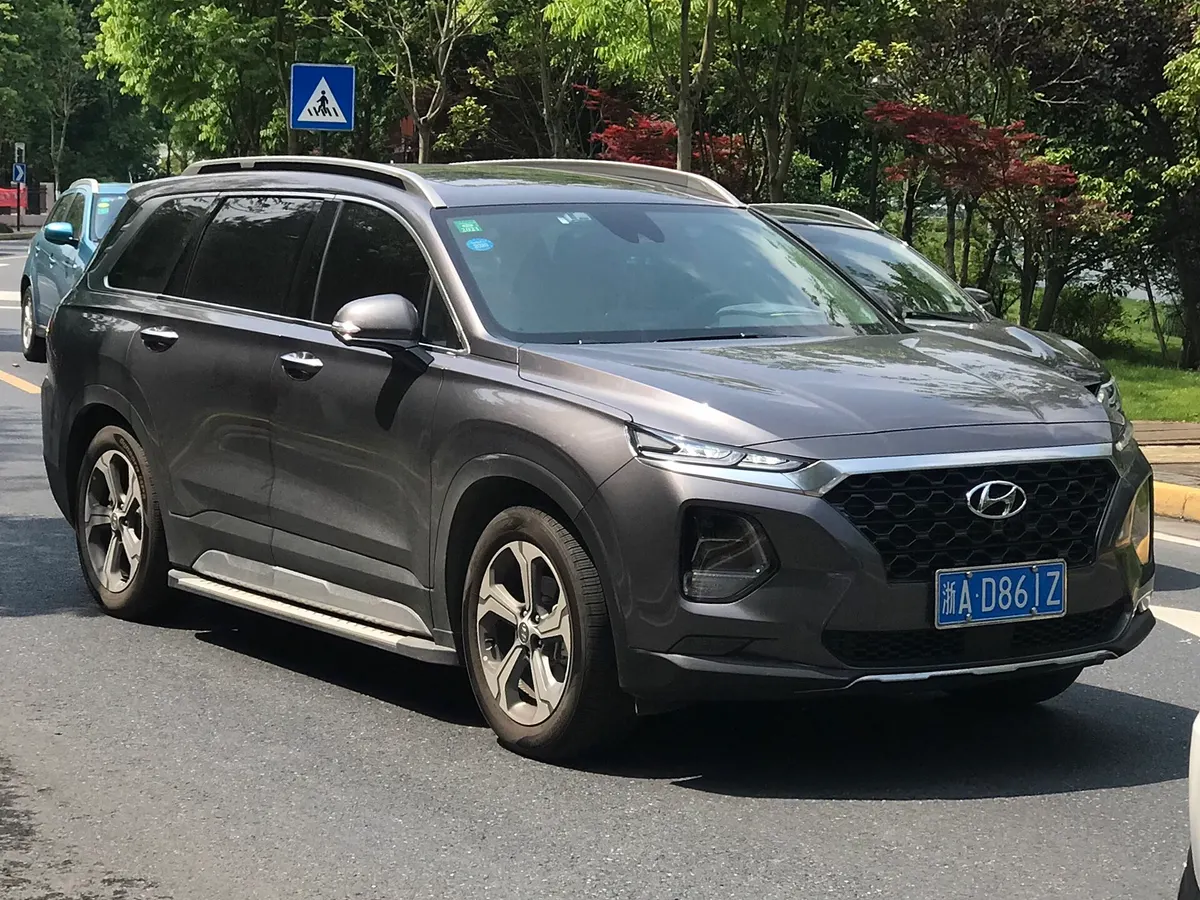
Engines
- Theta II 2.4 GDI · 2.4L gasoline, 185 hp
- Theta II 2.0T GDI · 2.0L turbo gasoline, 235 hp
- Smartstream 2.5 GDI/MPI · 2.5L gasoline, 191 hp
- Smartstream 2.5T GDI/MPI · 2.5L turbo gasoline, 277 hp
- 1.6T hybrid (HEV) · 1.6L turbo hybrid hybrid, 226 hp
- 1.6T plug-in hybrid (PHEV) · 1.6L turbo PHEV phev, 261 hp
Transmissions
- automatic , 8-speed
- dct , 8-speed
- automatic , 6-speed
Drivetrain
FWD / AWD
Body
SUV (5-passenger, 2-row)
Trims
SE, SEL, SEL Plus (2019), XRT (2022–2023), Limited, Ultimate (2019–2020), Calligraphy (2021–2023), Hybrid Blue / SEL Premium / Limited
Hyundai Santa Fe part-number cross-reference
Start from the OEM number, then pick the brand you trust. Verified equivalents for the Hyundai Santa Fe (2019–2023).
Part links go to Amazon, and to eBay where Amazon does not stock the part. Affiliate links, so we may earn a commission if you buy. Your price is unchanged, and a commission never changes a verdict.
Oil filter
Hyundai
the universal small Hyundai/Kia spin-on; supersedes 26300-35503/35504. NOT the filter the 2021+ 2.5 engines take.
Find Hyundai oil filter on AmazonWix
51334XP is the synthetic-media version; crosses documented against the superseded 26300-35503 (same filter family)
Look up Wix oil filterVerified via: HyundaiPartsDeal: Santa Fe oil filters by year (26300-35505 for 2019-2020), zFilters: Wix 51334 cross-reference (Hyundai 26300-35503, Fram PH9688, Purolator L14459), Amazon: 26300-35505 + 28113-A9100 kit listed for 2019-2020 Santa Fe 2.0L/2.4L
Oil filter
Hyundai
service-kit element (with seals) for the 26310-2S000/2S002 filter assembly; replaces 26350-2S000. Do NOT use the 26300-35505 spin-on. Hybrid 1.6T uses a different filter. Match by VIN.
Compare Hyundai oil filter on AmazonPremium Guard
aftermarket cartridge listed for the 2.5L Hyundai/Kia family incl. 2021+ Santa Fe
Find Premium Guard oil filterVerified via: HyundaiPartsDeal: Santa Fe oil filters by year (26350-2S001 / 26310-2S000 for 2021-2023), Hyundai OEM Parts Online: 26350-2S001 (2020-2026 fitment), Amazon: PG99527EX / 26350-2S000 cartridge for 2.5L incl. 2021-2025 Santa Fe
Engine air filter
Hyundai
shared with Kia Sedona/Telluride-family applications
Look up Hyundai engine air filter on AmazonVerified via: HyundaiPartsDeal: Santa Fe air filters by year (28113-A9100 for 2019-2020), Hyundai OEM Parts Online: 28113-A9100, Amazon: A-Premium panel filter, 2019-2020 Santa Fe fitment (replaces 28113A9100)
Engine air filter
Hyundai
also cataloged as 28113-L1100 revision; hybrid may differ. Verify by VIN. No aftermarket cross verified for this application; buy OEM.
Compare Hyundai engine air filter on AmazonVerified via: HyundaiPartsDeal: Santa Fe air filters by year (28113-L1000 for 2021-2026), Hyundai OEM Parts Direct: 28113-L1000
Cabin air filter
Hyundai
superseded by S2C79-AC100; shared with Palisade/Telluride-family applications
Find Hyundai cabin air filter on AmazonVerified via: HyundaiPartsDeal: Santa Fe cabin filters by year (97133-J5000 for 2019-2020), PartsGeek: 2019-2020 Santa Fe cabin air filter (Wix WP10367)
Cabin air filter
Hyundai
no aftermarket cross verified for this application; buy OEM or match by the OEM number
Check Hyundai cabin air filter on AmazonVerified via: HyundaiPartsDeal: Santa Fe cabin filters by year (97133-L1000 for 2021-2026)
Wiper blades
Hyundai (factory sizes)
the old 3-row Santa Fe XL sold alongside in 2019 uses a 14" passenger blade, so don't cross the two
See Hyundai wiper blades on AmazonBosch ICON / Rain-X / Trico / Michelin
select by length; consistent across 2019-2023
Compare Bosch ICON / Rain-X / wiper bladesVerified via: AutoPadre: Hyundai Santa Fe wiper sizes (26/16/13 for 2019-2023), Wiper Blades USA: 2022 Santa Fe wiper size chart
Battery (BCI group)
Hyundai
cars with idle stop-and-go (ISG) came with an AGM from the factory and the charging system expects AGM, so replace AGM with AGM
Find Hyundai battery on AmazonAny BCI group 48 / H6 AGM
e.g. Interstate, Duralast, DieHard in H6 AGM; match or exceed factory CCA
Look up Any BCI group 48 / H6 batteryVerified via: Hyundai Forums: TM Santa Fe battery replacement, Group 48/H6 AGM from factory, AutoZone: 2021 Santa Fe battery fitment (H6/Group 48)
Should I buy a 2019–2023 Hyundai Santa Fe?
Buy the 2021–2023 half of this generation, and be picky about the 2019–2020 half. A 2021–2023 with the base 2.5 and the conventional 8-speed automatic, or the hybrid, sidesteps every headline risk this generation has: no Theta II engine, no dual-clutch transmission. The 2.5T is quicker but carries the DCT oil-pump recall and low-speed drivability gripes, so verify recall 22V-746 is done and drive it in traffic before you commit. On a 2019–2020, treat the engine as the whole negotiation: they run the same Theta II 2.4/2.0T family that seizes from rod-bearing wear. The 2019 is on Hyundai's published lifetime bearing-warranty list (with conditions); the 2020 is not, so a dealer VIN check is mandatory. Across all years, confirm the tow-hitch-harness fire recall (23V-181) is closed. It's the recall that told owners to park outside.
Best years
2023, 2021–2023 with the base 2.5 + 8-speed automatic, 2021–2023 Hybrid
Years to avoid
2019–2020 (Theta II 2.4/2.0T bearing-failure exposure; 2020 isn't on the published lifetime-warranty lists), 2021–2022 2.5T until the DCT recall (22V-746) is verified done
Pre-Purchase Checklist for Hyundai Santa Fe
- ☐Identify the powertrain era first: 2019–2020 = Theta II 2.4/2.0T (engine-failure family); 2021–2023 = Smartstream 2.5/2.5T or hybrid. It changes everything about the risk.
- ☐On a 2019, have a Hyundai dealer run the VIN: KSDS knock-sensor software (Campaign 953) installed, and TXXI lifetime bearing-warranty eligibility intact (accident/salvage history and skipped software can void it).
- ☐On a 2020, do the same VIN check but assume nothing: the 2020 Santa Fe does not appear on Hyundai's published TXXC/TXXI warranty-extension lists despite using the same engines.
- ☐Cold-start the 2.4/2.0T and listen for a deep knock or rod rumble; ask if the check-engine light has ever blinked with code P1326.
- ☐Run the VIN through NHTSA's recall lookup. The big one is the tow-hitch-harness fire recall (23V-181). It applies 2019–2023 including hybrids, and Hyundai told owners to park outside until fixed.
- ☐On a 2021–2022 2.5T, confirm the DCT oil-pump recall (22V-746) is closed, then creep it through a parking lot and stop-and-go traffic. Hesitation and shudder show up at low speed, not on the highway.
- ☐Check the oil level and ask about top-offs between changes; oil consumption complaints exist on both the 2.4 and the 2.5 families.
- ☐On 2020–2021 cars built in late 2020, confirm the windshield-bonding recall (Hyundai Recall 216) was performed.
Common Hyundai Santa Fe problems & repair costs
Theta II connecting-rod-bearing failure (engine seizure)
$4,000–$8,000Symptoms: Deep knocking that worsens with miles, a blinking check-engine light with code P1326 and reduced power (the KSDS knock-sensor software catching the early failure pattern), metal in the oil, then stalling or a seized engine.
Fix: Engine long-block replacement. Hyundai's TXXI warranty extension (TSB 22-EM-001H-1, from the class-action settlement) makes rod-bearing long-block replacement a limited LIFETIME warranty on listed vehicles, and the 2019 Santa Fe (TM) 2.4/2.0T is on that list, transferable to later owners, conditioned on the KSDS update (Campaign 953) and a clean vehicle history. The 2020 Santa Fe is NOT on the published TXXC/TXXI lists despite carrying the same engines, so have a dealer confirm coverage by VIN before buying. Out of coverage, a replacement engine runs roughly $4,000–$8,000.
Sources: Hyundai TSB 22-EM-001H-1: Engine Warranty Extension (TXXI), applicable vehicles incl. 2019 Santa Fe (TM), HyundaiEngineInfo.com: Theta II settlement & KSDS FAQ, Four Wheel Trends: Hyundai engine replacement cost out of warranty
Tow-hitch harness fire risk (park-outside recall)
Symptoms: No warning in most cases: water gets into the tow-hitch harness module's circuit board, which has constant power, and can short and start a fire even while the vehicle is parked and off.
Fix: Covered by recall (NHTSA 23V-181 / Hyundai Recall 244): dealers install a new fuse and wire-extension kit free of charge. Until it's done, Hyundai advised parking outside and away from structures. Applies to hitches fitted at the factory or sold through dealers. Verify completion by VIN on any Santa Fe with a hitch.
Sources: NHTSA: Safety Recall Report 23V-181 (tow hitch harness fire), Hyundai Recall 244: 2019–2023 Santa Fe, 2021–2023 HEV, 2022–2023 PHEV
2.5T dual-clutch (wet 8DCT) oil-pump failure and low-speed drivability
Symptoms: Recall failure mode: warning lights, about 20–30 seconds of normal driving, then complete loss of drive power when the transmission's electric oil pump faults and the fail-safe logic doesn't hold the car in a limp mode. Day-to-day complaints: hesitation off the line, jerky low-speed creep, and shudder in parking maneuvers.
Fix: Recall 22V-746 (53,142 vehicles incl. 2021–2022 Santa Fe 2.5T): dealers inspect, reprogram the software, and replace the transmission if it faulted, all free. The low-speed manners are inherent to a dual-clutch; software updates help, but test-drive it in traffic and decide if you can live with it. The 2.5 non-turbo and hybrid use conventional automatics and avoid all of this.
Sources: NHTSA recall 22V-746: owner notification (DCT oil pump / loss of drive power), ATSG: Hyundai recalls 53,000 vehicles with DCT issue
Stalling while driving (2019, low mileage)
Symptoms: Engine stalls or shuts down while driving, often at low speeds and at very low mileage. This is CarComplaints' worst-reported 2019 problem, with stalls averaging around 6,000 miles. NHTSA logs 60+ engine-category complaints on the 2019 alone.
Fix: No single recall covers the stalling complaints; reported causes vary (fuel delivery, software, and early Theta II failures overlap here). On a used 2019, pull the service history for stall-related visits and make sure all software campaigns are applied. A stall complaint plus a P1326 history points back to the engine problem above.
Excessive oil consumption (GDI engines)
Symptoms: Burning noticeable oil between changes with no external leak. On the Theta II engines, running low accelerates the rod-bearing wear that kills them; owners of 2021+ 2.5s have filed similar complaints, and a 2022 class action named the 2015–2021 Santa Fe among many Hyundai models.
Fix: Check the dipstick monthly and document consumption with an oil-consumption test at a Hyundai dealer. On a 2019 that documentation supports a warranty engine claim. Outside coverage it's a monitoring cost first, and ring/engine work only in severe cases.
Sources: Top Class Actions: Hyundai excessive oil consumption class action, CarProblemZoo: Santa Fe engine burning oil complaints (NHTSA data)
Costs split cleanly along the 2021 refresh line. A 2021–2023 with the 2.5 or the hybrid is a normal-cost modern SUV: fluids, brakes, tires, and filters, with the recalls handled free by VIN. A 2021–2022 2.5T adds DCT risk. It's recall-covered if it fails the recall way, but a dual-clutch is simply a more expensive box than the torque-converter automatic if anything goes wrong out of warranty. The 2019–2020 cars carry the Theta II tail risk: a covered 2019 can get a free engine for life under TXXI, while an uncovered 2020 that spins a bearing is a $4,000–$8,000 event on a vehicle that may not be worth much more. Budget nothing for the recalls (they're free), and everything around whether the engine warranty status is verified in writing.
Cost calculator
What will this Hyundai Santa Fe cost you by a given mileage?
Drag to a mileage. We total the documented problems whose typical onset falls at or before it. The same cost ranges listed above, nothing new invented.
$0 estimated repair range
Have a repair quote for this Hyundai Santa Fe?
Audit against OEM book times, uncover duplicate pad and rotor labor, and verify parts markups.
How to fix common Hyundai Santa Fe problems (DIY)
Engine + cabin air filter replacement
Tools: No tools for the airbox (clips), Small screwdriver for the glovebox stops if needed
- Unclip the airbox lid in the engine bay, lift it, and note how the old panel filter sits.
- Drop in the new engine air filter the same way and re-clip the lid.
- Open the glovebox, release the side stops so it swings down, and pull the cabin-filter cover.
- Slide out the old cabin filter; insert the new one with the airflow arrow pointing the same direction as the old one.
- Close everything up and confirm airflow at the vents.
Parts
- Engine air filter, 2019–2020 (OEM 28113-A9100) · Amazon $12–$25
- Engine air filter, 2021–2023 (OEM 28113-L1000) · Amazon $12–$25
- Cabin air filter (97133-J5000 for 2019–2020 / 97133-L1000 for 2021–2023) · Amazon $10–$20
Front brake pads & rotors
Tools: Floor jack + jack stands, Lug + caliper socket set, C-clamp or caliper piston tool, Torque wrench, Brake cleaner
- Loosen lug nuts, raise the front, support on stands, and remove the wheels.
- Unbolt the caliper, hang it from the suspension (don't stress the hose), and remove the old pads and bracket.
- Slide off the old rotor; clean the new rotor's anti-rust coating off with brake cleaner.
- Compress the caliper piston, fit the new rotor and pads, and reassemble with the bracket and caliper torqued to spec.
- Reinstall wheels, lower the car, and pump the brake pedal firm before driving; bed in the pads gently.
Parts
- Front brake pad set (match year + engine, pad sizes differ across the range) · Amazon $35–$70
- Front rotor pair · Amazon $70–$140
12V battery replacement (gas models)
Tools: 10–12mm socket or wrench, Battery terminal brush, Memory saver (optional but keeps radio/window presets)
- With the ignition off, disconnect the negative terminal first, then the positive.
- Remove the battery hold-down bracket and lift the old battery out.
- Clean the terminal clamps and tray, set the new Group 48 (H6) battery in, and refit the hold-down.
- Connect positive first, then negative, and torque the clamps snug.
- Start the car and confirm no stop/start (ISG) or charging warnings; presets may need resetting without a memory saver.
Parts
- Group 48 (H6) AGM battery · Amazon $180–$260
Some parts links are affiliate links. We may earn a commission at no cost to you. We only list parts that fit this generation.
The short version
The 2019–2023 Santa Fe is one body with two completely different risk profiles, split at the 2021 refresh.
2019–2020 cars run the last of Hyundai’s Theta II 2.4 and 2.0T engines, the same family behind the company’s massive connecting-rod-bearing failures. The saving grace: the 2019 is on Hyundai’s published TXXI list, which turns rod-bearing engine replacement into a limited lifetime warranty (transferable, conditioned on the knock-sensor software update). The 2020 carries the same engines but does not appear on the published extension lists, which makes a dealer VIN check the single most important step before buying one.
2021–2023 cars got the Smartstream 2.5 engines and a genuinely good hybrid. The one asterisk is the 2.5T’s 8-speed wet dual-clutch: recall 22V-746 covered an oil-pump fault that could cause total loss of drive power, and owners gripe about low-speed hesitation that no recall will ever fix, because it’s how dual-clutches behave.
Hanging over almost the entire generation is the tow-hitch-harness fire recall (NHTSA 23V-181), the one where Hyundai told owners to park outside. The fix is a free fuse kit; confirm it’s done on any car with a hitch.
What that means when you’re shopping
The lowest-risk combinations are a 2021–2023 with the base 2.5 and the conventional 8-speed automatic, or the hybrid. No Theta II, no DCT. A 2.5T is fine if the recall is closed and you’ve test-driven it in stop-and-go traffic with open eyes.
On a 2019, get the TXXI/KSDS status in writing from a Hyundai dealer; an in-coverage 2019 with a documented engine (or a fresh replacement block) is a defensible buy at the right price. On a 2020, price in the engine risk unless the dealer’s VIN check shows coverage. The published lists skip it.
The recall homework
Run every candidate VIN through NHTSA’s lookup. Beyond the tow-hitch and DCT recalls, this generation also had fuel-pipe leak recalls on early 2021 2.5s (21V-308, 21V-524), a windshield-bonding recall on late-2020 builds (Hyundai Recall 216), and a seat-belt-pretensioner recall on 2021–2022 hybrids and 2022–2023 plug-ins (22V-816). All free to fix; all worth confirming before money changes hands.
How this file is built: failure modes and cost ranges are compiled from NHTSA recall and complaint data, Hyundai’s own TSBs and warranty-extension documents, owner reporting, and reliability sources, then sanity-checked against shop-floor experience. Cost figures are independent-shop estimates and vary by region. Spot something off? Tell us.
Viral car myths, checked against this car
- Misleading
Is the "$1 Japanese oil trick" that stops engine wear forever real?
The 'Japanese oil trick' is almost certainly MoS2 (molybdenum disulfide), a real industrial friction modifier. It is German, not Japanese (Liqui Moly popularized it), sold openly at every parts store for $15-20, has real but modest measured friction benefits, and was never buried by anyone.
- Dangerous
Is the "$2 liquid that destroys engine sludge forever" real? Our shop-floor verdict.
An aggressive solvent flush on a high-mileage engine is a textbook way to spin a bearing. The viral 'kitchen-cabinet flush' is folklore that real shops spend money cleaning up after.
Frequently asked questions
Is the Hyundai Santa Fe a reliable SUV?
Split it at the 2021 refresh. The 2019–2020 cars use the Theta II 2.4/2.0T engines from Hyundai's rod-bearing failure saga and rate the worst in this generation; the 2021–2023 cars, with the Smartstream 2.5 engines and the hybrid, have a much cleaner record. A 2021–2023 with the base 2.5 or the hybrid is a reasonable used buy; a 2019–2020 is only as good as its engine-warranty paperwork.
What years of the Hyundai Santa Fe should I avoid?
Be most careful with 2019 and 2020. They carry the Theta II 2.4 and 2.0T engines tied to connecting-rod-bearing failure. The 2019 is at least on Hyundai's published lifetime bearing-warranty list (TXXI, with conditions); the 2020 is not, despite having the same engines. On 2021–2022, only the 2.5T's dual-clutch transmission needs scrutiny. Verify recall 22V-746 was performed.
How many miles will a Hyundai Santa Fe last?
iSeeCars' data puts the Santa Fe's average lifespan around 136,000 miles, with roughly a 1-in-10 chance of reaching 200,000. That average is dragged down by the engine-failure years; a maintained 2021–2023 with the 2.5 or hybrid has none of those known killers, but this generation is too young to prove a higher number yet.
What are the common problems with the 2019–2023 Hyundai Santa Fe?
The big five: Theta II engine failure on 2019–2020 (rod bearings, code P1326), the tow-hitch-harness fire recall across 2019–2023 (park outside until fixed), the 2.5T's dual-clutch oil-pump recall and low-speed hesitation on 2021–2022, stalling complaints on early 2019s, and oil consumption on the GDI engines.
Does the 2019 Hyundai Santa Fe have a lifetime engine warranty?
For the specific rod-bearing failure, yes, with conditions. Hyundai's TXXI warranty extension makes long-block replacement for connecting-rod-bearing damage a limited lifetime warranty on listed 2019 Santa Fe 2.4/2.0T vehicles, transferable to later owners. It generally requires the KSDS knock-sensor software (Campaign 953) to be installed, and salvage history or neglect can void it. It is not a lifetime warranty on the whole car. Verify the VIN's status at a Hyundai dealer.
Is the Hyundai Santa Fe 2.5 turbo reliable?
The 2.5T engine itself has a decent record so far, but it comes only with the 8-speed wet dual-clutch transmission, and that gearbox was recalled (22V-746) because an electric oil-pump fault could cause complete loss of drive power on 2021–2022 models. Owners also report hesitation and shudder at parking-lot speeds, which is partly inherent DCT behavior. The base 2.5 with the conventional 8-speed automatic is the lower-risk pick.
Why were Hyundai Santa Fe owners told to park outside?
Recall 23V-181 (Hyundai Recall 244): on 2019–2023 Santa Fes with a Hyundai tow hitch, water can short the hitch harness module and start a fire even while the vehicle is parked and off. The fix, a new fuse and wiring kit, is free at any Hyundai dealer. Until it's done, Hyundai advised parking outside and away from buildings. Check the VIN on NHTSA's recall lookup.
Every Hyundai Santa Fe generation
The full case file run, beyond the generation before and after this one.
Cross-shopped rivals
Files on what buyers weigh against the Hyundai Santa Fe of this era.