Case file · TOYOTA-RAV4-2019-2024 · 5th gen (XA50)
Toyota RAV4 2019–2025Common problems, reliability & repair costs
The XA50 RAV4 is one of the safest used-SUV bets on the market, once you clear the 2019–2020 launch-year mess. First-year cars got a jerky low-speed transmission calibration, a Denso fuel pump recall that can stall the engine, a hybrid fuel tank that wouldn't take a full fill, and a 12V battery that drained itself in the driveway. Toyota fixed all of it with recalls, TSBs, and a class-action program, so the whole game is verifying by VIN that the work was done. 2022–2025 cars are boringly reliable, and 2025 closed the generation as the last pure-gas RAV4 before the all-hybrid 2026 redesign.
2022, 2023, 2024
2019 (first-year transmission calibration, most recalls of t +1 more
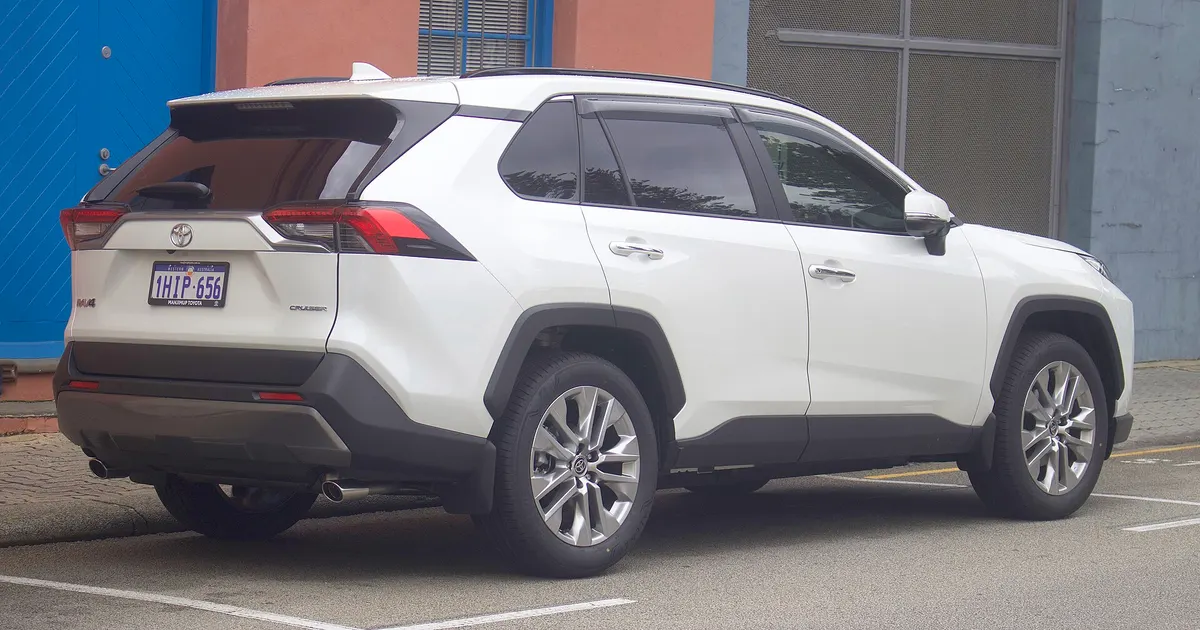
Engines
- A25A-FKS · 2.5L gasoline, 203 hp
- A25A-FXS (hybrid) · 2.5L hybrid, 219 hp
- A25A-FXS (Prime PHEV) · 2.5L phev, 302 hp
Transmissions
- UA80F (Direct Shift-8AT) · automatic, 8-speed
- cvt
Drivetrain
FWD / AWD
Body
suv
Trims
LE, XLE, XLE Premium, Adventure, TRD Off-Road, Limited, Hybrid SE, Hybrid XSE, Woodland Edition, Prime SE, Prime XSE
Toyota RAV4 part-number cross-reference
Start from the OEM number, then pick the brand you trust. Verified equivalents for the Toyota RAV4 (2019–2025).
Part links go to Amazon, and to eBay where Amazon does not stock the part. Affiliate links, so we may earn a commission if you buy. Your price is unchanged, and a commission never changes a verdict.
Motor oil
Toyota Genuine Motor Oil
Toyota sells its own 0W-16 by the quart and never in a 5-quart jug, so five singles at dealer prices is the expensive way to do this job. The six-pack case is the cheaper unit and leaves you a spare quart for top-offs. Toyota's catalog listing for the case shows the current fill at API SP.
Find Toyota Genuine Motor motor oil on AmazonMobil 1
The 5-quart jug most stores stock. Current bottles read API SQ / ILSAC GF-7B; older stock reads API SP / GF-6B and is equally fine here. The letter worth checking is the B. GF-6B and GF-7B are the categories written for 0W-16, while the A versions (GF-6A, GF-7A) are 0W-20 and thicker. The dexos1 Gen 3 approval printed on this same bottle is a GM requirement and Honda's HTO-06 is a Honda one; neither applies to a Toyota, so don't shop for them or pay extra for them.
Look up Mobil 1 motor oilPennzoil
5-quart jug. Shell's own data sheet lists API SQ Resource Conserving and ILSAC GF-7B, and heads the sheet 'recommended for use in hybrid vehicles', worth knowing if yours is the Hybrid or the Prime.
Check Pennzoil motor oilValvoline
Sold as a 5-quart jug and as single quarts, which is the easy way to keep one spare bottle around for between-change top-offs. Labeled API SP / ILSAC GF-6B.
See Valvoline motor oilVerified via: 2021 Toyota RAV4 Hybrid Warranty & Maintenance Guide (official Toyota document): 'Your vehicle is certified with Genuine Toyota 0W-16 motor oil... If 0W-16 is not available, 0W-20 mineral oil may be used. However, it must be replaced at a 5,000-mile or six-month INTERVAL with 0W-16 motor oil.', 2019 Toyota RAV4 Warranty & Maintenance Guide (official Toyota document): identical 0W-16 certification and 0W-20 stopgap wording on the gas car, Toyota official parts catalog: Genuine Toyota 0W-16 motor oil, 00279-16QTE-01 (one quart), Toyota official parts catalog: Genuine Toyota 0W-16 motor oil, 00279-16QTE (six-quart case, API SP), Toyota of Glendale, RAV4 oil type and capacity: 2019-2025 SAE 0W-16 full synthetic, 4.8 qt (4.5 L) with filter, revised to 4.5 qt (4.3 L) on 2024-2025, Oil Changers, RAV4 oil guide: 0W-16 (0W-20 only if unavailable), 4.8 qt (4.5 L) with filter, gas and hybrid alike, Mobil 1 Advanced Fuel Economy Full Synthetic 0W-16: API SQ Resource Conserving, ILSAC GF-7B; recommended by ExxonMobil for Toyota engines requiring 0W-16, Shell technical data sheet, Pennzoil Platinum SAE 0W-16 Full Synthetic: API SQ-Resource Conserving, ILSAC GF-7B, recommended for hybrid vehicles, Valvoline Advanced Full Synthetic SAE 0W-16: API SP / ILSAC GF-6B, sold in 5-quart and 1-quart
Engine oil filter
Fram
PartsHawk fitment list explicitly includes 2019-2020 RAV4 spin-on; same Fram number as the old 2AZ application
Find Fram engine oil filterWix
Cross of the PH4967/90915-YZZN1 interchange family per FinditParts
Look up Wix engine oil filterPurolator
Cross of the PH4967/90915-YZZN1 interchange family per FinditParts
Check Purolator engine oil filterMobil 1
Cross of the PH4967/90915-YZZN1 interchange family per FinditParts
See Mobil 1 engine oil filterVerified via: ToyotaPartsDeal: RAV4 oil filters by year (90915-10009 fits 2019-2024 RAV4 2.5L, superseded by 90915-YZZN1), Lakeland Toyota parts catalog: 2025 RAV4 engine oil filter 90915-YZZN1, PartsHawk: Fram PH4967 fitment (2019-2020 RAV4, spin-on), FinditParts: Fram PH4967 cross-reference (incl. Toyota 90915-YZZN1)
Engine air filter
Fram
Flex-panel filter; crossed to 17801-F0050/17801-25020 by multiple retailer listings
Find Fram engine air filterEPAuto
Sold as CA12377 equivalent; 2018-2025 Toyota/Lexus gas models incl. RAV4
Look up EPAuto engine air filterVerified via: ToyotaPartsDeal: RAV4 engine air filters by year (17801-F0050, 2019-2024 2.5L), Lakeland Toyota parts catalog: 2025 RAV4 engine air filter 17801-F0050, Amazon: EPAuto GP377 (CA12377) listing, fits 2018-2025 Toyota gas models incl. RAV4, Amazon: 17801-25020/17801-F0050/CA12377 replacement listing (2019-2024 RAV4)
Engine air filter
Toyota
Supersedes 17801-77050 and 17801-0T060; shared with Camry Hybrid, Avalon Hybrid, Highlander Hybrid, Sienna
Check Toyota engine air filter on AmazonVerified via: Modern Toyota parts catalog: air filter 17801-F0020, 2016-2026 Toyota (hybrid A25A applications), ToyotaPartsDeal: RAV4 Prime engine air filter 17801-77050 (2021-2024 RAV4 Prime SE/XSE 2.5L, replaces 17801-0T060), Amazon: engine air filter 17801-F0020 listing, fits RAV4 Hybrid 2020-2025, Camry Hybrid, Avalon Hybrid, Highlander Hybrid, Sienna, Amazon: CA12377 / 17801-25020 gas-engine filter listing marked '(Hybrid excluded)', confirming the gas/hybrid split
Cabin air filter
Verified via: ToyotaPartsDeal: RAV4 cabin air filters by year (87139-58010, 2019-2024 RAV4 2.5L), Modern Toyota parts catalog: cabin air filter 87139-58010, 2016-2025 Toyota incl. RAV4, FinditParts: Fram CF12157 cross-reference (OEM 87139-58010; Wix WP10322, Purolator C21471C), Amazon: EPAuto CP157 (CF12157) listing, fits 2016-2025 Toyota incl. RAV4
Spark plugs
Toyota
Denso FC16HR-Q8 iridium; supersedes 90919-A1001 (same plug, different pack number)
See Toyota spark plugs on AmazonDenso
FC16HR-Q8 in Denso retail packaging; literally the OE plug without the Toyota box
Compare Denso spark plugsVerified via: Toyota 2021 Spark Plugs application chart (official Toyota wholesale-parts document): RAV4 2019- A25AFKS, RAV4 HV 2019- A25AFXS, RAV4 Prime 2021- A25AFXS all FC16HR-Q8 / 90919-01289 / 90919-A1001, ToyotaPartsDeal: RAV4 spark plugs by year (90919-01289 fits 2019-2024 RAV4 2.5L, A25AFKS and A25AFXS; 90919-A1001 'replaced by 90919-01289'), Lakeland Toyota parts catalog: 2021 RAV4 spark plug 90919-01289, Advance Auto Parts: Denso Iridium Long-Life FC16HR-Q8, part 3524
Front brake pads
Toyota
Same friction job, plant-specific hardware; Toyota's value-line TCMC pad for both is 04465-AZ227
Find Toyota front brake pads on AmazonAkebono
ProACT ceramic, listed for 2019+ RAV4 front (shares the pad family with 2018+ Camry); not for the Prime
Look up Akebono front brake padsVerified via: Toyota 2024 Brake Pads application chart (official Toyota wholesale-parts document): RAV4 front kit AXAA5#..JPP 04465-33480, NAP5#..AXAA 04465-0E060; RAV4 HV front kit AXAH52/AXAH54/AXAL54 JPP 04465-33480, NAP 04465-0E060, ToyotaPartsDeal: RAV4 brake pad sets (04465-0E060 and 04465-33480 both listed for 2019-2024 RAV4 2.5L, A25AFKS and A25AFXS), PartsGeek: Akebono ACT2076 front brake pad set, 2019-2025 Toyota RAV4, Walmart: Akebono ProACT ACT2076 front ceramic pads, fits select 2019-2023 RAV4 / 2018-2021 Camry
Front brake pads
Verified via: Toyota 2024 Brake Pads application chart (official Toyota wholesale-parts document): RAV4 Prime PHV front kit AXAP54 2006-2112 = 04465-48230, 2112- = 04465-78020, American Toyota parts catalog: 2021-2022 RAV4 Prime disc brake pad set 04465-48230, Toyota of Nashua parts catalog: disc brake pad set 04465-78020 (RAV4 Prime from 12/2021), Go-Parts guide: replacing disc brake pads on the 2021-2024 RAV4 Prime
Serpentine belt
Toyota
No aftermarket cross made our verification bar; buy OEM, it is a cheap part
See Toyota serpentine belt on AmazonVerified via: Frontier Toyota parts catalog: genuine serpentine drive belt 90916-A2027 for 2021 Avalon 2.5L, 2018-2024 Camry 2.5L, and 2019-2024 RAV4 2.5L; drives alternator and A/C, Modern Toyota parts catalog: serpentine belt 90916-A2027, 2018-2025 Toyota, 2021 Toyota RAV4 Hybrid Warranty & Maintenance Guide (official Toyota document): no accessory drive-belt service item exists in the Hybrid maintenance log
Battery
Toyota TrueStart
Per Toyota's 2024 chart the OE H5 (LN2) application is serviced with the H6 (LN3)
Compare Toyota TrueStart battery on AmazonVerified via: Toyota 2024 TrueStart Batteries application chart (official Toyota wholesale-parts document): RAV4 2019- AXAA52L/AXAA54L gas w/o stop-start = H6 (LN3), 'This OE application H5 (LN2) is serviced with H6 (LN3)'; RAV4 STOP&START 2019-2021 and 2022- = H6 EFB (LN3-ISS), RAV4World: battery replacement guideline for the gas model (early 5th-gen cars shipped with the smaller Group 47/H5, later cars with H6; tray fits both; stop-start cars need EFB or AGM)
Battery
Toyota TrueStart
Genuine hybrid replacement batteries are dealer special-order per Toyota's chart; H5 aftermarket AGM/EFB units are the common route
Find Toyota TrueStart battery on AmazonVerified via: Toyota 2024 TrueStart Batteries application chart (official Toyota wholesale-parts document): RAV4 HV 2019- AXAH54/AXAL54..X standard = H4 (LN1), HV optional configs = H5 (LN2); RAV4 Prime 2021- PHV model = H5 (LN2), RAV4World: 2021 RAV4 Prime XLE battery question (Toyota replacement guide shows TrueStart H5/LN2 as the proper Prime replacement), RAV4World: 12 volt battery replacement on the 5th-gen Hybrid (H5/LN2 fits, H4/LN1 original in standard trims, spacer removal)
Wiper blades
Bosch
Beam blades; AutoZone lists the 26A driver / 16A passenger pair for 2019-2021+ RAV4
Check Bosch wiper bladesVerified via: ToyotaPartsDeal: RAV4 wiper blades by position (85222-42180 driver, 85212-42190 passenger, 85242-0R070 rear; all 2019-2024 RAV4), American Toyota parts catalog: wiper blade 85222-42180, 2019+ RAV4 (left/driver front), Toyota of Nashua parts catalog: rear wiper blade 85242-0R070, 2019-2024 Toyota, AutoZone: Bosch ICON wiper blades for 2020 RAV4 (26A driver / 16A passenger)
Should I buy a 2019–2025 Toyota RAV4?
Buy it, but treat 2019–2020 as a different car from 2021–2025. The late cars are among the most dependable used SUVs money can buy: the Dynamic Force engine and hybrid system have no pattern failures, and CarComplaints logs single-digit complaint counts for 2021–2023 and just 37 on the 2025. The early cars are fine too, but only after homework: run the VIN at nhtsa.gov and confirm the fuel pump recall (20V682), the engine block porosity recall (20V064), the transmission reflash TSB, and, on hybrids, the fuel-tank fix under Toyota's class-action customer support program. A 2019 with all campaigns closed is a good car at a discount; the same car with open recalls is somebody else's problem. The 2025 closed the generation as the last gas-only RAV4, and shoppers bought out the run-out cars before the all-hybrid 2026 even arrived, so expect final-year cars to hold their price. If the budget reaches, a 2022+ hybrid is the pick of the whole generation.
Best years
2022, 2023, 2024, 2025
Years to avoid
2019 (first-year transmission calibration, most recalls of the generation), 2019–2020 Hybrid unless the fuel-tank fix and fuel-pump recall are verified done by VIN
Pre-Purchase Checklist for Toyota RAV4
- ☐Run the VIN at nhtsa.gov/recalls and confirm 20V682 (fuel pump) and 20V064 (engine block porosity) are closed on 2019–2020 cars. Both are free at any Toyota dealer, and an open one is your negotiating leverage.
- ☐On a 2019: drive it in stop-and-go traffic and accelerate gently from a rolling stop. Hesitation followed by a lurch means the TSB T-SB-0107-19 ECM reflash was never done.
- ☐On a 2019–2021 Hybrid: fill the tank at a station. If the pump clicks off 2–4 gallons short of the ~14.5-gallon capacity, the fuel-tank fix under Toyota's customer support program is still outstanding.
- ☐Check the 12V battery date code and ask if it's been replaced. Early cars ate batteries via the telematics module (DCM) staying awake. A 2019–2020 car still on its original battery deserves a load test.
- ☐Inspect the windshield edge-to-edge for cracks and prior replacement (aftermarket glass stamp). This generation cracks glass easily, and replacement means recalibrating the front safety camera.
- ☐On Adventure/TRD trims with roof rails, check the headliner and rear cargo corners for water stains. Leaking roof-rail mounts are a documented 2019 complaint.
- ☐Cold-start it and let it idle: any coolant smell, low coolant level, or overheating history on a 2019–2020 is a red flag for the (rare) porous-block cars. Walk unless the recall inspection is documented.
- ☐On a 2022–2025 car: run the VIN for the two software recalls, 25V595 (instrument panel can boot up blank, no speedometer, 2023–2025) and 25V744 (backup camera can freeze in reverse, 2022–2025 with Panoramic View Monitor). Both are free; most cars got 25V595 over-the-air, but a Plug-in Hybrid may need a dealer visit.
Common Toyota RAV4 problems & repair costs
Low-speed transmission hesitation and lurching (8-speed, 2019)
$100–$4,500Symptoms: Hesitation when accelerating from a rolling stop or slow roll, then a harsh lurch or jerk as the transmission finally grabs a gear. Worst in stop-and-go traffic under light throttle. CarComplaints logs 60 transmission complaints on the 2019 alone, nearly half of all complaints on that year.
Fix: This is a calibration problem, not a broken transmission: the UA80F's low-speed shift logic hunts between gears under light throttle. Toyota's TSB T-SB-0107-19 (Aug 2019) reflashes the ECM and prescribes a relearn drive cycle, which resolves most cars, roughly a $100–$200 job at an independent shop if no goodwill applies. Ignore the scary $20k 'average repair cost' on CarComplaints; that's skewed by a handful of full replacements. Genuine hard failures are rare. Budget $3,500–$4,500 only if a mechanical fault is actually diagnosed.
Sources: CarComplaints: 2019 RAV4 hesitates and lurches at slower speeds, ToyotaNation: 2019 RAV4 low-speed transmission issues / TSB T-SB-0107-19
Fuel pump failure: engine stall while driving (Denso recall 20V682)
$400–$900Symptoms: Engine runs rough, warning lights on the dash, then a stall, potentially at highway speed, with the car unable to restart. Caused by a Denso low-pressure fuel pump whose resin impeller absorbs fuel, swells, and jams.
Fix: Free under NHTSA recall 20V682 (Toyota campaign 20TB02/20TA02): any Toyota dealer replaces the in-tank low-pressure fuel pump with an improved unit, no time limit. The cost range above is only what an independent shop charges if you pay out of pocket instead of using the recall. Don't. Verify completion by VIN before buying any 2019–2020.
Sources: NHTSA Part 573 recall report 20V-682, RAV4World: Safety Recall 20TA02 fuel pump, vehicle may stall
Hybrid fuel tank won't accept a full fill (2019–2021 Hybrid / 2021 Prime)
$1,500–$3,000Symptoms: The pump clicks off with the tank several gallons short. Owners reported taking as little as ~10 gallons into a 14.5-gallon tank, so real-world range falls far below the advertised ~580 miles. The tank's shape and vent behavior trip the nozzle's auto shut-off early.
Fix: Toyota settled a nationwide class action and runs an Extended Customer Support Program that replaces the fuel tank free on eligible vehicles. On any 2019–2021 hybrid, confirm at a dealer whether the fix was performed; the cost range is only the out-of-pocket tank replacement if a car somehow falls outside the program. Test it yourself at a gas station before buying.
Sources: CarComplaints: 2019–2020 RAV4 Hybrid fuel tank lawsuit, Top Class Actions: Toyota settlement with RAV4 Hybrid owners over fuel tank
12V battery drains while parked (DCM parasitic draw)
$250–$500Symptoms: Dead 12V battery after the car sits a few days, hybrids included, since the hybrid can't boot without the 12V. Original batteries dying within months. Root cause: the Data Communication Module (telematics) fails to sleep with the ignition off and keeps transmitting, plus a modestly sized factory battery.
Fix: Toyota issued a TSB with a software update that puts the DCM to sleep properly; a dealer applies it, and a fresh battery finishes the job. A class action was filed over the drain on 2020 cars, but in practice the update plus a quality replacement battery ends it. Very DIY-able on the battery side. See the repair below.
Sources: ClassAction.org: 2020 RAV4 parasitic battery-drain defect suit, RAV4World: battery draining threads (owner reports + DCM TSB)
Engine block porosity: internal/external coolant leak (recall 20V064)
$6,000–$9,000Symptoms: Coolant loss, overheating, or an oil leak on an otherwise young engine. Some 2.5L A25A blocks were cast with excess porosity that can crack. The result is coolant leaking internally or externally, risking a stall or, with an oil leak, fire.
Fix: Free under NHTSA recall 20V064 (Toyota campaign 20TA04): dealers inspect and replace the entire engine if the block is affected. Keep perspective. About 30,500 RAV4s were in scope but Toyota estimated under 0.5% actually had the defect. The cost range is the out-of-pocket engine swap you'd face only on a car that skipped the recall and cracked later. Check the VIN; a recall-replaced engine is a plus, not a minus.
Sources: NHTSA recall 20V064: Toyota engine block porosity, Toyota Safety Recall 20TA04: engine blocks can cause engine failure
Windshield cracks easily
$350–$1,000Symptoms: Long cracks from small chips or, in some owner reports, with no impact at all, including while parked. Toyota generally denies warranty coverage, calling it road damage. A law firm opened a class-action investigation covering 2019–2021 RAV4, Camry, and Venza windshields.
Fix: Windshield replacement on this car also includes recalibrating the Toyota Safety Sense front camera, which is what pushes the bill toward the top of the range. Aftermarket glass plus calibration lands mid-range; OEM glass at a dealer can exceed it. Check your insurance's glass coverage before paying cash.
Sources: Sauder Schelkopf: Toyota windshield cracking class-action investigation (2019–2021), RAV4World: windshield cracks owner threads
Blank instrument panel / frozen backup camera: software recalls (2022–2025)
Symptoms: At startup the instrument panel can fail to display vehicle speed, brake-system and tire-pressure warnings. That is recall 25V595, covering 591,377 Toyota/Lexus vehicles including 2023–2025 RAV4, Hybrid, and Plug-in Hybrid. Separately, recall 25V744 covers the rearview camera freezing or showing a blank screen in reverse, over 1 million vehicles equipped with the Panoramic View Monitor.
Fix: Both are free software fixes, and recalls never expire. 25V595 went out over-the-air on gas and hybrid cars; Plug-in Hybrids get a dealer software update or, where needed, a replacement instrument panel assembly. 25V744 is a dealer parking-assist software update. Run the VIN at nhtsa.gov/recalls on any 2022–2025 car and have the seller close anything open. There is no out-of-pocket version of this repair.
Sources: NHTSA recall 25V595: instrument panel may fail to display speed and warning lights, NHTSA recall 25V744: rearview camera may freeze or go blank (Panoramic View Monitor)
Once the launch-year campaigns are closed, an XA50 RAV4 costs very little to own: the A25A engine has no oil-consumption or sludge pattern, the 8-speed and eCVT are both durable, and parts are commodity-cheap. Real-world spend is tires, brakes, fluids, a 12V battery every 4–6 years, and possibly a windshield. Hybrids cost slightly less in brakes (regen does most of the work) and fuel; the high-voltage battery has no pattern failure in this generation and carries a 10-year/150k federal emissions warranty on 2020+ cars. Budget the big numbers only for an early car with skipped recalls.
Cost calculator
What will this Toyota RAV4 cost you by a given mileage?
Drag to a mileage. We total the documented problems whose typical onset falls at or before it. The same cost ranges listed above, nothing new invented.
$0 estimated repair range
5-Year Maintenance Schedule & Cost to Own
Every scheduled service by mileage, fluid capacities, independent shop ranges, and parts cross-references.
Have a repair quote for this Toyota RAV4?
Audit against OEM book times, uncover duplicate pad and rotor labor, and verify parts markups.
How to fix common Toyota RAV4 problems (DIY)
Engine & cabin air filter change
Tools: None required (hands only; small flathead helps on glovebox stops)
- Unclip the two metal clips on the airbox lid in the engine bay, lift the lid, and swap in the new engine filter with the rubber seal seated flat.
- Open the glovebox and squeeze the sides to release the stops, letting it hang down.
- Pull the cabin filter cover tab, slide the old filter out, and insert the new one with the airflow arrow pointing down.
- Reseat the glovebox and re-clip the airbox lid.
Parts
- Engine air filter (2019–2025 RAV4 2.5L) · Amazon $12–$25
- Cabin air filter (2019–2025 RAV4) · Amazon $10–$20
Replace the 12V battery
Tools: 10mm socket or wrench, 12mm socket (hold-down bracket), Memory saver (optional but keeps radio/window presets)
- Buy the right battery first: gas and hybrid RAV4s use different sizes, so match what's in the tray. The hybrid's smaller AGM 12V lives in the engine bay just like the gas car's.
- With the ignition off, disconnect the negative terminal first, then the positive, then remove the hold-down bracket.
- Swap in the new battery, snug the hold-down, and reconnect positive first, negative last.
- Expect one-time relearns: idle may take a few minutes to settle and windows may need an up-hold reset.
- On a 2019–2020 car that killed its battery sitting, have the dealer apply the DCM software TSB, otherwise the new battery meets the same fate.
Parts
- 12V battery (2019–2025 RAV4, match gas vs hybrid size) · Amazon $140–$260
Some parts links are affiliate links. We may earn a commission at no cost to you. We only list parts that fit this generation.
The short version
The fifth-generation RAV4 splits cleanly in two. 2021–2025 cars are among the most reliable used SUVs you can buy. CarComplaints shows 7 complaints for 2021, 2 for 2022, and just 37 for the 2025, against 136 for 2019. 2019–2020 cars are the same good design shipped before the bugs were shaken out: a jerky low-speed transmission calibration, a Denso fuel pump that can stall the engine (recall 20V682), a small batch of porous engine blocks that leak coolant (recall 20V064), a telematics module that drains the 12V battery, and, on hybrids, a fuel tank that stops taking gas 3–4 gallons early.
The generation is closed: 2025 was its final year, and the last year Toyota sold a pure-gas RAV4 in the US. The 2026 that replaced it is an all-new, hybrid-only sixth generation, a different car with its own file.
Here’s what makes this generation unusual: every one of those problems has a free, documented fix. Recalls never expire, the transmission cure is a software reflash, and the hybrid tank is replaced free under a class-action settlement program. The early cars aren’t lemons. They’re paperwork checks.
What that means when you’re shopping
On a 2022–2025 car, shop on condition, options, and price like any used Toyota. There is no landmine to clear. Just confirm two multi-model software recalls are closed: 25V595 (instrument panel can boot up blank, 2023–2025) and 25V744 (backup camera can freeze in reverse, 2022–2025 with the Panoramic View Monitor). Both are free updates, most applied over-the-air.
On a 2019–2020, the VIN does the work. Run it at nhtsa.gov/recalls and confirm 20V682 (fuel pump) and 20V064 (engine block) are closed. Drive it in traffic and accelerate from a rolling stop. Hesitation and a lurch means the transmission TSB was never applied. On a hybrid, fill the tank; a pump that clicks off around 10 gallons means the tank fix is outstanding. Every open item is free to fix and worth money off the price.
Gas or hybrid
Both drivetrains are proven. The hybrid is the better car: quicker, roughly 40 mpg, and its eCVT sidesteps the 8-speed’s calibration quirks entirely. The high-voltage battery shows no pattern failures in this generation, so don’t price in a hybrid-battery bogeyman. The gas 2.5L is equally long-lived; its 8-speed just needed the 2019 software fix.
The 2025 send-off
The final year was a quiet one, mechanically identical to 2024: the gas lineup slimmed to LE, XLE, XLE Premium, and Limited (Adventure and TRD Off-Road were dropped), the Prime was renamed “RAV4 Plug-in Hybrid,” and prices rose $175 across the board. Reliability stayed boring: 37 total complaints on CarComplaints, no pattern failures, and the only 2025-specific hardware recall (26V256, front-seat bracket welds) covers exactly four vehicles. Because 2025 was the last chance at a gas RAV4, dealers sold out of them before the 2026 arrived, so expect final-year cars to be priced firm, not discounted.
The one thing owners actually complain about later
Windshields. This generation cracks glass more readily than it should, enough that a class-action investigation covers 2019–2021, and replacement includes recalibrating the front safety camera, so a $350 glass job can become a $1,000 bill. Check your insurance glass coverage; it’s the cheapest fix for this car’s most common annoyance.
How this file is built: failure modes and cost ranges are compiled from NHTSA recall documents (20V682, 20V064, 25V595, 25V744, 26V256), the Toyota hybrid fuel-tank class-action settlement, Toyota’s 2026-generation announcement, CarComplaints data, and owner-forum reporting, then sanity-checked against shop-floor experience. Cost figures are independent-shop estimates and vary by region. Spot something off? Tell us.
Viral car myths, checked against this car
- Misleading
Is the "$2 liquid that stops any leak" really banned in 11 states?
Automotive stop-leak products are not banned in any US state. The products are real (Bar's Leaks, BlueDevil), they work in specific narrow situations, and they can permanently damage your cooling or oiling system if applied to the wrong leak.
- Outdated
Does a "$1 mineral" really double car battery life? The Epsom-salt reality.
The mineral is Epsom salt (magnesium sulfate). It was a real desulfation hack for serviceable flooded-cell batteries 40+ years ago. It does not work on modern sealed AGM or EFB batteries, and trying it on yours will void the warranty without helping the battery.
Frequently asked questions
Which Toyota RAV4 years should I avoid?
2019 is the year to be pickiest about. It carries the low-speed transmission calibration issue, the fuel pump recall, the engine block porosity recall, and the battery-drain problem, and it logged 136 CarComplaints entries versus single digits for 2021–2023. None of that makes a 2019 unbuyable; every issue has a free fix. It makes an unverified 2019 unbuyable. 2022–2025 are the safest picks.
Is 2025 the last year of the gas Toyota RAV4?
Yes. 2025 closed out the fifth generation and was the final year Toyota sold a non-hybrid RAV4 in the US. The redesigned 2026 RAV4 is an all-new generation offered only as a hybrid or plug-in hybrid. Buyers knew it, too: dealers sold out of gas 2025s before the 2026 arrived, so run-out cars tend to hold their price. Mechanically a 2025 is the same proven car as a 2022–2024; the only homework is confirming the two software recalls (25V595 instrument panel, 25V744 backup camera) are closed by VIN.
Are the 2019 RAV4 transmission problems serious?
Usually not mechanically. The hesitation-then-lurch behavior is shift-logic calibration, and Toyota's TSB T-SB-0107-19 ECM reflash resolves most cars. Actual transmission failures on this generation are rare. Test-drive at low speed from rolling stops. If it drives clean, the reflash was likely done; if it stumbles, price the car accordingly and get the TSB applied.
Is the RAV4 Hybrid fuel tank problem fixed?
Toyota settled the class action and runs a free Extended Customer Support Program that replaces the tank on eligible 2019–2021 Hybrids and 2021 Primes. Many cars have already had it done. Before buying, do the simplest test in this file: fill the tank. If it takes roughly 13+ gallons from near-empty, you're fine; if it clicks off around 10, the fix is outstanding, and still free at a dealer.
How long will a 2019–2025 RAV4 last?
There's no engineering reason a maintained XA50 won't do what previous RAV4s do: 200,000–250,000+ miles. The Dynamic Force engine and the hybrid's eCVT have no wear-pattern failures in this generation. The failure modes in this file are launch-year manufacturing and calibration issues with free fixes, not things that shorten the car's life once addressed.
RAV4 gas or hybrid: which is the better used buy?
The hybrid, if prices are close. It's quicker, gets ~40 mpg versus ~30, skips the 8-speed's calibration quirks entirely, and its high-voltage battery has no pattern failure. The only hybrid-specific homework is the 2019–2021 fuel-tank fix. The gas car is also a fine buy. Just budget nothing extra for the hybrid beyond a possible 12V battery, same as the gas car.
Every Toyota RAV4 generation
The full case file run, beyond the generation before and after this one.
Cross-shopped rivals
Files on what buyers weigh against the Toyota RAV4 of this era.