Case file · TOYOTA-RAV4-2026-2026 · 6th gen (XA60)
Toyota RAV4 2026–2026Common problems, reliability & repair costs
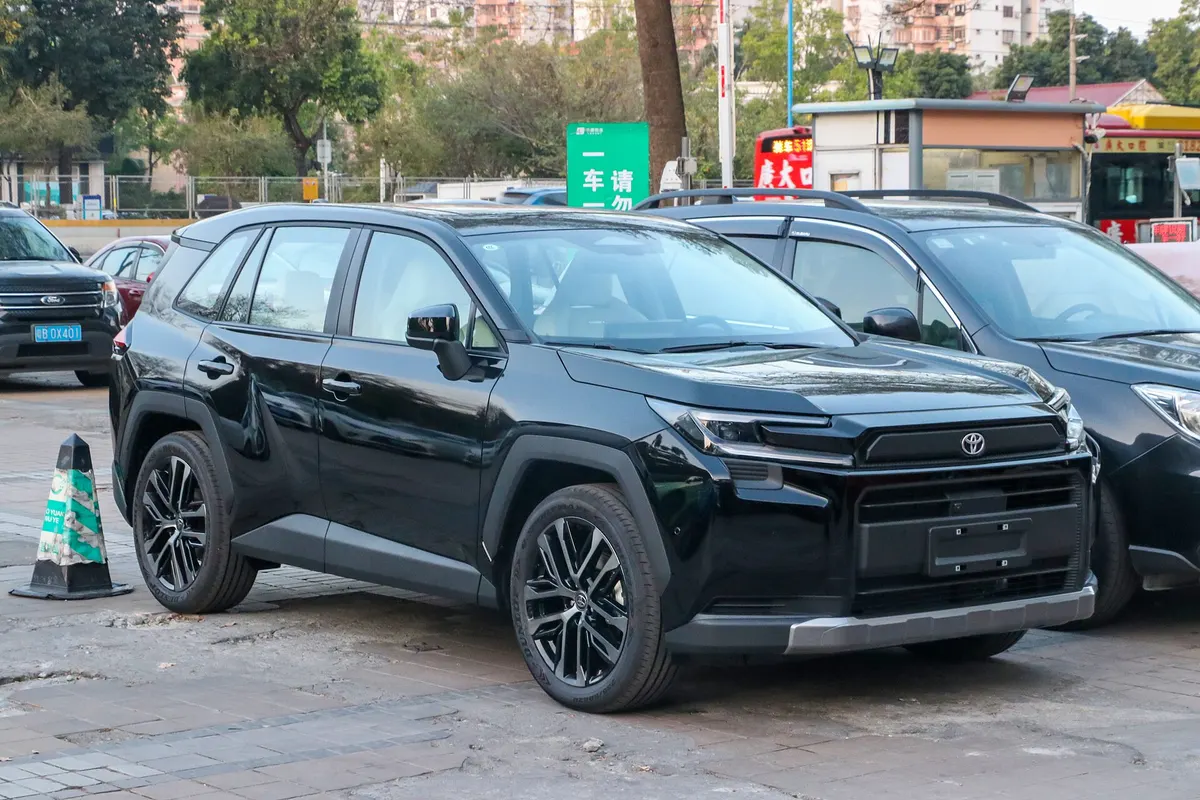
The sixth-generation RAV4 launched for 2026 as a hybrid-only lineup. Every trim is a hybrid or plug-in hybrid, and the gas-only RAV4 died with the 2025 model. It's too new for a reliability verdict: zero recalls so far, but the first months of NHTSA complaints already show a pattern of software and driver-assist gremlins: phantom emergency braking, 'System Malfunction' warning cascades, a PHEV that shut down in traffic, plus a sunglass holder that pops open onto the driver and several spontaneous glass failures. This file is deliberately thin. It documents what's verified, flags what to watch, and answers the real question: buy the first year, or wait.
Engines
- A25A-FXS · 2.5L hybrid, 236 hp
- A25A-FXS (PHEV) · 2.5L phev, 324 hp
Transmissions
- cvt
Drivetrain
FWD / AWD
Body
suv
Trims
LE, XLE Premium, Limited, SE, XSE, Woodland, GR SPORT (PHEV only)
Should I buy a 2026–2026 Toyota RAV4?
Wait if you can; buy carefully if you can't. There is no reliability verdict on a car this new. Anyone scoring it is guessing, and we don't guess. What's knowable: the drivetrain hardware is conservative (the proven 2.5L Dynamic Force and eCVT carried over), which is the strongest argument for buying early. The risk is everything wrapped around it: this is the first Toyota on the new Arene software platform, and the early NHTSA complaints are almost all electronics: phantom emergency braking, driver-assist systems shutting down with 'System Malfunction' warnings dealers can't reproduce, and one PHEV that lost the ability to drive in a live traffic lane. Toyota's own previous RAV4 launch (2019) shipped with problems that took two model years and several recalls to clean up. If you buy now: everything is under full warranty, so the cost risk is low. The real cost is dealer visits and a car that may need software updates to settle down. If you wait a year, the 2027 gets whatever fixes the 2026 owners are debugging for free.
Pre-Purchase Checklist for Toyota RAV4
- ☐Run the VIN at nhtsa.gov/recalls before signing. Zero recalls on the 2026 RAV4 as of August 2026, but that can change fast on a first-year vehicle. Ask the dealer to check for open TSBs and software campaigns by VIN while you're there.
- ☐Ask the dealer to apply every outstanding software update before delivery. The early complaint pattern is software, and 'latest calibration installed' is the cheapest insurance available on this car.
- ☐Test the overhead sunglass holder: close it, then press on it and hit the headliner near it. Multiple NHTSA complaints describe it popping open over bumps and dropping glasses toward the pedals. One owner had it replaced under warranty and the new part did the same thing.
- ☐On the test drive, watch the driver-assist systems. Any 'System Malfunction: Visit Your Dealer' message, frozen gauge display, or warning-light cluster is the known early-car failure mode. On a used or demo unit, ask for the service history on warning-light visits specifically.
- ☐Inspect every piece of glass (panoramic sunroof, quarter windows, windshield) for cracks or prior replacement. Early complaints include sunroofs and a quarter window shattering with no impact, and Toyota denied warranty on at least one. Also sight down the windshield for optical distortion (one complaint describes wavy lines across the full glass).
- ☐On a PHEV: verify charging behavior yourself. Plug it in, confirm it actually charges and holds the charge. One NHTSA complaint describes a traction battery going from 63% to 0% overnight while plugged in.
- ☐Check the 12V battery voltage after the car has sat. One PHEV complaint alleges chronic 12V undercharging triggering SRS and driver-assist warnings. That is unproven as a pattern, but the prior generation had a documented 12V drain issue, so it costs nothing to check.
Common Toyota RAV4 problems & repair costs
Phantom automatic emergency braking (false AEB activation)
Symptoms: The car brakes hard on its own at highway speed with nothing ahead. One owner reports three aggressive activations in ten minutes while passing a semi at 145 miles on the odometer, followed by a 'System Malfunction' message; another got a 'LOOK AHEAD' warning during a 65–70 mph phantom stop; a third was braked to a full stop mid-intersection during a normal left turn.
Fix: No recall and no acknowledged fix as of August 2026. Dealers in the complaints inspected the cars and found nothing. Everything here is covered by the new-car warranty; the practical move is documenting every event (date, speed, conditions), insisting the dealer open a case with Toyota, and filing an NHTSA complaint so the pattern gets counted. TSS 4.0 is new on this car, and false-activation complaints are the single most repeated safety item in the early data.
Sources: NHTSA complaints: 2026 RAV4 Hybrid (ODI 11722993, 11735012, 11750922)
'System Malfunction' warning cascades: driver-assist shutdowns and PHEV loss of propulsion
Symptoms: A wall of simultaneous warnings (pre-collision, lane assist, traction control, adaptive cruise, hybrid system, check engine), with a frozen gauge display in one report. Two PHEV complaints go further: sudden uncommanded deceleration at ~50 mph with no accelerator response, and a nearly new PHEV that told the driver to pull over, lost the ability to shift, and sat inoperable partly blocking a live lane before rebooting itself 15–20 minutes later.
Fix: The signature detail across complaints: dealers keep the cars for days, find no active fault codes, can't reproduce the failure, and return them unrepaired. That's consistent with immature software rather than broken hardware. This is the first Toyota built on the new Arene software platform. It also means there's no fix to demand yet. It's all warranty work; the cost is your time. If it happens repeatedly, document everything and know your state's lemon-law clock.
Sources: NHTSA complaints: 2026 RAV4 Hybrid (ODI 11738368), NHTSA complaints: 2026 RAV4 Plug-In Hybrid (ODI 11745309, 11751660)
Sunglass-holder latch pops open while driving
Symptoms: The overhead sunglass holder opens on its own over bumps, in hot weather, or at highway speed, dumping its contents toward the driver. Three separate NHTSA complaints describe glasses falling out mid-drive; in one, the glasses landed in the driver's footwell near the brake pedal. One owner had the holder replaced under warranty and the replacement does the same thing.
Fix: Warranty replacement of the latch/holder assembly, which at least one complaint says didn't cure it, pointing at design rather than a bad part. Until Toyota revises the part, the zero-dollar fix is not storing anything in it. Trivial as a repair, non-trivial as a distraction hazard, which is why owners are filing it with NHTSA instead of just grumbling.
Sources: NHTSA complaints: 2026 RAV4 Hybrid (ODI 11742640, 11748146, 11750922)
Spontaneous glass failures: sunroof, quarter glass, windshield distortion
Symptoms: Two complaints of a panoramic sunroof shattering at highway speed with no impact; one rear quarter window that cracked in a spider-web pattern while the car sat parked; one windshield with optical distortion (wavy lines around objects across the whole glass), causing eye strain and a false sense of motion.
Fix: Toyota denied warranty coverage on at least one shattered sunroof, calling it impact damage, and pointed the owner to insurance. Expect that fight. Glass claims usually route through your comprehensive coverage regardless of cause. Worth knowing the history: the prior-generation RAV4 (2019–2024) drew enough windshield-cracking complaints to trigger a class-action investigation, so watch whether thin glass carries over as this generation ages. No cost figures listed here. No independent-shop pricing exists yet for this body.
Sources: NHTSA complaints: 2026 RAV4 Hybrid (ODI 11752375, 11739312, 11735616, 11749111)
No real ownership-cost data exists yet. The first hybrids reached US dealers in December 2025 and the PHEVs in spring 2026, so every 2026 RAV4 is deep inside Toyota's warranty: 3-year/36,000-mile basic, 5-year/60,000-mile powertrain, 8-year/100,000-mile hybrid-component, and 10-year/150,000-mile hybrid-battery coverage. Out-of-pocket spend in year one should be fuel, maybe a cabin filter, and nothing else. The line items to watch long-term are the ones the early complaints hint at: glass (if the prior generation's windshield fragility carried over, replacements involve recalibrating the safety cameras) and time spent at dealers chasing software faults they can't reproduce.
Cost calculator
What will this Toyota RAV4 cost you by a given mileage?
Drag to a mileage. We total the documented problems whose typical onset falls at or before it. The same cost ranges listed above, nothing new invented.
$0 estimated repair range
5-Year Maintenance Schedule & Cost to Own
Every scheduled service by mileage, fluid capacities, independent shop ranges, and parts cross-references.
Have a repair quote for this Toyota RAV4?
Audit against OEM book times, uncover duplicate pad and rotor labor, and verify parts markups.
The short version
The 2026 RAV4 is a clean-sheet sixth generation, and the headline is the lineup: every single one is a hybrid. The gas-only RAV4 died with 2025. You choose between the hybrid (226–236 hp, up to 43 mpg) and the plug-in hybrid (324 hp, 48–52 miles of EV range, DC fast charging on XSE and Woodland). Pricing starts at $31,900 plus destination, below the outgoing hybrid.
This file is deliberately thin, and that’s the point. The car reached US dealers in December 2025; there is no long-term reliability data, no repair-cost history, and no verified parts cross-reference yet. We don’t score reliability on months-old cars, and we don’t pad files. Here’s what’s actually verifiable.
What the early data says
As of August 1, 2026, NHTSA shows zero recalls and roughly 15 complaints across the Hybrid and Plug-In Hybrid. Four patterns stand out, all documented above: phantom emergency braking at highway speed, “System Malfunction” warning cascades that dealers can’t reproduce (including one PHEV that lost propulsion in a live traffic lane), a sunglass holder that dumps its contents toward the pedals, and spontaneous glass failures.
Notice what’s not on that list: engines, transmissions, hybrid batteries. The mechanical package is conservative: the proven 2.5L Dynamic Force and eCVT carried over. The complaints cluster around what’s new: this is the first Toyota built on the Arene software platform, with the new TSS 4.0 safety suite and new multimedia system. First-year software acting like first-year software.
Buy the first year, or wait?
Wait, if you can. Toyota’s own history makes the argument: the previous RAV4’s 2019 launch year shipped with a jerky transmission calibration, two recalls, and a battery-drain fault that later years never had. Every one eventually got a free fix, after early adopters spent two years finding the problems. A 2027 gets those fixes from the factory.
If you need the car now, the risk is manageable: everything is warranty-covered, so you’re risking dealer visits, not money. Run the pre-buy checklist above, make the dealer apply every software update at delivery, and test the sunglass holder. Seriously.
Carryover risks we’re watching
Two prior-generation problems have early echoes worth tracking, not asserting: glass (the 2019–2024 car drew a windshield-cracking class-action investigation; the 2026 already logs four glass complaints) and the 12V battery (one PHEV complaint alleges chronic undercharging; the old car had a documented drain issue). Neither is a confirmed pattern on this generation. We’ll update this file when the data moves.
How this file is built: every problem above comes from NHTSA complaint records we pulled directly (August 2026), launch facts from Toyota’s press materials, and pricing corroborated by Edmunds and Motor1. No invented failure modes, no guessed costs. Where data doesn’t exist yet, this file says so. Spot something off? Tell us.
Viral car myths, checked against this car
- Outdated
Does a "$1 mineral" really double car battery life? The Epsom-salt reality.
The mineral is Epsom salt (magnesium sulfate). It was a real desulfation hack for serviceable flooded-cell batteries 40+ years ago. It does not work on modern sealed AGM or EFB batteries, and trying it on yours will void the warranty without helping the battery.
Frequently asked questions
Is the 2026 Toyota RAV4 reliable?
Nobody knows yet, and anyone who claims to is guessing. The car went on sale in December 2025. What's verifiable as of August 2026: zero recalls, and roughly 15 NHTSA complaints across the Hybrid and Plug-In Hybrid, mostly software and driver-assist faults, not mechanical failures. The drivetrain is the strongest reliability argument: the 2.5L Dynamic Force engine and eCVT carry over from a generation with an excellent record. The unknown is the new Arene software layer wrapped around them.
Should I buy the first-year 2026 RAV4 or wait?
If you can wait a year, wait. That's the honest answer for almost any first-year vehicle, and the 2026's early complaints (phantom braking, warning cascades dealers can't reproduce) are classic first-year software issues. Toyota's own track record makes the case: the previous RAV4's 2019 launch year needed multiple recalls and TSBs that later years never did. If you need the car now, buy it with eyes open: everything is under warranty, insist on all software updates at delivery, and run this file's pre-buy checklist.
Is the 2026 RAV4 only available as a hybrid?
Yes. Every 2026 RAV4 is either a hybrid (226 hp FWD / 236 hp AWD) or a plug-in hybrid (324 hp, 48–52 miles of EV range). The gas-only RAV4 ended with the 2025 model year, which was the final year of the fifth generation. There is no non-hybrid option, and the old 8-speed automatic is gone. Everything uses Toyota's eCVT.
How much does the 2026 RAV4 cost?
The hybrid LE FWD starts at $31,900 plus a $1,450 destination fee, about $33,350 before options. The lineup runs through LE, SE, XLE Premium, Woodland, XSE, and Limited, with the plug-in hybrid offered on SE, XSE, Woodland, and the new GR SPORT, which tops the range at $49,950. Notably, Toyota priced the base 2026 hybrid below the outgoing 2025 hybrid.
What are the common problems with the 2026 Toyota RAV4?
Four early patterns show up in NHTSA complaints: phantom automatic emergency braking at highway speed; 'System Malfunction' warning cascades that disable the driver-assist systems (including one PHEV that lost propulsion in traffic); a sunglass holder that pops open while driving; and spontaneous glass failures (two shattered sunroofs, a cracked quarter window, and a distorted windshield). No recalls yet, and no acknowledged fixes. Dealers in the complaints repeatedly found no fault codes.
How many miles will the 2026 RAV4 last?
There's no data on this generation. The oldest cars on the road are months old. The lineage argument: its 2.5L engine and eCVT are carried over from RAV4 and Camry hybrids that routinely clear 200,000+ miles, and the hybrid battery carries a 10-year/150,000-mile warranty. What nobody can promise yet is how the new software-heavy electronics age. Treat any specific mileage claim about this car as invented.
Does the 2026 RAV4 plug-in hybrid have fast charging?
On two trims. The PHEV's DC fast-charge port (10–80% in roughly 30 minutes, per Toyota) is available on the XSE and Woodland grades. Other PHEV trims and all regular hybrids charge only on AC, and the standard hybrid doesn't plug in at all. If road-trip EV charging matters to you, the trim choice matters.
Every Toyota RAV4 generation
The full case file run, beyond the generation before and after this one.
Cross-shopped rivals
Files on what buyers weigh against the Toyota RAV4 of this era.