Case file · TOYOTA-CAMRY-2025-2026 · 9th gen (XV80) (XV80)
Toyota Camry 2025–presentCommon problems, reliability & repair costs
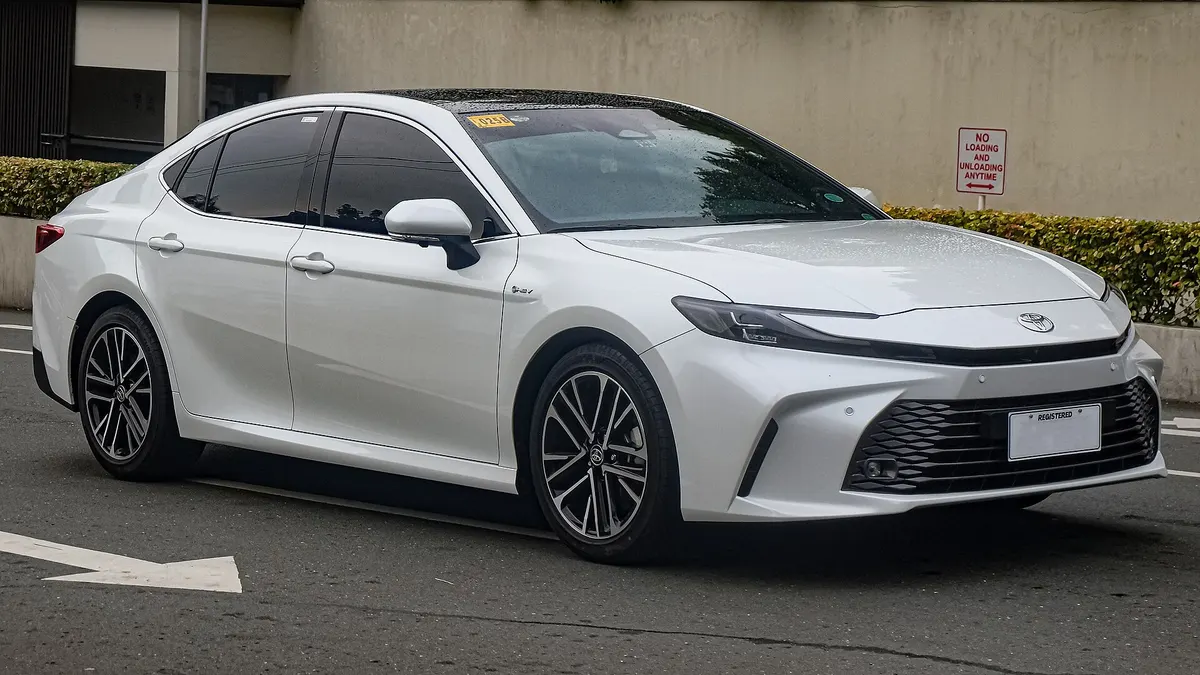
The ninth-generation Camry went hybrid-only. Every 2025+ car pairs the 2.5L four with Toyota's fifth-generation hybrid system, the most proven electrified drivetrain formula on the market. The generation is too young for wear-out data, but year one produced real recall homework: a loose inverter bolt that can cut power or start a fire (25V-869), two software recalls for blank gauge clusters and freezing backup cameras, and a seat belt webbing recall on early cars. All are free fixes, so the buying question is a VIN check, not a gamble.
Too early to call a best year. 2025 and 2026 both carry recall homework; buy on completed recall work and condition, not model year
No avoid years yet, but walk away from any car with the inve
Engines
- A25A-FXS · 2.5L hybrid, 225 hp
Transmissions
- cvt
Drivetrain
FWD / AWD
Body
sedan
Trims
LE, SE, XLE, XSE, SE Nightshade (2026+)
Toyota Camry part-number cross-reference
Start from the OEM number, then pick the brand you trust. Verified equivalents for the Toyota Camry (2025–present).
Part links go to Amazon, and to eBay where Amazon does not stock the part. Affiliate links, so we may earn a commission if you buy. Your price is unchanged, and a commission never changes a verdict.
Oil filter
Toyota
Denso-made; supersedes 90915-YZZF2 / 90915-10009 from the prior generation
Find Toyota oil filter on AmazonDenso
First Time Fit spin-on; cross-listed against the superseded 90915-YZZF2 family
Look up Denso oil filterWix
Cross-listed against the superseded 90915-YZZF2 family; 51394XP is the synthetic-media version
Check Wix oil filterVerified via: Lakeland Toyota: 90915-YZZN1 engine oil filter, 2025 Camry fitment, Frontier Toyota: 90915-YZZN1 replaces 90915-10009 / 90915-YZZF2 / 90915-YZZM1, RockAuto interchange search for 90915-YZZF2 (Denso 150-2000, WIX 51394)
Engine air filter
Verified via: Toyota OEM Parts Online: 17801-F2060 air filter, 2023-2026 Toyota fitment incl. Camry, Olathe Toyota: 17801-F2060 air filter, 2023-2025 Toyota fitment
Cabin air filter
Toyota
Premium charcoal element; 87139-58010 is the standard non-charcoal equivalent
Compare Toyota cabin air filter on AmazonFram
From the cross-reference list for the same 87139-58010 application
Look up Fram cabin air filterVerified via: Lakeland Toyota: 87139-0E040 cabin air filter, 2025 Camry fitment, Modern Toyota: 87139-0E040 cabin air filter, 2018-2026 Toyota fitment, K&N VF2054 cross-reference list (Toyota 87139-58010, Fram CF12157)
Spark plugs
Verified via: Toyota autoparts.toyota.com: spark plug 90919-01289 product page, Toyota dealer spark plug application chart (Camry 2018- : FC16HR-Q8 / 90919-01289, A25A-FXS hybrid same)
Wiper blades
Verified via: WiperSizeChart, 2025 Toyota Camry: 26 in driver / 20 in passenger, Otto Blades: 2025 Toyota Camry wiper fitment (26 in / 20 in, no rear)
Should I buy a 2025–present Toyota Camry?
Buy it, with a recall printout in hand. Mechanically this is the least-risky formula Toyota knows how to build: the A25A engine family and power-split hybrid layout that routinely cleared 200,000 miles in the last generation, now standard on every car. What year one exposed is launch build-quality, not engineering: a loose inverter bolt recall that can shut the car down (built Aug–Nov 2025), two software recalls that blank the gauge cluster or freeze the backup camera, a seat belt webbing recall on early cars, plus bumper-bracket and seat-frame niggles owners are working through under warranty. Every one of those is a free fix. A car with all recalls closed and tidy bumper/seat behavior is as safe a late-model used buy as exists; score is provisional until this generation has real miles on it.
Best years
Too early to call a best year. 2025 and 2026 both carry recall homework; buy on completed recall work and condition, not model year
Years to avoid
No avoid years yet, but walk away from any car with the inverter recall (25V-869) still open until the new inverter is actually installed
Pre-Purchase Checklist for Toyota Camry
- ☐Run the VIN at nhtsa.gov/recalls before you see the car. Four safety recalls apply to this generation: inverter bolt (25V-869), blank gauge cluster (25V-595), rearview camera freeze (25V-744), and second-row center seat belt (25V-059). All are fixed free at any Toyota dealer.
- ☐On cars built roughly August–November 2025 (late 2025 and early 2026 model years), specifically confirm the inverter recall 25V-869 shows CLOSED with a replaced inverter assembly. The defect can cause a loss of drive power or a fire, and the fix is hardware, not software.
- ☐Power the car on and watch the gauge cluster: speed, brake status, and tire-pressure info must display immediately at startup. Then shift to reverse several times and watch for a frozen or blank camera image. Both are the symptoms behind the two software recalls.
- ☐Sight down both front corners where the bumper cover meets the headlights. A lifting edge or gap is the known bumper-bracket problem. Press gently on the seam and see if it pops back rather than sitting flush.
- ☐Brake moderately hard from 30–40 mph and pay attention to the driver's seatback. A pop, thump, or shift in the mid-back is the front seat bolster issue Toyota addresses in TSB T-SB-0097-24.
- ☐Ask whether the 12V battery has ever died or been replaced, and watch the dash for low-battery warnings during your visit. Scattered early cars have eaten 12V batteries young. It's a warranty item on a car this new.
- ☐Give the driver-assist stack a real drive: a few owners report constant false alerts from the cross-traffic and collision systems. Also expect the brake pedal to feel slightly synthetic at low speed. That's the normal regen-to-friction handoff on this hybrid, not a defect.
Common Toyota Camry problems & repair costs
Hybrid inverter loose bolt (loss of power, fire risk)
Symptoms: Car won't power on, sudden loss of motive power while driving, or hybrid-system warnings. Inside the inverter, a bolt that wasn't torqued correctly at Denso's Tennessee plant can back out, break contact at the inverter terminal, or short against the circuit board. The short is the fire risk.
Fix: NHTSA recall 25V-869 (Toyota 25TA15/25TB15) covers about 55,400 vehicles, 2025–2026 Camrys plus the 2026 Corolla Cross Hybrid. The remedy is a full inverter assembly replacement, free at any Toyota dealer; owner letters with the final fix went out July 2026. This is the one recall on this car where you should refuse to buy until the work is physically done.
Sources: Toyota USA Newsroom: Camry / Corolla Cross Hybrid inverter recall, NHTSA recall acknowledgment 25V-869 (PDF), TFLcar: Toyota recalls 2025–2026 Camry for loss-of-power inverter issue
Screens go dark: gauge cluster and backup camera software recalls
Symptoms: Digital instrument cluster fails to display speed, brake status, or tire-pressure warnings at startup (restarting doesn't reliably bring it back); separately, the rearview camera image can freeze or show a blank screen in reverse. Owners also report center-screen blackouts that take the camera feed with them.
Fix: Two free software recalls. NHTSA 25V-595 (Toyota 25TB08) covers the blank cluster across roughly 591,000 Toyota/Lexus vehicles including the 2025 Camry, fixed with a software update, over-the-air on most cars. NHTSA 25V-744 covers the freezing camera across 1M+ vehicles with the Panoramic View Monitor; dealers update the parking-assist software. Both should show completed on any car you buy.
Sources: NHTSA Part 573 recall report 25V-744 (PDF), OEMDTC: recall 25V-595 detail (instrument panel software), autoevolution: Toyota recalls 591,000 US vehicles for instrument panel display issue, ToyotaNation: rearview camera recall owner thread
Second-row center seat belt webbing (early production)
Symptoms: Nothing visible in normal use. The center rear belt webbing may have been damaged during manufacturing and can fall short of federal strength requirements in a crash. Found by inspection, not symptoms.
Fix: NHTSA recall 25V-059 (Toyota 25TA03/25LA03), about 41,000 US vehicles across the 2025 Camry and 2024–2025 Lexus NX/RX. Dealers inspect the second-row center belt webbing and replace the assembly if damaged, free. Owner letters went out March–April 2025, so most cars are done. Verify on the VIN printout anyway.
Sources: Toyota USA Newsroom: Toyota and Lexus seat belt recall, NHTSA recall acknowledgment 25V-059 (PDF)
Front bumper cover pulling loose at the headlights
Symptoms: A visible gap opens between the top of the front bumper cover and the bottom edge of the headlight, or the bumper corner pops out of its clips, often after nothing more than car washes and normal driving. This is the single most-reported complaint theme on the 2025 Camry at NHTSA.
Fix: The plastic support brackets behind the bumper corners lose their grip; the fix is re-seating the cover and replacing the failed bracket, cheap plastic parts and a straightforward DIY, and dealers have handled it under the 3-year/36,000-mile basic warranty. There is no recall or TSB for it as of this writing, so document it at the dealer while the car is in warranty.
Sources: Go-Parts: 2018–2025 Camry front bumper gap / failing support brackets guide, CarComplaints: 2025 Toyota Camry complaint index, ToyotaNation: bumper popping out issue thread
Driver's seat bolster collapse, thump or pop in the seatback
Symptoms: A thump, pop, or shifting sensation in the mid-back of the driver's (or passenger's) seat, most noticeable when braking or accelerating. Caused by the front seat outer back bolster collapsing; some owners report repeat dealer visits before the underlying cause was identified.
Fix: Toyota issued TSB T-SB-0097-24 (Nov 2024, revised) for the collapsed front-seat outer back bolster on 2025 Camrys. The repair adds a developed seat-back edge protector and is covered under the basic warranty. Reference the TSB number at the service desk; it shortcuts the 'could not duplicate' loop.
Sources: OEMDTC: T-SB-0097-24 front seat back bolster service bulletin, CarComplaints: 2025 Camry driver's seat thump complaints, NHTSA: 2025 Toyota Camry owner complaints
12V battery dying young (scattered early reports)
Symptoms: Low-12V-battery warnings on the dash, a car that won't wake up after sitting, or a 12V battery condemned by the dealer within the first year. A handful of NHTSA complaints and ongoing owner-forum threads describe it; hybrids show weak 12V batteries as warnings and no-boot conditions rather than slow cranking, since there's no starter motor load.
Fix: No recall and no Camry-specific TSB so far. This reads as scattered weak batteries and drain cases, not a confirmed pattern. On a car this new the 12V battery is a straightforward warranty replacement; the practical move is to have any low-battery warning documented at the dealer and the battery load-tested before you buy.
Sources: ToyotaNation: 12V battery drain thread (2025 Camry), ToyotaNation: consolidated 12V battery thread, NHTSA: 2025 Toyota Camry owner complaints
Running costs are the whole point of this car: Toyota's manufacturer estimate is up to 51 mpg combined on the LE FWD, regenerative braking means friction brakes barely wear, the engine is chain-driven (no timing-belt service, ever), and the hybrid battery carries Toyota's 10-year/150,000-mile warranty. Two quirks to know. First, the factory oil spec moved to ultra-thin SAE 0W-8. The manual allows 0W-16 in a pinch but says to return to 0W-8 at the next change; 0W-8 costs more per quart and isn't on every parts-store shelf yet, so quick-lube shops sometimes reach for the wrong grade. It takes about 4.5 quarts with the filter. Second, keep an eye on the 12V battery early on and use the warranty if it acts up. Everything else is normal wear on a car too new to have any.
Cost calculator
What will this Toyota Camry cost you by a given mileage?
Drag to a mileage. We total the documented problems whose typical onset falls at or before it. The same cost ranges listed above, nothing new invented.
$0 estimated repair range
5-Year Maintenance Schedule & Cost to Own
Every scheduled service by mileage, fluid capacities, independent shop ranges, and parts cross-references.
Have a repair quote for this Toyota Camry?
Audit against OEM book times, uncover duplicate pad and rotor labor, and verify parts markups.
How to fix common Toyota Camry problems (DIY)
Oil and filter change (2.5L hybrid, 0W-8)
Tools: Floor jack + jack stands or ramps, 14mm socket for drain plug, Oil filter wrench, Drain pan + funnel, Torque wrench
- Warm the oil by driving a mile or two, then raise and support the front. You cannot idle this engine on demand: in READY mode the hybrid system decides when the gas engine runs, and pressing the power button without the brake only selects accessory mode, which does not start the engine at all.
- Pull the 14mm drain plug, drain into a pan, and install the plug with a fresh crush washer.
- Spin off the old filter (Toyota 90915-YZZN1 spin-on), lube the new filter's gasket, and hand-tighten it snug.
- Fill with about 4.5 quarts of SAE 0W-8 full synthetic. That's the factory spec; 0W-16 is the manual's only-if-you-can't-find-it fallback.
- Power the car to READY, check for leaks, shut down, then confirm the level on the dipstick and reset the maintenance reminder.
Parts
- Oil filter (2025+ Camry 2.5L hybrid, spin-on) · 90915-YZZN1 · Amazon $6–$12
- SAE 0W-8 full synthetic motor oil (5 qt) · Amazon $30–$50
Cabin & engine air filter change
Tools: None (hands only; maybe a small screwdriver)
- Open the glovebox, squeeze the sides to drop it past its stops, and pull the cabin filter cover behind it.
- Slide in the new cabin filter with the airflow arrow pointing the direction marked on the housing, and re-hang the glovebox.
- Under the hood, unclip the airbox lid, swap the engine panel filter, and re-clip the lid. Match the new filter to the old one before installing, since Toyota catalogs more than one part for this engine bay.
Parts
- Cabin air filter (2025+ Camry) · 87139-0E040 · Amazon $10–$20
- Engine air filter (2025+ Camry hybrid) · Amazon $15–$30
Wiper blade replacement (26" / 20")
Tools: None
- Lift the driver's arm and confirm your old blade is 26 inches; the passenger side is 20 inches. Verify against the car, since fit-guide data for this generation is still settling.
- Press the release tab on the old blade's connector and slide it off the hook or pin arm.
- Click the new blade on until it locks, then lower the arm gently, never let a bare arm snap onto the glass.
- Wet the windshield and run the wipers to check for streaks or chatter before you call it done.
Parts
- 26" + 20" beam wiper blades (2025+ Camry) · Amazon $25–$50
Some parts links are affiliate links. We may earn a commission at no cost to you. We only list parts that fit this generation.
The short version
The 2025+ Camry (the XV80 generation) is the first hybrid-only Camry: every car sold in North America runs the 2.5L four with Toyota’s fifth-generation hybrid system: 225 hp front-drive, 232 hp with AWD, and a manufacturer-estimated 51 mpg combined on the LE. The V6 is gone, the gas-only four is gone, and so is the 8-speed automatic that generated most of the last generation’s complaints.
Mechanically, that’s the most proven formula in the business. What the launch year exposed instead is build-quality homework: a loose bolt inside the hybrid inverter that can cut power or start a fire (recall 25V-869, cars built roughly August–November 2025), a gauge cluster that can wake up blank (25V-595), a backup camera that can freeze (25V-744), and damaged second-row seat belt webbing on early cars (25V-059). Every one is fixed free at a Toyota dealer.
What that means when you’re shopping
Run the VIN at nhtsa.gov/recalls before you drive anywhere. The inverter recall is the one with teeth. The fix is a physical inverter replacement, not software, so don’t accept “the letter said they’d contact us.” A car with that recall open is a no until the work is done.
Then check the two things owners actually complain about. Sight down the front corners where the bumper meets the headlights. A lifting seam is the known bracket problem, cheap to fix but worth negotiating. And brake firmly on the test drive while paying attention to the driver’s seatback: a thump or pop in the mid-back is the collapsed bolster Toyota covers in TSB T-SB-0097-24. Both are warranty items on a car this new; you just want them documented.
Finally, watch every screen at startup. Cluster shows your speed? Camera image live and moving in reverse? Then the software recalls are done or were never triggered. Either way, you’re clear.
Which one to buy
There’s no bad year yet and no clean year either. 2025 and 2026 both sit inside at least one recall population, so buy on completed recall work and condition, not model year. AWD is available on every trim if you need it; the LE FWD is the mileage king. The 2026 changes are cosmetic (a Nightshade edition and a new color), so a discounted 2025 with a clean recall printout is the value play.
How this file is built: failure modes, recall numbers, and TSB references are compiled from NHTSA recall documents and complaint data, Toyota’s own recall announcements, CarComplaints data, and owner-forum reporting, then sanity-checked against shop-floor experience. This generation is young. The file lists what’s corroborated today, not padded guesses, and will grow as the fleet ages. Spot something off? Tell us.
Viral car myths, checked against this car
- Outdated
Does a "$1 mineral" really double car battery life? The Epsom-salt reality.
The mineral is Epsom salt (magnesium sulfate). It was a real desulfation hack for serviceable flooded-cell batteries 40+ years ago. It does not work on modern sealed AGM or EFB batteries, and trying it on yours will void the warranty without helping the battery.
- Misleading
Is the "$1 Japanese oil trick" that stops engine wear forever real?
The 'Japanese oil trick' is almost certainly MoS2 (molybdenum disulfide), a real industrial friction modifier. It is German, not Japanese (Liqui Moly popularized it), sold openly at every parts store for $15-20, has real but modest measured friction benefits, and was never buried by anyone.
Frequently asked questions
Is the 2025 Toyota Camry a reliable car?
The honest answer is: the ingredients are proven, the batch is young. The 2.5L engine family and power-split hybrid design carry over from generations that routinely clear 200,000 miles, and nothing mechanical has emerged as a wear-out failure. What the first year did produce is four safety recalls (the inverter bolt, two software recalls for the gauge cluster and backup camera, and a seat belt webbing recall) plus bumper and seat build-quality complaints. All are free fixes, which makes this a paperwork-check car, not a gamble.
What are the common problems with the 2025 Toyota Camry?
In order of seriousness: a loose inverter bolt that can cause a loss of drive power or a fire (recall 25V-869, cars built Aug–Nov 2025); a gauge cluster that can start up blank (recall 25V-595); a backup camera that can freeze or blank (recall 25V-744); damaged second-row center seat belt webbing on early cars (recall 25V-059); front bumper covers pulling loose at the headlights; a driver's-seat bolster that collapses and thumps (TSB T-SB-0097-24); and scattered early 12V battery failures.
Is the 2025 Camry only available as a hybrid?
In North America, yes. Every ninth-generation Camry pairs the 2.5L four-cylinder with Toyota's fifth-generation hybrid system: 225 hp with front-wheel drive, 232 hp with the electric on-demand AWD that's optional on every trim. The V6 died with the 2024 car and the gas-only four is gone too. If you want a non-hybrid Camry, you're shopping the 2018–2024 generation.
What recalls does the 2025 Toyota Camry have?
Four safety recalls as of mid-2026: 25V-869 (hybrid inverter bolt, loss of power/fire risk, fixed with a new inverter assembly), 25V-595 (instrument cluster can be blank at startup, software update), 25V-744 (rearview camera can freeze, software update), and 25V-059 (second-row center seat belt webbing on early cars, inspect and replace). There was also a minor label recall (24V-548) for incorrect load-capacity stickers. All are free at any Toyota dealer with no expiration. Run the VIN at nhtsa.gov/recalls.
How many miles will a 2025 Camry hybrid last?
Nobody has real long-term data on this exact car yet. The oldest examples have been on the road since spring 2024. What's known: the same engine family and hybrid architecture in the 2018–2024 Camry regularly passes 200,000 miles, the eCVT has no belt or clutches to wear, and Toyota warranties this generation's hybrid battery for 10 years or 150,000 miles. There's no engineering reason to expect less than the last one delivered; we just can't prove it yet.
What kind of oil does the 2025 Camry take?
SAE 0W-8 full synthetic, thinner than anything most shops stock in bulk. The owner's manual allows 0W-16 if you can't find 0W-8, but says to return to 0W-8 at the next change. Capacity is about 4.5 quarts with the filter. It's worth watching quick-lube shops on this one; the wrong-grade fill is the most likely oil mistake on this car.
Does the 2025 Camry have a timing belt or chain?
A timing chain, like every modern Camry. There's no scheduled timing-belt replacement, ever. The chain is designed to last the life of the engine, which is one reason long-term running costs on these are so low.
Every Toyota Camry generation
The full case file run, beyond the generation before and after this one.
Cross-shopped rivals
Files on what buyers weigh against the Toyota Camry of this era.