Case file · TOYOTA-CAMRY-2007-2011 · 6th gen (XV40) (XV40)
Toyota Camry 2007–2011Common problems, reliability & repair costs
The XV40 Camry is the textbook reliable midsize sedan, with two well-documented asterisks. Many 2007–2009 four-cylinder (2AZ-FE) cars burn oil from worn piston rings, and almost every car in this run has a dashboard that turns sticky and shiny in the sun. Toyota covered both with warranty extensions that have now expired. Get a clean V6 or a late four-cylinder and it runs to 250k+; buy an oil-burner unaware and you're topping up between every fill.
2010, 2011, Any 3.5L V6 with the VVT-i oil hose campaign confirmed done by VIN
2007–2009 2.4L (2AZ-FE) cars with no oil-consumption repair
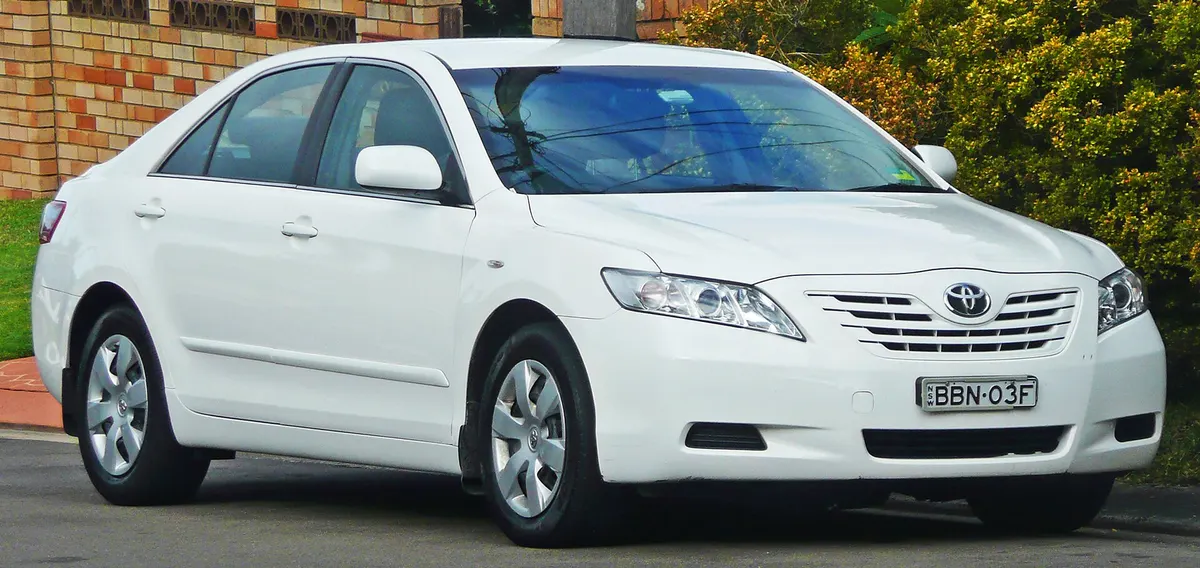
Engines
- 2AZ-FE · 2.4L gasoline, 158 hp
- 2AR-FE · 2.5L gasoline, 169 hp
- 2GR-FE · 3.5L gasoline, 268 hp
- 2AZ-FXE · 2.4L hybrid, 187 hp
Transmissions
- automatic , 5-speed
- automatic , 6-speed
- manual , 5-speed
- cvt
Drivetrain
FWD
Body
sedan
Trims
CE, LE, SE, XLE, Hybrid
Toyota Camry part-number cross-reference
Start from the OEM number, then pick the brand you trust. Verified equivalents for the Toyota Camry (2007–2011).
Part links go to Amazon, and to eBay where Amazon does not stock the part. Affiliate links, so we may earn a commission if you buy. Your price is unchanged, and a commission never changes a verdict.
Oil filter
Wix
Listed interchange; Wix list also includes 51394/51396. Confirm can height for your application
Check Wix oil filterVerified via: ToyotaPartsDeal: 90915-10004 fitment (2002–2011 Camry 2.4L, replaced by 90915-YZZF1), ToyotaPartsDeal: 2008 Camry oil filter listing, Oil Filter Cross Reference: Toyota 90915-YZZF1 interchange
Oil filter
Verified via: ToyotaPartsDeal: 04152-31090 element kit (fits Camry 2.5L, replaced by 04152-YZZA1), ToyotaPartsDeal: 2011 Camry oil filter listing (04152-31090 for 2.5L), Oil Filter Cross Reference: Toyota 04152-YZZA1 interchange
Engine air filter
Fram
Fits Camry 2007–2017 4-cyl; crosses to 17801-0H050 / 17801-28030 / 17801-YZZ02
Look up Fram engine air filterVerified via: ToyotaPartsDeal: 2008 Camry air filter (17801-0H050 / 17801-28030 replaced by 17801-YZZ02), FinditParts: Fram CA10171 fitment and cross references, Air Filter Cross Reference: Toyota 17801-YZZ02
Cabin air filter
Verified via: ToyotaPartsDeal: 87139-07010 fitment (2007–2011 Camry), ToyotaPartsDeal: 2009 Camry cabin air filter listing, Air Filter Cross Reference: Toyota 87139-07010
Should I buy a 2007–2011 Toyota Camry?
Buy it, with your eyes open. A well-kept XV40 Camry is one of the safest used-car bets of its era and routinely passes 200,000 miles. Two things separate a great buy from a headache. First, the 2007–2009 2.4L four-cylinder (2AZ-FE) is the one prone to burning oil; check oil level and color, and on those years strongly prefer a documented engine/piston repair or a different engine. The 3.5L V6 and the later 2.5L four (2010–2011) sidestep that issue, but the V6 carries its own: on certain 2GR-FE cars the rubber VVT-i oil supply hose can split and empty the sump in under a minute. Toyota's campaign for it names 2007 through 2010 Camrys by VIN, so run any V6 you are considering past a dealer and confirm the all-metal line went in. The free campaign expired at the end of 2021. Second, nearly all of these cars get a sticky, glare-producing dashboard in hot climates. Toyota's free-replacement program has expired, so price that in. Outside those two, this is a low-drama car.
Best years
2010, 2011, Any 3.5L V6 with the VVT-i oil hose campaign confirmed done by VIN
Years to avoid
2007–2009 2.4L (2AZ-FE) cars with no oil-consumption repair history
Pre-Purchase Checklist for Toyota Camry
- ☐On 2007–2009 four-cylinders: pull the dipstick warm. Low and/or dark, thin oil plus a clean exterior (no leaks) points to the piston-ring oil burning. Ask how often the owner adds oil between changes.
- ☐Confirm which engine it is. 2.4L (2AZ-FE) = at-risk years for the piston-ring oil burning; 2.5L (2AR-FE, 2010–2011) and 3.5L V6 (2GR-FE) = clear of that one.
- ☐On any V6, run the VIN past a Toyota dealer for Limited Service Campaign 90K and look at the oil supply line at the front of the engine. Toyota's covered list runs 2007 through 2010 by VIN, so a later model year is not an all-clear. A rubber section means the original hose is still on the car. An all-metal line means the fix is done. This is the one failure that can empty the sump while you drive.
- ☐Look (and feel) at the top of the dashboard. A sticky, shiny, or wavy surface is the known melting issue. It causes windshield glare and the free fix has expired.
- ☐Test-drive at light throttle around 30–45 mph on a 2007–2009 car; a faint shudder before the upshift is the known torque-converter/software condition.
- ☐Lock and unlock every door several times with the fob and the switch; listen for a buzzing or dead actuator, a common per-door failure.
- ☐Check service records for timing-chain-area noise on high-mile 2AZ cars and for transmission fluid having ever been serviced.
- ☐On the Hybrid, confirm the hybrid battery's health/age and that the 2.4L isn't also consuming oil.
Common Toyota Camry problems & repair costs
Excessive oil consumption (2.4L 2AZ-FE)
$2,000–$3,500Symptoms: Oil level drops fast with no external leak and little or no visible smoke. Owners report needing a quart every 1,000–2,000 miles. Left unchecked, low oil can trigger the oil light, engine knock, and eventual damage. Toyota's own threshold for repair was worse than 1 quart per 1,200 miles.
Fix: The proper repair is replacing the pistons and oil-control rings (Toyota's TSB procedure). Toyota ran Warranty Enhancement Program ZE7 (10 years / 150,000 miles) for affected 2007–2009 2.4L cars, but that coverage has now expired. Out of warranty, it's a labor-heavy piston/ring job at an independent shop; some owners instead manage it by checking and topping off oil regularly.
Sources: NHTSA TSB: 2AZ Engine Oil Consumption Repair (T-SB-0030-15), NHTSA: Warranty Enhancement Program ZE7 dealer letter, CarComplaints: 2008 Camry engine
VVT-i oil supply hose splits and dumps the oil (3.5L V6)
$300–$900Symptoms: The rubber section of the VVT-i actuator oil supply line develops a pinhole and then splits. Toyota's own description is oil leaking from the hose with abnormal engine noise and the oil pressure light coming on. What owners actually report first is a pool of oil under the car, an oil smell while driving, or the accessory belt slipping once oil reaches it. When the hose lets go while driving, the engine can lose its oil in well under a minute, and the warning arrives with almost no margin.
Fix: Replace the line with Toyota's updated all-metal design. Toyota's own campaign letter names certain 2007 through 2010 model year Camrys and lists them by VIN range, so the model year alone does not tell you whether a given car is affected: there are covered 2009 and 2010 cars in that table. Trade coverage puts the production change to the metal line around April 2008, which is useful background but is not in Toyota's letter, so check the VIN rather than the build date. Toyota covered the repair free under Limited Service Campaign 90K, extended to cover about 117,500 vehicles that missed the original window, and that extension ended December 31, 2021, so this is now out of pocket. The job itself is small, Toyota's own flat rate for a Camry is 0.7 hours. The reason it belongs beside the four-cylinder's piston-ring problem is the failure mode, not the bill: this one can starve the engine of oil before you get to the shoulder, and the repair cost above assumes the hose is changed before that happens. If it fails on the road, the cost is the engine.
Sources: NHTSA: Toyota LSC 90K dealer letter (VVT-i oil hose replacement), ImportCar
Sticky / melting dashboard
$600–$1,200Symptoms: The top of the dashboard turns sticky, shiny, and gooey in heat and sun, producing a bright reflection on the windshield that can impede visibility. Most common in hot, sunny climates (AZ, FL, TX, CA).
Fix: Dashboard replacement. Toyota covered it under Customer Support Program ZE6 (free replacement, 10 years from in-service) for 2007–2011 Camry/Camry Hybrid, but that program has ended. Out of coverage, options are a new/used dash, a dash cover, or living with it.
Sources: CarComplaints: 2008 Camry dashboard melting, CarComplaints news: Toyota to replace melting dashboards
Light-throttle transmission shudder / hesitation
$150–$2,500Symptoms: An intermittent shudder or hesitation when accelerating lightly after an upshift, typically felt around 30–45 mph during gentle throttle, not under hard acceleration.
Fix: Often resolved by a transmission-control software update and/or a fluid service; Toyota also revised the torque converter in production. If the torque converter itself is worn, replacement is the high end of the range. Start with the software/fluid path.
Sources: RepairPal: Toyota Camry automatic transmission may hesitate, CarComplaints: 2011 Camry transmission
Power door-lock actuator failure
$150–$400Symptoms: A single door stops responding to the fob or lock switch, often with a buzzing or grinding noise when it tries to cycle, or intermittent locking/unlocking. Usually fails one door at a time.
Fix: Replace the failed door-lock actuator. A common, well-understood per-door repair; aftermarket actuators are inexpensive and it's a DIY-able job once the door panel is off.
Sources: CarComplaints: 2011 Camry doors/locks malfunctioning, CarComplaints news: Toyota door lock actuator lawsuit
Apart from the oil-consumption and dashboard issues, the XV40 Camry is cheap to keep. Parts are everywhere and inexpensive, routine maintenance is simple, and the V6 and 2.5L four are genuinely durable. Plan normal wear: brakes, tires, an occasional door-lock actuator, struts on high-mile cars. The big-number risks are concentrated in a 2007–2009 2.4L that's burning oil and an unaddressed melting dash; clear both before you buy and your running costs stay low.
Cost calculator
What will this Toyota Camry cost you by a given mileage?
Drag to a mileage. We total the documented problems whose typical onset falls at or before it. The same cost ranges listed above, nothing new invented.
$0 estimated repair range
5-Year Maintenance Schedule & Cost to Own
Every scheduled service by mileage, fluid capacities, independent shop ranges, and parts cross-references.
Have a repair quote for this Toyota Camry?
Audit against OEM book times, uncover duplicate pad and rotor labor, and verify parts markups.
How to fix common Toyota Camry problems (DIY)
Replace a power door-lock actuator
Tools: Trim/panel removal tools, Phillips and small socket set, Electrical connector pick
- Disconnect the battery negative terminal to avoid airbag/electrical issues.
- Remove the door panel: pull the screw caps, switch bezel, and clips, then lift the panel off and unplug the connectors.
- Peel back the vapor barrier and locate the latch/actuator assembly at the rear of the door.
- Unbolt the latch assembly, disconnect the rods and the actuator connector, and remove it.
- Install the new actuator/latch, reconnect rods and wiring, and test lock/unlock before reassembling.
- Reseal the vapor barrier, reinstall the panel, reconnect the battery, and verify all functions.
Parts
- Door lock actuator (XV40 Camry) · Amazon $25–$60
Cabin & engine air filter change
Tools: Hands only (no tools for the cabin filter on most trims)
- Open the glovebox, squeeze the side stops to let it drop fully, and pull the cabin filter cover.
- Slide out the old cabin filter and insert the new one with the airflow arrow pointing down.
- For the engine filter, unclip the airbox lid, drop in the new panel filter, and re-clip.
Parts
- Cabin air filter (XV40 Camry) · Amazon $8–$15
- Engine air filter (XV40 Camry) · Amazon $10–$20
Some parts links are affiliate links. We may earn a commission at no cost to you. We only list parts that fit this generation.
The short version
The 2007–2011 Toyota Camry (the XV40) is exactly the dependable, boring-in-a-good-way midsize sedan its reputation promises, if you steer around two well-documented issues.
The first is oil. The 2.4-liter four-cylinder (2AZ-FE) used in 2007–2009 cars commonly wears out its piston oil-control rings and starts burning oil. Owners report adding a quart every 1,000 to 2,000 miles. Toyota acknowledged it and ran a warranty extension (Program ZE7) to replace the pistons, but that coverage has now expired. The 3.5L V6 and the later 2.5L four (2010–2011) don’t have this problem.
The second is the dashboard. On a huge share of these cars, the top of the dash turns sticky and shiny in the sun and throws a glare onto the windshield. Toyota offered free replacement (Program ZE6), also now expired.
What that means when you’re shopping
A 2010–2011 four-cylinder clears the engine risk outright. A V6 clears the oil-burning risk and swaps in a different one: the rubber VVT-i oil supply hose. Toyota’s campaign for it covers certain 2007 through 2010 cars by VIN, so a later model year does not settle it. Confirm the all-metal line is on that specific car, and then buy on condition and maintenance history like any used car.
If you’re looking at a 2007–2009 four-cylinder, treat oil consumption as the first thing to verify. Check the dipstick warm, ask how often the seller adds oil, and prize any record of the piston/ring repair. A car that’s documented-fixed is arguably safer than one that was never touched.
Either way, run your hand across the top of the dash. Sticky or wavy means the melting issue, which is now on you to fix.
Everything else is ordinary used-Camry stuff: a door-lock actuator that may quit, a light-throttle transmission shudder on some early cars (usually a software/fluid fix), and normal wear. None of it should scare you off a clean example.
How this file is built: failure modes and cost ranges are compiled from NHTSA TSB and complaint data, Toyota’s own warranty-enhancement programs (ZE7 oil consumption, ZE6 dashboard), CarComplaints owner reports, and shop-floor experience. Cost figures are independent-shop estimates and vary by region. Spot something off? Tell us.
Viral car myths, checked against this car
- Misleading
Is the "$1 Japanese oil trick" that stops engine wear forever real?
The 'Japanese oil trick' is almost certainly MoS2 (molybdenum disulfide), a real industrial friction modifier. It is German, not Japanese (Liqui Moly popularized it), sold openly at every parts store for $15-20, has real but modest measured friction benefits, and was never buried by anyone.
- Dangerous
Is the "$2 liquid that destroys engine sludge forever" real? Our shop-floor verdict.
An aggressive solvent flush on a high-mileage engine is a textbook way to spin a bearing. The viral 'kitchen-cabinet flush' is folklore that real shops spend money cleaning up after.
Frequently asked questions
Which 2007–2011 Camry years and engines should I avoid?
The risk is concentrated in the 2007–2009 2.4-liter four-cylinder (2AZ-FE), which is the engine tied to excessive oil consumption. Those cars aren't automatically bad, and many were repaired under Toyota's warranty program. You still have to verify oil use or find a documented piston/ring repair. The 3.5L V6 and the 2010–2011 2.5L four (2AR-FE) avoid that issue and are the safer picks.
Does the Camry really burn oil, and is it covered?
Yes, on many 2007–2009 2.4L cars. Worn piston oil-control rings let the engine consume a quart every 1,000–2,000 miles. Toyota ran Warranty Enhancement Program ZE7 (10 years / 150,000 miles) to repair affected engines, but that coverage has expired. Out of warranty it's a piston/ring job, or you manage it by topping off oil. That's why you check oil use before buying.
What's the deal with the sticky dashboard?
The dashboards on 2007–2011 Camrys commonly turn sticky and shiny in heat and sun, creating a glare on the windshield. Toyota offered free replacement under Customer Support Program ZE6 (10 years from in-service), but that program has ended. If a car still has the issue, budget for a replacement dash or a cover.
How many miles will an XV40 Camry last?
A sound V6 or a healthy four-cylinder that's been maintained routinely reaches 200,000–300,000 miles. These are among the most durable cars of their era. Most retirements come from the specific issues above or neglect, not the engine simply wearing out.
Every Toyota Camry generation
The full case file run, beyond the generation before and after this one.
Cross-shopped rivals
Files on what buyers weigh against the Toyota Camry of this era.