Case file · CHEVROLET-IMPALA-2006-2013 · 9th gen (W (GM W-body / W3 platform))
Chevrolet Impala 2006–2013Common problems, reliability & repair costs
The last W-body Impala is a cheap, roomy used sedan with a real asterisk: a GM ignition-switch recall (2006–2013, fixed free), a 'wet' intake gasket that leaks coolant on the 3.5L/3.9L V6, and a 4T65E automatic that's known to slip on higher-mileage cars. The 2012–2013 refresh (3.6L V6 and a 6-speed automatic) is the cleanest combination Chevy offered on this platform.
2012, 2013
2006–2008 (highest complaint volume for transmission slippin +1 more
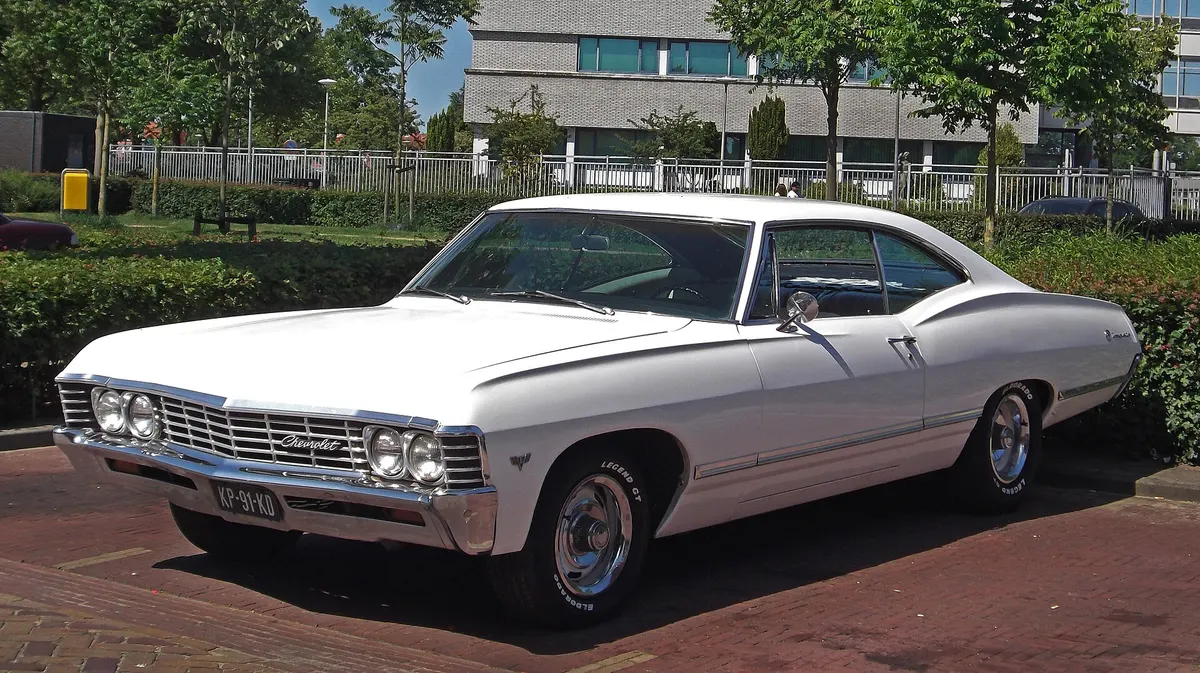
Engines
- LZE · 3.5L gasoline, 211 hp
- LZ9 / LZ8 · 3.9L gasoline, 233 hp
- LS4 · 5.3L gasoline, 303 hp
- LFX · 3.6L gasoline, 302 hp
Transmissions
- 4T65E · automatic, 4-speed
- 4T65E-HD · automatic, 4-speed
- 6T70 · automatic, 6-speed
Drivetrain
FWD
Body
sedan
Trims
LS, LT, LTZ, SS
Chevrolet Impala part-number cross-reference
Start from the OEM number, then pick the brand you trust. Verified equivalents for the Chevrolet Impala (2006–2013).
Part links go to Amazon, and to eBay where Amazon does not stock the part. Affiliate links, so we may earn a commission if you buy. Your price is unchanged, and a commission never changes a verdict.
Oil filter
ACDelco
GM 89017342 in the 2006-2009 books, 19210285 in the 2010-2011 books (2006 p357, 2007 p421, 2008 p363, 2009 p367, 2010 p383, 2011 p354)
Find ACDelco oil filter on AmazonVerified via: Chevrolet 2006 Impala owner manual, maintenance replacement parts (p357), Chevrolet 2011 Impala owner manual, maintenance replacement parts (p354)
Oil filter
ACDelco
PF48 (GM 89017524) in the 2007-2009 books (p421, p363, p367). The 2006 book lists PF46 (GM 88984215, p357)
Look up ACDelco oil filter on AmazonVerified via: Chevrolet 2006 Impala owner manual, maintenance replacement parts (p357), Chevrolet 2009 Impala owner manual, maintenance replacement parts (p367)
Oil filter
Verified via: Chevrolet 2012 Impala owner manual, maintenance replacement parts (p316), Chevrolet 2013 Impala owner manual, maintenance replacement parts (p307), ACDelco PF63 cross-ref + Impala 2012-2020 fitment (FindItParts)
Engine air filter
ACDelco
GM 10350737 in every 2006-2013 book. The 2006 book prints no ACDelco number, the 2007-2013 books list A2962C (2007 p421, 2013 p307)
Find ACDelco engine air filter on AmazonVerified via: Chevrolet 2013 Impala owner manual, maintenance replacement parts (p307), PartsGeek: 2006-2011 Impala air filter, AC Delco A2962C, PartsGeek: 2006-2011 Impala air filter, Fram CA10014
Cabin air filter
Verified via: Walmart: ACDelco CF132 fits 2000-2013 Impala, 2014-2016 Impala Limited, AutoZone: ACDelco CF132 cabin air filter, airfilter-crossreference.com: AC-Delco CF132 alternatives (Fram CF8392A, Purolator C25245, K&N VF3000)
Spark plugs
ACDelco
GM 12591131, every 2006-2011 book (2006 p357 to 2011 p354)
Check ACDelco spark plugs on AmazonVerified via: Walmart: ACDelco 41-100 Iridium, fits 2006-2011 Impala, PartsGeek: 2006-2011 Impala spark plug, AC Delco 41-100
Spark plugs
ACDelco
GM 12571164 in the 2006-2008 books (p357, p421, p363), 12609877 in the 2009 book (p367)
Compare ACDelco spark plugs on AmazonVerified via: Chevrolet 2006 Impala owner manual, maintenance replacement parts (p357), Chevrolet 2009 Impala owner manual, maintenance replacement parts (p367)
Spark plugs
Verified via: AutoZone: ACDelco 41-109 iridium spark plug, PartsGeek: 2012-2020 Impala 3.6L spark plug, ACDelco 41-109
Front brake pads
Wagner
Wagner QuickStop ceramic listed for 2006-2013 Impala 3.5L/3.6L/3.9L/5.3L
Check Wagner front brake padsVerified via: TascaParts: ACDelco Front Brake Pad Set 171-0952, 2006-2011 Impala, Sixity Auto: Wagner QS front pads, 2006-2013 Impala 3.5L/3.6L/3.9L/5.3L, Walmart: Power Stop 16-1159 fits 2008 Chevrolet Impala
Wiper blades
GM (size)
GM parts tables, 2006 p357, 2008 p363, 2009 p367, 2013 p307
Compare GM wiper blades on AmazonAftermarket listing
Otto Blades sizing. GM lists 21.7 in on both sides
Find Aftermarket listing wiper bladesVerified via: Chevrolet 2008 Impala owner manual, maintenance replacement parts (p363), Chevrolet 2009 Impala owner manual, maintenance replacement parts (p367), Otto Blades: 2006 Impala wiper set, 22"/22", Otto Blades: 2011 Impala wiper set, 22"/21", mywipersize.com: Chevrolet Impala wiper size chart
Serpentine belt
GM/ACDelco
Look up GM/ACDelco serpentine belt on AmazonVerified via: Walmart: ACDelco 12577770 serpentine belt, fits 2006-2011 Impala, AutoNation Parts: GM 12577770 V-ribbed serpentine belt
Battery
BCI group
See BCI group battery on AmazonVerified via: AutoZone: 2011 Impala battery, Group 34, carspecs.org: Chevrolet Impala battery size by year (Group 34 V6, Group 85 SS)
Should I buy a 2006–2013 Chevrolet Impala?
Buy carefully, and lean toward 2012–2013. This generation is cheap and roomy, but it carries more documented risk than the 10th-gen car that replaced it: a federal ignition-switch recall that must be confirmed complete, a coolant-leaking intake gasket on the 3.5L/3.9L V6, and a 4T65E automatic that's known to slip as mileage climbs. The 2012–2013 cars got a new 3.6L V6 and 6-speed automatic, the same drivetrain later used across the well-regarded 2014–2020 Impala, and are the safer pick if you can find one. If you're looking at an SS with the 5.3L V8, pay special attention to the transmission; the 4T65E-HD pairing with that engine is a known weak spot.
Best years
2012, 2013
Years to avoid
2006–2008 (highest complaint volume for transmission slipping and engine issues), 5.3L V8 SS with 4T65E-HD: verify transmission service history closely
Pre-Purchase Checklist for Chevrolet Impala
- ☐Confirm the GM ignition-switch recall (NHTSA 14V355000 / GM 14299, covers 2006–2013 Impala) was completed by VIN. Until it is, only the ignition key, nothing else, should be on the key ring.
- ☐On 3.5L/3.9L V6 cars, check coolant level and look/smell for a leak at the lower intake manifold. Slow coolant loss with no obvious puddle is the classic 'wet gasket' tell.
- ☐Drive it through every gear and feel for a hard, delayed, or slipping 2–3 shift; a scan for code P1811 is a strong signal the 4T65E needs a rebuild, not just fluid.
- ☐Cold-start the car after it's sat 2+ hours and listen for a lifter tick that fades over a few minutes. That points to AFM lifter wear, mostly on 2007–2009 3.9L cars.
- ☐Test every power door lock individually from both the switch and the fob; a single door that won't lock/unlock points to a failed actuator.
- ☐Turn the wheel lock-to-lock at low speed and listen for a clunk from the steering column, a known intermediate-shaft wear issue.
- ☐On an SS, ask for transmission service records specifically; the 4T65E-HD behind the 5.3L V8 has a thinner torque margin than the V6 cars.
- ☐Prefer 2012–2013 cars with the 3.6L V6 and 6-speed automatic if you can find one. It sidesteps the 4T65E and wet-gasket issues entirely.
Common Chevrolet Impala problems & repair costs
GM ignition-switch recall: unintended key rotation
$0–$0Symptoms: Added weight on the key ring plus a jarring event (pothole, rough road) can rotate the key out of 'run,' cutting engine power, power steering, and power brakes, and potentially disabling airbag deployment in a crash.
Fix: Covered by recall. GM dealers install two smaller key rings and an insert/cover on the key head at no charge (GM recall 14299 / NHTSA campaign 14V355000). Confirm completion by VIN; until then, keep only the ignition key on the ring.
Sources: NHTSA recall 14V355000: Impala, Lucerne, DTS, Monte Carlo, GM Authority: 2008 Impala recall 14V355000 detail
Intake manifold gasket coolant leak (3.5L/3.9L V6)
$400–$900Symptoms: Slow, hard-to-spot coolant loss, occasional sweet smell, rough idle or a P0300/P0171 code as the plastic-carrier lower intake gasket cracks with age and Dex-Cool exposure. Left unaddressed it can lead to overheating.
Fix: Replace the lower intake manifold gasket set. Aftermarket kits with an aluminum carrier (vs. the original plastic) are the durable fix. Labor is the bulk of the cost since the intake has to come off.
Sources: Go-Parts: 2006–2011 GM 3.5L/3.9L V6 intake manifold gasket guide, RepairPal: Impala intake manifold gasket coolant/oil leak
4T65E transmission slipping / hard shifting
$400–$3,200Symptoms: Slipping under load, delayed or harsh engagement, hard 1–2 or 2–3 shifts, and in worse cases loss of 4th gear or reverse. Owners and shops commonly trace it to worn solenoids, the reverse boost valve, or clutch wear inside the 4T65E.
Fix: Early symptoms respond to a fluid/filter service plus solenoid replacement. A P1811 code or worn internal clutches point to a reman or rebuilt transmission. The wide cost range reflects that gap.
Sources: CarComplaints: 2006 Impala transmission slipping (35 complaints), My Auto Store: why 9th-gen Impala transmissions fail
AFM lifter tick / rough idle (3.9L V6)
$250–$1,800Symptoms: A tick noise for a few seconds to several minutes after a cold start when the car has sat 2+ hours, sometimes with a misfire code (P0300/P0306) if a lifter unlocks or collapses.
Fix: GM's TSB directs checking oil level and viscosity first. Low or wrong-viscosity oil is a common trigger. If the tick persists, the fix is replacing the valve lifters.
Sources: GM TSB 10-06-01-007: AFM valve lifter tick noise at startup, Impala Forums: valve lifter tick noise at start up
Power door lock actuator failure
$150–$350Symptoms: A single door stops locking or unlocking from the switch or fob, sometimes with a buzzing or grinding noise from inside the door, as the small actuator motor wears out.
Fix: Replace the actuator in the affected door, a common, DIY-friendly repair on this platform.
Sources: CarProblemZoo: Impala power door locks not working, Go-Parts: GM door lock actuator failure, 2004–2020 Impala et al.
Steering intermediate-shaft clunk
$200–$500Symptoms: A clunk felt through the wheel or heard from the steering column during turns or over bumps.
Fix: GM TSB 01-02-32-001 (revised 2008) covers lubricating or replacing the upper intermediate steering shaft with a redesigned part.
Sources: RepairPal: steering clunk from upper intermediate shaft, GM Inside News: image/discussion of the Impala intermediate steering shaft
Once the recall is confirmed done and the intake gasket and transmission are checked out, this generation is cheap to run: parts are everywhere, mechanics know the platform cold, and routine service (brakes, tires, a battery) is inexpensive. The 4T65E is the biggest wildcard on 3.5L/3.9L cars. Budget for the possibility of a transmission service or rebuild on anything with unknown history past 100k miles. A 2012–2013 3.6L/6-speed car avoids most of that wildcard and is closer in ownership cost to the following 2014–2020 generation.
Cost calculator
What will this Chevrolet Impala cost you by a given mileage?
Drag to a mileage. We total the documented problems whose typical onset falls at or before it. The same cost ranges listed above, nothing new invented.
$0 estimated repair range
5-Year Maintenance Schedule & Cost to Own
Every scheduled service by mileage, fluid capacities, independent shop ranges, and parts cross-references.
Have a repair quote for this Chevrolet Impala?
Audit against OEM book times, uncover duplicate pad and rotor labor, and verify parts markups.
How to fix common Chevrolet Impala problems (DIY)
Replace a power door lock actuator
Tools: Trim panel removal tool, Screwdriver set, Socket set
- Remove the interior door panel (pop trim clips, remove screws behind the handle and armrest, disconnect the panel's electrical connectors).
- Peel back the plastic vapor barrier to access the latch/actuator assembly.
- Disconnect the actuator's electrical connector and unbolt it from the latch assembly.
- Install the new actuator, reconnect the wiring, and test lock/unlock before closing the door back up.
- Reinstall the vapor barrier and door panel.
Parts
- Door lock actuator (2006–2013 Impala) · Amazon $20–$45
Replace cabin & engine air filter
Tools: Screwdriver (glovebox stops)
- Open the glovebox, release the side stops so it drops down fully, and open the cabin filter door.
- Slide out the old cabin filter and insert the new one in the same airflow-arrow orientation.
- Unclip the engine airbox lid, lift out the old panel filter, and drop in the new one seated flat.
- Re-clip the airbox lid and re-seat the glovebox.
Parts
- Cabin air filter (2006–2013 Impala) · Amazon $10–$18
- Engine air filter (2006–2013 Impala) · Amazon $12–$20
Front brake pad replacement
Tools: Floor jack + jack stands, Lug wrench, Socket set + caliper bolt sockets, C-clamp or caliper piston tool, Torque wrench
- Loosen the lug nuts, lift the front of the car, support it on jack stands, and remove the wheels.
- Unbolt the caliper, lift it off (hang it with wire so it doesn't dangle by the hose), and remove the old pads.
- Compress the caliper piston with a C-clamp so the new, thicker pads will fit.
- Fit the new pads and hardware, reinstall the caliper, and torque the bolts to spec.
- Reinstall the wheels, torque the lug nuts, then pump the brake pedal until firm before driving.
Parts
- Front brake pads (2006–2011 Impala) · Amazon $25–$60
Some parts links are affiliate links. We may earn a commission at no cost to you. We only list parts that fit this generation.
The short version
The 2006–2013 Impala is the last of the old-school W-body sedans, and it’s a genuinely cheap, roomy used car, with three things worth checking before you hand over money. First, a federal recall: weight on the key ring plus a jarring event can rotate the ignition out of “run,” cutting power steering and brakes and potentially disabling airbags. GM fixed it free with a key-ring insert, but only if the work was actually done. Second, the 3.5L and 3.9L V6 engines use a “wet” intake manifold gasket that’s known to crack with age and leak coolant. Third, the 4T65E automatic behind those V6s is a documented slipper as miles pile up, especially on 2006–2008 cars.
None of that makes this generation a bad buy. It makes it a buy-with-eyes-open. The 2012–2013 refresh swapped in a 3.6L V6 and a new 6-speed automatic, the same combination later used across the well-liked 2014–2020 Impala, and it sidesteps all three issues above.
What to check before you buy
Start with the VIN: a Chevy dealer can confirm whether the ignition-switch recall (NHTSA 14V355000) was performed. If it wasn’t, that’s not a dealbreaker, but until it’s done, only the ignition key belongs on the ring, no fob, no house keys.
On any 3.5L or 3.9L V6 car, pop the hood and check the coolant level, and look near the base of the intake for residue or a faint sweet smell. Drive it through every gear, paying attention to how the 2-3 shift feels. Hesitation, flare, or a hard clunk is the 4T65E telling you it’s tired. If you’re looking at an SS with the 5.3L V8, ask specifically about transmission history; that combination has a documented torque mismatch.
Smaller things worth five minutes each: try every power door lock from the switch and the fob, and turn the wheel lock-to-lock listening for a clunk from the steering column. Both are common, cheap-to-fix items, not reasons to walk away, just things to know about going in.
The bottom line
Get the recall confirmed, check the intake gasket and transmission, and this is a solid, inexpensive sedan, better still if you can find a 2012 or 2013 with the 3.6L V6. Skip the SS unless the V8/transmission combination checks out clean.
How this file is built: failure modes and cost ranges are compiled from NHTSA recall and complaint data, CarComplaints owner reports, GM technical service bulletins, and owner-forum reporting, then sanity-checked against shop-floor experience. Cost figures are independent-shop estimates and vary by region. Spot something off? Tell us.
Viral car myths, checked against this car
- Misleading
Is the "$2 liquid that stops any leak" really banned in 11 states?
Automotive stop-leak products are not banned in any US state. The products are real (Bar's Leaks, BlueDevil), they work in specific narrow situations, and they can permanently damage your cooling or oiling system if applied to the wrong leak.
- Misleading
Is the "$1 Japanese oil trick" that stops engine wear forever real?
The 'Japanese oil trick' is almost certainly MoS2 (molybdenum disulfide), a real industrial friction modifier. It is German, not Japanese (Liqui Moly popularized it), sold openly at every parts store for $15-20, has real but modest measured friction benefits, and was never buried by anyone.
Frequently asked questions
Is the Chevrolet Impala (2006–2013) a reliable car?
It's a mixed bag. The bones are simple and cheap to fix, but this generation carries more documented issues than the 2014–2020 Impala that replaced it: a federal ignition-switch recall, a coolant-leaking intake gasket on the V6, and a 4T65E automatic that's known to slip with age. Buy one that's had the recall done and the transmission/coolant system checked, and it's a solid budget car.
What is the best year to buy a 9th-gen Impala, and which years should I avoid?
2012–2013 is the strongest pick. It got a new 3.6L V6 and 6-speed automatic that sidesteps the older 4T65E and wet-intake-gasket problems. 2006–2008 cars carry the highest complaint volume for both transmission and engine issues, so budget extra scrutiny (or a lower price) if you're looking at those years.
How many miles will a 2006–2013 Impala last?
A well-maintained 3.5L or 3.9L V6 car commonly reaches 150,000–200,000 miles; some owners report 200k+ with no major oil use. Getting there depends heavily on catching the intake gasket and transmission issues early rather than driving through them.
How much should I pay for a used 2006–2013 Chevy Impala?
Based on current market listings, expect roughly $3,000–$5,000 for an early (2006–2009) high-mileage car and up to $6,000–$9,000 for a clean, lower-mileage 2012–2013 with the 3.6L V6. Condition, mileage, and whether the recall/transmission were addressed matter more than the model year alone.
What are the common problems with the Chevy Impala 2006–2013?
The ignition-switch recall (unintended key rotation), an intake manifold gasket that leaks coolant on the 3.5L/3.9L V6, 4T65E transmission slipping, AFM lifter tick on the 2007–2009 3.9L, power door lock actuator failures, and a steering-column clunk from the intermediate shaft.
Should I buy the 3.5L or the 3.9L V6 Impala?
Either is fine mechanically-similar; the 3.9L has more power and, from 2007 on, Active Fuel Management for better fuel economy, but AFM is also the source of the 2007–2009 lifter-tick issue. The 3.5L is the simpler, AFM-free choice if you want to avoid that specific risk.
Is the Impala ignition-switch recall dangerous if it hasn't been fixed?
Yes, treat it as a real safety issue, not a formality. GM's own recall notice says a key knocked out of 'run' cuts engine power, power steering, and power brakes, and can prevent airbags from deploying in a crash. It's a free dealer fix. Confirm it was done by VIN before you buy, or do it immediately after.
Cross-shopped rivals
Files on what buyers weigh against the Chevrolet Impala of this era.