Case file · CHEVROLET-EQUINOX-2010-2017 · 2nd gen
Chevrolet Equinox 2010–2017Common problems, reliability & repair costs
The 2nd-gen Equinox is a roomy, comfortable, affordable used SUV with one serious catch: the 2.4L Ecotec four-cylinder burns oil. Worn piston rings let early 2010–2013 engines drink a quart every 1,000–2,000 miles, which starves the engine and can wreck timing chains and bearings, a defect GM eventually settled in a class action with free piston replacements. The 3.0L and 3.6L V6 cars sidestep that issue but cost more to feed.
2016, 2017
2010–2013 (2.4L oil-consumption / piston-ring defect) +1 more
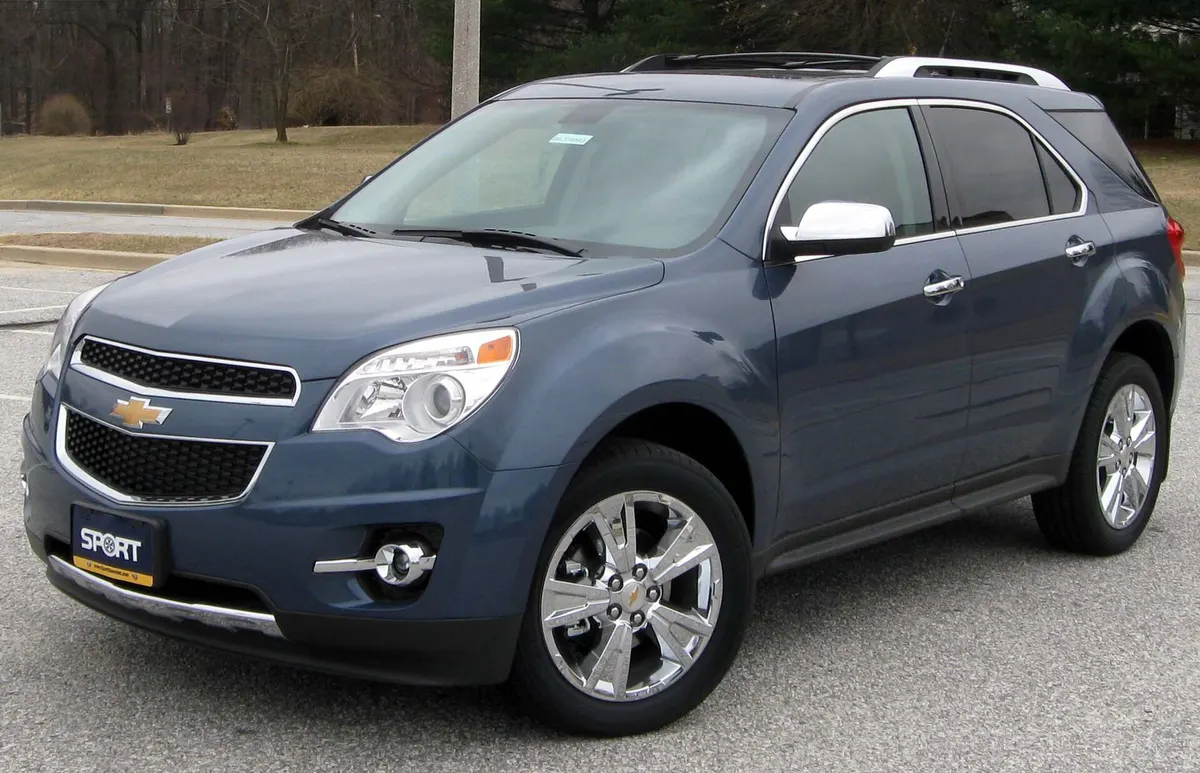
Engines
- LAF / LEA / LUK · 2.4L gasoline, 182 hp
- LF1 (2010) · 3.0L gasoline, 264 hp
- LFX · 3.6L gasoline, 301 hp
Transmissions
- 6T45 · automatic, 6-speed
- 6T70 · automatic, 6-speed
Drivetrain
FWD / AWD
Body
suv
Trims
LS, LT, LTZ, Premier
Chevrolet Equinox part-number cross-reference
Start from the OEM number, then pick the brand you trust. Verified equivalents for the Chevrolet Equinox (2010–2017).
Part links go to Amazon, and to eBay where Amazon does not stock the part. Affiliate links, so we may earn a commission if you buy. Your price is unchanged, and a commission never changes a verdict.
Oil filter
Verified via: Crossfilters: Wix 57082 replaces GM 12605566 / ACDelco PF457G, Amazon: ECOGARD X5436 fits Chevrolet Equinox 2.4L 2010-2017, Walmart: ACDelco PF457G fits 2010-2017 Chevrolet Equinox
Oil filter
ACDelco
GM's 2011–2015 books. The 2016–2017 books list the PF63E (GM 19330000)
See ACDelco oil filter on AmazonACDelco
GM bulletin 17-NA-157 names the PF64 and PF63 as 22 PSI bypass filters and the look-alike PF48/PF48E as 15 PSI
Compare ACDelco oil filterWix
correct 22 PSI cross. DO NOT use Wix 57045 or 57060. Both are lower-bypass (15 PSI) and are mis-crossed to this vehicle
Find Wix oil filterVerified via: eBay: GM ACDelco PF63 for 2013-2016 Chevrolet Equinox LTZ V6-3.6L, Oilfilter-crossreference: ACDelco PF63 crosses (Wix 57502, Fram PH10575, Purolator L22500), LN Engineering: GM oil filter bulletin 17-NA-157 (22 PSI bypass required; do not substitute PF48/PF48E), NHTSA: GM bulletin 17-NA-157 (2012–2024 engines incl. LEA and LFX)
Engine air filter
GM (ACDelco)
Compare GM engine air filter on AmazonVerified via: GMPartsGiant: OEM air filter 23335811 fits 2.4L/3.0L/3.6L, 2010-2017, PartsGeek: Wix 49727 for 2010-2017 Chevrolet Equinox, PartsGeek: Fram CA10465 for 2010-2017 Chevrolet Equinox
Cabin air filter
Verified via: GMPartsGiant: OEM cabin filter 20901295 fits 2010-2017 all engines (replaces 19130294), Walmart: Fram CF11819 fits 2010-2017 Chevrolet Equinox
Spark plugs
NGK
Laser Iridium; direct cross to ACDelco 41-108. Do not substitute the generic BKR6EIX/4344 catalogs list, the wrong heat range for this DI engine
Find NGK spark plugsVerified via: Walmart: ACDelco 41-108 fits 2010-2017 Chevrolet Equinox / GMC Terrain, Sparkplug-crossreference: ACDelco 41-108 -> NGK ILTR5C11, GMPartsGiant: OEM 2.4L plug GM 12681658
Spark plugs
Verified via: Chevrolet Parts: ACDelco Iridium 12681660 (41-109), Texan Supply: ACDelco 41-109 (12681660) for GM 3.0L/3.6L V6, GMPartsGiant: OEM V6 plug GM 12681660
Front brake pads
Verified via: GMPartsGiant: OEM front pad set 23214903 fits 2010-2017 all engines, PartsGeek: Bosch BC1421 front set, 2010-2017 Equinox, PartsGeek: Centric 103.11250 front set, 2010-2017 Equinox
Wiper blades
Fitment note
Same 24/17/13 sizes across 2010-2017; fits Trico, Bosch, Michelin, Rain-X beam blades
Check Fitment note wiper bladesVerified via: AutoPadre: Chevrolet Equinox wiper sizes (24/17 front, 13 rear), AllWiperSize: Chevrolet Equinox windshield & rear wiper sizes
Serpentine belt
Verified via: VBeltGuys: 2010 Equinox 2.4L serpentine belt (Gates K050404, 5-rib), PartsGeek: Bando 5PK1030 accessory drive belt, 2010-2017 Equinox, Sixity: Dayco serpentine belt, 2010-2016 Equinox 2.4L
Serpentine belt
Verified via: eBay: Gates serpentine belt for 2013-2017 Chevrolet Equinox V6-3.6L, Sixity: Gates Micro-V belt, 2010-2016 Equinox 3.0L/3.6L V6, Amazon: Gates FleetRunner Micro-V, Equinox 3.0L/3.6L V6 2010-2017
Battery
BCI group size
See BCI group size battery on AmazonAlternate fitment
some listings show Group 47/H5 as an alternate; typical spec ~700-730 CCA, AGM-capable
Compare Alternate fitment batteryVerified via: AutoPadre: Chevrolet Equinox battery group size (48/H6), AutoZone: Chevrolet Equinox battery by group size
Should I buy a 2010–2017 Chevrolet Equinox?
Buy with your eyes open, and lean toward later years. The 2nd-gen Equinox is a genuinely comfortable, spacious, cheap-to-buy used SUV, but the 2.4L four-cylinder's oil-consumption defect is the single thing that turns a bargain into a blown engine. On a 2.4L car (any year, but worst on 2010–2013), you must verify oil consumption and whether the class-action piston repair was done. A 2015–2017 2.4 with documented low oil use, or any 3.6L V6 car, is the safer pick. Always buy one with maintenance records; this is not a car to gamble on with an unknown history.
Best years
2016, 2017
Years to avoid
2010–2013 (2.4L oil-consumption / piston-ring defect), 2010–2011 (highest overall complaint volume)
Pre-Purchase Checklist for Chevrolet Equinox
- ☐On any 2.4L car: check the oil level and condition cold, then ask the seller how often they add oil. A quart every 1,000–2,000 miles is the defect, not normal use.
- ☐Pull the dipstick and look at the oil; a low, dark, or burnt-smelling level on a 'just changed' car is a red flag.
- ☐On 2010–2013 2.4L cars, ask whether GM's oil-consumption piston repair (class-action / special coverage) was performed. A Chevy dealer can check by VIN.
- ☐Cold-start the engine and listen for rattle on startup or a knock, signs of timing-chain wear or low oil pressure from oil burning.
- ☐Watch for blue smoke from the exhaust on a hard throttle or after idling. That's burning oil.
- ☐Test both windshield wipers through a full cycle; a dead wiper is a known failure (GM extended coverage).
- ☐Drive at highway speed and listen for a wheel-bearing hum that rises with speed; check for ABS/StabiliTrak warning lights.
- ☐Test the A/C on a hot day. Compressor failures are common and not cheap.
Common Chevrolet Equinox problems & repair costs
2.4L Ecotec excessive oil consumption (worn piston rings)
$150–$6,000Symptoms: Oil level drops fast with no external leak, often a quart every 1,000–2,000 miles. Low-oil light, engine knock, fouled spark plugs, blue exhaust smoke, and in late stages bearing or timing-chain damage and engine failure.
Fix: GM tied the defect to faulty piston rings and settled a class action (~$42M) covering 2010–2013 Equinox/Terrain 2.4L cars with free piston-assembly replacement and reimbursement, within mileage/time limits (e.g. 2010: 10 yr/120k mi; 2011–2013: 7.5 yr/120k mi). Out of coverage, the fix ranges from a PCV/valve-cover repair (low hundreds) to a full piston-and-ring job or engine replacement (thousands).
Sources: CarComplaints: GM oil consumption settlement finalized, CarComplaints: Chevy Equinox Ecotec oil consumption lawsuit, GM Authority: settlement reached in oil-burn lawsuit
Timing-chain wear & camshaft actuator solenoid faults
$60–$2,500Symptoms: Rattle on cold start, check-engine light with cam-timing codes (P0010/P0011/P0013/P0014), rough running, hesitation, hard starting. On oil-burning 2.4 cars the chain wears early because the engine runs low on oil.
Fix: A faulty camshaft position actuator solenoid is a cheap part (~$50–$60) and an easy fix. A worn timing chain is the expensive end. A full timing-chain kit job runs well into four figures, and it's a common downstream casualty of the oil-consumption problem.
Sources: Samarins: Equinox 2010-2017 common problems, NHTSA complaints: Chevrolet Equinox
Windshield wiper failure
$150–$450Symptoms: One or both wipers stop moving. The motor runs but the linkage doesn't drive the arm. A safety problem in rain or snow.
Fix: The wiper transmission (linkage) socket separates. GM issued a special-coverage adjustment extending the warranty on this to 10 years / 150,000 miles. Out of coverage, replace the wiper transmission/linkage assembly.
Sources: Samarins: Equinox 2010-2017 common problems, NHTSA complaints: Chevrolet Equinox
Wheel-bearing failure
$250–$500Symptoms: Humming or growling that rises with road speed, sometimes louder when turning. Can trigger ABS and StabiliTrak warning lights as the wheel-speed sensor in the hub fails.
Fix: Replace the affected hub/bearing assembly (about 1–1.5 hours labor each). A common wear item on this generation; budget per corner.
A/C compressor failure
$550–$1,100Symptoms: A/C blows warm; sometimes a noise from the compressor clutch. If the compressor fails internally it can send debris through the whole system.
Fix: Compressor replacement, often with a system flush and the receiver/drier if the old unit grenaded internally.
The big variable is the engine. A clean 3.6L V6 or a 2.4L that's been confirmed not to burn oil is cheap to own. Parts are everywhere, it's a mainstream GM platform, and most spend is ordinary wear (brakes, wheel bearings, a possible A/C compressor, the wiper linkage). A 2.4L that burns oil is the opposite: even if you stay on top of it by topping off, you risk a fouled engine, a worn timing chain, or a full rebuild. Whatever you save buying a cheap oil-burner you'll spend back, and then some. Budget the four-figure numbers only for an at-risk 2.4 engine.
Cost calculator
What will this Chevrolet Equinox cost you by a given mileage?
Drag to a mileage. We total the documented problems whose typical onset falls at or before it. The same cost ranges listed above, nothing new invented.
$0 estimated repair range
5-Year Maintenance Schedule & Cost to Own
Every scheduled service by mileage, fluid capacities, independent shop ranges, and parts cross-references.
Have a repair quote for this Chevrolet Equinox?
Audit against OEM book times, uncover duplicate pad and rotor labor, and verify parts markups.
How to fix common Chevrolet Equinox problems (DIY)
Replace camshaft position actuator solenoid
Tools: Socket set (8–13mm), Torque wrench, OBD-II scanner (to read/clear cam-timing codes)
- Scan for codes to confirm which actuator solenoid (intake or exhaust) is at fault (P0010/P0011/P0013/P0014).
- Locate the solenoid(s) on the cylinder-head end; remove the engine cover and any harness in the way.
- Unplug the connector and unbolt the solenoid, catching any oil that seeps out.
- Clean the bore, install the new solenoid with a fresh seal, and torque to spec.
- Reconnect the connector, clear the codes, and test-drive to confirm the light stays off.
Parts
- Camshaft position actuator solenoid (2.4L Equinox) · Amazon $25–$60
Replace a front wheel-bearing / hub assembly
Tools: Floor jack + jack stands, Socket set + breaker bar, Torque wrench, Large axle nut socket (30–36mm)
- Loosen the axle nut and lug nuts, then raise and support the front, and remove the wheel.
- Remove the brake caliper, bracket, and rotor and hang the caliper out of the way.
- Unbolt the hub/bearing assembly from the back of the knuckle and disconnect the ABS sensor.
- Pull the old hub off the axle splines; clean the mounting face.
- Install the new hub assembly, torque the bolts and the axle nut to spec, and reassemble the brakes.
- Test-drive and confirm the hum is gone and no ABS/StabiliTrak light returns.
Parts
- Front wheel hub & bearing assembly (Equinox) · Amazon $45–$90
Engine + cabin air filter change
Tools: Screwdriver (cabin filter access)
- Open the glovebox, release the side stops to drop it down, and pull the cabin filter cover.
- Slide out the old cabin filter and insert the new one with the airflow arrow pointing down.
- For the engine filter, unclip the airbox lid, drop in the new panel filter, and re-clip.
Parts
- Cabin air filter (Equinox) · Amazon $8–$15
- Engine air filter (Equinox) · Amazon $12–$22
Some parts links are affiliate links. We may earn a commission at no cost to you. We only list parts that fit this generation.
The short version
The 2010–2017 Chevrolet Equinox is a comfortable, roomy, cheap-to-buy used SUV with one defect big enough to define the whole generation: the 2.4L Ecotec four-cylinder burns oil. Worn piston rings let early 2010–2013 engines drink a quart every 1,000–2,000 miles. Run low on oil long enough and you get engine knock, fouled spark plugs, a worn timing chain, and eventually a dead engine.
It got bad enough that GM settled a class action (about $42 million) and replaced pistons for free on covered 2010–2013 Equinox and GMC Terrain cars, within mileage and time limits that most cars have now aged out of.
That single issue is the difference between a $7,000 SUV that runs for years and a $7,000 SUV that needs a $5,000 engine.
What that means when you’re shopping
If you’re looking at a 2.4L car (any year, but especially 2010–2013), treat oil consumption as the first thing to clear. Check the oil cold, ask point-blank how often the seller adds a quart, and look for startup rattle or blue smoke. A Chevy dealer can check by VIN whether the class-action piston repair was already performed; a car with that repair documented is arguably safer than one that was never touched.
If you want the lower-stress version of this SUV, look at a 3.6L V6 car. The V6 engines don’t share the 2.4’s piston-ring defect. You trade some fuel economy for skipping the headline problem. A 2015–2017 car of either engine is the better-sorted end of the run.
Everything else here is ordinary used-Equinox stuff: a windshield-wiper linkage that can quit (GM extended coverage on it), wheel bearings that hum at highway speed, and an A/C compressor that may be living on borrowed time. None of those should scare you off. They’re well understood and not bank-breaking. The oil-burning 2.4 is the one that is.
How this file is built: failure modes and cost ranges are compiled from NHTSA complaint data, the GM oil-consumption class-action settlement and special-coverage actions, and owner reporting, then sanity-checked against shop-floor experience. Cost figures are independent-shop estimates and vary by region. Spot something off? Tell us.
Viral car myths, checked against this car
- Misleading
Is the "$1 Japanese oil trick" that stops engine wear forever real?
The 'Japanese oil trick' is almost certainly MoS2 (molybdenum disulfide), a real industrial friction modifier. It is German, not Japanese (Liqui Moly popularized it), sold openly at every parts store for $15-20, has real but modest measured friction benefits, and was never buried by anyone.
- Dangerous
Is the "$2 liquid that destroys engine sludge forever" real? Our shop-floor verdict.
An aggressive solvent flush on a high-mileage engine is a textbook way to spin a bearing. The viral 'kitchen-cabinet flush' is folklore that real shops spend money cleaning up after.
Frequently asked questions
Which Chevy Equinox years should I avoid?
The 2010–2013 cars with the 2.4L Ecotec four-cylinder are the ones to be careful with. That's the engine and the years tied to the excessive oil-consumption defect from worn piston rings. 2010 and 2011 also carry the highest overall complaint volume. The 2015–2017 cars are the safer used buy, and any V6 (3.0L or 3.6L) avoids the oil-burning issue.
Is the Equinox oil-consumption problem covered by GM?
GM settled a class action (around $42 million) over the 2.4L oil consumption on 2010–2013 Equinox and GMC Terrain models, offering free piston-assembly replacement and reimbursement within mileage and time limits (for example 10 years/120,000 miles on 2010s, 7.5 years/120,000 miles on 2011–2013s). Many cars are now outside those windows, so the repair would be on you. That is exactly why you check before buying.
How do I know if an Equinox 2.4 is burning oil?
Check the oil cold and ask the seller how often they add a quart. Burning a quart every 1,000–2,000 miles is the defect. Other tells are a low-oil light, engine knock or startup rattle, fouled spark plugs, and blue smoke from the exhaust on hard acceleration. A 2.4 that needs regular topping off is a car to walk away from unless the piston repair was already done.
Is the V6 Equinox more reliable than the four-cylinder?
On the oil-consumption issue, yes. The 3.0L and especially the 3.6L V6 don't share the 2.4L's piston-ring defect, so they sidestep the headline problem. The trade-off is fuel economy and slightly higher running costs. If you can find a well-kept 3.6L car, it's often the lower-stress used buy.
How many miles will a 2nd-gen Equinox last?
A V6 car, or a 2.4 that doesn't burn oil and has been maintained, can comfortably reach 150,000–200,000 miles. The engines that don't make it that far are almost always the oil-burning 2.4s that ran low on oil and chewed up the timing chain or bearings. Condition and oil history matter far more than the odometer here.
Every Chevrolet Equinox generation
The full case file run, beyond the generation before and after this one.
Cross-shopped rivals
Files on what buyers weigh against the Chevrolet Equinox of this era.