Case file · FORD-ESCAPE-2013-2019 · 3rd gen (C520)
Ford Escape 2013–2019Common problems, reliability & repair costs
The third-gen Escape sold in huge numbers and drives nicely, but it carries two expensive, well-documented liabilities: the EcoBoost coolant-intrusion problem (coolant seeps into the cylinders, causing misfires, overheating, and in the worst cases engine fires) and a fragile 6F35 automatic that shudders and fails. Early 2013–2014 cars are the riskiest. Buy a clean later one with the right engine and it's fine; buy carelessly and you're facing a $4,000 engine or transmission.
2017, 2018, 2019
2013 (worst year: engine-fire recalls + transmission failure +2 more
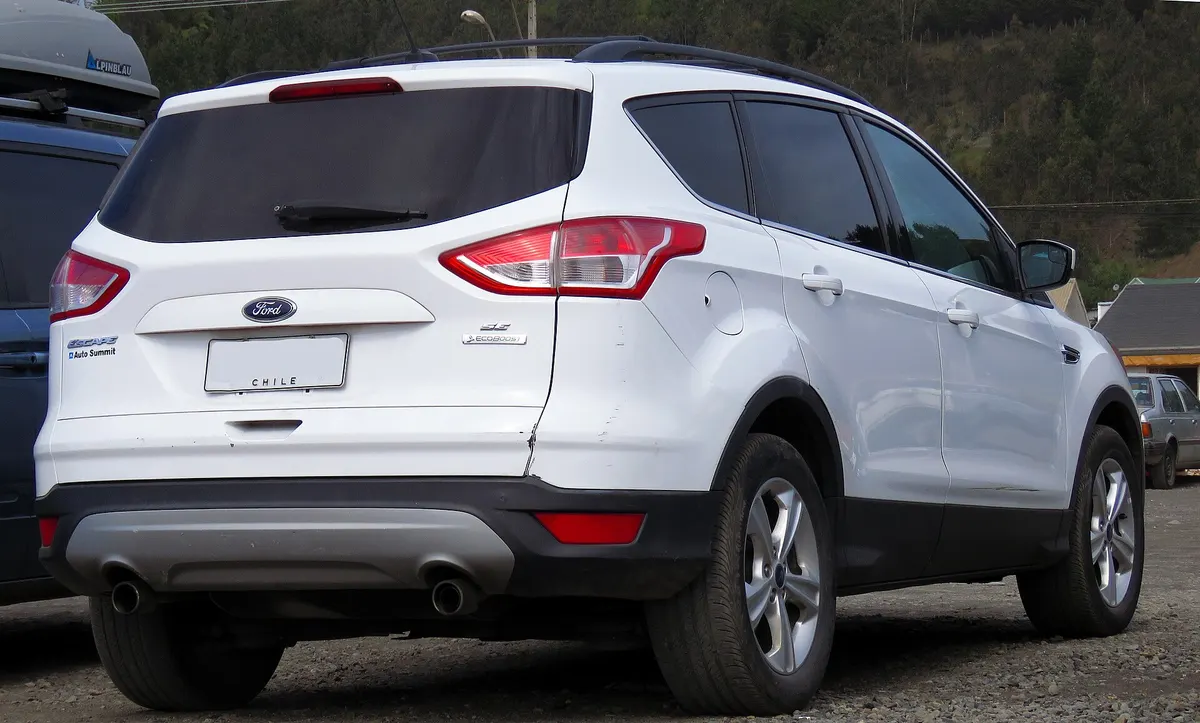
Engines
- 1.6L EcoBoost (JTBA) · 1.6L gasoline, 178 hp
- 2.0L EcoBoost (R9DA) · 2.0L gasoline, 240 hp
- 2.5L Duratec (iVCT) · 2.5L gasoline, 168 hp
- 1.5L EcoBoost · 1.5L gasoline, 179 hp
Transmissions
- 6F35 · automatic, 6-speed
Drivetrain
FWD / AWD
Body
SUV (5-door)
Trims
S, SE, SEL, Titanium
Ford Escape part-number cross-reference
Start from the OEM number, then pick the brand you trust. Verified equivalents for the Ford Escape (2013–2019).
Part links go to Amazon, and to eBay where Amazon does not stock the part. Affiliate links, so we may earn a commission if you buy. Your price is unchanged, and a commission never changes a verdict.
Oil filter
Motorcraft
Ford OE BE8Z-6731-AB. This is the 3rd-gen filter. NOTE: the taller FL-500S is the 2008-2012 (2nd-gen) 2.5L filter. Do NOT use it on a 2013-2019 car
Find Motorcraft oil filter on AmazonVerified via: FSWERKS: FL-910S Escape fitment (1.6L 2013-2016, 2.0L 2013-2019, 2.5L 2014-2019), CarsSimplified: FL-910S / BE8Z-6731-AB cross reference (Wix 51348, Fram PH3614, Bosch 3330, Purolator L10241, ACDelco PF53), Oilfilter-crossreference: Motorcraft FL910S (Fram PH3614, Mann W7015), Walmart: Wix 51348MP fits 2013-2018 Ford Escape / Focus
Engine air filter
Motorcraft
Ford OE CV6Z-9601-A; tall square element shared with Focus/C-Max/MKC EcoBoost. Different from the 2.5L filter
Check Motorcraft engine air filter on AmazonVerified via: FordPartsGiant: 2016 Escape air filter (CV6Z-9601-A = 1.5L/1.6L/2.0L EcoBoost), Airfilter-crossreference: Motorcraft FA1908 (Fram CA11114, Wix 49017, K&N E-2993)
Engine air filter
Motorcraft
Ford OE CJ5Z-9601-A. The 2.5L uses this, NOT the EcoBoost CV6Z-9601-A / FA-1908
Look up Motorcraft engine air filter on AmazonVerified via: FordPartsGiant: 2016 Escape air filter (CJ5Z-9601-A = 2.5L Duratec), Airfilter-crossreference: Motorcraft FA1910 (Fram CA11456, Baldwin PA4470, Hastings AF1556, Luber-finer AF6910), Highfil: OE Motorcraft FA1910 / Ford CJ5Z-9601-A (Mann C21102, Purolator A26199)
Cabin air filter
Motorcraft
Ford OE CV6Z-19N619-A; shared with 2012-2018 Focus
Look up Motorcraft cabin air filter on AmazonVerified via: Walmart: Motorcraft FP-70 fits 2013-2019 Ford Escape, 2012-2018 Focus, Airfilter-crossreference: Motorcraft FP-70 (Fram CF11920, Wix 24419, Purolator C36174, NAPA 4419)
Spark plugs
Motorcraft
Iridium; Ford OE AYFS-32Y-R (superseded to AYFS-32Y-RX)
See Motorcraft spark plugs on AmazonVerified via: FordPartsGiant: Escape spark plug (AYFS-32Y-R = 2.5L Duratec), AFA-Motors: Motorcraft SP-530 iridium = AYFS-32Y-R (Ford Escape / Lincoln MKZ 2.5L)
Spark plugs
Motorcraft
Ford/Motorcraft iridium, superseded to CYFS-13Y-RCX. Turbo-specific. Do NOT use the 2.5L plug. (SP-542 is the 2.7L EcoBoost Edge plug, not this engine.)
Compare Motorcraft spark plugs on AmazonVerified via: FordPartsGiant: Escape spark plug (CYFS-13Y-RC = 1.6L EcoBoost SCTi, 2013-2016), Levittown Ford: Spark Plug 1.6L EcoBoost CYFS-13Y-RCX
Spark plugs
Motorcraft
Iridium; Ford OE CYFS-12Y-2, superseded to SP-550X / CYFS-12Y-PCTX
Find Motorcraft spark plugs on AmazonVerified via: FordPartsGiant: Escape spark plug (CYFS-12Y-2 = 2.0L EcoBoost 240PS, 2013-2019), Amazon: SP-537 / CYFS-12Y-2 iridium plug, Ford Escape/Focus/Lincoln
Spark plugs
Motorcraft
Iridium; Ford OE HYFS-094-YEC, superseded to SP-539X / HYFS-094-YECX. Replaced the 1.6L for 2017+
Look up Motorcraft spark plugs on AmazonVerified via: FordPartsGiant: Escape spark plug (HYFS-094-YEC = 1.5L EcoBoost 180PS, 2017-2019), Amazon: SP-539 / HYFS-094-YEC iridium plug, 2017-2019 Escape 1.5L / Fusion
Front brake pads
Motorcraft
Ford OE CV6Z-2001-L (base front pad, shared with 2013-2018 Focus). The 2.0L EcoBoost / AWD / Titanium with the larger front rotors uses Ford CV6Z-2001-N instead. WARNING: the 1611-family pads (Motorcraft BR-1611, Wagner ZD1611/OEX1611) are the Explorer/Flex/Taurus front pad and do NOT fit the Escape
Check Motorcraft front brake pads on AmazonFord
Larger front pad set, the kit Ford lists as fitting the 2.0L EcoBoost (as well as other trims); use on cars with the bigger front rotors
See Ford front brake padsRaybestos
Element3 ceramic; verified 2013-2016 Escape / 2014-2018 Focus SE (base brakes)
Compare Raybestos front brake padsVerified via: FordPartsGiant: Escape front brake pads (CV6Z-2001-L base vs CV6Z-2001-N incl. 2.0L EcoBoost), OEM Parts Online: 2013-2019 Escape front pads CV6Z-2001-L, Walmart: Motorcraft BRF-13 fits 2013-2016 Escape / 2012-2018 Focus, Walmart: Raybestos Element3 EHT1095H fits 2013-2016 Escape / 2014-2018 Focus SE
Wiper blades
OE size
Rear window blade is 11 in. Any 28-inch beam/OE-hook front blade fits; confirmed identical across the 1.6 EcoBoost, 2.5i, and 2.0 EcoBoost trims. (Some listings wrongly show 26/16 in; that is incorrect for this vehicle.)
Look up OE size wiper blades on AmazonVerified via: WiperSizeChart: 2016 Ford Escape 28"/28" front, 11" rear (all trims), Wiper Blades USA: 2016 Ford Escape wiper size chart (28"/28"/11")
Serpentine belt
Verified via: Ford.com: Serpentine Belt 2.5L (JK6833), FordPartsGiant: Escape serpentine belt (CV6Z-8620-B = 2.5L Duratec)
Serpentine belt
Ford
Motorcraft-boxed; 1.6L EcoBoost SCTi. Different length from the 2.5L and 2.0L belts
See Ford serpentine belt on AmazonVerified via: FordPartsGiant: Escape serpentine belt (BM5Z-8620-B = 1.6L EcoBoost, 2013-2016), Genuine Ford Escape serpentine belt catalog (by engine)
Serpentine belt
Ford
Motorcraft-boxed; current Ford number for the 2.0L EcoBoost (240PS) accessory belt
Compare Ford serpentine belt on AmazonVerified via: FordPartsGiant: Escape serpentine belt (GJ5Z-8620-A = 2.0L EcoBoost 240PS), eBay: 2013-2020 Ford Escape 2.0L serpentine belt fitment
Serpentine belt
Ford
Motorcraft-boxed; 1.5L EcoBoost. F1FZ-8620-A is a superseded/early number
Find Ford serpentine belt on AmazonVerified via: FordPartsGiant: Escape serpentine belt (F1EZ-8620-A = 1.5L EcoBoost, 2017-2019), Genuine Ford Escape serpentine belt catalog (by engine)
Battery (2.5L; 2013-2016 EcoBoost)
Motorcraft
Group 96R, ~590 CCA (top-post, reverse polarity). BXT-96R-500 is the 500-CCA variant. Any BCI group 96R battery (Duralast/EverStart/DieHard 96R) fits
Look up Motorcraft battery on AmazonVerified via: Ford.com: Motorcraft Group Size 96 battery BXT-96R-590 (590 CCA), AutoZone: 2016 Ford Escape battery (group 96R)
Battery (1.5L and 2.0L EcoBoost, 2018-2019)
Motorcraft
Group 48 (H6) AGM. The 2018 and 2019 owner's manuals list only this battery for the 1.5L and 2.0L
Check Motorcraft battery on AmazonVerified via: Ford 2018 Escape owner's manual (battery specification), Ford 2019 Escape owner's manual (battery specification), FordPartsGiant: Motorcraft BAGM-48H6-760
Should I buy a 2013–2019 Ford Escape?
Buy only with eyes open. The 2.5L non-turbo cars are the safe pick: no EcoBoost coolant-intrusion exposure and the simplest powertrain. If you want an EcoBoost (most of them are), pick a later 1.5L or 2.0L, demand records, and confirm the coolant level holds and there's no white exhaust or unexplained misfire. On every year, the 6F35 transmission is the other shoe. Test for shudder and harsh shifts hard. Avoid 2013–2014 unless the price reflects the risk; those are the worst years for both the engine and the transmission.
Best years
2017, 2018, 2019
Years to avoid
2013 (worst year: engine-fire recalls + transmission failures), 2014 (transmission failures peak ~70k mi), Any 1.6L EcoBoost unless coolant-intrusion history is documented clean
Pre-Purchase Checklist for Ford Escape
- ☐Identify the engine first. 2.5L (non-turbo) is lowest-risk; 1.6L EcoBoost is highest-risk. Open the cap and check for the engine code.
- ☐On any EcoBoost: check the coolant reservoir level and look for unexplained coolant loss, white/sweet-smelling exhaust, or a rough cold idle. Those are the coolant-intrusion tells.
- ☐Run the VIN through NHTSA and a Ford dealer for open recalls. Early 1.6L cars had multiple fire-related recalls; confirm the fixes were performed.
- ☐Test-drive at highway speed and feel for a shimmy/shudder around 40–55 mph and on light throttle. That's classic 6F35 torque-converter shudder.
- ☐Force a few stop-and-go shifts; harsh banging, slipping, or hesitation points to a failing transmission.
- ☐Check that all four doors latch firmly. A generation-wide door-latch recall covered pawl-spring breakage that let doors pop open.
- ☐Confirm the power steering feels normal at all speeds; EPAS (electric power steering) failure is a common, ~$1,500 complaint on these.
Common Ford Escape problems & repair costs
EcoBoost coolant intrusion / engine fires
$3,000–$7,000Symptoms: Slowly disappearing coolant with no external puddle, rough running or misfire (cylinder fills with coolant), overheating, white sweet-smelling exhaust. Worst case: coolant evaporating on a hot engine has ignited and caused engine-bay fires. Early 1.6L cars had a separate fire risk from a dislodged cylinder-head cup plug.
Fix: First check open recalls. Early 1.6L Escapes were recalled for the cup-plug/fire issue and Ford performed coolant-system fixes. Where coolant has entered a cylinder, the realistic repair is a short-block or full engine replacement. Some owners pursued the EcoBoost coolant-intrusion class action; coverage on any given car varies.
Sources: NHTSA recalls/complaints: 2013 Ford Escape, ClassAction.org: Ford EcoBoost coolant/overheating, Green Car Reports: Escape 1.6L EcoBoost recall roundup
6F35 automatic transmission shudder & failure
$3,200–$5,500Symptoms: Torque-converter shudder/vibration at highway speed and on light throttle, harsh or banging shifts, slipping, hesitation, warning lights, and in the worst reports the car losing drive entirely on the road.
Fix: Catch early: a fluid service and TCM recalibration can quiet mild shudder. Once friction material is gone or metal is in the fluid, the fix is a rebuilt or remanufactured 6F35 (commonly $3,200–$4,500 for the unit, more with torque converter and labor). Dealer trans-and-converter jobs have run toward $8k.
Sources: CarComplaints: 2013 Escape transmission failure, FordProblems: 3rd-gen Escape problems
Electric power steering (EPAS) failure
$1,000–$1,800Symptoms: Sudden loss of power-steering assist, so the wheel goes heavy, often with a 'power steering assist fault' warning. Intermittent at first for some owners.
Fix: Diagnose the cause; the common fix is replacing the electric steering rack/EPAS unit (or, on some, the steering column/sensor). Check for any applicable Ford service action by VIN before paying out of pocket.
Sources: CarComplaints: 2013 Escape steering, FordProblems: 3rd-gen Escape problems
Door-latch pawl-spring breakage (recall)
$0–$300Symptoms: A door that won't stay latched, or that appears closed but isn't, and can open while driving. Caused by a broken pawl spring inside the latch.
Fix: Covered by a large Ford recall. Affected latches were replaced free. Confirm the recall work was done by VIN; out of coverage, it's a per-door latch replacement.
Sources: Ford recall details: Escape, CarComplaints: 2013 Escape recalls
Engine stalling while driving
$300–$1,200Symptoms: Engine cuts out or shuts down while driving, sometimes with a check-engine light; frequently tied back to the EcoBoost cooling/overheating issues or related sensor faults.
Fix: Diagnose the trigger. It could be the coolant-intrusion chain of events, a sensor, or a fuel-delivery fault. Address any open recalls first, as several stalling reports trace to the same cooling defect.
Sources: CarComplaints: 2013 Escape engine, FordProblems: 3rd-gen Escape problems
The big two, a coolant-intruded EcoBoost or a failed 6F35, are the line items that decide whether this Escape is cheap or ruinous to own, and either can hit $3,000–$7,000. Outside of those, running costs are ordinary compact-SUV stuff: brakes, tires, the occasional sensor, and routine service. Parts are plentiful and cheap because Ford sold so many. The smartest money move is buying the lowest-risk powertrain (2.5L non-turbo) and staying religious about transmission-fluid service to keep the 6F35 alive.
Cost calculator
What will this Ford Escape cost you by a given mileage?
Drag to a mileage. We total the documented problems whose typical onset falls at or before it. The same cost ranges listed above, nothing new invented.
$0 estimated repair range
5-Year Maintenance Schedule & Cost to Own
Every scheduled service by mileage, fluid capacities, independent shop ranges, and parts cross-references.
Have a repair quote for this Ford Escape?
Audit against OEM book times, uncover duplicate pad and rotor labor, and verify parts markups.
How to fix common Ford Escape problems (DIY)
Replace the engine air filter & cabin air filter
Tools: Flat screwdriver (airbox clips), Shop towel
- Pop the airbox clips on the engine air filter housing and lift the lid.
- Remove the old panel filter, note its orientation, and drop the new one in.
- Re-clip the airbox lid securely.
- For the cabin filter, open the glovebox, release the side stops to drop it down, and pull the filter cover behind it.
- Slide out the old cabin filter and insert the new one with the airflow arrow pointing the correct way.
Parts
- Engine air filter (3rd-gen Escape) · Amazon $12–$22
- Cabin air filter (3rd-gen Escape) · Amazon $10–$18
Transmission fluid drain & fill (6F35 maintenance)
Tools: Floor jack + jack stands, Socket set + Torx bits, Fluid pump / funnel, Drain pan
- Warm the transmission to operating temp, then safely raise and level the vehicle.
- Remove the drain plug (or pan) and drain the old fluid, measuring what comes out.
- Reinstall the drain plug with a new crush washer, or refit the pan with a new gasket and filter.
- Refill with the exact Mercon-LV-spec fluid, matching the drained quantity through the fill port.
- Check level per Ford's temperature-based procedure, then road-test for smooth shifts.
Parts
- Mercon LV automatic transmission fluid · Amazon $30–$55 (case)
- 6F35 transmission filter / pan gasket kit · Amazon $20–$45
Replace spark plugs (EcoBoost)
Tools: Spark plug socket + extension, Torque wrench, Ratchet set, Dielectric grease
- Let the engine cool fully, then remove the engine cover and any intake piping in the way.
- Unbolt and lift each coil-on-plug, labeling them by cylinder.
- Remove each old plug, check it for coolant fouling (a coolant-intrusion warning sign), and gap the new plugs to spec.
- Thread new plugs in by hand, then torque to the EcoBoost spec. Do not overtighten the aluminum head.
- Refit the coils with a little dielectric grease, reinstall the cover and piping, and start to confirm a smooth idle.
Parts
- Iridium spark plugs (EcoBoost set) · Amazon $30–$60 (set)
Some parts links are affiliate links. We may earn a commission at no cost to you. We only list parts that fit this generation.
The short version
The 2013–2019 Ford Escape is a genuinely pleasant SUV to drive that comes with two genuinely expensive ways to lose money. The first is the EcoBoost coolant-intrusion problem: on the turbocharged 1.6L, 2.0L, and 1.5L engines, coolant can find its way into the cylinders, causing misfires, overheating, and in the worst documented cases engine-bay fires. The early 1.6L cars were recalled multiple times for fire risk, and the broader defect became the subject of class-action litigation.
The second is the 6F35 six-speed automatic, the only transmission this generation uses. It’s prone to torque-converter shudder and to failing outright, most often on 2013–2014 cars and frequently around 70,000–80,000 miles. The average transmission repair runs about $4,400.
What that means when you’re shopping
Start by identifying the engine. The 2.5L non-turbo (base S trim) is the low-risk choice: no EcoBoost coolant exposure, simplest design. Most Escapes are EcoBoosts, though, so if that’s what you’re looking at, pick a later 1.5L or 2.0L, demand maintenance records, and confirm the coolant level holds with no white exhaust, sweet smell, or rough cold idle.
Then test the transmission like you mean it. Get it to highway speed and feel for a shimmy around 40–55 mph; force some stop-and-go shifts and watch for banging, slipping, or hesitation. A car that shudders is telling you the bill is coming.
Run the VIN through NHTSA and a Ford dealer for open recalls. The early 1.6L fire recalls and the generation-wide door-latch recall both matter, and you want the fixes confirmed. Everything else is ordinary compact-SUV ownership: brakes, tires, the odd sensor, and an electric-steering unit that occasionally quits. Avoid 2013–2014 unless the price already reflects the risk.
How this file is built: failure modes and cost ranges are compiled from NHTSA complaint and recall data, CarComplaints and FordProblems reporting, Ford’s own recall actions, EcoBoost coolant-intrusion litigation coverage, and owner-forum experience, then sanity-checked against shop-floor reality. Cost figures are independent-shop estimates and vary by region. Spot something off? Tell us.
Viral car myths, checked against this car
- Misleading
Is the "$2 liquid that stops any leak" really banned in 11 states?
Automotive stop-leak products are not banned in any US state. The products are real (Bar's Leaks, BlueDevil), they work in specific narrow situations, and they can permanently damage your cooling or oiling system if applied to the wrong leak.
- Misleading
Is the "$1 Japanese oil trick" that stops engine wear forever real?
The 'Japanese oil trick' is almost certainly MoS2 (molybdenum disulfide), a real industrial friction modifier. It is German, not Japanese (Liqui Moly popularized it), sold openly at every parts store for $15-20, has real but modest measured friction benefits, and was never buried by anyone.
Frequently asked questions
Which Ford Escape years should I avoid?
2013 and 2014 are the years to avoid. The 2013 was recalled multiple times early on (including for engine fires), and both years have the highest rate of 6F35 transmission failures, which tend to hit around 70,000–80,000 miles. Later 2017–2019 cars are the safer used buy.
What is the EcoBoost coolant-intrusion problem?
On Ford's EcoBoost four-cylinders (1.5L, 1.6L, 2.0L), coolant can seep into the cylinders, causing misfires, overheating, and in some cases engine fires. It became the subject of multiple recalls on early 1.6L Escapes and broader class-action litigation. On any EcoBoost Escape, check that coolant level holds and there's no white exhaust or unexplained misfire before buying.
Is the Ford Escape transmission reliable?
The 6F35 six-speed automatic is the weak point across this whole generation. Torque-converter shudder and outright failure are common, with average repair costs around $4,400 near 77,000 miles. Regular transmission-fluid service helps, but test hard for shudder and harsh shifts before you buy.
Which Escape engine is the most reliable?
The 2.5L naturally aspirated Duratec in the base S trim. It's slower and thirstier than the turbos, but it has no EcoBoost coolant-intrusion exposure and the simplest design. If you want low risk, that's the engine to find.
Cross-shopped rivals
Files on what buyers weigh against the Ford Escape of this era.