Case file · TOYOTA-4RUNNER-2025-2026 · 6th gen
Toyota 4Runner 2025–2026Common problems, reliability & repair costs
The 6th-gen 4Runner is a brand-new truck on the TNGA-F platform with the Tacoma's 2.4L turbo four and hybrid, and no long-term reliability record yet. Early ownership has been typical first-model-year stuff: a brake-squeal TSB, a gauge-cluster software recall, and trim rattles. The honest question isn't 'is it reliable,' because nobody knows yet. It's whether you want to be the one finding out.
Too early to call: no model year has a long-term record yet, 2026 builds get the first-year fixes baked in
None proven bad, but early-production 2025s carry the most f
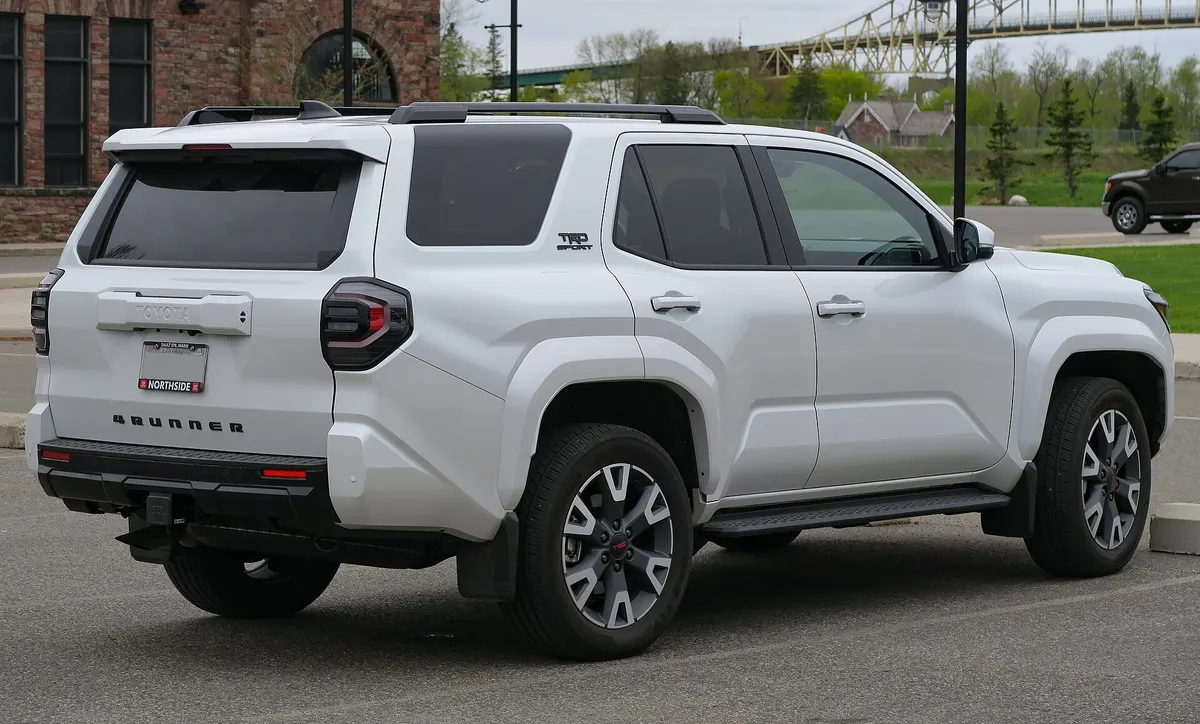
Engines
- T24A-FTS (i-FORCE) · 2.4L turbo gasoline, 278 hp
- T24A-FTS + motor (i-FORCE MAX) · 2.4L turbo hybrid hybrid, 326 hp
Transmissions
- automatic , 8-speed
Drivetrain
RWD / 4WD
Body
suv
Trims
SR5, TRD Sport, TRD Sport Premium, TRD Off-Road, TRD Off-Road Premium, Limited, Platinum, TRD Pro, Trailhunter
Toyota 4Runner part-number cross-reference
Start from the OEM number, then pick the brand you trust. Verified equivalents for the Toyota 4Runner (2025–2026).
Part links go to Amazon, and to eBay where Amazon does not stock the part. Affiliate links, so we may earn a commission if you buy. Your price is unchanged, and a commission never changes a verdict.
Oil filter
Fram
Extra Guard (Ultra Synthetic version XG4967 lists 4Runner 2025-2026 fitment)
Look up Fram oil filterVerified via: YotaXpedition: OEM oil filter 90915-YZZN1 for 4Runner 2025+, Tacoma 2024+, Land Cruiser 2024+ (hybrid and non-hybrid), oilfilter-crossreference.com: Toyota 90915-YZZN1 alternatives (Fram PH4967), FinditParts: FRAM XG4967 cross reference and fitment (Toyota 90915-YZZN1; fits 4Runner 2025-2026, Tacoma 2024-2026; Wix WL10332, Mobil 1 M1-103A, Denso 150-1000)
Engine air filter
Verified via: airfilter-crossreference.com: Toyota 17801-0P051 alternatives, Modern Toyota (dealer): OEM 2011-2026 air filter 17801-0P051, changes to 17801-YZZ11, 4Runner6G forum: factory filter 17801-0P051 superseded by 17801-YZZ11; hybrid TH/Pro filter differs
Cabin air filter
Verified via: 4Runner6G forum: cabin air filter part numbers confirmed by dealer (87139-60030 non-carbon, 87139-30110 carbon), Lakeland Toyota (dealer): 2025 4Runner cabin air filter 87139-60030
Should I buy a 2025–2026 Toyota 4Runner?
This is a provisional score, and that's the whole point: the 6th-gen 4Runner has no long-term record, because it hasn't existed long enough to have one. What early data shows is encouraging-but-ordinary first-year friction: a brake-squeal TSB, a gauge-cluster software recall, rattly trim. Not engine or drivetrain disasters. The real risk is the unproven powertrain: the 2.4L turbo and 8-speed are shared with the 2024+ Tacoma, which needed a transmission-replacement TSB in its first year. If you want maximum certainty per dollar, a clean late 5th-gen (2010–2024) with its known-quantity V6 is still the safer buy. If you want the new truck, buy it. Toyota's warranty covers the discovery period. But go in knowing you're an early adopter, and consider a 2026 over a leftover early-build 2025.
Best years
Too early to call: no model year has a long-term record yet, 2026 builds get the first-year fixes baked in
Years to avoid
None proven bad, but early-production 2025s carry the most first-year TSB/recall exposure
Pre-Purchase Checklist for Toyota 4Runner
- ☐Run the VIN for recall 25V595000 (instrument panel software) and confirm the update was done. It's a free OTA/dealer fix.
- ☐Ask the dealer to check the VIN for open TSBs. First-year trucks accumulate them fast, and the fixes are free under warranty.
- ☐Back up slowly with the windows down and listen for front brake squeal. It's the #1 early complaint, covered by TSB T-SB-0046-25 under the 3yr/36k warranty.
- ☐Drive over rough pavement and listen for the rear spoiler/liftgate rattle and window/trim buzz. These are known first-year build-quality gripes; fixes are cheap but you want them documented before purchase.
- ☐Feel for harsh or delayed 1–2 shifts, hesitation from a stop, or clunky low-speed behavior from the 8-speed. It's the same transmission family that generated a replacement TSB on the 2024 Tacoma. Any doubt: have the dealer scan for codes.
- ☐Check the front air dam and underbody panel fasteners are all present and tight. NHTSA complaints include hardware backing out and panels dislodging at speed.
- ☐On hybrids: the 12V battery lives in the rear cargo area and lot queens can run it down. Watch for slow starts or electrical weirdness on the test drive.
- ☐Sit in the second row and load the cargo area. The 6th gen's hybrid battery raises the load floor, and space is a common owner disappointment versus the 5th gen. That's a fit issue, not a defect, but find out before you sign.
Common Toyota 4Runner problems & repair costs
Front brake squeal, especially in reverse (TSB T-SB-0046-25)
$0–$600Symptoms: Loud squeal from the front brakes, most noticeable when backing up cold, embarrassing-loud, per owners. It's the single most common early complaint: 15+ of the first ~48 NHTSA complaints on the 2025 4Runner are this noise. Braking performance itself is not affected.
Fix: Toyota issued TSB T-SB-0046-25 (July 2025) for 4Runner and 4Runner Hybrid: revised front brake hardware installed free under the 3yr/36k basic warranty. Some owners report the squeal returning until the full TSB parts were fitted. Out of warranty this becomes an ordinary pad/hardware job. Annoyance, not danger. But get it documented at the dealer while it's free.
Sources: NHTSA complaints: 2025 Toyota 4Runner (brake squeal is the top category), 4Runner6G: official brake squeal TSB fix (T-SB-0046-25), OEMDTC: Toyota T-SB-0046-25 service bulletin
Instrument panel software fault: recall 25V595000
$0–$0Symptoms: At startup, the digital instrument panel can fail to display vehicle speed, brake-system warnings, and tire-pressure warning lights. You may notice a blank or partially blank cluster after turning the truck on.
Fix: Free under NHTSA recall 25V595000 (Toyota 25TB08/25TA08): a software update, delivered over-the-air on most trucks or at the dealer. Owner letters went out starting December 2025 in phases. Nothing to fix yourself. Just confirm by VIN that the campaign is closed on any truck you're buying.
Sources: NHTSA recall 25V595000: 2025 4Runner instrument cluster software, Cars.com: 2025 Toyota 4Runner recalls
8-speed transmission, a watch item inherited from the 2024 Tacoma
$0–$7,500Symptoms: On the 4Runner itself: scattered owner reports of harsh or delayed shifting, low-speed clunkiness, and jerky gas/electric transitions on hybrids. No confirmed failure pattern yet. The reason it's on this list is the 2024 Tacoma, which shares this powertrain: early Tacomas suffered harsh shifting, trucks dropping into neutral, and outright transmission failures, which Toyota traced to manufacturing debris and addressed with TSB T-SB-0076-24, replacing the transmission and torque converter on trucks that set specific fault codes.
Fix: Under the 5yr/60k powertrain warranty this costs you nothing. The Tacoma TSB replaced transmission assemblies free when the diagnostic codes were present. The number to fear is the out-of-warranty one: a replacement 8AT runs well into four figures at an independent shop. To be plain: there is no confirmed equivalent failure wave on the 4Runner as of mid-2026. We list it because the hardware lineage is identical and the smart move is a careful test drive plus a dealer code scan, not because your 4Runner is doomed.
Sources: TFLTruck: some 2024 Tacomas need a new transmission and torque converter, Motor1: 2024 Tacoma transmission replacement TSB, 4Runner6G: Tacoma transmission TSB discussion among 6th-gen owners
First-year build quality: rattles, buzzes, and loose exterior hardware
$0–$300Symptoms: Rear spoiler rattle against the liftgate is the signature one; owners also report window and interior trim buzz, and NHTSA complaints describe front air dam and underbody fasteners backing out. In a few cases panels dislodged at highway speed. A persistent rear-seat-reminder nag and occasional wireless CarPlay drops round out the small stuff.
Fix: Dealer fixes under warranty: felt tape or upgraded grommets for the spoiler, re-seating and re-torquing loose trim and underbody hardware, software updates for the electronics nags. None of it is expensive; all of it is the tax of a first-year truck. Walk the truck and check fastener tightness at every service until the pattern ages out.
Sources: Trail4Runner: top complaints about the 6th-gen 4Runner, NHTSA complaints: 2025 4Runner (structure/fastener reports), 4Runner6G: '3 months in, noticing some issues' owner thread
Right now the 6th gen is cheap to own for one reason: warranty. Basic 3yr/36k covers the TSB-and-rattle phase, powertrain 5yr/60k covers the turbo and 8-speed, and the hybrid battery carries 10yr/150k. Real ownership costs today are fuel (premium is recommended on the turbo, quietly eating the efficiency gain over the old V6), tires, and normal service. Toyota includes 2yr/25k of scheduled maintenance. The unknowable number is what this powertrain costs at 120k miles; the old 4.0L V6's answer was 'almost nothing,' and the turbo four has yet to take that exam. Budget normally, keep every TSB visit documented, and let the warranty do the early-adopter work.
Cost calculator
What will this Toyota 4Runner cost you by a given mileage?
Drag to a mileage. We total the documented problems whose typical onset falls at or before it. The same cost ranges listed above, nothing new invented.
$0 estimated repair range
Have a repair quote for this Toyota 4Runner?
Audit against OEM book times, uncover duplicate pad and rotor labor, and verify parts markups.
How to fix common Toyota 4Runner problems (DIY)
Engine and cabin air filter change
Tools: None for the airbox (clips); small screwdriver helpful for the glovebox stops
- Unclip the engine airbox lid in the engine bay, lift it, and swap in the new panel filter with the seal seated all the way around.
- Re-clip the lid. On a turbo engine an unsealed airbox matters more, so make sure it's fully latched.
- Open the glovebox, squeeze the side stops, and let it swing down to expose the cabin filter door.
- Slide the old cabin filter out and insert the new one with the airflow arrow pointing the right way (marked on the housing).
- Close everything up and note the mileage: every 10k for the engine filter in dusty use, 15–30k for the cabin filter.
Parts
- Engine air filter (2025+ Toyota 4Runner 2.4 turbo) · Amazon $15–$30
- Cabin air filter (2025+ Toyota 4Runner) · Amazon $10–$20
Silence the rear spoiler / liftgate rattle
Tools: Trim tool or plastic pry tool, Isopropyl alcohol and a rag
- First choice: let the dealer do it free under warranty. This is a documented first-year fix. DIY only if you're out of warranty or done waiting.
- With the liftgate open, press on the spoiler and lower trim panels while a helper watches for movement. Find exactly where plastic meets steel and rattles.
- Clean both contact surfaces with isopropyl alcohol and let them dry.
- Apply thin adhesive felt tape (or upgraded rubber grommets) at each contact point so the plastic rests on felt, not paint.
- Re-seat the trim, close the liftgate, and test over the same rough road that exposed the rattle.
Parts
- Adhesive felt tape roll · Amazon $8–$15
Install a battery maintainer pigtail (hybrid 12V battery)
Tools: 10mm wrench or socket
- On i-FORCE MAX hybrids the 12V battery is in the rear cargo area on the driver side, not under the hood. Pull the cargo trim panel to access it.
- Attach the maintainer's SAE ring terminals: positive to the positive post first, then negative, torquing snug with the 10mm.
- Route the pigtail so it exits the trim cleanly and the cargo panel closes without pinching the wire.
- Plug in the maintainer whenever the truck will sit more than a week or two. Owners report weak 12V batteries on hybrids that sit, and a dead 12V strands a hybrid just like a regular truck.
- Unplug and stow the pigtail end before driving.
Parts
- Smart battery maintainer / tender with SAE pigtail · Amazon $30–$60
Some parts links are affiliate links. We may earn a commission at no cost to you. We only list parts that fit this generation.
The short version
The 6th-generation 4Runner is an all-new truck: new TNGA-F platform, and the old 4.0L V6 replaced by the Tacoma’s 2.4L turbo four, alone (i-FORCE, 278 hp) or as a hybrid (i-FORCE MAX, 326 hp / 465 lb-ft). New platform, new engine, new transmission, new everything.
That means the most important fact in this file is a non-fact: there is no long-term reliability data on this generation. It hasn’t existed long enough. The 5th gen earned its bulletproof reputation over fifteen years and millions of trucks; the 6th gen is still taking the exam.
What the early evidence actually shows is ordinary first-model-year friction: a front brake squeal loud enough to earn its own TSB (T-SB-0046-25), a gauge-cluster software recall (25V595000), and build-quality nuisances like spoiler rattles, loose underbody fasteners, and electronics nags. About 48 NHTSA complaints in year one, none of them an engine or transmission bloodbath.
The one thing worth genuinely watching
The 8-speed automatic. It’s shared with the 2024 Tacoma, and the Tacoma’s first year produced real transmission failures: trucks dropping into neutral, harsh shifting, some needing full transmission-and-torque-converter replacement under TSB T-SB-0076-24, traced to manufacturing debris. No equivalent failure wave has been confirmed on the 4Runner as of mid-2026, and we won’t pretend otherwise in either direction. Test-drive with attention, have the dealer scan for codes, and remember the 5yr/60k powertrain warranty exists precisely for this.
What that means when you’re shopping
Buying new or nearly-new, your risks are covered by warranty. Your job is paperwork: confirm the recall is closed on the VIN, get every squeal and rattle documented at the dealer while it’s free, and prefer a later build over an early-production 2025 if you have the choice.
The bigger decision is new-versus-proven. A clean late 5th gen is the certainty play. The 6th gen is a better truck on paper in almost every measurable way, and an unproven one. Both are rational buys. Only one of them is a known quantity.
How this file is built: everything above was verified against NHTSA’s recall and complaint records for the 2025–2026 4Runner, Toyota’s published TSBs (T-SB-0046-25; Tacoma T-SB-0076-24), and 6th-gen owner-forum reporting. Where the data doesn’t exist yet, we say so instead of inventing it. Cost figures are independent-shop estimates and vary by region. Spot something off? Tell us.
Viral car myths, checked against this car
- Outdated
Does a "$1 mineral" really double car battery life? The Epsom-salt reality.
The mineral is Epsom salt (magnesium sulfate). It was a real desulfation hack for serviceable flooded-cell batteries 40+ years ago. It does not work on modern sealed AGM or EFB batteries, and trying it on yours will void the warranty without helping the battery.
- Misleading
Is the "$1 Japanese oil trick" that stops engine wear forever real?
The 'Japanese oil trick' is almost certainly MoS2 (molybdenum disulfide), a real industrial friction modifier. It is German, not Japanese (Liqui Moly popularized it), sold openly at every parts store for $15-20, has real but modest measured friction benefits, and was never buried by anyone.
Frequently asked questions
Is the 2025 Toyota 4Runner reliable?
Honest answer: nobody knows yet, and anyone who tells you otherwise is guessing. The generation launched in late 2024; there is no 100k-mile data on this powertrain in this truck. What we can say is that the first ~48 NHTSA complaints and one recall are typical first-year friction: brake squeal, software, rattles. Not engine or transmission carnage, and Toyota's track record earns some benefit of the doubt. Check back as the miles accumulate; this file will be updated.
Should I buy the new 4Runner or a used 5th gen (2010–2024)?
If certainty is the priority, the 5th gen wins. Its 4.0L V6 and 5-speed auto are among the most proven drivetrains ever sold, and its failure modes are fully mapped. The 6th gen wins on power, torque, fuel economy, towing, and technology, but you're trading fifteen years of evidence for a warranty. Buying the new one isn't wrong; buying it while believing it has the old truck's proven record is.
Is the new 2.4L turbo engine (T24A-FTS) reliable?
Too early for a verdict. It launched in the 2024 Tacoma, and the serious first-year problem there was the 8-speed transmission rather than the engine itself. Manufacturing debris led to a TSB replacing transmissions and torque converters on affected trucks. No widespread engine failure pattern has been verified on either truck as of mid-2026. It's a modern turbo engine, so take oil changes seriously and don't skip intervals.
Does the 2025–2026 4Runner have any recalls?
One on the 2025: NHTSA 25V595000, an instrument-panel software error that can blank out the speed display and warning lights at startup, fixed free with a software update. The only 2026 campaign so far is a Gulf States Toyota mislabeled load-capacity sticker on some accessory-modified trucks. Always run the specific VIN at nhtsa.gov before buying.
Hybrid (i-FORCE MAX) or non-hybrid?
The hybrid is the torque play, 326 hp and 465 lb-ft versus 278/317, not a big fuel-economy play. Costs of going hybrid: price, a raised cargo floor that eats the space owners already find tight, more system complexity with zero long-term record, and a 12V battery in the cargo area that dislikes sitting unused. The hybrid battery itself carries a 10yr/150k warranty. If you tow or want the shove, get it; if you want the simplest version of an unproven truck, stay non-hybrid.
Every Toyota 4Runner generation
The full case file run, beyond the generation before and after this one.
Cross-shopped rivals
Files on what buyers weigh against the Toyota 4Runner of this era.